Category Archives: Eyewitness identification

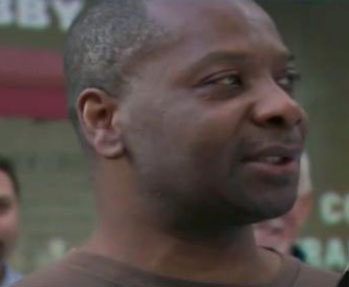
Kash Delano Register Free After Judge Overturns Decades-Old Murder Conviction

Register

After 34 years in prison for a murder he did not commit, Kash Delano Register is a free man. How could this perversion of justice have happened?

This quote from the HuffPost story pretty much says it all. “Superior Court Judge Katherine Mader threw out the conviction on Thursday, ruling that prosecutors used false testimony at trial and failed to disclose exculpatory evidence.”

Read the HuffPost story here.

With news of wrongful convictions occurring at a steady pace these days, it really causes one to ponder - how many more are out there?

Friday’s Quick Clicks…

click
  • A Connecticut judge on Wednesday ordered a new trial for Michael C. Skakel, a nephew of Ethel Kennedy who was convicted in 2002 of bludgeoning a neighbor with a golf club in 1975, saying his original lawyer had not represented him effectively.
  • Two men exonerated by DNA evidence in the rape of a Washington woman have reached a $10.5 million settlement with the county that wrongly imprisoned them for 17 years. Larry Davis, 57, and Alan Northrop, 49, were falsely convicted of raping a housekeeper in 1993, victims of technological limitations that prohibited the use of DNA testing on the small samples collected in the case. Ordered since then by a judge, and aided by the Innocence Project Northwest, to do conduct post-conviction DNA testing, Clark County (WA) retested the samples and found that neither belonged to the two men. Since their release, Davis and Northrop have fought Clark County in pursuit of restitution, citing negligence by the sheriff’s office and the lead detective on the case, Don Slagle. Davis and Northrop were accused based on sparse details provided by a victim who was blindfolded throughout the crime. The county finally decided to settle once Slagle took the stand when it was revealed that he not only had other leads, but he completely neglected them to pursue Davis and Northrop. Keep reading original story….
  • Baltimore police implement “double blind” lineup procedure
  • A federal judge has entered a default judgment against former Douglas County crime scene investigator David Kofoed in two wrongful prosecution lawsuits. Matthew Livers and Nicholas Sampson sued several Nebraska law enforcement agencies and officials, including Kofoed, who spend two years in prison for evidence tampering in the case. Prosecutors said Kofoed planted blood evidence in a car to bolster a case against Livers and Sampson, who were later exonerated. The other defendants agreed to pay a total of $2.6 million to the men to settle the suits. Continue reading…
  • Three men who were sentenced to death only to be exonerated years later have a message for Ohio and the rest of America: Abolish the death penalty because the judicial system doesn’t work. Delbert Tibbs, Joe D’Ambrosio and Damon Thibodeaux, who collectively spent almost 40 years on death row before being set free, are giving 10 talks in five days in Ohio this week in hopes of persuading people to oppose the death penalty. Continue reading....

BBC report on malleable memories

The BBC has published a short but interesting media report on malleable memories here, which recognises the work done by Innocence Projects (“Why does the human brain create false memories?”, by Melissa Hogenboom, 29 September 2013).

Why does the human brain create false memories?

From the BBC:

Human memory constantly adapts and moulds itself to fit the world. Now an art project hopes to highlight just how fallible our recollections are.

All of us generate false memories and artist Alasdair Hopwood has been “collecting” them.

For the past year he has asked the public to submit anecdotes of fake recollections which he turns into artistic representations.

They have ranged from the belief of eating a live mouse to a memory of being able to fly as a child.

One man who wrote in wrongly believed his girlfriend had a sister who died while at the dentist. So strong was his conviction that he kept all his dentist visits secret.

He wrote: “Over dinner one day she said she was going to the dentist the next week. It all went quiet at the table and my mum said it must be hard for her to visit the dentist after what had happened.”

This is hardly a rare case. Neuroscientists say that many of our daily memories are falsely reconstructed because our view of the world is constantly changing.

Imagination trick

Subtle cues can easily steer our memories in the wrong direction.

A famous experiment carried out by Elizabeth Loftus in 1994 revealed that she was able to convince a quarter of her participants they were once lost in a shopping centre as a child.

Another similar experiment in 2002 found that half of the participants were tricked into believing they had taken a hot air balloon ride as a child, simply by showing them doctored photographic “evidence”.

This work was carried out by Kimberley Wade at the University of Warwick, UK. For the current project she was asked by Mr Hopwood to take part in a real hot air balloon ride, video and images of which are now exhibited in his show. She says she was very excited to take part.

“I’ve been studying memory for more than a decade, and I still find it incredible that our imagination can trick us into thinking we’ve done something we’ve never really done and lead us to create such compelling, illusory memories,” she says.

The reason our memories are so malleable, Kimberley Wade explains, is because there is simply too much information to take in.

“Our perceptual systems aren’t built to notice absolutely everything in our environment. We take in information through all our senses but there are gaps,” she adds.

“So when we remember an event, what our memory ultimately does is fills in those gaps by thinking about what we know about the world.”

Lost keys

For the most part false memories are about everyday situations with no real consequences except the occasional disagreement with a friend or partner about trivial things like who lost the keys, again.

But sometimes, false memories can have more serious ramifications. For example, if an eyewitness testimony in court contributes to a false conviction.

Forensic technology has now led to many such convictions being overturned. The Innocence Project in the US campaigns to overturn eyewitness misidentification and lists all the people who have subsequently been acquitted.

The project reports that there have been 311 post-conviction DNA exonerations in the US, which includes 18 people who were sentenced to death before DNA evidence was able to prove their innocence.

Christopher French of Goldsmiths University in London says there is still a lack of awareness of how unreliable human memory is, especially in the legal system.

“Although this is common knowledge within psychology and widely accepted by anybody who has studied the literature, it’s not widely known about in society more generally,” he says.

“There are still people who believe memory works like a video camera as well as people who accept the Freudian notion of repression - that when something terrible happens the memory is shoved down into the subconscious.”

But the evidence of repressed memories, he adds, is “very thin on the ground”.

A psychologist’s memory of her hot air balloon ride features in the exhibition

Prof French was also involved in the memory project. He hopes it will create more awareness of the malleability of human memory.

Alasdair Hopwood says he was fascinated that people could strongly believe in an entirely imagined event.

“What’s interesting is that the submissions become mini-portraits of the person (albeit anonymously) yet the only thing you are finding out about this person is something that didn’t actually happen. So there’s a lovely paradox there which I’m very drawn to as an artist,” he says.

According to another researcher, the errors the human brain makes can sometimes serve a useful purpose.

Sergio Della Sala, a cognitive neuroscientist at the University of Edinburgh, UK, says it can be thought of in the following way. Imagine you are in the jungle and you see some grass moving. Humans are likely to panic and run away, with the belief that there could be a tiger lurking.

A computer, however, might deduce that 99% of the time, it is simply the wind. If we behaved like the computer, we would be eaten the one time a tiger was present.

“The brain is prepared to make 99 errors to save us from the tiger. That’s because the brain is not a computer. It works with irrational assumptions. It’s prone to errors and it needs shortcuts,” says Prof Della Sala.

False memories are the sign of a healthy brain, he adds. “They are a by-product of a memory system that works well. You can make inferences very fast.”


‘False Justice: Eight Myths That Convict the Innocent’ - Why Did They Write It?

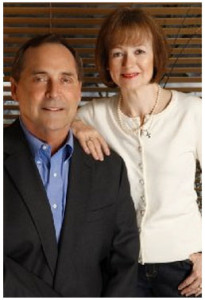
I hope that you’re all familiar with, and in fact have read, the book by Jim and Nancy Petro, False Justice: Eight Myths That Convict the Innocent.

Jim&Nancy

.

.

.

.

Jim is a former Attorney General of the state of Ohio, and Nancy, among her many other endeavors, is also a contributing editor to this blog.

I recently just happened across this interview with Jim and Nancy at the Columbus Metropolitan Club in 2010. They talk about what brought them to write the book.

It’s about an hour long, and I found it both fascinating and illuminating. Definitely worth a watch.

Conviction Error Demands Reexamination of Death Penalty

The following opinion piece with the title “Jim Petro: An intolerable rate of wrongful convictions” was published today in The Akron Beacon Journal (here).

Would you get on an airplane if there were a 2.3 percent chance it would crash? The equivalent of this “worse case” outcome in criminal justice is convicting an innocent person. There’s a special horror in convicting an innocent person of a death penalty crime. Well-documented research has found that our criminal justice system’s error rate in capital cases is at least 2.3 percent. This troubling record was underscored recently when senior U.S. District Judge Anita Brody overturned the conviction of James Dennis, who spent 21 years on death row. As reported by the Associated Press, the judge called the case “a grave miscarriage of justice” and said Dennis was convicted on “scant evidence at best.” Continue reading

Thursday’s Quick Clicks…

click

Tuesday’s Quick Clicks…

click
  • Arizona prosecutor opposes ethical rule requiring prosecutors to disclose evidence of a wrongful conviction
  • Dallas DA Craig Watkins, champion of the wrongfully convicted, draws challenger for 2014 election
  • Oklahoma Innocence Project files brief to free to men featured in John Grisham’s book The Innocent Man and in the book The Dreams of Ada
  • Colorado exoneree Robert Dewey may receive $1.2 million in compensation

A New Twist to False Confessions - The Pharmacological Factor

RxWe’ve reported before on this blog about how police interview & interrogation tactics and techniques can contribute to false confessions. See previous posts here, here, here, here and here. One aspect of false confessions that we have not previously covered is the situation in which a subject is interviewed or interrogated while under the influence of medically supervised mind altering drugs. Recently, two prominent researchers in this area have undertaken a collaboration on this very subject with the intent of educating attorneys about the pharmacological and psychological factors that may affect how a suspect responds to the pressure of interrogation.

Dr. David Benjamin (medlaw@doctorbenjamin.com) is a Clinical Pharmacologist and Forensic Toxicologist, and Adjunct Associate Professor in the Pharmaceutical Sciences Department of Northeastern University School of Pharmacy in Boston, MA. Dr. Brian Cutler is Professor of Forensic Psychology and Associate Dean of the Faculty of Social Science and Humanities at the University Of Ontario Institute Of Technology, Oshawa, Ontario, Canada (briancutler@mac.com). Both have extensive experience as educators, consultants, and expert witnesses.

Dr. Benjamin has authored numerous papers, some of which are available on his website, www.doctorbenjamin.com. He also conducts a seminar on “Developing Active Listening Skills” which is intended to raise the awareness of testifying expert witnesses to the rhetorical ploys, subterfuge, forms of questions and other attempts to gain concessions used by prosecutors during depositions or during cross examination. Dr. Cutler has co-authored, with Prof. Timothy Moore, the article titled “Mistaken Eyewitness Identification, False Confession, and Conviction of the Innocent,” and you can read that article here: Cutler & Moore

As part of their mission to educate attorneys on interrogation and false confessions in general and pharmacological issues in particular, Dr. Benjamin and Dr. Cutler have proposed a workshop on the topic to the National Association of Criminal Defense Lawyers (NACDL) and the American Bar Association (ABA). The workshop proposal is under review, and the abstract is provided below. Regardless of the outcome of the review processes, Drs. Benjamin and Cutler aim to pursue educational opportunities for attorneys and are open to presentation, publication, and other methods of reaching out to attorneys about this timely and important topic.

False and Coerced Confessions: Causes and Cures by David M. Benjamin Ph.D. and Brian L. Cutler Ph.D.

Continue reading

Eyewitness Rules Ignored - Wrongful Convictions Result

eyeIt has been heavily documented that eyewitness misidentification is the single largest contributing cause of wrongful conviction. The reasons for this are many, and range from the vagaries of how the human brain works, to the procedures used by law enforcement for establishing an eyewitness identification. In court, an eyewitness identification will even trump a rock solid alibi, so it’s important to do everything possible to ensure the integrity of eyewitness identifications. There’s not a lot we can do about the vagaries of the human brain, except try to understand how they impact a person’s memory and perception. But there are lots of things we can do about how police go about establishing an eyewitness ID. Federal guidelines have been issued, and a number of states have taken steps to improve the process, including mandating the use of “blind” administration of lineups. It seems, however, that what’s being done in practice is lagging far behind what’s being recommended or required. A recent article by Kevin Johnson in USA TODAY brings this point home:

WASHINGTON — More than four out of five police agencies in the U.S. have no written policies for handling eyewitness identifications despite long-standing federal guidelines, according to a report obtained by USA TODAY.

The findings in the National Institute of Justice report, come as flaws in eyewitness identification represent the single greatest cause of wrongful conviction, contributing to 75% of convictions overturned through DNA testing, according to the Innocence Project, which uses DNA testing to challenge criminal convictions.

The report, which was produced for the Justice Department’s research arm by the Police Executive Research Forum, is the first national assessment of eyewitness identification standards. In it, 84% of police agencies reported that they had no written policy for conducting live suspect lineups, and slightly more than 64% said they had no formal standard for administering photo displays of potential suspects.

Read the full story by Kevin Johnson of USA TODAY here.

California Innocence Project Wins Exoneration in Sexual Assault Case

An emotional Uriah Courtney, 33, became the eleventh person to be exonerated through the efforts of the California Innocence Project (CIP), with assistance from students at the California Western School of Law, yesterday. Courtney had served eight years of a life sentence in prison for a 2004 rape and kidnapping of a sixteen-year old girl in Lemon Grove, California.

The exoneration was possible because evidence from the crime was retained and could be retested with more advanced DNA technology. The results not only eliminated Courtney but linked to another man, who closely resembled Courtney, and lived within three miles of the crime. Continue reading

New Yorkers: Urge Passage of Criminal Justice Reform Now

The Innocence Project is urging New York citizens to voice support of criminal justice reform to their legislators before the current legislative session ends on June 21. The legislation is designed to reduce wrongful convictions by requiring the full recording of interrogations in serious felonies and by improving police witness eyewitness identification procedures.

The Innocence Project has made it easy to voice support for the legislation with a prepared message (here). Continue reading

Can Eyewitness Identification Alone Meet the Standard of “Beyond a Reasonable Doubt”?

Joel Freedman, a frequent contributor to MPNnow of Canandaigua, New York, has posed a question very important to the Rosario family whose gatherings take place at Sing Sing Correctional Facility in Ossining, New York. His opinion piece (here) asks, “Why is Richard Rosario still in jail?” The question has a short answer, but it elevates a troubling issue in DNA-era criminal justice. Continue reading

Kansas City man freed after DNA tests clear him in 1983 rape case

A 49-year-old Kansas City man convicted in a 1983 rape has been released from prison after DNA testing exonerated him and implicated another man.

The Kansas City Star reports here that Robert E. Nelson was freed Wednesday but that prosecutors and the Midwest Innocence Project withheld the announcement until Friday, after the new suspect was arrested.

Nelson was twice denied DNA testing before the Midwest Innocence Project took on his case last year and spent more than $40,000 for tests that identified the new suspect. Nelson began serving the 70-year rape sentence in 2006 after finishing earlier sentences for robbery.

Wednesday’s Quick Clicks…

click

Wisconsin Innocence Project’s Work Prompts Judge to Overturn Rape Conviction

Winnebago County (Wisconsin), Circuit Court Judge Daniel Bissett has overturned the 1994 rape conviction of Joseph Frey, who has been serving a 102-year sentence for the crime, which involved the rape at gunpoint of a University of Wisconsin student in her apartment. According to a Wisconsin State Journal report (here), the judge said Frey’s “conviction must be vacated ‘in the interest of justice.’” Frey remains in jail as prosecutors decide whether or not to retry him. Continue reading

Open-discovery rules won’t necessarily stop prosecutors from cheating

Sunday’s New York Times hits the nail on the head in an editorial here in which it laments that violations of the U.S. Supreme Court’s 50-year-old Brady rule, which requires prosecutors to disclose exculpatory evidence to the defense, remain ”widespread.” The Times might be overly optimistic, however, in its belief that open-files reforms like those adopted in North Carolina and Ohio that require full disclosure of law enforcement’s investigative files in a case will necessarily solve the problem.
Such rules will work only if prosecutors and law enforcement agencies follow them, and that’s far from guaranteed. In an Ohio case I am currently investigating, for example, information about the identification of an uncharged suspect was disclosed only after we learned from a witness that she had picked the man out of a photo lineup. The identity of a second suspect, which a co-defendant says she gave to both a detective and the prosecutor before she pleaded guilty, has still not been disclosed, nor has a summary of her statement that the only other person charged in the crime was not involved.
Defense attorneys and investigators should remain skeptical that prosecutors will always follow open-discovery rules any more than they always follow the Brady rule.
They should also be aware that another reform — the use of blindly administered sequential photo lineups — can still lead to misidentifications in the era of social media. In this same case, a witness admitted that she and others looked up the defendant’s photo on Facebook once they learned his name, which made picking out his photo later fairly easy. She now admits she was wrong.

Friday’s Quick Clicks…

click
  • Texas moves one step closer to establishing an exoneration review commission
  • Kevin Curtis, the Elvis impersonator falsely accused of mailing letters laced with ricin to Barack Obama and U.S. Senator Roger Wicker, was released Tuesday night and gave an exclusive, and bizarre, interview to CNN’s Piers Morgan.
  • In Canada, man wrongfully convicted of rape sues government 43 years later
  • California Innocence Project supporters soon to begin their 600 mile walk for justice
  • Great DNA access decision by Kentucky Supreme Court
  • Spotlight on new West Virginia Innocence Project
  • The U.S. Court of Appeals for the Second Circuit has refused to hear en banc a 2012 decision affirming a grant of habeas corpus where the panel referenced scientific literature submitted by amicus curiae, The Innocence Project, on ways in which in-court identifications can be tainted by the facts of the crime, prior identification procedures and other factors.

BBC Video: Franky Carrillo’s Story after 20 years of False Imprisonment

See here for a BBC’s just released video on Franky Carrillo’s story after 20 years of false imprisonment. Carrillo was released after eyewitnesses in his case admitted that they had lied.


Recently Freed Man in Stabilized Condition Following Heart Attack

David Ranta, released from prison last Thursday after serving 23 years in prison in a high-profile wrongful murder conviction, suffered a heart attack Friday night. According to this CNN report (here), as of Sunday night, Ranta’s conditioned was stabilized. He is being treated in cardiac intensive care unit at a New York hospital. Continue reading