Daily Archives: June 1, 2012

Cell Tower Triangulation - How it Works

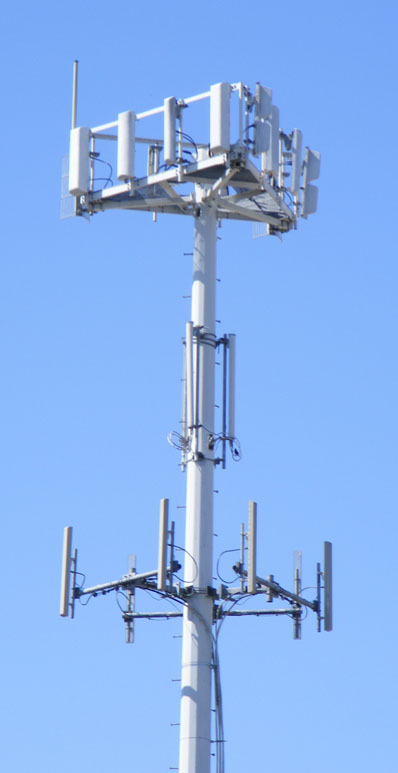
Cell TowerFirst, I refer you to Martin Yant’s earlier post on this subject: https://wrongfulconvictionsblog.org/2012/05/10/cell-phone-evidence-doesnt-always-ring-true/

The post makes the point that data from a single cell tower is essentially worthless in trying to place someone in a particular location. The best you can expect is a band within a 120° “pie wedge” from the cell tower.

If two cell towers are used, it gets much better, and if three towers are used it gets even better yet. But to make sure this kind of evidence doesn’t get misused, and to know what it’s limitations are, it’s important to know how it works.

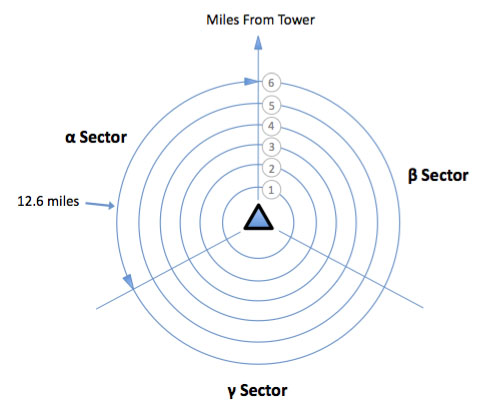
You may have noticed that the antennas on a cell tower are always arranged in a triangle. There are some sound technical and economic reasons for this, but we won’t go into that here. But it does mean that a cell tower can tell from which of the three antenna arrays it is receiving a signal. Each of the three antenna arrays covers a 120° sector with the tower at it’s focus, and these sectors, by convention, are referred to as alpha, beta, and gamma - α, β, γ.

Within each sector, the tower can make a measurement of how far away the transmitting cell phone is. This is done by measuring signal strength and the round-trip signal time. For a lot of technical reasons, this is not a very accurate measurement, and the determined distance will have a reasonably significant error band.

Here is a diagram of a single cell tower showing concentric bands of distance from the tower, and the three “sectors”. The distance bands don’t stop at “6”, but this is just to give you the idea. Note that at six miles out, the arc of a sector is 12.6 miles long.
Continue reading

Policing Snitching to Protect Defendant’s Rights

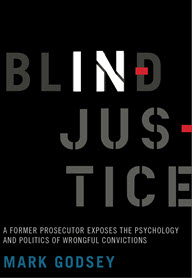
The above is the title of a concisely written article by Emily Smith. It appeared in the American Criminal Law Review, 2011. The article reviews the pros and cons of informant testimony; the idea that snitching evidence is essentially quid pro quo in nature. That, for the most part, they are to be viewed with circumspect, otherwise, measures are required to be put in place to retain their probative value.

The author provides anecdotal evidence to support the claim that, 49% of those wrongly convicted and sentenced to death, faced this fate because of crooked testimony. The author then followed with a rhetorical question: Is reliance on this essential practice, really necessary to the effective enforcement of the criminal law?

‘No one can deny that the information the informants can provide is relevant to a trial. However, prosecutors are given almost unfettered discretion to offer the informant incentives, with courts rarely questioning the credibility of their witnesses. The problem is that the informant’s greed creates trouble when it is combined with the prosecutor’s leeway and singular focus on conviction’. In light of this ‘tunnel vision’ by prosecutors, the author suggests that, there should be some additional sort of judicial oversight. She says, there are three ways to conduct such supervision. Read those ways and the entire article.

Friday’s Quick Clicks…

John Bradley’s Loss as Williamson County D.A. Was a Win for Craig Watkins and Innocence

From the Dallas Observer:

If Dallas District Attorney Craig Watkins has a direct foil in the state of Texas, it’s soon-to-be-former Williamson County District Attorney John Bradley.

Watkins, actively pursuing innocence claims and making Dallas the leading county for exonerations in Texas, is an outlier, albeit one who is gaining supporters around the country for his tough-but-nice-guy legal philosophies. Meanwhile, Bradley upholds a reputation for being relentlessly tough on crime — and innocence.

But in yesterday’s primaries, Bradley, a 10-year incumbent, lost to Jana Duty, the County Attorney, by 10 percentage points, after Duty harped on the fact that Bradley worked hard to prevent DNA testing for Michael Morton, who was found innocent of killing his wife and was released after 25 years in prison.

Lawyers defending Morton allege that he would not have been wrongfully convicted if prosecutor, Ken Anderson, had not deliberately withheld evidence that pointed to his innocence. Anderson faces a Court of Inquiry in September and has denied any wrongdoing, and Bradley has been portrayed as acting in support of his predecessor by fighting DNA testing on the bloody bandana, eventually the key to Morton’s freedom.

Bradley has told the Texas Tribune he was “deeply challenged” by what he had been through in the Morton case. It seemed the experience caused him to warm up to the idea of justice for the innocence in time for the election — but it wasn’t enough to tip the scales.

In an interview before Tuesday’s election, Gary Udashen, president of the Innocence Project of Texas, made it clear that voters in Williamson County were casting ballots that would have statewide implications for the innocence movement.

“If John Bradley loses his election in Williamson county, then that’s a loud message to prosecutors all over the state is that there actually are consequences to engaging in prosecutorial misconduct,” Udashen said. He pointed to the fact that many innocence cases, both those that include DNA evidence (like Morton’s) and those that do not, include instances where prosecutors either deliberately or mistakenly withhold evidence in support of a person’s innocence.

In an NPR interview in January of 2011, the differing philosophies of Bradley and Watkins were on blast as the two top prosecutors bickered on-air, Bradley criticizing Watkins for basking in the spotlight and Watkins harping on the idea of seeking justice, not just convictions.

“I hope you remember that you have other elected prosecutors in Texas who have been doing many of these same things,” Bradley said, pointing out that just because an office doesn’t have a special division dedicated to freeing innocent prisoners doesn’t mean they don’t have traditional channels for doing so.

“You enjoy the national media, you enjoy the attention that you get. We have a lot of prosecutors who don’t seek that. They seek justice by reviewing these cases carefully and making sure that a guilty violent person is not released,” Bradley said.

Watkins response is more true today than ever: “Well obviously that didn’t work.”