
Justin Brooks
Professor, California Western School of Law; Director,
California Innocence ProjectOrder his book
Wrongful Convictions Cases & Materials 2d ed. here

Assistant Professor, Faculty of Law, National University of Singapore

Daniel Ehighalua
Nigerian Barrister

Associate Professor of Justice Studies, Montclair University
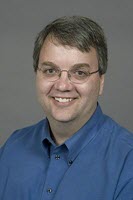
Carey D. Hoffman
Director of Digital Communications,
Ohio Innocence Project@OIPCommunicati1

Shiyuan Huang
Associate Professor, Shandong University Law School; Visiting Scholar, University of Cincinnati College of Law

Professor of Criminology, Law & Society and Sociology, University of California-Irvine

Phil Locke
Science and Technology Advisor, Ohio Innocence Project and Duke Law Wrongful Convictions Clinic

Dr. Carole McCartney
Reader in Law, Faculty of Business and Law, Northumbria University

Nancy Petro
Author and Advocate
Order her book
False Justice here

Professor, Faculty of Law, Konan University Innocence Project Japan

Professor, Department of Criminology & Criminal Justice, Northern Arizona University; Executive Director, Arizona Innocence Project

Professor of Law, Faculty of Law, University of Oslo, Norway

Author and Private Investigator
Order his book
Presumed Guilty here


 Wrongful Convictions Blog
Arizona prosecutor opposes ethical rule.
It’s MARICOPA COUNTY! Would we expect anything else?
Mr. Locke hit it on the head (remember Andrew Thomas?) but also, this “ethical rule” closely mirrors the ABA’s Rule 3.8(g & h) “Special Responsibilities of a Prosecutor.”
…
(g) When a prosecutor knows of new, credible and material evidence creating a reasonable likelihood that a convicted defendant did not commit an offense of which the defendant was convicted, the prosecutor shall:
(1) promptly disclose that evidence to an appropriate court or authority, and
(2) if the conviction was obtained in the prosecutor’s jurisdiction,
(i) promptly disclose that evidence to the defendant unless a court authorizes delay, and
(ii) undertake further investigation, or make reasonable efforts to cause an investigation, to determine whether the defendant was convicted of an offense that the defendant did not commit.
(h) When a prosecutor knows of clear and convincing evidence establishing that a defendant in the prosecutor’s jurisdiction was convicted of an offense that the defendant did not commit, the prosecutor shall seek to remedy the conviction.