Author Archives: Phil Locke

Shaken Baby Syndrome (SBS) Blog

Sue Luttner is a San Francisco Bay area technical writer and journalist who found herself following the polarized professional debate that’s surrounded shaken baby syndrome (SBS) for the past two decades. After years of research, she has concluded that well-intentioned child-abuse professionals working with an overly simple model of SBS are, in some cases, convicting innocent people and tearing apart innocent families.

Sue maintains a blog on the subject, onsbs.com, and here is a link:

http://onsbs.com

Child Abuse Medical Hubris – Will it Ever End?

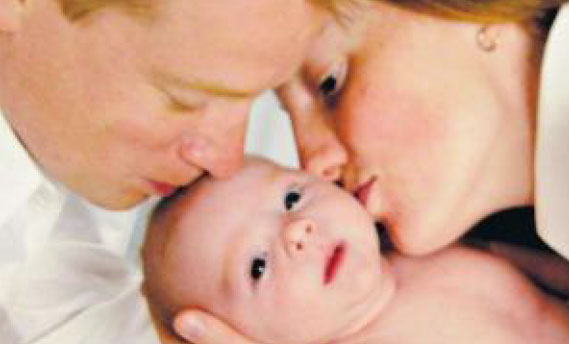
This is a picture of Baby Allysa with her parents.  Allysa has since died of a genetic condition, spinal muscular atrophy, that is fatal in infants.  Tragically, her death came after the death of her parents who were under investigation for child abuse because of the broken bones in Alyssa’s legs.  Allysa had been taken from her parents at 3 months and given to a foster mother.  Facing imminent arrest, Allysa’s father, increasingly despondent and distraught, shot his sleeping wife in the head, and then killed himself.  It was shortly after this that Alyssa’s genetic condition, which explains the broken bones, was finally diagnosed.

Dr. John Plunkett recently posted an article on this case on the SBS Listserv, with this comment:

“Physicians, not social workers, initiate and propagate the incorrect diagnoses.”

A copy of the article from the Dnever Post is here:

Olinger D. Spinal muscular atrophy. Denver Post, 2012-04-01

This is a heart breaker, but aren’t they all.  I have to agree with Dr. Plunkett’s view. The medical community is going to have to take the elevator down from their ivory towers, deflate their bloated egos, and admit there is much they don’t know, and that they are not always right.  I can’t blame the pediatric medical community for wanting to “protect the babies”, but they have to get it right, and not be locked-in to predispositions about abuse diagnoses.

Phil Locke

Trayvon Martin and Casey Anthony – We Don’t Know What We Don’t Know

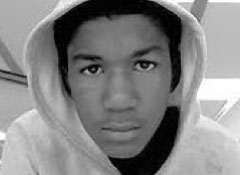
The Trayvon Martin case has been getting LOTS of media coverage.  Of course – this is a racially charged situation.  But I would like to echo Martin Yant’s previous post on the danger of a “rush to judgement”.  You cannot – I repeat, CANNOT – try these cases in the media.  There is no way “Joe citizen” can possibly be cognizant of all the details, and facts, and intricacies of a case like this.  And there is great probability that neither the prosecution nor the defense can either.

With all the media hype, people make a quick determination based upon their own set of prejudices, and then form an emotional attachement to that determination.  Then “confirmation bias” kicks in big time.

And at this point in time, the investigation hasn’t even been completed.

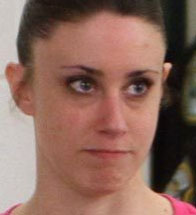
Another case in point is the Casey Anthony case.  Now …. did Caylie Anthony die? Yes.  Was her body found in a garbage bag?  Yes.  Did her mother have any kind of involvement in her death and the coverup?  Probably.  But was it premeditated, 1st degree, capital murder?  The jury said “no”.  And the jury did the right thing.  The prosecution did not prove it’s case.  In their rush to “make big headlines” and “build careers” they got greedy.  A lesser charge would have returned a “guilty” verdict in a minute.

Whether you be prosecution or defense, this is supposed to be about facts, and truth, and logic, and JUSTICE.

A Plug …. for the National Association of Criminal Defense Lawyers

The 2012 National Innocence Network Conference has just concluded.  The event was hosted this year by the University of Missouri Kansas City School of Law.  We attend these events to sharpen our skills, increase our knowledge base, and forge relationships that will help us in our work; and this year’s conference did not disappoint.

On the Thursday prior to the conference, the National Association of Criminal Defense Lawyers (NACDL) (www.nacdl.org) conducts a full day seminar/tutorial, usually on some aspect of litigating forensics.

Here is the agenda from this year’s session dealing with “forensic pathology”.

NACDL

They bring in recognized experts to speak, and the day is jammed full of relevant and useful information.  They do an excellent job, and they offer this free of charge to “qualified” (defense/innocence work) attendees.

I have had the distinct pleasure of attending three of these events, and I would rate them as outstanding.

The NACDL is funded by:

  • Membership dues revenue;
  • Non-dues revenue such as CLE programs, publications, and product sales; and
  • Funding support, including external grants and internal fundraising.

This is an organization that deserves your support.

Phil Locke

What Really Happened in the Amanda Knox Case?

I have followed the Amanda Knox case over its course, and was recently able to attend a talk given by Prof. Greg Hampikian of Boise State University on the subject.  Prof. Hampikian is also Director of the Idaho Innocence Project and an internationally recognized authority on DNA forensics.  Prof. Hampikian advised the Amanda Knox legal team on DNA issues.

After the dust had settled, I felt compelled to write a brief summary of the case based upon my own knowledge of the case combined with information from Prof. Hampikian’s presentation – just to try to put it all into perspective.  That summary follows.

Continue reading

17 Years Wrongfully Imprisoned – No Compensation

Here’s a link to an article about exoneree Alan Northrop, who received no compensation for his 17 years of wrongful imprisonment in Washington state.

http://www.cnn.com/2012/03/25/justice/wrongful-conviction-payments/index.html?hpt=hp_c1

Judicial Independence – How Do We Get There?

An independent judiciary – one that is not influenced by campaign contributors or special interest groups or religions or political parties or other power brokers.  Sounds like it should be the bedrock of a fair and impartial criminal justice system, doesn’t it?  Well … I’m afraid that ain’t what we got.

With the exception of Arizona (judges are appointed by the governor or elected on a non-partisan ballot), all US state level judgeships are elected political positons (just like prosecutors).  We all know that “Job 1” for any elected official is  to to get reelected.  This automatically sets in place a host of the “wrong” incentives for judicial job performance.  It’s human nature, and it’s a fact.  There will be pressure for politically elected judges to make judicial decisions that will accommodate the political base.  And I will have to opine that appointees by a governor, while not having to campaign for reelection, are also political postions.

Continue reading

Fingerprints From Shell Casings

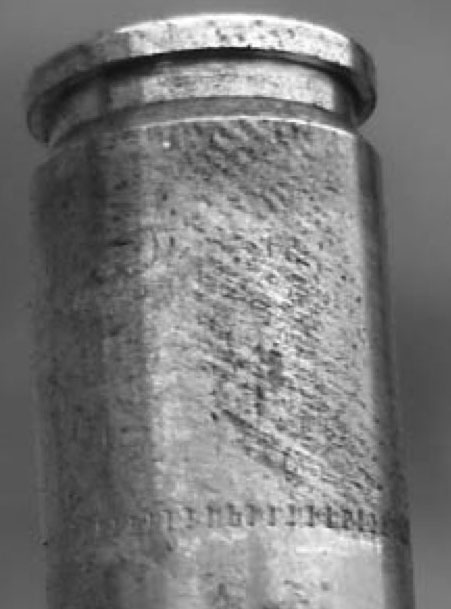
Ask any latent print examiner about imaging fingerprints from expended shell casings, and they will tell you it’s most likely futile.  Any latent prints that have been deposited on cartridges before, or during, loading into the firearm are “erased” by the firing temperatures experienced by the shell casing.  Studies with thermal imaging cameras have shown that the exterior of a brass 9mm cartridge casing will reach approximately 145° F.  This is apparently enough to break down or vaporize the skin oils of which a fingerprint is comprised.

However, a new technology has recently become available.  It relies on the fact that the acidity level in the skin fluids of a latent print is enough to “micro-etch” the surface of the brass shell casing; leaving the brass surface with a very slightly etched image of the latent print.

Dr. John W. Bond, head of the Forensic Science Unit of the Northamptonshire, UK Police and Senior Lecturer in Forensic Sciences at the University of Leicester, developed a method for imaging these micro-etched prints by bringing the shell casing to a high voltage static charge and cascading tiny graphite spheres over the casing while it is rotated.

Here is a journal article by Dr. Bond describing the process:

Shell Casing Prints

Continue reading

Chases and Altercations Hinder Police Memory

A recent study conducted with police agencies in Winnipeg, Canada reveals that when police are forced into high levels of exertion by a crime situation, this hinders their ability to remember details of what happened.

Article:   http://thechart.blogs.cnn.com/2012/03/20/cops-more-forgetful-after-chases-or-altercations/?hpt=hp_bn10

Gunshot Residue Evidence – What It Really Takes

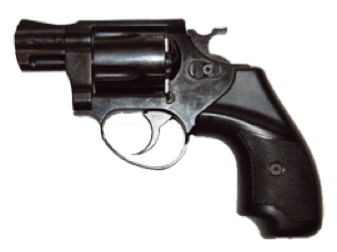
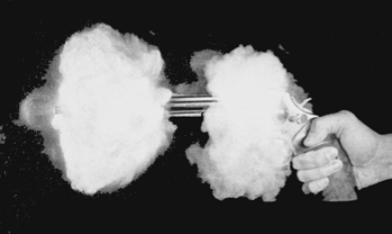
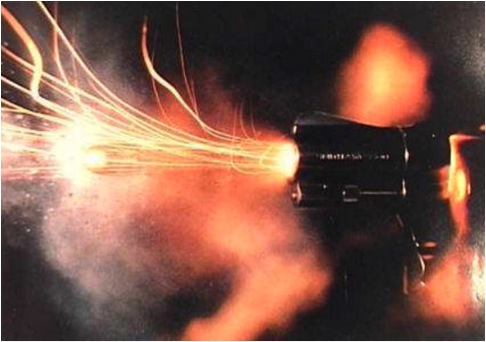
Gunshot residue – GSR.  Gunshot residue consists of tiny (microscopic, 1-10 micron) particles of  the cartridge primer that are ejected from various orifices of a gun when a cartridge is fired.  GSR has historically been identified by it’s elemental composition signature of lead, barium, and antimony.  These elements vaporize when the primer ignites, and then condense into the particles known as gunshot residue – GSR.

The residue floats in the air, and lands on all kinds of  things, not the least of which is the hand, and possibly the clothing, of the shooter – and bystanders.  These pictures will give you an idea of how it happens.

Continue reading

Shaken Baby Syndrome “Science” (Really??) — REDUX

There were some questions generated from my last post on this, so I wanted to provide some clarification about why I am skeptical regarding biomechanical studies (dummies, simulation, and modeling) to determine the “cause and effect” relations of triad symptoms.

To examine more closely the deficiencies with biomechanical studies, modeling, and simulation, let’s look at a particular example.  Let’s take the example of one of the “triad” symptoms, retinal hemorrhage.  What is solely responsible for retinal hemorrhage from head impact is the acceleration experienced by the retina and fluids in contact with the retina, not the skull.  Skull impact acceleration forces will be transmitted (and modified) through various tissues and fluids to the retina, and what the retina experiences will be different than what the skull experiences.  However, as far as I know, we have no way to directly measure acceleration of the retina, so we have to settle for measuring acceleration of a simulation or model of the skull, and infer how that gets transmitted to the retina.  Therein lies part of the problem, and a major reason why modeling or simulating the situation is so difficult.  And in fact, measuring skull acceleration is no easy task in itself, because it will depend upon the “flexibility” or “compliance” of any particular skull.  I would guess that an infant skull with the fontinel still open would be more compliant than one with the fontinel closed, and certainly more compliant than a fully formed adult skull.  (Side note.  Some might say, “Use monkeys or cadavers for these studies.”  However, the physiology of animal brains and skulls is different, and cadavers have no blood pressure, muscle tone, or reflex reactions.)

Continue reading

Shaken Baby Syndrome “Science” (Really ??)

I’ve been reading lately about biomechanical studies that have been, and are being, done to try to quantify the physical forces and accelerations required to inflict damage inside the human infant skull sufficient to cause “triad” symptoms (subdural hematoma, retinal hemorrhage, diffuse edema or diffuse axonal injury).

Dr. Carole Jenny, queen of the SBS protagonists, has dedicated her career to doing research with “bio-fidelic” dummies in search the answers to these questions.  Other researchers have attempted to use the power of computer modelling, employing the technique of finite element analysis, to answer the same questions.

Continue reading

The NAS Report – so where are we now?

Since the publication of the NAS report in 2009, Strengthening Forensic Science in the United States: A Path Forward, prosecutors and the forensic science community have “circled the wagons,” and have been pushing back mightily.  Acceptance and adoption by the courts has been spotty at best.  So where do things stand today?

The (US) National Association of Criminal Defense Lawyers (NACDL) issues a bi-monthly publication called “The Champion.”  In the January/February issue there is an article titled “A Path Forward: Where Are We Now?”  This includes the author’s (Jennifer Friedman) perspective on the situation, along with some practical pointers for defense attorneys in using the NAS report in their case strategies.

This issue of The Champion is not yet available on the NACDL website (www.nacdl.org), so I include the article here:

Champion – NAS

Phil Locke

Arson Investigation – After Decades of Junk Science

Arson is, of course, the intentional setting of a fire.  Arson is determined ex post facto by a “fire investigator”.  Fire investigators have historically  been people who started their career with a fire department, and inherited the job from a predecessor.  Training was largely “on the job” as a result of mentoring by superiors.  It might also be common for novice fire inspectors to attend a one week training course.  The body of knowledge concerning the causes, and locations of origin, of fires was anecdotal and passed from one generation of fire inspectors to another as folklore. Some have even compared the “old folklore science” of fire investigation to witchcraft.

I’m happy to report that true fire science has made great strides over the last two decades, and what it has determined is that most of the “rules of thumb” that were the “stock in trade” of fire investigators for decades were wrong.

Continue reading

Compositional Analysis of Bullet Lead (CABL, also called CBLA) – True Science Triumphs

CABL – Compositional Analysis of Bullet Lead – was originally proposed as a means to be able to link a bullet recovered from a crime with a box of ammunition that may be, or may have been, in the possession of a suspect.
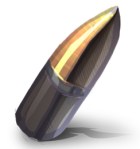
The theory was that the precise chemical composition of any particular melt of lead used to make bullets made it unique and distinguishable from all others.  The compositional testing was most commonly done by the FBI lab.  Many people were convicted of fire-arms-based crimes based upon this theory.

However, when real science started focusing effort on this issue, it was determined that two different melts of lead could, in fact, be compositionally  indistinguishable.  The major reason for this being that bullets are universally manufactured from melted down car batteries, and the lead used to make car batteries is, by necessity, VERY uniform.

This is another example of where the forensics community presumed “uniqueness” without statistical validation.  Once validation was attempted, they were proven wrong.

The FBI has officially acknowledged the discrediting of this evidence, and they ceased doing CABL analysis in 2005.  However, there are still cases of wrongful conviction based upon this evidence out there.

Here is some reference material for you:

1)  Here is a graphic showing why this is bogus evidence by Laura Stanton, The Washington Post – November 17, 2007

CABLChart

2)  In 2004 The (US) National Academies did a study of the validity of CABL.  Here is chapter 5 of that report, stating conclusions.

National Academies Report

3)  Here is a 2007 article by  John Solomon of the Washington Post.

Forensic Test Full of Holes

Phil Locke

Gallery

Let’s Talk About FINGERPRINTS

This gallery contains 5 photos.

Fingerprints, more technically known as “friction ridge analysis”, have been around for well over 100 years; at least since Francis Galton published his seminal work simply titled “Finger Prints” in London in 1892.  In fact, fingerprints are still analyzed according … Continue reading

Gallery

The SBS Wars

SBS – Shaken Baby Syndrome SBS (now officially renamed Abusive Head Trauma – AHT – by the American Academy of Pediatrics) is defined as a condition in infants and small children characterized by a combination of three symptoms: 1)  Subdural … Continue reading

Gallery

The (Sorry) State of Forensics in the US [and perhaps the world]

This gallery contains 2 photos.

In 2009, The National Academies of Science of the United States published it’s Congressionally commissioned report:  “Strengthening Forensic Science in the United States – A Path Forward.”  Chapter 5 of the report presents a review of a number of forensic … Continue reading

Gallery

Forensic Odontologists Finally Begin to Take First Steps to Introduce Science into their Field

In the wake of the (US) National Academy of Sciences report on the state of forensics in the US, the field of “forensic odontology” is apparently responding.  Forensic odontology can be classified as one of the most questionable of forensic … Continue reading