Author Archives: Mark Godsey

Will Texas Admit It Executed an Innocent Man?

From the NYTimes:

Armed with what it says is new evidence of wrongdoing in the prosecution of Cameron Todd Willingham, the Innocence Project on Friday will ask Gov. Rick Perry to order the Texas Board of Pardons and Paroles to investigate whether the state should posthumously pardon Mr. Willingham, whose 2004 execution has become a lightning rod of controversy over the Texas justice system.

“This is a terrible thing to not only execute somebody who was innocent; this is an individual who lost his three children,” said Barry Scheck, co-founder of the Innocence Project, a legal group that focuses on wrongful convictions.

The organization says it discovered evidence that indicated the prosecutor who tried Mr. Willingham had elicited false testimony from and lobbied for early parole for a jailhouse informant in the case.

The informant, Johnny Webb, told a Corsicana jury in 1992 that Mr. Willingham had confessed to setting the blaze that killed his three daughters.

The Innocence Project also alleges that the prosecutor withheld Mr. Webb’s subsequent recantation. The organization argues that those points, combined with flawed fire science in the case, demand that the state correct and learn from the mistake it made by executing Mr. Willingham.

Former Judge John H. Jackson, the Navarro County prosecutor who tried Mr. Willingham, said the Innocence Project’s claims were a “complete fabrication” and that he remained certain of Mr. Willingham’s guilt.

“I’ve not lost any sleep over it,” Mr. Jackson said.

Mr. Willingham was convicted, largely on the testimony of a state fire marshal, who said Mr. Willingham started the 1991 fire that killed his daughters. Several fire scientists, though, have concluded that the science underpinning that conclusion was faulty. In April 2011, the Texas Forensic Science Commission agreed.

Now, Mr. Scheck said, his organization has discovered that prosecutors went to great lengths to secure false testimony from Mr. Webb, to repay him for helping secure the conviction and to hide the recantation.

During the trial, Mr. Webb, who was in jail on an aggravated robbery charge, said he was not promised anything in return for testifying. But correspondence records indicate that prosecutors later worked to reduce his time in prison.

In a 1996 letter, Mr. Jackson told prison officials Mr. Webb’s charge should be recorded as robbery, not aggravated robbery.

But in legal documents signed by Mr. Webb in 1992, he admitted robbing a woman at knife point and agreed to the aggravated robbery charge.

In letters to the parole division in 1996, the prosecutor’s office also urged clemency for Mr. Webb, arguing that his 15-year sentence was excessive and that he was in danger from prison gang members because he had testified in the Willingham case.

In 2000, while he was incarcerated for another offense, Mr. Webb wrote a motion recanting his testimony, saying the prosecutor and other officials had forced him to lie.

That motion, Mr. Scheck said, was not seen by Mr. Willingham’s lawyers until after the execution. Meanwhile, he said, prosecutors used the testimony to stymie efforts to prove Mr. Willingham’s innocence and prevent his death.

An investigation is needed, Mr. Scheck said, to improve the judicial process.

Mr. Jackson said he made no promises to Mr. Webb. He also said Mr. Webb had sent him a letter explaining that the recantation motion was untruthful but that he was forced to submit it by prison gang members who supported Mr. Willingham.

“There’s no doubt the arson report was based on archaic science, but from a practical standpoint I think the result was absolutely correct,” Mr. Jackson said.

The Innocence Project has worked for years to exonerate Mr. Willingham, but Mr. Perry has argued that he was guilty.

Scott Henson, author of the criminal justice blog Grits for Breakfast, believes the current effort may be successful when a new governor takes office in 2015, he said.

Mr. Henson added, “Perry has made his position on the case pretty clear.”


Thursday’s Quick Clicks…

click
  • Cambodia’s Supreme Court ordered the release of two men Wednesday who were wrongly convicted and jailed for the 2004 murder of a prominent opposition activist.  The court’s decision to drop all charges came amid renewed calls to free the men, whom leading international rights groups have called “scapegoats” in the murder of Chea Vichea and one of many examples of the country’s corrupt judicial system.  Rest of article here
  • Alaska Innocence Project files motions to free the Fairbanks Four
  • Judge Ken Anderson, former prosecutor who prosecuted Michael Morton, resigns
  • Tyra Patterson:  Interesting alleged false confession case in Ohio

Law Review Issue on Wrongful Convictions Around the Globe Now in Print…

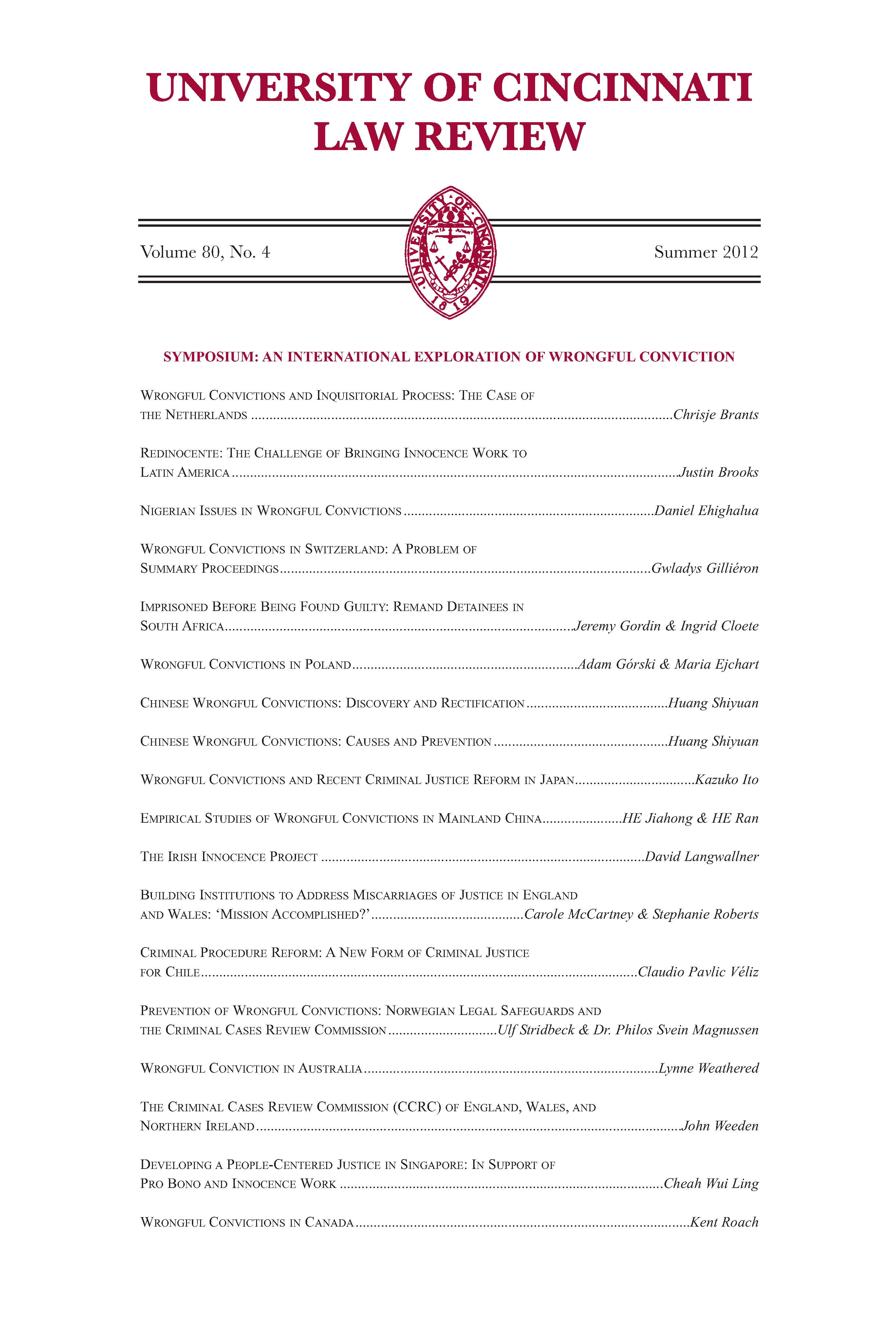
Cover

At long last, the University of Cincinnati Law Review symposium issue stemming from the 2011 International Innocence Conference in Cincinnati is finally in print.  The edition contains articles discussing and summarizing the causes and extent of wrongful conviction in countries across the globe.  You can find the entire volume here.  Congrats to all involved on completing this important work.

Tuesday’s Quick Clicks…

click

Thursday’s Quick Clicks…

click
  • Exoneree says arrestee names should remain confidential
  • Murder conviction tossed in Georgia
  • An epidemic of prosecutor misconduct
  • Exoneree Fernando Bermudez to kick off ‘Dilemmas of Justice’ lecture series Sept. 24th
  • On Monday, the 9th U.S. Circuit Court of Appeals upheld a lower court ruling that freed a California man who was wrongfully convicted in 1999 of being in possession of a concealed knife under California’s Three Strikes Law.  Daniel Larsen was convicted based largely on eyewitness identification. Two officers testified that they saw Larsen throw a knife under a car located in the parking lot of the Golden Apple Bar in Los Angeles. Because he had prior felony convictions, Larson was sentenced to serve 28 years to life in prison.  Larsen spent nearly 14 years in prison before his conviction was reversed by a U. S. District Court judge in 2010 after the California Innocence Project, which began representing Larson in 2002, found witnesses who testified seeing a different man holding the knife.

PA Innocence Project Launches Forensic Science Academy for Lawyers

From the Pennsylvania Innocence Project Blog:

In 2009, the National Academy of Sciences produced an exhaustive study of the state of forensic science in the United States. The report, Strengthening Forensic Science in the United States: A Path Forward, was a rude awakening for the entire criminal justice system as to the state of forensic science in our country, and particularly took lawyers to task for not understanding forensic science at all. In response, the Pa. Innocence Project sought to provide that education for Pennsylvania prosecutors and defense lawyers.

Collaborating with Arcadia University and the Center for Forensic Science Research and Education, we developed a 16-hour course to cover topics including death investigations, DNA, fingerprints, chemistry, and arson and explosives. Leading practitioners and scientists are conducting the courses, and lawyers are getting hands-on experience with the techniques to better understand their applications and limitations.

In the early evening of September 12, 30 prosecutors and public defenders gathered in Willow Grove, Pennsylvania for the first lecture.Dr. Barry Logan, the Executive Director of the Center, covered the first topic on Death Investigations and Forensic Toxicology. The course will go through October 31, meeting each Thursday evening to cover a different area of forensic science.

It is the goal of the Pennsylvania Innocence Project to provide educational opportunities for all members of the criminal justice system to ensure the fair administration of justice.


New Scholarship Spotlight: Lessons from Inquisitorialism

image.phpVanderbilt Law Professor Christopher Slobogin has posted the above-titled article on SSRN.  Download here.  The abstract states:

The adversarial system as it is implemented in the United States is a significant cause of wrongful convictions, wrongful acquittals and “wrongful” sentences. Empirical evidence suggests that a hybrid inquisitorial regime would be better than the American-style adversarial system at reducing these erroneous results. This paper proposes the integration of three inquisitorial mechanisms into the American trial process — judicial control over the adjudication process, non-adversarial treatment of experts, and required unsworn testimony by the defendant — and defends the proposals against constitutional and practical challenges. While other scholars have suggested borrowing from overseas, these three proposals have yet to be presented as a package. Together they could measurably enhance the accuracy of the American criminal justice system.


Thursday’s Quick Clicks…

click
  • Duke Law School’s Innocence Program, which includes the Wrongful Convictions Clinic and Innocence Project®, has been awarded a $249,718 grant from the U.S. Department of Justice.
  • Irish Innocence Project joins the debate over a DNA database in Ireland
  • Wrongful convictions of women topic of panel discussion in Chicago on September 25th
  • The decision by Cook County State’s Attorney (Chicago) Anita Alvarez to set aside the convictions of two men Tuesday, leading to their release from prison and into the arms of family members and lawyers, underscored the fact that Illinois’ problems with wrongful convictions are far from over.  But Alvarez’s handling of the cases of Carl Chatman and Lathierial Boyd also may signal a shift in her approach to wrongful conviction cases, one that has given her a reputation as a prosecutor who slow-walks innocence claims and dismisses convictions only when she has no choice.  More…

Tuesday’s Quick Clicks…

click
  • The Irish Innocence Project may be on the verge of its first exoneration
  • Chicago taxpayers will spend $12.3 million to compensate two more exonerated inmates who claim they were tortured into false confessions by convicted former Area 2 Cmdr. Jon Burge, keeping former Mayor Richard M. Daley off the hot seat.  The identical $6.15 million settlements will go to Ronald Kitchen and Marvin Reeves, who spent more than two decades in prison for the 1988 murders of five they did not commit.  It marks the third time that cases settled by Mayor Rahm Emanuel have spared Daley from answering questions under oath about allegations that — as state’s attorney and as mayor — he failed to investigate police torture allegations against Burge and participated in a conspiracy to cover it up.
  • In Illinois, DNA that exonerated one man points to a new suspect
  • In Virginia, lawmakers consider moves that would speed up exoneration process and rate at which exonerees obtain their compensation

A Perspective on the Simon Hall Confession and Its Impact in the UK…

From the JusticeGap.com:

By Julie Price, director of the Cardiff Law School’s Innocence Project:

Gobsmacked’, some said. Others were ‘Stunned’, writes Julie Price. But whatever the language of choice for miscarriage of justice observers, the common reaction to Simon Hall’s confession last month was: ‘We didn’t see that coming.’

Setting aside any questions (and there are many) as to the circumstances surrounding his confession after maintaining innocence for 12 years, this turn of events will not have helped the cases of genuine victims of wrongful conviction, as suggested in early reactions from the ‘no smoke without fire’ brigade.

The UK’s university innocence project world may now take stock, and try to assess how it should manage any consequential damage to the credibility of our daily operations.

When the flagship hits the rocks
There is no doubt that the Simon Hall case was considered a flagship of the UK’s university innocence project movement, which has developed apace since the first project at Bristol in 2005, closely followed by Leeds and Cardiff. It has possibly reached its peak of between 25-30 projects operating with varying degrees of activity at universities in England, Scotland and Wales, with new ones emerging and earlier projects closing along the way.

Those of us working in this most difficult of pro bono/clinical legal education fields have closely followed the Simon Hall case since the last ever episode of BBC’s Rough Justice filmed Bristol University students working on the case with Hall’s then solicitor, criminal appeals stalwart, Campbell Malone.

Publicity
Hall’s case was played out on a very public stage. It was different to most others partly because of the ferocity of the campaign and its soap opera qualities. There were family feuds. One Stephanie (Bon) created a Justice4Simon website, facilitated the involvement of the BBC and worked relentlessly giving vital early support, only to be replaced by another Stephanie, who married Hall in prison. Stephanie Hall argued with many.

But the loyal wife’s dogged determination led to the CCRC apparently bowing to pressure and giving her regular updates on their work, a service that evaded others conducting cases more quietly.

As well as press releases from Bristol University and its related Innocence Network UK (INUK), there was other regular web activity, with vitriolic outpourings by rival forum members using pseudonyms, being enthralled and appalled in equal measure by the slanging matches that were played out for all to see.

Hall’s wife uploaded a plethora of letters and documents, suggesting that other named individuals were responsible, and with a poignant ‘Elephant in the Room’ photo reminding us of the dearth of evidence, constantly calling for her innocent husband to be released to avoid perpetuating the ongoing injustice.

The 2011 appeal decision
When Hall’s appeal decision was due in early 2011, we eagerly awaited the anticipated first-ever case involving a university to be overturned by the Court of Appeal. It would be a ‘milestone’ for university innocence projects, the Observer commented. When the conviction was upheld, we were shocked.

That was not because we naively accepted what Bristol University said, but because we had read for ourselves what was in the public domain, often so eloquently and wholly seeming to undermine the evidence against Hall.

Keeping the faith
Despite the 2011 appeal being lost, our collective faith was not. Michael Naughton and Gabe Tan of Bristol University gave passionate interviews to a pro bono online resource, Human Rights TV, condemning the decision. This confidence in the unsafety of the conviction was reinforced to us outside observers when the defence fibres expert wrote a powerful letter to the Court of Appeal challenging the Court’s understanding of his evidence. Bristol University’s press release urged that Simon Hall’s conviction ‘cannot stand’.

With hindsight, there was little mainstream public interest in the case outside of Suffolk where the murder occurred. Outside of the small miscarriage of justice community, Private Eye ran pieces, keeping up the pressure.

Wider problems and pressure
There were also difficulties behind the scenes, about which outside observers could only speculate. After the failed appeal, it seemed that Simon Hall had ‘sacked’ his legal team in favour of innocence project representation. If this were true, it would have been an uncomfortable development in the eyes of those of us who consider that the relationship between the practising legal profession and universities is core to the sustainability of innocence projects.

Hall’s supporters routinely reminded Keir Starmer of his words for Rough Justice that: ‘The one crucial link is the fibre evidence. Break this and the case disappears.’

Hall’s wife regularly made changes to the website: information came and went. The pressure on the CCRC was huge.

Fast forward to September 2013. So, one month on from the August 8th news that Simon Hall has confessed to the murder, ‘hoodwinking’ (so say theDaily Mail) the BBC and MPs, where does that leave us, the universities that have invested many years in working on alleged wrongful conviction cases?

The UK innocence project world is still poised, waiting for its first case to be overturned with the help of a university. I don’t say ‘by’ a university because this can probably only be achieved as a result of a collaborative effort embracing pro bono lawyers, experts and journalists. But how far away are we from overturning a conviction, and will it ever happen?

A legend in our own academic backyard only?
What is most striking from newspaper coverage of Simon Hall’s confession is that after eight years of hard slog, university innocence projects still do not seem to feature in the nation’s consciousness. When you are immersed in something so all-consuming, there is a tendency to believe that everyone knows about your work.

I don’t think that university innocence projects have even scratched the itch on the nose of the miscarriage of justice problem, even though they have played an important part in teaching our future lawyers about the iniquities of the criminal justice system.

In newspaper coverage immediately after the confession, none of the pieces in the Daily MailThe TelegraphThe Independent or other local and national newspapers mention the involvement of Bristol University’s innocence project in Hall’s case (the BBC does).

Statistics
Northumbria University’s Student Law Office achieved success in overturning the robbery conviction of Alex Allen in 2001, and subsequently securing compensation for him of £170,000, but this was not through the vehicle of an innocence project.

No UK innocence project has yet been involved in overturning a conviction.

The Criminal Cases Review Commission (CCRC), the body charged with looking into possible miscarriages of justice, has statistics on the involvement of innocence projects in submissions to them, with caveats that their data mining is not perfect, and may not be 100% accurate because of the ‘many variables in the way people might describe involvement’ of an innocence project.

Also, the CCRC’s figures do not distinguish between universities involved with the INUK and those that are not. (For the uninitiated, the INUK is a network of universities working under that umbrella, led by Bristol University, with members but no democratic constitution. Most university innocence projects are members of INUK; others have never joined or have left, for example Cardiff, Leeds, Westminster, London Innocence Project. Other universities run criminal appeals clinics that are not called innocence projects, for example Northumbria, Derby, and now Birmingham).

The CCRC’s results show that as at February 2013 there were 60 cases or submissions at the CCRC where the phrase ’innocence project’ occurs.

  • Of these, there were 18 substantive submissions where the applicant had been represented by an innocence project. This is not 18 different cases, but it includes Responses to Provisional Statements of Reasons.
  • Seven are cases where it seems projects were assisting in some other way short of reviewing or representing.
  • 17 were cases where the CCRC supplied material to a project but no representations had so far followed.
  • Five were where the CCRC suggested that applicants might consider contacting a project.
  • 13 were cases where innocence projects are just mentioned in correspondence in some other way, including two mentions of a USA Innocence Project, a complaint that a project had had a case for three years and then dropped it, a complaint that the applicant could not get a project to help, and a complaint that the applicant had been told that his case meets criteria, but that the project was too busy to take his case.

So, looking more closely at these figures, the bottom line appears to be that of the 18 substantive submissions, 10 of these were from our project at Cardiff Law School (on sixdifferent cases) and four were from Leeds. Neither Cardiff nor Leeds are INUK projects.

Of the INUK universities, three of these submissions were from Bristol (two of which were on the Simon Hall case), and one was from Gloucester.

In addition to these CCRC figures, Bristol succeeded in having a case referred from the Scottish CCRC, and Lancaster University had an appeal heard directly at the Court of Appeal, bypassing the CCRC.

Since these figures were given by the CCRC in February 2013, Sheffield Hallam has also recently submitted a case to the CCRC. Cardiff has made a further two substantive responses to the CCRC, we are on target for submitting another two new cases in the autumn, and we hope soon to take another case directly to the Court of Appeal.

I do not have information for other non-INUK projects but from the CCRC’s figures, it would seem that they have not been involved in making substantive submissions.

This statistical information is not available generally, so if these figures do not tally with others, for example those generated by INUK, then corrections are welcomed.

However, these figures are miniscule in the overall picture of applications to the CCRC. it is fair to conclude that innocence projects are not yet having any real impact outside of their educational remit. By way of historical context, the BBC’s Rough Justice series is credited with overturning the convictions of 18 people in 13 cases over its 25 year existence. The Simon Hall case was the last ever Rough Justice film, and was not typical of its previous investigative content, instead portraying the work of the innocence project students. The penultimate Rough Justice film, about the Barri White & Keith Hyatt case, was responsible for the new evidence which led to their convictions being quashed at the Court of Appeal.  Thanks to Rough Justice, the miscarriage of justice world yesterday welcomed the conviction of Shahidul Ahmed for the murder of Rachel Manning, the crime for which Barri had been wrongly convicted. We should rightly mourn the demise of such investigative journalism programmes and keep the Simon Hall confession in context.

The future?
The wider miscarriage of justice community, including university innocence projects, has other pressing concerns:

  1. Vital opportunities to obtain evidence and documentation post appeal have been seriously hampered following the dismantling of the Forensic Science Service, and the current decision in the case of Kevin Nunn.
  2. Awareness of the iniquity of Joint Enterprise convictions is increasing courtesy of hard campaigning by the voluntary group JENGbA (Joint Enterprise Not Guilty by Association). Casework organisations have yet only seen the tip of the iceberg of this category of convictions, many of which appear wholly unjust and unjustifiable, but antiquated laws are being used disingenuously to secure convictions in the name of tackling gang culture.
  3. As seen in the debacle following the prosecution of police officers in the Lynnette White murder case, protecting the integrity of the criminal justice system seems to remain a national priority even in the light of the Hillsborough review.
  4. There seems to be an increasing abandonment of the burden of proof in sexual offence cases, particularly historical ones.
  5. Criminal legal aid is being decimated. The inevitable slashing in numbers of criminal appeals practitioners will adversely affect those claiming wrongful conviction, and numbers of miscarriages of justice will increase.
  6. There are increasing numbers of convicted people maintaining innocence on various unofficial ‘waiting lists’ who may never get the chance to have their case looked at properly. There are myriad practical and ethical issues that accompany this sort of scenario.
  7. There is a difference between campaigning and conducting casework, but sometimes lines are blurred. Recent years have seen the emergence of a new breed of ‘casework assistance’ organisations – and therein lies a ticking time bomb. They tend to be run by legally unqualified people who in most cases have a solid interest in miscarriages of justice, and perhaps an academic qualification. Some call themselves a ‘national service’, which is entirely inappropriate, misleading and worrying. The danger is that these are wholly unregulated, probably uninsured, with no quality control, and unlike universities and other funded organisations, are formally accountable to no-one other than the (usually vulnerable) client. A few years ago, a new charity recruited law students and others with promises of financial remuneration. A number of individuals, universities and organisations were taken in. In one particular case precious files were entrusted to that “charity” on the promise of a professional review and assistance, only never to be seen again after the charity folded and one of its founders went off to experience prison life from the inside.
  8. Virtually unheard of in other university real client work, innocence project activity leaves academic staff exposed to the perhaps inevitable but wearying squabbling (and worse) that sadly seems to come with the territory. As well as being humbled by the resilience and goodwill of many victims of miscarriage of justice and their supporters in this small community, I have been disappointed to observe turf wars and jealous guarding of territory. It’s little wonder that those of us who have dedicated years of our lives to this work often feel that we are on a hiding to nothing. Criminal legal aid lawyers are a dying breed. If university colleagues brave enough to take the plunge into these muddy waters become understandably frustrated by logistical problems and lack of progress, topped off by petty wrangling, and choose to move into ‘easier’ pro bono work, that will be a valuable resource lost to the whole miscarriage of justice community in increasingly difficult times. The possibility of this should not be underestimated: most of us are in this because we are committed to helping, but we all have a breaking point.

Given this heavy duty political, cultural and practical context to miscarriage of justice work, it is not viable to be an innocence project tourist. It’s not the sort of work you can dip in and out of if you are a university wanting to set up an exciting new real client project. It carries with it heavy ethical and practical problems, and is not for the faint-hearted.

Heads, parapets and reflection
For me, the saddest consequence of Simon Hall’s confession will be if long-standing, wise, respected supporters of miscarriages of justice work decide that it’s too risky to put their names to a campaign, and instead take a back seat out of the public arena. It’s not easy to stick your head above the parapet: we’ve done that at Cardiff in many respects, and we’ve been on the receiving end of friendly and not-so-friendly fire. But we are still here, largely due to the sterling efforts of my colleague Dr Dennis Eady, and because Cardiff Law School has to date invested in us.

We have learned lessons about publicity. Our educational project, Cardiff Casewatch, planned to chart our six cases on their journey through the CCRC’s system, in real time. That idea was put on the backburner largely for various practical reasons, but we plan to update the webpages to report the ultimate outcome.

Prompted by the credibility issues created by Simon Hall’s confession, perhaps it’s time for universities individually and collectively to evaluate whether the current model of innocence projects is working effectively. It is not, in my opinion. We could look strategically at other possible collaborative alternatives, along the lines of the Inside Justice, the miscarriage of justice investigative unit operated by Louise Shorter at Inside Time, the not-for-profit national newspaper for prisoners. Inside Justice works collaboratively with experts and lawyers and has a pro bonoadvisory panel of eminent experts who conduct cold-case reviews of cases. The unit’s first case has just been submitted out of time to the Court of Appeal and another is under review by the CCRC. As well as facilitating hard-to-find expert advice Inside Justice is also bridging the media gap and working to get publicity for deserving cases and hoping to inspire the next generation of lawyers and experts just as Rough Justice inspired so many.

The Centre for Criminal Appeals is also an attractive idea. Central to its working model isthe need for a qualified lawyer to lead the case, who may access core funding through legal aid even if now at drastically reduced rates. They say, “Prisoners may tell their lawyers things they have not told their wives, or bright-eyed students”. The Centre’s founders also emphasise the need to be able to progress a case “under the radar” arguing that sometimes it may be easier to right a wrongful conviction without the media and campaign groups in constant attendance. The Centre’s test case, which resulted in the quashing of the prisoner’s conviction, is relatively unknown. The CCA recognises from outset that collaboration with campaign groups on strategy, a wider advisory group, and proper core funding is essential. Those elements are essentially absent from our university innocence project movement, which bears no resemblance to that in the USA. The UK version, whilst of admirable intention, has evolved and reacted ad hoc without any democratic underpinning and with no obvious publicity or other strategies; the absence of core funding undoubtedly puts unsustainable pressure on the two individuals who run it.

The future for alleged victims of miscarriages of justice isn’t bright, and universities aren’t going to change that. The fault lies with a problematic criminal appeals system which appears to value protecting the integrity of the system at all costs, even if that means sacrificing some innocents.

University innocence projects should arguably be more transparent in the information they pass to the outside world, within confidentiality constraints. In this way, false expectations can be avoided, even though academic intellectual property and career progression drivers might instead prefer to closet information. We should recognise and reflect upon our shortcomings, reinforce our educational remit, and properly manage the expectations of our clients and students. We should think long and hard about what publicity opportunities are appropriate and which are best passed over despite any inclination to the contrary that any publicity is good publicity: it is not. We need to retain a healthy dose of scepticism but not lose the humanity and fresh eagerness which is the value that our keen young students can supply. We need to have meaningful ethical conversations to discuss at what point we need to close a case, rather than carrying on regardless. We need to work even more collaboratively with colleagues in journalism, forensic science and so on.

A fair number of innocence projects nationally will soon be reaching a crossroads/brick wall stage, after several years of frustrated operation. They will move from the honeymoon period towards despair and helplessness, feeling overwhelmed, realising that upping gear to ‘crusade mode’ is not what they signed up for. So when something happens like the Simon Hall confession, this has the potential to justify and accelerate plans for exodus. Those of us who have invested thousands of hours of our time will naturally feel (at best) disappointment at our cause being undermined by the confession, setting back casework by years, precious time that could have been spent on genuine cases. But how can a worthy case be differentiated from one that will eventually throw up evidence of guilt? The short answer is that it can’t¸ and we shouldn’t beat ourselves up about it. Perhaps guilty prisoners do see universities as a haven for keen young things over whose eyes the wool can easily be pulled: after all, they have nothing to lose (apart from the progression problems of prisoners maintaining innocence, which is another harrowing story). But to say that the BBC and Bristol University were ‘hoodwinked’ is unfairly disparaging. There are many reasons why people maintain innocence, and the Simon Hall confession could have happened to any of us.

Eight years on from the start of innocence projects in the UK, it is difficult to reflect positively upon where we might be in another eight years from now, but this is because of issues far more wide-reaching than Simon Hall’s confession.

In the meantime, may you Rest in Peace, Joan Albert, and others. Please be assured that, as well as potential victims of wrongful conviction, the victims of crime and their loved ones are always at the forefront of our minds.

A Victory for the “Flat Earth Society”

clickFrom chron.com:

NEW YORK (AP) — Bite mark evidence that may connect a murder suspect to the victim will be allowed at his trial, a judge decided Thursday, disappointing those who hoped the case would help get the forensic technique banished from the nation’s courtrooms.

Manhattan state Supreme Court Justice Maxwell Wiley’s decision follows lengthy testimony last year that went to the heart of the reliability of bite mark analysis, which involves comparing bite marks left on the flesh of victims with the teeth of suspects.

At least 24 men convicted or charged with murder or rape based on bite marks found on victims have been exonerated in the U.S. since 2000, according to a June report by The Associated Press based on decades of court records, archives, news reports and filings by the Innocence Project, which helps wrongfully convicted inmates win freedom through DNA testing.

Many of those who were exonerated spent more than a decade in prison, including time on death row.

The AP analysis is the most comprehensive count to date of those exonerated after being convicted or charged based partially or entirely on bite mark evidence.

In Thursday’s case, Wiley said he would explain the reasoning behind his ruling in a written decision, but he did not say when that would be.

He did say that his basic finding was that “the field of bite mark analysis comports with the standards of evidence under New York law.” He added: “It’s obviously a field that has not been looked at closely by the courts in a long time.”

Chris Fabricant, director of strategic litigation at the Innocence Project, was at Thursday’s hearing and said Wiley’s decision was “contrary to the overwhelming consensus of the scientific community.”

“It’s a victory for the Flat Earth Society,” he said.

The Innocence Project and other defense attorneys slam bite mark analysis as sham science and argue that it should no longer be allowed in courtrooms.

Many forensic dentists defend the practice as useful, especially when trying to eliminate suspects, and say it has helped convict murderers and rapists, most famously serial killer Ted Bundy.

The New York case involves the murder of 33-year-old Kristine Yitref, whose beaten and strangled body was found wrapped in garbage bags under a bed in a hotel near Times Square in 2007.

A forensic dentist concluded that a mark on her body matched the teeth of Clarence Brian Dean, a 41-year-old fugitive sex offender from Alabama.

Dean told police he killed Yitref in self-defense, saying she and another man attacked him in a robbery attempt after he agreed to pay her for sex; no other man was found.

Dean is awaiting trial on a murder charge. His attorney declined to comment after Thursday’s hearing.

Prosecutors wanted the bite mark evidence allowed at his trial to help convince jurors of Dean’s guilt. His defense attorneys wanted it barred because of past mistakes involving the practice and how powerful bite mark evidence can be to jurors, even with opposing testimony.

Dr. David Senn, a San Antonio forensic dentist, testified in last year’s hearings that bite mark analysis is valid when used in a closed population of suspects and that problems of the past can be blamed on individual dentists, not the science itself.

“The issue is not that bite mark analysis is invalid, but that bite mark examiners are not properly vetted,” he said.

He added that he couldn’t imagine a case today in which he would identify a biter unless “there was other very strong corroborating evidence.”

Testifying for defense attorneys at the hearings was Dr. Mary Bush, a researcher at the University of Buffalowho has used computer models to study bite marks made on dead bodies using pliers and dental models. Her research, which has been published in the Journal of Forensic Sciences, found that human dentition is not unique and cannot be accurately transferred to skin.

Bush acknowledges that a significant limitation of her research includes the fact that she’s using dead bodies that have been frozen and thawed and using machinery to create bite marks, a method that is far from re-creating a real-life bite made on a live person during an act of violence.

Bush testified that she did not feel that bite marks should be admissible in courtrooms but that more research in the field is needed.


Thursday’s Quick Clicks…

click

Gubernatorial Candidate in Virginia Runs on Innocence Credentials…

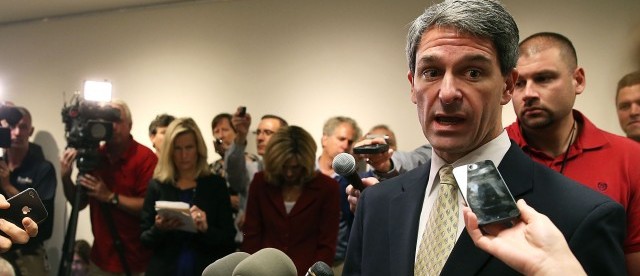
ken_cuccinelli_virginia_getty_images-e1378234617700From dailycaller.com:

Often attacked by liberals as a conservative hardliner on social issues, Virginia gubernatorial candidate Ken Cuccinelli is airing a new, positive television ad that is being praised for showing the Republican’s compassionate side.

The advertisement tells the story of Cuccinelli’s work as attorney general of Virginia that led to the exoneration of Thomas Haynesworth, an innocent black man, who wrongly spent 27 years in prison on rape convictions, it was determined.

“After going through all of the evidence, I was convinced that Thomas Haynesworth was innocent,” Cuccinelli says in the ad. “And I took that case on myself.”

Haynesworth himself appears in the ad in support of Cuccinelli. “To me, he’s a hell of a guy.”

Political observers noted that the ad could help soften Cuccinelli’s image.

“Broadens image beyond divisive social issues,” University of Virginia politics expert Larry Sabato said Tuesday. “Where was this in spring?”

The ad comes after prognosticators like Sabato have said the race appears to be slipping from Cuccinelli in favor of Democratic nominee Terry McAuliffe. A recent Quinnipiac shows McAuliffe beating Cuccinelli 48 percent to 42 percent.

Crime Labs Paid For Convictions…

From the Huffington Post:

By Radley Balko

I’ve previously written about the cognitive bias problem in state crime labs. This is the bias that can creep into the work of crime lab analysts when they report to, say, a state police agency, or the state attorney general. If they’re considered part of the state’s “team” — if performance reviews and job assessments are done by police or prosecutors — even the most honest and conscientious of analysts are at risk of cognitive bias. Hence, the countless and continuing crime lab scandals we’ve seen over the last couple decades. And this of course doesn’t even touch on the more blatant examples of outright corruption.

In a new paper for the journal Criminal Justice Ethics, Roger Koppl and Meghan Sacks look at how the criminal justice system actually incentivizes wrongful convictions. In their section on state crime labs, they discover some astonishing new information about how many of these labs are funded.

Funding crime labs through court-assessed fees creates another channel for bias to enter crime lab analyses. In jurisdictions with this practice the crime lab receives a sum of money for each conviction of a given type. Ray Wickenheiser says, ‘‘Collection of court costs is the only stable source of funding for the Acadiana Crime Lab. $10 is received for each guilty plea or verdict from each speeding ticket, and $50 from each DWI (Driving While Impaired) and drug offense.’’

In Broward County, Florida, ‘‘Monies deposited in the Trust Fund are principally court costs assessed upon conviction of driving or boating under the influence ($50) or selling, manufacturing, delivery, or possession of a controlled substance ($100).’’

Several state statutory schemes require defendants to pay crime laboratory fees upon conviction. North Carolina General Statutes require, ‘‘[f]or the services of’’ the state or local crime lab, that judges in criminal cases assess a $600 fee to be charged ‘‘upon conviction’’ and remitted to the law enforcement agency containing the lab whenever that lab ‘‘performed DNA analysis of the crime, tests of bodily fluids of the defendant for the presence of alcohol or controlled substances, or analysis of any controlled substance possessed by the defendant or the defendant’s agent.’’

Illinois crime labs receive fees upon convictions for sex offenses, controlled substance offenses, and those involving driving under the influence. Mississippi crime labs require crime laboratory fees for various conviction types, including arson, aiding suicide, and driving while intoxicated.

Similar provisions exist in Alabama, New Mexico, Kentucky, New Jersey, Virginia, and, until recently, Michigan. Other states have broadened the scope even further. Washington statutes require a $100 crime lab fee for any conviction that involves lab analysis. Kansas statutes require offenders ‘‘to pay a separate court cost of $400 for every individual offense if forensic science or laboratory services or forensic computer examination services are provided in connection with the investigation.’’
In addition to those already listed, the following states also require crime lab fees in connection with various conviction types: Arizona, California, Missouri, Tennessee, and Wisconsin.

Think about how these fee structures play out in the day-to-day work in these labs. Every analyst knows that a test result implicating a suspect will result in a fee paid to the lab. Every result that clears a suspect means no fee. They’re literally being paid to provide the analysis to win convictions. Their findings are then presented to juries as the careful, meticulous work of an objective scientist.

No wonder there have been so many scandals. I’m sure we’ll continue to see more.

(Disclosure: In 2008, Koppl and I co-wrote an article for Slate on how to fix some of these problems.)


“There was no possibility in their mind that I didn’t do it”

From the ChicagoReader.com:

Andre Davis was sentenced to 80 years for an unforgivable crime—a crime he swore he didn’t commit. Two decades later, someone finally started taking his innocence claims seriously.

By 

Andre Davis, 32 years after he was convicted of rape and murderAndre Davis, 32 years after he was convicted of rape and murder

CLAYTON HAUCK

Part one of two

On a summer day in 1980, 19-year-old Andre Davis stepped off a train 125 miles south of his native Chicago. He expected his visit would last the summer. Little did he know he wouldn’t return home for more than 30 years.

Andre had just graduated from high school and traveled to the central Illinois town of Rantoul, population 20,000, to learn his father’s business. Richard Davis—known as “Crazy Legs” for his brilliant moves on the dance floor—was a disc jockey serving nearby Chanute Air Force Base.

Andre had grown up on Chicago’s south side, where he lived with his mother, Emma, who owned a beauty salon. Emma and Richard had divorced when Andre was two, and though Andre didn’t see much of his father, he had an extended family to rely on. Andre’s grandfather had moved to Chicago from the south in the 1920s, part of the initial Great Migration of African-Americans. He started a corner store and was later successful in real estate. In decades of difficulty for so many blacks, members of the Davis family attended college and went on to lucrative careers. They were, as several of them proudly put it, pillars of the community—lawyers, doctors, entrepreneurs, teachers, and scholars.

Andre’s mother recalls that her son was a good student but also a “typical teenager.” “He always did very well in school, but was bored by it,” she says. She believes that boredom, perhaps accentuated by the sporadic presence of his father, led to Andre acting out. In his early teens, Andre started breaking curfew and running away from home for short periods. A few years later, he faced an auto-theft charge for what he calls “a joy ride” that left him in the hospital. “He was hanging out with the bad boys on the block,” Emma Davis says, “and they were a bad influence on him.”

Some time spent in Rantoul, his family thought, would be good for him.

Rantoul was a far cry from Chicago. Historically, the town has averaged less than a murder per year. Blacks accounted for just 10 percent of the population. Former police chief Eldon Quick says that gangs have always been nonexistent and race relations in the town “were not a big deal.” Still, the small African-American population felt it was necessary to stick together. Andre’s father had a big network—most of the parties he DJed were thrown on the base, where Crazy Legs was the man to know. And so Andre instantly had a network, too.

When Andre arrived at the train station, he was greeted by Crazy Legs and his friend Donald “Don Juan” Douroux. Andre quickly took to Don, who had enlisted in the Air Force several years prior, was discharged in 1979, and decided to stick around Rantoul with a girlfriend while attending nearby Parkland College. It was also through his father that Andre met Lutellis “Sonny” Tucker. Sonny had five kids, was divorced, and lived two blocks from Crazy Legs. Sonny’s kids came and stayed with him occasionally, but mostly they lived with their mother in Gary, Indiana, Sonny’s hometown. Sonny’s brother, Maurice, who was around Andre’s age, had recently moved into Sonny’s house.

Sonny, a cook at Chanute, had been convicted in April of 1978 of felony theft and placed on two years’ conditional discharge. On one occasion, Don would later claim, he overheard one of the Tucker brothers thanking a police officer from Gary for beating him up instead of taking him to jail after he was caught stealing a car.

The crew would often drink together and get into wrestling matches. Andre was only 5’7″ and 130 pounds, but he was muscular enough to hold his own with Maurice Tucker, who was six inches taller and 50 pounds heavier. Neither of the two had found work, so they’d get together and lift weights, drink beer, smoke weed, and hang around the NCO club on base. When Sonny’s kids weren’t staying with them on the weekends, the Tucker brothers often threw parties at their house on Eastview Avenue “for all the brothers,” as Don put it.

Friday, August 8, 1980, was steaming. Andre headed over to the Tuckers’ at around 10 AM to waste the day away with Maurice while Sonny was in and out of the house. They took out weights from the utility room, where Maurice slept, and lifted barbells in the backyard under the blazing sun. They played records. Most ambitiously, they climbed the generous fruit trees that leaned from a neighbor’s house into the yard and picked apples and pears. But mostly they sat on the stoop drinking beer and cheap Wild Irish Rose wine and listening to breaks.

Andre would later recall that when he left the house, sometime after 6 PM, he saw a little girl playing outside. He remembered telling her to stay out of the garbage can she was getting into.

The girl, Brianna Stickel, was adorably blonde and had recently turned three. Earlier that day her stepfather, Rand Spragg, who was stationed at Chanute, had worked until noon before taking Brianna’s mother, Becky Spragg, to apply for a job at the local Holiday Inn Jr. The couple then picked up Brianna and her 18-month-old brother, Simon, from their nursery and returned home. The kids hadn’t napped yet, so the family lay down to rest together, as they often did.

The children woke first, around 6 PM. When Rand got up, he noticed that Brianna and Simon had gotten into the fridge; Brianna had spilled some juice. Becky took Simon for a bath, and Brianna was told to go play outside. The heat was so intense that the little girl was clad only in yellow underwear. Rand went to the window and saw her sitting beneath the large shade tree, biting her nails.

After wiping up the spilled juice, Rand squeezed the liquid out of the mop and turned again to the window. Brianna was gone. He went outside and circled the house. No Brianna. He went inside and asked Becky if the little girl was with her. She wasn’t.

At around 6:30 PM, Rand began knocking on doors. He went to the Tuckers’ house and heard a stereo playing on low volume. He knocked but got no answer, figuring that somebody had left the stereo on. He then got in his car to continue the hunt. The Spraggs didn’t own a phone, so Becky flagged down a passing police car and told the officer that Brianna was missing. Officer Ronald McLemore began checking around the neighborhood.

Brianna Stickel Andre Davis Jordan Smith

  • COURTESY JUDI STICKEL
  • Brianna Stickel’s stepfather last saw her alive in the family’s front yard, where she was sitting beneath a large shade tree.

Shortly before 8 PM, as the officer was conducting his search, “a black man come up there in a car—I don’t remember the car—and he knocked on the [Tuckers’] door,” Becky later recalled. It was Don Douroux. He was carrying a glass of Kool-Aid and wearing a T-shirt with the words master blaster emblazoned on the front and don juan on the back. A short while later, Rand and Becky saw Don walk out the back door of the house and lock it up. Becky walked up and asked if they could look for Brianna inside. Perhaps she had wandered over? At first Don demurred—it wasn’t his house, he said. But he relented and they searched the house while he supervised. No sign of Brianna. Rand did notice a wet red stain on the twin bed in the messy utility room where Maurice slept. He passed his finger across the stain, but chalked it up to “a single man living there and having girlfriends, you know,” he later said. The room had clothes strewn everywhere. Don saw the Spraggs to the front door, and went to lock up the back.

As Rand and Becky stood in front of the Tucker house debating what to do next, Don emerged. He was shaking and crying, borderline hysterical, and dropped the glass of Kool-Aid he was drinking on the front porch. Becky thought he was having an epileptic seizure. He was silent for a bit and then said there was something on the bed in the back room under a pile of clothes. “I can’t look,” he said. Rand went in with Simon and pulled back the sheets on the bed in Maurice’s room. There was Brianna, lying on her stomach, her head turned to one side. Rand rolled her over. She wasn’t breathing, and she had no pulse. Her lips were purple. He began CPR, and saw some vomit. He didn’t want Simon to continue to see the disturbing scene and took the baby out of the room. As Simon whimpered, Rand went back to resume CPR on Brianna. He got no response.

At 8:15 PM, Officer McLemore received an ambulance call directing him to the Tuckers’ house. He raced over and found a crowd standing around the home. Becky was outside crying. Rand escorted McLemore to the utility room, where Brianna lay limp and naked, with bloodstains on her genitals. The blankets were all in a ball at the end of the bed, wet with blood. The officer performed CPR on Brianna for two minutes. It was futile. Don told the officer that “the person that done this is at 1056 Eastview”—Don’s own house, the next block over.

Sergeant Arthur Wiseman and Quick, the police chief, went to the address and knocked on the door. Don, who had raced home ahead of them, answered the door and let them in. Andre was inside, watching television. Wiseman later said Don was “acting somewhat nervous” and said he wished to speak to one of the lawmen. He went outside with Chief Quick. Wiseman stayed inside with Andre, who appeared “nonchalant or uninvolved in what was going on.” Andre told Wiseman he didn’t know why the sergeant was there, and Wiseman stayed quiet about the crime. Outside, Don was telling the chief that he’d returned from work to find Andre hiding under a trailer behind the bushes. He said Andre had told him he’d “been in bed with a woman” at the Tuckers’ when a knock at the bedroom door led him to put his hand over the woman’s mouth to keep her silent—and he soon noticed she wasn’t breathing. Don told Chief Quick that at first he didn’t believe Andre and told him so. He said he went over to the Tuckers’ to prove Andre was lying, and found the little girl dead.

“Everything happened so quick I barely had time to think. I had a brain freeze times a thousand.”—Andre Davis, describing his realization that police were charging him with the rape and murder of a three-year-old girl

Andre later would deny Don’s account. He said he never claimed to have been with a woman that day, let alone killed anyone. His recollection was that he left the Tuckers’ between 6:15 and 7 PM, when Maurice and Sonny were still at the house—a point on which all parties agreed—and headed over to Don’s. Finding nobody there, he said he went to a friend’s house across the street and made a phone call. He said he then returned to Don’s and waited for him until he came home, which was about 20 minutes later. According to Andre, the two drank some Kool-Aid together and discussed getting high later on, after which Don told him he was going for a run. (Don went over to the Tuckers’ instead.) Andre recalled Don returning 20 minutes later, and the police arriving soon after.

Wiseman stepped outside to talk with Don and the chief. He went back into the house and cuffed Andre—who would later say that he thought the police were just taking him in for questioning about a crime that had occurred. They began asking him pointed questions, though, and when he understood he was being charged, he “went ballistic,” he would later recall. “I couldn’t understand it. Everything happened so quick I barely had time to think. I had a mind freeze times a thousand.” He says that as far as the police were concerned, he was guilty. They slapped him around, he claims, hurling racial slurs. “There was no possibility in their mind that I didn’t do it.”

In the five months leading up to his trial, Andre was held in the Champaign County jail. He barely slept. “I didn’t know what was happening one moment to the next.” He kept his mind focused on his family; his mother reassured him that he would be acquitted, and told him to pray and stay optimistic.

Andre’s trial got under way at the Champaign County Courthouse in January 1981. He wore a beige plaid suit, brown shirt and tie, and green sweater. The strategy of his court-appointed attorney was to finger Don Douroux as being involved in Brianna’s death, which would explain why Don would falsely—according to the defense—implicate Andre. It was Don, after all, who had found Brianna. What’s more, if Andre had told Don he’d killed a woman he was having sex with, why didn’t Don find Brianna on his first sweep of the house? He would have known he was looking for a corpse, after all. “Donald Douroux knows a lot more about this than he is telling us,” Andre’s lawyer, Donald Parkinson, told the jury. “I don’t know if he did it or not, but I suspect that he knows something more about it than he’s telling us. Don Douroux, Don Juan, came home and found a patsy. And from that moment on, he’s put this on Andre Davis. And he’s putting it on Andre Davis because he’s trying to cover for himself or someone else.”

The state’s first witness was pathologist Stanley Bobowski, who testified that Brianna had been suffocated by somebody putting a hand or other object over her mouth and nose. He told the jury she’d been raped at the same time. Though dried blood and feces were found around Brianna’s anus, there were no breaks or tears, Bobowski said, which suggested she had not been anally raped.

Next on the stand was Robert Beams, an FBI special agent who headed up the Washington lab where the evidence in the case was tested. At the time, the FBI was the only agency in the country capable of doing sophisticated forensic analysis. type O-positive blood, the most common blood type in the United States, covering about 45 percent of the population, was found at the scene. Brianna was type O-positive, as is Andre. Moreover, Andre is what’s called a “nonsecretor.” Eighty percent of Americans are secretors, individuals whose blood type is present in the rest of their fluids. Andre is among the remaining one-fifth of the population who do not have blood-group substances in their saliva, urine, sweat, and semen. Beams told the court that a mattress and bedsheet with semen on them had been sent to him for testing. Both contained no trace of blood-group substances—meaning they came from a nonsecretor, like Andre.

Rantoul police officer Montgomery Portis testified that Andre—after being arrested by Officer Wiseman and advised of his Miranda rights—shook his head in a negative fashion and declined to sign a Miranda form. He was then interrogated further by Portis and Wiseman. During the questioning, Andre told them that he and Don Douroux had been wrestling—which explained why he had fresh, bloodied scratch marks. In the course of undressing Andre at the station, Portis also noticed grass in both his head hair and pubic hair. Andre then changed his story, according to Portis, saying, “Juan and I is too big to be wrestling.” Portis testified that Andre then said he didn’t know where the scratches came from. “I didn’t rape no little two- or three-year-old white girl,” Portis recalled Andre saying.

When Don Douroux took the stand, his recollection of Andre’s confession was damning. “He said something similar to that he had killed someone,” Don testified. “So I asked him who did he kill and where, and he said it was just a woman who lived down the street next door to a mutual friend of ours, Sonny Tucker.”

Sonny testified that on the morning of the crime, he left his house at about 10 AM to run some errands. Andre was already there, he recalled. He returned home at around noon with some wine, and shared it with his brother and Andre. “We were just sitting around and talking, you know.” Sonny told the jury he stepped out again that afternoon and returned between 5:30 and 6 PM with a friend, Ida Parker, at which time he said Andre and Maurice were still there drinking. Sonny had plans to drive to Gary, Indiana, to visit his parents. Before he departed, he said, Andre left on foot, in the direction of Don Douroux’s house. (Prosecutors contended that Andre later returned to the house.) Soon after, Sonny said, he locked up the doors and left, with Maurice and Ida still at the house. He told the jury that was the extent of what he knew about the day’s events.

Maurice also took the stand, testifying that after Andre and Sonny were gone, he himself left—with Ida Parker—to go spend the night with relatives in Champaign. Maurice testified that he found out about the killing that very night, at his relatives’ house. Someone—he didn’t specify who—called him around midnight and told him there had been a child found murdered at his brother’s house. He knew Brianna Stickel, he said, “but she never came inside” the house. He said he had nothing to do with the crime.

Ida Parker testified that she arrived at the Tuckers’ early that evening with Sonny, saw Andre and Sonny leave, then left with Maurice to go to Champaign.

Perhaps the most persuasive testimony came from Jose Raquel. Raquel was the emergency room physician at Burnham City hospital the night Brianna was killed. He described to the jury how he examined Andre’s genitals after he was arrested. Raquel testified that the head of Andre’s uncircumcised penis had been “red or recently traumatized.” The only way a penis can get that traumatized, Raquel said, was “by forcing it against a tight opening” when it is erect. Could the penis of a man who had masturbated, or had been walking around without underwear, show the same type of trauma? “Absolutely not,” Raquel said. He also said he found “unmistakably fecal material . . . from the anus of a human being” in Andre’s foreskin. Raquel took saline swabs from Andre that showed no presence of semen or blood, but testified that Andre could have washed them off.

When Andre himself took the stand, he was sure his testimony would convince the jury of his innocence. “I thought from day one that I would be found not guilty,” he told me. “I always believed in justice, and I thought innocence was more powerful than anything else.” He explained that after he left the Tuckers’ house that evening, he made a phone call at a friend’s house and waited for Don Douroux at Don’s place. He said Don told him he was going for a run and came back 20 minutes later, shortly after which the police arrived.

Asked point-blank on the stand if he had anything to do with Brianna’s death, Andre replied, “No, I didn’t.” He was never at the Tuckers’ house without them, he said, and had made no confession to Don.

Phone records were checked, however, and no calls had been made from Andre’s friend’s house that day, according to testimony from an employee of the Eastern Illinois Telephone Company (the employee also testified that, if it had been a collect call, no record would exist). The prosecutor said in his closing argument that this proved Andre had “lied, lied, lied.” Andre’s lawyer retorted in his closing argument that Andre was “confused” (which certainly didn’t help lend credibility to anything else he said on the stand). “The days are pretty similar when you’re not working,” Parkinson said. “And you might forget what day you made a phone call.”

Andre’s lawyer focused his closing argument on discrediting Don Douroux. Parkinson pointed out that Don’s girlfriend had testified earlier that he had occasionally hit her. And it was Don, not Andre, who was nervous when the police first arrived.

Jane Raley Northwestern University Center for Wrongful Convictions Andre Davis Jordan Smith

  • ANJALI PINTO
  • Jane Raley, an attorney with Northwestern University’s Center for Wrongful Convictions, knew there was something familiar about Andre Davis when he wrote her seeking help in 2003.

The jury deliberated for just under three hours before delivering a verdict: Andre Davis was guilty of the rape and murder of Brianna Stickel. “None of us had any doubt,” Melvin Parker, a juror at the trial, told me more than 30 years later.

When being questioned during jury selection, all potential jurors had to agree that they would be willing to apply the death penalty if it were appropriate. Parker and nine other jurors voted for death for Andre, but two others said they couldn’t condone the killing of a human being. Parker and the others pushed, saying they had all agreed in principle during jury selection. But the two holdouts said that, when faced with the real thing, they couldn’t vote to put a man to death. Instead, Andre was sentenced by the judge to 80 years in prison without the chance of parole.

Andre was devastated, but still hopeful. He even got a second trial. It turned out that the jury had requested a copy of the transcript of the trial testimony during deliberation, but the bailiff had failed to pass on the request to the judge.

Before the second trial, Andre was offered a deal. If he pleaded guilty, he would serve a maximum of 25 years. Under Illinois law at the time, he would get a day off his sentence for every day he behaved well in prison. The offer on the table, then, was for 12.5 years in prison. Andre declined. “I would never plead guilty,” he says. “Never, never. I was innocent, and that was going to come out some day, I knew it.” Andre’s mother, Emma, encouraged him in that decision.

The second jury heard virtually the same information as the first—though this time around, Don’s testimony included a revelation that was not made in his prior testimony and did not appear in prior police records. Don told the jury that Andre had asked him at his house—shortly before Don went to the Tuckers’ and discovered Brianna’s body—what would happen in a town like Rantoul if a black man killed a white person. And again, in 1983, Andre was found guilty of first-degree murder and received the same sentence of 80 years. Harold Jensen, the judge at the second trial, says now that he had “no doubt whatsoever” about Andre’s guilt at the time. “The evidence was quite clear to me, and there was nothing to contradict that evidence.”

For the first 18 years of his sentence—almost as many years as he’d been alive at the time he was locked up—Andre passed the time at the maximum-security Pontiac Correctional Center by obsessively going over his case and praying to a god he still had faith in. At no time did he ever abandon his belief that he would one day be released. “I still believed in justice,” he recalls. “I did anything I could to keep my sanity.”

In addition to examining his case, Andre spent his time studying religion. Christianity, Catholicism, Judaism, and Islam, in particular. “What screamed to me was that in Islam, the biggest pursuit of justice is really emphasized.” Early into his sentence, in 1984, he converted. His faith sustained him for the hardest part of his sentence—the part that wouldn’t arrive for more than 25 years.

He kept himself in shape by exercising in his tiny cell. He did whatever else he could to maintain his mental stability. If you let your bitterness get the better of you in prison, he says, you’ll never make it. “I spent my time reading, watching TV, talking to myself, writing thousands of letters.” He wrote to the NAACP, to the Nation of Islam, to the Urban League. But the most important letter turned out to be one he received—from an unlikely source.

“I never adjusted to prison,” Andre says. “In my mind, in my spirit, I rejected the fact that I was in that world—I wasn’t going to accept that I was in that world.” He adds: “I was a captive, so why would I ever accept that?”

Of all the criminal charges that can land someone in prison, sexual abuse of a child is considered the worst by most inmates and guards. “Everyone’s out to get you,” Andre says. “Keeping yourself safe is a constant struggle.” On top of that, he wanted to assert his will as much as he could, to discourage other prisoners from attacking him and to convince himself that prison hadn’t broken him. He says that his constant attempts to protect himself—and to send other prisoners a message—resulted in a mind-set that repeatedly got him in trouble. He racked up one of the longest prison disciplinary records in the state, according to the Chicago Tribune. It eventually caught up with him.

July 20, 1998, was Andre’s 37th birthday. It was also the day he was transferred from the maximum-security state prison to the newly built Tamms Correctional Center, the now-notorious supermax facility reserved for the worst of the state’s violent criminals. For at least 23 hours a day, Andre, like all Tamms prisoners, would be locked in solitary confinement in a windowless 7-by-12-foot cell. If he was well behaved, he was permitted an hour outside of his cell to get exercise in the yard. In Tamms, Andre didn’t eat with other inmates—there was no mess hall. Meals were stuffed through a slot in a steel door. Inmates were not allowed to interact with each other, and they rarely had contact with guards. There was no library, no classroom—even medication was typically passed through the steel door.

An Illinois federal court would later find that “Tamms imposes drastic limitations on human contact, so much so as to inflict lasting psychological damage and emotional harm on inmates confined there for long periods.” Amnesty International determined that the facility “flout[s] international standards for humane treatment.” (Tamms was finally closed by Governor Pat Quinn on January 4, 2013.)

Judi Stickel Kevin E. Schmidt Innocent Man Andre Davis

  • KEVIN E. SCHMIDT/CHICAGO TRIBUNE/MCT VIA GETTY IMAGES
  • Judi Stickel says of the man convicted of killing her young niece: “It became clear to me that Andre was innocent. Nothing added up.”

Andre’s mother and sister were consistently amazed at his optimism while in prison. During his parents’ regular visits, he tried to cheer them up.

Emma always shared her son’s conviction that he would one day be freed. When asked if she ever had any doubt about Andre’s innocence, Emma’s jaw squares up. “No,” she says. “I know my son.”

Another woman shared Emma’s conviction: Judi Stickel, Brianna’s aunt.

Stickel had spent years reading and rereading police records and court documents describing the death of her niece. And she came to believe that the accounts witnesses gave police were contradictory. “It became clear to me that Andre was innocent,” she told me. “Nothing added up.” She sent Andre a letter in 1992, she recalled to the Tribune last year, which he ignored for fear that she had ulterior motives. She kept sending letters until he finally responded, two years later. Stickel then met with Andre’s mother. She visited Rantoul. She pored over transcripts, interviewed witnesses herself, and wrote everyone she could think of who might want to hear what she had to say. Finally—more than ten years after she first wrote Andre—Judi Stickel stumbled upon someone who might listen.

In 2003, when he was closing in on a quarter of a century of prison life, Andre—at Stickel’s urging and with her help—wrote a desperate letter to a woman named Jane Raley, a law professor at Northwestern University and, since 2000, an attorney at the university’s Center for Wrongful Convictions. Stickel had discovered the center and believed that they’d be able to act on Andre’s behalf.

Raley is slender and polite, with thin bangs that sometimes fall into her eyes. When she begins talking about her defenses of wrongfully convicted individuals, her calm demeanor vanishes and she can shake with anger. At a recent panel on the use of DNA in wrongful convictions, one of the formerly incarcerated men she works for called her a “drum major for justice.”

Raley received Andre’s letter, written on lined yellow paper. It was one of the estimated hundreds of letters she’d received in her three years at the Center for Wrongful Convictions, and the words described a scenario familiar to her—though not because of her past work at the center. Raley had, coincidentally, been the backup attorney in the public defender’s office during Andre’s appeal. “I knew the case—and we thought he might be innocent,” she recalled earlier this year, sitting in her small Northwestern office. Several pieces of the investigation seemed strange to her. And the fact that Andre had gotten a second trial suggested to Raley that perhaps other errors had been made—earlier on.

What’s more, two juries had decided against the death penalty for Andre. But if any case cried out for an execution, it was the horrific rape and murder of three-year-old child. “It suggested to me that they had reasonable doubt,” she says, “that the evidence was problematic.”

Raley began parsing court transcripts and police records. The initial police report mentioned something relevant that was never discussed in court: Don Douroux had written in a statement to police that Becky Stickel, Brianna’s mother, asked to look for Brianna in Sonny’s house because “the girl visited there frequently.” Maurice had testified, however, that Brianna had never been in the house.

In addition, a junior high school student who was a neighbor of the Tuckers and had been in his backyard around the time of the crime had a clear view of a black man coming out of the house—yet didn’t identify Andre in a police lineup. And hairs consistent with those of an African-American male that were found on Brianna’s body did not match Andre’s hair (or, for that matter, Don’s).

In his letter to Raley, Andre offered to take a DNA test. That, for Raley, was the decisive factor. Guilty men, she felt, typically don’t want DNA tests done.

Judi Stickel letter Andre Davis Jordan Smith

  • COURTESY JUDI STICKEL
  • The first of Andre Davis’s many letters to Judi Stickel. (Click on the image to read the letter in its entirety.)

Exoneration through DNA testing is extremely rare. DNA evidence plays no role in 90 to 95 percent of criminal convictions. But exonerating someone based on DNA evidence is, of course, far easier than exonerating defendants in cases in which DNA evidence doesn’t exist. Successfully working a non-DNA wrongful-conviction case takes an average of 3,500 hours, according to Lesley Risinger, director of the Last Resort Exoneration Project at Seton Hall University. Those hours, billed to a midlevel associate, would compute to at least $1.5 million. Proving one’s innocence through DNA is usually a far less costly and time-consuming endeavor.

Andre, like most inmates, had no money to pay a lawyer. And once an individual is convicted, he has no right to a court-appointed attorney after his initial appeal. If Raley didn’t listen to him, Andre’s innocence claims likely weren’t going to be heard by anyone else.

On February 13, 2004, Raley filed a motion for DNA testing in Andre’s case. She foresaw a fight. All states have laws granting some form of postconviction DNA testing. But in Illinois, as in other places, anyone seeking that testing still must meet burdensome criteria. And so prosecutors had the option to force Andre to prove he met the standards before being tested, which would have delayed Raley’s motion.

But they didn’t. “To their credit, the state always said, ‘Go right ahead and test it, we don’t care,'” Raley says. The problem was that a lot of the evidence in Andre’s case was either destroyed or missing. Hairs, swabs, a bloody brown paper towel discovered in the Tuckers’ bathroom—all were tested using the technology of the time, but weren’t introduced at trial and therefore weren’t preserved. Fortunately, the evidence that was introduced—sheets, a mattress, and toilet paper—was stashed in the basement of the Champaign County Courthouse.

Raley sent the material, along with a vial of Brianna’s blood and an oral swab from Andre containing his DNA, to Cellmark Diagnostics, a testing lab in North Carolina. “These sheets and bedding—they were filled with just blood and semen,” she recalls.

The minimum cost for a DNA test at California’s Serological Research Institute (SERI) is $2,200, says Gary Harmor, the lab’s executive director. For that price, SERI can test one swab from an individual and compare it with one sample of blood or semen from a piece of evidence. Of course, most cases have far more evidence than just one piece—Harmor is currently working a cold case that’s running a $110,000 tab so far. DNA degrades, so old evidence, such as in the Davis case, requires extra testing and is pricier. In addition, there are costs for having the lab prepare a report and for having a lab expert testify at a hearing or trial. The Virginian firm Bode Technology Group charges $1,900 per day plus expenses for an expert witness to appear at a courtroom outside of the local area.

Northwestern University provides the Center for Wrongful Convictions with student help and pays for overhead and the lawyers’ salaries. But any money for investigations and DNA testing has to be raised from private sources—and the center receives hundreds of requests annually from prisoners and their families to work their cases. But May 2004 happened to be a time when some money was available.

Cellmark representatives told Raley that they couldn’t do anything with the blood on the bedsheets—it was 24 years old and too degraded to be properly tested. The lab could, however, test the semen on the bedding. On November 16, 2004, they called Raley with the results.

This article was reported with assistance from the Investigative Fund at the Nation Institute, with additional support from the Puffin Foundation.

Part two of this story will be published online on September 3.


New Scholarship Spotlight: Missing the Forest for the Trees: Federal Habeas Corpus and the Piecemeal Problem in Actual Innocence Cases

Professor Stephanie Roberts Hartung has posted the above-titled article on SSRN.  Download here.  This article is on an important issue that causes serious problems for innocent habeas petitioners.  The abstract states:

The DNA exoneration data stemming from the Innocence Movement exposes a harsh reality in our criminal justice system: existing post-conviction review procedures fail to accurately identify and remedy wrongful convictions of the innocent. While the layers of review available upon conviction are seemingly exhaustive, in fact, the factually innocent prisoner is confronted with little more than a façade of protection. At the federal habeas stage, several provisions of the Anti-Terrorism and Effective Death Penalty Act [AEDPA] operate to foreclose viable claims of innocence. Further, the federal courts entertain second or successive habeas petitions in a piecemeal fashion, if they do so at all. This “piecemeal approach” negatively impacts prisoners raising claims of factual innocence, in light of their typically pro se status and incarceration. In reviewing each successive habeas petition in isolation, without regard to previous claims, the courts often miss the forest for the trees, allowing innocent prisoners to remain in custody.

This Article discusses the piecemeal problem inherent in federal habeas review procedures, provides a case illustration, and advocates for a broader reading of the “evidence as a whole” language in AEDPA’s 28 U.S.C. Section 2244(b)(2). This broader interpretation, already adopted by the Fourth Circuit, would allow courts to review a petitioner’s successive habeas claims in the aggregate, and thus, more readily identify cognizable claims of factual innocence. This Article contributes to the ongoing debate as to how the competing post-conviction interests of finality and fairness should be recalibrated in light of the DNA exoneration data brought forth by the Innocence Movement.


Friday’s Quick Clicks…

click
  • In Vermont, an aggravated murder charge against John Grega, a Long Island, N.Y., man charged with killing his wife in 1995, has been dismissed, because of difficulties with additional DNA testing. The dismissal of the second murder charge against Grega comes a year after his 1996 conviction was dismissed, and a new trial ordered, because of new DNA evidence. Windham County State’s Attorney Tracy Shriver announced late Wednesday that murder charges against Grega would be dismissed without prejudice because of difficulties finding a lab to do necessary DNA matching of evidence taken from Christine Grega’s body.
    Shriver, in a joint statement with Vermont Assistant Attorney General Cindy Maguire, said they “remain committed to continuing this investigation to seek justice for Christine Grega and her family.”  In 2012, new DNA testing had revealed the presence of an unknown man’s DNA in her body, the discovery of which resulted in a judge ordering a new trial.
  • A U.S. judge ordered a new trial Wednesday for a Philadelphia man sentenced to death in 1992 for killing a high school student for her gold earrings.  U.S. District Judge Anita Brody found that James Dennis’ conviction was based on dubious eyewitness testimony, bad police work and a poor defense by his lawyer, The Philadelphia Inquirer reported. She said he must be freed if he is not retried within six months.
  • In India, Supreme Court limits right of intermediate courts to overturn acquittals

Tuesday’s Quick Clicks…

click
  • Kenya scarred by wrongful convictions (and the government’s refusal to acknowledge them)
  • Was the Stanley Wrice wrongful conviction hearing in Illinois subverted by politics?
  • RIP exoneree Forest Shomberg, found dead in Wisconsin of apparent drug overdose
  • The Alaska Supreme Court is considering proposed rule changes that would require lawyers in the state to disclose evidence that suggests a person has been wrongly accused or convicted of a crime.  Alaska state prosecutors and defense lawyers are currently not required to turn over exculpatory evidence – facts that point toward a defendant’s innocence.  For the past four years, the Alaska Bar Association has called on the court system to add rules to the Alaska Rules of Professional Conduct, which govern lawyers across the state. The American Bar Association has promoted similar state-level rules around the country.  “This is designed to encourage lawyers to think about the consequences of not doing anything,” said Steve Van Goor, counsel for the Alaska Bar Association. “When you’re in a position to report evidence and don’t, an innocent person sits in prison.”
  • Clerk fired for helping wrongfully convicted man said she would do the same thing all over again
  • New newsletter of Innocence Network UK available here

Tuesday’s Quick Clicks…

click
  • The National Center for Reason and Justice’s response to DA Kathleen Rice’s self-serving report on the Jesse Friedman case.
  • Irish Innocence Project students intern in the U.S.
  • A killer from Ipswich, England, who spent a decade claiming he was the victim of a miscarriage of justice has finally admitted his guilt.  Simon Hall, 35, was convicted and jailed for life in 2003 after murdering Joan Albert, 79, in her home in Capel St Mary, Suffolk. She was found in her hallway on December 16, 2001, after being stabbed five times.  He had protested his innocence ever since, launching a series of appeals, winning the backing of MPs and appearing in the BBC documentary Rough Justice.  But now it has emerged Hall, previously of Hill House Road, Ipswich, had admitted his guilt to prison authorities, bringing his campaign to an end.
  • An exonerated Durham man said Monday that the State Bureau of Investigation has agreed to pay him $4.6 million after he was wrongfully convicted of murder and spent 17 years behind bars.  Greg Taylor sued the agency after an independent review found questionable practices at its state crime lab. Taylor’s conviction was bolstered in part by blood evidence analysis from the lab that has since been discredited.
  • In New Orleans, police avoid turning over public records to Innocence Project New Orleans
  • Exoneree Brian Banks cherishes preseason debut with Atlanta Falcons

In China, String of Wrongful Convictions Leads to Judicial Reforms…

From Eastday.com:

BEIJING, Aug. 12 — China has started a new round of judicial reform to tackle problems impeding judicial justice, China’s chief justice wrote in an article published on Monday.

The reform is aimed at making breakthroughs in improving the judicial system, especially enhancing the independence of judges and prosecutors and curbing interference from other sources of power and the influence of profits, wrote Zhou Qiang, president of the Supreme People’s Court (SPC), in a byline article published by the People’s Daily, the mouthpiece of the Communist Party of China (CPC) Central Committee.

Judicial departments are urged to adopt measures to curb outside intervention and improve their work styles, Zhou wrote.

Although the country’s legislation has progressed well, greater efforts are needed in the implementation of laws, the article stated, adding that the full and effective implementation of laws is the most important factor in promoting the rule of law in China.

Judicial departments should bear their duties of upholding justice and protecting the authority of the law in every court case, Zhou wrote.

In addition, the chief justice called on officials to “be always in awe of the Constitution and laws.”

Officials, especially those in charge, should set an example by abiding by laws and maintaining the principle that the red line of the law should not be crossed, Zhou wrote.

Judicial departments should also firmly believe in the ideal of the law and socialist legal system while consciously resisting the infiltration of Western concepts, he wrote in the article.

Chinese courts have been under public scrutiny since a string of cases involving the miscarriage of justice and scandals involving judges were exposed.

On July 2, a Zhejiang court overturned sentences for five men who were wrongfully convicted of robbing and killing two taxi drivers 18 years ago.

Last week, four senior judges from Shanghai’s higher court were removed from their positions for allegedly hiring prostitutes at a nightclub.

The SPC on Wednesday said the four court officials have tarnished the image of the nation’s judges and scarred judicial credibility.

It has ordered courts across the country to fight corruption and eliminate black sheep to stop similar events from occurring in the future.