Author Archives: Mark Godsey

Monday’s Quick Clicks…

click

Friday’s Quick Clicks…

click

Prosecutor Turned Judge “Can’t Remember” Exculpatory Evidence in Michael Morton Case…

From AP:

GEORGETOWN, Texas (AP) — A Texas judge whose prosecution led to an innocent man spending 25 years in prison for his wife’s death said he couldn’t remember if he had evidence that could have cleared the man, including statements from the couple’s young son that indicated his father wasn’t the killer, according to a videotaped deposition played in court Tuesday.

A special hearing is being held to examine whether Williamson County Judge Ken Anderson acted improperly in 1987 when, as district attorney, he prosecuted Michael Morton. Morton’s lawyers have accused Anderson of intentionally hiding evidence, though Anderson has denied any wrongdoing.

Morton, 58, was released from prison in October 2011 after new DNA tests showed that he didn’t fatally beat his wife, Christine, in their north Austin home. Another man has been arrested for the murder.

The special prosecutor in the case, Houston defense attorney Rusty Hardin, has focused on whether Anderson failed to give Morton’s trial lawyers a transcript and a report about statements made by Morton’s then 3-year-old son, Eric. They boy said he witnessed the 1986 slaying and indicated it was a “monster” and not his father who committed the crime.

During the eight-hour deposition, Anderson said he couldn’t recall if at the time of the trial he had any documents about statements by Morton’s son.

“There’s no way in God’s green earth that, if that was in my file, I wouldn’t have told” Morton’s attorneys about the boy’s statements, Anderson said in the October 2011 deposition. He was being questioned by Barry Scheck, an attorney with the Innocence Project, a nonprofit that helped secure the new DNA testing.

Anderson, who has apologized to Morton but denied any wrongdoing, said when allegations were made he had suppressed evidence, he wasn’t worried because he believed Morton was guilty.

He also said he never had a problem as a prosecutor disclosing evidence that could point to a defendant’s innocence, adding: “It’s your worst nightmare to have anybody you convicted be innocent,” Anderson said.

Scheck repeatedly asked Anderson whether the ex-district attorney had complied with an order by the trial judge to turn over all evidence that could have been favorable to the accused. Morton’s attorneys have contended the order included the statements made by Morton’s son. Anderson, continuing to say he can’t remember if he had any documents related to such statements, believed the judge’s order only meant he needed to turn over reports related to interviews investigators had done with Morton.

Later Tuesday, during a break from the playing of the videotaped affidavit, Kimberly Gardner, a former prosecutor who had worked for Anderson, testified that before Morton’s trial, she had heard Anderson discuss Eric Morton’s claims that a monster had killed his mother.

“It’s very hard to do this because I don’t want to be here but I know what I heard,” said Gardner, who added that she likes Anderson and feels grateful to him.

Gardner said she asked if the boy’s statement could be used at trial and was told no because the boy was not a competent witness because of his age.

The video was played during a court of inquiry, a rarely used hearing that is held when officials or public servants are accused of wrongdoing. District Judge Louis Sturns is hearing the evidence and could refer the case for possible prosecution if he determines Anderson committed a crime. Anderson, whose courtroom is just down the hall, has been a judge in the county since 2002.

The court of inquiry was to continue Wednesday with testimony from more witnesses.

The new DNA tests, which were conducted on a bloody bandanna found near the Mortons’ home, pointed to another suspect, Mark Alan Norwood, who was arrested for the murder in November 2011. He is set to be tried in March for capital murder. Norwood also has been indicted in a separate 1988 slaying of another Austin woman who lived near the Mortons.

Anderson also is being sued by the State Bar of Texas for his conduct in the Morton case.


Tuesday’s Quick Clicks…

click

An Update on the Ohio IP and Columbus Dispatch Project, 5 Years Later…

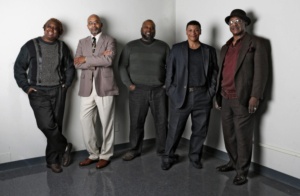
The 5 DNA exonerees from the joint project

The 5 DNA exonerees from the joint project

From the Dispatch:

The five men who were caged in prison cells for a combined 99 years for rapes and murders they didn’t commit stepped into the cramped elevator.

They were meeting for the first time.

As the doors closed, these members of an exclusive club smiled at one another and remembered when their lives were confined to cells only a little bigger than the elevator.

DNA testing has given Robert McClendon, Joseph Fears, Ray Towler, David Ayers and Doug Prade their freedom, but not the time they lost.

“You can’t reclaim the life you had; you just try to fit into the new one as best you can,” McClendon said. “When people hear about our cases, I hope they don’t think of us. I hope they think of the other innocent people locked up in prison. DNA testing has helped a lot, but there is a lot more that can be done in the future to help the criminal-justice system.”


The five men were freed following The Dispatch series “Test of Convictions,” which exposed Ohio’s flawed evidence-retention and DNA-testing systems.

The series’ five-year anniversary this past week took on greater significance when a Summit County judge declared that Prade, a former Akron police captain, is innocent of murdering his ex-wife. Prade’s DNA didn’t match the DNA on a bite mark left by the killer.

Prade’s case was one of more than 300 The Dispatch reviewed with the Ohio Innocence Project. The project highlighted the cases of 30 prime candidates for testing and arranged for free testing with the DDC DNA Diagnostics Center in Cincinnati. Immediately after its publication, attorneys for the Innocence Project filed applications for testing on behalf of the inmates.

McClendon, 56, of Columbus, was the first to be exonerated, in August 2008. Fears, 65, of Columbus, was freed in March 2009. Towler, 55, of Cleveland, was exonerated in May 2010. Ayers, 56, was released in September 2011, and then Prade, 66, followed last week.

Four men also have been proved guilty, seven were denied testing and in 10 cases, the testing was inconclusive.

For a few others, the testing and slow legal process continue.

One of those inmates is Akron native Dewey Jones, who had his 1995 murder conviction overturned last year after DNA testing results excluded him. Jones is still in prison pending appeals, awaiting word on whether he will receive a new trial.

Another is Robert Caulley of Columbus, who was convicted in 1997 of killing his parents but granted a new trial last year after it was learned that his trial attorney had a sexual affair with his then-wife before, during and after his trial. The Ohio Supreme Court is now considering an appeal by the Franklin County prosecutor’s office in Caulley’s case.

DNA testing has helped set free 303 wrongly convicted inmates across the country, and more states continue to embrace laws that make it easier for inmates to receive a test.

After the Dispatch project, Ohio passed what is considered to be among the strongest laws in the nation to protect against future wrongful convictions.

Experts in the system say the law has had great impact in preserving and Continue reading

Resistance to Innocence in Ohio…

From Cleveland.com:

Soon after Summit County Common Pleas Judge Judy Hunter exonerated Douglas Prade last week in the slaying of his former wife, prosecutors announced they would appeal.

At the same time, Cuyahoga County prosecutors said they would continue to appealJoseph D’Ambrosio’s case — days after a judge ruled that he was wrongfully imprisoned for a slaying that put him on death row for about 21 years.

The cases highlight a mindset under which some prosecutors have continued their legal assaults on defendants after judges — following thorough, articulated reviews — attacked government attorneys as lacking even the basics needed to take their cases to trial.

And in the case of Prade, the judge went so far as to declare him innocent.

It has raised a growing concern about whether prosecutors are out to seek justice, as they are sworn to do, or to win cases at all costs.

“There is a litany of cases where some prosecutors have fought to keep convictions rather than work to find justice,” said Michael Benza, a law professor at Case Western Reserve University who also represented Brett Hartman. The state executed Hartman in November for the slaying of a woman in Summit County.

“It’s very difficult for some prosecutors to admit that they have made a mistake,” Benza said. “If you make a mistake in this case, how many other mistakes have you made?”

Defense attorney Terry Gilbert, who has represented D’Ambrosio in civil cases, agreed: “They hate to lose, and sometimes it’s difficult for them to accept responsibility when they are wrong.

“That’s a bad rap and a misconception,” said Ronald O’Brien, the Franklin County prosecutor and the president of the Ohio Prosecuting Attorneys Association. He said he welcomes any piece of evidence in any case his office prosecutes to be tested. “Prosecutors have a different role. They have to seek justice, not win cases.”

O’Brien has been hailed as a model for his open-mindedness and cooperation in dealing with defense attorneys seeking to have evidence tested.

“He’s what a prosecutor should be,” said Michele Berry, a defense attorney in Cincinnati, who has dealt with O’Brien’s office in the past. “Believe it or not, there are prosecutors who are not open-minded to the fact that mistakes can be made.”

So why do some prosecutors keep pushing cases after judges ruled so decisively against them?

“Because the judge might be wrong,” said John Murphy, the executive director of the prosecuting attorney association. “That’s why we have appellate courts. If we believe there is a genuine issue, we have to take it to the appeals courts.”

But some prosecutors don’t wait for appeals courts.

In an unprecedented move, then-U.S. Attorney Greg White asked judges to release more than a dozen people from prison after a botched drug case. In 2008, White made the move based on lies and phony drug deals by an informant who worked a Mansfield drug investigation.


DNA convinced judge Geoffrey Mearns is the president of Northern Kentucky University, the former provost of Cleveland State University and a former federal prosecutor. He said prosecutors persisting in a case in light of a judge’s decision raises some concern of whether they are out to win cases or seek justice.

But he stressed that each case must be judged on its own facts, as opposed to making categorical judgments about prosecutors as a group.

“Are there cases where that criticism is valid? Yes,” Mearns said. “But there are a lot of cases, many more, I believe, where prosecutors have consented to or initiated dismissals in light of new DNA evidence.”

On Tuesday, Hunter, the Summit County Common Pleas judge, exonerated Prade, 66, of Akron, enabling him to leave prison after spending 15 years there. In 1998, a jury convicted Prade of aggravated murder in the slaying of Margo Prade, his former wife. A judge sentenced him to life in prison.

Hunter said in her 26-page ruling that conclusive new DNA test results, as well as evidence from the trial, convinced her that responsible jurors could not convict Douglas Prade.

Based on that, she said, “the outcome of the deliberation of these offenses would be different,” Hunter wrote. “The verdict forms would be completed with a finding of not guilty.”

Summit County Prosecutor Sherri Bevan Walsh quickly announced that her office will appeal the decision. She said in a statement that DNA experts from the Ohio Bureau of Criminal Investigation interpreted the test results as “insufficient and unreliable and most likely proof of contamination or mistakes.”

While Summit County prosecutors are planning the appeals in Prade’s case, the appellate process marches on for D’Ambrosio.

Cuyahoga County County Common Pleas Judge Michael J. Russo ruled Jan. 11 that D’Ambrosio, 51, of North Royalton, was wrongfully imprisoned for the slaying of Anthony Klann. The decision means he can seek reimbursement from the state for his 21 years of imprisonment.

Days after Russo’s decision, prosecutors said they would appeal.

Money for D’Ambrosio If successful in obtaining the reimbursement, D’Ambrosio could receive more than $1 million from the Ohio Court of Claims. The court hears civil cases filed by residents against Ohio and its agencies.

Prosecutors have appealed several decisions involving D’Ambrosio since a federal judge overturned his conviction in 2006, ruling that prosecutors withheld evidence that might have exonerated him at 1989 trial. Four years later, Judge Kate O’Malley barred prosecutors from trying him again because they failed to disclose the death of a key witness.

A three-judge panel had found him guilty of killing Klann, whose body was found floating in Doan Brook in Cleveland’s Rockefeller Park.

Also last month, in a less noticed filing, prosecutors urged Cuyahoga County Common Pleas Judge Cassandra Collier-Williams to throw out a ruling by her predecessor to have D’Ambrosio’s case sealed. Judge Joan Synenberg, on her last day in office last month, ordered the case sealed. Prosecutors argued it would interfere with pending civil suits D’Ambrosio filed.

“Even with a no-brainer like an expungement, they can’t seem to let it go,” said Gilbert, who has represented D’Ambrosio in civil cases.

Matthew Meyer, an assistant county prosecutor, said in a statement: “We are appealing the wrongful imprisonment and expungement rulings. We are confident that we have the evidence to win both.”

D’Ambrosio isn’t alone in fights with prosecutors. Consider:

Darrell Houston, 44, of Cleveland who was awarded nearly $380,000 from the Ohio Court of Claims last month. That’s about half of the amount he is expected to be compensated for spending 16 years in prison for a 1991 slaying of a deli owner that he didn’t commit. He can obtain more money for lost wages and other expenses, an amount that must be litigated.

Last year, Cuyahoga County Common Pleas Judge Carolyn Friedland ruled that Houston was wrongfully convicted in a case built on the word of a witness, who said the killer of Said Ali looked like Houston. A jury convicted Houston in 1992, and he was sentenced to 33 years to life. The witness identified another man and said Houston was not involved.

In 2007, a judge ordered a new trial based on the witness, who said he feared for his life that the real robber would kill him and his family. At a second trial, the witness’ testimony prompted prosecutors to seek a dismissal of charges.

Houston later filed suit against the state, citing the fact that he was wrongfully imprisoned. Friedland handled the case and ruled in his favor. Prosecutors appealed the decision and brought up issues that linked Houston to the store.

The 8th District Court of Appeals upheld the decision last year, saying Houston had “demonstrated his innocence by a preponderance of the evidence.” Houston then took his case to the Ohio Court of Claims. The Ohio attorney general’s office is litigating how much Houston is to be paid.

Raymond Towler, 55, of Cleveland who was awarded $2.5 million in a settlement with the state after spending 29 years in prison for a rape of an 11-year-old girl at the Rocky River Reservation of the Cleveland Metroparks. A Cuyahoga County Common Pleas Court jury convicted him in 1981, and a judge sentenced him to life in prison.

In 2004, Towler, through the Ohio Innocence Project, pushed for DNA testing of the victim’s underwear. Towler was excluded. Then-Cuyahoga County Prosecutor William Mason’s office fought efforts to give Towler a new trial, claiming the testing was inconclusive.

Further testing excluded Towler, and his conviction was thrown out in 2010. He sued for wrongful imprisonment within days of his release from prison. A year later, his attorneys and government lawyers agreed to the settlement.


 

Friday’s Quick Clicks…

click

A Day in the Life of the Mid-Atlantic Innocence Project

From source:

While a 1L, Susan Friedman learned of a critical National Academy of Sciences report on the strengths and weaknesses of forensic science in the courtroom. Susan, who came to law school with two science degrees (a Bachelor’s in Biochemistry and a Master’s in Biomedical Sciences) and a passion for public interest law, was in the market for something that would combine her science background with her interest in service. She wasted no time; at the beginning of her 2L year, she contacted the Mid-Atlantic Innocence Project and ended up interning there throughout the rest of her time at law school. After law school, Susan was awarded an Equal Justice Works Fellowship to continue her work with forensic science reform and wrongful convictions at the Mid-Atlantic Innocence Project.  

5:30 a.m. On days that I have to visit a client at the prison I wake up early. While some of the prisons I go to can be within an hour of my office, the one I drive to most often is two and a half hours away.

7:00 a.m. I’m out the door, buy a cup of coffee, and hit the road to make a 10 a.m. meeting with a client. Prisons are very particular about visiting hours, and I want to make sure I have enough time to meet with everyone I set up an appointment to see.

8:00 a.m. On non-visit days, I get to sleep in a little! But I try to leave the house by this time at the latest since the commute to my office takes about an hour.

9:00 a.m. On non-visit days, I arrive at the office and prepare for a case meeting with our legal staff and case investigator. During case meetings, we discuss issues we are dealing with in the cases we’re investigating, and provide updates to each other on our own cases. The Mid-Atlantic Innocence Project serves Maryland, DC and Virginia, and I focus on the Maryland cases; regular communication is essential since we handle so many cases.

10:00 a.m. On visit days, I meet with my client at the prison. I update him on the status of his case: how the investigation is going, the documents we need and witnesses we’re looking for, what I’m working on and what to expect next. Because innocence cases take so many years to sort out, it’s common for lawyers working on these types of cases to develop a close relationship with the client’s family, and often I will communicate with the family before and after the client visit as well.

Because the prison is so far away, I try to schedule meetings with three or four indivduals in the same day, if I have time. Sometimes I need to interview a witness there for another case I’m working on or talk to a defendant whose case the Project is considering accepting. When I interview a witness, I’ll bring legal interns from the Project along with me, not just because it’s a great learning experience for them, but also because it’s a good idea for me to have my own witness to my interview with the case witness.

12:30 p.m. Multitask while eating lunch—check my e-mails, return phone calls. On non-visit days, case meetings usually go until lunchtime. If the investigator is in the office that day, he and I may also meet during this time. He might give me an update on a witness he’s spoken with, and I might request him to see a certain witness or track down some documents for me.

1:00 p.m. On visit days, I always leave by this time because the prison follows its own tight schedule for inmates. If I’m by myself, I’ll grab a quick lunch before beginning the long drive back. If I’m with interns, we’ll go out to lunch together and debrief. I’ll answer any questions they may have, ask what their impressions were and if they have any ideas or strategies for dealing with the case.

2:00 p.m. Spend time writing a petition for a Writ of Actual Innocence for a client or work on my judicial forensic science training manual. I do a lot of writing when I’m in the office. As part of my fellowship, I’m writing a manual that is primarily for judges, but I anticipate it to be useful for all stakeholders on how forensic science and the law interact in the criminal justice system. A big part of my fellowship is litigating cases where there has been a misuse of forensic science. My cases involve non-DNA evidence such as microscopic hair analysis, firearm mark analysis and gunshot residue. While forensic science is a valuable tool, it has gone unchallenged for a long time, and not been held to the same standards as other scientific disciplines. My manual is designed to make science a little less scary for judges and stakeholders and to encourage them to really analyze the science and expert testimony, challenge it if necessary, and hold it to rigorous evidentiary standards.

When I’m not writing, I often hold conference calls with experts and co-counsel in my cases. The Project co-counsels on most cases with law firms in the area, so I often have calls with other attorneys who work on cases with me. After I’m done with phone calls, I take the afternoon to look into any cases that I was assigned during case meeting. Usually, the case has forensic science issues, so I focus on the expert testimony, look at the facts, and try to determine if the forensic science testimony is credible or if the case needs further investigation.

4:00 p.m. On visit days, I get back to the office. I like to record the events of the day while the details are fresh in my mind. Afterwards, I want to see what I’ve missed being out of the office all day, and hope that documents from police departments or crime labs arrived.

7:00 p.m. Head home for the night. Whether I spent most of my time in the office or out, it’s the end to a long, rewarding day! My clients are incredibly strong, inspiring people who motivate me to work hard every day.


Thursday’s Quick Clicks…

click
  • In this week’s Ohio exoneration of Douglas Prade, Prade’s daughters believe he is innocent; and the Cleveland Plain Dealer tells prosecutors they should take another look at the evidence and let the case drop
  • A grand jury investigating the death of 6-year-old beauty queen JonBenet Ramsey voted to indict her parents 13 years ago, but the district attorney in Boulder, Colo., refused to prosecute the case
  • In New Zealand, David Bain has filed a claim today at the High Court in Auckland against the Minister of Justice over the way she handled his compensation case.  Bain supporter Joe Karam said Bain is seeking a judicial review of the actions taken by Judith Collins since she received a report in late August 2012 by former Canadian judge Ian Binnie into whether Bain should get compensation for spending more than a decade in jail, including the “secret process” which culminated in the peer review by New Zealand lawyer Robert Fisher.

Friday’s Quick Clicks…

click
  • Mississippi Innocence Project close to solving cold murder case that authorities have not been able to solve
  • Documentary film raises awareness of wrongful convictions in the Philippines
  • William Lopez freed in NYC after federal judge throws out conviction, saying case was “rotten from Day 1.”
  • Review of documentary film West of Memphis
  • Bennett Barbour was exonerated in Virginia and then died of cancer before he could be compensated, leaving family with unpaid legal bills; now a bill is pending to compensate the family
  • Review of play Innocence Lost
  • Duke Innocence Project seeks to exonerate Charles Ray Finch

Breaking: Three Exonerated in NYC…

From gantdaily.com:

New York, NY, United States (4E) – Three men imprisoned for almost 18 years for two murders they long claimed they did not commit were released Wednesday night in Bronx, New York.

According to reports, a judge granted the prosecution’s request to vacate the last remaining convictions, allowing Michael Cosme, Devon Ayers and Carlos Perez to walk free without bail.

The men were convicted for the slayings of a taxi driver and a Federal Express executive in 1995 but almost two decades later, two former gang members confessed to the murder of the cab driver, although the conviction on the Federal Express executive’s murder remained.

But because the murder of the cab driver, Baithe Diop, and the executive, Denise Raymond, happened in the area only three days apart, the conviction for the executive’s murder has become questionable.

The New York Times reported that assistant district attorney, Nicole Keary, addressing Justice Denis J. Boyle of State Supreme Court on Wednesday said that problems with some of the evidence that had been used against the men determine that “the convictions then must be vacated.”

At the prosecution’s request, the indictment was not dismissed and a hearing was scheduled in 90 days to check if the prosecutors would have new evidence to justify a second trial.

Breaking News…Ohio Judge Throws Out Murder Conviction in False Confession Case…

This morning, an Ohio judge tossed the conviction of longtime Ohio Innocence Project client Glenn Tinney, finding that he falsely confessed to the murder of Ted White, and that his conviction was a “manifest injustice.”  Tinney has spent more than 20 years in prison.

OIP staff attorneys Donald Caster and Karla Hall have handled the case for the OIP over the years, with Donald doing a superb job in the recent evidentiary hearing.

Decision here, first news accounts here.

More details to follow…

Wednesday’s Quick Clicks…

click

Monday’s Quick Clicks…

click
  • The Innocence Project recently filed a motion on behalf of Texas death row inmate Larry Swearingen seeking DNA testing of crime scene evidence that could support his longstanding claims of innocence. Swearingen, who is scheduled to be executed in six weeks on February 27, has been requesting the testing of the ligature used to strangle the victim, her fingernail scrapings, clothing and other evidence for years. As the motion notes, the current DNA testing statute was expanded by the Texas legislature in direct response to Swearingen’s unsuccessful requests for testing.
  • Will New York implement wrongful conviction reforms?
  • Exoneree Audrey Edmonds talks about her new book
  • Priest exonerated in Wales 350 years after his death

Friday’s Quick Clicks…

click

New Scholarship Spotlight: To Walk in Their Shoes: The Problem of Missing, Misunderstood, and Misrepresented Context in Judging Criminal Confessions

Professors Richard Leo and Deborah Davis have posted the above-titled article on SSRN.  Download here.  The abstract states:

Focusing on failures to detect false confessions, this article addresses the issue of police contamination, which has been explored in previous work by the authors as well as in Brandon Garrett’s recent book, Convicting the Innocent: Where Criminal Prosecutions Go Wrong. The authors review some of Garrett’s most important findings, considering them in light of the authors’ own model of seven pathways from false confession to wrongful conviction. The authors review these pathways (the biasing effects of confession evidence; tunnel vision and confirmation biases; motivational biases; emotional influences on thinking and behavior; institutional influences on evidence production and decision-making; incorrect relevant knowledge; and progressively constricting relevant evidence), which they argue have the effect of providing incomplete and/or inaccurate contextual information for evaluating the validity of confessions and thus interfere with the rational analysis of the information that is available. The authors conclude by arguing that the judicial system must take more care in evaluating defendants’ claims of contamination in false confessions.

Wednesday’s Quick Clicks…

click

Can Ohio Handle the Truth About the Tyrone Noling Case?

From The Atlantic:

There are four hard truths in Tyrone Noling‘s unenviable life. The first three form a part of his past that he can never get back: bad choices and decisions he made, or that were made for him, which have put him where he is today. The fourth truth is the biggest part of his present, and will surely determine his future — or whether he even has a future. Noling is on Ohio’s death row, and has been since 1996, for a crime he says he didn’t commit; a crime to which he is linked by so little reliable evidence that a federal appeals court last year went out of its way to express “concern” about the accuracy of Noling’s conviction.

The first truth in Tyrone Noling’s life is that an elderly couple named Cora and Bearnhardt Hartig were murdered in their home in 1990. The second is that Noling, then a teenager, was convicted of the murders despite passing a lie detector test — even though there was no physical evidence linking him to the Hartigs and the witnesses against him, co-defendants, were so unreliable that prosecutors initially dropped the charges against him. The third truth about Noling is that Ohio won’t allow his attorneys to DNA test a cigarette found at the scene, evidence, the defense suggests, which might determine who might have killed the couple.

The fourth truth is unfolding now. Last Tuesday, for about half an hour, the Supreme Court of Ohio heard oral argument in the Noling case. His lawyers are asking the justices to recognize a broad application of a new state law designed to encourage DNA testing in cases like these. Prosecutors, claiming the butt is Continue reading

Monday’s Quick Clicks…

click
  • Center on Wrongful Convictions at Northwestern University 2012 report, outlining 5 exonerations during 2012
  • Judge in Texas considering new trial in arson case of Ed Graf
  • Charges dropped against detective accused of lying in the Tim Masters wrongful conviction case in Colorado
  • Wisconsin Innocence Project wins new trial for Seneca Malone, in prison for murder, based on ineffective assistance of counsel
  • RIP exoneree Bennett Barbour

Thursday’s Quick Clicks…

click