Author Archives: Mark Godsey

Wednesday’s Quick Clicks…

RIP Exoneree James Woodward…

From CBSDFW.COM :  DALLAS  – James Woodard’s name resonates with any exoneree in North Texas.  He was one, and spent the last several years helping others.

Woodard, 60, was the 17th Dallas County Inmate freed by DNA testing.

He was serving a life sentence for the murder of Beverly Jones.

After serving 27 years behind bars for the murder conviction he walked out of court a free man in April of 2008.

“It’s a good day! April 29th, 2008, I never forget it,” he said walking out of a Dallas courtroom that day.

Woodard was back in jail in late August after being arrested.

After responding to a traffic accident, Carrollton police arrested him for several outstanding warrants.
Investigators say after searching him they found cocaine.

Over the past weekend Woodard, who suffered from seizures, was rushed from the Dallas County Jail to Parkland Hospital, where he died.

Those close to him want to know what happened.  “It’s a loss that we can’t get Continue reading

Fingerprint Misidentification Leads to Wrongful Conviction in Indiana…

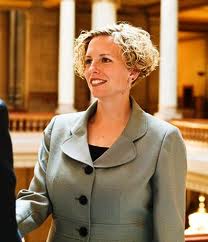
Cara Wieneke

Congrats to Indiana post-conviction attorney Cara Wieneke, who had a murder conviction thrown out last week after proving that her client had been convicted based on a fingerprint misidentification.  After learning of the story (here’s a news clip), I asked her to write a more detailed account.  Here is what she wrote:

State of Indiana v. Lana Canen

On Thanksgiving 2002, Helen Sailor, an elderly woman living in Elkhart, Indiana, was found dead in her apartment. Because her apartment had been ransacked, police believed robbery was the motive for the killing. They found several latent prints, including one on a plastic container that held Sailor’s prescription medication.

Police had few leads, however, and the case went cold. Several months later, the Elkhart Police Department created a homicide unit and decided to reopen the investigation of Sailor’s death as one of its first cases. Police focused on Lana Canen, a tenant in Sailor’s apartment building.

Police contacted Dennis Chapman, a detective with the Elkhart County Sheriff’s Department, to conduct a comparison of the latent print found on the plastic container with Lana’s fingerprints. Detective Chapman had some training in print classification and ten-print examination, but he had no training in conducting latent print comparisons. After conducting his examination, he concluded Lana was the source of the latent print.

Lana steadfastly maintained her innocence and said she had never been in Sailor’s apartment. Police knew Lana was physically incapable of killing Sailor, so Continue reading

Exoneration in North Carolina for Willie Grimes…

I failed to report on this case earlier because I was out of the country.  But congratulations to the North Carolina Center on Actual Innocence for their wonderful work on this case…

From the Hickory Record:

It took the three-judge panel less than 30 minutes to decide that Willie Grimes was innocent of a 1987 rape conviction for which he had served more than 24 years.

Judge David Lee read the panel decision, and said the charges of rape and kidnapping were dismissed, as well as having his name removed immediately from the sex offender registry. Then Lee paraphrased the Rev. Martin Luther King’s famous 1963 speech and said, “Free at last! Free at last! Thank God Almighty. Thank Jehovah, Willie Grimes is free at last!”

District Attorney Jay Gaither told the judges, “The State cannot argue any conclusion other than for the innocence in the case of Willie Grimes.” He then Continue reading

Tuesday’s Quick Clicks…

  •  In Canada, appellate court overturns exoneration that had been based in part on the unreliability of bite mark evidence
  • In Massachusetts, exoneree Shawn Drumgold (who had previously served more than a decade for a murder he didn’t commit) acquitted of drug charges
  • Ohio man who served 8 years in prison for a crime he says he didn’t commit, sues state for alleged bogus testimony of toxicologist who put him behind bars
  •  In Ohio, oral arguments set for January 8th in front of Ohio Supreme Court in the case of Tryone Noling; the Ohio Innocence Project seeks DNA testing in the case
  • Profile of the Innocence Clinic at Wake Forest University
  • Controversial documentary ‘The Central Park Five’ plays at Chicago film festival as lawyers demand filmmaker Ken Burns turn over footage so city can defend itself in $250M federal lawsuit
  • Exoneree Edwin Arnell Chandler of Kentucky given $8.5 million in compensation by state of Kentucky
  • Exoneree James Bain speaks today at Florida Southern College

Spotlight on Arizona Innocence Project…

Students in the Arizona Innocence Project

From Arizona Daily Sun:

Chris Duarte and Ryan Staab put in the legwork.

And based upon their work, they are convinced that a Prescott man was wrongfully convicted of manslaughter in the shooting of another man near his home.

Now, the case is seeing new light in the courts.

What happens in the end has yet to be determined. But Jason Derek Krause, who has served his 10 1/2 year sentence and now lives a quiet life, would like the system that convicted him to acknowledge his innocence.

“This is a man who lost his life, and I’d like to see him get his life back, above all else,” Duarte said. “I know in my gut and my soul this is an innocent man.”

Staab added, “He just wants a piece of paper that says he’s free and clear.”

Welcome to a day in the life of the Arizona Innocence Project at Northern Arizona University.

THE GAMUT

“No longer are these cases hypothetical,” said Professor Robert Schehr, executive director of the AIP.

The students who sign up for the AIP class are undergraduates who are close to Continue reading

New West Virginia University Innocence Project…

Welcome to innocence movement, West Virginia University Innocence Project! For those of you unfamiliar with this new initiative, here is a recent story about its founding:

CHARLESTON, W.Va. — After 11 years in a Mississippi prison, Leigh Stubbs and Tammy Vance were exonerated earlier this year of charges that they brutally assaulted another woman and left bite marks all over her body.

Stubbs and Vance were convicted in 2001 on charges of aggravated assault and drug possession and sentenced to 44 years in prison, at least partly because a discredited forensic bite-mark analyst gave bogus testimony during their trial that pinned them to the attack, Stubbs’ lawyer, Valena Beety, told the Gazette-Mail.

Beety is now the director of the West Virginia University Innocence Project, a new legal clinic affiliated with a national organization of criminal defense lawyers who help prisoners fight wrongful convictions.

“You get to feel great about what you do — push through all the obstacles that are in your way,” Beety said. “And when you get someone out of prison, it’s amazing.”

In the case of Stubbs and Vance, forensic odontologist Michael West testified during their trial in the early 2000s that bite marks found on the victim matched their dental records. West also told jurors that security camera footage depicted the two women carrying out the attack.

Prosecutors sent the video to the FBI for analysis. Federal investigators returned with a 20-page report that said they couldn’t tell if the people were men or women and that they didn’t appear to be engaged in any illegal activity.

The state, however, did not disclose that report to Stubbs and Vance. A Mississippi judge overturned their convictions earlier this year, and West has since admitted that his bite-mark analysis in the case was not sound.

Beety and recent University of Chicago Law School graduate Kristen McKeon, who is helping with cases as part of a yearlong fellowship, will handle the bulk of the casework for the WVU clinic. The clinic’s four law students are charged with screening applicants for the program, Beety said.

“We’re focusing as a project on freeing innocent people who are in prison, but also on policy problems, systemic problems that lead to wrongful convictions, and making eyewitness identification more reliable,” she said.

Seventy-five percent of the 297 prisoners exonerated through DNA evidence since 1989 were convicted because they were mistakenly identified as suspects, according to figures from the national Innocence Project, which is based in New York.

WVU’s clinic is still new, Beety said, so they haven’t received many applications for post-conviction help, but she has been reaching out to prisons, public defender offices and other avenues for leads on potential cases.


Monday’s Quick Clicks…

  • Judge in Philippines who believed man may have been wrongfully convicted re-opens case on motion of defendant, and then gets removed from office because the law in the Philippines does not recognize the re-opening of criminal cases after conviction
  • A Kentucky judge has denied Susan Jean King’s motion for a new trial on charges that she killed her ex-boyfriend, despite finding that another man who recently confessed to the crime provided a “startling level of detail about the murder.”  Spencer Circuit Judge Charles R. Hickman said the confession with “reasonable certainty” would change the result if King were granted a trial.  But he declined to order one because she pleaded guilty in 2008, while maintaining her innocence, and wasn’t convicted at trial.  “A motion for a ‘new trial’ logically suggests that there was an ‘old trial,’ and that is not the case ,” Hickman ruled Friday in an eight-page order.  King’s lawyer, Linda A. Smith, director of the Kentucky Innocence Project, said she was “beyond disappointed” in the ruling, which she said didn’t serve “the greater purpose of justice.”
  • Malta’s pre-trial system slammed as unjust
  • The four myths that convicted Amanda Knox
  • The Innocence Network UK’s fall 2012 newsletter available here

New Scholarship Spotlight: Examining Shaken Baby Syndrome Convictions in Light of New Medical Scientific Research

Innocence Network president Keith Findley has posted the above-titled article on SSRN.  Download piece here.  The abstract states:

This is the text of a talk given by Keith Findley as part of the Integris Law & Medicine Lecture Series at Oklahoma City University School of Law on September 27, 2011, with commentary by Dr. Patrick Barnes, Professor David Moran, and Professor Carrie Sperling. The talks address controversies that have arisen in the past ten or twelve years over the diagnosis Shaken Baby Syndrome (SBS) (now known also more expansively as Abusive Head Trauma (AHT)) and prosecution of individuals based on the hypothesis that the child was injured or died after an adult caregiver violently shook the child. The talks examine the science-dependent nature of prosecutions (or child removal actions) based on the shaking hypothesis, as well as emerging controversies from new medical research about whether shaking can cause such injuries and death, at least without causing extensive neck and cervical spine injuries; whether the indicators previously attributed almost exclusively to shaking — such as subdural hematomas and retinal hemorrhages — are indeed diagnostic of abuse; whether other causes, both natural and accidental, can mimic abuse and lead medical professionals astray; and whether the onset of clear neurological impairment can reliably be timed to the infliction of injuries so that the medical science can be used to identity the perpetrator (assuming there was one). This talk examines how the legal system is being called upon to re-examine SBS convictions in light of this evolving medical science.


The Fallibility of Human Fact Finding…

This is a really interesting article by a Supreme Court Justice in Australia about how our fact-finding processes are not up to date with current understandings in the field of psychology, etc.   Wish more judges were this enlightened.

Problems with Fact-finding [1]
Justice David Ipp[2]

HE: I can remember everything as if it were yesterday. We met at nine.
SHE: We met at eight.
HE: I was on time.
SHE: No, you were late.
HE: Ah yes, I remember it well. We dined with friends.
SHE: We dined alone.
HE: A tenor sang.
SHE: A baritone.
HE: Ah yes, I remember it well. That dazzling moon …
SHE: There was none that night. And the month was June. [3]

This lyric illustrates the unreliability of human memory as well as the difficulties attendant on making findings of fact. 

Fact-finding is labour on the factory floor of the judicial system. It is not glamorous work. Judgments on fact go unreported; they have no enduring fame. Nevertheless, justice depends on correct factual findings, and a fundamental measure of a legal system is the accuracy and skill with which facts are found. It is curious how little attention has been given to this facet of the judicial task [4]. We accept with a knowing smile the virtual impossibility of remembering with accuracy past events in the ordinary course of life, such as those about which Maurice Chevalier and Leslie Caron so nostalgically sang. Nevertheless, the justice system has, as one of its basic foundations, the assumption that witnesses are capable of accurately describing events that took place years ago, and that judges can reliably tell what evidence is true and what is false. 

Witnesses may be deliberately untruthful, but there may be many other causes of inaccuracy in a witness’s testimony. These include imperfect observation, faulty memory, an over-active imagination, emotional disturbances, self-interest, and other biases. Witnesses may be dishonest about only parts of their evidence. Little is more Continue reading

Thursday’s Quick Clicks…

Powerful Documentary Focuses on Wrongful Conviction in Philippines, Airs in U.S. Tomorrow……

From source:

NEW YORK – “Give Up Tomorrow,” an astonishing documentary about an outrageous miscarriage of justice, comes to PBS on Thursday, Oct. 4.

Produced by Marty Syjuco and directed by Mike Collins, a longtime gay couple living in Brooklyn, N.Y., the documentary is part of the 25th anniversary celebration of the “POV” (“Point Of View”) series on PBS.

The documentary won the Audience Award at the 2011 Tribeca Film Festival and has captivated audiences around the world, including in the Philippines, where the judicial system failed spectacularly in a double murder case.

“Give Up Tomorrow” exposes the corruptness of the Filipino judicial system, the ineptness of its police force and criminal investigators, the stunning lack of evidence in the case, bribery, cronyism, the racial and economic divide within the country, and so many other issues.

In an exclusive interview with San Diego Gay & Lesbian News, Marty Syjuco describes how he and his partner spent more than seven years to complete the project that was fraught with danger and risk. They smuggled a camera into prison so they could get footage from behind bars, and had to figure out ways to get the tapes safely out of the country. They also had unprecedented access to the two central figures in the documentary:

• Paco Larranaga, a 19-year-old college student from a prominent Spanish-Filipino family in the Philippines who is framed for the presumed rape and murder of two Chinese-Filipino girls, whose family wielded important political connections to the nation’s president.

• Mrs. Chiong, mother of the missing girls, who manipulated the Filipino media to her advantage and befriended the one and only star witness who confessed he was part of the killings.

Syjuco said he was helped by his family connections – his brother is married to Paco’s older sister – and their status asmestizos — a mixed race group that traditionally dominates the social and political circles in the Philippines.

SDGLN: Why did you get involved in the making of this documentary?

Marty Syjuco: In 1999 Paco was first sentenced to life in prison. He appealed to the [Philippine] Supreme Court and his family patiently waited for the decision, Continue reading

Wednesday’s Quick Clicks…

Monday’s Quick Clicks…

Running for Re-Election, Prosecutor Tries to Distance Himself from Michael Hash Case…

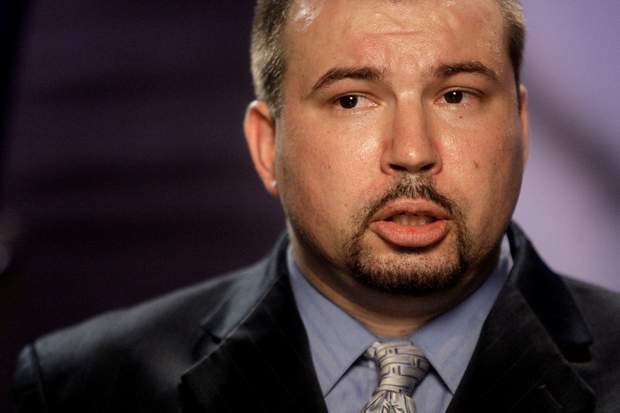
Michael Hash

Wish we saw this type of investigative journalism more often these days….

From Starexponent.com:

Culpeper County Commonwealth’s Attorney Paul Walther assisted as second seat prosecutor in the recently overturned 2001 capital murder conviction of then 19-year-old Michael Wayne Hash, cross-examining four alibi witnesses for the defense and arguing jury instructions with the judge.

The overall outcome of the controversial case resulted in 12 years behind bars for now 31-year-old Hash, freed in March after, by most accounts, enduring wrongful incarceration in violation of his constitutional right to due process, as knowingly perpetuated by the Culpeper County justice system, the record shows.

Walther, up for election in November to the top prosecutor’s seat as Culpeper County’s GOP nominee, continues to downplay his association with the Hash case, and has criticized his opponent, independent Megan Revis Frederick, and the press for making it an issue.

Fact remains, it is an issue regardless of whether or not Walther — widely supported by local and state Republicans as well as the local legal community, the mayor and a prominent local Democrat — wants it to be. The Star-Exponent recently reviewed the 1,300-plus page Hash trial transcript and its entire record on case — including criminal files, newspaper accounts, and personal interviews — in an effort to factually gauge Walther’s exact involvement, as he seeks to become the next gatekeeper to the Culpeper legal system.


The reversal that ignited controversy

For one, Walther, 58, former deputy commonwealth’s attorney, only got the top prosecutor promotion earlier this year because of the reversal by a federal judge in February of Hash’s capital murder conviction in the July, 13 1996 brutal shooting death of church organist Thelma Scroggins in her home in Lignum. Walther, who served under former longtime Culpeper County Commonwealth’s Attorney Gary Close – another prominent local Republican – for more than 20 years, said he never wanted to run for the constitutional office against his friend and boss.

But then Close, who had just won re-election to his sixth term in November, stepped down because of Senior U.S. District Court Judge James Turk’s scathing written opinion of his handling of the Hash prosecution, detailing “extreme malfunction in the state criminal justice system” and saying “the court is disturbed by the miscarriage of justice that occurred in this case.”

Judge Turk, in his extensive 64-page ruling on the matter, granted Hash full Continue reading

Exoneree Jeffrey Deskovic Gives Back…

From source:

It’s not exactly like winning the lottery.

Jeffrey Deskovic’s fortune, a $9 million windfall (minus lawyers’ fees), came because he spent nearly 16 years in prison for a murder he did not commit.

Deskovic was released from a New York state prison in 2006, thanks in large part to the efforts of Mancos resident Claudia Whitman. The DNA at the 1990 crime scene did not match Deskovic. In 2006, the DNA evidence was re-examined, and, in a cross-check of a DNA bank, the true killer of 15-year-old Angela Correa, Deskovic’s high school classmate, was revealed.

This column featured Deskovic and Whitman in 2007. While I tend to wish my subjects well, I don’t always follow up on their lives. In this case, Deskovic called me.

He’s looking to get the word out about what he’s doing with his life. It’s been a struggle, he says, to re-enter society. Imagine entering prison at age 17 and suddenly being freed at 32. When do you learn to be an adult?

Deskovic, at first, felt detached from the world around him. He suffered anxiety attacks. It was too much at once, figuring out how to deal with new technology, how to earn a living, how to make friends. Little by little, he’s learned to cope.

“My mind is much clearer than before,” he said in a recent telephone interview from his office on West 72nd Street in Manhattan.

What the 38-year-old is doing with his life is this:

He took about $1.5 million from the money he was awarded in two court cases and started the Jeffrey Deskovic Foundation for Justice. The nonprofit foundation, launched in March, has four components:

Promoting public awareness of wrongful imprisonment and related issues, urging legislation to reform the system, exonerating innocent prisoners and reintegrating ex-prisoners into society.

The foundation has a legal division, an investigator, an office manager and an assistant director. Then there’s Deskovic himself, a powerful speaker who travels as far as California to bring attention to the issues and the foundation, said assistant director Richard Blassberg. In all there are five staff members and four interns.

For an office, the foundation took a former beauty salon and rebuilt it “from the ground up.” It’s a quick walk to Central Park, and, a tidbit for curious Beatles fans, it’s about a block from The Dakota, where John Lennon lived and was Continue reading

Saturday’s Quick Clicks…

Thursday’s Quick Clicks…

New Scholarship Spotlight: Remapping the Path Forward: Toward a Systemic View of Forensic Science Reform and Oversight

U. of Texas Prof Jennifer Laurin has posted the above-titled article on SSRN.  Download full article here.  The abstract states:

The 2009 report of the National Academy of Sciences on the state of forensic science in the American criminal justice system has fundamentally altered the landscape for scientific evidence in the criminal process, and is now setting the terms for the future of forensic science reform and practice. But the accomplishments of the Report must not obscure the vast terrain that remains untouched by the path of reform that it charts. This Article aims to illuminate a critical and currently neglected feature of that territory, namely, the manner in which police and prosecutors, as upstream users of forensic science, select priorities, initiate investigations, collect and submit evidence, choose investigative techniques, and charge and plead cases in ways that have critical and systematic, though poorly understood, influences on the accuracy of forensic analysis and the integrity of its application in criminal cases. By broadening our understanding of how forensic science is created and used in criminal cases — by adopting a systemic perspective — the Article points to a raft of yet unaddressed issues concerning the meaning of scientific integrity and reliability in the context of investigative decisions that are by in large committed to the discretion of decidedly unscientific actors. Critically, the Article demonstrates that systemic dynamics affecting upstream use of forensic science might well undermine the reliability-enhancing goals of the reforms advocated by the National Academy Report. As the NAS Report begins to set the agenda for active conversations around legislative and executive action to reform forensic science, it is critical to consider these questions. Moreover, the Article suggests that the embrace of science as a unique evidentiary contributor within the criminal justice system problematizes some of the bedrock assumptions of American criminal procedure that have, to date, prevented more robust doctrinal intervention in the investigative stages and decisions that the Article explores.

Wednesday’s Quick Clicks…

  • USA Today article about inadequate compensation for exonerees in U.S.
  • The NYPD and the Innocence Project have been awarded a $1.25 million grant that will help better catalogue evidence for those seeking to prove their innocence through DNA testing.  The money, awarded by the National Institute of Justice, will be distributed over two years
  • LAPD Police Chief responds to recent exoneration under his watch
  • Wall Street Journal: Academic study shows innocent plead guilty at a high rate