Author Archives: Mark Godsey

Weekend Quick Clicks…

Conviction Tossed in Another Chicago False Confession Case

Here’s a great email to receive this week—from David Owens, attorney for Patrick Prince…

Mates:
I’m a little late in reporting, but last Thursday, in an exceptionally courageous decision, a Cook County judge granted post-conviction relief to Exoneration Project client, Patrick Prince. After a evidentiary hearing, Judge Wilson found that we’d met the actual innocence standard and vacated Prince’s conviction. The opinion can be found here, and is attached. Still unsure whether the state will seek a retrial or dismiss the charges.
Mr. Prince has been imprisoned since 1991, when he was just 19. There was one—and only one–piece of evidence that tied him to the crime: a confession notorious Chicago Detective Kriston Kato coerced out of him after an evening of interrogation and abuse. Detective Kato has been accused of abusing more than 30 people (indeed, witnesses and not just defendants), nearly 1/3 of whom were never charged, acquitted, or had their convictions overturned.
An additional “Chicago style” wrinkle:  In Chicago, after a suspect agrees to give a statement, a “Felony Review” Assistant State’s Attorney comes to the police station to memorialize the confession, even if it’s 5 in the morning as it was in this case. Then, the felony review ASAs testify—almost identically from case to case—at suppression hearings that the defendant seemed fine, not abused, was treated well by the police, etc. It is completely bogus, and a part of the deep corruption here. These felony review ASAs must play ball with the detectives, or they don’t move on to the trial division, which is what leads to the homicide division and, of course, later being elected as a Cook County judge….
This is why I described the opinion as courageous.  In this case, the felony review ASA was a women named Dominica Stephenson.  Ms. Stephenson is a sitting judge in the same building as our judge. She was represented in the hearing by “Special State’s Attorneys” from Skadden. Truly remarkable. If that weren’t enough, Detective Kato is married to a different sitting judge in the building who parks next to Judge Wilson. So, in addition to the legal hurdles we had to overcome, we had to persuade our judge to ignore the political pressure of  26th and Cal. It is not lost on me that this opinion would have been impossible had he been a former ASA in Cook County.
A final note that makes this case pretty great: University of Chicago law students were involved at every step—from intake, to pleadings, and to putting on witnesses in our evidentiary hearing. In addition to the great news for our client, it was truly rewarding to see the students learn so much, and gain an appreciation for the importance of this work hands on.
Cheers,
David Owens
Earlier coverage of case here.

A very moving story about the final days of Darryl Hunt…

…He was a celebrated exoneree who so sadly committed suicide.

Story here.

Wednesday’s Quick Clicks…

Breaking News: Exoneration in Michigan

From an email sent by Dave Moran:

The Michigan Innocence Clinic is thrilled to announce the exoneration and release today of our client, Marwin McHenry, who served more than four years for a shooting he did not commit.

Mr. McHenry’s conviction of assault with intent to murder and other charges arose from an incident that occurred in Detroit in July 2012 as two groups of young women (the Bohanens and the Woodwards) prepared to fight in the street. Just as the two groups approached each other, a man stepped out from a car and opened fire, wounding one of the Bohanens. The victim told the police that she believed the shooter was the brother of one of the Woodwards, but the police showed her instead a photo of Marwin McHenry, and she picked him as the shooter. Two other Bohanens also picked Mr. McHenry’s photo. There was no evidence against Mr. McHenry other than these eyewitness identifications.
At trial in 2013, the defense presented one of the Woodwards, who testified that her brother (Bosley) was the shooter, but Mr. McHenry was convicted and sentenced to 16-27 years. At a post-verdict motion for new trial, the defense presented Bosley’s mother and another sister, who also swore that Bosley was the shooter, but the judge found them not credible.
Finally, Bosley himself went to the Wayne County Prosecutor’s Office, spoke to an investigator, and swore under oath that he was the shooter. The prosecutor’s investigator interviewed other witnesses, including some on the other side of the Bohanen-Woodward feud, who confirmed that Bosley was the shooter and had repeatedly admitted the shooting to others. The prosecutor’s investigator also arranged for the key witnesses, including Mr. McHenry, to take polygraphs.
In light of all of this evidence, Kym Worthy, the Wayne County Prosecutor, agreed that Mr. McHenry’s conviction should be vacated and the charges dismissed. The judge signed the order this morning, and Mr. McHenry was released and picked up by his family about 1:00 p.m.
In addition to the prosecutor’s investigators, two of our students, Sarah Precup and Brooke Theodora (both of whom will graduate on Friday), did terrific work on this case speaking with witnesses, drafting pleadings, and counseling the client.
Dave Moran
Michigan Innocence Clinic

Weekend Quick Clicks…

Friday’s Quick Clicks

  • This is weird.  Bill pending in Tennessee would allow inmates cleared by DNA testing to bypass the governor and be exonerated by the legislature.  Articles suggest currently governor is only options for such inmates.  A quick look at the Tennessee rules seems to suggest that such a motion could only be brought in the court system if it were made within 30 days of sentencing.  WTH?  That’s awful.  Tennessee needs an innocence organization to fix that situation and get a real “motion for new trial” rule passed in that state.
  • ‘Global epidemic’ of US-style plea bargaining prompts miscarriage warning
  • Oklahoma Commission Issues Report Findings: ‘It is undeniable that innocent people have been sentenced to death in Oklahoma’
  • Exoneree Marty Tankleff passes the NY bar exam!!!

Synthesized Testimony

From the Blind Injustice Facebook group:

Blind Injustice Chapter 5 titled Blind Memory discusses “synthesized testimony,” which occurs when police officers, many times unwittingly, take advantage of the malleability of human memory to bend and shape witness statements to fit their theory of the case. Many times, the witnesses don’t even realize their memories of the case have been contaminated and altered. From this link:

“But investigators manipulated the children’s often-conflicting narratives, dooming Sanborn to 70 years in prison for a crime that, his attorney claims in a new motion for bail filed last week, he did not commit.”

Victory in Taiwan….

From the Taiwan Innocence Project (news story in English here)

:

We are very happy to announce that our client Lin Chin-Kui was ordered released from prison on April 21, 2017.
 
Lin Chin-Kui was convicted for murdering a taxi driver in 2010, and was sentenced to life. In 2013, he reached out to the Taiwan Innocence Project claiming his innocence. 
 
During the investigation the Project found surveillance footage at the scene showing that the killer had long hair down to the shoulder. The Project contacted Lin’s sister to see if there were any photographs taken around the time of the crime. His sister found a ID photo taken 2 months before the incident, and he had short hair in the photo. Due to common sense, it was impossible for a person to grow hair that long in a two months period. TIP further asked for assistance from an expert in electric and computer engineering, who provided advice on facial recognition. The expert conducted a 3D analysis and concluded that it was highly unlikely that that the person in the footage was Lin. 
 
In March 2016, the Project filed a motion for retrial, the court granted retrial on April 18 2017. The court also ordered Lin to be released from prison. Lin walked out from prison on April 21, 2017.


Monday’s Quick Clicks…

Thursday’s Quick Clicks…

Exoneration and Freedom for Evin King in Ohio

Today, prosecutors in Cuyahoga County (Cleveland)  vacated the conviction of long-time Ohio Innocence Project client Evin King.  King was convicted in 1995 of murdering his girlfriend despite no direct evidence of guilt (eyewitness or forensic).  He always maintained his innocence, from arrest and trial and then throughout his 23 years of incarceration.

When he is released, which will hopefully be later this week, King will be the 25th person the OIP has freed on grounds of innocence since its founding in 2003.  Together the 25 innocent Ohioans spent more than 470 years in prison for crimes they didn’t commit.

unnamed

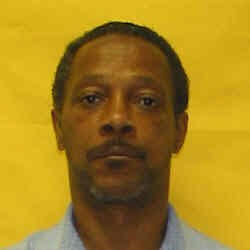
Evin King prison photo

DNA testing confirmed that the semen found in the victim’s vaginal cavity after the attacked matched male skin cells found under her fingernails (a hand-to-hand struggle appeared to have taken place during the attack, as the victim was strangled).  This male DNA in both locations did NOT match Evin King, but rather, an unknown male.
[Watch this moving video of Assistant Clinical Professor Jennifer Bergeron informing Evin King, in prison, that he is about to regain his freedom after 23 years in prison for a murder he didn’t commit…]
Prosecutors had for years failed to respond to King’s motions for relief, even after the exclusionary DNA test results were obtained.  And the trial court sat on King’s post-conviction motions for nearly a year-and-a-half before denying relief.  Fortunately, the 8th District Court of Appeals reversed the trial court’s decision last year and sent the case back to the trial court for a hearing, while specifically observing that the DNA evidence supports King’s innocence claim.  On Friday, the OIP learned that after newly-elected prosecutor Michael O’Malley took office in January, he put new prosecutors on the case to look into it with a fresh eye.  When O’Malley was later informed of the details of King’s case from these prosecutors, he ordered that King’s conviction be overturned and that he be released.
OIP Assistant Clinical Professor Jennifer Bergeron has represented King for many years, as did OIP staff attorney and Ohio Public Defender attorney Carrie Wood (now at the Cincinnati Public Defender’s Office).  OIP student fellows on the case include Taylor Freed, Katie Wilkin, Mallorie Thomas, Joe Wambaugh, Bryant Stayer, Steve Kelly, Morgan Keilholz, Jon Walker, Scott Leaman, Thomas Styslinger, John Markus, and Julie Payne.  The Ohio Public Defenders Office, particularly Kris Haines, worked on King’s case as well for many years.  King’s case is another example of the importance of determination and perseverance, as Bergeron, Wood, Haines, and the students never gave up even though at times King’s prospects appeared bleak given the initial stiff resistance of the trial court and the prosecutors.
OIP co-founder and director Mark Godsey said, “While the initial delay in obtaining justice for Mr. King is disturbing, Michael O’Malley and the Cuyahoga County Prosecutor’s Office deserve credit for turning this case around and correcting an injustice.  As we have seen in other counties with other cases, prosecutors far too often fight back hard against an exoneration even when the evidence of innocence is strong.  But in several past cases in Cuyahoga County, and today with Evin King’s case, the prosecutors in Cleveland put justice above winning.  O’Malley’s involvement in the case since his recent election, along with his decision to put new prosecutors on the case, may have been the pivotal factor that secured freedom for an innocent man, and we are thankful for his heroic intervention.”

Blood test for Shaken Baby Syndrome?

From the Blind Injustice Facebook group:

Blood test for shaken baby syndrome? I would sure like to know more about this. History shows that far too often, in the rush for answers, these newly-developed theories or tests are put into use before they are adequately tested in a controlled environment that considers other factors that could lead to the same blood test results. And that leads to wrongful convictions. If the 2009 National Academy of Sciences report on forensic means anything, it means that we have to be very careful with claims like this…

Article about alleged blood test here.

Weekend Quick Clicks

  • Newspaper articles focuses on cost to taxpayers of “shoddy” and “reckless” police work that led to a wrongful conviction.   That’s the kind of coverage the public needs to see more of–the cost of wrongful conviction to their own pocketbooks, because the cost to the public is high in a variety of ways.
  • One year after release, Keith Harward travels country to point out failures of forensic science, help the wrongly convicted
  • New exoneree compensation law in Michigan provides $50k for each year behind bars

Friday’s Quick Clicks…

Today’s Widespread Use of Pre-Trial DNA Testing Won’t End Wrongful Convictions

From phys.org:

As we enter an era in which DNA evidence is routinely used in criminal investigations, errors that led to wrongful convictions—including mistakes later corrected with DNA tests—may seem to be fading into history. This, however, isn’t true, says law and criminal justice professor Daniel Medwed, who edited the book, Wrongful Convictions and the DNA Revolution, which was published last month.

Many of the underlying issues that plagued the U.S. criminal justice system before DNA evidence rose to the fore still exist, he says, and will continue to produce flawed convictions unless they’re remedied.

Here, Medwed explores some of those procedural deficiencies as well as the deeply rooted sense of justice that animates his work.

Why do wrongful convictions occur, and what are some of the factors that lead to convicting an innocent person?

The phrase “wrongful convictions” could encompass a range of flawed convictions. Yet the concept typically refers to the case of a factually innocent person: Someone who simply didn’t commit the crime for which she was convicted. I think innocence cases largely derive from good-faith mistakes rather than malevolence on the part of, say, police or prosecutors. Those mistakes include eyewitnesses who simply get it wrong; zealous prosecutors who can’t look objectively at contrary evidence because of tunnel vision; suspects who falsely confess to crimes due to cognitive deficits; defense lawyers who are overworked and underpaid; and reliance on forensic “science” that lacks sufficient grounding in the scientific method.

In Wrongful Convictions and the DNA Revolution, you examine what we’ve learned after 25 years of exonerating innocent prisoners through DNA evidence. What are those lessons?

We’ve learned about the substantive factors that contribute to wrongful convictions, as mentioned earlier, but we’ve also unearthed the procedural deficiencies in our system. The more than 300 documented exonerations of innocent prisoners through post-conviction DNA tests from 1989 to 2014 show that the traditional mechanisms of error correction in our system are insufficient. The direct appeal (in which a defendant challenges a criminal conviction secured at the trial level to a higher court), is ill-suited to address errors based in fact as opposed to law. And classic “collateral” remedies, such as habeas corpus, are replete with statutes of limitations and other procedural hurdles too high even for the innocent to clear. Going forward, we need to address both the substantive and the procedural flaws that can yield miscarriages of justice.

What has motivated you to study wrongful convictions and DNA evidence, and what inspires you to keep studying it?

First, inspiration comes from deeply-held personal beliefs. In my view, the hallmark of a civilized society is the extent to which we protect those in the weakest position to defend themselves—most notably, criminal suspects facing the potentially massive power of the government. All too often, criminal suspects are people of color with limited financial resources. This dynamic not infrequently produces disturbing outcomes for the individual, and sometimes results in the conviction of an innocent person. Imagine what it must be like to have the system fail you so dramatically, to have your cries of innocence fall on deaf, cynical ears. Thinking about that provides all the motivation I need.

Second, I feel as if we’re at a unique stage in history. DNA testing is now commonly used at the front end of the criminal process to weed out the innocent before a case even gets to trial. That means post-conviction DNA exonerations of inmates will inevitably dwindle to almost nothing; many of the DNA cases that generate headlines concern prisoners convicted years ago. But a decline in DNA exonerations will not signify that the system has become error-proof. Rather, the factors that initially gave rise to those  will remain and infect criminal cases that lack biological evidence suitable for DNA testing at all. Only an estimated 10 to 20 percent of criminal cases have testable biological evidence at all; what’s more, that  is often lost, destroyed, or degraded over time. So, I think we need to capitalize on the lessons learned from the DNA era to reform the underlying sources of error for all cases. And we need to do this before the rate of DNA exonerations wanes too much and the public gets the misimpression that the innocence problem is fixed.


Wednesday’s Quick Clicks…

  • Man exonerated and set free in Australia after finding of “unsafe” confession
  • Jeff Sessions and the odds of imprisoning innocents
  • New England Innocence Project client Fred Weichel was granted a new trial Monday. Judge Raymond Veary found that prosecutors failed to give the defense a police report suggesting an alternate perpetrator. The only evidence against Weichel was an eyewitness who identified him as the shooter (said eyewitness had at the time just finished a 6 pack of beer and was 180 feet away, at night.)  Click here for decision.

New York passes massive innocence reform bill…

From The Innocence Project:

(Albany, NY — April 10, 2017) – The New York Legislature has passed the FY18 budget that incorporated reforms which will greatly reduce wrongful convictions. Specifically, these changes will mandate law enforcement to record interrogations and adopt standardized best practices for conducting police lineups, and respective safeguards to prevent false confessions and eyewitness misidentifications.

“We applaud lawmakers in Albany for taking a tremendous step forward in protecting New Yorkers from wrongful convictions,” said Barry Scheck, co-director of the Innocence Project, which is affiliated with Cardozo School of Law. “I want to especially thank the governor for sticking by these key reforms right through the end of this process, and Assemblyman Joe Lentol for championing the wrongful conviction bill over the past 10 years.”

“The provisions mandating the recording of interrogations are some of the most stringent in the country, which we know will makes a huge difference in preventing false confessions,” said Peter Neufeld, co-director of the Innocence Project. “The new rules for identification procedures, which require that the lineups be conducted by an officer that is unaware of the identity of the suspect, include the most critical reforms. These changes will immediately make a tremendous difference in establishing a reliable and accurate criminal justice system.”

There have been 224 wrongful convictions overturned in New York. In the 30 that have DNA-based evidence, misidentification or false confession played roles in all of them. This ultimately means that every time someone is wrongfully convicted and incarcerated, the person who committed the crime went free, posing a threat to public safety and committing more crimes.

“This has been a long time coming for those of us who have suffered the horror of being imprisoned for a crime someone else committed. No financial settlement or words can replace the decades stolen from us and our families. However, knowing we have finally changed New York law gives us some solace and hope for the future,” said Yusef Salaam, a member of the Central Park Five and now an advocate for interrogation reform.

“We have worked over the years to make sure that what happened to us 28 years ago doesn’t happen to anyone else. It’s incredible to know we finally have made a difference, and maybe our conviction, as terrible as it was, has some meaning,” said Raymond Santana, also a Central Park Five exoneree and New York advocate.

Kevin Richardson, also exonerated of the notorious Central Park jogger rape case, and now a criminal justice advocate added, “If this had been law when we were interrogated, we may have never seen the inside of a prison, but now we can say, these long–awaited changes shows New York’s commitment to preventing the crime of putting innocent people behind bars and allowing the guilty to remain free.”

Rebecca Brown, policy director for the Innocence Project added, “Getting this critical legislation passed wouldn’t have been possible without the help of many people, but especially New York exonerees who never missed an opportunity to explain to lawmakers why these reforms are needed to prevent other people from being wrongly convicted.”

New York has 35 exoneration cases that involved false confessions and 76 where witness misidentification was a factor. If electronic recording of entire custodial interrogations had already been adopted, these numbers would likely be much lower. Recording is the most commonly recommended safeguard against wrongful convictions stemming from false confessions. It deters against coercive or illegal interrogation practices and alerts investigators, judges and jurors if suspects have mental illness, intellectual disabilities or other vulnerabilities that make them more susceptible to false confessions.

The U.S. Department of Justice, National Academy of Sciences and International Association of Chiefs of Police all recommend identification best practices—which includes using a “blind administrator” who is unaware of the suspect’s identity to conduct a lineup and therefore unable to provide unintentional cues—for reducing the risk of eyewitness misidentification.

“We applaud the governor, the legislative leaders and the entire legislature for passing this law to address wrongful convictions, by requiring video recording of custodial interrogations involving serious crimes and reforming eyewitness identification procedures—a long-standing legislative priority of the New York State Bar Association,” New York State Bar Association President Claire P. Gutekunst commented. “The new law is a positive step toward addressing wrongful convictions and rebuilding public trust and confidence in New York’s criminal justice system. It is essential to ensure that those who are innocent of crimes remain free and that the guilty are not free to commit more crimes. Wrongful convictions erode that fundamental tenet of our society.”

“Today, we embrace the passage of the New York Budget. In 2008, I first testified for the passage of legislation that required the electronic recording of interrogations.  Year after year, when called upon, I testified before the senate, assembly, city council—anywhere my voice could be heard.  Hopefully, from this day forward, interrogations will be recorded and we can avoid as many wrongful convictions as possible,” said Marty Tankleff, a New York exoneree, attorney and advocate.

Judge Jonathan Lippman, Chief Judge of the New York Court of Appeals remarked: “I could not be more delighted that the wrongful conviction legislation for which we have fought for so long has finally passed. I salute the Innocence Project for its stellar leadership and unswerving commitment to ensuring that this day would come to pass. The work of the Innocence Project and the court system’s own Justice Task Force paved the way for this monumental achievement. Today, New York moves one step closer to making the ideal of equal justice a reality each and every day in our state.”

New York has now joined 20 additional states that employ the blind administration of lineups and is 1 of 22 states that require the recording of interrogations.

This critical budget bill had recently gained strong support from the New York Hotel Trades Council and their President Peter Ward, placing their efforts behind what has been a decade-long advocacy campaign for the Innocence Project.

Many players have helped see this bill to fruition and it would not have been possible without the help of the New York State Bar Association and former president Glenn Lau-Kee;  Peter Ward and the New York Hotel Trades Council; Families of the Wrongfully Convicted and Lonnie Soury;  Kevin Richardson, Yusef Salaam, Raymond Santana, Jarrett Adams, Sharonne Salaam, Marty Tankleff, Jeff Deskovic, Johnny Hincapie, David McCallum, Derrick Hamilton, Shabaka Shakur, Steven Barnes, Sylvia Barnes, Frank Sterling, Al Newton, Fernando Bermudez, Everton Wagstaffe, Doug Warney, Kevin Smith, Dewey Bozella, Barry Gibbs and Alice Lopez, widow of William Lopez.


NYTimes Editorial Criticizes Trump/Sessions Decision to Kill New Forensic Science Commission

The evidence as to why this is needed is clear.  Those in this movement had worked for such a commission for decades.  This is a horrible decision that could really set back innocence reform–and justice–for years.   Editorial here

Tuesday’s Quick Clicks…