Category Archives: Forensic controls

Family Files for Posthumous Pardon of Cameron Todd Willingham…

From the Houston Chronicle:

Related story here….

Despite repeated rebuffs by the state of Texas, relatives of Cameron Todd Willingham on Wednesday again will try to get officials to admit that the Corsicana man was wrongly executed eight years ago for the 1991 deaths of his three young children in a Christmas-season fire.

Eugenia Willingham, the convicted killer’s stepmother, and two of his cousins are scheduled to join lawyers from the New York-based Innocence Project in Austin to announce they will ask the Texas Board of Pardons and Paroles to recommend a posthumous pardon.

Also to be present is Ernest Willis, a West Texas man who spent 17 years on death row for the 1986 suspected arson murders of two Iraan women. In December 2004, 10 months after Willingham’s execution, Willis was freed when a Pecos County district attorney concluded the fire in his case likely had been accidental.

A draft of Willingham’s pardons petition asserts that “since his trial, scientific advances have shattered every assumption underlying the testimony of the two fire investigators who declared to the jury and the court that Willingham had set the fire that killed his children. In fact, today, no credible arson expert would make such a declaration.”

Willingham’s relatives could not immediately be reached for comment, but in a statement released Tuesday, the killer’s stepmother said “it was Todd’s last wish that we help clear his name.” His cousin, Patricia Willingham, added, “It’s time for the state of Texas to own up to its mistake and give Todd the justice he deserves.”

Only once, in 2008, has the pardons board recommended that Gov. Rick Perry grant a posthumous pardon. That case involved Timothy Cole, a Texas Tech University student who died in prison 14 years after being convicted of rape. His case – the victim later admitted she had misidentified Cole as her attacker – was a catalyst for a state law providing compensation for exonerated prisoners.

The Innocence Project began championing Willingham’s cause in 2008 when it asked the Texas Forensic Science Commission to review the quality of arson investigations leading to the former auto mechanic’s conviction.

Three reviews of the investigations, one commissioned by the Innocence Project and another by the forensic science commission, found that Corsicana and state arson investigators had misread evidence at the fire scene. Willingham went to his death at the Texas death house protesting his innocence.

The forensic science commission puzzled through conflicting claims in the case until July 2011 when Texas Attorney General Greg Abbott shut down the inquiry by finding commissioners were acting outside their jurisdiction.

Although the review led to far-reaching recommendations to improve education for firefighters, commissioners stopped short of finding that investigators in the Willingham case had done sloppy work.

In a separate attempt to have Willingham declared wrongfully executed, the Innocence Project in 2010 petitioned Austin district courts for a court of inquiry. A proceeding in state District Judge Charles Baird‘s court ended abruptly when an appeals court ruled the judge acted improperly in accepting the case.

Baird’s term ended weeks after that ruling, and no effort was made to revive the court of inquiry in another venue.
Friday’s Quick Clicks…

  • Five Chicago men who were wrongfully convicted of murder when they were teenagers, known as the Dixmoor 5, filed a federal lawsuit Wednesday alleging crooked cops framed them.  More details here.
  • After a 10 month investigation, the State Bar of Texas claims District Judge Ken Anderson withheld evidence in the Michael Morton case that may have led to Morton’s wrongful conviction in the murder of his wife in 1987.  The State Bar Disciplinary Council filed a disciplinary petition against Anderson on October 4 in Williamson County. It alleges Anderson knew about the existence of several pieces of evidence and withheld them from the defense counsel.  Morton was convicted by a Williamson County jury in 1987 and sentenced to life in prison for the beating death of his wife Christine. Her served almost 25 years before new DNA evidence cleared him in October 2011.
  • A D.C. man’s fight for exoneration gained support Wednesday as two members of the jury that convicted him of murder in 1980 and the victim’s daughter told a judge that they supported a declaration of innocence because of forensic science errors.Santae A. Tribble, 51, was convicted of killing a Southeast Washington cabdriver in 1978 after an FBI agent testified that he found Tribble’s hair in a stocking mask near the crime scene. A prosecutor put the odds of the hair belonging to someone else as high as “one chance . . . in 10 million.”  In fact, DNA test results in January ruled out Tribble as the source of hairs in the stocking — after Tribble spent 28 years in prison.

PBS Nova – “Forensics on Trial” – a Review

If you were not able to watch PBS Nova’s presentation of “Forensics on Trial” last night, you can stream it here.

To sum up my overall reaction, I was quite disappointed.  They failed to educate the audience about the actual underlying scientific shortcomings of forensics, and for a good portion of the show, I felt like I was watching an episode of CSI in which the investigator sits down at a computer and some magical software application solves the crime.

They did say that there needs to be more “science” in “forensic science”, but did not address what or how.  They did say that most all forensics is subject to an examiner’s interpretation of the evidence, and that it can be wrong.  Beyond that, I found little value in the program.  My impression is that it was clearly produced more to entertain than to educate.

The program addressed three areas of current forensics – fingerprints, blood spatter, and bite marks.  Let’s look at some specifics.

Continue reading

Fingerprint Misidentification Leads to Wrongful Conviction in Indiana…

Cara Wieneke

Congrats to Indiana post-conviction attorney Cara Wieneke, who had a murder conviction thrown out last week after proving that her client had been convicted based on a fingerprint misidentification.  After learning of the story (here’s a news clip), I asked her to write a more detailed account.  Here is what she wrote:

State of Indiana v. Lana Canen

On Thanksgiving 2002, Helen Sailor, an elderly woman living in Elkhart, Indiana, was found dead in her apartment. Because her apartment had been ransacked, police believed robbery was the motive for the killing. They found several latent prints, including one on a plastic container that held Sailor’s prescription medication.

Police had few leads, however, and the case went cold. Several months later, the Elkhart Police Department created a homicide unit and decided to reopen the investigation of Sailor’s death as one of its first cases. Police focused on Lana Canen, a tenant in Sailor’s apartment building.

Police contacted Dennis Chapman, a detective with the Elkhart County Sheriff’s Department, to conduct a comparison of the latent print found on the plastic container with Lana’s fingerprints. Detective Chapman had some training in print classification and ten-print examination, but he had no training in conducting latent print comparisons. After conducting his examination, he concluded Lana was the source of the latent print.

Lana steadfastly maintained her innocence and said she had never been in Sailor’s apartment. Police knew Lana was physically incapable of killing Sailor, so Continue reading

New Scholarship Spotlight: Examining Shaken Baby Syndrome Convictions in Light of New Medical Scientific Research

Innocence Network president Keith Findley has posted the above-titled article on SSRN.  Download piece here.  The abstract states:

This is the text of a talk given by Keith Findley as part of the Integris Law & Medicine Lecture Series at Oklahoma City University School of Law on September 27, 2011, with commentary by Dr. Patrick Barnes, Professor David Moran, and Professor Carrie Sperling. The talks address controversies that have arisen in the past ten or twelve years over the diagnosis Shaken Baby Syndrome (SBS) (now known also more expansively as Abusive Head Trauma (AHT)) and prosecution of individuals based on the hypothesis that the child was injured or died after an adult caregiver violently shook the child. The talks examine the science-dependent nature of prosecutions (or child removal actions) based on the shaking hypothesis, as well as emerging controversies from new medical research about whether shaking can cause such injuries and death, at least without causing extensive neck and cervical spine injuries; whether the indicators previously attributed almost exclusively to shaking — such as subdural hematomas and retinal hemorrhages — are indeed diagnostic of abuse; whether other causes, both natural and accidental, can mimic abuse and lead medical professionals astray; and whether the onset of clear neurological impairment can reliably be timed to the infliction of injuries so that the medical science can be used to identity the perpetrator (assuming there was one). This talk examines how the legal system is being called upon to re-examine SBS convictions in light of this evolving medical science.


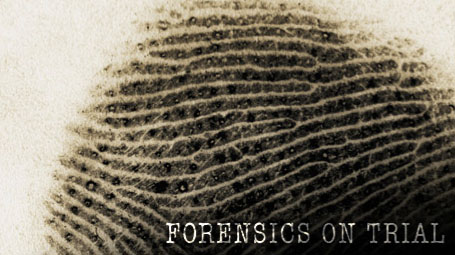
Forensics on Trial

“Modern forensics, including the analysis of fingerprints, bite marks, ballistics, hair and tool marks, can sometimes send innocent people to prison.”

On Wednesday, October 17, at 9:00 PM EDT, Nova will air a special documentary on the subject of “forensics gone wrong”.

I’m expecting this to be a “must watch”.

Boston Drug Lab Scandal – Over 1,000 Cases Effected

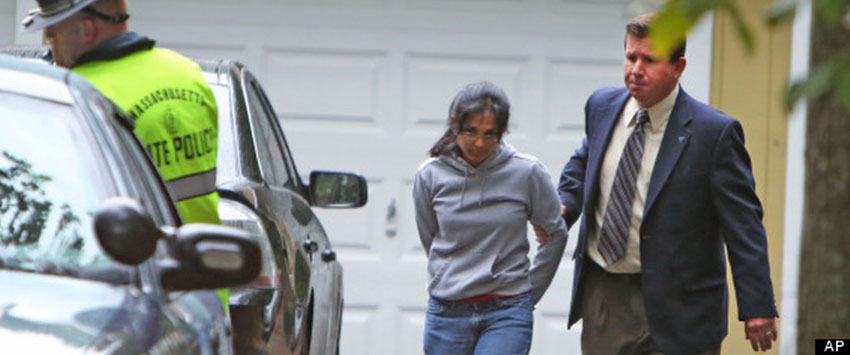
Police arrested Annie Dookhan, a chemist at a Boston drug lab, on Friday for allegedly faking drug results, forging paperwork and mixing samples at a state police lab in a scandal that has lawyers scrambling to figure out how to handle the 1,140 inmates who were convicted using possibly tainted evidence.

Dookhan, 34, was arrested at her home in Franklin, about 40 miles southwest of Boston. She is scheduled to be arraigned in Boston Municipal Court on Friday afternoon.

Dookhan’s alleged mishandling of drug samples prompted the shutdown of the Hinton State Laboratory Institute in Boston last month and resulted in the resignation of three officials, including the state’s public health commissioner.

Huff Post story here

CBS News story here

Boston Globe story here.

Thursday’s Quick Clicks…

Wednesday’s Quick Clicks…

Monday’s Quick Clicks…

NYPD Will Apply Grant to Identify, Catalog DNA Evidence

Eight hundred persons convicted in New York City are seeking to prove their innocence through DNA testing. Unfortunately, it has been difficult to locate evidence in the city’s massive evidence storage facility. Now those who are actually innocent in this group have new hope. The National Institute of Justice has granted $1.2 million to enable the New York Police Department to dedicate a new staff person to search for sexual assault and homicide cases so that the evidence can be reclassified and assigned a bar code—making the evidence more readily available. Some DNA testing will also be covered by the grant, which will begin on October 1, 2012.

As reported in The New York Times (here) the funds will be applied in a highly efficient manner “because they will be utilizing infrastructure and expertise already in place. The cataloguing system for the evidence will utilize the NYPD’s recently modernized evidence tracking system.” A “new Innocence Project staff person will expedite innocence claims”…and “the Chief Medical Examiner has agreed to donate all staff time for the DNA testing.” Continue reading

New Scholarship Spotlight: Remapping the Path Forward: Toward a Systemic View of Forensic Science Reform and Oversight

U. of Texas Prof Jennifer Laurin has posted the above-titled article on SSRN.  Download full article here.  The abstract states:

The 2009 report of the National Academy of Sciences on the state of forensic science in the American criminal justice system has fundamentally altered the landscape for scientific evidence in the criminal process, and is now setting the terms for the future of forensic science reform and practice. But the accomplishments of the Report must not obscure the vast terrain that remains untouched by the path of reform that it charts. This Article aims to illuminate a critical and currently neglected feature of that territory, namely, the manner in which police and prosecutors, as upstream users of forensic science, select priorities, initiate investigations, collect and submit evidence, choose investigative techniques, and charge and plead cases in ways that have critical and systematic, though poorly understood, influences on the accuracy of forensic analysis and the integrity of its application in criminal cases. By broadening our understanding of how forensic science is created and used in criminal cases — by adopting a systemic perspective — the Article points to a raft of yet unaddressed issues concerning the meaning of scientific integrity and reliability in the context of investigative decisions that are by in large committed to the discretion of decidedly unscientific actors. Critically, the Article demonstrates that systemic dynamics affecting upstream use of forensic science might well undermine the reliability-enhancing goals of the reforms advocated by the National Academy Report. As the NAS Report begins to set the agenda for active conversations around legislative and executive action to reform forensic science, it is critical to consider these questions. Moreover, the Article suggests that the embrace of science as a unique evidentiary contributor within the criminal justice system problematizes some of the bedrock assumptions of American criminal procedure that have, to date, prevented more robust doctrinal intervention in the investigative stages and decisions that the Article explores.

Friday’s Quick Clicks…

  • Two of the Beatrice 6 awarded compensation in Nebraska
  • Innocence Project Northwest wins new trial in the murder case of Jeramie R. Davis; prosecutor says will retry
  • Eyewitness identification reforms kicking in in Texas
  • Group called “Innocence Matters” gets exoneration today in California based on recanting witness
  • NPR on the crime lab scandal rocking Massachusetts

How Much Justice Can We Afford: Postscript

In a  recent post: How much justice can we afford during the UK’s financial crisis?  I discussed the many budget cuts in the UK, to the police, courts, legal aid, and forensic science, that are threatening the quality of justice in this country. I could barely have believed that today we read that a senior police officer has called for ‘volunteers’ to help police take fingerprints. He calls this ‘very low grade’ forensics, and something that ordinary members of the public could do with little training. This is in an attempt to save £20m from the police budget. One can only imagine where these cuts will lead us next.

Police chief wants volunteers to collect fingerprints

Brandon Garrett: Where is the Path Forward For Forensics?

From Salon.com:

Donald Eugene Gates, convicted of murder in Washington D.C., would spend 28 years in prison before he was exonerated in 2009 through the tireless work of his lawyers at the Public Defender Service for the District of Columbia – but it was not until this Spring that the flawed FBI forensics supposedly “matching” his hair to the crime scene would finally come under broader scrutiny.

The case brought still worse problems to light. This Spring, the Washington Post released the results of a remarkable investigation, uncovering a buried 1990’s Department of Justice inquiry into FBI hair cases, and finding hundreds more cases with flawed forensics. Some of the cases were death row cases — for example, a Texas man was executed in the late 1990s, but if it had not been for the FBI’s flawed hair analysis, he would not have been even eligible for the death penalty.

This Spring, the Public Defender Service also cleared two more people who had flawed FBI hair testimony, using DNA tests. One, Kirk Odom had served 22 years in prison for a crime he did not commit and has been exonerated. The second man, Santae Tribble, spent 28 years in prison, and is still waiting for a ruling on Continue reading

How much justice can we afford during the UK’s financial crisis?

Justice is yet again coming under threat in the UK. With a government hell bent on cutting expenditure, the justice system is proving an easy targets for cuts. These cuts, whilst widely criticised, are only now starting to result in the inevitable: injustice. The most obvious cuts have been to legal aid budgets: this is not new of course, governments have been cutting the legal aid budget for years – but it has now reached crisis point, with criminal lawyers leaving the profession and ineffective defence lawyering becoming widespread. These cuts are proposed to be 40% – see here…

Legal aid cuts: if lawyers don’t defend justice for all, who will?

These cuts in addition of course to the privatisation of the court interpreting service, which I have blogged about previously.

Recently, we had the closure of the UK’s Forensic Science Service in March 2012 – while lone voices raised serious concerns about this (and I have blogged about this previously) and the risks of miscarriages of justice, the public may finally be starting to sit up. The BBC recently aired a Radio 4 documentary highlighting the risks of flawed forensic science (news item contains link to radio programme):

DNA test jailed innocent man for murder

We are now being warned that budget cuts to the Criminal Cases Review Commission – the body specifically tasked with investigating possible wrongful convictions – is leaving the organisation so cash-strapped it is taking short-cuts and delays are lengthening. The case of Kevin Lane and his fight to get the CCRC to refer his case back the Court of Appeal is just one example:

Prisoner’s 16-year fight to prise open the secrets of Operation Cactus

All of this comes on top of 20% across the board cuts to the police, with some forces cutting their forensic budgets by up to 40% to ‘protect’ frontline policing. Michael Mansfield now warns the government that treating the justice system as a business  risks the entire system with creeping deregulation. The cost of wrongly imprisoning someone (and leaving someone else free to commit more crimes) is difficult to calculate in simple economic terms – the government needs to realise that all these cuts will end up with far greater costs – to public confidence in justice, and the ability of the police and courts to arrest and prosecute the right people. This is too high a cost to bear:

Justice can’t be treated as a business enterprise.

About Bite Mark Evidence – Forensic Odontology

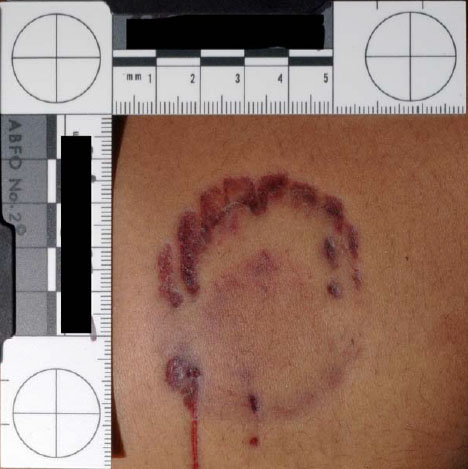
The most famous bite mark case in the US, and perhaps the world, is that of serial killer Ted Bundy.  On Jan. 15, 1978, Bundy broke into the Chi Omega sorority on the Florida State University campus, assaulting and killing three women.  During the crime, Bundy left a bite mark on the buttocks of Lisa Levy, whom he raped and killed.  It was this bite mark that was primarily responsible for his conviction.  He was executed in Florida’s electric chair on Jan. 24, 1989.  Shortly before his execution, he confessed to 30 other murders in seven states, but it is believed that he may have been responsible for as many as 100 deaths.

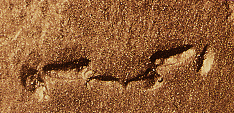
Here are photos of the bite mark on Lisa Levy’s buttocks, and the wax impresstion that was made of Bundy’s lower dentition:

Continue reading

Bad Chemist May Have Caused Many Wrongful Convictions in Massachusetts….

From WBUR.org:

BOSTON — A chemist at the Massachusetts State Police crime lab in Jamaica Plain improperly handled drug evidence and breached procedures, leading police to worry about wrongful convictions and potential “miscarriages of justices” by corrupted evidence, state police said Thursday afternoon.

Gov. Deval Patrick ordered state police to shut the lab down early Thursday as police and the attorney general’s office investigate possible “malfeasance” of a chemist at the lab that could affect thousands of drug cases over several years.

Patrick ordered the lab closing after additional evidence came to light as part of an ongoing investigation looking at “improprieties” at the lab that conducts tests in drug cases. Within the last five days, state police investigators uncovered more improprieties than they originally thought, state police said during a press conference held at the Framingham headquarters. Investigators are looking at one chemist, who resigned in March. Police did not release the woman’s name.

Thousands of drug cases will now have to be reviewed, Massachusetts State Continue reading

An MRI Polygraph ?? Beware

Over the past few years, some researchers have been looking at the possibility that an MRI (magnetic resonance imaging) brain scan can reveal whether or not someone is lying.  In experiments, subjects are instructed to lie about certain things while an MRI monitors their brain activity.  When the subject lies, the researchers look for differences in the patterns of brain activity.  They have observed ‘differences’ when a subject is lying as opposed to when the subject is telling the truth.

Here are two recent articles on the subject:

…….. From yesterday’s Washington Post    Laris M. MRI polygraphy. Wash Post, 2012-08-26

…….. From the August, 2010 IEEE Spectrum (the official publication of the Institute of Electrical and Electronic Engineers)    MRI Polygraph

There is even a company called No Lie MRI that is trying to commercialize the phenomenon.    http://noliemri.com/

Now, let me comment on these developments from the standpoint of the scientific method, design of experiments, and logic.  These “experiments” are nothing more than observational studies.  The experiment may have a hypothesis, that is, when the subject “lies” we’ll see differences in brain activity, which, in the experiment, would be the “dependent variable”.  However, this is very non-specific.  What areas of the brain?  What kind of activity?  What extent of activity?  What level of activity indicates a “lie” over a statistically significant population of subjects of representative ages, races, genders, IQ’s, and physical & mental health?  And the most glaring shortcoming of these experiments is lack of control over independent variables.  A properly designed experiment should have a single dependent variable and all independent variables should be controlled.  That is, if the independent variable being measured is “lie or no lie”, all other independent variables must be constant throughout the experiment – age, race, gender, mental and physical health, IQ, amount of sleep, state of mind, …………..

It has already been observed that the MRI can be “fooled” if the subject imagines imperceptibly wiggling a finger or toe while lying.

I fear that we might be seeing yet another forensic junk science in the making.  Conclusions based upon these studies are another example of forensics being driven by anecdotal, observational studies that get pushed through a process of flawed inductive reasoning.  “I’ve seen a hundred roses, and they’re all red; therefore, all roses are red.”  Or, “I’ve never seen anything like that before; therefore, it must be unique.”

So far, this technology also fails the question that most all forensics fail; “Show me the statistically valid data from which I can compute a probability of occurrence.”  And by the way, even “fingerprints” fails this question.

One saving grace of many forensic disciplines is that they can be statistically valid in excluding a suspect from consideration.  I don’t see that MRI scans are legitimate enough to even do that.

Science is in its infancy in terms of truly understanding the functioning of the human brain.  MRI lie detection may some day be legitimate, but my prediction is that it will be decades, if not generations, from now.

Innocence Project Reaches Out to Chemists…

From Nature.com:

A group that has used DNA evidence to free nearly 300 wrongly convicted people from prison reached out to scientists this week, asking chemists to engage with forensic science. Peter Neufeld, co-founder of the Innocence Project, an organization based in New York that investigates potential wrongful convictions, asked researchers at the American Chemical Society (ACS) meeting in Philadelphia, Pennsylvania, to do more to improve the troubled field of forensic science.

Complaints about the unreliability of some scientific evidence used in courts worldwide are long-standing, and a 2009 report by the US National Research Council called for major reforms to the US forensic-science system, including better standardization of protocols and more research into the reliability of methods used. The US Congress is now considering a bill that would provide money for forensics research and require the US National Institute of Standards and Technology to establish standards in the area (see ‘Proposed bill calls for better forensic science‘).

But despite such concerns, little has changed on the ground, says Justin McShane, an attorney at the McShane Firm in Harrisburg, Pennsylvania, who works with the Pennsylvania Innocence Project and serves as co-chair of the ACS Division of Chemistry and the Law. “It’s still a Wild Wild West out there in forensic science.”

Neufeld says that misuse of forensic science is a major factor in nearly half the cases investigated by the Innocence Project. He is calling on chemists to lobby Congress individually and through the ACS in support of the bill. But he also wants more scientists to engage with forensic science research. “What we want to do is make forensic science more about science and less about law enforcement,” he says, so it becomes an impartial assessor of evidence rather than a branch of law enforcement.

This call was echoed by Frederick Whitehurst, a chemist and former investigator for the US Federal Bureau of Investigation. “What we seem to know in the world of science is that there are some real problems in the world of forensic science, and we’d rather work on something cleaner,” he told an ACS session on chemistry and the law. “We don’t seem to want to work with dirty crime sciences.”

Whitehurst says that crime-laboratory technicians are often under pressure to produce evidence that agrees with police or prosecutor theories. Scientists can “run into a sledgehammer” when their evidence doesn’t confirm prosecutors’ hypotheses, says Whitehurst, potentially putting their careers at risk.

Greg Hampikian, a geneticist at Boise State University in Idaho and director of the Idaho Innocence Project, told the meeting that he regularly has nightmares about the ease with which innocent people can be convicted because of flaws in forensics systems.

Hampikian has worked on such high-profile cases as that of Meredith Kercher, a British student who was murdered in Italy in 2007. Amanda Knox and Raffaele Sollecito were convicted of the murder, partly on the basis of DNA evidence, but were freed in 2011, in part because Hampikian showed that DNA can easily be transferred via gloves from an item a person has touched to another item — such as a knife — that they have not touched. As new techniques allow ever smaller amounts of DNA to be detected, such contamination will be an increasing problem, Hampikian says.

But DNA analysis can also prove innocence: several attendees at the ACS meeting had been exonerated through investigations by the Innocence Project.

Steven Barnes was convicted of rape and second-degree murder in 1989 and spent nearly 20 years in prison before DNA testing showed that sperm cells from the crime scene did not match his. Ray Krone was sentenced to death on the basis of a bite-mark analysis in a 1991 murder case. He was proven innocent by DNA testing after serving ten years in prison. “I had never been in trouble in my life. They put me on death row. This could happen to you,” said Krone. “I’m calling on the ACS to get more involved in forensic science.”

ACS president Bassam Shakhashiri, a chemist at the University of Wisconsin–Madison, has been a strong supporter of the Innocence Project, and he appeared with many of the speakers for the Innocence Project at a press conference on Monday. He told Nature that before the society could lobby Congress in favour of the bill, the board would need to approve a policy statement on the matter, but that he planned to speak to several of the governance committees that oversee the topics involved.

“The topics discussed by the Innocence Project are vitally important to all of us,” he says.