Yearly Archives: 2012

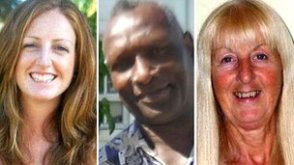
Barbados rape scandal grows with Police Commissioner statement.

Image

Further to my 22nd November post:

Victims try to prevent a wrongful conviction in Barbados

the story continues to develop. While the two victim’s efforts appear to have prevented an innocent man from being wrongly convicted of rape, the Police Commissioner of Barbados has now spoken out to claim that he is ‘happy’ with the investigation, and will not be losing any sleep over it. The real rapist is yet to be caught. Derick Crawford maintains that he was forced to confess, and there is no other evidence to link Crawford with the two separate rapes.See news items here:

Barbados rapes: Case against Derick Crawford dismissed

Barbados rapes: Derick Crawford thanks women who fought to clear him

Barbados rapes: Victims Rachel Turner and Diane Davies’ anger at police

Sunday’s Quick Clicks…

Dutch Supreme Court Re-Opens Alleged False Confession Case…

Here is an update written by Evelyn Bell of the Knoops Innocence Project in the Netherlands (earlier report on case here):

On 18 December 2012 the Dutch Supreme Court re-opened the case of six wrongfully convicted individuals. This re-opening was based on a request of the prosecution after a new investigation into the case. The defense also submitted a request to re-open the case, in support of the prosecution request. The Supreme Court referred the case to the Court of Appeals for a retrial.

On 4 July 1993 the mother of the owner of the Chinese restaurant Peacock was found dead, and she had been violently stabbed to death. In 1995 six individuals were convicted, based on the false confessions of three of the six accused. The three convicted women had falsely confessed during police interrogations. One of the women already withdrew her confession at trial, but this retraction was ignored by the judges. The three convicted men claimed their innocence at all stages of the proceedings. Nevertheless, they were convicted for second degree murder on the basis of the confessions of the women during the police interrogations and sentenced to ten years imprisonment. Two of the women were convicted as assessors to the murder and sentenced to two years imprisonment and the third was sentenced to fifteen months imprisonment. All of the accused have fully served their sentences.

One of the accused requested, eight years ago, the assistance of the Project “Gerede Twijfel” at the Vrije Universityin Amsterdam. This person sought legal representation of Mr Knoops in 2009 who represented him and two other defendants in this case during the review proceedings.

It was established that the confessions were very likely to be false, while the convictions were almost solely based on these confessions. The confessions were in contradiction of the statements two witnesses who were sitting in a bus shelter across the restaurant on the night of the murder. However, these two exculpatory statements were not disclosed in 1995 to the judges. Two lawyers of the Knoops’ Innocence Project (Mr. G.G.J. Knoops and Mrs. R. Dijkstra) provide legal representation as Counsel during the re-trial proceedings in 2013 for three of the six defendants among which the accused who initiated the review.


Witnessed Baby Shakings - Shaken Baby Syndrome

BabyShake

This article addresses Shaken Baby Syndrome, SBS (now officially renamed Abusive Head Trauma - AHT), and the so-called “triad” of symptoms that the bulk of the medical establishment and the justice system say are pathognomonic (exclusively indicative of) of SBS. The “triad” consists of retinal hemorrhage, subdural hematoma, and diffuse edema of the brain, and according to largely prevailing medical wisdom, violent shaking or abusive head trauma is the only thing that can cause these symptoms in an infant or child - not diseases or genetic conditions or short falls.

Documented, witnessed baby shakings are a rare event. Charges of SBS are almost universally brought against care givers in situations in which there are no witnesses, and the determination of SBS rests solely upon a medical opinion. Prof. Deborah Tuerkheimer of DePaul University has said that a “post mortem determination of SBS is essentially a medical diagnosis of murder.”

Continue reading

False confessions no relic of past

Joshua Tepfer, a staff attorney with the Center on Wrongful Convictions at Northwestern University and co-director of the center’s Youth Project, presents a powerful argument in today’s Chicago Sun-Times that false confessions remain a serious problem in Chicago. (Things aren’t much better in the rest of the United States, but Chicago always seems to lead the way.)

You can read Tepfer’s commentary here.

Crime labs need greater scrutiny, discipline

Forensic fraud and error are major causes of wrongful convictions, and that’s not likely to change without a lot more housecleaning at the nation’s crime labs.

As The Washington Post reports here, the U.S. Justice Department’s current review of over 21,000 cases handled by the FBI Laboratory’s hair and fibers unit before 2000 to determine whether improper lab reports or testimony might have contributed to wrongful convictions doesn’t cover the work of the 600 to 1,000 state and local examiners the FBI trained to use the same problematic standards.

But the problem with crime labs goes far beyond bad theory and training. As law professor Alicia Hilton, a former FBI agent, points out in this Rutgers Law Review commentary, ”Scientific evidence is like eyewitness testimony — evidence can be tainted by mistakes, prejudice, and corruption.” Hilton offers an excellent review of how and why this happens and advocates enhanced background checks, ethics training and oversight to rein in bad crime-lab employees before their misconduct helps put innocent people in prison.

Dismissed Case Raises Questions On Shaken Baby Diagnosis

This is an excellent article, with a link below, but here is a significant quote from the article: (emphasis is mine)

Patrick Barnes, a pediatric neuroradiologist and one of the experts hired by Aspelin’s defense, explained how doctors now recognize “a variety of accidental and natural causes” that are sometimes overlooked in cases that are first diagnosed as shaken baby syndrome.

Barnes had testified for the prosecution in one of the most famous shaken baby syndrome cases — at the 1997 trial of English au pair Louise Woodward in Massachusetts. Since then he has come to believe that the syndrome is overdiagnosed and misdiagnosed.

You can read the article here.

Breaking News: Man Exonerated of Murder Charge in France…

From France24.com:

A Parisian court quashed the conviction of a young man imprisoned for seven years for a murder he did not commit Thursday. Marc Machin also made French legal history, as it is only the eighth time a conviction has been overturned since World War II.

Paris’s criminal court made front page news on Thursday after acknowledging a serious miscarriage of justice in the wrongful imprisonment of a young man for murder.

Marc Machin was only 19 years old when he was first accused of the brutal December 1, 2001 murder of Marie-Agnès Bedot. The 45 year-old Bedot had been found stabbed to death near the wealthy and chic town of Neuilly, just outside of Paris. After a nearly two-week long investigation, police charged the young Machin with the crime, despite the fact that the evidence against him was largely circumstantial.

Machin initially denied the charges, but under duress owned up to the crime. By the time Machin attempted to retract his confession, it was too late. The young man was found guilty of murder and sentenced to 18 years in prison.

Machin always maintained his innocence, and attempted to overturn the ruling, but lost his appeal in 2005.

Interest in Machin’s case was revived in March, 2008, however, after a David Sagno, a homeless man, turned himself into the police for a separate murder, which also took place near Neuilly. During his confession, Sagno also owned up to killing Bedot, describing the crime in exact detail. Police reopened their investigation into the case, only to find traces of Sagno’s DNA on the victim’s clothing.

After seven years in prison for a crime he didn’t commit, there was a call for Machin’s case to be re-examined. Now, more than 11 years after Machin first stood accused of the crime, his name has finally been cleared.

Speaking after his acquittal, Machin said, “When you’ve been the victim of a miscarriage of justice, wrongfully and unjustly imprisoned, you cannot celebrate and jump up and down… I need to rebuild my life.”

Machin’s acquittal is only the eighth time since World War II that a criminal conviction has been reversed.


Singapore: High Court Quashes Drunk-driving Conviction

The Singapore High Court has quashed the drunk-driving conviction of Daniel Au on the basis that he had fallen into a drunken sleep while the car was parked rather than driving it while drunk. Mr Au was earlier punished with a two-week jail sentence, a driving ban, and a fine. He had appealed his conviction while serving his jail sentence, which was then quashed by the High Court. It has been reported that his new lawyer, Mr Peter Fernando, argued during appeal that the district judge who had sentenced his client had not “indicated that there was any evidence to show he had driven under the influence of alcohol or posed a risk to other road users.” Mr Au, who is to have his fine refunded and his driving license restored, is also reported to have said that his time spent in jail was “not easy”.

The Dark Side of Crime Stoppers - False Information and Police Tunnel Vision

CS LogoYou’re probably familiar with Crime Stoppers. Crime Stoppers first began in Albuquerque, NM during July 1975. Two weeks after a fatal shooting, the police had no information, when out of desperation, Detective Greg MacAleese approached the local television station requesting a reconstruction of the crime. The re-enactment offered $1,000 for information leading to the arrest of the killers. Within 72 hours, a person called in identifying a car leaving the scene at high speed, and he had noted its registration. The person calling said that he did not want to get involved, so he had not called earlier. Detective MacAleese then realized that fear and apathy were the primary reasons why the public tended not to get involved. So he helped establish a system where the public could anonymously provide details of crime events that offered cash rewards for information leading to an arrest and/or conviction. Since its first chapter was officially formed in Albuquerque in 1976, Crime Stoppers has spread across the United States, and has been responsible for more than half a million arrests and more than $4 billion in recovered property.

This all sounds very good, and I support the organization, but let’s dig deeper into the motivational aspects of why someone would phone in an anonymous tip to Crime Stoppers. Someone who really wanted to do their “civic duty” would go directly to the police, and if they’re afraid of “involvement” or retribution, they can still remain anonymous. Given that anyone can provide an anonymous tip directly to the police, the real attraction of Crime Stoppers is the cash. Here are some examples from Crime Stoppers organizations across the country. The payouts are all conditioned upon either an arrest or an indictment or both.

This from the Topeka, KS Crime Stoppers website:
Topeka Crimestoppers

And here is a random sampling of the rewards offered by Crime Stoppers organizations across the country:

Crime Stoppers of Michigan - $1,000

Texas Crime Stoppers - $50,000

Crime Stoppers of Tampa Bay - $1,000

NYPD Crime Stoppers - $10,000, $2,000, $1,000, or $500 - depending on the crime

The problem here is that people can be tempted to provide information, even if it’s false, just to get the payout. It happens - just like jailhouse snitches will provide false information to get a deal from the prosecutor.

Continue reading

Compromised Justice? Selling Case Details to Would-be Snitches

A must-read USA Today report published on December 14 (here) places a spotlight on a process rarely revealed to those outside the justice system: The role of the snitch in making federal cases…and in reducing sentences. While DNA proven wrongful convictions have shown that snitches can be a questionable source for information, the use of snitches continues to be widespread. So much so that credible case information is a currency for getting out of jail sooner.

Imprisoned bank robber Marcus Watkins is not the first to recognize that there could be a profitable business in selling case details to defendants and convicts desperate to reduce their sentences. Continue reading

New Scholarship Spotlight: Freeing the Guilty without Protecting the Innocent: Some Skeptical Observations on Proposed ‘Innocence’ Procedures

bio-2Utah professor Paul Cassell has posted the above-titled article on SSRN. Download here. The abstract states:

Proceeding from the perspective of “innocentrism” (that is, the idea that exoneration of the “innocent” ought to be privileged over other values in the criminal justice system), I suggest eight proposals for reform: (1) researching the frequency and causes of wrongful conviction; (2) allowing waiver of rights for greater freedom to raise post-conviction innocence claims (Professor Gross’s proposal in this symposium); (3) improving the implementation of existing rules on disclosing exculpatory evidence; (4) increasing resources for defense counsel and prosecutors to focus on issues relating to actual innocence; (5) abolishing the Fourth Amendment exclusionary rule; (6) replacing the Miranda regime with a system of videotaping custodial interrogation; (7) barring prisoners from filing for habeas relief without a colorable claim of actual innocence; and (8) requiring defense attorneys to directly ask their clients if they are actually innocent. These discriminating proposals offer a far greater prospect of providing help to the innocent without blocking conviction of the guilty. A common theme underlying many of them is that they reorient the focus of the criminal justice system away from procedural issues and toward substantive issues of guilt or innocence. Sadly, Bakken’s proposals seem to offer too much procedure and not enough substance, a recipe for helping the guilty. The truly innocent will benefit in a system that values substance over procedure.


Wednesday’s Quick Clicks…

  • clickThe new West Virginia Innocence Project helps an exoneree clear his name from the sex offender registry
  • Irish barrister shadows Duke Innocence Project
  • Story on the documentary West of Memphis
  • Don’t let the Florida Innocence Commission die

Update with the Wits Justice Project in South Africa…

image003-1

I am cutting and pasting below an email from the Wits Justice Project in South Africa. I had the pleasure of visiting these folks about 2 years ago. They are a first-class organization.

The Wits Justice Project team – Nooshin, Carolyn, Gift, Grethe, Robyn, Ruth and Tshepang – would like to thank you for your support and encouragement in 2012 and wish you a restful and safe holiday and festive season and a very successful 2013.

We have had a tremendously exciting year and would like to share some of the highlights with you:

a. Journalism

  • WJP won the Webber Wentzel Legal Journalist of the Year award for the second year in a row. Senior journalist, Ruth Hopkins, won first prize and our other senior journalist, Carolyn Raphaely, was first runner-up for her articles on torture. Carolyn won this prestigious award last year, in 2011.

The articles for which Ruth won her award were in two categories. The first looks at the scourge of TB in our prisons and how it has affected both the inmates and their families.

1. “Sisters probe TB scourge in prison” http://mg.co.za/article/2012-04-13-sisters-probe-tb-scourge-in-prisonwhich appeared in the Mail & Guardian and

2. “SA prisons: hotbed for spread of TB inside and outside” http://www.journalism.co.za/index.php/wjpnews/5064-sa-prisons-hotbed-for-tb-inside-and-outside.html which appeared in the Saturday Star.

The second category was the systemic failures which cause unreasonable delays in finalizing cases.

1. “Incarcerated since 2007 – but trial hasn’t progressed” http://www.iol.co.za/the-star/incarcerated-since-2007-but-trial-hasn-t-progressed-1.1255807 which appeared in The Star, show the consequences of court delays,

2. “Who is watching the lawyers?” (with Grethe Koen) http://www.iol.co.za/saturday-star/who-is-watching-the-lawyers-1.1328182 which appeared in the Saturday Star.

b. Advocacy

  • WJP project coordinator, Nooshin, was asked to speak at various conferences on issues affecting remand detainees and other matters affecting the criminal justice system . This included the “Helen Suzman Foundation Quarterly Roundtable on Remand Continue reading

Monday Quick Clicks…

  • clickD.C. judge exonerates Santae Tribble in 1978 murder; cites DNA test that showed hair evidence at trial was flawed
  • Innocence Network exoneration report for 2012
  • Video story about the Ohio Innocence Project’s Roger Dean Gillispie case
  • Murder exoneree Kerry Porter sues the Louisville, KY police department

Peter Neufeld Responds to Alverez’ Response to 60 Minutes…

From ChicagoTribune.com:

Innocence Project co-director Peter Neufeld has emailed me his response to the open letterCook County State’s Attorney Anita Alvarez sent to complain about a report on last Sunday’s broadcast about false confessions in Chicago:

What I am most concerned with is not Ms. Alvarez’s individual comments which can and will be easily refuted. Rather, it is the fact that her letter reveals that she is simply stuck in denial of the magnitude of the catastrophic consequences suffered by nine young African American men who were stone cold innocent but lost the best years of their lives.

The first step to improving a situation where mistakes and misconduct occurred in the past is to admit that errors were made. The admission of error is a fundamental first step whether a shuttle crashes, a hospital mishandles a patient or an innocent person languishes in prison for a crime he did not commit. If you can’t first admit error, there is no hope for meaningful improvement or change.

The most serious aspect of the manner in which Ms. Alvarez has handled these cases, is her utter unwillingness to admit that the Continue reading

Request for Papers for 2013 Innocence Network Conference

The 2013 Innocence Network Conference is being held in Charlotte, North Carolina on April 19-20 (http://www.innocencenetwork.org/conference). I am chairing the Innocence Scholarship panel session and am seeking paper submissions for consideration. Each year we have attempted to highlight the most compelling new scholarship in our field. If either you, or someone you know is working on new research pertaining to wrongful conviction please have them contact me via email at Robert.Schehr@nau.edu. We’re looking forward to seeing you in Charlotte!

Sincerely,

Dr. Robert Schehr

Arizona Innocence Project

Department of Criminology and Criminal Justice

Northern Arizona University

Execution Imminent in Taiwan

Cheng Hsing-tse was arrested on 5 January 2002 and accused of killing a police officer during a gunfight. He was sentenced to death for murder by the Taichung District Court on 18 November 2002. The case bounced back and forth between the High Court and the Supreme Court for appeals and retrials; however Cheng Hsing-tse’s death sentence was finalized on 25 May 2006. His lawyers have since applied for extraordinary appeals but the requests have been rejected each time by the Prosecutor General.

The recently founded Taiwan Innocence Project has taken on the case. They believe that a confession that was made was obtained through torture, and have filed perjury charges against two police officers for lying about that in testimony. The defendant has recanted the confession. The crime scene investigation was completely botched by the police - the guns were not left in place and were collected, and the bodies were moved. There was also a bogus ballistics analysis done, which has been confirmed as such by a US firearms expert. However, despite their efforts, the Minister of Justice could sign an execution order at any moment.

Here is the call by Amnesty International for petitions to be submitted to the Taiwanese government: asa380062012en

Breaking News: Judge Vacates Convictions in Washington

Congratulations to Robert Larson, Tyler Gassman, Paul Statler, and the Innocence Project Northwest!!

From The Spokesman Review:

Family members gasped with joy and wept Friday as a judge threw out the disputed robbery convictions of three Spokane men who have argued for years that they were framed by a snitch who was trying to spare himself and his brother from longer prison terms.

Superior Court Judge Michael Price, after reviewing new evidence in the case, offered scathing criticism of what he called the failures of the three attorneys who previously defended Paul E. Statler, Tyler W. Gassman and Robert E. Larson. Price vacated the 2009 convictions for robbery, assault and drive-by shooting that netted Statler about 42 years, Gassman 26 and Larson 20 years in prison.

“Mr. Larson, Mr. Gassman and Mr. Statler were entitled to a fair trial and effective counsel,” Price said. “One cannot go on without the other. Here the counsel failed … to discover evidence critical to rebutting the state’s case.”

Price said arguments presented by attorneys on behalf of the Innocence Project Northwest Clinic had provided new phone and work records – which had not been sought by earlier defense attorneys – that raised serious doubt whether a jury would have convicted the three men. Continue reading

Cook County State’s Attorney Anita Alvarez Responds to 60 Minutes Interview … Kind Of

From the Pennsylvania Innocence Project Blog:

After being universally drubbed for her comments during a recent 60 Minutes segment on false confessions in Chicago, Cook County State’s Attorney Anita Alvarez wrote to the head of CBS to complain of what she viewed as one-sided and unfair coverage on the broadcast. You can read her letter here. Among the points she raised,

  • There were 5 men convicted in the murder of Cataresa Matthews, not 3. Two men pled guilty to the charges in court where they were represented by counsel and testified against the other three.
  • Bob Milan, the trial prosecutor featured in the piece, took the confession in the Dixmoor case and was the best person to see whether “mistreatment and coercion” took place.

While these are interesting points, they just indicate that, for all the progress Ms. Alvarez has made in her office to investigate wrongful convictions, she just doesn’t get it when it comes to false confessions. We know beyond a doubt that people plead guilty to crimes they didn’t commit, and they often testify against other “co-defendants” as part of the deal they receive.

Moreover, the fact that some of the statements were secured with a prosecutor present who saw no “coercion” misses the point. The techniques used to obtain a false confession do not always involve overt coercion; furthermore, police generally have already been talking to suspects long before the prosecutors arrive. Mr. Milan was quite clear in his statement to 60 Minutes: he’s haunted at having played a role in these tragedies.

The Chicago police had a more productive response to the segment. Chicago Police Superintendent Garry McCarthy pointed out that the department has undertaken major reforms since those cases were prosecuted. For instance, he noted the state has required videotaping of all homicide interrogations and confessions for years, to document whether proper procedures were followed.

“You know, there’s been so many other things; upgrading supervision in the department, better training for our detectives, and looking at the methods that we’re doing lineups, for instance,” he said.

McCarthy said all police procedures are under review, even now.

“We’ve got nine separate committees that are working on revamping everything that we do,” McCarthy said.

We learn more daily about how to prevent wrongful convictions. As we do, police departments nationwide are working to improve their investigation techniques; a development we applaud and support.