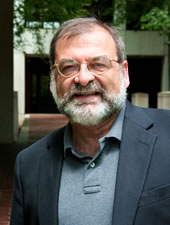
Author Archives: Mark Godsey

Thursday’s Quick Clicks…

click

Why is Scalia So Angry About Protecting the Innocent?

From Slate.com:

In 1996, Congress cracked down on defendants who repeatedly try to go to court to overturn their convictions. The Antiterrorism and Effective Death Penalty Act (AEDPA), signed by President Bill Clinton, created a thicket of new requirements for people in prison who file last-ditch appeals—called habeas corpus petitions. The idea was that once you’ve lost your first and only direct appeal, you should only get a single try at habeas corpus (the “great writ,” dating from the 14th century, that allows a prisoner to sue his warden for release). And you were supposed to get moving quickly: The law generally imposed a new deadline of one year from the date on which you lost your direct appeal.

Congress made an exception, however: If you say you have new evidence, then you have one year from the day you could have discovered it through “the exercise of due diligence.” But what if you miss the deadline without any good excuse—and yet the new evidence could show that you are innocent? On Tuesday, the Supreme Court widened what it called the “gateway”to reviewing claims of actual innocence that are made long after the one-year deadline expires. It’s a 5-4 decision, split between liberals-plus-Kennedy and conservatives. The opinions, by Justice Ruth Bader Ginsburg and Justice Antonin Scalia, read like a pitched battle in a long-simmering war. At the end, Ginsburg succeeds in opening what she calls a “gateway” to court for innocence claims that blow by the one-year deadline. But it’s probably not wide enough forFloyd Perkins, the prisoner at the center of this case, to get his own habeas petition heard.

In 1993, Perkins left a party in Flint, Mich., with two other men, Rodney Henderson and Damarr Jones. Henderson was found later, on a trail in the woods, stabbed to death. Jones said Perkins did it. Perkins said Jones did it. Two other witnesses implicated Perkins, and he was convicted and sentenced to life in prison in 1993. He lost his direct appeal a few years later, and his conviction became final in 1997.

In 2008, Perkins filed a habeas appeal, with evidence he said could prove his innocence. It included a witness saying that Jones had blood on his clothes on the night of the murder and an employee from a dry cleaner saying that around the same date, a man looking like Jones brought in pants and a shirt heavily stained with blood.

Since we are in AEDPA land, the lower courts couldn’t just decide whether this evidence gave them enough doubt about Perkins’ conviction to order a new trial. They had to first determine whether they could excuse Perkins for missing the law’s one-year deadline. Perkins didn’t argue that he’d been exercising due diligence and couldn’t help having taken 11 years to go back to court. He said that because he had evidence of actual innocence, he should get an exception to the one-year cutoff.

In theory, a majority of the Supreme Court has now agreed to such an exception. “Actual innocence, if proved, serves as a gateway through which a petitioner may pass,” Ginsburg wrote. But she also warned that “the exception applies to a severely confined category.” It is not enough for Perkins to assert that he has evidence of his innocence. He also has to show that “it is more likely than not that no reasonable juror would have convicted him in the light of the new evidence.”

That’s a high bar. In effect, it means that to figure out if people like Perkins are entitled to a hearing about whether they have strong evidence of innocence, judges will have to first hold a hearing to figure out whether there is strong evidence of innocence. If you’re a judge whose attention is caught by a habeas petition because you’re concerned that an innocent person may be in prison, AEDPA’s one-year deadline won’t stop you from taking a close look. That’s a victory for defendants and for the growing cadre of Innocence Projects around the country.

 But it’s a pretty minor one. Justice Ginsburg makes clear that waiting around to file a habeas petition is still a bad idea because an “unexplained delay” is a strike Continue reading

SCOTUS says actual innocence gets around statute of limitations for habeas petitions….

In the Perkins decision today, SCOTUS said that actual innocence, if proved, provides a gateway through which a federal habeas corpus petitioner may pass to overcome a failure to file within the one-year statute of limitations.   Opinion here.

Breaking News: All 50 States Have DNA Testing Access….

With passage of Oklahoma bill today, all 50 states now have DNA testing laws….. Congrats to all involved.

Details here…..Cool infographic here….

Tuesday’s Quick Clicks…

click

Wednesday’s Quick Clicks…

click
  • Two co-defendant exonerees in China awarded state compensation
  • Clarence Harrison was arrested in Decatur, Georgia on rape charges and spent 18 years in prison before DNA evidence freed him. Two musicians want to record an album that tells his story and helps the Georgia Innocence Project.
  • May newsletter of the National Registry of Exonerations
  • In Maryland, John Norman Huffington gets new trial based on flawed hair evidence
  • Nice profile on the Northern California Innocence Project

New Scholarship Spotlight: Rectifying Wrongful Convictions: May a Lawyer Reveal Her Client’s Confidences to Rectify the Wrongful Conviction of Another?

moliternojWashington & Lee Professor James E. Moliterno has posted the above-titled article on SSRN.  Download here.  The abstract states:

Awareness is increasing that the U.S. criminal justice system produces convictions of the innocent. Currently, except in two states (Alaska and Massachusetts), lawyer confidentiality law prevents a lawyer from revealing client information to rectify the wrongful conviction of an innocent. An interpretation of the standard future harms exception, especially with the Restatement illustration gloss, may yield permission to reveal the client’s information and rectify the wrongful conviction. But that result is far from certain and is weighted down with significant factor-weighing to determine if the wrongly convicted is suffering “substantial bodily harm.” Despite a broader view that would dictate revelation of such information, the individual defense lawyers and prosecutors involved are likely to resist results of factor-weighing that favor revelation. The Alaska and Massachusetts approach is cleaner but still requires what may be unpalatable to some: Inflicting harm on one’s own client to aid an innocent-other. As confidence in the justice system’s ability to convict only the guilty wanes, policy-makers should consider adopting a clearer path to revelation of client information when necessary to rectify the conviction of an innocent who is currently incarcerated.

Grotesque Speed for Florida Capital Cases

From the NYTimes:

The Timely Justice Act, a grotesquely named bill passed by the Florida Legislature, could get to Gov. Rick Scott as soon as this week for him to sign into law. The measure would require a governor to sign a death warrant within 30 days of a review of a capital conviction by the State Supreme Court, and the state would be required to execute the defendant within 180 days of the warrant.

Also this week, an inmate on Florida’s death row, Clemente Javier Aguirre-Jarquin, presented DNA evidence that could exonerate him. He was convicted in 2006 of murdering two women, based largely on circumstantial evidence. On Monday, he was in court seeking a new trial because the DNA evidence showed that blood at the crime scene — none of it his — was that of a victim’s daughter, who, his lawyers argue, likely committed the murders.

Mr. Aguirre-Jarquin’s case offers good reason for Governor Scott to veto the bill. The state’s indisputably defective death penalty system is made more horrifying by attempts to rush inmates to execution. There is a strong chance that Mr. Aguirre-Jarquin will become the 25th death-row inmate exonerated in Florida since it reinstated capital punishment in 1973. More death-row inmates have been exonerated in Florida than in any state.

As the American Bar Association explained in a scathing 2006 report on the state’s death penalty system, Florida is one of the few states that allows a jury to recommend a sentence of death based on a majority vote rather than a unanimous one. Defendants charged with capital crimes often have woefully unqualified counsel, and are much more likely to be convicted and sentenced to death if the victim is white — a sign of racial disparity that is clearly unconstitutional. The flaws in Florida’s system, which soaks up huge amounts of resources, cannot be fixed. It is long past time to abolish capital punishment.


Justin Brooks Update from the Innocence March…

Innocencemarch.santa monica rallySeveral of you have sent messages asking about how Alissa, Mike, and I are doing.  I figured I’d send an update. 

Today was Day 17 of the Innocence March.  We’ve walked more than 200 miles and are working our way through Santa Barbara County.  Aside from some sunburn and blisters, we are all doing fine.  The walk through Camp Pendleton, and the areas with no sidewalks along Route One in Orange County, have probably been the toughest days.  Walking around the Long Beach refineries in the rain was not pleasant at all.  On the other hand, we have had some amazing days.  Having 300 friends and family members join us on Day 1 was awesome.  Walking with CIP exoneree Adam Riojas and his wife and baby in Oceanside, while he told us about his current life as a minister, was an incredibly moving experience, as was walking with Guy Miles family through Long Beach.  Guy’s elderly parents and uncle struggled to walk as far as they could while his wife walked the full 20 miles.  We had a great rally in Santa Monica with exonerees, family members, CIP staff, and students, and on Mother’s Day weekend we walked with Brian Banks and his mom.
I feel very good that this march is doing everything we hoped for.  We’ve raised awareness through the media and public speaking events. We’ve met incredible people along the way, my favorite being the Mexican farmer who insisted on giving us free fruit and letting us use the bathroom in his home when he heard what were were doing. We’ve had people honking their support the whole way up the coast.  Most important, we’ve obtained a meeting with the Governor’s Chief of Staff to present our petitions.
Below is some of the media coverage we’ve received so far and some photos from the march.  Thanks to Pam, Hank, and Ian for their help coordinating the media effort.  Happy trails. jb
 http://www.utsandiego.com/news/2013/apr/30/innocence-project-march-san-diego-sacramento/

Major Blogs about March:
Videos we’ve made about the march:

Black Defendants Still Majority of Wrongfully Convicted…

From Blackvoicenews.com:

By Freddie Allen
NNPA Washington Correspondent

WASHINGTON (NNPA) – When a Baltimore grocery store employee fingered 26-year-old Michael Austin for the murder of a security guard in the spring of 1974, Austin didn’t even match the police sketch. The wanted suspect was less 6 feet tall and Austin was the size of a small forward in the NBA. The only other evidence linking him to the crime was a business card with the name of an alleged accomplice, a man who was never found.

The store owner, who was positive Austin wasn’t the shooter, was never called to testify during the original trial and Austin’s defense attorney never called a single witness to back up Austin’s alibi that he was at work across town when the crimes were committed. A year later, Austin was convicted of first-degree murder and robbery and sentenced to life in prison on the eyewitness account of the grocery store employee, a college student, according to the prosecution, and a drug addict and high school dropout.

Austin spent half of his life behind bars for a crime he didn’t commit, only gaining freedom through a New Jersey-based lawyers’ group that works to free the wrongfully convicted. The grocery store employee died of an overdose in 1997, but not before he told family members that he lied about what he saw during the murder and sent an innocent man to prison. In December 2001, Austin was granted his freedom. Three years later, Austin won a $1.4 million settlement from the state of Maryland.

Michael Austin’s story was chronicled in The National Registry of Exonerations, a collaborative effort between the University of Michigan law school at Ann Arbor and the Center on Wrongful Convictions at the School of Law at Northwestern University in Chicago. An updated registry of features stories of the wrongfully convicted and was recently released.

According to the report, Blacks account for nearly half (47 percent) of all known exonerees in 1989, and Whites made up nearly 39 percent of all known exonerees. When the updated exoneration report was released in April, 57 percent of the known cases that occurred in 2012 involved Blacks.

Samuel Gross, a law professor at the University of Michigan at Ann Arbor and the editor of The National Registry of Exonerations said the 10 percent increase for Blacks was striking, but it’s too early to draw any firm conclusions. Gross said that he continues to learn about new cases that occurred in 2012. In last year’s report released in June 2012, the registry found that 50 percent of the all known exonerees were Black.

“It’s striking and if it stands up and it repeats in another year or two it will be an important trend,” said Gross.

According to the registry report, 52 percent of the wrongful conviction cases involved perjury or false accusation, 43 percent involved official misconduct and 41 percent involved mistaken eyewitness identification.

The majority (57 percent) of all known exonerations were in homicide cases and 47 percent of those cases involved Black defendants and 37 percent involved Whites. Blacks accounted for 63 percent and Whites 18 percent of those wrongfully convicted of committed robberies.

“Homicide and robbery, sadly to say, are crimes that African Americans are heavily overrepresented in the prison population,” said Gross.

The report found that “African Americans constitute 25% of prisoners incarcerated for rape, but 62% of those exonerated for such crimes.”

Faulty eyewitness identification continues to drive the high rate of Blacks involved in adult sexual assault exoneration cases. Gross said that this is likely because of problems associated with cross-racial identification.

“White people don’t have the type of experience living with and distinguishing members of other races as minorities do,” said Gross. “There is also a long terrible history of racial discrimination in the prosecution of African Americans for rape when they are accused of raping White women and that may be a factor here, too.”

According to the National Registry of Exonerations, a majority of the cases (52 percent) involve witness making a false accusation or committing perjury. Forty-one percent of the cases involve faulty eyewitness identification.

“As a group, the defendants had spent nearly 11,000 years in prison for crimes for which they should not have been convicted – an average of more than 10 years each,” stated a report by The National Registry of Exonerations released in April.

These are often the most productive years of a person’s life and the reason why many criminal justice advocates say that seeking compensation for wrongful convictions is the only chance that exonerees have in regaining a foothold in a world that is often much different than how they left it.

“Unfortunately, many of our clients have been in jail for decades and often these were the best years of their life; the years where you can go to school and get an education, years where you can build a career and learn how to do a job,” said Paul Cates, communications director for the Innocence Project. “When they get out after 15 or 20 or 25 years, it’s very difficult to enter the job market without an education and without any marginal skills.”

Cates said that, when the government confines someone for those lengths of time, they definitely deserve to be compensated. Cates added: “It’s particularly true when you consider that they have no way of making a living once they’ve been released.”

Despite the proliferation of crime shows depicting the use of DNA in solving murders and proving innocence or guilt of a suspect, DNA testing is becoming less of a factor in wrongful conviction cases, because it is often initiated before cases go to trial.

“DNA evidence can be very persuasive to courts and to judges and to prosecutors, because it’s a very definitive proof of innocence,” said Cates. “But in all these other cases where this evidence is not available, it’s really hard to prove when someone has been wrongfully convicted and the court system doesn’t make that easy.”

That could be changing. According to the registry report, for the first time, law enforcement officials cooperated in the majority of the known cases that freed the wrongfully convicted in 2012.

Revisions to state policies involving post-conviction DNA testing, greater oversight of convictions in prosecutorial offices, and the evolution of law enforcement practices could have contributed to the increase, according to the study.

“It’s pretty clear that we make mistakes as you would expect from any human system and we should acknowledge that and that’s becoming more widely understood and accepted,” said Gross. “The more realistic we are in understanding that we do mistakes the better we’ll be at identifying them and preventing them.”


 

Monday’s Quick Clicks…

click

Mother’s Day and the Wrongfully Convicted

From the Innocence Project of Florida:

This Sunday families will gather together to celebrate the women who gave them life. But for the wrongfully convicted, Mother’s Day serves as another reminder of the life that was stolen from them by inequities embedded in the criminal justice system. Many wrongfully convicted people spend decades serving a prison sentence they do not deserve, and subsequently miss countless opportunities to spend time with their mothers, fathers, children, and spouses.

Alan Crotzer, a Florida DNA exoneree, bore the weight of this cross when he lost his mother fives years before his exoneration in 2006. In an interview with the IPF, Alan spoke about his mother’s unwavering faith in his innocence and how she inspired him to continue to fight for his freedom. Alan lost spending the last twenty years of his mother’s life with her due to his wrongful imprisonment. Countless other wrongfully imprisoned have faced similar losses.

Florida DNA exoneree Luis Diaz was wrongfully convicted in 1980 and sent to prison when his three children were only five, seven and thirteen years old. He served 25 years in prison until post-conviction DNA testing provided proof that he was wrongfully convicted. By the time he was released, his children were not only grown but married with children of their own. Luis was denied the ability to raise his own children and his children were denied their father for most of their childhood. Each holiday was a harsh reminder that this family was missing a parent.

These two men represent a fraction of the innocent people in prison who are locked away from their families and their freedom everyday.

We hope you celebrate lives of your mothers, wives and daughters. We applaud their tireless efforts. We also ask that you let your thoughts also turn to those who have had their lives stolen from under them by a wrongful conviction and are waiting to come home.

Friday’s Quick Clicks…

click

New Scholarship Spotlight: How Many False Convictions are There? How Many Exonerations are There?

'srgross'Professor Samuel Gross has posted the above-titled article on SSRN.  Download here.  The abstract states:

The most common question about false convictions is also the simplest: How many are there? The answer, unfortunately, is almost always the same and always disappointing: We don’t know. Recently, however, we have learned enough to be able to qualify our ignorance in two important respects. We can put a lower bound on the frequency of false convictions among death sentences in the United States since 1973, and we have some early indications of the rate of false convictions for rape in Virginia in the 1970s and early 1980s. These new sources of information suggest – tentatively – that the rate of false convictions for serious violent felonies in the United States may be somewhere in the range from 1% to 5%. Beyond that – for less serious crimes and for other countries – our ignorance is untouched.

Wednesday’s Quick Clicks…

click
  • David Onek named Executive Director of Northern California Innocence Project
  • In Washington state, a new law grants the wrongfully convicted $50,000 for each year spent behind bars, but an apology is harder to come by
  • In Canada, a man who spent decades behind bars on a wrongful murder conviction has lost his bid to sue the police involved.  In a recent decision, the Ontario Superior Court of Justice dismissed a $14-million lawsuit for damages filed by Romeo Phillion.  The defendants included two Ottawa police officers and Ontario’s attorney general.  In his suit, Phillion alleged “malicious, reckless and negligent conduct” led to conviction for the 1967 murder of an Ottawa firefighter.
  • A new advocacy group is launching a national advertising campaign calling for prosecutor accountability and the importance of conviction integrity.  The nonprofit group, Blind Justice, says it wants to “ensure that elected officials don’t turn a blind eye to prosecutors who trample on the rights of the accused to get a conviction.”  The television ads will feature an alleged wrongful conviction case involving local district attorneys and will begin airing Wednesday on television networks in Manhattan, Brooklyn and Houston, Texas.

With Only Hours to Go, MIssissippi Stays Execution of Man Who Has Been Denied DNA Testing..

Source:

Hours before his scheduled execution at 6 p.m. today, the Mississippi Supreme Court hasissued a stay to Willie Jerome Manning, whose death sentence was upheld in a 5-4 court ruling last week even though the state refused to test available DNA evidence, and the FBIdeemed major pieces of evidence in the case “unscientific” and “invalid.” As a consequence, Manning will not be executed tonight and will have more time to continue arguing his case.

Late Tuesday afternoon, an 8-1 majority granted Manning’s last-ditch motion, which included new letters from the Department of Justicedescribing how crucial hair samples were improperly tested, and testimony improperly linked bullets near Manning’s home to bullets at the crime scene. Manning was convicted in the 1992 abduction and murder in part based on testimony that the hair samples were likely his because both he and the hair strands were African American. The trial also featured testimony from a jailhouse informant, which studies have shown is particularly unreliable.


Chinese Judge: “If a true criminal is released, heaven will not collapse, but if an unlucky citizen is wrongfully convicted, heaven will fall.”

Shen Deyong, in 2007. Shen called for more respect of the judicial process

Shen Deyong, in 2007. Shen called for more respect of the judicial process

From source:

One of China’s most senior judges has called for an end to miscarriages of justice by the nation’s courts after two cases of wrongful convictions have highlighted inadequacies in its legal system.

“If more of these wrongful criminal convictions appear, they will become an unprecedented challenge to the People’s Courts,” Shen Deyong, the executive vice-president of the Supreme People’s Court, wrote in thePeople’s Court Daily on Monday.

The paper is the court’s official mouthpiece.

“It’s preferable to release someone wrongfully, than convict someone wrongfully,” he said. “If a true criminal is released, heaven will not collapse, but if an unlucky citizen is wrongfully convicted, heaven will fall.”

Criminal trials in China had a conviction rate of 99.9 per cent in 2009, according to the latest China Law Yearbook. In recent months, several murder cases have raised public ire against the judicial system.

Zhejiang’s provincial supreme court on March 26 overturned a decade-old death sentence with two-year reprieve and a 15-year prison sentence for two men convicted on murder charges for killing a woman in Hangzhou.

Caixin in April reported on the ordeal of a farmer wrongfully sentenced to death with reprieve in 2008 in Zhecheng, Henan province. Also in Zhecheng, convicted murderer Zhao Zuohai gained prominence in 2010, when his purported victim returned to the village and Zhao’s death sentence had to be overturned.

Last year, Henan started to hold judges responsible for their rulings even after retirement to reduce the number of miscarriages of justice.

“Wrongful convictions are often the result of given orders, an abandonment of principles or sloppy dereliction of duty,” Shen wrote on Monday. If these things happen in the West, he argues, “the professional stigma cannot be washed away in a lifetime”.

Shen called for more respect of the judicial process, better training of legal practitioners and more transparency in the judicial review process. Chinese judges “face intervention and pressure from all sides”, he wrote, which give them little leeway to rule independently.

Shen’s article “is a good statement”, said Teng Biao, a law lecturer at the China University of Politics and Law in Beijing. “It’s progress.”

But Teng cautioned: “These are likely to be just personal views. Even if the courts are changing, they remain restrained by public security organs and the [Communist Party’s] Politics and Law Committees.”

Shen, 61, gained prominence when he was parachuted to Shanghai to preside over the corruption investigation on the city’s party secretary, Chen Liangyu, who was later sentenced to 18 years in jail for bribery and abuse of power.

His comments come almost two months into Zhou Qiang’s tenure as president of the Supreme People’s Court. Unlike his predecessor, Zhou has a university degree in civil law and worked in the Ministry of Justice before scaling the party’s echelons of power.

Last month, Zhou called on lawyers and scholars to join efforts to reform China’s legal systems.

Friday’s Quick Clicks…

click
  • Actor Martin Sheen said Thursday he won’t stop backing a man’s bid to be exonerated in a 1998 killing, although prosecutors have concluded the case was sound.  Sheen said in a statement he was outraged by the Manhattan district attorney’s recent decision in the case of Jon-Adrian Velazquez, who was convicted of killing a retired police officer. Some witnesses have since backtracked, but prosecutors say an 18-month-long review didn’t turn up enough proof to clear Velazquez.  “I promised Jon-Adrian that I would not give up the fight to see him walk out of prison a free man and I repeat that promise today,” Sheen said in the statement, provided by Velazquez’ lawyers, who filed papers Thursday asking a judge to dismiss the case.  “He is an innocent man, wrongfully convicted. May justice prevail,” Sheen added.
  • A central New York man who spent nine years in prison after being wrongfully convicted of trying to kill his wife has won $5.5 million in damages from the state.  Syracuse-area media outlets report a state Court of Claims judge ordered the payment to 46-year-old Daniel Gristwood of Pennellville. The judge ruled in 2011 that state police coerced him into falsely confessing in 1996.  Gristwood was released from prison in 2005 after another man admitted attacking the sleeping Christina Gristwood with a hammer.
  • A review of Amanda Knox’ new book
  • After wrongful conviction in Nicaragua, Jason Puracal wants to work to change the system

Two Police Chiefs Honored at National Innocence Conference in Charlotte, NC

From the Innocence Blog:

The Innocence Network honored two innovative police chiefs last week at the annual Innocence Network Conference held in Charlotte, North Carolina, for their work to reform the criminal justice system to prevent wrongful convictions: William G. Brooks, III, Chief of the Norwood, Massachusetts Police Department, and Darrel Stephens, former Chief of the Charlotte Police Department.

The Innocence Network presented Chief Brooks with the 2012 “Champion of Justice” award. The award is given to public servants who go above and beyond in their efforts to free the wrongly convicted or reform the criminal justice system to prevent wrongful convictions. Previous honorees include Jim Petro, former Ohio Attorney General, and Jim Trainum, retired detective with the Washington D.C. Metropolitan Police Department.

During his acceptance speech, Chief Brooks reflected on the openness of most of the law enforcement officers towards reforms to prevent wrongful convictions:

“Not a single police officer has approached me following our presentations [on eyewitness identification] to say that he disagrees with what we have said. Without exception, we hear police officers tell us that they favor these reforms.”

Chief Brooks has been a police academy instructor for over 25 years and an educator on police lineup reforms for five years. In that time, he has partnered with Innocence Network members to train law enforcement personnel about scientifically supported best practices and to instruct thousands of officers nationwide about the importance of implementing criminal justice reforms to prevent wrongful convictions. Chief Brooks’ work in Connecticut and Michigan contributed to statewide adoption of eyewitness identification best practices in both states. In his home state, he sits on the Supreme Judicial Court’s Police Practice Committee, which is set to issue recommendations in the coming months. Chief Brooks concluded his remarks by saying, “I am honored to receive this award, and you have humbled me with it.”

The Innocence Network also selected Darrel Stephens, former Police Chief of the Charlotte Police Department, to deliver the keynote address. As police chief, Stephens implemented reforms that are proven to decrease mistaken eyewitness identifications. He also helped implement these reforms statewide, putting North Carolina at the forefront of a national trend in reforms to eyewitness identification procedures to prevent wrongful convictions. Stephens currently serves as the Executive Director of the Major City Chiefs Association and a Board Member of the Innocence Project.

During his keynote, Stephens spoke about police agencies across the country implementing reforms to help prevent wrongful convictions:

“There are hundreds of police departments that have or are taking the steps…to minimize the potential for wrongful convictions. New York City announced last year that it would begin videotaping interrogations. Laws in 18 states and the District of Columbia require it. More police agencies are adopting best practices in eyewitness identification and improvements are being made in forensics. And both police and prosecutors are increasing their participation in wrongful conviction cases.”


Amanda Knox Interview on ABC Tonight in U.S at 10pm EST….

Details here.  Prior coverage of case here, here, here, and here.  Post about her new book here.