Category Archives: Exonerations

Thursday’s Quick Clicks…

Tuesday’s Quick Clicks…

  • A judge overturned the conviction of Noe Moreno, a client of the Duke Law Wrongful Convictions Clinic who had been incarcerated since 2006, on Aug. 31.  North Carolina Superior Court Judge Richard Boner vacated Moreno’s conviction and ordered charges against him dismissed, based on evidence of his innocence developed by students and presented by Theresa Newman ’88, co-director of the clinic, and David Pishko ’77, who worked pro bono on the case. Details here
  • Judge in Texas grants DNA testing to 4 inmates convicted of rape and murder in 1992
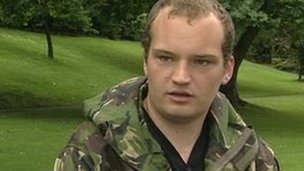
  • More on New Zealand exoneree David Bain’s bid for state compensation here and here
  • Utah Supreme Court to hear state’s appeal for exoneration of Debra Brown, client of Rocky Mountain Innocence Center
  • A district judge has ruled that a Dallas area man wrongfully imprisoned for more than two dozen years must pay his ex-wife a share of any compensation the state gives him.  The Dallas Morning News reports that Steven Charles Phillips was cleared in 2008 of a string of sex crimes committed by another man in the 1980s. He spent more than two dozen years in prison.  Phillips and his wife, Traci Tucker, divorced in 1991. She sued him after his release, arguing that she too had suffered when he was wrongfully imprisoned.  Judge Lori Hockett on Friday ruled that Tucker was due $114,000 in lost wages and an additional $39,000 for attorneys’ fees and expenses.

Prosecutor-Driven Exoneration in Chicago Today…

From the SunTimes.com:

The Thursday jailhouse phone call began not much different than usual.

“How’s your day going?” the inmate’s attorney, Kathleen Zellner, asked.

“Pretty much like any other day in prison,” replied Alprentiss Nash, a 37-year-old Chicago man who’s spent the last 17 years in prison professing his innocence.

“ ‘Well, you’re going to be a free man tomorrow,’ I told him,” said Zellner. “He just started yelling and shouting and praising God. It was great.”

Nash is expected to walk out of the Menard Correctional Center in downstate Menard at 11 a.m. Friday–a day after prosecutors with Cook County State’s Attorney Anita Alvarez’s office went to court and asked a judge to vacate murder charges against him.

Convicted in January 1997 of the 1995 armed robbery and murder of Leon Stroud in his West Pullman home, Nash becomes the first person ever to have his murder conviction overturned solely by that office after a re-investigation by its new Conviction Integrity Unit, which Alvarez created in February.

“The decision to vacate this conviction comes as a result of a comprehensive investigation into the facts of this case,” the state’s attorney said at a news conference, announcing that the unit had reviewed DNA evidence, old court and police records, and even re-interviewed witnesses to arrive at the decision.

“Based upon the new DNA evidence and the collective results of our investigation, it is my assessment that we do not have the evidence that is required to sustain this murder charge,” said Alvarez, who established the six-person unit solely to investigate wrongful conviction claims.

Zellner’s client was arrested and jailed shortly after the April 30, 1995 crime in the 11700 block of South Wentworth; convicted on eyewitness testimony that had been substantially discredited at trial; and sentenced to 80 years.

The killer wore a black ski mask during the crime. One was recovered from a gate post near Stroud’s home. During a post-conviction appeal, Nash, acting as his own attorney, had sought DNA testing of the mask. That was opposed by Alvarez’s office and subsequently dismissed by the Cook County Circuit Courts.

The Illinois Appellate Court later reversed that decision, ordering the DNA testing that in 2010 came back with a genetic profile matching a prison inmate paroled within the last year after serving time on a drug conviction.

“The investigation into the murder of Leon Stroud remains open and will continue,” said Alvarez, confirming her office has interviewed that parolee.

“Today’s action demonstrates the commitment that I made when we began the unit, that we would proactively investigate and review cases that involve possible wrongful or questionable convictions and take action,” Alvarez said.

The unit already has 100 cases, referred by lawyers, families and defendants.

Nationally known for taking such cases — Nash is the 13th wrongfully convicted man she has helped exonerate — Zellner applauded Alvarez.

“It’s courageous of her to do this,” said Zellner. “There are other cases where there’s been DNA results, and different counties still have not acted, or released the person. So we’re extremely excited. Nash is our lucky 13.”

When he walks out Friday, Nash, after his journey, says he’ll harbor no anger.

“Well, I’m shocked,” he said through his lawyer Thursday. “Finally I’m getting justice. But I’m not mad at anybody. I just want to get on with my life.”


New York to Pay $3.5 Million Settlement for Prosecutorial Misconduct

Outraged by the lack of disciplinary action against prosecutorial misconduct that cost 13 years of his life, Shih-Wei Su sued, and New York State will now pay him  $3.5 million.

At age 17, Su was convicted of attempted murder and related charges and sentenced to 16 to 50 years in a weak case based on conflicting eyewitness Continue reading

Texas Man Not Bitter After Two Decades of Wrongful Imprisonment

After serving 23 years in prison for a rape DNA proved he didn’t commit, David Lee Wiggins, 48, walked out of prison and into freedom via courthouse doors in Fort Worth, Texas, yesterday with his brother, his sister, and Innocence Project attorney Nina Morrison. As has been the case with many other exonerees, he expressed no bitterness after his long ordeal.

As reported here on Monday, the Wiggins case was one of misidentification, a contributor in about 75 percent of DNA-proven wrongful convictions. He was Continue reading

Long Ordeal of Son’s Wrongful Conviction is Over for Hash Family

Earlier this week murder charges against Michael Hash, 31, were dismissed 12 years after he had been convicted of the murder of Thelma B. Scroggins, 74, in Virginia. Hash was 15 at the time of the crime, 19 when accused. He was convicted and sentenced to life without parole. Last February, citing numerous examples of police and prosecutorial misconduct, U.S. District Judges James Turk tossed out Continue reading

West Memphis Three case taking ugly turn

Wrongful conviction cases are often emotional minefields. This is particularly true when the case gets national media attention or it has multiple defendants and legal teams. So it’s not surprising that divisions are surfacing in the high-profile case of West Memphis Three, who were released last year after entering guilty pleas while asserting their innocence.

Evidence of rift between Damien Echols, Jason Baldwin and Jessie Misskelley surfaced last week, when The New York Times reported here that Baldwin and Echols weren’t speaking because of Echols’ criticism of Baldwin for allegedly delaying their release in his forthcoming book, Life After Death.

Yesterday, the Arkansas Times went into greater detail, reporting that “Echols unceremoniously throws fellow WM3’er Jason Baldwin and Baldwin’s defense team under the bus.” You can read the actual quotes and reactions here.

All of this upsets noted forensic scientist Brent Turvey, who helped turn the WM3 case around in the early stages.

“There are many rifts and divisions, some created by misinformation and some created by egos, that exist with the WM3 camps,” Turvey wrote on Facebook today. “The attorneys have been among the worst of these — each clamoring for publicity and credit. It is a strange and perverse thing to bear witness to. . . . When the films start rolling out, it will only get more obscene. It saddens the soul.”

Prosecutors Agree: Imprisoned Man is Innocent; Should be Freed

Steve Conder, the prosecutor in charge of post-conviction DNA motions for Tarrant County (TX), filed a motion yesterday that will put David Lee Wiggins, 48, a giant step closer to freedom. Wiggins was convicted of raping a 14-year-old girl in 1988. He has always claimed innocence. Wiggins is expected to be freed on bail this Friday.

The Innocence Project worked on the case for years. Testing of partial sperm cell Continue reading

Two Courts Agree: Murder Conviction Should be Tossed Out

Two courts have now indicated that death row inmate Justin Michael Wolfe’s conviction of hiring the murder of drug dealer Daniel Petrole, Jr. should be overturned. A three-judge panel of the 4th U.S. Circuit Court of Appeals affirmed U.S. District Judge Raymond A. Jackson’s ruling to toss out the conviction because prosecutors withheld evidence that would have discredited key testimony from the trigger man, Owen Barber IV, namely that Barber was told by a detective he could avoid the death penalty if he fingered Wolfe. Continue reading

The Buffalo News urges New York to Compensate for Wrongful Conviction

DeJac Peters, who was convicted of second degree murder in the strangulation death of her 13-year-old daughter in 1993, is listed in the National Registry of Exonerations compiled by Northwestern Law’s Center on Wrongful Convictions and Michigan Law. Maurice Possley’s Registry report provides details of the case that resulted in Peters’ 14 years of wrongful imprisonment and her ongoing pursuit of state compensation in New York.

Peters was convicted on the testimony of a friend who was facing a potential life sentence in another crime and Dennis Donahue, a man she had dated, who was an early suspect in the case. When, in late 2007, testing revealed male DNA in a blood Continue reading

Ohio death-row exoneration featured in new book

One of the most clear-cut non-DNA exonerations in a death penalty case — that of Dale Johnston in Ohio — is now receiving some much-deserved attention in a new book, Guilty by Popular Demand by Bill Osinski.

Although Johnston’s 1984 convictions in the dismemberment murders of his step-daughter and her boyfriend were overturned and Johnston was released in 1990, many in law enforcement still insisted on his guilt. That changed in 2008, when Chester McKnight confessed that he and an early suspect in the case, Kenny Linscott, had committed the murders. McKnight later changed his story to say he committed the murders by himself and that Linscott only helped him dismember the bodies. McKnight pleaded guilty to the murders and Linscott to abuse of corpse charges, removing all doubt that Johnston was involved.

Osinski documents in his book how hysteria created by ill-founded reports of incest and Satantic sacrifices; the misuse of hypnosis on witnesses, and the bogus testimony of a forensic fraud — in this case alleged footprint expert Louise Robbins — can lead to a horrible injustice.

You can read more about the case here and a review of Osinski’s book here.

Johnston is still fighting to win compensation for the years he spent on death row while fighting to prove his innocence. If there is any justice, Osinski’s book will help spur his case to a successful conclusion.

Update on Wisconsin Innocence Project Case: The Rape that Wasn’t

Jarrett Adams was 17 years old when he was accused of rape. Never having been in trouble with the law, he and his family trusted their court-appointed lawyer who advised him to take a “no defense strategy.” This prevented Jarrett from calling the one witness whose testimony would have likely prevented his conviction.

report on the case by (Wisconsin) Law School News, submitted on August 8, 2012, includes an excellent video featuring both Adams and his attorney. It’s a study in how accusations can stick even with very thin evidence. It also Continue reading

DNA exoneration in Jamaica

Christopher Murray, convicted in October 2010 of sexually molesting a young boy, has had his conviction overturned at the Court of Appeal in Jamaica. At trial, the Government forensic experts had ruled that DNA tests had been inconclusive. On further testing, the DNA exonerated Murray. Read more here….

DNA evidence overturns Jamaica man’s buggery conviction

Breaking News: Tokyo High Court Denies Prosecution’s Objection in Mainali Case

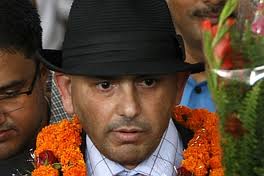
Mr. Govinda Prasad Mainali.

Division 5 of the Tokyo High Court denied the objection filed by Tokyo High Public Prosecutor’s Office in Mainali Case, a 1997 murder case, on July 31st (JST). Previous posts about the Mainali Case here, here and here.

Division 4 of the Tokyo High Court granted the petition for retrial for Govinda Mainali, as well as his release from custody last month. The Prosecutor’s Office immediately filed an objection, but the objection was denied today by Division 5 of the same court. The Prosecutor’s Office has until August 6th to file a Special Appeal to the Supreme Court. If the Prosecutor’s Office does not appeal or loses appeal at the Supreme Court, Division 4 of the Tokyo High Court will hold a retrial for Mainali. It has been reported that it is unlikely that the Prosecutor’s Office will appeal.

Mainali was convicted for a murder in 2000.  In March 2005, Mainali filed for a retrial to the Tokyo High Court. Later, a new DNA testing was conducted. The new test focused on the semen found on and inside the body of the victim. Fifteen samples from the crime scene were tested, but none of the DNA type matched Mainali’s. The unknown profile from the semen did match that of the two pubic hairs found in the crime scene.

The decision which granted Mainali a retrial in June stated that it was likely that the third person whose DNA was on the victim had a sexual intercourse with the victim and later killed her. In the Objection, the prosecution stated that this new evidence only suggests that the victim had sexual intercourse with this unknown third person on the evening of the incident, but the court today denied this claim as unreasonable. The prosecutors also sought a new DNA testing of a substance on victim’s hand, but the court denied the request.

Media report about today’s decision in Japanese can be found here and here.

Wrongly convicted women get much-needed attention

Women are mostly forgotten victims in the scourge of wrongful convictions. For the most part, women are convicted of committing crimes in which there is no biological evidence. Hence, wrongly convicted women are rarely exonerated by the type of indisputable DNA testing that garners wrongly convicted inmates publicity and sympathy.

As noted on http://www.womenandinnocence.com, “Female clients in innocence work represent a different population. That is, they are not more apples, they are oranges, and categorically divergent in some ways from men. By so being they require a body of research and attention particularized so that defense efforts can be most efficiently strategized.”

Zieva Dauber Konvisser has made a significant contribution to that body of research with her article “Psychological Consequences of Wrongful Conviction in Women and the Possibility of Positive Change” in the spring 2012 issue of DePaul Journal for Social Justice. You can read it here.

Blume and Helm on Innocent Defendants Who Plead Guilty

John H. Blume of Cornell University and Rebecca K. Helm have posted the article “The Unexonerated: Factually Innocent Defendants Who Plead Guilty”, Cornell Legal Studies Research Paper (July, 2012) on SSRN. Here is the abstract:

Several recent high profile cases, including the case of the West Memphis Three, have revealed (again), that factually innocent defendants do plead guilty. And, more disturbingly in many of the cases, the defendant’s innocence is known, or at least highly suspected at the time the plea is entered. Innocent defendants plead guilty most often, but not always, in two sets of cases: first, low level offenses where a quick guilty plea provides the key to the cellblock door; and second, cases where defendants have been wrongfully convicted, prevail on appeal, and are then offered a plea bargain which will assure their immediate or imminent release. There are three primary contributing factors leading a criminal justice system where significant numbers of innocent defendants plead guilty to crimes they did not commit. The first is the perceived need that all defendants must plead. The second is the current draconian sentencing regime for criminal offenses. And, the final contributing factor is that plea bargaining is, for the most part, an unregulated industry. This article discusses cases in which innocent defendants plead guilty to obtain their release, thus joining the “unexonerated” and then propose several options the criminal justice system should embrace to avoid, or at least ameliorate the plight of innocent defendants who plead guilty.

DNA Exoneration in Oklahoma Yesterday…

From TulsaWorld.com (more here):

“I can go where I want to now,” said Courtney, 40, before he left the Tulsa County Courthouse.

District Attorney Tim Harris announced in a hearing Thursday morning that based on new DNA evidence, Courtney’s 1996 convictions for armed robbery and first-degree burglary should be vacated.

The decision came a day after a congressional hearing on reforming forensic science and more than three years after the National Academy of Sciences found “serious deficiencies” in the country’s forensic science system and named nuclear DNA analysis the only consistently reliable way to link an individual to pieces of evidence.

On Sept. 27, District Judge William Kellough will decide the terms of the dismissal.

Courtney was convicted of allegedly attacking and robbing Shemita Greer at gunpoint in her east Tulsa apartment on April 6, 1995. Two intruders wore ski masks and took tires, rims and about $400. Greer, who sustained a traumatic brain injury, said Courtney was one of the intruders.

Results from DNA testing available at the time were inconclusive, but microscopic hair analysis allegedly revealed that one red hair from a mask was consistent with a similar hair of Courtney’s.

Courtney maintained his innocence and had three alibi witnesses, but he was convicted in February 1996. He was released on parole in June 2011 after serving 16 years of his 30-year sentence. The Innocence Project, an organization that uses DNA evidence to get wrongful convictions reversed, took on his case in 2007.

After Thursday’s hearing, Innocence Project Co-Director Barry Scheck corrected Continue reading

Another DNA exoneration for the UK?

The US leads the way internationally in exonerating innocent prisoners utilising DNA technology. In the UK, there has really only been one ‘DNA’ exoneration to date, that of Sean Hodgson in March 2009 (read here…) That case demonstrated shocking failings by the then major forensic science provider in the UK; the Forensic Science Service (now closed down). However, there is now a fresh appeal to be heard at the Court of Appeal, in the case of Victor Nealon.

Nealon, a postman, was convicted of attempted rape in 1997, and has been in prison protesting his innocence ever since. In TWO attempts to get his case back to the Court of Appeal via the Criminal Cases Review Commission (CCRC), Nealon’s lawyers were refused ‘speculative’ DNA testing. At trial, the prosecution had claimed that there no DNA evidence. In fact, the victims clothing had never even been tested. Now independent testing HAS revealed DNA on the victims clothing – and it belongs to a man other than Nealon. The CCRC have NOW finally decided to refer his case back the Court of Appeal.

Without even pre-empting what must surely be a foregone conclusion at the appeal courts, this case must surely raise questions about the CCRC and their refusal to undertake DNA testing. With all that is known about the power of forensic testing, and the fact that none had taken place previously in this case, what exactly was the Commission’s rationale for not permitting DNA testing? How often are they refusing such testing? Why has Nealon had to wait this long to get back to the Court of Appeal? These are surely just the first of many awkward questions that must be asked of the CCRC in this case. This is a miscarriage of justice heaped upon a wrongful conviction. Those who have faith in the ability of the CCRC to undertake reasonable investigations into alleged miscarriages of justice must now question that faith.

Read more here: Man jailed for 16 years could be freed through fresh DNA evidence

Former Supreme Court Justice’s Work for Wrongfully Convicted Sheds Light on Justice

Among the many misconceptions about the criminal justice system revealed through DNA exonerations is the myth that conviction errors will get corrected on appeal.  The Innocence Project now lists 292 DNA-proven wrongful convictions. Many of these unfortunate people had exhausted a lengthy appeals process before DNA finally proved their innocence. Former New Jersey Supreme Court Justice Virginia Long, who has committed to working for the wrongfully convicted, recently provided insights into why the courts do not Continue reading

James Taylor:A Life in Ruin!

One of the troubling after effect of a wrongful conviction, remain how victims come to terms with their present situation; how they go past it, put it aside and move ahead. Some never do. Others just resign themselves to fate and the vicissitudes of life. The system is so skewed and unfair to leave a man stranded for apparently no fault of his.

The vexed question of post wrongful conviction compensation, whether and when to pay, indeed, if there is a right to restitution remain a moot point – both with adversarial and inquisitorial jurisdictions. It sounds strange that the system would continue to stigmatise a man for an offense he did not commit or has not been found culpable by a court of competent jurisdiction.

Despite the ‘giant’ stride that has been made in the United Kingdom, and the long line of cases of miscarriages of justice – from the days of the Birmingham Six,  to the establishment of the Criminal Cases Review Commission – it seems cases still seep through the system undetected and uncompensated when they come to light.

James Taylor deserve to get his life back. He must explore all in his power and within the law to see to that, if the pronouncements of Judge Peter Clarke QC is to make any sense. Judge Peter Clarke QC is reported to have said that ‘We find the consequences to Mr. Taylor little less than horrifying’

You can read Taylor’s odyssey here and make up your own mind http://www.bbc.co.uk/news/uk-england-kent-18787249