Category Archives: Exonerations

DNA Exoneration Yesterday in D.C.

Video here.  Motions filed by his attorneys here and here….

From the Washington Post:

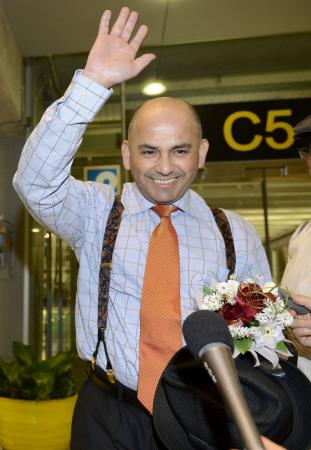
Federal prosecutors agreed Tuesday that a Washington man imprisoned for 20 years for rape is innocent and they acknowledged scientific errors in his case after DNA evidence proved that another man committed the crime.Kirk L. Odom will become the second District man in two months and the third in three years to have his conviction for rape or murder overturned because of erroneous hair matches claimed in court by FBI forensic experts.

Odom’s case was featured in a series of articles in April in which The Washington Post reported that Justice Department officials have known for years that flawed forensic work might have led to the convictions of potentially innocent people.

Odom, 49, served his sentence and was released from prison in 2003. He was convicted of raping, sodomizing and robbing a 27-year-old woman before dawn in her Capitol Hill apartment in 1981. However, court-ordered DNA testing revealed in January that the hair fragment in his case could not have come from Odom.Further DNA testing of stains on a pillowcase and robe indicated that only another man, not Odom, could have committed the crime.

“More than 30 years after Mr. Odom’s conviction, DNA testing reveals that he suffered a terrible injustice,” U.S. Attorney Ronald C. Machen Jr. wrote in a two-page filing in D.C. Superior Court.

“The United States expresses its profound regret for the harm suffered by Mr. Odom, and requests that this Court immediately vacate Mr. Odom’s convictions and dismiss the indictments against him with prejudice,” Machen wrote.

Odom, who was identified in court as the attacker by the victim, was thrilled by the news.

“Oh my goodness, the storm is over, yes yes!” he said from the office of his attorney, Sandra K. Levick, chief of special litigation for the District Public Defender Service.

“There’s no more dark clouds, and the sun is beginning to shine very bright,” said Odom, who lives in Southeast Washington with his wife, Harriet, a medical counselor.

Asked if he would say anything to police or prosecutors, or to the victim, Odom responded, “There’s nothing much to say except, ‘God bless you.’ ”

The Post generally does not name victims of sexual assaults without their permission.

The man whose DNA matched the stains is a convicted sex offender. He will not be charged, because the statute of limitations has expired on the crime, Machen said.

In a written statement, Machen endorsed eliminating the statute of limitations on sex crimes.

“Though we can never give him back the years that he lost, we can give Mr. Odom back his unfairly tarnished reputation,” Machen wrote. “Three decades ago, law enforcement got it wrong: Mr. Odom did not commit this crime. . . . It is never too late to secure justice — even if that means correcting a grave injustice from decades earlier.”

Odom would become the 293rd person cleared by post-conviction DNA testing in the United States, after the judge rules on what is now a joint motion between the prosecution and defense.

Odom would be released from lifelong parole and no longer would have to register as a sex offender. He also would be allowed to seek financial compensation for damages sustained during his 20-year incarceration. Prosecutors also said they would agree to seal his arrest and conviction record.

In May, a Superior Court judge dismissed the murder conviction against Santae A. Tribble, 51, after DNA tests disproved testimony at his trial from an FBI hair expert linking him to the 1978 killing of a District taxi driver.

In December 2009, Donald E. Gates was exonerated of a 1981 rape and murder in Rock Creek Park — again after DNA tests ruled out a hair match claimed by the FBI.

“We salute Mr. Odom for having the courage and fortitude to withstand more than 31 years convicted of terrible crimes for which he was absolutely innocent,” Levick said. “We salute the United States Attorney’s Office for joining us today to remedy this tragic injustice. And we salute the Department of Justice and the FBI for agreeing to a review of all cases involving hair evidence of the kind used to convict Mr. Odom, Mr. Tribble and Mr. Gates.”


Compensation paid in Italian wrongful conviction of Albanian UK Resident

It sounds confusing, but the facts of this case are very important and may set an important precedent for cases using the European Arrest Warrant.  The EAWs permit the extradition of European residents to other EU Member States, usually with nothing but the barest statements of evidence against the individual. In this case, Edmond Arapi, 31, an Albanian who came legally to the United

Kingdom in 2000 was convicted in his absence of a murder in Genoa, Italy in 2006 and sentenced to 16 years. Arapi, was unaware of the case until he was arrested at Gatwick airport in 2009. He was then sent to a UK prison where he spent weeks fighting extradition. The Italians eventually admitted that Arapi had never been to Italy and overturned the conviction. The whole ordeal lasted over a year. The compensation recognises the distress and the impact of the ordeal. One

may hope that this sends a warning shot to judges and administrators who regularly acceded to EAW requests with little attention. Many more Europeans may be being sent to countries to face wrongful charges or conviction. Read the story here:

Edmond Arapi wins payout from Italian court for wrongful murder conviction

Murder Conviction Overturned in Ohio After DNA Tests Results Point to Innocence…

Dewey Jones

Congrats to OIP staff attorney Carrie Wood for her victory in this hard-fought case!

From the Columbus Dispatch (more here):

Dewey Jones’ quest to prove that he isn’t a murderer took another step forward yesterday when a judge overturned his felony conviction and granted a new trial for the Akron man, who has served 17 years of a life sentence.

The ruling by Summit County Common Pleas Judge Mary Margaret Rowlands follows the release in April of new test results showing that DNA recovered from an Akron murder scene didn’t come from Jones.

Jones, 50, was convicted in March 1995 of robbing and killing 71-year-old Neal Rankin, a family friend. Jones previously had been convicted of drug trafficking and passing bad checks, but he has always maintained his innocence in Rankin’s murder.

“I’ve done some things I’m not proud of in life and made some bad choices,” Jones told The Dispatch last year at the Richland Correctional Institution in Mansfield last year. “ But I’ve not hurt or killed anyone.”

The lab tests, conducted by DNA Diagnostics Center of Fairfield in southwestern Ohio, found a partial male DNA profile on the piece of rope used to tie Rankin’s wrists, the knife used to cut the rope, and pieces of Rankin’s shirt sleeves. None of it matched Jones when compared with his DNA.

The testing also found no DNA that matched Gary Rusu, whom the state’s lead Continue reading

Monday’s Quick Clicks…

Of Texas Wrongful Conviction Cases in Exoneration Registry 25% of Them Involved Prosecutorial Misconduct

From the TexasTribune.com (more here):

From the moment 4-year-old April Tucker died, Debbie Tucker Loveless and John Harvey Miller told police and prosecutors that she had been mauled by dogs. But in 1989, the couple was convicted of murdering her and sentenced to life in prison.

Four seemingly endless years later, in 1993, the Texas Court of Criminal Appeals overturned their convictions, after a state district judge ruled prosecutors had withheld critical evidence that vindicated the couple.

Between 1989 and 2011, at least 86 Texas defendants including Loveless and Miller had their convictions overturned, according to the National Registry of Exonerations. In an extensive analysis of court rulings, news reports and pardon statements, The Texas Tribune found that in nearly one-quarter of those cases — 21 in total — courts ruled that prosecutors made mistakes that in most instances contributed to the wrong outcome.

The wrongfully convicted in those cases spent a combined total of more than 270 years in prison.

(See an interactive presentation with details about all the cases.)

In the cases, judges found that prosecutors broke basic legal and ethical rules, suppressing important evidence and witness testimony and making improper arguments to jurors.

Despite the courts’ findings of some serious missteps, the State Bar of Texas reports very little public discipline of prosecutors in recent history.

The State Bar does not track discipline of prosecutors separately from other Continue reading

DNA Exoneration in Illinois Yesterday by Center on Wrongful Convictions…

From USAtoday.com:

CHAMPAIGN, Ill. (AP) – A Chicago man who spent more than 30 years behind bars before DNA evidence helped overturn his conviction in the rape and killing of a 3-year-old girl was released from prison late Friday, just hours after prosecutors dropped the case against him.

Andre Davis speaks with his mother on a cell phone outside the Tamms Correctional Center after being released on Friday in Tamms, Ill.

An Illinois appeals court in March had ordered a new trial for 50-year-old Andre Davis after tests found that DNA taken from the scene of the 1980 killing of Continue reading

Are one out of every 10 rape convictions wrong?

Forensic psychologist Karen Franklin presents an interesting anaylysis on false accusations, false convictions and false recantations here.

Another False Confession Case — Fukawa Case

Takao Sugiyama and Shoji Sakurai

As I posted here, false confessions account for many, if not the majority of, wrongful convictions in Japan. Yet another case illustrates this: the Fukawa Case, in which two people were finally exonerated in 2011 for a 1967 robbery-murder.

The crime occured in August of 1967, in the town of Fukawa, Ibaraki Prefecture, about 40 miles outside of Tokyo. A carpenter was found dead in his home.  His legs were tied with a towel and a shirt, a pair of underpants were stuffed in his mouth, and he was strangled. There were signs of struggle in the house, but it was unclear if anything was taken from the house, except for a white purse the victim supposedly used daily. 43 fingerprints were found but none of them connected to perpetrator(s). There was no physical evidence at the scene.

However, there were several eyewitness statements that two men (one tall man and another shorter man) were near the victim’s house on the evening that the victim was supposedly murdered. This statement lead the police to think there were two perpetrators.

Based on this information, the police investigated more than 180 men in the area, until they found the two men, Shoji Sakurai and Takao Sugiyama,who did not have an alibi on the date of the crime. In October of the same year, both of them were arrested on separate charges, and were interrogated.

Sakurai and Sugiyama were held in police jails (“Daiyo-Kangoku“), and interrogated for hours and days. After 5 days of interrogations, Sakurai confessed to the crime. Based on Sakurai’s confession, the police also forced Sugiyama to confess. They retracted their confession during the interrogation by the prosecutors, but the prosecutors sent them back to police jails, and after continuous interrogations that ensued, they finally gave in and confessed again.

The two contested their guilt at trial. The prosecutors had no direct evidence of their guilt. All they had were: their confessions made during interrogations by police and prosecutors (with the  testimony of interrogators and the partial tape recordings of the interrogations which recorded only the part after they confessed to the crime), and testimonies of eyewitnesses who saw two men on the day of the crime.

There was no physical evidence, including the white purse which was never found. Their confessions during investigation changed repeatedly, Sakurai and Sugiyama’s confessions contradicted each other’s in important parts, they did not match the circumstances of the crime scene, and there was no information revealed in the confessions which unknown to investigators.

Nevertheless the trial court declared that their confessions made during investigation were reliable and sentenced them to life in 1970. The High Court as well as the Supreme Court denied the appeal. Their sentences were finalized in 1978. Continue reading

High-schoolers develop oral history project on wrongful convictions

Rob Warden, executive director of the Northwestern Center on Wrongful Convictions, shared this good news in an email:

Six Chicago high school students—five from Francis W. Parker and one from Whitney Young—recently completed an impressive oral history project focusing on clients and staff of the Center on Wrongful Convictions.

The interviews, both transcribed and video-taped, are posted here.

The project was led by Jeanne Polk Barr, chair of the Department of History & Social Studies at Parker, and Cliff Mayotte, director of Educational Programs for the Voice of Witness Program.

Cliff is a colleague of Parker alumnae Lola Vollen, who co-authored with David Eggers a remarkable book titled Surviving Justice, containing interviews with exonerated defendants.

The oral history project was done in cooperation with Facing History & Ourselves.

The Parker students who conducted interviews were Madison Mullen, Sydney Bronstein, Becca Lewis, Henry Cutler, and Willy Byrne Vogt. The Whitney Young student was Grace Zelle.

Please share this with anyone you think might be interested.

Duke’s Wrongful Conviction Clinic Scores Release, New Trial of Lamonte Armstrong…

From press release:

See news videos here and here….

GREENSBORO, N.C. — A Greensboro man convicted of first-degree murder in 1995 was released from prison Friday after a judge agreed with defense attorneys and a North Carolina assistant district attorney that he should be freed pending a new trial.

LaMonte Armstrong, convicted of the 1988 murder of Ernestine Compton in Greensboro, had served 17 years of a life sentence. He was released by Judge Joseph Turner after defense attorneys David Pishko ’77 and Theresa Newman ’88, a professor at Duke Law School and co-director of the school’s Wrongful Convictions Clinic, presented evidence of his wrongful conviction. Guilford County Assistant District Attorney Howard Neumann joined with Armstrong’s lawyers in recommending his release pending a new trial.

Armstrong’s hearing, originally scheduled for September, was fast-tracked after police uncovered new evidence during a retest of physical evidence from the crime scene.

A team of Duke Law students, many of them now alumni, has been working with Newman, Pishko and Professor James Coleman on Armstrong’s case for years. Their “dogged work,” and the “open minds” of Neumann and Greensboro Police Detective Michael Matthews, resulted in a just outcome, Coleman said.

“The willingness of the Greensboro Police Department and the District Attorney’s office to listen to our concerns and act as amenable, if skeptical, allies in pursuing the truth is a blueprint for how innocence investigations should Continue reading

Yet Another Police Misconduct Revealed in Mainali’s Case

Mr. Mainali, on his way back home.

Previous posts on Govinda Mainali’s exoneration in Japan here, here, and here.

While Mainali went back to his home contry (Nepal) after the Tokyo High Court granted his new trial, yet another misconduct by the police in his case was revealed.

From the Japan Times.

Roommate says police forced him to sign false statement indicating Mainali’s guilt

DHULABARI, Nepal — A Nepalese man who shared a Tokyo flat with compatriot Govinda Prasad Mainali, 45, said Monday he was coerced while in detention in Japan to sign a false statement indicating his roommate had murdered a Tokyo woman in 1997 in order to rob her…….

Khadka said he and Mainali were among five Nepalese migrant workers who lived in a building in Tokyo’s Shibuya Ward adjacent to the vacant apartment where the woman was murdered. Police found her body 11 days after her death.

“Japanese police wanted to establish that Mainali was desperately in need of money at the time of the murder. They made me sign a statement that said Mainali returned to me a few days after the murder a sum of ¥100,000 that he had borrowed from me in February that year,” Khadka told Kyodo News at his residence in Dhulabari, about 300 km southeast of Kathmandu. Continue reading

Exoneration in Argentina..

Here is an email sent yesterday by Justin Brooks, director of the California Innocence Project:

I am so pleased to report that the Argentinian Supreme Court has reversed the conviction of Fernando Carerra.  Carerra’s case was championed by Enrique Pinero, an Argentinian film director and co-founder of our newest innocence project in South America. The Carerra case was the subject of Pinero’s film “The Rati Horror Show.”
http://www.youtube.com/watch?v=xx538juk1KI which we will premiere in Santiago, Chile in 2 weeks at our First Latin American Innocence Conference.
There is an incredible amount of media attention on this case, mostly in Spanish, but here is a short article in English.

http://www.argentinaindependent.com/tag/fernando-carrera/

Mainali Case Reveals Flaws of Japanese Criminal Justice System

Mainali’s wife and his two daughters.

Here is an article by Minoru Matsutani of the Japan Times on the Mainali Case and the flaws of the Japanese criminal justice system that it highlights (read about the Mainali Case here and here).

It points out some of the problematic features of the Japanese system including: (1) prosecutors withholding evidence which would have cleared the defendant (no Brady rule in Japan), (2) not enough disclosure of the prosecution’s evidence, (3) no law to limit the appeal by the prosecution to a not guilty decision by the court, etc. In addition, there were apparently even more hardships for Mainali, who is a Nepalese.

Mainali is expected to leave Japan for his home country this week.

Excerpt:

Mainali case exposes flaws, bias in judicial system –Prosecutors withheld evidence, detained Nepalese after acquittal

Facing retrial, exoneration and freedom after spending 15 years in prison for the 1997 murder of a Tokyo woman — a crime for which he was initially acquitted — Govinda Prasad Mainali could be a case study in the flaws in the nation’s judicial system.

Like other foreigners in violation of their visa status, the Nepalese was placed in immigration detention after his acquittal, pending deportation. But prosecutors had other plans: They made sure he stayed in immigration custody as they retried his case on appeal, bent on a conviction.

To this end, they withheld evidence that would strongly establish reasonable doubt of guilt. In short, they presented, as a spokesman for the state said, what was needed “to prove their case.”

……Mainali lawyer Shozaburo Ishida faulted prosecutors for withholding vital evidence that could have upheld Mainali’s acquittal. Continue reading

Frank O’Connell Exonerated in California Yesterday After More Than 25 Years in Prison….

From LATimes.com:

The criminal case against a former Glendora High School football star who spent 27 years behind bars for a murder he insists he did not commit was dismissed Monday, ending a nearly three-decade legal saga that saw his conviction thrown out.

“I’m just as happy as can be. It’s finally over,” Frank O’Connell said in a phone interview following the hearing in Pasadena court. “I walked into that courtroom 27 years ago thinking I was walking out, and I walked out today for sure a free man. There’s a weight off my shoulders.”

Los Angeles County prosecutors asked for the case to be dismissed, telling Superior Court Judge Suzette Clover that they did not have enough evidence to retry O’Connell, said O’Connell’s lawyer, Verna Wefald. She said prosecutors indicated that the investigation into the 1984 fatal shooting of Jay French, a South Pasadena maintenance man, would continue.

O’Connell, 54, said he hoped that the investigation would finally prove his innocence.

“If they could find the people involved, I could be totally exonerated,” he said.

O’Connell was released on bail in April after Clover ruled he should be given a new trial. The judge found that during the first trial in 1985, Sheriff’s Department detectives failed to disclose records pointing to another possible suspect, and may have improperly influenced witnesses.

At a hearing last year, the prosecution’s key witness from the first trial recanted, saying he never got a good look at the killer and felt pressured to make a positive identification after tentatively identifying O’Connell as the gunman during a photo lineup. O’Connell, whose conviction was based largely on eyewitness testimony, has always maintained that he had nothing to do with the killing.

O’Connell said Monday that he feels no anger about what occurred and hopes to restart his life in Colorado working for a custom cabinet-making company run by the stepfather of his son, who was just 4 when O’Connell was sentenced to 25 years to life in prison.

“Anger and frustration just drag you down,” he said. “I don’t want to hate on people. I can’t get my time back. I won’t be able to fix my son’s owies and take him to school, so there’s no sense in being mad at it. Just enjoy today.”

O’Connell expressed gratitude to the organization that championed his case, Centurion Ministries, a nonprofit organization that advocates for the release of inmates it contends were wrongfully convicted. He said he hoped one day to talk to French’s family, who have expressed dismay at O’Connell’s release and said they believe he was responsible for the killing.

“I feel for the French family. It’s a terrible thing that happened. They thought for years that I had my hands involved in this. I can’t change how they feel,” he said. “I am willing to do anything — anything — to help them find the truth.”

Banks Story Highlights Other Innocence Efforts

With the amazing story of Brian Banks‘s exoneration by the California Innocence Project and his numerous tryouts with NFL teams, there are many stories on the media about innocence efforts. It is great that all the sports fans will get to know what the innocence work is all about.

Brian Banks’s tryout with the Seattle Seahawks was a huge news in local media as well. It also highlighted local innocence efforts. Several news featured the work of the Innocence Project Northwest, located at the Univestiy of Washington School of Law.

Here is a story by KIRO FM News.

And here is a brief story by King 5 News.

Excerpt from the King 5 News: Media attention this week on aspiring Seahawks team member Brian Banks is shining light on the Innocence Project, a national effort to free and exhonorate wrongly convicted people from prison…

In Seattle, the Innocence Project Northwest operates out of the University of Washington School of Law, where students, faculty and volunteer legal experts have helped secure freedom for at least 16 people in Washington prisons since 1997. Continue reading

Role of Prosecutors in Postconviction Proceedings

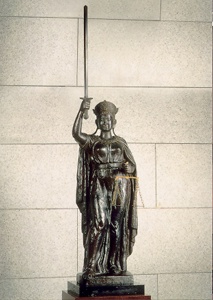
Lady Justice, in the Supreme Court of Japan

As I posted on Thursday, there was a decision by the Tokyo High Court to grant a retrial to Govinda Mainali. The High Court also ordered his release. He was finally released after 15 years of confinement. Since he has a conviction for visa violations, he is placed in immigration custody, and will be sent back home to Nepal, to his family.

However, the Tokyo High Public Prosecutor’s Office immediately filed an objection to the High Court. Even if the Court denies the objection, they can still file an appeal to the Supreme Court. Deputy chief prosecutor of the Tokyo High Public Prosecutor’s Office was quoted as saying that the Court’s decision to grant Mainali a retrial was “absolutely unacceptable”.

Meanwhile, Asahi Shimbun news reported on June 3rd that the Supreme Public Prosecutor’s Office will be holding the first meeting ever with the public prosecutors who deal with postconviction claims of innocence. They are apparently alarmed about the relatively high number of recent court decisions to retry cases. Of the eleven decisions (in death penalty or life sentence cases) to grant a retrial since the end of WWII, five  were handed down after 2009 (decisions in Ashikaga, Fukawa, Fukui, Higashi Sumiyoshi, and Mainali cases. Note that four of these involve false confessions).

The court decisions in these cases were made possible in part by the state-of-the-art DNA testing. As the exonerations all over the world have made it clear, DNA is a strong tool to prove innocence of the wrongfully convicted.

However an exoneration means the police and prosecutors who investigated, prosecuted, and helped to convict an innocent person will be criticized by the public. Thus, it was reported that the prosecutors are worried that these decisions to retry cases “will undermine the public’s trust to the investigation process, and therefore worrisome from the standpoint of public safety”. An executive prosecutor said that they “will do their best to battle these retrial claims by developping prosecution’s scientific knowledge.”

If the prosecutors truly believe what they said in these media reports, it is an evidence that the public prosecutors are worried more about “winning” postconviction cases than finding out the truth. Continue reading

J. Barry on Actual Innocence and the Double Jeopardy Clause

I came across a great article by Professor Jordan Barry of University of San Diego School of Law on prosecution of the exonerated.

Jordan Barry, Prosecuting the Exonerated: Actual Innocence and the Double Jeopardy Clause, 64 Stanford Law Review 535 (March, 2012). It is obtainable on SSRN.

Here is the abstract:

In certain circumstances, a prisoner who challenges her conviction must convince a court that she is actually innocent in order to get relief. Unfortunately, such judicial exonerations often fail to persuade prosecutors, who are generally free to retry prisoners who successfully challenge their convictions. There have been several instances in which prisoners have convinced courts of their innocence and overturned their convictions, only to have prosecutors bring the exact same charges against them a second time. This Article argues that the Double Jeopardy Clause protects these exonerated defendants from the ordeal of a second prosecution. Permitting prosecutors to continue to pursue such individuals contradicts established Supreme Court case law, violates the policies animating the Double Jeopardy Clause, and impairs the operation of the criminal justice system.

Michigan Arson Exoneration Yesterday….

After an exoneration in Illinois in an arson case just last week, Michigan followed it up with one yesterday (thanks to the U. of Michigan Innocence Clinic).

From the Sentinel-Standard:

After spending 26 years in prison, David Gavitt is a free man.

Gavitt, now 53, was convicted in 1986 in the arson deaths of his wife and two daughters. He was serving three life sentences at Carson City Correctional Facility when lawyers and law students from the Michigan Innocence Clinic took on his case three years ago and filed a Motion for Relief from Judgment last fall.

After extensive examination of trial records and the evidence, Ionia County Prosecutor Ron Schafer signed a stipulation and order, acknowledging that Gavitt was entitled to a new trial, that the prosecutor’s office is not going to retry him, and that he should be released from prison.

Chief Circuit Court Judge Suzanne Hoseth-Kreeger ordered that Gavitt’s charges Continue reading

Knoops Innocence Project in the Netherlands Files For Exoneration for Multiple Defendants in Murder Case

By J.D. Schoone of the Knoops Innocence Project in Amsterdam:

According to the Attorney-General of the Supreme Court of the Netherlands, six people might have been wrongfully convicted in a murder case. The case centers on the murder of a Chinese woman in a Chinese restaurant in 1993. The six suspects, most of them teenagers at that time, were convicted in 1994 with sentences of 2 years imprisonment (for the three female suspects) and 10 years imprisonment (for the three male suspects).

Now, with so much information on the causes of wrongful convictions, the case has been re-examined. It became evident that the suspects have been pressured by the police to confess to the crime. They were also shown photos of the crime scene, which resulted in knowledge of the crime scene which was later used against the suspects. Furthermore, exculpatory testimonies of eyewitnesses were not submitted to the defense or to the court. Finally, forensic experts which have reexamined blood traces found at the crime scene have concluded that the DNA corresponds to an Asian male, whereas none of the six suspects are of Asian origin.

The Knoops’ Innocence Project, representing three of the six suspects, will file a supporting revision request with the Supreme Court of the Netherlands, in addition to the lengthy request (160 pages) of the Attorney-General. If revision is granted, then the six suspects will receive a retrial. The Knoops’ Innocence Project hopes that this case shows that wrongful convictions are not only an American phenomenon, but happens worldwide. So far, four wrongful convictions have been overturned in the Netherlands. With these six and other possible wrongful convictions currently being investigated, this number can rise drastically in the following years.

Breaking News: Tokyo High Court Grants Retrial for Mainali

“Retrial Granted!!” — from Mainichi Shimbun News.

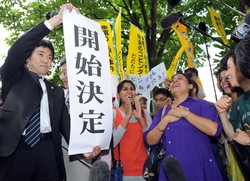
The Tokyo High Court granted the petition for retrial for a 1997 murder case today (Friday June 7, 2012, JST). It also granted petitioner Govinda Mainali‘s release from custody.

Of the cases where a death sentence or a life sentence were imposed in Japan since the end of World War II, it is said to be the eleventh case that a court granted a retrial.

The Court ruled that if the new DNA evidence was presented at the original proceeding, Mainali would not have found guilty of the crime. News can be found here and here (in Japanese).

However, the prosecutors may file an objection within three days (and they likely will). Even if the Court rejects the objection, the prosecutors can still file a special appeal to the Supreme Court…

Here is what happened in this case:

The victim was found strangled to death in a vacant apartment in Shibuya, Tokyo on March 19th 1997.  She was also robbed 40,000 yen, and it was said that she was murdered on the night of March 8th, 1997. The case became well known since the victim was said to have lead a double life: a graduate of one of the top colleges in Japan, she worked on weekdays at a then very prestigious company, but worked as a prostitute on weekends.

There was a used condom in the toilet of the empty apartment that the victim’s body was found. DNA testing of the semen in the condom revealed that the sperm came from Govinda Mainali, a Nepali national Continue reading