Category Archives: False confessions

The Passing of a Forgotten (Wrongfully Convicted) Man

George Whitmore Jr. “never saw himself as a race activist. In the 1960’s and 1970’s, from prison and on the streets, he watched the civil rights movement and the Black Power Movement at a wary distance. He did not judge people by the their skin color. He knew he had been the victim of a grave injustice, but he did not assume that the detectives who framed him, or his slow torture at the hands of a rigged system, were motivated by racial prejudice.” Thus writes, T.J. English in his New York Times piece (here), “Who Will Mourn George Whitmore?”

According to English—who befriended Whitmore and has written The Savage City: Race, Murder, and a Generation on the Edge about Whitmore and his times—in April, 1964, Whitmore, at 19 years old, was picked up by New York City detectives and interrogated for 22-hours before signing a confession to Continue reading

New York Bar Association Advocates Videotaped Interrogations, Again

Thank you, Seymour W. James Jr., President of the New York State Bar Association for your Oct. 1 Letter to the Editor of The New York Times (here) supporting videotaping of custodial police interrogations, widely recommended as a best practice that can reduce false confessions. As you noted, since 2004, the NY State Bar Association “has supported mandatory videotaping legislation and has sponsored successful pilot programs.” The legislation has been introduced repeatedly but failed passage again in the last session of the New York Legislature.

With Mayor Michael R. Bloomberg’s pledge to support NY City Police Commissioner Raymond Kelly’s decision to voluntarily record interrogations in serious crimes, this important legislation may be more likely to pass for Continue reading

Understanding the Unthinkable: False Confession

According to Rob Warden, of 70 wrongful convictions in Cook County, Illinois, between 1986 and 2011, a false confession was involved in more than half, including both those who falsely confessed to a crime they did not commit and those implicated by another person’s false confession. Warden should know. Co-founder and executive director of the Center on Wrongful Convictions at Northwestern Law, he’s an award-winning legal affairs journalist, whose efforts to expose official misconduct—physical abuse in interrogations in Illinois—resulted in a more complete understanding of the phenomenon of false confession.

Warden’s 11-minute TEDx video (here) is a primer on why false confessions occur and how the criminal justice system can reduce them.

Warden notes that physical torture does not account for the majority of false confessions today. Most are the result of psychological pressures that could prompt many reading this article to confess to a crime not committed. Continue reading

False confessions continue to taint justice system

The recent exoneration of Damon Thibodeaux in Louisiana and overturned conviction of Richard Lapointe in Connecticut are two new reminders of the devastating effects of false confessions induced by overzealous interrogators.

Thibodeaux was sentenced to death and spent 15 years in prison for the murder of his half-cousin before his exoneration by DNA testing on September 28. Lapointe, a mentally disabled dishwasher convicted of murder in 1989 was granted a new trial on On October 1. Both men claimed they were manipulated into falsely confessing to the crimes.

You can read about Thibodeaux’s exoneration — the 300th achieved by DNA testing —here and here.

While Thibodeaux is now a free man, Lapointe still faces the possibility of a new trial. The state’s top appeals court only ruled that prosecutors had denied him access to notes by a police detective that tend to support his alibi defense. But longtime innocence advocate Donald S. Connery makes a compelling case of Lapointe’s innocence in this opinion column.

Forensic psychologist Karen Franklin gives an excellent explanation of how a false confession “contaminates everything and everyone in touches — from the prosecutor, the judge, and even the suspect’s own attorney” on her informative blog here.

Three Sequential Errors Red Flag Wrongful Convictions

Three recurring contributors to wrongful conviction are the subject of a Pacific Standard article (here) based on a paper (here) by Steven Drizin, co-founder of the Center on Wrongful Convictions for Youth and Richard Leo, a noted social psychologist.

The first of these sequential errors is the selection of an innocent person as the (often sole) guilty suspect. The second, “coercion error” is pursuing “a guilt-presumptive, accusatory interrogation that invariably involves lies about Continue reading

Wrongful Conviction and Alleged Misconduct Prompt $8.5 Million Settlement

Defense attorney Debi Cornwall, a partner in the New York firm of Neufeld Sheck & Brustin, called it “one of the worst cases of systemic police misconduct I’ve seen in the entire country.” As reported in the Courier-Journal (here) Edwin Chandler, who served nine years in prison for a murder he did’t commit, has reached a settlement in a federal lawsuit in which Louisville metro government will pay him $8.5 million.

According to the report, “The settlement was reached after federal court-ordered Continue reading

Innocence Project Achieves 300th DNA Exoneration

Louisiana death-row inmate Damon Thibodeaux exonerated with DNA evidence

First, here is some interesting, relevant data to which this case adds:  (the emphasis is mine)

Of 83 exonerations in the past five years, more than 15 percent didn’t involve rape. As many as a quarter of the cases involved a false confession, in which one or more defendants admitted to the crime under interrogation.

Samuel Gross, an author of a report by the recently created National Registry of Exonerations at the University of Michigan, calculated that based on the proven rate of exonerations among death-row prisoners in the past two decades, U.S. courts appear to have an error rate in capital cases of between 2.5 percent and 4 percent.

.
In June, researchers examining biological evidence from hundreds of Virginia rape convictions between 1973 and 1987 determined that new DNA testing appeared to exonerate convicted defendants in 8 percent to 15 percent of cases.
.
See Washington Post story here.
.
And here is a link to a CNN article on the story.
.
Here is a link to the Innocence Project’s web page featuring the story.

Wednesday’s Quick Clicks…

  • USA Today article about inadequate compensation for exonerees in U.S.
  • The NYPD and the Innocence Project have been awarded a $1.25 million grant that will help better catalogue evidence for those seeking to prove their innocence through DNA testing.  The money, awarded by the National Institute of Justice, will be distributed over two years
  • LAPD Police Chief responds to recent exoneration under his watch
  • Wall Street Journal: Academic study shows innocent plead guilty at a high rate

New York City Police Won’t Wait for Legislature to Videotape Interrogations

New York Police Commissioner Raymond Kelly announced last week that the department will begin a policy of videotaping custodial interrogations in murder, serious sex crimes, and felony assault cases. This comes after the New York State Legislature failed to pass legislation requiring videotaping statewide, as recommended by a task force created by Jonathan Lippman, Chief Judge of the Court of New York. The New York Times praised the initiative in an editorial yesterday (here).

Commissioner Kelly noted a benefit that is becoming a factor for professionals in the criminal justice system, namely, that videotaping interrogations can “enhance public confidence in the criminal justice system by increasing transparency as to what was said and done.”

Supreme Court Denies Release in Higashi-Sumiyoshi Case

Previous posts on Higashi-Sumiyoshi Case here (part 1) and here (part 2).

This is an arson case where a couple (Tatsuhiro Boku and Keiko Aoki) was convicted in 1999 of setting their house on fire and killing an 11 year old girl (Aoki‘s daughter) in Higashi-Sumiyoshi Ward, Osaka Prefecture.

Boku and Aoki each filed a petition for retrial to the Osaka District Court in 2009, and were granted a retrial in March 2012.  The presiding Judge stated in the decision that the petitioners’ confessions were unreliable and unreasonable from a “scientific viewpoint”, taking into consideration the result of the new experiment.

The prosecutors instantly appealed the ruling, and the retrial petition is currently being reviewed by the Osaka High Court.

Osaka District Court had also ordered Boku and Aoki’s immediate release. The prosecution also appealed this ruling. Osaka High Court agreed with the prosecution and reversed the District Court’s decision. The petitioners then filed a special appeal to the Supreme Court, but it denied the appeal on September 18th. The Supreme Court merely stated that the conditions of special appeal did not meet in the case. It did not even go into the actual facts of the case…

Even in the rare instances where a retrial is granted, the appeal process may take years. After the lengthy appeals process, the actual retrial process may take even longer…

A statement by the supporters can be found here (in Japanese).

Brian Banks, Exonerated of Rape, Signs to Play Pro Football

The Brian Banks case has appeared on this blog before with postings by Nancy Petro here and Kana Sasakura here.

A high school football standout in southern California, he was wrongfully convicted and imprisoned for rape.  With the help of the California Innocence Project, he was exonerated earlier this year.  His dream has always been to play pro football.

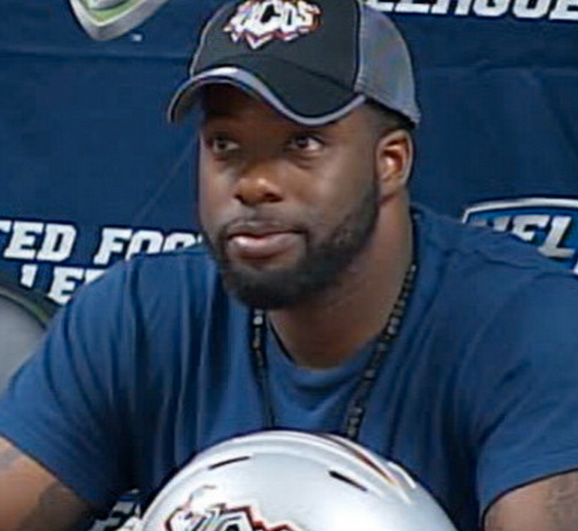
He has just signed with the Las Vegas Locomotives, and hopes that this will be his stepping stone to the NFL.  See story here.

Thursday’s Quick Clicks…

  • On November 9th, the Temple Law Review and the Pennsylvania Innocence Project will hold a symposium on false confessions
  • Police officers in New York City will soon videotape many more interrogations of suspects because jurors are so used to seeing taped interviews on television shows like “CSI” they’ve come to expect recordings as routine, Police Commissioner Ray Kelly said yesterday
  • Review of the 10th Anniversary run of The Exonerated in NYC
  • Exoneree Danny Colon seeks $120 million from NYPD and a prosecutor for wrongful conviction
  • Wrongful convictions still at risk in the UK
  • Book by Damien Echols of the West Memphis 3 is released

New Scholarship Spotlight: The Unexonerated: Factually Innocent Defendants Who Plead Guilty


Professor John Blume

John Blume of Cornell and Rebecca Helm have posted the above-titled article on SSRN.  Download article here.  The abstract states:

Several recent high profile cases, including the case of the West Memphis Three, have revealed (again), that factually innocent defendants do plead guilty. And, more disturbingly in many of the cases, the defendant’s innocence is known, or at least highly suspected at the time the plea is entered. Innocent defendants plead guilty most often, but not always, in two sets of cases: first, low level offenses where a quick guilty plea provides the key to the cellblock door; and second, cases where defendants have been wrongfully convicted, prevail on appeal, and are then offered a plea bargain which will assure their immediate or imminent release. There are three primary contributing factors leading a criminal justice system where significant numbers of innocent defendants plead guilty to crimes they did not commit. The first is the perceived need that all defendants must plead. The second is the current draconian sentencing regime for criminal offenses. And, the final contributing factor is that plea bargaining is, for the most part, an unregulated industry. This article discusses cases in which innocent defendants plead guilty to obtain their release, thus joining the “unexonerated” and then propose several options the criminal justice system should embrace to avoid, or at least ameliorate the plight of innocent defendants who plead guilty.

Englewood Four are Officially Innocent

On Friday afternoon, Sept. 14, 2012, Judge Paul Biebel, chief judge of the Criminal Division of the Cook County (IL) Circuit Court, granted certificates of innocence to four men—Vincent Thames, Terrill Swift, Harold Richardson, and Michael Saunders—who became known as the Englewood Four after their conviction of the 1994 rape and murder of a South Chicago alleged prostitute.

Ranging in ages from 15 to 18 at the time, the four teens confessed during interrogation by Chicago police. No physical evidence connected them to the Continue reading

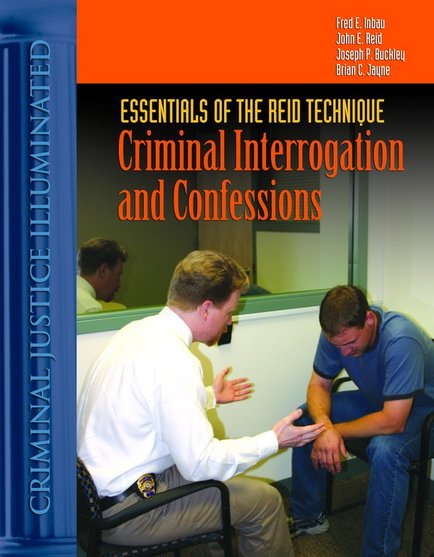
Canadian Judge Blasts Reid Interrogation Method for Inducing False Confessions…

From the CalgaryHerald.com:

An Alberta judge has blasted a police interrogation technique used across North America because of the possibility it can lead to “overwhelmingly oppressive situations” and cause innocent people to make false or coerced confessions.

The ruling last month by Provincial Court Judge Mike Dinkel stems from a case in which a day-care operator was charged with aggravated assault after a child in her care suffered a serious head injury.

Dinkel said Calgary police subjected Christa Lynn Chapple to an eight-hour interview and interrogation that “had all the appearances of a desperate investigative team that was bent on extracting a confession at any cost.”

Even though the accused asserted at least 24 times that she wanted to remain silent, Detective Karla Malsam-Dudar disregarded that right, continuing to prolong the interview with lengthy monologues, constant interruptions and persistent questioning.

The accused’s free will was overborne to the point where she told police what they wanted to hear, the judge concluded.

Citing other court rulings that have been critical of the so-called Reid Technique Continue reading

Friday’s Quick Clicks…

Texas District Judge Recommends New Trial; Incriminating Statements “illegally obtained”

“For our justice system to work it must make two important promises to its citizens: A fundamentally fair trial and an accurate result. If either of these two promises are not kept, our system loses its credibility, our citizens lose their faith and confidence in our court system and eventually our decisions and laws become meaningless. Just as it is important to keep jury decisions intact, judges have a duty to set things right. It is this court’s recommendation to the Texas Court of Criminal Appeals that the applicant Daniel Villegas’s request for a new trial should be granted.”

With these words from Texas District Court Judge Sam Medrano Jr., supporters of Daniel Villegas, 35, cheered yesterday and he wiped away tears. Medrano’s 78-page opinion strongly criticized the evidence used to convict Villegas, imprisoned Continue reading

Tuesday’s Quick Clicks…

  • In Australia, David Harold Eastman one step closer to overturning his conviction based on fresh evidence of possible innocence
  • Michigan Supreme Court limits expert testimony regarding false confessions
  • Video:  Patrick Joseph Hill, one of “The Birmingham Six” in the UK, gives a visceral account of the anger and ongoing trauma faced by him and other victims of wrongful conviction.
  • Zackary Stewart, imprisoned for four years for a murder he didn’t commit, filed a civil suit against three law enforcement officers who investigated the case and the Stone County Sheriff’s Department in Missouri.  In the complaint filed Friday, Stewart alleges Stone County investigators violated his constitutional rights, had inadequate training, and abuse of police and arrest power on the citizens of Missouri.  The lawsuit in U.S. District Court cites seven points, including malicious prosecution, false arrest, and wrongful incarceration.  Video here
  • Thomas and Raymond Highers, brothers, granted new trial in Michigan based on new evidence of innocence
  • Video of exoneree Brian Banks on the Tonight Show in the U.S.
  • An article summarizing the American press on the death of the Lockerbie Bomber, who many outside of the U.S. believe was wrongfully convicted

Consent Decree with New Orleans PD Includes Recorded Interrogations…

From Nola.com:

Consent decree here….

U.S. Attorney General Eric Holder and local officials will announce Tuesday in New Orleans a wide slate of reforms in the New Orleans Police Department, ending months of negotiation over the most far-reaching federal consent decree of its kind in the country, according to a source with knowledge of the negotiations. The 125-page agreement, which a federal judge must endorse, will serve as a road map for change in the city’s long-embattled police department. The federal oversight mandated by the agreement will stick for at least four years, to be overseen by a monitor and a federal court judge, the source told The Times-Picayune.

Under the terms of the deal, the NOPD will be forced to address numerous deficiencies, most of which the U.S. Department of Justice highlighted last year in a withering critique of virtually every aspect of the force.

In order to break away from federal scrutiny, the agency must be free of violations for two consecutive years, the source said. If the NOPD fails to do so, a federal judge can extend the oversight or impose other penalties.

The decree dictates changes big and small, from policy tweaks to administrative reconfigurations and more. Among the changes outlined in the decree: how cops must conduct traffic stops, searches and arrests; how they examine officer use of force; and how they interrogate citizens. Unlike now, officers will be required to audiotape and videotape every suspect interview, the source said.

In addition, the federal order mandates changes to the NOPD’s troubled system in which officers work off-duty, paid security details for private interests. The city and the department previously announced changes in the details system, creating an oversight agency within City Hall, a move that aligns with what is required under the decree, the source said.

Mitchell Rivard, spokesman for the U.S. Department of Justice, declined to comment when contacted by The Times-Picayune on Monday. U.S. Attorney Jim Letten, who oversees the eastern district of Louisiana, also declined to comment.

A spokesman for Mayor Mitch Landrieu did not return a call for comment.

NOPD spokeswoman Remi Braden declined to comment. She said police Superintendent Ronal Serpas was out of town Monday.

“We’re not confirming anything about the consent decree, and we can’t discuss the consent decree,” she said.

New mandates for NOPD

For months, City Attorney Richard Cortizas and his subordinates have negotiated aspects of the decree with the federal government, including members of the Justice Department and Letten’s staff.

Some of the more contested changes include investigations into the use of police force and implementation of a new system of police details that Landrieu outlined in late May.

Investigations into police shootings and other use of force will be taken out of the homicide division and directed to a new team, which will report to the Continue reading

Tuesday’s Quick Clicks…