Category Archives: Inquisitional and adversarial systems of justice

Innocence Network UK (INUK) and the CCRC

Dr. Michael Naughton, founder and director of the Innocence Network UK (INUK) has been quite vocal in his criticisms of the British Criminal Case Review Commission, the government agency designated to inquire into alleged wrongful convictions and refer cases back to the Court of Appeals.   Of the most than 13,000 applications it has received since its creation in 1995, less than 4% have been referred back to the Court of Appeals for further proceedings (far less than the CCRC’s predecessor, which was viewed as inefficient and too restrictive).  Naughton’s detailed criticisms of the CCRC process are outlined here and here.  Anyone interested in how Innocence Commissions functions would be wise to become familiar with Naughton’s scholarship on the subject (link to his book and a series of articles here).

INUK is sponsoring a major symposium on the need to reform the CCRC on March 30th, details here.  Speakers include:

Chris Mullin (Former MP)
Professor Michael Zander QC (Emeritus Professor, LSE and Member of the
Royal Commission on Criminal Justice)
Mark George QC (Garden Court North)
Mark Newby (Solicitor Advocate, Jordans Solicitors)
Dr Michael Naughton (Founder and Director, Innocence Network UK)
Laurie Elks (Ex-Commissioner of the Criminal Cases Review Commission)
David Jessel (Ex-Commissioner of the Criminal Cases Review Commission) Professor Richard Nobles (Queen Mary University, London)
Dr Eamonn O’Neill (Investigative Journalist, University of Strathclyde)
Paddy Joe Hill (One of the Birmingham Six)
Susan May and Eddie Gilfoyle (alleged victims of wrongful conviction)
Bruce Kent (Chair, Progressing Prisoners Maintaining Innocence
Russ Spring (West Midlands Against Injustice)

Extensive Piece on Dr. Michael Naughton and the Innocence Network UK

Here is a is very nice piece on the founding and evolution of the Innocence Network UK.  The article also discusses Founder and Director Dr. Michael Naughton’s criticisms of the CCRC (Criminal Case Review Commission), a point that Naughton has been quite outspoken about.  Very interesting read.

Dr. Michael Naughton of Bristol U.

Naughton’s book on the CCRC available here.  A series of articles by Naughton on the CCRC and innocence work in the UK available here.


DA-turned bestselling novelist reveals ‘dirty little secret”

William Landay’s brilliant new legal thriller, Defending Jacob, has created quite a buzz. It has been compared favorably with Scott Turow’s Presumed Innocent, which is pretty heady territory.

Like Turow, Landay is a former prosecutor. And like Turow, Landay issues an indictment of our criminal-justice system on several levels.  Defending Jacob is not about a wrongful conviction. It is as much a family drama as it is a legal one, and it takes many dramatic turns before what one seasoned reviewer called its “astonishing” ending.

Continue reading

Thoughts on the Oklahoma Innocence Collaboration Act

The newly formed Oklahoma Innocence Project, headed by well-known innocence attorney Tiffany Murphy, is working with legislators to pass the Oklahoma Innocence Collaboration Act.  A House subcommittee passed the bill 9-0 last month, and it now is heading to Appropriations and Budgets Committee.  The bill appears to set up a mandated structure where the Oklahoma Innocence Project could send cases it felt involved problematic scientific analysis for review to the forensic labs at University of Central Oklahoma.  The university department would analyze the case and write a report, and then the case would be sent to the Oklahoma State Bureau of Investigations, which would review the findings and take action if necessary.

I wonder how this system will work in practice.  The structure seems to take the case out of the adversarial system.  Instead of relying on their own experts to evaluate the case, and then present those findings in court, the case will be reviewed by state officials (at the Oklahoma Innocence Project’s referral), who, as anyone in this field knows, often suffer from tunnel vision or are loathe to admit a mistake.  The attacks by prosecutors last week against the North Carolina Innocence Commission are just one recent example of this problem.

But the following quote from the bill’s sponsor caught my attention:

“We’re the only state that doesn’t allow people that are incarcerated when new evidence comes along to use that evidence to prove their innocence.”

Can this actually be true?  Oklahoma doesn’t have a “motion for new trial” rule or Continue reading

Friday’s Quick Clicks….

  • Many believe wrongful convictions are sometimes caused by pressure on the cops to solve high-profile cases.  This pressure has caused the D.C. police to come up with some creative accounting to claim a 94% closure rate in homicide cases.
  • Major League Baseball’s MVP Ryan Braun exonerated from a wrongful suspension for using steroids…Green Bay Packers QB Aaron  Rodgers says Braun is an innocent man, although MLB execs say Braun is guilty and vehemently disagree with the ruling.  Do MLB execs have tunnel vision?
  • After an exoneration and release in Bangladesh, the society struggles with questions like how did it happen, and will the exoneree be compensated?  Sound familiar?
  • All remember Mike Nifong, the infamous D.A. from Durham, NC in charge of the Duke Lacrosse Case.  His successor Tracey Cline is now under fire for allegedly being overzealous, attacking a sitting judge, and not always having the facts to back up her allegations.  More here.
  • The State of Utah has appealed the exoneration of Debra Brown, a woman exonerated last year by the Rocky Mountain Innocence Center.
  • Wrongful conviction in the States is impacted by the trend of mass incarceration.  Here’s an interesting new article from The New Yorker attempting to explain America’s mass incarceration.
  • A retrospective on a famous case of alleged wrongful conviction in Australia of a man named Darryl Beamish.
  • Apparently in Kathmandu, like in the U.S., there’s rarely punishment for public officials like judges whose conduct leads to gross miscarriages of justice.
  • The disciplinary charges against a Texas attorney for making millions representing exonerees in state statutory compensation claims (my understanding is that the state statutory claims involved not much more than filing paperwork to obtained undisputed amounts) was dismissed.  The disciplinary committee plans to appeal, calling the contingency-type fee “unconscionable” in this type of case.  We have, unfortunately, had this problem in Ohio as well.

The polygraph and false confessions

False confessions are a leading cause of wrongful convictions. According to the Innocence Project, about 25 percent of the documented DNA exoneration cases involved incriminating statements, full confessions or guilty pleas by innocent suspects.

The polygraph is an important tool in the extraction of false confessions. Despite the well-documented inaccuracy of the polygraph, police in North America (less so in Europe and other areas) still rely heavily on the “lie detector” and its even less accurate cousin, the voice stress analyzer, in the investigative process.  If an innocent suspect fails the polygraph exam, police will use the results to persuade him or her that they must be guilty. In some cases, police will tell the suspect that they failed the exam even when they didn’t in an attempt to obtain a confession.

Given the polygraph’s inaccuracy and record of being used to obtain confessions, I am continually amazed to come across cases in which defense attorneys Continue reading

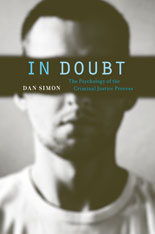
In Doubt: The Psychology of the Criminal Justice Process

Here’s a new book that looks interesting and on-point entitled In Doubt:  The Psychology of the Criminal Justice Process by Dan Simon, a professor of psychology at the University of Southern California.  The abstract reports:

The criminal justice process is unavoidably human. Police detectives, witnesses, suspects, and victims shape the course of investigations, while prosecutors, defense attorneys, jurors, and judges affect the outcome of adjudication. In this sweeping review of psychological research, Dan Simon shows how flawed investigations can produce erroneous evidence and why well-meaning juries send innocent people to prison and set the guilty free.

The investigator’s task is genuinely difficult and prone to bias. This often leads investigators to draw faulty conclusions, assess suspects’ truthfulness incorrectly, and conduct coercive interrogations that can lead to false confessions. Eyewitnesses’ identification of perpetrators and detailed recollections of criminal events rely on cognitive Continue reading

Medwed’s New Book on Prosecutorial Ethics and Tunnel Vision

Innocence Network Board Member Daniel Medwed has a new book coming out on prosecutorial ethics and tunnel vision.  Purchase here.

Here is the abstract: Continue reading

Gallery

Wrongful Conviction in a Financial Crimes Case?

It appears there may have been a wrongful conviction in a U.S. federal financial crimes case involving a Goldman Sachs computer programmer.  You don’t see claims of wrongful conviction too often in financial crime cases.  The 2nd Circuit federal appellate … Continue reading

Gallery

Trial by Jury: Is It About Time for Nigeria?

Nigeria’s adversarial justice system, pitches the prosecutor against the defense, in a fierce evidential ‘duel’ as to the guilt or otherwise of an accused person. That leaves a stand-alone bench to determine – on the basis of the weight of … Continue reading

Injustice to increase due to cuts in interpreter service?

Image

In the UK, we have already had cases where gross injustice has occurred because of a lack of proper translation during trials (see the infamous Satpal Ram case here… and here… where Bengali witness testimony was not translated because of a lack of an interpreter and the judge said that the court would ‘get the gist’ of their vital testimony with him translating even though he didn’t speak Bengali.) Now cuts to the justice system risk even greater, and more frequent injustice with cuts to the interpreter service. It cannot be underestimated how important it is for the suspect/defendant to be able to know what is being said, and for the authorities and juries etc. to understand exactly what the defendant is saying.

Read BBC news item here:

Court chaos follows interpreter change

“The government is hoping to save £18m a year by changing how interpreters are provided for court hearings – but it is said the new system is causing chaos and costly delays.”

And the fallout, just two weeks into the new private interpreter contract:

Courts given green light to hire own interpreters as ALS struggles to cope

Gallery

New Zealand considers alternatives to jury trial

This gallery contains 1 photos.

The Law Commission of New Zealand have announce an online public consultation looking at alternatives to the jury trial: Alternative models for prosecuting and trying criminal cases.  Some of the ‘alternatives’ posited include lone judges sitting with ‘semi-professional’ jurors. Some … Continue reading