Category Archives: Prosecutorial conduct (good and bad)

Utah AG: The Innocence Movement and 12 Angry Men…

12 Angry Men, Roberto Roman and Factual Innocence in the Debra Brown Appeal
By Utah Attorney General Mark Shurtleff

From Utahpulse.com:

In 1957, Henry Fonda starred as Juror Number 8 in the courtroom film classic 12 Angry Men. I loved the drama of the jury room and the movie became a personal favorite. Five years ago, the Chicago-Kent Law School conducted a symposium in honor of the fiftieth anniversary of the film’s release. Panels of learned judges, trial lawyers and academic scholars discussed the transformative power of jury deliberations and the relevance of the film in today’s criminal justice system. Their presentations were published here. A common criticism of the film was that it is very rare that a single “Juror Number 8” can change the minds of all others and lead them from a unified “guilty” to ”not-guilty” verdict or vice-versa. A second more profound effect on our jury system is that the popular drama enhances the myth that factual innocence of the guilty is a common result of jury trials.

In his article, “Good Film, Bad Jury” Boalt Hall Law Professor Charles Weisselberg argued that while it made for great theatre, it “should not be our ideal of an American jury” and in fact “presents a veritable buffet of juror misconduct.” UCLA Law School Professor Michael Asimow, points out that “the movie serves as an argument against the jury system because it is so unlikely to be replicated in any real jury room,” and questions whether factual innocence is preserved when holdout jurors are “convinced the defendant should be acquitted but because of the social pressure to give in to the emerging consensus.”

The power of persuasion in jury deliberations was evident last month when an eight member jury found Roberto Roman “not-guilty” in the murder of Millard County Deputy Josie Fox. As some of those jurors spoke to reporters, it became clear that 55 years after Fonda battled his fellow jurors; a similar scene had been played out in a Utah County jury room. A juror who revealed he was a law student and was for a finding of not-guilty began questioning and picking apart the evidence. He later told the Salt Lake Tribune that he and another juror who was a college theatre professor were” fairly instrumental” in the not-guilty verdict. Other jurors admitted that they may have made a mistake, including one juror who said that very possibly “a murderer walked.” After eight hours of deliberation, the single hold-out, Jury Forewoman Nicole Kay, asked the judge if they should continue or come back the next day. She later told reporters that “there was intense pressure for me to conform and I wish I would have stayed strong and said we weren’t ready.” She wasn’t alone. Juror Cooper said that in announcing the verdict “I felt sick to my stomach, “and I had far less confidence in the process than I had going in.” (All juror quotes are taken from a story by Aaron Falk in an August 25th Salt Lake Tribune article, “Román trial: Doubt takes hold.”)

The acquittal of a confessed cop-killer sent shock waves around the country. People were outraged and blamed the system. Ironically, a Utah judge was praised last year when he overturned a 1995 jury that had found Debra Brown guilty beyond a reasonable doubt of aggravated murder when he used a lesser burden to find her “factually innocent.” This time outrage was directed at me when I concluded that the judge had misapplied the required statutory test, and I appealed to the Utah Supreme Court which heard oral arguments last week. Debra Brown was the first person found “factually innocent” under a new Utah law that my office and I helped draft and pass in 2008 based on a recognition that although infrequent, mistakes can be made within our current system. Factual innocence trials are limited to cases where “newly discovered material evidence” proves the convict did not commit the crime. The Rocky Mountain Innocence Center claims the Brown case as its first victory in support of its belief that false convictions are prevalent.

In his Chicago-Kent symposium treatise, “The Myth of Factual Innocence,” Colorado District Judge Morris Hoffman stated that in his experience on the bench, “innocence projects are in some ways the modern post-conviction equivalent of 12 Angry Men. Because there are just too few [Perry Masons and] Henry Fondas in modern jury pools—or so the innocence project orthodoxy goes—vast seas of wrongfully-convicted defendants must today rely on law students and their clinical faculty advisors to do what Fonda-less juries have chronically failed, and continue to fail, to do.” Judge Hoffman uses facts and statistics to rebut the myth perpetuated by claims like that on the RMIC website that there is a “3 to 6% error rate in our criminal justice system nationwide.” He calculates an overall error rate of the system at around 0.0016%.

I share Judge Hoffman’s concern that if not challenged; myths and Hollywood depictions of factual innocence will result in a loss of confidence in our criminal justice system and the undervaluing of public defenders and jurors. I lobbied for a factual innocence law, and putting emotion aside, I took the Brown innocence finding to the Supreme Court which will determine whether that finding was correctly based on that law.


Charges Dismissed Against Ohioan Once on Death Row…

From Salon.com:

CLEVELAND (AP) — A man who spent more than 21 years on death row is free after a judge dismissed the murder charge against him in the 1988 stabbing death of a man found dead in a brook in a Cleveland park.

A Cuyahoga County Common Pleas judge on Thursday dismissed the charge of aggravated murder against Michael Keenan, 62, after determining evidence that could have exonerated him was withheld from his trial attorneys.

Judge John Russo said the evidence withheld by prosecutors “would have strengthened and been beneficial” to Keenan’s case and that the harm done to Continue reading

Wednesday’s Quick Clicks…

  • Utah Supreme Court hears oral arguments in the Debra Brown case, as the State seeks to overturn her exoneration
  • New Zealand exoneree David Bain’s compensation case “full of complexities”
  • More on the Connecticut Supreme Court’s ruling to allow expert trial testimony on eyewitness identification
  • Pennsylvania Innocence Project encourages Philadelphia DA to create a new conviction integrity unit
  • Midwest Innocence Project says Missouri Supreme Court should grant Mark Woodworth a new trial

Prosecutor-Driven Exoneration in Chicago Today…

From the SunTimes.com:

The Thursday jailhouse phone call began not much different than usual.

“How’s your day going?” the inmate’s attorney, Kathleen Zellner, asked.

“Pretty much like any other day in prison,” replied Alprentiss Nash, a 37-year-old Chicago man who’s spent the last 17 years in prison professing his innocence.

“ ‘Well, you’re going to be a free man tomorrow,’ I told him,” said Zellner. “He just started yelling and shouting and praising God. It was great.”

Nash is expected to walk out of the Menard Correctional Center in downstate Menard at 11 a.m. Friday–a day after prosecutors with Cook County State’s Attorney Anita Alvarez’s office went to court and asked a judge to vacate murder charges against him.

Convicted in January 1997 of the 1995 armed robbery and murder of Leon Stroud in his West Pullman home, Nash becomes the first person ever to have his murder conviction overturned solely by that office after a re-investigation by its new Conviction Integrity Unit, which Alvarez created in February.

“The decision to vacate this conviction comes as a result of a comprehensive investigation into the facts of this case,” the state’s attorney said at a news conference, announcing that the unit had reviewed DNA evidence, old court and police records, and even re-interviewed witnesses to arrive at the decision.

“Based upon the new DNA evidence and the collective results of our investigation, it is my assessment that we do not have the evidence that is required to sustain this murder charge,” said Alvarez, who established the six-person unit solely to investigate wrongful conviction claims.

Zellner’s client was arrested and jailed shortly after the April 30, 1995 crime in the 11700 block of South Wentworth; convicted on eyewitness testimony that had been substantially discredited at trial; and sentenced to 80 years.

The killer wore a black ski mask during the crime. One was recovered from a gate post near Stroud’s home. During a post-conviction appeal, Nash, acting as his own attorney, had sought DNA testing of the mask. That was opposed by Alvarez’s office and subsequently dismissed by the Cook County Circuit Courts.

The Illinois Appellate Court later reversed that decision, ordering the DNA testing that in 2010 came back with a genetic profile matching a prison inmate paroled within the last year after serving time on a drug conviction.

“The investigation into the murder of Leon Stroud remains open and will continue,” said Alvarez, confirming her office has interviewed that parolee.

“Today’s action demonstrates the commitment that I made when we began the unit, that we would proactively investigate and review cases that involve possible wrongful or questionable convictions and take action,” Alvarez said.

The unit already has 100 cases, referred by lawyers, families and defendants.

Nationally known for taking such cases — Nash is the 13th wrongfully convicted man she has helped exonerate — Zellner applauded Alvarez.

“It’s courageous of her to do this,” said Zellner. “There are other cases where there’s been DNA results, and different counties still have not acted, or released the person. So we’re extremely excited. Nash is our lucky 13.”

When he walks out Friday, Nash, after his journey, says he’ll harbor no anger.

“Well, I’m shocked,” he said through his lawyer Thursday. “Finally I’m getting justice. But I’m not mad at anybody. I just want to get on with my life.”

New York to Pay $3.5 Million Settlement for Prosecutorial Misconduct

Outraged by the lack of disciplinary action against prosecutorial misconduct that cost 13 years of his life, Shih-Wei Su sued, and New York State will now pay him  $3.5 million.

At age 17, Su was convicted of attempted murder and related charges and sentenced to 16 to 50 years in a weak case based on conflicting eyewitness Continue reading

Prosecutor’s Viewpoint Shouldn’t Obscure: We Can Do Better

Yesterday, Mark Godsey posted on a commentary written by Erie County (NY) District Attorney Frank A. Sedita III and published here in the BuffaloNews.com. It has drawn considerable commentary from those who read this blog. However, for persons uneducated on the subject of wrongful conviction, the prosecutor’s viewpoint might serve to downplay concerns about miscarriages of justice and discourage the public from supporting criminal justice reforms. That would be a shame.

Mr. Sedita’s commentary plays on the universal fear of crime and criminals. The tide of public concern has been turning, however, Continue reading

A Prosecutor’s View on Wrongful Convictions…

WCB readers,  this is a must read.   Enjoy!!!

From the BuffaloNews.com:

By Frank A. Sedita III

Every prosecutor in New York agrees that the conviction of an innocent man is a grave injustice and is unquestionably unacceptable. Accordingly, the Office of the Erie County District Attorney employs a rigorously enforced standard before a case, especially a felony case, can be prosecuted: the credible evidence, which is likely admissible in court, must prove the offense charged.

We do not prosecute a felony case because a complainant made an allegation or a police officer arrested someone. Every assistant district attorney assigned to a felony case must independently and critically review it for its prosecutorial viability. The case is again reviewed by the assistant district attorney’s supervisor. Should the grand jury vote to indict the defendant, the proposed indictment and its underlying proof is again reviewed before the defendant is formally accused and arraigned.

Our policy of critically and repeatedly reviewing cases at the pre-indictment stage has resulted in some cases being dismissed because the defendant is innocent. Since January 2011, my office has reviewed 4,764 potential felony cases for presentation to the grand jury or other disposition. Thirty-three of the defendants (0.7 percent) charged by the police were probably innocent. One such defendant was exonerated after indictment but well before trial. The remaining 32 defendants were exonerated before they were indicted by a grand jury.

None of the foregoing exonerations occurred after a wrongful conviction. None of the convictions obtained during my administration has been overturned because the defendant was innocent. My predecessor, District Attorney Frank J. Clark, served for 12 years (1997 to 2008) and none of the thousands of defendants convicted during his three terms has been exonerated as innocent.

In reality, it is the prosecutor who usually exonerates the wrongly accused, often without prodding from a defense attorney, and almost always well before a trial. Indeed, a critical review of every felony case, by professional prosecutors and at the earliest practicable stage of the proceedings (i.e. before indictment), prevents wrongful indictments and thus, prevents wrongful convictions.

Once a defendant is indicted, New York is one of the most difficult states in which to achieve a criminal conviction, precisely because of the rights already afforded to the defendant and because of the procedures already in place to prevent a wrongful conviction. A typical felony case will run a gauntlet ofsix separate judicial reviews before the conviction will be allowed to stand. Convictions are occasionally overturned by appellate courts, but usually because of procedural errors or because the trial court allowed the jury to hear evidence of guilt that “prejudiced” the defendant’s rights. In New York, it is rare for a conviction to be overturned because of insufficient evidence, and rarer still for a conviction to be overturned because the defendant was innocent.

While no one can deny that wrongful convictions have taken place, their rate of occurrence has been obscenely exaggerated. In reality, wrongful acquittals are much more common than wrongful convictions. I can point to at least four trials this year alone in Erie County that resulted in an acquittal despite overwhelming evidence of the defendant’s guilt. Post-indictment dismissals, usually because of technical procedural issues or because the court suppresses key prosecution evidence at the request of the defense, are more common still. Citizens are amazed to learn that under our legal system, the prosecution can rarely appeal a dismissal and can never appeal an acquittal.

Despite the infrequency of wrongful convictions and the procedures in place that prevent them, there are those who believe that more statutory reform is required. A thoughtful reading of the fine print, however, often reveals that the introduction of insurmountable procedural hurdles coupled with punitive sanctions is what is really intended by the so-called reform. The chief proponents of these Trojan horse statutes also neglect to mention that criminals will be the chief beneficiaries of the additional hoops through which the police and prosecutors must jump in order to obtain justice for crime victims.

I agree that the system is flawed, but in a manner that benefits the accused. I can accept that. Our system presumes a man innocent until he is proven guilty beyond a reasonable doubt. Ours is the greatest criminal justice system ever devised and I am proud to play a role in it. What I cannot accept is deliberate deception heaped upon an unsuspecting public. In my view, these so-called legislative reforms, offered under the pretense of preventing an injustice, are not intended to protect the innocent from wrongful conviction but are instead designed to shield the guilty from any conviction.

A Defense Attorney Prosecuting a Prosecutor…

From the NYTimes.com:

HOUSTON —The key to Rusty Hardin’s extraordinary career, in his view, has been his ordinariness. He is just a regular guy.A regular guy whose expansive office on the 22nd story of a Houston high-rise frames the city’s skyline. A regular guy who is famous for his ice-cream-colored suits. A regular guy whose walls are lined with newspaper photos of his superstar clients, including Roger Clemens, Wade Boggs and Warren Moon.

“If I ever thought I was special for a moment, I’d lose every bit of advantage I have,” said Mr. Hardin, a 70-year-old lawyer and native of a small town in North Carolina, chatting comfortably in a light-gray pinstriped suit and a bubble-gum-pink tie. “So I’m glad I’m not pretty or anything.”

As a top prosecutor in Harris County, Mr. Hardin tried high-profile murder cases and sent 14 criminals to death row. Since switching to the defense in 1990, he has developed something of a specialty in representing famous clients, particularly athletes.

This winter, his experiences as a prosecutor and a defense lawyer will collide in a courtroom drama that lawyers, judges and legal scholars nationwide are watching carefully because of its potentially powerful consequences for the legal system. Louis Sturns, the state district judge in charge of the inquiry, appointed Mr. Hardin to serve as special prosecutor in an unusual court of inquiry that will start on Dec. 10. It will determine if Ken Anderson, a former Williamson County district attorney, will face criminal charges for his role in the wrongful conviction of Michael Morton. Prosecutors rarely face criminal charges in cases of wrongful conviction.

Mr. Morton, who was convicted in 1987 of murdering his wife, Christine Morton, spent nearly 25 years in prison before DNA testing last year linked the killing to Continue reading

Mother Released from Prison Pending State’s Decision on New Trial

After serving 16 years in prison, Kristine Bunch, 38, was freed Wednesday, following the Indiana Court of Appeals March ruling that granted her a new trial in the state-alleged arson murder of her young son in a mobile home fire.

The Appeals court found that the forensic evidence used to convict Bunch was outdated and discredited and that prosecutors withheld from the defense a lab Continue reading

Long Ordeal of Son’s Wrongful Conviction is Over for Hash Family

Earlier this week murder charges against Michael Hash, 31, were dismissed 12 years after he had been convicted of the murder of Thelma B. Scroggins, 74, in Virginia. Hash was 15 at the time of the crime, 19 when accused. He was convicted and sentenced to life without parole. Last February, citing numerous examples of police and prosecutorial misconduct, U.S. District Judges James Turk tossed out Continue reading

California Man Still Locked Up 2 Years After Being Found Innocent…

California Innocence Project client Daniel Larsen was found innocent by a federal judge 2 years ago, but remains locked up while the state AG appeals and tries to get the decision overturned.  Full story here and here…sign petition to get him released here

Monday’s Quick Clicks…

Decision on Whether to Retry Michael Hash Due Today…

UPDATE:  Charges DROPPED….

Previous coverage of case here

From the Richmond Times-Dispatch:

Michael Wayne Hash, whose 2001 capital murder conviction was overturned by a federal judge in February, likely will learn today whether he will be freed or retried.

Raymond F. Morrogh, the Fairfax commonwealth’s attorney appointed special prosecutor in the case, is set to appear in Culpeper Circuit Court this morning to report on his investigation into the 1996 slaying of Thelma B. Scroggins.

Hash was sentenced to life for the slaying of the 74-year-old Lignum woman shot to death during a robbery in her home. Two others were charged. Jason Kloby was acquitted, and Eric Weakly pleaded guilty after testifying against the other two.

In February, U.S. District Judge James C. Turk overturned Hash’s conviction, calling it a miscarriage of justice involving police and prosecutorial misconduct and gave authorities six months to decide whether to retry him.

In his 65-page opinion, Turk said Hash had made a showing of actual innocence.

The six-month period does not expire until Aug. 28, but Morrogh is expected to announce his decision today. At an earlier hearing, Morrogh told the court he had requested new DNA testing on crime scene evidence and that witnesses were being interviewed.

Longtime Culpeper Commonwealth’s Attorney Gary Close, who prosecuted Hash and the others, resigned in March, saying the controversy was a distraction to law enforcement.

Hash was 15 and living in the Lignum area of Culpeper County when Scroggins was slain. Convicted when he was 19, he was released from confinement in March and is living with his parents in Crozet and reporting regularly to authorities.

Hash’s lawyers declined to comment. Circuit Judge Jay T. Swett told lawyers involved in March that he did not want it tried in the newspapers.

Weakley, who served almost seven years in prison, is now free and has repudiated his confession and testimony implicating Hash.

Two Courts Agree: Murder Conviction Should be Tossed Out

Two courts have now indicated that death row inmate Justin Michael Wolfe’s conviction of hiring the murder of drug dealer Daniel Petrole, Jr. should be overturned. A three-judge panel of the 4th U.S. Circuit Court of Appeals affirmed U.S. District Judge Raymond A. Jackson’s ruling to toss out the conviction because prosecutors withheld evidence that would have discredited key testimony from the trigger man, Owen Barber IV, namely that Barber was told by a detective he could avoid the death penalty if he fingered Wolfe. Continue reading

Texas District Judge Recommends New Trial; Incriminating Statements “illegally obtained”

“For our justice system to work it must make two important promises to its citizens: A fundamentally fair trial and an accurate result. If either of these two promises are not kept, our system loses its credibility, our citizens lose their faith and confidence in our court system and eventually our decisions and laws become meaningless. Just as it is important to keep jury decisions intact, judges have a duty to set things right. It is this court’s recommendation to the Texas Court of Criminal Appeals that the applicant Daniel Villegas’s request for a new trial should be granted.”

With these words from Texas District Court Judge Sam Medrano Jr., supporters of Daniel Villegas, 35, cheered yesterday and he wiped away tears. Medrano’s 78-page opinion strongly criticized the evidence used to convict Villegas, imprisoned Continue reading

Errol Morris examines Jeffrey MacDonald case in new book

Academy Award-winning director Errol Morris, who convincingly documented the innocence of Randall Dale Adams in his 1988 film The Thin Blue Line, has now tackled the bizarre 1970 murder case of Jeffrey MacDonald. Morris’ weapon of choice in this case, though, is a book rather than a movie. In A Wilderness of Error, Morris’ goal isn’t so much to prove MacDonald’s innocence but to indict the legal system that has made it virtually impossible to reach a sound conclusion because of the way the investigation was handled and the subsequent trial and appeals distorted the facts. Wendy Kaminer writes about the book here.

Discredited Arson Theories Open Prison Doors to New World

David Gavitt, 54, is thankful Michigan doesn’t have a death penalty. He’s trying to come to grips with his newfound freedom. Convicted of arson in the fire that took his wife and two daughters, Gavitt spent 16 years in prison and always proclaimed his innocence. Mark Godsey reported on this case earlier here. A follow-up article here updates Gavitt’s efforts to cope with his loss and a world that has changed dramatically.

Gavitt’s conviction was based on expert testimony that has now been discredited. New technology could not find the presence of alleged Continue reading

Breaking News: Exonerative DNA Test Results Announced in High-Profile “Bite Mark” Murder Case in Ohio

Former Police Captain Douglas Prade

Douglas Prade, a former police captain from Akron, Ohio, was convicted of killing his ex-wife in 1998 based primarily on “bite mark” evidence (i.e., an expert testified at trial that the bite mark impression left on his ex-wife’s skin matched Douglas’ teeth).  Doug’s ex-wife, Margo Prade, was a prominent doctor in Akron at the time she was murdered in her van in the parking lot of her office.  The case received significant national media attention at the time of trial, including from Dateline NBC and other  national programs.

The law firm of Jones Day and the Ohio Innocence Project have teamed up for several years now on the case, seeking DNA testing of the bite mark (the bite occurred through the lab coat Margo was wearing when she was killed; DNA testing was sought of the bite mark area of the lab coat).  DNA testing at the time of trial in 1998 was not sensitive enough to obtain meaningful results.  At the time of trial, experts testified that the killer would have “slobbered” all over the part of the lab coat where the intense bite occurred, and the state’s own expert testified at trial that future testing  of the bite mark area of the lab coat would be the best place to find the killer’s DNA (presumably assuming DNA testing continued to become more advanced and sensitive).

The OIP and Jones Day announced today that DNA testing of the bite mark area of the lab coat found male DNA, and Captain Prade was excluded as the source of that DNA.   Prade was also excluded from all other DNA found at the crime scene, including the male DNA found under the victim’s fingernails.  Despite the prosecution’s claims that the lab coat might have been contaminated, months of DNA testing on various parts of the lab coat, pursued by the prosecution, failed to show any male DNA profiles anywhere on the coat except in the bite mark area where the killer bit so hard that he left a deep, lasting impression.

The litigation in this case has been under seal until today.  Prade’s opening brief is here; the Innocence Network’s amicus brief is here; the State’s response is here, and Prade’s reply brief is here.

Upon his conviction in 1998, Prade immediately stood, addressed the court, and stated: ”I didn’t do this…  I am an innocent convicted person. God, myself, Margo and the person who killed Margo all know I’m innocent.”  Prade also stated that Continue reading

Breaking News: Mainali Case will Go to Retrial

Tokyo High Prosecutor’s Office stated on August 2nd (JST) that it will not appeal the Tokyo High Court’s decision affirming the ruling to grant a retrial for Govinda Prasad Mainali.  The Prosecutor’s Office commented that it could not find a compelling reason to file a Special Appeal to the Supreme Court (since the grounds for Special Appeal are limited). However, they will not change their argument that Mainali is guilty of the 1997 murder in the retrial process.

Division 4 of Tokyo High Court granted Mainali a retrial in June this year, but the Prosecutor’s Office immediately filed an objection. Objection was denied by Division 5 of High Court on July 31st. Read more in my previous post here.

Division 4 of the Tokyo High Court, which also granted a retrial for Mainali, will handle the retrial process. In all the cases where a retrial took place in the past, “not guilty” decisions followed.

Read a detailed report in English from the Daily Yomiuri Online Staff writers Katsuro Oda and Chihiro Iwasaki here.

Excerpt:

The Tokyo High Court’s rejection of objections by prosecutors regarding the granting of a retrial to a Nepalese man convicted of murder has made it nearly certain a retrial will be held and that the defendant, who was released from custody in June, will be found not guilty. Continue reading

Breaking News: Tokyo High Court Denies Prosecution’s Objection in Mainali Case

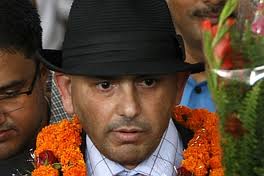
Mr. Govinda Prasad Mainali.

Division 5 of the Tokyo High Court denied the objection filed by Tokyo High Public Prosecutor’s Office in Mainali Case, a 1997 murder case, on July 31st (JST). Previous posts about the Mainali Case here, here and here.

Division 4 of the Tokyo High Court granted the petition for retrial for Govinda Mainali, as well as his release from custody last month. The Prosecutor’s Office immediately filed an objection, but the objection was denied today by Division 5 of the same court. The Prosecutor’s Office has until August 6th to file a Special Appeal to the Supreme Court. If the Prosecutor’s Office does not appeal or loses appeal at the Supreme Court, Division 4 of the Tokyo High Court will hold a retrial for Mainali. It has been reported that it is unlikely that the Prosecutor’s Office will appeal.

Mainali was convicted for a murder in 2000.  In March 2005, Mainali filed for a retrial to the Tokyo High Court. Later, a new DNA testing was conducted. The new test focused on the semen found on and inside the body of the victim. Fifteen samples from the crime scene were tested, but none of the DNA type matched Mainali’s. The unknown profile from the semen did match that of the two pubic hairs found in the crime scene.

The decision which granted Mainali a retrial in June stated that it was likely that the third person whose DNA was on the victim had a sexual intercourse with the victim and later killed her. In the Objection, the prosecution stated that this new evidence only suggests that the victim had sexual intercourse with this unknown third person on the evening of the incident, but the court today denied this claim as unreasonable. The prosecutors also sought a new DNA testing of a substance on victim’s hand, but the court denied the request.

Media report about today’s decision in Japanese can be found here and here.