Category Archives: Reforming/Improving the system

Registry of Prosecutorial Misconduct

The Center for Prosecutor Integrity has just launched its Registry of Prosecutorial Misconduct.  This is a significant step in documenting the hard data that will ultimately be required to effect some measures of accountability and sanctions for errant and unethical prosecutors.

Here is the press release from the Center for Prosecutor Integrity:

In Wake of NY Times Editorial, CPI Unveils Registry of Prosecutorial Misconduct

 WASHINGTON / January 8, 2014 – Today the non-profit Center for Prosecutor Integrity (CPI) announces the launching of the new Registry of Prosecutorial Misconduct. The unveiling comes three days after a New York Times’ editorial charged ethical violations by prosecutors have become “rampant” across the nation: http://nyti.ms/1hu7K7V

 The Registry is the first publicly available national online database to catalog judicial or legal disciplinary committee findings of prosecutorial misconduct. The Registry of Prosecutorial Misconduct will allow lawmakers, researchers, legal organizations, criminal justice reform groups, and others to identify common types of misconduct, assess trends, and compare jurisdictions.  The database includes over 15 fields such as Crime, State, Prosecutor Name, Trial Year, Misconduct Type, and Sanction Type. The Finding field features the opinion or determination by a disciplinary body or by a trial, appellate, or supreme court.

The Registry database can be viewed here: http://www.prosecutorintegrity.org/registry/database/A graph summarizing the most common types of misconduct committed by federal prosecutors is available here: http://www.prosecutorintegrity.org/registry/graph/numberbymisconducttype/

The database can be accessed by any individual at no charge using Sort, Filter, or Search functions. The Registry defines prosecutorial misconduct as the violation of any pertinent code of professional ethics or law, or other conduct that prejudices, or appears to prejudice the administration of justice.  The database currently features 200 cases of misconduct by federal prosecutors. Additional cases will be added to the database on a state-by-state basis. CPI will identify state-level partners to facilitate data access.

“As a former district attorney, I have become deeply concerned that the American public has begun to question the ethical commitment of prosecutors,” notes CPI chairman Phillip Kuhn. “The Registry of Prosecutorial Misconduct will promote accountability and help advance the integrity of prosecutorial practice.”

Additional information about the Registry can be seen here: http://www.prosecutorintegrity.org/registry/.  Persons may submit cases for consideration for inclusion: registry@prosecutorintegrity.org .

The Center for Prosecutor Integrity is working to preserve the presumption of innocence, assure equal treatment under law, and bring an end to wrongful convictions through the enhancement of prosecutor ethics: http://www.prosecutorintegrity.org/

Video

An Epidemic of ‘Brady’ Violations (Prosecutorial Misconduct)

Posted on December 18, 2013 by Phil Locke

An epidemic of Brady violations – those are not my words.  They are the words of Alex Kozinski, Chief Judge of the US 9th Circuit Court of Appeals in a recent decision in the case of US vs. Olsen.

Kozinski

If you don’t know what a ‘Brady’ violation is — it’s when the prosecution fails to turn over exculpatory evidence to the defense.  The US Supreme Court ruled in the case of Brady vs. Maryland (1963) that suppression of evidence by the prosecution violates the defendant’s due process rights.  Note, however, that the ruling does not specify sanctions for prosecutors who fail to comply with Brady disclosure.  It only stipulates that the defendant’s due process rights have been violated, thus making a Brady violation potential grounds for post-conviction relief.

Read the Huff Post story about Judge Kozinski’s opinion here.

This quote from judge Kozinski’s opinion:  “There is an epidemic of Brady violations abroad in the land. Only judges can put a stop to it.”  Kozinski’s statement is interesting, because it is recognizing that there is nothing in the law that punishes (sanctions) prosecutors for this unethical behavior.  They are supposedly subject to sanction from their bar association, but guess what – this just about never happens.

Continue reading

Are There Geographic “Hotspots” for Shaking Babies? Shaken Baby Syndrome.

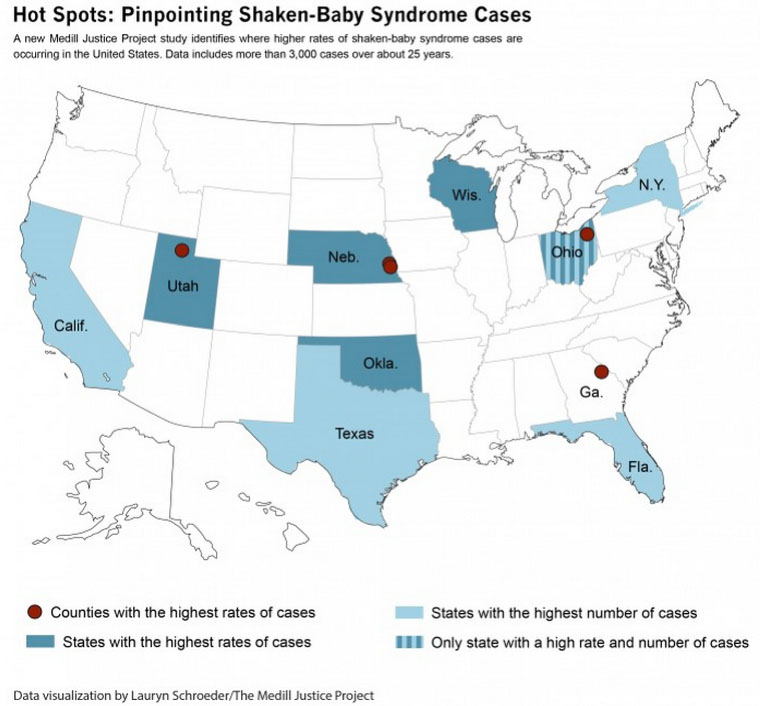
The Medill Justice Project, in its now year-long effort to build a database of SBS cases, has published a portion of that data relating to the geographic occurrence of SBS.  The report identifies several SBS geographic “hotspots.”

Medill Map

What could cause this?  As Innocence Project co-founder Barry Scheck has jokingly suggested, maybe it’s “in the water.”  But this data does NOT support a theory that certain localities have higher percentages of more violent people who are more likely to shake their babies.  It DOES, however, support a theory that certain localities have higher concentrations of aggressive and dogmatic prosecutors and child abuse pediatricians* who ARE more likely to (wrongfully) accuse and prosecute someone for shaking their baby.  And given this, it raises serious questions with respect to the concept of “equal justice.”  What I mean by this is – if your baby experiences a short fall, and you take it to the hospital, and the baby presents with any or all of the triad symptoms, you are much more likely to go to prison if you live in Summit County, Ohio than if you live in Kane County, Illinois – even though you did NOT shake your baby.

You can read the Medill report here.

Sue Luttner has posted an article looking at this geography lesson on her blog OnSBS.  She has done a little more research on how rate of occurrence relates to geography.  You can read it here.

* (More about child abuse pediatricians in a future post.)

Prosecutorial Misconduct “Double Feature”

Thanks to E. Everett Bartlett of the Center for Prosecutor Integrity for passing this along.

Here is a link to an Anderson Cooper 360 web page that contains two video’s.

The first tells the story of New Orleans exoneree John Thompson, and how the prosecutor withheld critical evidence in his case that eventually freed him from death row.

The second is a “debate” between a criminal defense lawyer and a former federal prosecutor about the issue of prosecutorial immunity.

When is a Lawyer not a Lawyer?

We’ve written before about how bad defense lawyers are responsible for as many wrongful convictions as anything else (see the section on “bad lawyers” in Why I Think the US Justice System is Broken – and Why It’s Not Getting Fixed).  But what about on the prosecution side?  The thought of legally unqualified prosecution attorneys – and this includes staff – is scary.

So this brings us to the question – when is a lawyer not a lawyer?  Apparently, the answer may be – when they practice in Arizona.  Get this — it’s actually not illegal to practice law in Arizona without a license.

Karyl Krug is a highly regarded Texas attorney who was transplanted to Arizona.  What she encountered in the Arizona legal system was cause for profound dismay.  She tells her own story here.

Misbehaving Prosecutors Almost Always Get Off Scotfree

The Center for Prosecutor Integrity, in December 2013, published a white paper titled An Epidemic of Prosecutor Misconduct.

Appendix B from that paper is a table listing documented cases of prosecutorial misconduct and in how many of those cases sanctions were imposed.

Appendix B

(For the sources footnoted, please refer to the paper.)

Out of 3,625 documented cases of prosecutorial misconduct, sanctions were imposed in only 63 of them – 1.7%.

Isn’t it about time for some prosecutorial accountability and sanctions for misconduct?

Documentary Demonstrates that Michael Morton’s Case is Not Unique

Michael Morton’s remarkable story of wrongful conviction for the 1986 murder of his wife Christine, his 25 years of incarceration, and his exoneration, will be told to a national audience when the documentary “An Unreal Dream,” written and directed by two-time academy award nominee, Al Reinert, premiers on CNN tomorrow night, Thursday, December 5, at 9:00 p.m. ET and PT. According to CNN (here) the documentary seeks to “demonstrates that Morton’s story is not unique.” Continue reading

Police chiefs lead effort to prevent wrongful convictions by altering investigative practices

By Spencer S. Hsu, Monday, December 2, 6:57 PM
The Washington Post

The nation’s police chiefs will call Tuesday for changes in the way they conduct investigations as a way to prevent wrongful convictions, including modifying eyewitness identification.

In a joint effort with the Justice Department and the Innocence Project, an advocacy group for prisoners seeking exoneration through DNA testing, the International Association of Chiefs of Police (IACP) will urge police departments nationwide to adopt new guidelines for conducting photo lineups, videotaping witness interviews and corroborating information from jailhouse informants, among 30 recommendations.

The group also calls for new tools to identify investigations at high risk of producing a wrongful arrest, as well as formalizing the way flawed cases are reviewed and the way assertions of innocence are investigated.

“At the end of the day, the goal is to reduce the number of persons who are wrongfully convicted,” said Walter A. McNeil, the police chief in Quincy, Fla., and past president of the chiefs association, which convened a national policy summit on wrongful convictions.

“What we are trying to say in this report is, it’s worth it for all of us, particularly law enforcement, to continue to evaluate, slow down, and get the right person,” McNeil said.

Legal experts said the findings, which were funded by the Justice Department’s Office of Justice Programs, mark a milestone in the deepening engagement by police and prosecutors in correcting breakdowns in the criminal justice system. Those errors have been exposed in recent years by advances in DNA profiling.

The findings also reflect a new emphasis by police on preventing mistakes from occurring, as well as a growing willingness to investigate past errors by adopting what the IACP called a “culture of openness” in rethinking how police analyze evidence and tackle problems such as investigative bias.

“We may appear to some to be strange bedfellows, but in fact we all support these reforms because they protect the innocent and enhance the ability of law enforcement to catch the guilty,” said Barry Scheck, co-founder of the Innocence Project.

Criminal prosecutions are handled overwhelmingly at the state and local level, and the IACP said its summit was the first national-level symposium on the subject to be led by law enforcement.

With 17,000 of its 22,000 members in the United States, the IACP brings an influential voice of police professionals to active debates over how police should ask eyewitnesses to identify suspects, for example, and how law enforcement should address past convictions that may have relied on flawed forensic or other evidence.

Despite their strong impact on juries, witness recollections are wrong about one-third of the time, researchers have found. Eyewitness misidentifications played a role in the majority of more than 300 DNA exonerations since 1989.

Many police agencies have moved to reduce potential sources of errors or bias, such as by conducting blind lineups in which the police officer shows a witness photographs but does not know who the suspect is.

In addition, research indicates that showing photographs of possible suspects one at a time, or “sequentially,” rather than in a group, reduces misidentifications. But some police agencies have balked, worrying that in practice it may confuse witnesses or create investigative problems.

The IACP acknowledged both viewpoints, calling for more research even as it urged agencies not to wait to adopt blind and sequential lineups.

Nearly 10 states have implemented such policies, as have police departments serving large cities, including Dallas and Baltimore.

More than 20 states record interrogations statewide, and another 850 law enforcement agencies voluntarily do so.

With several states and the FBI grappling with how to address convictions that may have relied on flawed forensic evidence, the IACP said it and the Justice Department should provide tools to help agencies investigate claims of innocence and resolve wrongful convictions.

“Any time new information comes forward that could indicate the need for redirection, justice system officials across the continuum must welcome and carefully examine that information,” the IACP said in its report.

Mexican Prison Overcrowding Reveals Underlying Issues

Mexican prisons are suffering from severe overcrowding due to preventative detentions and the lack of sentencing alternatives.  Mexico Evaluates, a Center of Analysis and Public Policy, has referred to the country’s prison system as a ticking time bomb.

The overcrowding in Mexico’s penitentiaries is obvious when you look at the capacities and current populations. There is at least one prison operating at 400% capacity and six are operating between 176-274% capacity. Currently, there are 242,000 inmates incarcerated in 420 prisons designed to house 195,000.  As in the United States, Felipe Calderon, President from 2006 to 2012, focused on building more cells.  This did not cure the problem, which lies in the overuse of preventative detention and the lack of alternative sentencing

Statistics from this past year reveal that 41.3% of prisoners had not yet been convicted.  There were three Mexican prisons where more than 60% of inmates had not been convicted, four where more than 76% of inmates had not been convicted, and in the prison in Tabasco, 94.5% of inmates had yet to be convicted.

The second major issue is that jail-time is viewed as the only logical solution to crimes.  In 2011, 96.4% of sentences called for incarcerations.  Only 3.6% of crimes were punished with other sanctions such as fines.  This is evidence that minor or common crimes are being treated the same as serious and violent crimes.  For example, the penal code establishes a similar sentence for a nonviolent robbery and a homicide without aggravating factors.  Approximately 72,000 inmates are currently incarcerated for theft.

The Mexican penal system must be altered and not simply used for preventative detention.  Alternative sanctions should also be explored so that the punishments better fit the crimes.  Overcrowded prisons become violent and ineffective at any form of rehabilitation. Former President Felipe Calderon admitted the country’s prisons only serve a retributive purpose.  The new president, Enrique Peña Nieto, has promised to envision new solutions.  Hopefully those will be coming soon.

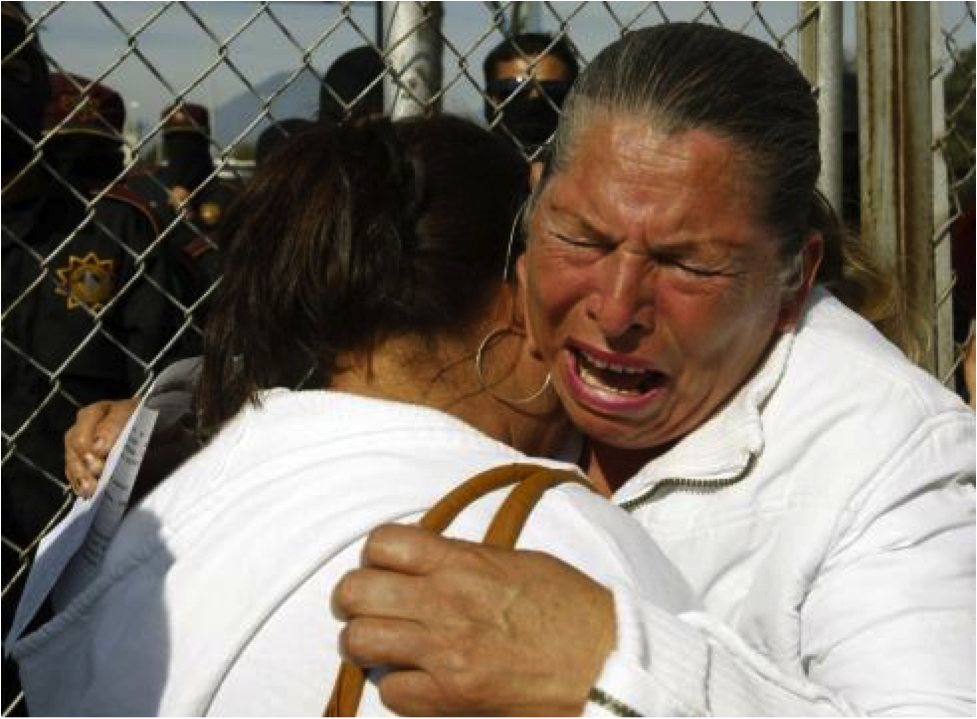
Family members mourn the loss of inmates killed in prison riot where 44 were left dead.

Family members mourn the loss of inmates killed in prison riot where 44 were left dead.

Follow me on Twitter: @JustinoBrooks

Professor Justin Brooks
Director, California Innocence Project
California Western School of Law
225 Cedar Street
San Diego, CA 92101
jpb@cwsl.edu
www.californiainnocenceproject.com

For more information please see:  <http://www.proceso.com.mx/?p=355719&gt;

Photo Credit to:  <http://usatoday30.usatoday.com/news/world/story/2012-02-19/mexico-prison-riot/53152968/1&gt;

Immigration Policies Should Not be Driven By Prison Profiteering

On August 7, 2013, officials from the United States and Mexico met in Texas to discuss immigration reform. Roughly 400 thousand people, primarily from our bordering neighbor, are arrested for immigration violations each year.  The creation and enforcement of immigration laws has created a massive industry with a vested interest in continuing the expansion and enforcement of immigration crimes.

Corrections Corporations America, the GEO Group, and Management and Training Corporation house 80% of those apprehended for immigration crimes.  Between them, they make a profit of over $5 billion per year. CCA Founder is quoted as saying selling the concept of private prisons to the government is just “like you were selling cars, or real estate, or hamburgers.”

Prisons should not be run just like any other business.  The social costs are too great to simply consider the supply and demand of inmates, and increasing supply by legislating new crimes or changing enforcement.  Clearly, these companies rely and directly stand to benefit from anti-immigration laws. The Associated Press noted that they spent $45 million on lobbying over the last decade. Since 2005, the largest growth in prison populations came from federal immigration detentions. It has been the leading cause of incarceration for the last four years.   It is the growth sector for these businesses.

Immigration reform is at the forefront of our national and foreign policy.  Decisions need to be made that make sense domestically and for our relationships with our southern neighbors.  Those decisions should also be driven by what is right, fair, and humane.  They should not be driven by the profiteering of the corrections industry.

Follow me on Twitter: @JustinoBrooks

Professor Justin Brooks
Director, California Innocence Project
California Western School of Law
225 Cedar Street
San Diego, CA 92101
jpb@cwsl.edu
www.californiainnocenceproject.com

For more information please see:

<http://ljazee.aljazeera.com/watch/shows/the-stream/the-latest/2013/10/9/privatizing-the-undocumented.html&gt;

<http://ljazee.aljazeera.com/watch/shows/the-stream/the-stream-multimedia/2013/10/9/immigration-and-privateprisoncompaniesinfographic.html&gt;

<http://hereandnow.wbur.org/2013/08/07/immigration-private-prisons&gt;

Center for Prosecutor Integrity to Establish ‘Registry of Prosecutorial Misconduct’

This (in my opinion) is huge.  By now, you’re probably familiar with the National Registry of Exonerations which has established a mechanism for collecting and documenting data about wrongful convictions across the US.  To date, it has logged data on 1,250 exonerations.  The registry will be a very powerful tool for justice system reform and improvement, because it provides incontrovertible, hard data that can be used to make known and describe the errors that can, and do, happen in this very imperfect system of ours.

Data from the National Registry of Exonerations has already revealed that “official misconduct” (by both police and prosecutors) is a contributing factor in 42% of wrongful convictions.  In a previous WCB post, Prosecutorial Misconduct – What’s to be Done?  A Call to Action, it was pointed out that one of the very first things needed to begin addressing the prosecutorial misconduct cause of wrongful convictions is DATA.  We know that prosecutorial misconduct happens, but our understanding of the problem, and its extent, has been only anecdotal up until now.  This new Registry of Prosecutorial Misconduct is a significant step forward in building a base of data that can be used by legislators, policy makers, and advocates in defining and implementing necessary changes to the laws and rules that govern prosecutorial behavior.

The press release from the Center for Prosecutor Integrity follows:

Continue reading

Sentenced to a Slow Death – Only in America?

Wrongful Conviction

Excessively long prison terms that are way out of proportion to the crime they’re supposed to be punishing have become more and more common in the US.  We already know, largely because of this, that even though the US has only 5% of the world’s population, it has 25% of the world’s prisoners.  (See previous WCB post here.)

The NY Times Editorial Board recently published this commentary on criminal court sentencing in the US titled ‘Sentenced to a Slow Death.’  The opening sentence of this editorial is, “If this were happening in any other country, Americans would be aghast.”

This situation is well characterized by the so-called “three strikes” laws.  Texas was the first state to enact such a law, doing so in 1974 with a mandatory life sentence.  In1993; Washington.  In 1994; California, Colorado, Connecticut, Indiana, Kansas, Maryland, New Mexico, North Carolina, Virginia, Louisiana, Wisconsin, Tennessee, and Georgia.  In 1995; Arkansas, Florida, Montana, Nevada, New Jersey, North Dakota, Pennsylvania, South Carolina, Utah, and Vermont.  In 2006; Arizona.  In 2012; Massachusetts.  And on top of all these are the draconian sex offender laws which can make registered sex offenders out of anyone for the crime of “touching.”  See previous WCB post here.

A platform of “tough on crime” has always been a “bread & butter” issue for politicians.  They’ve discovered it can help get them elected.  This started in the 1980’s, and has been getting progressively more severe as the years roll by.  It’s easy for the electorate to shrug this off as “the criminals get what they deserve,” but until you personally, or someone close to you, gets unjustly shredded by this meat grinder we call “justice,” you just can’t comprehend how insane this all is.  And this is exacerbated by prosecutors looking for more and more convictions, so they can get re-elected. However, study after study has confirmed that more severe sentencing laws DO NOT correlate with crime deterrence.  All they do is fill up the prisons at staggering tax payer expense.  Here is just one such study by Dr. Valerie Wright of The Sentencing Project – study by Dr. Valerie Wright.  This telling quote from the conclusion of that study:  “Existing evidence does not support any significant public safety benefit of the practice of increasing the severity of sentences by imposing longer prison terms.”

The bottom line here, folks, is that the problem is “us.”  As long as we keep electing legislators who continue to pass harsh mandatory sentencing laws that allow judges no discretion; and as long as we keep electing prosecutors and judges who disregard logic, fairness, and justice in favor of getting re-elected; we’ll continue to have a justice system that is perfectly willing to also scoop in the innocent to make sure that NO guilty people escape.  And while we’re at it, we’ll make sure that all those convicted, whether innocent or guilty, receive the most vengeful punishment we can visit upon them.

Texas Prosecutor, Ken Anderson, Out of Jail After Only 5 Days.

Former Texas prosecutor, Ken Anderson, sentenced to 10 days jail time for criminal contempt in his prosecution of the Michael Morton case has been released after only 5 days.  See previous WCB post here.

Read the story here.

And the irony is – he was released early for “good behavior.”

Please tell me this is not rubbing salt in the wounds of the wrongfully convicted.

Prosecutor Jail Time – An Emerging Trend? We Can Only Hope.

Prosecutors A&N

We’ve read much recently about former Texas prosecutor Ken Anderson being sentenced to jail time for his conduct in the Michael Morton case.  You can read Mark Godsey’s excellent editorial on the subject here.

The NY Times Editorial Board recently published a commentary on the sanctions against Ken Anderson – read that NY Times editorial here.  One of the points made in the opening paragraph of the editorial is, “the 10-day jail sentence for the prosecutor, Ken Anderson, is insultingly short.”  After all, Michael Morton spent 25 years in prison as a result of the wrongful conviction by Anderson.  I’m sure most would agree that this punishment certainly doesn’t come close to fitting the crime. Continue reading

Press Release: Center for Prosecutor Integrity Calls on Prosecutors to Root out Misconduct After AZ Report of Widespread Unethical Practices

WASHINGTON / November  6, 2013 – Following revelations that 22% of death sentence cases in Arizona involve judicial findings of impropriety, the Center forProsecutor Integrity is calling on prosecutors nationwide to take a proactive approach to hold unethical prosecutors accountable and restore public confidence in the criminal justice system.

The finding of widespread prosecutor misbehavior is based on a review of all death sentence convictions in Arizona in the past decade. These sentences are routinely seen by the state Supreme Court. Since 2002, there have been 82 death sentence cases reviewed by the state high court. In 18 of the cases – 22% of the total — the Supreme Court made a finding of impropriety.

Examples of unethical practice include presenting false testimony, resorting to emotional appeals in closing arguments, referring to mitigating evidence as “excuses,” and removing a jacket worn by a victim from a plastic evidence bag for the jury’s “smelling pleasure.”

The cases were assembled in an online database as part of a four-part investigative report by Michael Kiefer of the Arizona Republic newspaper:http://www.azcentral.com/news/projects/prosecutorial-conduct/

The Arizona study is important because previous analyses of prosecutorial misconduct focused on cases that were pre-selected based on defense counsel’s allegation of misconduct or a judicial determination of a wrongful conviction. The Arizona findings likely underestimate the true extent of wrong-doing because the most egregious cases of misconduct triggered a mistrial or led to a last-minute plea deal not carrying a death sentence.

“In the past, some prosecutors have insisted that unethical conduct is so rare that it doesn’t even deserve attention,” notes CPI spokesperson Sheryl Hutter. “But when a high court concludes more than one in five cases involve impropriety, taxpayers should be demanding accountability and lawmakers should be convening hearings.”

The CPI report, An Epidemic of Prosecutor Misconduct, concludes unethical conduct has become widespread throughout the country: http://www.prosecutorintegrity.org/wp-content/uploads/EpidemicofProsecutorMisconduct.pdf

The Center for Prosecutor Integrity is working to preserve the presumption of innocence, assure equal treatment under law, and bring an end to wrongful conviction through the enhancement of prosecutorial ethics.

Prosecutorial Misconduct – Spotlight on Arizona

Gray Area copy

Michael Kiefer covers courts and the death penalty for The Arizona Republic.  He has recently written a four-part series of articles about prosecutorial misconduct in the Arizona courts titled “The Gray Area of Courtroom Conduct.”

Here is an excerpt from the opening section of the Part 1 article:

“There seldom are consequences for prosecutors, regardless of whether the miscarriage of justice occurred because of ineptness or misconduct.  In fact, they are often congratulated.  Since 1990, six different prosecutors who were named prosecutor of the year by the Arizona Prosecuting Attorneys Advisory Committee also were later found by appeals courts to have engaged in misconduct or inappropriate behavior during death-penalty trials, according to The Republic’s examination of court documents.”

You can read Michael Kiefer’s four-part series here.

In editorial fairness, a group of Arizona prosecutors wrote a response to Mr. Kiefer’s articles, which was posted on azcentral.com, and you can read their letter here.  Now, exercising editorial privilege, I will have to say this letter could be one of the biggest crocks of BS I have ever read.  I particularly like this sentence from the prosecutors’ letter: “The system is designed for the defense in that there are ethical rules that apply only to prosecutors.”  So … never mind that prosecutors often pay no attention to those “ethical rules.”   The position of prosecutor is endowed with more power of discretion than almost any other elected position.  There are things prosecutors can decide and do that even governors cannot decide and do.  Additionally, the prosecution has the police, the crime labs, a staff of attorneys, and they are funded by the taxpayers; while the defendant has to pay for his own investigators, forensic testing, and attorneys.

In Mr. Kiefer’s articles, you’ll find frequent mention of Maricopa County.  You know, the place where Joe Arpaio is sheriff.  More about Maricopa County in future posts.

Children Living in Jails in Bolivia

The San Pedro Prison located in La Paz, Bolivia, was built 140 years ago for 250 inmates. Today it houses around 2,000 inmates and is home to 200 children. The number rises to almost 400 at Christmas time.

The mural reads: Welcome to the football pitch... Freedom and justice for everyone.

The mural reads: Welcome to the football pitch… Freedom and justice for everyone.

Denis Racicot, a representative of the United Nations High Commission on Human Rights, reported that Bolivia is the only country where children live in jails with their parents. Ramiro Llanos, the current Director of the Prison system, insisted this is not uncommon practice in other parts of South America.

During the day, the children living in San Pedro either go to nurseries located inside or attend schools outside. There is an elementary school 50 yards away. The kids are ashamed of their residence, often making up false addresses. Furthermore, their perception of reality is significantly disparate from those of their classmates.

Children living in the Bolivian jails.

Children living in the Bolivian jails.

Life inside the San Pedro Prison is extremely unique. First and foremost, inmates must pay for their rooms. The jail is divided into eight sectors based on their relative value, ranging from the most luxurious La Posta sector to the most miserable. Inmates can rent their rooms if they are unable to afford them. There are also inmates who are homeless, forced to live in the hallways, because they cannot afford rent. This is comparable to drug warlords in Mexico, who are afforded better cell accommodations, food, and liquor catering services thanks to their political power, social position, and monetary advantages.

In order to pay for their rooms, inmates must work to earn a living. Within the jail they might work as carpenters, laundry staff, shoe-shiners, or sell food and groceries. Police do not intervene with the jail’s internal affairs. Prisoners are denied sufficient basics like soap, shampoo, and clothing. Thus, the majority of their resources are brought to them from outside family members, including their children.

Live inside a Bolivian prison.

Life inside a Bolivian prison.

The fact that children are living with their incarcerated fathers is evidence of the lack of positive alternatives for them. Some say that it has a humanizing effect on inmates, encouraging their rehabilitation and desire to reenter society successfully. However, the potential for disastrous psychological and physical effects is there. For example, in June, a 12 year-old girl was raped and impregnated. In the nearby city of Santa Cruz, a prison fire on August 23, 2013, killed 29 inmates and one 18-month old child.

Due to the outrage that these two recent events sparked, the government of Bolivia stressed it plans to shut down the prison in San Pedro. This is not the first time the government has threatened to take action. Furthermore, it is an action directed at the symptom, not the source of the problem. First, quite astoundingly, only 25% of inmates have actually been convicted. The rest are awaiting trial. This reflects the entire country’s incarceration rate: as of 2011, 80% of the 10,496 prisoners were on preventative detention. Additionally, every four of five prisoners is in for drug-related offenses.

In 2011, President Evo Morales attempted to address the issue of the stagnant and corrupt judicial system by holding a nation-wide election. Judges were chosen for the Supreme Court and three lower courts. There were 125 candidates, 52 positions, and 5.2 eligible voters. Unfortunately, a congressional assembly committee made up of the President’s supporters selected the 125 candidates. The opposition was merely able to view candidates and voice appeals.

The San Pedro Prison is essentially a “jail town.” Inmates must work to earn a living, pay for their accommodations, and are permitted to live with their sons and daughters. This poses a huge risk to the children. Nevertheless, due to the lack of institutional development in the judicial area, insufficient public resources, and extreme poverty of most prisoners, the situation looks bleak. It seems access to justice is severely limited by one’s economic power.

Follow me on Twitter: @JustinoBrooks

Professor Justin Brooks
Director, California Innocence Project
California Western School of Law
225 Cedar Street
San Diego, CA 92101
jpb@cwsl.edu
www.californiainnocenceproject.com

For sources and information please see:

<http://www.nu.org.bo/noticias/noticias-nacionales/onu-rechaza-presencia-de-ninos-ninas-en-las-carceles/&gt; <http://news.bbc.co.uk/2/shared/spl/hi/picture_gallery/06/americas_inside_a_bolivian_jail/html/1.stm&gt;

<http://www.aljazeera.com/indepth/opinion/2011/10/201110169924243497.html&gt;

<http://danmoriarty.blogspot.com/2013/06/closing-san-pedro-prison.html&gt;

Chile Closes Luxury Prison

CHILEAN JAIL FOR DICTATORSHIP SUPPORTERS WILL BE CLOSED AFTER MOVING INMATES

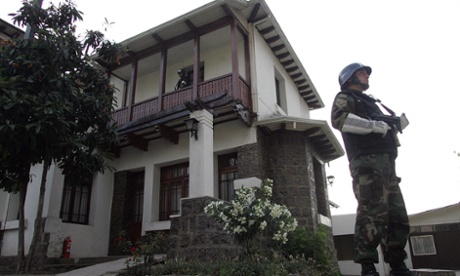
One house in the Cordillera jail in Santiago, now to be closed.

General Augusto Pinochet ruled over Chile as a dictator from 1973 to 1990. When he died in 2006, he was facing over 300 potential criminal charges for human rights violations, tax evasion, and embezzlement. The 40th anniversary of the coup d’état that brought him to power was passed on September 11. For many, it was a day to remember Pinochet intolerance for political opposition and the tens of thousands of people who were killed, tortured, or interned during his reign. To date, Chile has officially recognized 40,018 victims of the dictatorship; 75% were killed.

Penal Cordillera is a luxury prison that was built in the capital city of Santiago in 2004. It currently houses only 10 inmates: eight generals and two colonels from Pinochet’s military. The inmates have “an assistant, three paramedics, two cuisine teachers, and a nutritionist to supervise their meals.” The convicts live in small cabins with hot showers, share a pool, tennis court, and barbecue, and are allowed to visit home. It is known as a “golden prison.” It is very different from the Chilean prisons I recently posted about where substandard sustenance, sanitary conditions, and overcrowding has incited various long-lasting hunger strikes.

On September 26, President Sebastián Piñera announced his decision to close Cordillera. He pointed to the importance of “equality before the law” as his reasoning. Piñera announced the inmates would be moved to Punta Peuco, a less luxurious jail also intended for human rights offenders. Two days after his statement, the head of Pinochet’s feared intelligence agency, General Odladier Mena, left the prison for the weekend and killed himself outside his home.

The director of Chile’s official Human Rights Institute called the closure of Cordillera a milestone. Michelle Bachelet, former president and front-runner for the upcoming November election, was detained and tortured during Pinochet’s dictatorship. She praised the decision.

Follow me on Twitter: @JustinoBrooks

Professor Justin Brooks
Director, California Innocence Project
California Western School of Law
225 Cedar Street
San Diego, CA 92101
jpb@cwsl.edu
www.californiainnocenceproject.com

For more information please see:

<http://www.theguardian.com/world/2013/sep/27/chile-closes-luxury-prison-pinochet-cordillera&gt;

<http://latino.foxnews.com/latino/news/2013/09/29/chile-pinochet-era-general-commits-suicide-before-jail-transfer/&gt;

<http://www.voxxi.com/chile-closes-golden-prison/&gt;

Photograph: Mario Ruiz/EPA

Lawyers Gather in Buenos Aires for Second Annual Latin America Innocence Conference

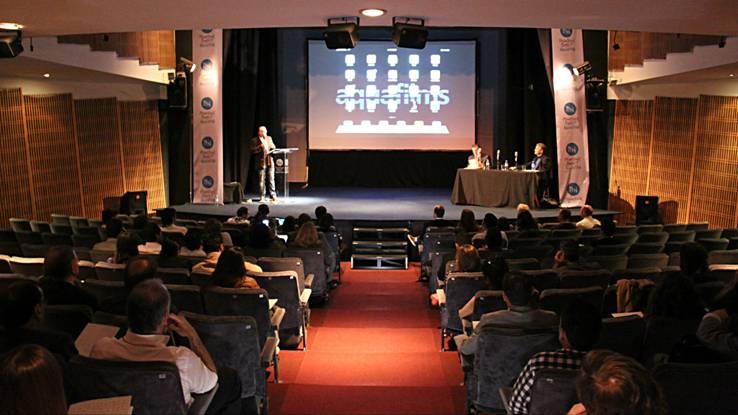
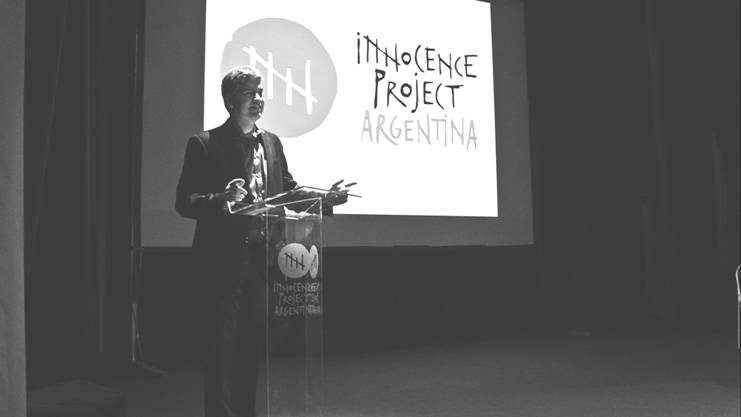
Attorneys gathered from all over Latin America for the Red Inocente!  Second Annual Latin American Innocence Conference last week in Buenos Aires, Argentina.  Over a span of three days, Enrique Piñeyro, the Director of the newly established Innocence Project Argentina, graciously welcomed participants from Argentina, Brazil, Chile, Colombia, México, Nicaragua, Paraguay, and Puerto Rico.  The group included attorneys, law students, judges, academics, politicians, scientists, and members of the media.

Director of the Innocence Project Argentina, Enrique Piñeyro

Director of the Innocence Project Argentina, Enrique Piñeyro

Piñeyro, also an accomplished Argentine film director, hosted the conference and organized speakers on an array of topics. Attorneys spoke about evidentiary issues.  Experts spoke about the criminalization of the poverty in the Latin American jails and corruption in the judiciary.  California Innocence Project exoneree, Rafael Madrigal, spoke about the seven years he spent in prison after he was wrongly convicted for an attempted murder in Orange County, California.  Exoneree, Eric Volz from Nicaragua, also spoke on his international experience resulting from his wrongful murder conviction.  Both of these talks allowed people to hear about the real-life experiences of those unjustly sent to prison and illustrated why innocence work is so important throughout the world.

Director of the California Innocence Project, Justin Brooks

Director of the California Innocence Project, Justin Brooks

This conference was the second conference of its kind.  The first conference was held in 2012 in Santiago de Chile.  Since the conference in Chile, innocence projects have taken root in Mexico, Argentina, Chile, and Peru.  The directors of these projects, as well as the director of the already long-established project in Colombia, were able to speak to the group and relay the problems, challenges, and successes of their work in their respective countries.

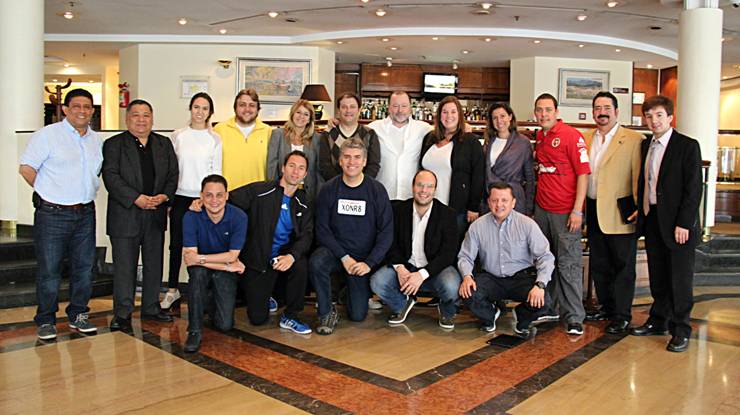
Participants and speakers from Brazil, Unites States, Nicaragua, Mexico, and Argentina.

Participants and speakers from Brazil, Unites States, Nicaragua, Mexico, and Argentina.

Piñeyro also showcased his documentary, The Rati Horror Show, to demonstrate the corruption and serious problems of the Argentine judicial system.  The documentary was pivotal in the release of Fernando Carrera, who was convicted of murder because the police altered evidence at the scene of the crime and manipulated witness testimony.  Carrera, in an unexpected Argentina Supreme Court decision, was ordered back to prison when the Court denied the decision by the lower court to reverse his conviction.  Carrera’s attorneys also participated in a forum where participants were allowed to ask them questions about the judicial decisions and the facts surrounding the underlying conviction.

The Mexican documentary, Presunto Culpable, was also shown at the conference.  The film vividly illustrates the struggle to exonerate an innocent man in the deeply flawed Mexican justice system.

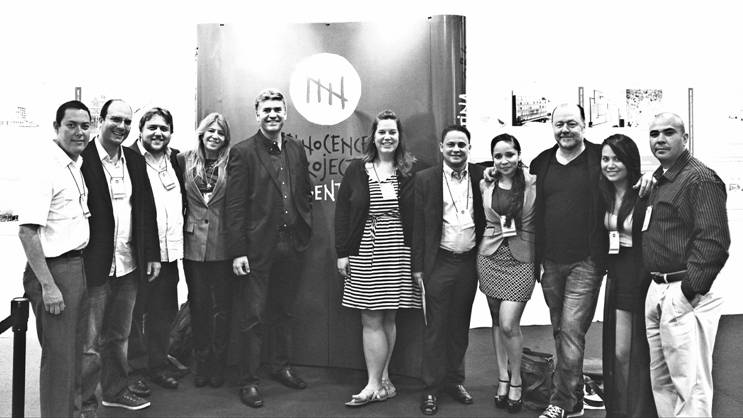
Directors of the established  projects from Colombia, Brazil, Peru, Mexico, Nicaragua, Colombia, and the United States.

Directors of the established projects from Colombia, Brazil, Peru, Mexico, Chile, Nicaragua, Colombia, and the United States.

Red Inocente! hopes to organize a conference for Latin American innocence projects every year to continue to share information, experiences, and knowledge.  The conference will be held in Bogotá, Colombia in October of 2014.  Red Inocente! is a non-profit legal and education program designed to offer assistance to those who are trying to help secure the release of innocent prisoners in Latin America, promote legislative reforms to reduce the number of wrongful convictions, and offer information on latest developments in forensic science and law to the lawyers who litigate these cases.

Follow me on Twitter @justinobrooks

Professor Justin Brooks
Director, California Innocence Project
California Western School of Law
225 Cedar Street
San Diego, CA 92101
jpb@cwsl.edu
www.californiainnocenceproject.com

For more information, please visit the following websites:  www.redinocente.org, www.ipargentina.org.

“Scenes of a Crime” – Documentary of a False Confession

ScenesOfaCrimeSue Luttner posted a commentary on this film yesterday on her blog On SBS.

If you want to have a better understanding of how false confessions can happen, and why an innocent person would confess to something they didn’t do, here’s an ‘eye opener.’   The opening paragraph of Sue’s post:  “After watching “Scenes of a Crime” over the weekend, I now know why this potent documentary has garnered so much praise.  Filmmakers Grover Babcock and Blue Hadaegh have interspersed actual footage from the lengthy police interrogation of an accused father in Troy, New York, with excerpts from Reid Technique training films and commentary by key players in the case. The result is a clean, careful, and gripping illustration of how a man can be manipulated into confessing to a crime he didn’t commit.”

While this particular case involves SBS (shaken baby syndrome), the methods are the same as those used in general by law enforcement, and the Reid Technique for interrogation is prominent.  We’ve reported on the Reid Technique on this blog here, herehere, and here.

You can read Sue’s full post here.