Category Archives: Reforming/Improving the system

Dismissed Case Raises Questions On Shaken Baby Diagnosis

This is an excellent article, with a link below, but here is a significant quote from the article: (emphasis is mine)

Patrick Barnes, a pediatric neuroradiologist and one of the experts hired by Aspelin’s defense, explained how doctors now recognize “a variety of accidental and natural causes” that are sometimes overlooked in cases that are first diagnosed as shaken baby syndrome.

Barnes had testified for the prosecution in one of the most famous shaken baby syndrome cases — at the 1997 trial of English au pair Louise Woodward in Massachusetts. Since then he has come to believe that the syndrome is overdiagnosed and misdiagnosed.

You can read the article here.

The Dark Side of Crime Stoppers – False Information and Police Tunnel Vision

CS LogoYou’re probably familiar with Crime Stoppers.  Crime Stoppers first began in Albuquerque, NM during July 1975.  Two weeks after a fatal shooting, the police had no information, when out of desperation, Detective Greg MacAleese approached the local television station requesting a reconstruction of the crime. The re-enactment offered $1,000 for information leading to the arrest of the killers.  Within 72 hours, a person called in identifying a car leaving the scene at high speed, and he had noted its registration. The person calling said that he did not want to get involved, so he had not called earlier. Detective MacAleese then realized that fear and apathy were the primary reasons why the public tended not to get involved. So he helped establish a system where the public could anonymously provide details of crime events that offered cash rewards for information leading to an arrest and/or conviction.  Since its first chapter was officially formed in Albuquerque in 1976, Crime Stoppers has spread across the United States, and has been responsible for more than half a million arrests and more than $4 billion in recovered property.

This all sounds very good, and I support the organization, but let’s dig deeper into the motivational aspects of why someone would phone in an anonymous tip to Crime Stoppers.  Someone who really wanted to do their “civic duty” would go directly to the police, and if they’re afraid of “involvement” or retribution, they can still remain anonymous.  Given that anyone can provide an anonymous tip directly to the police, the real attraction of Crime Stoppers is the cash.  Here are some examples from Crime Stoppers organizations across the country.  The payouts are all conditioned upon either an arrest or an indictment or both.

This from the Topeka, KS Crime Stoppers website:
Topeka Crimestoppers

And  here is a random sampling of the rewards offered by Crime Stoppers organizations across the country:

Crime Stoppers of Michigan$1,000

Texas Crime Stoppers – $50,000

Crime Stoppers of Tampa Bay$1,000

NYPD Crime Stoppers – $10,000, $2,000, $1,000, or $500 – depending on the crime

The problem here is that people can be tempted to provide information, even if it’s false, just to get the payout.  It happens – just like jailhouse snitches will provide false information to get a deal from the prosecutor.

Continue reading

Compromised Justice? Selling Case Details to Would-be Snitches

A must-read USA Today report published on December 14 (here) places a spotlight on a process rarely revealed to those outside the justice system: The role of the snitch in making federal cases…and in reducing sentences. While DNA proven wrongful convictions have shown that snitches can be a questionable source for information, the use of snitches continues to be widespread. So much so that credible case information is a currency for getting out of jail sooner.

Imprisoned bank robber Marcus Watkins is not the first to recognize that there could be a profitable business in selling case details to defendants and convicts desperate to reduce their sentences. Continue reading

New Scholarship Spotlight: Freeing the Guilty without Protecting the Innocent: Some Skeptical Observations on Proposed ‘Innocence’ Procedures

bio-2Utah professor Paul Cassell has posted the above-titled article on SSRN.  Download here.  The abstract states:

Proceeding from the perspective of “innocentrism” (that is, the idea that exoneration of the “innocent” ought to be privileged over other values in the criminal justice system), I suggest eight proposals for reform: (1) researching the frequency and causes of wrongful conviction; (2) allowing waiver of rights for greater freedom to raise post-conviction innocence claims (Professor Gross’s proposal in this symposium); (3) improving the implementation of existing rules on disclosing exculpatory evidence; (4) increasing resources for defense counsel and prosecutors to focus on issues relating to actual innocence; (5) abolishing the Fourth Amendment exclusionary rule; (6) replacing the Miranda regime with a system of videotaping custodial interrogation; (7) barring prisoners from filing for habeas relief without a colorable claim of actual innocence; and (8) requiring defense attorneys to directly ask their clients if they are actually innocent. These discriminating proposals offer a far greater prospect of providing help to the innocent without blocking conviction of the guilty. A common theme underlying many of them is that they reorient the focus of the criminal justice system away from procedural issues and toward substantive issues of guilt or innocence. Sadly, Bakken’s proposals seem to offer too much procedure and not enough substance, a recipe for helping the guilty. The truly innocent will benefit in a system that values substance over procedure.


Double Jeopardy and the Japanese Law

As I posted here, Mainali Case revealed many problems of the Japanese criminal justice system. One of them is the law that permits prosecutors to appeal the acquittal verdict.

Japanese law does ban double jeopardy. Article 39 of the Constitution states: No person shall be held criminally liable for an act which was lawful at the time it was committed, or of which he had been acquitted, nor shall he be placed in double jeopardy.

However, the Supreme Court decided on September 27, 1950 that trials in district court, hight court and the Supreme Court for the same offence constitute a single jeopardy. Thus, there exists no double jeorpardy where the prosecutor appeal the acquittal at the district court. There has been many cases where this case law was challenged, but the Court has constantly upheld the decision. It was not even considered as an issue in the recent reform efforts.

Isn’t it about time we change this rule? Here is an excellent article by The Japan Times on this topic.

From The Japan Times Online :

Tuesday, Dec. 4, 2012

Double jeopardy practice scrutinized

Bids to reverse acquittals risk invalidating the lay judges’ role

By SETSUKO KAMIYA Staff writer

Two recent high-profile exonerations have reignited calls by defense lawyers to require the full disclosure of evidence, and to let verdicts handed down by lay judges stand.

The lawyers for Nepalese Govinda Prasad Mainali, who on Nov. 7 was finally exonerated in absentia of a 1997 robbery-murder, went a step further and slammed the Japanese practice of allowing prosecutors to appeal acquittals — something other countries ban as double jeopardy. Continue reading

Texas Bill Would Require Recorded Interrogations…

From TheTexasTribune.com:

There are moments of the two-day police interrogation that led to Christopher Ochoa’s wrongful conviction — which resulted in his spending 12 years in prison before a 2002 exoneration — that will never be known. Not all of the interrogation that preceded Ochoa’s false confession to the murder of Pizza Hut employee Nancy DePriest in Austin — and implication of his roommate, Richard Danziger — was recorded.

Some advocates argue that such false confessions could be prevented if police interrogations were recorded. SB 87, by state Sen. Rodney Ellis, D-Houston, would require police to record the questioning of suspects in cases involving murder, kidnapping, human trafficking and some sex crimes.

“Recording an interrogation is the most accurate means of preserving what happened in an interrogation room and what a suspect actually said,” Ellis said in an email.

Texas law already requires in most cases that investigators tape the confession itself. But in the wake of a handful of exonerations involving false confessions, defense attorneys and other advocates worry that without a recording of the entire interrogation, they may never know how a false confession occurred. Nineteen other states and the District of Columbia already require such recordings.

While some prosecutors and police support the idea, others worry that it could Continue reading

The Dangers of Tunnel Vision

images-65From Slate.com:

The best magazine piece I’ve read this year is by Pamela Colloff, in the Texas Monthlyabout the murder conviction of Michael Morton and the 25 years he spent in a Texas prison as prosecutors insisted he’d killed his wife, despite the mounting proof that he hadn’t. You really have to read this story for yourself—it’s movie material; it’s that riveting. I want to pull on one thread of Colloff’s narrative, because I’ve seen it in the weave of many other wrongful conviction cases. I’m talking about tunnel vision: the tendency of investigators to seize on an early piece of evidence that appears to implicate the defendant, and to hold on to their belief in his guilt even as other evidence points to his innocence. It’s a problem that by definition emerges in hindsight. What’s scary is how tenaciously police and prosecutors cling to their initial assumptions—and how much this reflects basic human tendencies.

On an August afternoon in 1986, Christine Morton was found lying on her bed, bludgeoned to death. A neighbor had seen her 3-year-old son Eric walking around the family’s front yard by himself; she searched the house and called the police.

When Sheriff Jim Boutwell arrived, he found this note, signed “I L Y,” for I love you, and “M,” for Michael, who was Christine’s husband.

Chris, I know you didn’t mean to, but you made me feel really unwanted last night. After a good meal, we came home, you binged on the rest of the cookies. Then, with your nightgown around your waist and while I was rubbing your hands and arms, you farted and fell asleep. I’m not mad or expecting a big production. I just wanted you to know how I feel without us getting into another fight about sex. Just think how you might have felt if you were left hanging on your birthday.

Colloff explains that based on the note, which established Michael’s anger with his wife in the hours before she was killed, “Boutwell treated Michael not like a Continue reading

Pennsylvania Law Enforcement Focuses on False Confessions…

From news source:

The integrity of confessions affects the integrity of convictions, law enforcement leaders say.

That’s one reason Pennsylvania law enforcement is getting more engaged on the issue of so-called “false confessions,” which is more typically a hot topic in academic and criminal defense circles.

“Police and prosecutors need to be on the front lines of making sure we are doing things the right way … It’s up to us to do our jobs with integrity and maintain integrity in our investigations,” Montgomery County District Attorney Risa Vetri Ferman said.

Earlier this year, Ms. Ferman’s office started a pilot project in which interrogations by county detectives of murder suspects are now being recorded.

She said none of those recordings have been used in court yet, so it is too soon to Continue reading

Major Victory for Eyewitness Identification Reform in Oregon…

The Oregon Supreme Court issued a landmark ruling yesterday regarding eyewitness identification testimony.  The opinion in Oregon v. Lawson is here.  News coverage here.  Based on the Court’s press release, the Lawson opinion does at least the following four things:

1. eliminates the flawed Manson balancing test
2.  places the burden on the state to establish all preliminary facts necessary for the admissibility of eyewitness identification evidence
3. places at issue the totality of the circumstances in evaluating the admissibility of eyewitness identification evidence
4.  recognizes, and requires that courts act in a manner consistent with, the vast body of scientific research in the area of eyewitness identification and memory.

Wednesday’s Quick Clicks…

  • New project launched at University of Greenwich in England
  • In Australia, court exonerates convicted murderer, Fred McDermott, posthumously
  • The Texas Center for Community Journalism at Texas Christian University is embarking on a statewide initiative to investigate the fairness of in the Texas criminal justice system, especially in cases that deal with indigent defense. The project is being underwritten by the Hood County News.  Kathy Cruz, staff writer for the News and a consultant in investigative reporter for the Center, is writing the series about the quality of legal services in Texas and the impact of the justice system on those who are accused of crimes, as well as the impact on their families.   The stories are being provided to community newspapers throughout the state free of charge, and papers will be encouraged to investigate the quality of legal services within their own counties.

Lawmakers Need to Heed the Lessons of Wrongful Conviction

Last week Virginia’s Governor and the state’s Attorney General scrambled to find a legal way to release Jonathan Montogmery from prison after his accuser admitted the sexual assault—for which he had served four years—never happened. The Washington Post railed against “balky officials in Richmond who will not move off the dime to free him” in a published opinion (here). However, the editorial also properly identified the “root problem”: Virginia’s 21-day rule.

In states across the country existing laws indicate an unacceptable lack of awareness or concern over the lessons of wrongful conviction. Continue reading

Florida Supreme Court Approves New Jury Instructions Regarding Eyewitness Identifications….

From Staugustine.com:

TALLAHASSEE — Trial judges are being required by the Florida Supreme Court to instruct jurors on factors such as race and familiarity that should be considered when evaluating the accuracy of eyewitness identifications, the leading cause of wrongful convictions.

The seven justices unanimously adopted the new jury instruction on Wednesday. It’s opposed by some prosecutors, who say judges shouldn’t be commenting on evidence, as well as advocates for the wrongly convicted, who say it’s too weak.

Judges will be required to tell jurors to consider whether witnesses are of the same race or ethnic group as those they are identifying, how familiar they are with people they are identifying and whether they relied solely on their own recollection or have been influenced in some way.

Another factor is the capacity and opportunity of a witness to observe a suspect including length of time, lighting and distance. Jurors also will be told to consider how much time has gone by since an event before identifications are made and any inconsistencies by witnesses.

The rule was proposed by the Supreme Court Committee on Standard Jury Instructions in Criminal Cases.

The Innocence Project of Florida, which has helped free wrongly convicted inmates through DNA testing, contended in comments filed with the high court that the instruction fails to reflect scientific understanding of how to properly asses the reliability of eyewitness identifications. It had urged the justices to ask for a more robust rule or appoint a special master to hear evidence on how it could be strengthened.

The group wrote that the instruction neither warns “the jury of the dangers inherent in eyewitness evidence” nor does it “provide any comprehensive guidance on how jurors weigh certain factors.”

The justices, though, wrote that they aren’t expressing an opinion on the instruction’s correctness nor are they stopping additional or alternative instructions.

The Innocence Project commended the committee for adding the racial factor, which was not part of its original proposal, but says it fears most jurors still won’t understand how to weigh cross-race identification.

“Thus, the committee’s proposal on this factor should be enhanced to provide guidance to a jury informing them that the eyewitness and the subject being of a different race significantly decreases the accuracy of identifications,” the group wrote.

Two committee members, both prosecutors, submitted a minority report contending the instruction violates case and statutory law and will require judges to abandon their neutral positions by reiterating evidence presented by one side.

“The neutrality of the judicial process is of upmost importance and should not be sacrificed on the altar of seeking perfection,” wrote Assistant State Attorneys Richard Combs of Quincy and Brian Iten of Bradenton.

They argued the problem of mistaken witness identifications could be better addressed by educating defense lawyers on the subject.


Monday’s Quick Clicks…

  •  Worried about wrongful convictions, High Court in Bombay, India rules that a conviction cannot be based solely on a dying declaration
  • Federal judge criticizes a prosecutor for his role in a wrongful conviction case
  • Honoring the role of defense attorneys in New Zealand
  • Video of John Montgomery’s family thanking the Mid-Atlantic Innocence Project
  • Exoneree Jerry Hobbs’ lawsuit against Chicago area prosecutor continues to move forward
  • State Rep. Jamilah Nasheed urges Missouri AG to drop appeal of exoneration of George Allen
  • Discussion of recent symposium on false confessions held at Temple Law School and sponsored by the Pennsylvania Innocence Project
  • Erie County, New York District Attorney Frank A. Sedita III is looking into the possibility that a man who pleaded guilty six years ago to a double murder on Buffalo’s West Side was wrongfully convicted.  Sedita said he became aware of the possibility about a week ago, when he learned that federal authorities were charging three other men with the murders of Nelson and Miguel Camacho in 2004.  Josue D. Ortiz, the man originally convicted in the killings, has spent the past six years in prison.

SBS – Shaken Baby Syndrome. Politics and “Religion” vs. New Science

Sue Luttner is the editor of a blog called OnSBS.  (OnSBS.com)  After reading a recent Quick Click on the Wrongful Convictions Blog, she was inspired to author a post on her blog.  The Quick Click in question is one about the San Antonio Four – four young women who were wrongfully convicted and incarcerated for what was described as “Satanic cult child abuse”; even though the theory of Satanic cult child abuse had been debunked years prior to that.  You can read the Quick Click article here.  [Sidebar:  You may remember the McMartin Preschool case from the 80’s, which was driven, at least in part, by a wave of “Satanic cult ritualistic abuse” paranoia that had taken the country.  This was the longest and most expensive criminal trial in US history, and eventually, all charges against all defendants were dismissed; although, one of the defendants had already spent 5 years in prison.  This was truly a black mark on the US justice system.]

In the post, Sue draws an insightful parallel between the debunking of the old Satanic cult theories and those of the entrenched medical dogma of SBS and the “triad” (a combination of three symptoms said to be uniquely indicative of SBS).  See Sue’s OnSBS post here.  She very appropriately titles the post Old Theories Die Hard.

I’d like to leverage off the message of that title within the context of SBS.  I once heard pathologist and anti-triad crusader Dr. John Plunkett say, “It takes 10 years to get a new idea into medicine, but it takes 100 years to get a bad idea out of medicine.”  I believe he was speaking from experience.  There has been much recent, new, and still emerging research that clearly calls into question the 100% validity of the triad.  There’s lots of other stuff that can cause a child to present with retinal hemorrhage, subdural hematoma, or diffuse edema.  And the old theories that triad symptoms can’t be caused by short falls, and that there’s no such thing as “lucid invertal” have been proven absolutely untrue.  However, the vast majority of the medical community seems to turn a blind eye to it.  How can that be?

Continue reading

Compensation for the Wrongfully Convicted

Studying other legal systems enables us to look back and clearly assess what is wrong with our own system. When I first started working for the Innocence Project Northwest last year, I was shocked to learn that the State of Washington has no law that ensures  compensation to the wrongfully convicted (read the details here). In fact, many of the states in the US still have no compensation law (read the details here).

What about other countries? Here is the situation in Japan.

The Constitution of Japan (which was drafted after the WWII under the US occupation) states in Article 40: ” Any person, in case he is acquitted after he has been arrested or detained, may sue the State for redress as provided by law“.  It ensures one the right to sue the State to get compensation in case he was wrongfully arrested or detained. In response to this Article, the Criminal Compensation Act (1950) specifies the details of the compensation.

Article 4 of the Act provides that the amount of compensation given will be decided by the court. The court shall set the rate of compensation by considering how the person was detained, the length of detention, the person’s loss of property, physical and mental pain he/ she had to suffer, and negligence by the police and prosecutors.  The minimum daily rate is 1,000 yen (12.5 USD) per day he/ she was detained, and the maximum is 12,500 yen (about 155 USD).  See the table below for the amount given to exonerees in past cases.

The wrongfully arrested/ detained can also file a lawsuit against the State under  the State Redress Act (Act No. 125 of 1947).  However, to win the lawsuit, the plaintiff must prove that “a public officer who exercises the public authority of the State or of a
public entity has, in the course of his/her duties, unlawfully inflicted damage
on another person intentionally or negligently” (Art. 1 of the Redress Act. Emphasis added. Translation by Japanese Law Translation).

It is extremly hard to prove the intention or negligence of the public officer since the State has all the evidence about the case, and the lawsuit takes a lot of time and resources. Only about 6% of the lawsuits under the Redress Act end in favor of the plaintiff. This system needs much reform.

So how much compensation will Govinda Mainali (recent exoneree) get for his 15 years of detention? Here’s an article by Daily Yomiuri Online.

From Daily Yomiuri Online.

Excerpt: Chihiro Iwasaki and Kotaro Kodama / Yomiuri Shimbun Staff Writers

Shaken Baby Syndrome Accusations: A Modern Day Witch Hunt?

Sue Luttner posted this earlier on her blog “On SBS” here.

Hangbin and Yi Ling have been incarcerated in Rikers Island since 2008 for the abusive death of their baby daughter Annie.  It was discovered only a few months ago that Annie had a genetic marker for osteogesis imperfecta (brittle bone disease), and the family histories suggest the possibility of other genetic  problems as well.  The NY Chinese community has rallied around them, and formed a support group.  That group recently published a statement which summarizes the SBS situation quite well.  Here is the text of their statement:

Supporting acquittals in the face of public outrage: some thoughts.

In the UK and Australia, as elsewhere,  there have been high profile acquittals of persons who were considered ‘guilty’ in the media. I have long thought that while we often do not do enough to heed the lessons of wrongful convictions, we should also be taking note of acquittals and seeing what wider lessons they may also hold. Two such cases this week have given me pause to consider the criminal process when it ‘works’ and how this can be portrayed in the media in such as way as to be damaging to public confidence in the criminal justice system. While it can be difficult and unpopular, I believe those working to prevent wrongful convictions, should not be afraid to support these cases and speak up in support of the protections that have led to the acquittals.

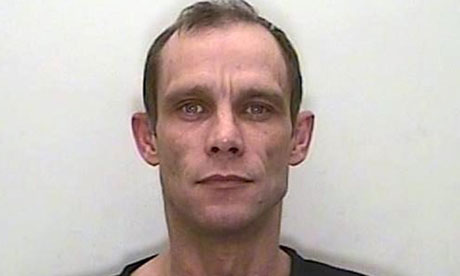
In the UK, the case of Christopher Halliwell (called a ‘dangerous predator here) hit the headlines. Halliwell was arrested on suspicion of kidnapping Sian O’Callaghan and upon arrest, was driven to a deserted spot and grilled by a detective. While he pleaded to see a solicitor, he eventually buckled and led the police to Sian’s body. After subsequent questioning, all still outside of the bounds of legality, Halliwell led the police to a second body.  Under the rules of evidence in England and Wales, his ‘confession’ to the second murder (which had occurred 8 years previously) was not admissible, and as there was no other evidence, Halliwell could not be tried for that murder. Halliwell is clearly guilty of 2 murders, and yet can only be convicted of one, with an understandable ensuing outcry led by the victims mother. Commentators have also taken the opportunity to bemoan the plentiful ‘rights’ that are afforded suspects and how these obstruct justice, pledging support for the now suspended detective. However, these rules on confessions and police conduct  of interviews are there for a purpose. There is a long history of false confessions that have been co-erced or even beaten out of suspects, who have gone on to be convicted and serve many years in prison wrongfully. It took many years of campaigning to get these rights enshrined in law and we lose them at our peril. I have faced down critics on more than one occasion, for standing up for the rights of suspects, including those of murderers. (Read more on Halliwell case here and how he ‘evaded trial’).

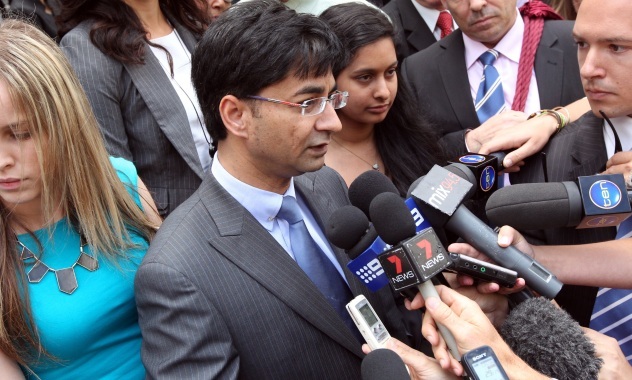
In Australia this week, a high profile acquittal was covered in the media with much accompanying outrage. Lloyd Rayney has been cleared of murdering his wife after the ‘trial of the decade’ (see here and see here). The beauty of this trial is that it was a judge-only trial, and you can read the judge’s statement here... The reasoning reasserts that it is for the prosecution to prove beyond a reasonable doubt the guilt of the accused and the accused does not have to prove his innocence. He goes on to explain that in this case: “Endeavours by the State to fill critical gaps and explain away improbabilities are primarily no more than speculation without foundation in the evidence.”

This echoes a prior acquittal, in the case against Francis Marshall, again in a judge-only trial in Australia in 2010, where the judge stated: “I’m satisfied that the accused had a motive, and find that there are a number of suspicious circumstances which implicate the accused as the killer of Bernadette Liston,… But motive, by itself, is insufficient to find the accused guilty, (and) suspicion piled upon suspicion does not equate to proof beyond reasonable doubt.”

Perhaps there is something to be said for holding more ‘judge only’ trials. That is a debate for another day. What I do believe, is that we need to support these acquittals, even in the face of strong criticism. We cannot allow the media to use such cases to fight against removal of any hard-won protections for suspects and defendants.

The case of Johnny Montani will hopefully be successful and instructive (read more here). Montani’s brother has lodged a complaint with the Australian Corruption and Crime Commission over his three trials (and acquittals), three years on remand and huge legal bill. Montani is alleging police misconduct for adducing erroneous evidence. Being put on trial for a crime you didn’t commit should not be considered a minor inconvenience. Lives can be shattered, just as with a wrongful conviction.

In many of these ‘near misses’, there are lessons for all the participants in the criminal process to learn. These people mentioned here are fortunate to not now be fighting for their wrongful convictions to be overturned. It is important that we do not allow the media to use such cases to argue against due process rights.

School-to-Prison Pipeline in Mississippi

Talk about wrongful convictions!

The school district in Lauderdale County Mississippi is being sued by the Justice Department for maintaining a “school-to-prison” pipeline.  For minor infractions, which includes things like talking back to teachers or violating dress codes, students are arrested, processed through a juvenile court without rights, and incarcerated.  It’s reported that all the victims of this process are minorities.

Here are some examples of the unconstitutional actions taken by the school district and the court:

• Children are handcuffed and arrested in school and incarcerated for days at a time without a probable cause hearing.

• Children detained wait more than 48 hours for a hearing, in violation of constitution requirements.

• Children make admissions to formal charges without being advised of their Miranda rights.

• Children are not routinely granted legal representation during the juvenile justice process.

Read the story here.

We talk a lot here about flaws in the justice system, but what do you do when there is no justice system?  How can this happen in this day and age – in this country?

Prosecutors Argue for Mainali’s Innocence

My previous post on Govinda Mainali’s Case here. This is a 1997 case where a Nepalese man was convicted of killing a woman in Tokyo.

 
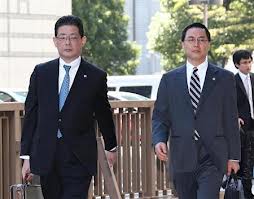
Prosecutors entering Tokyo High Court for the Mainali Retrial Hearing (From Sankei Shimbun News).

The retrial was held on October 29th at the Tokyo High Court.  The prosecutors argued for Mainali’s innocence, saying that Mainali was accused of a crime he did not commit. The court will hand down the ruling next week, on November 7th. The prosecution will not appeal the not-guilty ruling, and the decision will be finalized soon.

Mainali’s case will be the 8th case in Japan after WWII where the defendant was declared innocent after the retrial in a death penalty/ life imprisonment case.

Takayuki Aoki (Tokyo High Prosecutor’s Office) made a comment after the retrial. He said that the investigation and the first trial itself were not problematic. He did state that he is sorry that Mr. Mainali was wrongfully accused and detained for a long time as the perpetrator. However, there was no apology given from the prosecution at the retrial hearing. They still take the position that the their accusation was inevitable, and the circumstances have changed since the new DNA testing results became available.

Typical problems surrounding the Japanese criminal justice system were present during the course of the trial and the retrial of the Mainali case: lengthy detention during investigation, interrogations coerced by the police and prosecutors, prosecutors appealing the decision to grant retrial, and non-disclosure of exculpatory evidence by the prosecution. It is reported that the police and prosecutors will not hold a thorough investigation of what went wrong in this particular case. If we sincerely regret what happened and are determined to never let it happen again, shouldn’t we thoroughly examine the cause of wrongful conviction in each and every case?

Stories on Mainali’s retrial here and here (in English).

Scottish judges, lawyers & advocates all fight to keep corroboration rule

The Scots have been making a lot of headlines in the UK this week after signing an agreement with the British Prime Minister that they can hold a referendum seeking full independence from the UK. However, they have always had their own legal system, entirely separate from England, Wales and Northern Ireland. This legal system has just been the subject of a major review, which has recently reported.

The Carloway Review has recommended the abolition of the Scots corroboration rule, that requires that each piece of evidence adduced during a trial is supported by two sources. This requirement has always been the subject of envy by those south of the border who work in the field of miscarriages of justice, albeit that there are still people wrongly convicted in Scotland. However, Lord Carloway’s recommendation that the rule be abolished, as it has ‘no place in a modern legal system’, is meeting with fierce resistance. Each of the professional bodies for judges, advocates, and lawyers, have come out against the move, arguing that it would seriously increase the risk of miscarriages of justice and decrease confidence in the legal system. Read more here…

The corroboration rule is one that acts as a significant safeguard against miscarriages of justice and it is a shame that the rule does not apply in English and Welsh courts. With each piece of evidence requiring corroboration, many false allegations of sexual assault etc. cannot be prosecuted as they cannot be supported independently. However, this is one reason the corroboration rule is at risk of being eradicated, because it makes it harder to achieve convictions, particular in cases of domestic violence or sexual offences where it can be merely one person’s word against another. We shall watch the Scottish debate with interest.