Category Archives: Reforming/Improving the system

One Issue Not Discussed on the Campaign Trail – the Justice System

Here’s an issue that has not been addressed at all during this political campaign season – the justice system.

The universal political knee-jerk response to justice system issues is “tough on crime,” but this blindly ignores any ‘root cause analysis’ approach to the problem, which is really the only way to actually come close to “solving” it.

This article on the subject is quite interesting, and I include it without editorial comment.

Forensics on Trial

“Modern forensics, including the analysis of fingerprints, bite marks, ballistics, hair and tool marks, can sometimes send innocent people to prison.”

On Wednesday, October 17, at 9:00 PM EDT, Nova will air a special documentary on the subject of “forensics gone wrong”.

I’m expecting this to be a “must watch”.

Prosecutorial Misconduct Forum Engages a Prosecutor and a Man Wrongfully Convicted

Yesterday the Northern California Innocence Project (NCIP) held it’s fifth panel discussion on prosecutorial misconduct, this time at Santa Clara University. Unlike the previous four, the local district attorney, Jeff Rosen, accepted the NCIP’s invitation to participate.

According to the Mercury News (Silicon Valley, CA) here, Rosen “was elected on a promise to reform the office’s win-at-all-costs culture after a series of scandals.” He has re-established the office’s Conviction Integrity unit. While acknowledging that some prosecutorial misconduct is “egregious,” he expressed his belief that prosecutorial error is primarily “unintentional, not malicious.”

Also attending was Obie Anthony, who served 17 years in prison before a judge overturned his murder conviction. The judge noted prosecutorial misconduct in utilizing the key piece of evidence against Anthony, testimony of a pimp, and concealing the deal the prosecutor had made with him. Anthony essentially urged Rosen to be alert to criticisms as “notice” that someone in his office is committing misconduct. “You just need to be accountable,” Anthony said.

NCIP executive director Kathleen “Cookie” Ridolfi reported that a third of the misconduct cases from 1997 through 2011 involved “repeat-offender prosecutors.”

“A group of bad actors are dragging down the reputation of prosecutors, and we have a system that protects them,” she said.

The NCIP’s annual report counted 92 cases of alleged prosecutorial misconduct reaching state and federal courts in California alone, of which the courts set aside the conviction or sentence, barred evidence or declared a mistrial in ten.  To put misconduct statistics in perspective, Ridolfi noted that 97 percent of criminal cases end in plea bargains. Since judges review primarily cases that have gone to trial, the vast majority of criminal cases rarely receive subsequent judicial review…and this opportunity for discovery of prosecutorial misconduct.

A webcast of the forum may be viewed here.


Understanding the Unthinkable: False Confession

According to Rob Warden, of 70 wrongful convictions in Cook County, Illinois, between 1986 and 2011, a false confession was involved in more than half, including both those who falsely confessed to a crime they did not commit and those implicated by another person’s false confession. Warden should know. Co-founder and executive director of the Center on Wrongful Convictions at Northwestern Law, he’s an award-winning legal affairs journalist, whose efforts to expose official misconduct—physical abuse in interrogations in Illinois—resulted in a more complete understanding of the phenomenon of false confession.

Warden’s 11-minute TEDx video (here) is a primer on why false confessions occur and how the criminal justice system can reduce them.

Warden notes that physical torture does not account for the majority of false confessions today. Most are the result of psychological pressures that could prompt many reading this article to confess to a crime not committed. Continue reading

NYPD Will Apply Grant to Identify, Catalog DNA Evidence

Eight hundred persons convicted in New York City are seeking to prove their innocence through DNA testing. Unfortunately, it has been difficult to locate evidence in the city’s massive evidence storage facility. Now those who are actually innocent in this group have new hope. The National Institute of Justice has granted $1.2 million to enable the New York Police Department to dedicate a new staff person to search for sexual assault and homicide cases so that the evidence can be reclassified and assigned a bar code—making the evidence more readily available. Some DNA testing will also be covered by the grant, which will begin on October 1, 2012.

As reported in The New York Times (here) the funds will be applied in a highly efficient manner “because they will be utilizing infrastructure and expertise already in place. The cataloguing system for the evidence will utilize the NYPD’s recently modernized evidence tracking system.” A “new Innocence Project staff person will expedite innocence claims”…and “the Chief Medical Examiner has agreed to donate all staff time for the DNA testing.” Continue reading

LAPD Chief’s Opposition to Line-up Reform Should Prompt Public Pressure

The Los Angeles Times published an opinion today by Barry Scheck, co-director, and Karen A. Newirth, litigation fellow, of the Innocence Project, that underscores why L.A. Police Chief Charlie Beck is wrong in opposing adoption of the best practice of blind administration in police lineups.

The misidentification of an innocent person as the perpetrator has contributed in nearly 75 percent of DNA-proven wrongful convictions. Brandon Garrett notes in his book Convicting the Innocent – Where Criminal Prosecutions Go Wrong a less-known, revealing statistic: Among DNA-proven wrongful convictions in which misidentification was a factor, 36 percent of those misidentified were fingered by more than one witness. This supports what Continue reading

About Bite Mark Evidence – Forensic Odontology

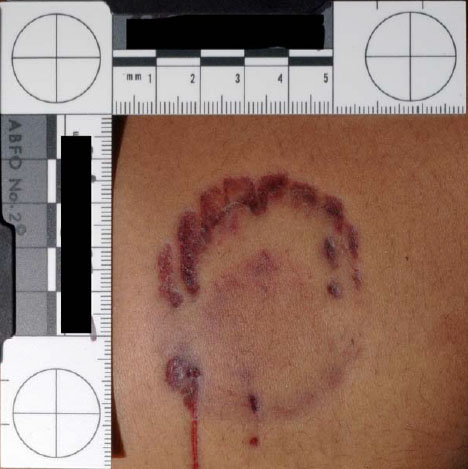
The most famous bite mark case in the US, and perhaps the world, is that of serial killer Ted Bundy.  On Jan. 15, 1978, Bundy broke into the Chi Omega sorority on the Florida State University campus, assaulting and killing three women.  During the crime, Bundy left a bite mark on the buttocks of Lisa Levy, whom he raped and killed.  It was this bite mark that was primarily responsible for his conviction.  He was executed in Florida’s electric chair on Jan. 24, 1989.  Shortly before his execution, he confessed to 30 other murders in seven states, but it is believed that he may have been responsible for as many as 100 deaths.

Here are photos of the bite mark on Lisa Levy’s buttocks, and the wax impresstion that was made of Bundy’s lower dentition:

Continue reading

Sentencing “Rules” and “Guidelines” – Have Things Gone Too Far?

Anders Breivik, the Norwegian who meticulously planned and carried out an attack that killed 77 people, has been found sane, and sentenced to 21 years.  See the NY Times article here.

Meanwhile, this past May, Marissa Alexander, a Florida woman, who was in a fight with her abusive husband, fired a warning shot into a wall without injuring anyone, and was sentenced to 20 years.  See GlobalPost article here.

Does anybody else see a problem here?

And then there are the “three strikes” laws.  Under these laws people who have committed three felonies, albeit non-violent and minor, can be sentenced to life in prison.  24 states currently have some form of “three strikes” law.  The intention was to reduce crime from repeat offenders, but no statistically valid causal correlation with reduced crime has been shown.  However, it has been observed that offenders in jeopardy of a “third strike” are more likely to violently attack police.

Something is seriously out of kilter here.

Successful Wrongful Convictions Conference in China Held August 6-8, 2012…

The “foreign” delegates with conference host Professor Jiahong HE (front row, center).  More than 150 Chinese scholars, judges, prosecutors and defense attorneys attended the intense 3-day event.

China has had many high-profile and well-publicized wrongful convictions and exonerations in the past decade, and this was the first conference in China to focus on the problem of wrongful conviction.  The conference was held August 6-8, 2012 in Changchun, China, which is in the north near North Korea and Russia.  The conference was packed with interesting speakers (program with speakers and topics here), and I can attest (as can anyone else who was present) that the more than 150 Chinese scholars, judges (including Supreme Court Justices), defense lawyers and high-level prosecutors were extremely concerned about the problem and keen on getting the Chinese system to start working on reforms to minimize it.  China recently passed reforms requiring videotaped interrogation in many cases, and is working diligently to update the criminal procedure rules and to get other innocence reforms in place.

The thing that many of us from the “West” commented to each other throughout the conference was how open the judges and prosecutors were to the problem, and how they seemed to be on the same page with the scholars interested in reform.  You rarely see that kind of cooperation in the U.S. or, as Innocence Network UK founder Michael Naughton noted, in the UK.  [Note:  Naughton is on the far right of the back row in the above picture]

Some of the causes of wrongful conviction that the Chinese speakers frequently noted were false confessions due to intense interrogation methods, political interference in the cases from the local communist party officials who sometimes take an interest high-profile cases and want them to come out a certain way, tunnel vision of police and prosecutors, and the evaluation and promotion process for judges and prosecutors that rewards high conviction rates.  Restructuring the system that so the judiciary is totally independent (from both other branches of government and the Communist Party) seemed to be most frequently cited as the next reform to tackle.  Discussion was open, frank, and filled with a spirit that reform is the air in China, and that anything is possible (eventually).

In addition to being an outstanding conference substantively, a nice perk was that conference attendees had the option of going to the Changbai Volcano on the border of North Korea.  It was remarkably beautiful; I took this photo with my Iphone

One interesting point that was discussed was the Chinese legal system’s distrust of confessions (due in part to the history of torture to obtain them), and the growth of the Mutual Proof Rule, which requires a judge to determine that the objective facts of the case match the suspect’s confession before considering the confession as probative evidence of guilt.  Cases were discussed in which the Mutual Proof Rule resulted in confessions being disregarded because the details varied too far from the undisputed facts.

Another interesting point that was discussed was how the judiciary in the Hunan Province, after a troubling exoneration a few years ago, declared May 9th each year to be set aside for the local judicial system to reflect on wrongful convictions and discuss reforms.  Each year on May 9th the province judicial council issues a report on wrongful convictions and what progress the province has been made to remedy the problem in the past year.

My favorite moment of the conference was when an American professor congratulated the Chinese reformers on how far they have come in recent years, but noted that only 30% of defendants in China are entitled to counsel during trial.  One of the Chinese scholars retorted:  “America put the right to counsel in the Bill of Rights in the 1790s and didn’t make it a universal reality until the 1960s.  It took you almost 200 years.  We have only had serious reform in China for 1o or 20 years, so we’re on track to beat America by more than 150 years.  And we’re gonna do it!!”

If this conference is any indication of the Chinese resolve for reform, then this statement may very well end up being true.

Me with Norwegian Professor Ulf Stridbeck, who was instrumental in founding the Norwegian CCRC, which some believe is the most effective governmental body designed to fight wrongful convictions anywhere in the world…

Fabrication of Reports by Police Forensic Science Lab Scientist Revealed

Forensic Science Lab in Wakayama.– from TBS News.

It was reported today that a scientist at Forensic Science Laboratory in Wakayama Prefectural Police Headquarters had been fabricating reports in criminal cases (Read the news in Japanese here and here).  It was revealed that the scientist wrote up reports although he never tested the actual evidence, using  his previous reports and copied charts from them. The Wakayama Prefectural Police had been looking into the case since July, after an accusation by fellow scientist.

The alleged scientist works in the chemical division of the lab, which handles the analysis of evidence such as drugs or vehicle paint left at the scene of a traffic accident. The police determined that there had been fabrication of reports in 8 cases between May 2010 through June 2012. These cases include cases involving death of victims and hit-and-run cases. However, the Wakayama Police Department is claiming that the impact of false evidence in actual cases was minimal.

If in fact the scientist had been fabricating evidence, he may face criminal charges. There might have been trials where the reports of the scientist’s “testing” results were introduced and admitted into as evidence. If so, it could be a reason for a retrial.

There have been several incidents of fabrication of evidence by police investigators recently. In Osaka, an officer fabricated results of alcohol testing during enforcement of drunk-driving. In Fukushima, officers lost cigarette butts left at the crime scene and logged in unrelated evidence in their place. Continue reading

New Scholarship Spotlight: Beyond Finality: How Making Criminal Judgments Less Final Can Further the ‘Interests of Finality’

Andrew Chongseh Kim has posted the above-titled article on SSRN.  Download here.  The abstract states:

Courts and scholars often assume that granting convicted defendants more liberal rights to challenge their convictions and sentences would necessarily harm society’s various interests in “finality,” the most prominent of which are resource conservation, efficient behavior by defense counsel, and deterrence. The extent to which convicted defendants should be allowed to challenge their judgments depends, according to the common analysis, on how much society is willing sacrifice those interests to validate defendants’ rights. This article argues that although expanding defendants’ rights on post-conviction review inherently makes criminal judgments less “final,” it does not necessarily harm the interests “finality” presumes to protect. Rather, when the financial costs of wrongfulincarceration, resource constraints on defense counsel, and the effects of legitimacy on compliance are considered, it becomes clear that granting more liberal review can often conserve state resources, will rarely affect the behavior of defense counsel at trial, and can help reduce crime.

First, the assumption that defendants’ post-conviction rights impose significant burdens on states ignores the costs of wrongful incarceration. Although recent studies on innocence have demonstrated that successful post-conviction review can produce large incarceration savings, they offer little insight into how significant those savings are compared to the administrative costs of providing the many appeals by defendants who failed to obtain relief on appeal. This article demonstrates, using the limited data available, that for direct appeals, the wrongful incarceration savings are generally quite substantial compared with the administrative costs of providing those appeals. Indeed, it is quite possible that some states realize net cost savings by providing direct appeals. The article then identifies specific restrictions on defendants’ rights, such as restrictions on relief from plain errors in sentencing that impose net costs on states. This article argues the existence of such restrictions that harm defendants at net financial cost to states is partly the result of an agency problem in criminal appellate decision making.

Second, although limiting defendants’ opportunities to seek relief from errors after conviction may increase incentives on defense counsel to prevent errors at trial, these increased incentives are unlikely to affect the actual behavior of counsel. With respect to strategic behavior or “sandbagging,” this article argues that because harmless error rules prohibit relief from errors that did not, in retrospect, affect the outcome of a trial, defense counsel will rarely have incentives ex ante to intentionally sandbag errors. In addition, because most inadvertent mistakes are caused by resource constraints on public defenders, rather than inattentiveness, increased restrictions on post-conviction rights are unlikely to reduce inadvertent mistakes. Moreover, to the extent that restricting review might actually compel defense counsel to take additional care at trial, because this care must be paid for by the state, it could actually be inefficient.

Finally, this article argues that the traditional finality deterrence argument, which depends heavily on the assumption that prisons effectively rehabilitate offenders, has been severely undermined by social science literature. Liberalizing post-conviction review, however, could increase incentives on people to obey the law by reducing wrongful convictions and the punishment given to defendants wrongfully convicted. Although the effects of reduced wrongful conviction are unlikely to affect the incentives of most people, for whom the risk of wrongful conviction is already negligible, they may be significant for at risk populations for whom the risk of profiling and wrongful suspicions are more salient. In addition, studies have demonstrated that the willingness of people to obey the law is influenced heavily on how “fair” or “legitimate” the legal system is perceived to be. Because many restrictions on post-conviction relief may be perceived as procedurally “unfair” by defendants, lifting these restrictions may actually encourage criminals and their associates to comply with the law.


Thursday’s Quick Clicks…

Re Wrongful Conviction: Katie Monroe Seeks Policy, Cultural Change

“What we would like to see is change in the culture in the way government officials respond to wrongful convictions,” says Katie Monroe. “We’d like it to grow to a place where government officials realize that correcting mistakes is good for all of us and not just the person in prison.” Monroe, longtime leader of the Rocky Mountain Innocence Project (RMIP), is leaving her RMIP post, as reported here,  to become the Innocence Project’s first person in Washington, D.C. dedicated to working with prosecutor and police groups to shape policy that can reduce wrongful conviction.

She takes helpful experience to the challenge. The RMIC authored with the Utah Attorney General’s office Utah’s 2008 non-DNA factual innocence statute, which Continue reading

Texas Executes Developmentally Disabled Man in Violation of 2002 Supreme Court Ruling

On Tuesday night, Texas executed Marvin Wilson, whose IQ score was 61 — low enough that it should have met any standard for “diminished mental capacity.” Shockingly, the US Supreme Court did not intervene to stop the execution despite its 2002 decision in Atkins v. Virginia barring the execution of the “mentally retarded” as “cruel and unusual punishment” in violation of the Eighth Amendment.

See full article here.

Texas to Review Arson Convictions

How many innocent persons have been convicted of arson on now-discredited forensic arson theory? Texas may provide an indication. As reported earlier today by Mark Godsey here and in the Star-Telegram here, the Texas Forensic Science Commission has asked the Texas Innocence Project (TIP) to work with the State Fire Marshall’s Office to identify potential wrongful convictions that relied on debunked arson theory. Jeff Blackburn, chief counsel for the TIP is estimating that by spring of 2013, 10-15 cases will be identified for close Continue reading

Shaken Baby Syndrome (SBS) Expert Testimony – This HAS to get fixed.

I was planning to post an article about the minefields and pitfalls involved in expert testimony in general, but after thinking about it, I decided that there is a specific area that deserves special consideration – expert medical testimony in SBS cases.  The “general case” I will save for another day.

I cannot say that I’m deeply experienced, but over the last 4+ years, I’ve been personally involved in five separate SBS cases (all still ongoing), and have become a student of the subject in general.  I’m not an attorney, and I’m not a doctor.  I’m an engineer by training, and have spent a 42 year career deeply involved in a broad range of sciences and technologies, which has taught me the value of “cause and effect” and “root cause” analysis, as well as for the “scientific method” and “design of experiments”.  So I think I can kind of figure out what’s going on.

My study of the early medical literature on the subject, tells me that the origins of the “triad” theory of SBS causation (reference) were founded on conclusions from “studies” (by Drs. Guthkelch and Caffey) that resulted from logically flawed inductive reasoning and experimental sample sizes that were so small as to be statistically meaningless.  But somehow, the “triad” became embedded in pediatric medical dogma, and has been so for the last 30 years.

Continue reading

Two Minnesota Public Defenders Take Down St.Paul Crime Lab

Two public defenders in Minnesota, not satisfied with a 1 or 2 page summary from the St.Paul crime lab, made the effort and had the chutzpah to demand complete case files, visit the lab, and interview lab staff.  What they found was staggering.  Controls, procedures, and minimum standards were woefully lacking.  When they asked one lab staffer why there weren’t minimum standards in place, the answer was, “I guess I don’t know what minimum standards are.”

Prosecutors are now offering favorable deals in 160 drug cases, and more cases may come under review.

Law enforcement agencies are no longer sending samples for testing to the St.Paul crime lab.

Here are three articles from the St.Paul StarTribune chronicling the story.

Xiong C. St. Paul Crime Lab. Star Tribune, 2012-07-28

Tevlin J. St. Paul Crime Lab. Star Tribune, 2012-07-28

Estrada HM. St. Paul Crime Lab. Star Tribune, 2012-07-30

Reforms Recommended in Australia…

On the 18th, July 2012 the South Australian Legislative Review Committee on the CCRC Bill reported that it would not be recommending that a CCRC-style body be established in South Australia.

It did, however, make seven reform recommendations.  Recommendation 3 was for a new statutory right for certain qualifying offences to provide that a person may be allowed at any time to appeal against a conviction for serious offences if the court is satisfied that:

· the conviction is tainted;

· where there is fresh and compelling evidence in relation to the offence which may cast reasonable doubt on the guilt of the convicted person.

Also of particular significance, Recommendation 5 was that the Attorney-General considers establishing a Forensic Science Review Panel to enable the testing or re-testing of forensic evidence which may cast reasonable doubt on the guilt of a convicted person, and for these results to be referred to the Court of Criminal Appeal.

The Full Report is here.

Consent Decree with New Orleans PD Includes Recorded Interrogations…

From Nola.com:

Consent decree here….

U.S. Attorney General Eric Holder and local officials will announce Tuesday in New Orleans a wide slate of reforms in the New Orleans Police Department, ending months of negotiation over the most far-reaching federal consent decree of its kind in the country, according to a source with knowledge of the negotiations. The 125-page agreement, which a federal judge must endorse, will serve as a road map for change in the city’s long-embattled police department. The federal oversight mandated by the agreement will stick for at least four years, to be overseen by a monitor and a federal court judge, the source told The Times-Picayune.

Under the terms of the deal, the NOPD will be forced to address numerous deficiencies, most of which the U.S. Department of Justice highlighted last year in a withering critique of virtually every aspect of the force.

In order to break away from federal scrutiny, the agency must be free of violations for two consecutive years, the source said. If the NOPD fails to do so, a federal judge can extend the oversight or impose other penalties.

The decree dictates changes big and small, from policy tweaks to administrative reconfigurations and more. Among the changes outlined in the decree: how cops must conduct traffic stops, searches and arrests; how they examine officer use of force; and how they interrogate citizens. Unlike now, officers will be required to audiotape and videotape every suspect interview, the source said.

In addition, the federal order mandates changes to the NOPD’s troubled system in which officers work off-duty, paid security details for private interests. The city and the department previously announced changes in the details system, creating an oversight agency within City Hall, a move that aligns with what is required under the decree, the source said.

Mitchell Rivard, spokesman for the U.S. Department of Justice, declined to comment when contacted by The Times-Picayune on Monday. U.S. Attorney Jim Letten, who oversees the eastern district of Louisiana, also declined to comment.

A spokesman for Mayor Mitch Landrieu did not return a call for comment.

NOPD spokeswoman Remi Braden declined to comment. She said police Superintendent Ronal Serpas was out of town Monday.

“We’re not confirming anything about the consent decree, and we can’t discuss the consent decree,” she said.

New mandates for NOPD

For months, City Attorney Richard Cortizas and his subordinates have negotiated aspects of the decree with the federal government, including members of the Justice Department and Letten’s staff.

Some of the more contested changes include investigations into the use of police force and implementation of a new system of police details that Landrieu outlined in late May.

Investigations into police shootings and other use of force will be taken out of the homicide division and directed to a new team, which will report to the Continue reading

Tuesday’s Quick Clicks…