Category Archives: Reforming/Improving the system

Nigeria: Extra-Judicial Killings and Police Brutality Spiralling

The rise and rise of the spate of police brutality in Nigeria, not only poses dire consequences for the stability of the Nigerian polity, but undermines the policing and judicial processes. In 2009, the Nigerian police was fingered in what turned out to be the extra-judicial ‘execution’ of Mohammed Yusuf, even though he was in the custody of the police and in cuffs. He was shot repeatedly at point blank range. Mohammed Yusuf was acclaimed to be the leader of the Boko Haram sect. Read BBC report here –http://news.bbc.co.uk/2/hi/africa/8544131.stm
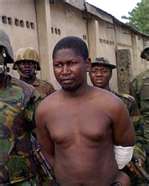
The situation appears to have significantly deteriorated today. A detailed new report catalogued by the Daily Trust newspaper, demonstrates that the assault, brutality and extra-judicial killings is still going on under the watch of the Nigerian police. Read report here –http://weeklytrust.com.ng/index.php?option=com_content&view=article&id=8788:extra-judicial-killings-on-the-rise&catid=40:cover-stories&Itemid=26

It is hard to fathom how this situation can be reversed if the National Human Rights Commission; the Police Service Commission and the Judiciary dont take their statutory responsibilities seriously.

Saturday’s Quick Clicks…

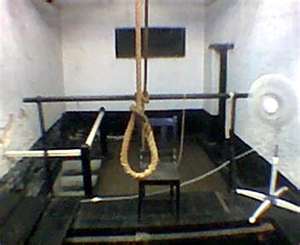
March 20th: Matthew Puckett to Keep a date with the hangman’s noose

Matthew Puckett is slated for ‘execution’ by the state of Mississippi on March 20th, 2012. The death penalty – regardless of the heinousness of the crime – continue to raise dust and controversy wherever it is applied worldwide. It is about time we re-engage with the rationale, the humanity, as well as the emotional and spiritual arguments against the death penalty; especially, when it potentially raises the possibility, however slightly, of a wrongfully convicted person being taken to the gallows.

Jamie Arpin-Ricci (Author and Pastor) makes a powerful, emotional and ‘reasoned plea’ why Mathew Puckett should be spared the guillotine.Read herehttp://www.huffingtonpost.com/jamie-arpinricci/death-penalty-is-not-christian_b_1341706.html There is still enough time left to stretch the law to its limit. How you may ask? By signing the petition or contacting Mississippi’s Governor, Phil Bryant. A link is provided at the penultimate paragraph of the article

Connecticut Considers Eyewitness ID Reform As DNA Proves Another Eyewitness Wrong…

From the Connecticut News Junkie:

As lawmakers on the Judiciary Committee consider a bill to change how criminal lineups are conducted Friday, they may also want to consider the case of Hubert Thompson, who may be the latest Connecticut inmate to be exonerated by DNA evidence.

A judge allowed Thompson to walk out of prison Monday after serving five years for a rape that DNA evidence now suggests he didn’t commit.

Thompson was arrested after a victim picked his face out of a photo lineup, according to his lawyer William Koch, Jr.

According to a petition for a new trial filed in Continue reading

Wednesday’s Quick Clicks…

New Article Spotlight: Cassell’s Skeptical Observations of Some Suggested Innocence Reforms

Professor Paul Cassell has posted Freeing the Guilty Without Protecting the Innocent: Some Skeptical Observations on Proposed New “Innocence” Procedures here.  The introduction gives you an idea of where his article takes you:

A recent thoughtful article by Tim Bakken discusses the plight of innocent defendants and proposes new procedures to prevent “factually” innocent defendants from being convicted at trial.1 Bakken quite rightly draws attention to the important subject of preventing the conviction of innocent persons—a fundamental goal of the criminal justice system. In proposing his prescribed solutions, however, Bakken stands on shakier ground. His untested and unprecedented proposals seem quite likely to free countless guilty defendants without doing much to aid the truly innocent. Indeed, by overwhelming the criminal justice system with frivolous claims of innocence, Bakken’s proposal seems likely to swell the size of the criminal justice haystack of purportedly innocent defendants, thus making it more difficult to identify the needle of the truly innocent defendant enmeshed in the system. To truly help the innocent, we should be looking at other, more discriminating reforms that offer better prospects of separating guilty from innocent defendants.

Sunday’s Quick Clicks…

What should Americans expect of public officials AFTER a wrongful conviction?

In most endeavors a costly mistake results in immediate efforts to identify what went wrong and how it can be prevented. Curiously, in the criminal justice system, officials too often respond to the tragic error of convicting an innocent with defensiveness and denial. Such miscarriages of justice should prompt important improvements in the system, but these will be derailed or hard won until Americans clarify our expectations of officials after justice stumbles.

Following a wrongful conviction, public officials can go a long way toward restoring trust in the system by following a 7-step process—mandated by both decency and public relations 101—that includes (1) honestly acknowledging that a Continue reading

What Can Innocence Reformers Learn from the Aviation and Engineering Fields?

Boaz Sangero and Mordechai Halpert of Ramat Gan Law School in Israel have posted a very interesting article on SSRN, entitled A Safety Doctrine for the Criminal Justice System (available here).  The abstract states:

Criminal law, unlike other risk-creating fields, currently lacks any modern safety doctrine. In light of the proven phenomenon of wrongful convictions and the severe harm it causes to both those wrongly convicted and society, this Essay focuses on the necessary preliminary stages in developing a safety doctrine for the criminal justice system. Under our conception criminal law is a “safety-critical system”: it deals with matters of life and death. We view false conviction to be a type of accident, similarly to a crash of a fighter airplane. This comparison is not only metaphorical, but quite literal when the damage is assessed from an economic standpoint. Care and Continue reading

‘Bryan Stevenson: We need to talk about an injustice’

This 23minutes 41seconds talk by Bryan, will simply blow up and open your mind to a whole new perspective of crime, society, criminal (in)justice, mass incarceration, death penalty, ‘identity/race’ question in the United States. The opposite of poverty is injustice. In a sense therefore, this can be replicated mutatis mutandi whether in the United States, Europe or Africa. It demonstrates clearly, there is work to be done. It was also striking to know that there is no death penalty in Germany. The entire footage can be viewed here.

The galvanizing Troy Davis case taught lessons beyond death penalty

Massive attention in America and internationally on the Troy Davis case appropriately focused on the death penalty, but this case was a call to action regardless of one’s position on capital punishment. The troubling uncertainty that followed Troy Davis to the death chamber on September 21, 2011, should prompt widespread recognition that the U.S. criminal justice system can do better, and Americans must require it.

When Davis’s guilt was called into question following the recantation of most key witnesses, thousands protested but were unable to stop the train that had left the station twenty years earlier. That’s when a jury, after weighing evidence Continue reading

Commentary: New York’s DNA Database Bill and Innocence Reforms

New York’s pending bill to expand collection of DNA samples for the database to some misdemeanor and all felony arrestees is causing quite a stir.  As previously reported, those supporting innocence reforms have asserted that the collection of DNA should not be expanded without including reforms to protect the innocent, such as eyewitness identification reforms and requirements to record interrogations.  But NY Governor Cuomo is fighting back, saying:

“I don’t want to play the normal Albany game with this bill…which is (to say), ‘Well, let’s use this bill to accomplish unrelated things that we want to get done,’ right? This bill is about DNA and the use of DNA, and the use of DNA to prove guilt or prove innocence. And this is the bill that we want to pass. … Let’s not make this bill a vehicle to debate other issues.”

Innocence reforms are “unrelated” to DNA testing?  If DNA has taught us anything over the past 20 years, it’s that the system has flaws, and that those Continue reading

The High Costs to Society (including financial) of Wrongful Conviction

Here a link to a great article by Rob Warden and John Conroy about the costs of wrongful conviction in Illinois.  One example:  Wrongful convictions cost Illinois taxpayers $214 million dollars between 1989 and 2010.  The article contains lots of great stats and charts.  Check it out.

Prosecutors Attack North Carolina’s Innocence Commission, And Demand Changes, After it Exonerates Wrongfully Convicted

On the heels of having exonerated several inmates in North Carolina, prosecutors are challenging the laws establishing and setting the standards for North Carolina’s Innocence Inquiry Commission.  Prosecutors want the burden for inmates to obtain relief raised from “clear and convincing” evidence of innocence to proof of innocence “beyond a reasonable doubt.”  They also want a chance to cross-examine defense witnesses at an earlier stage in the investigative process, rather than at the 3-judge panel hearing that occurs after initial investigation.  A law to make these changes passed the House last year, but died in the Senate.   Prosecutors are beating the drum again this year, after the Innocence Inquiry Commission exonerated two men a few months ago.

Christine Mumma, director of the North Carolina Center on Actual Innocence opposes the changes.  So does attorney Brad Bannon, who serves on the board of N.C. Legal Prisoner Services.  He says, “Simply put, these changes would make it more difficult for innocent, wrongly convicted people to gain their freedom. That turns the entire idea of the Innocence Commission, if not justice itself, upside down.”

Indeed, why anyone would want an inmate to remain in prison–or on death row–when there is clear and convincing evidence of his innocence, is hard to fathom.  Changing the law to require proof of innocence “beyond a reasonable doubt” would make exonerations extremely difficult to attain.  Proving that someone committed a crime “beyond a reasonable doubt,” which is what prosecutors face at trial, is easier than proving innocence “beyond a reasonable doubt.”  We all know that proving a negative (that he didn’t do it) is nearly impossible to do, and is much more difficult than proving a positive (that he did it).   Continue reading

New York Times urges open files in U.S. federal cases

A New York Times editorial yesterday properly urged that the Justice Department require federal prosecutors’ files be open to the defense. While Brady v Maryland requires disclosure of exculpatory evidence, too often prosecutors at all levels skirt this requirement and courts dismiss the undisclosed information as not “material,” a subjective call that can be flawed as revealed in many DNA-proven wrongful convictions.

As the editorial points out, 96% of federal cases are resolved in plea bargains. The lax application and court enforcement of Brady  puts defendants at the considerable disadvantage of not knowing the evidence against them in plea negotiating. The editorial advocates an open files federal rule, which would be an important example for the states.

Ohio and North Carolina were mentioned as two states that now have open files rules. At the state level this requires leadership; Ohioans can thank the late Chief Justice Thomas Moyer, who championed this rule change, adopted by the high court’s rules committee in July 2010.

How to reduce fingerprint errors

 Before the advent of DNA testing, fingerprint comparison was considered the  best way to identify criminal perpetrators. To hear the FBI and other law-enforcement agencies tell it, there was virtually no chance of misidentifying someone because every fingerprint is supposedly unique and their highly trained examiners never made mistakes.

Although false fingerprint identifications were known to have contributed to wrongful convictions, the errors seemingly occurred because of fabrication and misconduct, not actual error.  The case of Portland, Oregon, attorney Brandon Mayfield helped change that perception.

Continue reading

Is the ‘Legal Aid Architecture’ failing Nigerians?

The statistics are grim. 65 percent of inmates in Nigerian prisons have never been convicted of any crime. Waiting trial period has increased dramatically from 5years to upwards of 10years or more. The police and prison authorities continue to trade blames. Only one in seven inmates awaiting trial have access to private legal representation. Most prisoners are too poor to engage the services of a lawyer. To read more click here www.pmnewsnigeria.comThe shame of a nation

This situation exactly was the objective of setting up the Nigerian Legal Aid Council in the mid 70s: to provide free legal representation, assistance and advice, together with alternative dispute resolution services to indigent prisoners. Read more of the Council’s stautory responsibilities here www.legalaidcouncil.org.ng The Council has been struggling to make its impact. Admittedly, the Council’s constraints are primarily funding and capacity.

The recent passage and Assent by the President to the new Legal Aid Amendment Act 2011, has been hailed as one way of providing the needed impetus for the Council to act pro-actively, and take their responsibilities more seriously. The Act contains a lot of innovative provisions and strategies for tackling not only the knotty question of legal representation, but addressing the quality of justice delivered. It is still early days to make a definitive impact assessment. One thing is certain though, the Council will need to sit up and justify the tortuous process of ensuring that the 2011 Act was passed into law. No more excuses. Tens of thousands of prisoners are languishing in jail houses, in utter violation of their constitutional rights.

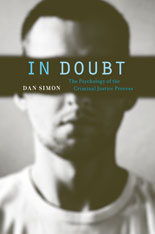
In Doubt: The Psychology of the Criminal Justice Process

Here’s a new book that looks interesting and on-point entitled In Doubt:  The Psychology of the Criminal Justice Process by Dan Simon, a professor of psychology at the University of Southern California.  The abstract reports:

The criminal justice process is unavoidably human. Police detectives, witnesses, suspects, and victims shape the course of investigations, while prosecutors, defense attorneys, jurors, and judges affect the outcome of adjudication. In this sweeping review of psychological research, Dan Simon shows how flawed investigations can produce erroneous evidence and why well-meaning juries send innocent people to prison and set the guilty free.

The investigator’s task is genuinely difficult and prone to bias. This often leads investigators to draw faulty conclusions, assess suspects’ truthfulness incorrectly, and conduct coercive interrogations that can lead to false confessions. Eyewitnesses’ identification of perpetrators and detailed recollections of criminal events rely on cognitive Continue reading

Gallery

Trial by Jury: Is It About Time for Nigeria?

Nigeria’s adversarial justice system, pitches the prosecutor against the defense, in a fierce evidential ‘duel’ as to the guilt or otherwise of an accused person. That leaves a stand-alone bench to determine – on the basis of the weight of … Continue reading

Gallery

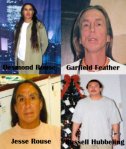
American Indian Injustice

This gallery contains 4 photos.

American Indian reservations are, to a certain extent, a world unto themselves. Tribal councils, rather than the U.S. government or state governments, generally control what happens on America’s 300-plus reservations on which many native Americans still live. But not when … Continue reading