Category Archives: Scholarship

New Scholarship Spotlight: Innocence Compensation: A Comparative Look at the American and Canadian Approaches

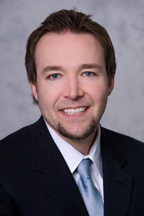
260981_1027077731_6977685_n-1Myles Frederick McLellan from the University of Ottawa Department of Criminology has posted the above-titled article on SSRN.  Download article here.  The abstract states:

The plight of the wrongfully convicted is gaining prominence with the growing awareness of the prodigious harms to innocent persons at the hands of the criminal justice system. Most of the attention, both scholarly and legislatively, has been focused on the causes of miscarriages of justice. What needs to now be addressed more comprehensively is the issue of how to provide redress to those persons whose lives have been inexorably damaged; and how to best compensate them in their efforts to rebuild a life. Virtually all western democracies have turned their attention to this issue, some more effectively than others. This paper looks at the similarities and the differences in the approaches between the United States and Canada in this regard. Lessons can be learned from both.

Innocence Network Conference Convenes in Charlotte, North Carolina

More than 500 attendees from around the world, including at least 100 exonerees, are arriving in Charlotte, North Carolina, for the 2013 annual Innocence Network Conference, which will begin Friday, April 19, at 7:00 a.m. EST with opening remarks at 8:00 a.m. from Peter Neufeld and Barry Scheck, co-founders of the Innocence Project, a model that has been emulated throughout the United States and internationally.  The sell-out conference will conclude at 5:00 pm on Saturday, April 20. Exonerees will gather at a preliminary reception Thursday evening. Continue reading

Risinger & Risinger on Innocence Lawyers and More…


Here are five recently published works of scholarship relating to wrongful conviction.

(1) Michael D. Risinger and Lesley C. Risinger , The Emerging Role of Innocence Lawyer and the Need for Role-Differentiated Standards of Professional Conduct (March 21, 2013). Sarah Cooper (Ed.) Controversies in Innocence Cases in America, Forthcoming.

Available at SSRN: http://ssrn.com/abstract=2237754

(2)Richard A. Leo, Why Interrogation Contamination Occurs (2013). Ohio State Journal of Criminal Law, Forthcoming; Univ. of San Francisco Law Research Paper .

Available at SSRN: http://ssrn.com/abstract=2235152

(3)Andrew Chongseh Kim, Beyond Finality: How Making Criminal Judgments Less Final Can Further the ‘Interests of Finality’ (March 19, 2013). Utah Law Review, Forthcoming.

Available at SSRN: http://ssrn.com/abstract=2235812

(4)Jon Gould,  Julia Carrano, Richard A. Leo and Katie Hail-Jares, Predicting Erroneous Convictions (March 2013). Iowa Law Review, Forthcoming; Univ. of San Francisco Law Research Paper .

Available at SSRN: http://ssrn.com/abstract=2231740

(5) Samuel R Gross, How Many False Convictions are There? How Many Exonerations are There? (February 26, 2013). Wrongful Convictions and Miscarriages of Justice: Causes and Remedies in North American and European Criminal Justice Systems, C. R. Huff & M. Killias eds., Routledge, March 2013 ; U of Michigan Public Law Research Paper No. 316.

Available at SSRN: http://ssrn.com/abstract=2225420

New Scholarship Spotlight: Prosecution (Is) Complex


Alafair S. Burke

Alafair S. Burke

Alafair S. Burke has posted the above titled-article, a book review of Prosecution Complex, on SSRN.  Download here.  The abstract says:

Post-conviction DNA testing has led to the exoneration of nearly three hundred defendants. As the number of exonerations grows, we are in an era where the once unthinkable is now undeniable. We convict the innocent. We imprison the innocent. We place the innocent on death row. Daniel Medwed brings this reality to life in his captivating book, Prosecution Complex, which carefully documents the myriad ways that prosecutors can contribute to wrongful convictions at every stage of a criminal case. From the charging decision to plea bargaining to trial to post-conviction, Medwed argues, prosecutors face an “ongoing schizophrenia” as they seek to balance dual roles in the criminal justice system, trying to serve both as zealous advocates for the government and as neutral ministers of justice.

This book essay offers three lessons that can be gleaned from Medwed’s central thesis that prosecutors must struggle to balance their dual roles as advocates and ministers of justice. Two of these lessons are for prosecutors: 1) that the protection of justice means not only the protection of the innocent, but also the fostering of a fair process, and 2) that prosecutors can mitigate the possibility that they will contribute to a wrongful conviction by seeking out contrary voices that foster neutral decision-making. The third lesson, aimed at the wrongful convictions movement, is to avoid a language of fault, which has a tendency to focus reform efforts on intentional misconduct and to signal to virtuous prosecutors that they need not worry that they may contribute to a wrongful conviction. Prosecution Complex is a significant book that should be read by any scholar, lawyer, or layperson who cares about criminal justice. But its most essential audience is prosecutors themselves, who hold the key to the most feasible and important reforms in the prevention of erroneous convictions.


New Scholarship Spotlight: Destruction of Innocence: The Friedman Case: How Coerced Testimony & Confessions Harm Children, Families & Communities for Decades after the Wrongful Convictions Occur

Gavin DeBecker and Emily Horowitz have posted the above-titled article on SSRN.  Download full article here:  The abstract states:

Between 1984 and 1995, at least 72 individuals were convicted during the national hysteria of mass child molestation and satanic ritual abuse cases. Almost all thoseconvictions have since been overturned. This paper analyzes the present-day, on-going impact from wrongful convictions, focusing on the Friedman case, well-known as the subject of the landmark documentary film, Capturing the Friedmans. Though the US Appeals Court has ruled that Jesse Friedman was likely wrongfully convicted, the case has not yet been overturned. The impact on wrongly-imprisoned defendants is obvious, however the impact on hundreds of children has rarely been considered. Initially sure they were not sexually abused, and confident in their perceptions of reality, these children were dragged to a place of confusion, mistrust of adults, and uncertainty about themselves and the world. This paper provides new evidence and insight from extensive interviews with people police alleged were molested – and who now as adults confirm they were coerced into making false accusations. Also revealed are new witnesses who were present during alleged crimes against others, and now confirm there was no molestation. Child sexual abuse does happen, of course, and is a profound social issue; at the same time, false and hysteria-driven prosecutions robbed resources from cases of actual sex crimes, reduce the public’s faith in the legitimacy of such prosecutions, and interfered with the protection of children. The Friedman case provides a unique opportunity to heal a community still suffering from the wounds of false accusation, confusion, and deceit.

New Study Show Statistical Factors Behind Wrongful Convictions…

From news source:

Why do innocent people go to jail in the United States every year for violent crimes they did not commit? It’s a serious question representing the ultimate miscarriage of justice—taking away the freedom of a factually innocent person while also allowing the guilty person to remain free. The U.S. Department of Justice’s National Institute of Justice (NIJ) wanted to learn answers to prevent wrongful convictions in the first place.

Jon B. Gould, J.D., Ph.D., a professor and the director of the Washington Institute for Public and International Affairs Research at American University and his team of researchers conducted a three year, first of its kind, large-scale empirical study Predicting Erroneous Convictions: A Social Science Approach to Miscarriages of Justice employing social scientific methods. It was funded by NIJ, and an NIJ video features Gould discussing wrongful convictions. After identifying 460 cases employing sophisticated analytical methods matched with a qualitative review of the cases from a panel of experts, 10 statistically significant factors were identified that distinguish a wrongful conviction from a “near miss” (a case in which an innocent defendant was acquitted or had charges dismissed before trial).

“Surprisingly unlike airplane crashes or near midair collisions where the FAA moves in to investigate and reconstruct events in an effort to prevent future catastrophes, wrongful convictions have rarely been investigated beyond a specific case study,” says Gould. “This is especially troubling since our criminal legal system is predicated on finding defendants guilty beyond a reasonable doubt before imprisoning them.”

10 Factors Identified in Wrongful Convictions

  •     State death penalty culture/state punitiveness
  •     Strength of prosecution’s case
  •     Prosecution withheld evidence (Brady violation)
  •     Forensic evidence errors
  •     Strength of defendant’s case
  •     Age of defendant
  •     Criminal history of defendant
  •     Intentional misidentification
  •     Lying by non-eyewitness
  •     Family witness testified on behalf of defendant


The resulting 10 factor model applied by Gould and his team can be used to accurately predict an erroneous conviction versus a “near miss” nearly 91 percent of the time and is a useful tool for jurisdictions around the country to adopt remedies to address the 10 weaknesses with little cost according to Gould. The biggest investment is time, training and the acknowledgement that there is room for improvement from police, prosecutors and defense interests. A key to the model’s development was the unprecedented cooperation of an expert panel composed of stakeholders from the Association of Prosecuting Attorneys, Police Foundation, National Innocence Project and National District Attorneys Association.

From the quantitative and qualitative analysis, Gould and his team determined that prevention begins at the police station starting with the interrogation and investigation of alibis. This is followed by several opportunities along the way to identify the innocent before they are wrongfully convicted. For example, if forensic testing was conducted earlier and the results became available sooner to investigators innocent suspects could be freed. But faulty identifications, absence of early forensic test results, and inadequate investigation of alibis leads to what Gould characterizes as a “perfect storm” of errors made worse by collective tunnel vision. It should be noted much of this is unintentional.

The 10 factors in various combinations create this tunnel vision where a prosecutor with a weak case focuses on an accused even more intently rather than considering alternative suspects precisely because tunnel vision has set in – in other words the case seems to add up from the investigation but is sufficiently weak relying on perhaps a misidentification. For Gould this was the most surprising result of his research because he and his team expected strong prosecutorial cases to result in wrongful convictions since the evidence was compelling for the prosecutor to seek conviction but instead the study revealed the contrary. This led the team to look at weak defense counsel, poor explanation/presentation of forensic evidence, and police practices that could trigger the course of events spiraling out of control to a wrongful conviction because the weak prosecution case in turn is not adequately challenged by the defense attorney and the prosecution for one reason or the other may fail to disclose exculpatory evidence- a Brady violation.

Finally, the wrongfully convicted skew toward young suspects as well as those who have a prior criminal record. In other words, the defendants are not in a strong position to demand more from prosecutors or even their own defense counsel because they do not have the wherewithal to challenge the charges.

The study concludes that the social science approach is valid and effective in studying miscarriages of justice and should continue. Gould especially is interested in more research on the “near miss” cases to better learn how the criminal justice system can “get it right” when confronted with an innocent defendant. In the coming weeks, Gould will present his research in Seattle, Miami, New York City, Albany, NY, and North Carolina.


Scholarship Spotlight: Promoting Accuracy in the Use of Confession Evidence: An Argument for Pre-Trial Reliability Assessments to Prevent Wrongful Convictions

Professor Richard Leo

Professor Richard Leo


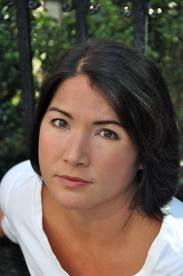
The all-star team of Richard Leo, Peter Neufeld, Steve Drizin and Andew Taslitz have posted the above-titled article on SSRN.  Download article here.  The abstract states:
This article argues that constitutional criminal procedure rules provide insufficient safeguards against the admissibility of false confession evidence that is the product of police contamination. We propose a specific framework, as well as several possible mechanisms, for courts to review and screen the reliability of confession evidence prior to trial. We also offer specific suggestions for how pre-trial reliability assessments for confession evidence could effectively and efficiently work in practice. Finally, we respond to several possible objections to the idea of pre-trial reliability assessments, underscoring that in a variety of contexts trial judges – consistent with their traditional gatekeeping role — already routinely prevent evidence with sufficient indicia of unreliability from going to the jury.

New Scholarship Spotlight: Failed Evidence: Why Law Enforcement Resists Science

harris_david-0187_0Pittsburgh professor David Harris has posted the above-titled article, Chapter 1 of his new book, on SSRN.  Download full text here.  Abstract states:

News reports about police and science like DNA identification, and popular entertainment like the television program CSI and its many imitators, give the impression that science is now the handmaiden of law enforcement. But this picture is at best misleading. Law enforcement does rely on some scientific techniques, but far more often police and prosecution prefer to ignore or even resist science that bears directly on the basics of police investigation. Years of scientific research on eyewitness testimony, police interrogation, and basic forensic techniques (other than DNA and chemical analysis) tells us how these foundational aspects of investigation go wrong. This science also explains how we can improve these aspects of how evidence is gathered and used. This work has been published, peer reviewed, and duplicated – sometimes for decades. But despite the fact that 300 cases of wrongful convictions have now been exposed using DNA, law enforcement continues to resist changes to these basic techniques that police use every day.

The focus of Failed Evidence is why law enforcement resists, and what can be done to overcome it. The resistance to better, more accurate investigative techniques has its roots in two aspects of human thinking: cognitive barriers (e.g., cognitive dissonance, group polarization, and loss aversion), and institutional and political barriers (e.g., the imperatives of arrest and conviction, the ingrained “us versus them” heart of police culture). These problems keep most police and prosecutors from even considering positive change.

From this understanding of why the resistance to science occurs, Failed Evidence distills six recommendations for making change happen, and gives concrete examples of progress from around the nation.

How psychological research can decrease defective verdicts

The current issue of Scientific American has an excellent article, titled ”Your Brain on Trial,” about how psychological research can help prevent flawed verdicts. Unfortunately, authors Scott O. Lilienfeld and Robert Byron note, ”Many well-established psychological findings have yet to exert much influence on the legal system, in part because of a resistance to change and in part because of differing traditions. Whereas science tends to question common intuitions regarding human nature, the legal system tends to embrace them.”

Lilienfeld and Byron give many examples of how relatively minor reforms based on scientific research could help prevent wrongful convictions. Some of the reforms concerning eyewitness identification and false confessions have received a great deal of attention on this blog. One that hasn’t concerns the futility of a judge telling jurors to disregard inadmissible statements or questions.

Once the cat’s out of the bag, they write, the judge can’t put it back all that easily. ”False beliefs often persist long after they have been discredited,” they write. They say research has shown that such ”belief perseverance” is less likely to persist if the judge explains why the stricken statement is unfair to the prosecution or defense. But judges rarely do that.

Lilienfeld and Byron also point out that, while videotaping interrogations is a good thing, the way police set the cameras up to focus on the person being questioned ”engenders bias against the suspect, probably because observers are prone to attributing cause — and blame — to whatever is most visually salient.” They say that researchers at Ohio University found that ”broadening the camera angle to include both interrogator and suspect diminishes this bias.”

Simple reforms like these could help ensure valid verdicts. Unfortunately, nothing is simple when it comes to rigid criminal-justices systems. You can read the whole article here.

New Scholarship Spotlight: To Walk in Their Shoes: The Problem of Missing, Misunderstood, and Misrepresented Context in Judging Criminal Confessions

Professors Richard Leo and Deborah Davis have posted the above-titled article on SSRN.  Download here.  The abstract states:

Focusing on failures to detect false confessions, this article addresses the issue of police contamination, which has been explored in previous work by the authors as well as in Brandon Garrett’s recent book, Convicting the Innocent: Where Criminal Prosecutions Go Wrong. The authors review some of Garrett’s most important findings, considering them in light of the authors’ own model of seven pathways from false confession to wrongful conviction. The authors review these pathways (the biasing effects of confession evidence; tunnel vision and confirmation biases; motivational biases; emotional influences on thinking and behavior; institutional influences on evidence production and decision-making; incorrect relevant knowledge; and progressively constricting relevant evidence), which they argue have the effect of providing incomplete and/or inaccurate contextual information for evaluating the validity of confessions and thus interfere with the rational analysis of the information that is available. The authors conclude by arguing that the judicial system must take more care in evaluating defendants’ claims of contamination in false confessions.

New Scholarship Spotlight: The Evidence of Things Not Seen: Non-Matches as Evidence of Innocence

liebman_j_68x91A group of authors, including James Liebman of Columbia Law School, has posted the above-titled article on SSRN.com.  Download here.  The abstract states:

Exonerations famously reveal that eyewitness identifications, confessions, and other “direct” evidence can be false, though police and jurors greatly value them. Exonerations also reveal that “circumstantial” non-matches between culprit and defendant can be telling evidence of innocence (e.g., an aspect of an eyewitness’s description of the perpetrator that does not match the suspect she identifies in a lineup, or a loose button found at the crime scene that does not match the suspect’s clothes). Although non-matching clues often are easily explained away, making them seem uninteresting, they frequently turn out to match the real culprit when exonerations reveal that the wrong person was convicted. This Article uses “non-exclusionary non-matches” and what would seem to be their polar opposite, inculpatory DNA, to show that: (1) all evidence of identity derives its power from the aggregation of individually uninteresting matches or non-matches, but (2) our minds and criminal procedures conspire to hide this fact when they contemplate “direct” and some “circumstantial” evidence (e.g., fingerprints), making those forms of evidence seem stronger than they are, while, conversely, (3) our minds and procedures magnify the circumstantial character of non-exclusionary non-matches, making them seem weaker than they are. We propose ways to use circumstantial matches and non-matches more effectively to avoid miscarriages of justice.

New Scholarship Spotlight: Freeing the Guilty without Protecting the Innocent: Some Skeptical Observations on Proposed ‘Innocence’ Procedures

bio-2Utah professor Paul Cassell has posted the above-titled article on SSRN.  Download here.  The abstract states:

Proceeding from the perspective of “innocentrism” (that is, the idea that exoneration of the “innocent” ought to be privileged over other values in the criminal justice system), I suggest eight proposals for reform: (1) researching the frequency and causes of wrongful conviction; (2) allowing waiver of rights for greater freedom to raise post-conviction innocence claims (Professor Gross’s proposal in this symposium); (3) improving the implementation of existing rules on disclosing exculpatory evidence; (4) increasing resources for defense counsel and prosecutors to focus on issues relating to actual innocence; (5) abolishing the Fourth Amendment exclusionary rule; (6) replacing the Miranda regime with a system of videotaping custodial interrogation; (7) barring prisoners from filing for habeas relief without a colorable claim of actual innocence; and (8) requiring defense attorneys to directly ask their clients if they are actually innocent. These discriminating proposals offer a far greater prospect of providing help to the innocent without blocking conviction of the guilty. A common theme underlying many of them is that they reorient the focus of the criminal justice system away from procedural issues and toward substantive issues of guilt or innocence. Sadly, Bakken’s proposals seem to offer too much procedure and not enough substance, a recipe for helping the guilty. The truly innocent will benefit in a system that values substance over procedure.


New Scholarship Spotlight: Prosecutorial Conflicts of Interest in Post-Conviction Practice

Professor Keith Swisher has posted the above-titled article on SSRN.  Download here.  The abstract states:

Prosecutors, our ministers of justice, do not play by the same conflict of interest rules. Other attorneys should not, and cannot, attack their prior work in transactional or litigation matters; nor should other attorneys represent clients in matters in which the attorneys themselves face disciplinary, civil, or criminal liability. When prosecutors have likely convicted an innocent person, however, prosecutors are asked to review their own prior work objectively and then to undo it. But they suffer from a conflict between their duty to justice and their duty to themselves – their duty to seek the release of the innocent person and their interest in avoiding embarrassment and liability for themselves and their offices. After I show a variety of ways these conflicts cause problems, I show that they can be solved or mitigated by simply restructuring the post-conviction review process.


Former Tokyo High Court Judge publishes book on causes of wrongful convictions

From The Japan Times: “A former judge is seeking to raise public awareness of how miscarriages of justice can occur, having reversed more than 20 guilty verdicts during eight years as a presiding judge at the Tokyo High Court. In his newly published book, “Reversed on the Facts — What Overturned Guilty Verdicts Can Teach Us About Fact-Finding,” Kunio Harada uses actual rulings in 16 of these cases to explain how he found misjudgments in the previous court decisions.”  Read the full story here…

News photo


New Scholarship Spotlight: Remapping the Path Forward: Toward a Systemic View of Forensic Science Reform and Oversight

U. of Texas Prof Jennifer Laurin has posted the above-titled article on SSRN.  Download full article here.  The abstract states:

The 2009 report of the National Academy of Sciences on the state of forensic science in the American criminal justice system has fundamentally altered the landscape for scientific evidence in the criminal process, and is now setting the terms for the future of forensic science reform and practice. But the accomplishments of the Report must not obscure the vast terrain that remains untouched by the path of reform that it charts. This Article aims to illuminate a critical and currently neglected feature of that territory, namely, the manner in which police and prosecutors, as upstream users of forensic science, select priorities, initiate investigations, collect and submit evidence, choose investigative techniques, and charge and plead cases in ways that have critical and systematic, though poorly understood, influences on the accuracy of forensic analysis and the integrity of its application in criminal cases. By broadening our understanding of how forensic science is created and used in criminal cases — by adopting a systemic perspective — the Article points to a raft of yet unaddressed issues concerning the meaning of scientific integrity and reliability in the context of investigative decisions that are by in large committed to the discretion of decidedly unscientific actors. Critically, the Article demonstrates that systemic dynamics affecting upstream use of forensic science might well undermine the reliability-enhancing goals of the reforms advocated by the National Academy Report. As the NAS Report begins to set the agenda for active conversations around legislative and executive action to reform forensic science, it is critical to consider these questions. Moreover, the Article suggests that the embrace of science as a unique evidentiary contributor within the criminal justice system problematizes some of the bedrock assumptions of American criminal procedure that have, to date, prevented more robust doctrinal intervention in the investigative stages and decisions that the Article explores.

New Scholarship Spotlight: Eyewitnesses and Exclusion…

Virginia Professor Brandon Garrett has posted Eyewitnesses and Exclusion on SSRN.  Download here.  The abstract states:

The dramatic moment when an eyewitness takes the stand and points to the defendant in the courtroom can be pivotal in a criminal trial. That piece of theater, however compelling to jurors, is staged: it is obvious where the defendant is sitting, and, importantly, the memory of the eyewitness should have been tested before trial using photo arrays or lineups. Such courtroom displays have been accepted for so long that their role in the U.S. Supreme Court’s due process jurisprudence regulating eyewitness identifications has been neglected. The due process test that regulates tens of thousands of eyewitness identifications each year admits at-trial identifications that resulted from suggestive pretrial procedures — long known to increase the dangers that the innocent may be misidentified — if the judge decides that those identifications are otherwise “reliable.” In this Article, I uncover an approach — use of an independent source rule — that has been adopted by the vast majority of courts, but whose importance has not been appreciated. This approach short-circuits the already malleable due process inquiry. Even if a prior lineup was suggestive and illegal, judges will nonetheless allow a subsequent courtroom identification by citing to its supposed “independent source.” This approach to exclusion of eyewitness identifications has it backwards. It is the courtroom identification that should be excluded. In contrast, flaws in prior procedures used to test the eyewitness’s memory should be fully aired before the jury. As efforts to improve eyewitness identification procedures gain traction in response to DNA exonerations and social science research establishing the fragility of eyewitness memory, lawmakers and judges should revisit the entrenched problem of the courtroom identification. If courtroom identifications are not per se excluded in cases with a prior identification, judges may circumvent crucial efforts to safeguard the accuracy of eyewitnessprocedures.


New Scholarship Spotlight: The Unexonerated: Factually Innocent Defendants Who Plead Guilty


Professor John Blume

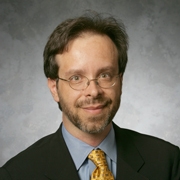
John Blume of Cornell and Rebecca Helm have posted the above-titled article on SSRN.  Download article here.  The abstract states:
Several recent high profile cases, including the case of the West Memphis Three, have revealed (again), that factually innocent defendants do plead guilty. And, more disturbingly in many of the cases, the defendant’s innocence is known, or at least highly suspected at the time the plea is entered. Innocent defendants plead guilty most often, but not always, in two sets of cases: first, low level offenses where a quick guilty plea provides the key to the cellblock door; and second, cases where defendants have been wrongfully convicted, prevail on appeal, and are then offered a plea bargain which will assure their immediate or imminent release. There are three primary contributing factors leading a criminal justice system where significant numbers of innocent defendants plead guilty to crimes they did not commit. The first is the perceived need that all defendants must plead. The second is the current draconian sentencing regime for criminal offenses. And, the final contributing factor is that plea bargaining is, for the most part, an unregulated industry. This article discusses cases in which innocent defendants plead guilty to obtain their release, thus joining the “unexonerated” and then propose several options the criminal justice system should embrace to avoid, or at least ameliorate the plight of innocent defendants who plead guilty.

New Scholarship Spotlight: Beyond Finality: How Making Criminal Judgments Less Final Can Further the ‘Interests of Finality’

Andrew Chongseh Kim has posted the above-titled article on SSRN.  Download here.  The abstract states:

Courts and scholars often assume that granting convicted defendants more liberal rights to challenge their convictions and sentences would necessarily harm society’s various interests in “finality,” the most prominent of which are resource conservation, efficient behavior by defense counsel, and deterrence. The extent to which convicted defendants should be allowed to challenge their judgments depends, according to the common analysis, on how much society is willing sacrifice those interests to validate defendants’ rights. This article argues that although expanding defendants’ rights on post-conviction review inherently makes criminal judgments less “final,” it does not necessarily harm the interests “finality” presumes to protect. Rather, when the financial costs of wrongfulincarceration, resource constraints on defense counsel, and the effects of legitimacy on compliance are considered, it becomes clear that granting more liberal review can often conserve state resources, will rarely affect the behavior of defense counsel at trial, and can help reduce crime.

First, the assumption that defendants’ post-conviction rights impose significant burdens on states ignores the costs of wrongful incarceration. Although recent studies on innocence have demonstrated that successful post-conviction review can produce large incarceration savings, they offer little insight into how significant those savings are compared to the administrative costs of providing the many appeals by defendants who failed to obtain relief on appeal. This article demonstrates, using the limited data available, that for direct appeals, the wrongful incarceration savings are generally quite substantial compared with the administrative costs of providing those appeals. Indeed, it is quite possible that some states realize net cost savings by providing direct appeals. The article then identifies specific restrictions on defendants’ rights, such as restrictions on relief from plain errors in sentencing that impose net costs on states. This article argues the existence of such restrictions that harm defendants at net financial cost to states is partly the result of an agency problem in criminal appellate decision making.

Second, although limiting defendants’ opportunities to seek relief from errors after conviction may increase incentives on defense counsel to prevent errors at trial, these increased incentives are unlikely to affect the actual behavior of counsel. With respect to strategic behavior or “sandbagging,” this article argues that because harmless error rules prohibit relief from errors that did not, in retrospect, affect the outcome of a trial, defense counsel will rarely have incentives ex ante to intentionally sandbag errors. In addition, because most inadvertent mistakes are caused by resource constraints on public defenders, rather than inattentiveness, increased restrictions on post-conviction rights are unlikely to reduce inadvertent mistakes. Moreover, to the extent that restricting review might actually compel defense counsel to take additional care at trial, because this care must be paid for by the state, it could actually be inefficient.

Finally, this article argues that the traditional finality deterrence argument, which depends heavily on the assumption that prisons effectively rehabilitate offenders, has been severely undermined by social science literature. Liberalizing post-conviction review, however, could increase incentives on people to obey the law by reducing wrongful convictions and the punishment given to defendants wrongfully convicted. Although the effects of reduced wrongful conviction are unlikely to affect the incentives of most people, for whom the risk of wrongful conviction is already negligible, they may be significant for at risk populations for whom the risk of profiling and wrongful suspicions are more salient. In addition, studies have demonstrated that the willingness of people to obey the law is influenced heavily on how “fair” or “legitimate” the legal system is perceived to be. Because many restrictions on post-conviction relief may be perceived as procedurally “unfair” by defendants, lifting these restrictions may actually encourage criminals and their associates to comply with the law.


Wednesday’s Quick Clicks…

Wrongly convicted women get much-needed attention

Women are mostly forgotten victims in the scourge of wrongful convictions. For the most part, women are convicted of committing crimes in which there is no biological evidence. Hence, wrongly convicted women are rarely exonerated by the type of indisputable DNA testing that garners wrongly convicted inmates publicity and sympathy.

As noted on http://www.womenandinnocence.com, “Female clients in innocence work represent a different population. That is, they are not more apples, they are oranges, and categorically divergent in some ways from men. By so being they require a body of research and attention particularized so that defense efforts can be most efficiently strategized.”

Zieva Dauber Konvisser has made a significant contribution to that body of research with her article “Psychological Consequences of Wrongful Conviction in Women and the Possibility of Positive Change” in the spring 2012 issue of DePaul Journal for Social Justice. You can read it here.