Wrongful Imprisonment: Reuven Fenton on the Horror of Prison for Women

From: Glamour.com

By Jillian Kramer

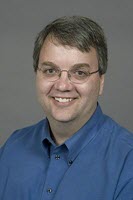
Reuven Fenton (pictured) recently sat down for an interview with Glamour Magazine to discuss his new book Stolen Years.

At this very moment, the National Registry of Exonerations—a database of wrongful conviction cases from the last 26 years—lists 1,679 innocent men and women who went to prison. In his new book, Stolen Years, reporter Reuven Fenton profiles 10 of them, telling their harrowing stories of imprisonment and how they were set free. “As you’re reading this, an impossible-to-document number of wrongly convicted people are sitting in prison, and only a small fraction will ever get out,” Fenton writes. “If this book helps fuel a burgeoning conversation about lives destroyed by our win-at-all-costs criminal justice system, I’ve done my job.”

We sat down with Fenton to find out what inspired him to write this book, and how women are really treated when they enter the system.

Glamour: Your book, Stolen Years, tells the stories of 10 men and women who served prison sentences for crimes they didn’t commit. How did you choose this subject matter for a book? What about it intrigues you?

Fenton: I cover all sorts of breaking news for the New York Post, and one type of story that I’ve covered more and more frequently in recent years is the exoneration story—when a man or woman who served decades in prison is found by a judge to have been wrongfully convicted and is freed. If you’ve ever had the opportunity to witness this in a courtroom, it’s something you never forget.

A few years ago, I covered the exoneration of a man named David Ranta, who served two decades for killing a rabbi in Brooklyn. And let me tell you, the sight of Ranta being able to walk over to his daughter in that courtroom and hug her for the first time as a free man was easily one of the most moving things I’ve ever seen.

Then, after the hearing, there was this big, chaotic press conference and reporters were asking Ranta questions like, “How does it feel to be out of prison?” and, “What’s the first thing you plan on doing as a free man?”

And these are all perfectly good questions to ask, because this was a breaking news story and the press needed the relevant soundbites. But I remember thinking, man, this guy’s got a whole story to tell and we’re not even scraping the surface.

That’s where the idea for this book stemmed. Anyone who’s ever been wrongfully imprisoned is in a unique position to tell one of the most incredible stories one can tell—if he or she is up to it. I decided I’d profile 10 exonerees and give each of them a magazine story-length amount of space to tell their tale. I could easily have written an entire book about a single case, but if I’d done that I wouldn’t have accomplished my second objective: showing how wrongful convictions can happen to people of all walks of life, for so many different reasons.

Glamour: How did you choose which cases to highlight?

Fenton: One of the saddest things about wrongful convictions is how frequently they occur. Some studies say the number of innocent men and women currently doing time at U.S. prisons at as high as five percent. That’s potentially 100,000 innocent inmates—a staggering number.

I had certain criteria in mind for this book. I wanted to profile people who’d been locked up for at least 10 years and who’d been exonerated within the past few years. I also wanted each of my subjects to be from a different state.

And it was important for me to include women, because women aren’t typically thought about when it comes to wrongful conviction. I think this is largely because far more men than women go to prison, and therefore more men than women get exonerated. But this doesn’t make women’s stories of wrongful imprisonment any less compelling. In the end I ended up profiling two women and found their stories to be among the most riveting.

Glamour: What made these women’s stories so riveting?

Fenton: More than anything, what struck a chord for me was the way they spoke about their estrangement from their children. It’s extremely difficult to maintain relationships with family, especially when you’re handed a life sentence as these women were. So one can only imagine what it’s like being a mother, watching your kids visit you less and less frequently until they stop visiting altogether.

Glamour: Are there any common themes—beyond wrongful conviction, of course—between each of these cases?

Fenton: I was expecting at least some of the people I profiled to be broken versions of their past selves. After all, they’d been through the worst kind of hell.

What I wasn’t expecting, and was delighted to find out, was that all 10 of my subjects showed an incredible triumph of the human spirit. They all had a positive outlook on life, both in and out of prison. Each believed in their heart that they’d be free one day. Despite seeing the justice system fail them so horrifically, they still believed that their freedom was a fundamental right, almost in a cosmic sense.

And each of them, once they got exonerated, refused to brood over the years they had lost. They just wanted to hit the road running, catching up on all they missed and rebuilding their lives. Since getting out, some have started families, others have built successful businesses. Even the ones that haven’t been as successful still keep pushing, because they’re determined to make the most of the time they have left.

Glamour: What did you learn about how women, specifically, are sometimes treated in the legal system?

Fenton: Women suffer all sorts of horror in prison that men are spared from. And this is becoming an increasingly relevant issue as the number of women inmates in jails and prisons continues to grow.

Let’s start with the scariest issue: sexual assault in prison. At the worst prisons, one in four women gets sexually assaulted while serving out her sentence. A considerably higher percentage of women have experienced incidents when male corrections officers solicited them for sex in exchange for special treatment, or with threats of discipline if they refused.

Neither of the women I profiled had this happen to them, at least not that I know of. But Debra Brown of Utah did speak about the time she opened a pantry door in the prison kitchen where she worked and caught a female inmate performing a sexual act on a male officer. Later, the officer warned Debra to keep her mouth shut.

An issue related to sexual assault is that of unreasonable searches. Many female inmates suffered sexual abuse before they went to prison, and become retraumatized when they have to strip down and get full-body searches. Although the Fourth Amendment is supposed to guarantee them the right to refuse these searches, they often don’t know their rights.

Glamour: How is women’s health affected in prison?

Fenton: Women’s health is another major issue. All kinds of research has found that women inmates often have more severe health problems than men, often due to issues tied to poverty, drug use and sexual assault. Women inmates also suffer higher rates of mental illness than men. Yet prisons don’t always take this into account. They don’t necessarily provide the needed hygiene products for women who are menstruating. They often fail to give pregnant women proper care.

Women who want abortions run into all sorts of barriers. I read about one case in a New York facility in which the prison waited so long to schedule an inmate’s abortion that the legal 24-week limit passed, and then it was too late.

The exoneree Debra Brown, who I mentioned earlier, got breast cancer and cervical cancer while locked up. Her experiences were horrifying in a number ways, and it’s an absolute miracle she survived. In one instance, she went to see her doctor about the cervical cancer and he asked her how she was doing on her meds to keep the breast cancer from returning. She was like, “What meds?” The pharmacy had lost the paperwork or something.

Glamour: In chapter nine, we read about Ginny LeFever, a woman who went to prison for more than two decades for killing her soon-to-be-ex husband based on—quiet honestly—laughable evidence. Her story begs the question: Is there a bias against women?

Fenton: Whether this particular case suggests a bias against women is up for debate. But I would like to point out something:

The weird thing about Ginny LeFever’s case is that the toxicologist—who turned out to be a total fraud—claimed she had killed her husband in this really elaborate way. He said she inserted arsenic pellets into his rectum, then locked him in a room bombed with fumigant and finally just beat the living daylights out of him.

Her alleged bungled attempts at murder remind me of a cartoon, like Wile E. Coyote always devising these crazy ways to capture the Road Runner and always messing it up.

LeFever has always maintained that her husband ingested a bottle of antidepressants in an apparent attempt to kill himself, and that’s how he died. And you have to wonder why her explanation was so much less believable than the toxicologist’s.

Well, we know that in the weeks and months leading to her husband’s death, Ginny had been having a very tough time dealing with the guy. He’d been showing up to her house at odd hours and sending her stalky messages. She was in a very vulnerable place.

Unfortunately, that sort of vulnerability can be interpreted as a motive to murder somebody. And that’s where the prosecutor had a leg up against the defense. So despite all sorts of evidence to the contrary, and despite the couple being days away from finalizing their divorce, the prosecutor was able to convince a jury that this woman hated her husband so much that she killed him.

And you have to ask yourself whether it was ethical for the prosecutor to use a woman’s vulnerability as a weapon against her, just to win a case.

Glamour: When telling each story, what was your goal? What do you want readers to take away from the book?

Fenton: I just think there’s no better way to change something that needs fixing than through stories. That’s what journalism is all about. The public responds to drama.

Let’s say the big story of the week is about war in the Middle East. You can cite statistics and draw up charts until you’ve made your point ad nauseam, but nothing is going to stir people to bring change if they aren’t moved on a gut level. That’s where stories come in—real, in-depth stories about people who have been treated unjustly.

I spend the bulk of Stolen Years telling these stories, trying to give readers—and myself—a sense of what if feels like to go to prison for a crime you didn’t commit. I wanted people to know how itchy the prison scrubs are, how bad the food is—and what it’s like to be stabbed 73 times by Aryan Nation thugs, as Drayton Witt was in chapter five.

Then the final chapter, the backbone of the book, is the call to action. That chapter analyzes the top causes of wrongful convictions and suggests ways to help—for instance, volunteering with innocence organizations that are often two-man teams desperately in need of help. Or reaching out to elected officials. Stuff that really does make a difference if enough people get involved.

My hope is that by saving my call to action for the end of the book, readers will be so moved by the stories that they’ll actually be motivated to help.

Nearby New York City? You can attend a special reading and snag a signed copy of Fenton’s book, Stolen Years: Stories of the Wrongfully Imprisoned, at 7 P.M. on Nov. 12 at the Mysterious Bookshop, 58 Warren St. Otherwise, follow Fenton on Twitter at @reuvenfen for future events and more information on his book. The book is available beginning Nov. 10.

Breaking News: Osaka High Court Rejects Appeal by Prosecutor, Orders Release in Higashi-Sumiyoshi Arson Case

Osaka High Court rejected the appeal by the prosecutor today, and ordered release of two petitioners (serving life sentences) in a high profile arson case, Higashi Sumiyoshi Case. Read about the case here.

In this case, the Osaka District Court ruled to grant a retrial in 2012. The Presiding Judge stated in the decision that the petitioners’ confessions were unreliable and unreasonable from a “scientific viewpoint”, taking into consideration the result of a new experiment by experts.

However, to the dismay of the supporters, the prosecutors instantly appealed the ruling, and the retrial petition was being reviewed by the Osaka High Court.

Osaka High Court today ruled that according to additional experiments and statements by experts, the confessions by peritioners can no longer be evaluated as reliable. It also ordered release of petitioners from prisons.

The criminal procedure code in Japan writes that the prosecutors can still appeal the decision to the Supreme Court.

Man acquitted in Osaka After Retrial: Victim’s Recantation

From the Japan Times:

Man Acquitted After Serving 3 1/2 Years in Prison for Rape; Victim Gave False Evidence

Oct 17, 2015

OSAKA – An Osaka court on Friday acquitted a 72-year-old man of rape and indecent assault in a retrial after serving 3½ years of a 12-year prison term.

Osaka District Court presiding judge Minamoto Ashitaka said he was “sorry as a judge” that the man’s “freedom was taken away for an extensive period of time for a crime (he) did not commit, and inflicted unimaginable suffering” on him.

The acquittal was finalized the same day as prosecutors gave up their right to appeal. Continue reading

Masaru Okunishi, Death Row Inmate seeking Retrial Dies at 89

A belated post on Nabari Case

From the Japan Times:
Death row inmate seeking retrial over 1961 wine-poisoning murders dies at 89
October 4, 2015 by Kyodo

An 89-year-old death row inmate who was seeking a retrial for his 1961 conviction over the infamous wine poisoning murders in Nabari, Mie Prefecture, died in a Tokyo prison Sunday, his lawyers said.

Masaru Okunishi, who was arrested in 1961 on suspicion of murder and attempted murder, initially admitting to lacing wine with an agricultural chemical that killed five women, including his wife, but retracted his confession before being indicted. Continue reading

Another Texas Exoneration Calls Bite Mark Evidence Into Question

From: Texas Monthly

Steven Chaney became the twenty-sixth person to be wrongly convicted or indicted based on bite mark evidence. The two dental experts who testified against him have also testified in numerous other cases—and they’ve been wrong before.

By Michael Hall

After serving 28 years in prison, Steven Chaney walked away a free man last Monday when a Dallas judge overturned his 1987 murder conviction. The clincher that sent Chaney to prison nearly three decades ago? Bite mark testimony, given at his trial by two forensic odontologists. The clincher that secured his freedom? Discredited bite mark testimony.

The outcome of Chaney’s case is yet another notable strike against the controversial practice of using bite marks to secure convictions. For decades, testimony from forensic dentists—who inspect the injuries of victims and attempt to match them to the dental patterns of alleged perpetrators—has been admissible in court. Often, this testimony is the prosecutor’s only physical evidence.

Chaney was on trial for the murder of John Sweek, a drug dealer found stabbed to death on his kitchen floor. Chaney, a construction worker, had been one of Sweek’s customers. During the trial, Homer Campbell, a forensic dentist from Albuquerque, told the court that there was a “reasonable dental certainty” that the bite marks on Sweek’s arm came from Chaney. Jim Hales, chief dental consultant for the Dallas County Medical Examiner’s Office, piled on with an alarming statistic: that there was a “one to a million chance” someone other than Chaney was the biter. Even though Chaney had nine alibi witnesses, the jury placed considerable stock in the word of these experts. One juror, when asked why he voted for Chaney’s guilt, said, “The bite mark.”

But now, in an affidavit filed with the court, Hales has admitted what critics of bite mark evidence have been saying for years: even an expert can’t reliably match bite marks to teeth.

Conclusions that a particular individual is the biter and their dentition is a match when you are dealing with an open population are now understood to be scientifically unsound. Under today’s scientific standards, I would not, and could not, testify to a reasonable medical/dental certainty as I testified at the time of trial nor could I testify that there was a ‘one to a million’ chance that anyone other than Mr. Chaney was the source off the bite mark.

Chaney’s lawyers—Julie Lesser, with the Dallas County Public Defender’s Office, and Barry Scheck of the Innocence Project—challenged the conviction, citing Texas’s junk science law, passed in 2013, which says that a conviction can be attacked in a writ of habeas corpus if there is new science that contradicts the science that was used at trial.

The truth is, there was never any conclusive data or rigorous studies to back up bite mark evidence, which has been under fire from scientists and defense lawyers ever since it was first allowed in court in 1974. Tests of bite mark evidence reliability have found error rates between 12 and 64 percent, but since no court ever ruled against its admissibility, it was allowed.

Bite marks are nothing like DNA profiles.

Forensic odontologists sometimes can’t even agree on whether marks found on – skin—a malleable, inconstant medium—came from teeth or not. The first official red flag about bite mark evidence came in 2009 when a report from the National Academy of Sciences said, “The scientific basis is insufficient to conclude that bite mark comparisons can result in a conclusive match.” Around that time a husband and wife team of researchers at SUNY Buffalo began doing research on bite marks using cadavers, and after more than a dozen studies, they found that “statements of dental uniqueness with respect to bitemark analysis in an open population are unsupportable.” In other words, bite marks are nothing like DNA profiles—and there are certainly no statistics to back up accurate comparisons between sets of teeth, like Hales did when he said there was a “one to a million chance” anyone but Chaney was the biter.

It was significant that Dallas County DA Susan Hawk concluded that “the bite mark evidence that was critical to [Chaney’s] conviction has been discredited”—he is now the twenty-sixth person to have been wrongly convicted or indicted based on bite mark testimony—but county prosecutors knew about his case for months. All summer long the Texas Forensic Science Commission—which for the past five years has been blazing a trail of state-wide criminal justice reforms via numerous investigations of labs and forensic disciplines—has been looking into bite marks after a complaint was filed by Chaney’s lawyers, who asked the commission to “exercise its statutory mandate to investigate and report on ‘the integrity and reliability’ of bite mark evidence.” The FSC has already held one meeting to look into bite marks—last month in Dallas—and Chaney’s name came up often. His name will come up again when the FSC convenes again next month in Fort Worth.

One of the things Chaney’s lawyers asked the FSC to do is go back and vet cases where bite mark testimony was used in Texas in the same way the FSC has been re-investigating old hair microscopy cases. When it does so, the commission will find other troublesome Texas cases, including three that Campbell (now deceased) and/or Hales handled at the same time as Chaney’s.

One of those cases involved two men convicted for the rape and murder of Juanita White in Waco in 1986. When investigators found what they believed to be bite marks on White’s body, they took a dental mold of a suspect named Calvin Washington and drove it to Dallas for Hales to inspect. His conclusion? Washington’s teeth matched the wounds on White’s body. But the story didn’t end there. Investigators began to suspect Washington had an accomplice, a man named Joe Sidney Williams, and they made a mold of his teeth too. This mold—along with Washington’s mold and White’s autopsy photos—was sent to Campbell, who saw things differently than Hales: Williams was the biter, not Washington. Prosecutors chose to go with Campbell’s identification, not Hales’s, and in August 1987 Williams went on trial. The only physical evidence were the bite marks. Campbell identified four of them on White’s body and said Williams’s teeth were consistent with an injury on her hip. “The research states that there are no two people that have the same position [of their teeth],” Campbell testified, though no such research has ever been done. Williams was found guilty, as was Washington in a later trial where almost the same evidence was presented.

But both Campbell and Hales were wrong, a fact not found out until 2000, when the semen in the rape kit was compared to the DNA profile of another man. It matched the new suspect and Washington was freed. (Williams had been freed in June 1993 because testimony from a jailhouse informant had been ruled inadmissible.) The two men served a total of 19 years in prison for a murder they had nothing to do with—all based on bogus bite mark testimony.

The third case is even more troubling because it involved an execution. The defendant’s name was David Spence, and he was, oddly enough, Juanita White’s son. (For more on this labyrinthian case read “The Murders at the Lake.”) Spence was convicted in two trials, in 1984 and 1985, of the murders of three Waco teens and given the death penalty. The only physical evidence against him: bite marks on the bodies of two of the victims. The expert who testified: Homer Campbell. Spence, Campbell said, was “the only individual” to a “reasonable medical and dental certainty” who could have bitten the women. According to jurors, Campbell’s words were powerful. “We had life-size pictures of the marks and a cast of [Spence’s] teeth brought into the jury room,” remembered one juror afterward. “The testimony—‘everyone’s bite mark is different, like a fingerprint’—was very convincing.”

Spence’s appellate lawyers tried to attack Campbell’s methods with other forensic odontologists. One, Thomas Krauss, a former president of the American Board of Forensic Odontology (ABFO), said Campbell’s methodology was “well outside the mainstream.” Krauss helped the lawyers set up a blind panel of five odontologists to analyze the autopsy photos and vet Campbell’s work by comparing the marks with dental molds from Spence and four other subjects. The results were astonishing. Though the five experts identified several patterns that were possibly bite marks, they couldn’t say much more. One of them said the photos were too poor in quality to compare to the molds. A second wrote that the marks were “more likely than not made by insects or artifacts.” A third thought that some of the marks were probably bite marks, but he couldn’t match any of the molds to them. Two of the experts did indeed match one of the marks to one of the molds, but it was not Spence’s. It belonged to a housewife from Phillipsburg, Kansas. Unfortunately for Spence, the study wasn’t completed until after the deadline for Spence’s writ. He was eventually executed, despite numerous questions about his guilt—the biggest coming from the fact that the only physical evidence against him came from Campbell.

Campbell made at least one other embarrassing mistake that we know of. In 1984, a few years before he testified against Spence and Chaney, he was asked by a lieutenant in the sheriff’s department in Coconino County, Arizona, for help in identifying the body of a young woman found alongside I-40 near Flagstaff. The lieutenant had a hunch the girl was a missing runaway from Jacksonville, Florida, named Melody Cutlip, who had left home in 1981. Campbell compared the corpse’s teeth with those in a photo of Cutlip that he enlarged. “They matched exactly,” he told the Ocala Star-Banner. Cutlip’s family was notified and the corpse was buried in a Williams, Arizona, cemetery under a headstone with her name. In 1986, Cutlip contacted her mother. She was alive. Campbell was wrong.

A review of old bite mark cases will almost certainly reveal more false identifications, simply because of the nature of the way experts thought and testified. As Hales said in his affidavit in Chaney’s case:

At the time of the trial in December 1987 both the ABFO guidelines and the scientific field of Forensic Odontology supported use of the terms match and biter to relate a suspected person to a bite mark and it was permissible for experts to testify to a reasonable degree of medical/dental certainty that an individual was the biter in a case.

And indeed, if you go back and look at old cases, the word “match” is constantly used by experts, dating back to that very first 1974 case (“The bite mark matches the teeth reproduced in the model”). If experts didn’t say “match,” they said words that meant the same thing: “no question in my mind” (the defendant bit the victim); “it could be no one but [the defendant] that bit this girl’s arm.” Sometimes, as Hales did in Chaney’s trial, they would go further and use statistics, even though no studies had ever been done. Campbell did it in a 1977 Arizona case, when he testified that marks found on a murder victim’s breasts and a model he’d made of defendant’s teeth were “consistent,” which he then quantified by saying, “The probability factor of two sets of teeth being identical in a case similar to this is, approximately, eight in one million, or one in 125,000 people.”

Statements like these were, in Hales’s own contemporary words, “scientifically unsound”—opinions from well-intentioned experts with little to guide them but their own eyes and their own experience. (We reached out to Hales, who declined to comment for this article.) Campbell himself acknowledged the basic problem with bite mark analysis during the Joe Sidney Williams trial in 1987, when he was asked about its inherent subjectivity. “It is subjective,” he said. “I’ll admit it.”

– See more at: http://www.texasmonthly.com/articles/another-texas-exoneration-calls-bite-mark-evidence-into-question/#sthash.oOh4ghum.dpuf

Thursday’s Quick Clicks…

Wednesday’s Quick Clicks…

Why is a Man Serving Life for a Murder that Feds Say Someone Else Committed?

From the Marshall Project:

The case of Lamont McKoy.

Lamont’s case is currently being handled by the Duke Law Wrongful Convictions Clinic at Duke University. I am very familiar with this case, as I have substantial time in on it, and I can tell you there is even more exculpatory evidence than what is cited in the above article.


Friday’s Quick Clicks…

Montana Innocence Project Mourns Loss of Talented Investigator and Friend

Spencer Veysey, 26, a tireless investigator for the Montana Innocence Project tragically died October 2, 2015, while mountain climbing on the east face of Longs Peak in Rocky Mountain National Park, northwest of Boulder, Colorado. A 2012 graduate of the University of Montana School of Journalism, he was one of four full-time employees of the Montana Innocence Project.

Veysey was a student intern and volunteer the past three years and became the first full-time investigator for the Montana Innocence Project. He worked long hours to uncover truth for the Project’s clients. He had evaluated and investigated many cases and had testified at trial. Veysey was described by Larry Mansch, legal director of the Project, as having a “wealth of knowledge” that he said was “truly irreplaceable.”

Our condolences to Spencer Veysey’s family, friends, and Montana Innocence Project colleagues.

Read more here: (Missoulian) and (Ames Tribune).

Thursday’s Quick Clicks…

Wednesday’s Quick Click…

Texas Judge Frees Steven Mark Chaney, Convicted of Murder by Junk Science

State District Judge Dominique Collins ordered the release from prison of Steven Mark Chaney yesterday after he had served more than a quarter of a century behind bars. He was convicted of the 1987 murders of an East Dallas couple, John and Sally Sweet. Nine witnesses testified to support Chaney’s alibi. Yet he was convicted by bite-mark junk science.

This case — and widespread official recognition of the unreliability of this type of forensic evidence — should prompt new consideration of all cases in which bite-mark testimony contributed to the conviction.

Chaney’s release yesterday was supported by Dallas County District Attorney Susan Hawk, his New York based Innocence Project Attorney Julie Lesser, and the Dallas County Public Defender’s Office. They all recognize that Chaney did not receive a fair trial.

As reported in The Guardian, Chaney will remain free while the Texas Court of Criminal Appeals reviews the case. His attorneys believe he will be exonerated… Continue reading

60 Minutes Profiles Glenn Ford Exoneration

Glenn Ford was released from prison in March 2014 after his wrongful conviction for murder was vacated. Until that point, he had spent 29 years, three months and five days in solitary confinement on death row at Angola State Penitentiary in Louisiana. A little over a year after his release, Ford died of lung cancer at the age of 65. Three weeks prior to his death, Ford was interviewed by CBS news. His interview aired last night on a 60 minutes segment discussing Ford’s exoneration and Louisiana’s staunch support of Capital Punishment.

Marty Stroud, the former prosecutor who convicted Ford, was also interviewed. After learning of Ford’s release, Stroud came forward and publicly assumed full responsibility for the wrongful conviction. He turned himself into the Louisiana Bar Association’s Ethics Committee, asking to be reprimanded for his role in Ford’s prosecution.

Stroud’s, however, were not universally supported. Current Louisiana Prosecutor Dale Cox, who was also interviewed for the segment, expressed his belief that Stroud did not owe Ford an apology. Cox also defended Ford’s capital conviction and expressed his belief that, despite the number of death row exonerations, Louisiana needed to impose the death penalty more often.

When asked about the Louisiana’s failure to compensate Ford’s family for the 30 years he spent in prison, Cox defended the State’s sole gift to Ford: a $20 gift card.

 Cox: I got him out of jail as quickly as I could. That’s what the obligation of the state is.

Bill Whitaker: And that’s the end of the state’s obligation?

Dale Cox: As far as I’m concerned.

Cox is a vehement supporter of the death penalty, his Parish along In the sentenced more people to death per capita from 2010 to 2014 than in any other county in the United States.

To view the entire 60 Minutes segment click here.

Monday’s Quick Clicks…

Jarrett Adams: From Wrongfully Imprisoned to a Clerk Fellowship at the 7th Circuit Court of Appeals

On August 10, 2012, this blog published an article entitled “Update on Wisconsin Innocence Project’s Case: The Rape that Wasn’t.” It was the story of Jarrett Adams. In 1998 when he was 17 years old, Adams was accused of sexual assault and convicted after his court-appointed lawyer advised him to take a “no-defense strategy.”

A key witness who would likely have prevented Adams’ conviction never was called to testify. Adams was convicted and sentenced to 20 years in prison, a sentence that was immediately increased to 28 years when he told the judge he was innocent. Continue reading

When Prosecutors Can’t be Bothered With Innocence

An insightful article by Radley Balko, writing for the Washington Post.

From the article:

“That they (the two prosecutors cited in the article) have yet to be sanctioned or disciplined by a court or state bar speaks volumes about the legal profession’s ability to police itself. That they continue to be reelected is more evidence that the criminal justice reform movement should get more directly involved in electoral politics.”

Friday’s Quick Clicks…

Northern California Innocence Project Client Larry Pohlschneider Exonerated

Earlier this week Sandee Magliozzi, Executive Director of the Northern California Innocence Project, sent out the following notification detailing a recent victory for NCIP…

Dear Friends,

We wanted to share some great news with you: yesterday afternoon the Tehama County Superior Court overturned the wrongful conviction of NCIP client Larry Pohlschneider, 46, after nearly 15 years of wrongful imprisonment! Mr. Pohlschneider’s attorneys and the Tehama County District Attorney agreed that his 2000 conviction should be vacated and the charges dismissed due to the ineffective assistance of Mr. Pohlschneider’s trial counsel.

NCIP Assistant Legal Director Maitreya Badami, Mr.

Pohlschneider’s lead attorney, commended the Tehama County District Attorney’s Office for its willingness to look at this case with fresh eyes when presented with evidence from NCIP’s investigation. “Without the District Attorney’s fairness and cooperation, Mr. Pohlschneider’s unjust incarceration might have been even more prolonged,” explained Ms. Badami. “The failure of Mr. Pohlschneider’s trial attorney to investigate and challenge the medical evidence resulted in an untrustworthy verdict and his wrongful imprisonment.”

Larry Pohlschneider and legal team
From left: NCIP Legal Director Linda Starr, NCIP Assistant Legal Director Maitreya Badami, Larry Pohlschneider, and NCIP volunteer attorney Thom Seaton beam after a Tehama County Superior Court judge overturns Mr. Pohlschneider’s conviction. Photo: Audrey Redmond.
“Today marks the first step toward freedom and complete vindication for Mr. Pohlschneider,” said NCIP volunteer attorney Thom Seaton. “An innocent man was pulled into a child-molestation case because of junk science which led police wrongly to focus on him as an additional perpetrator — despite the fact that the true, sole perpetrator, Albert Harris, had been charged, confessed, and ultimately pled guilty to the crime.”

“Tragically, junk science passing as expert testimony is a contributing factor in 22 percent of wrongful convictions and NCIP is actively working to free innocent people and establish policies to prevent wrongful convictions like Larry’s,” said NCIP Legal Director Linda Starr.

The court ordered Mr. Pohlschneider’s release, and his discharge from Tehama County Jail is expected imminently.

It is because of your support that together we are able to celebrate this victory. We look forward to telling you soon that Larry has been released!

Sincerely,
Sandee Magliozzi

Sandra “Sandee” Magliozzi, Esq.
Interim Executive Director, NCIP
Associate Dean of Experiential Learning, Santa Clara University School of Law

P.S. Send Larry a message of support here.

Donate to NCIP

From left: NCIP Legal Director Linda Starr, NCIP Assistant Legal Director Maitreya Badami, Larry Pohlschneider, and NCIP volunteer attorney Thom Seaton beam after a Tehama County Superior Court judge overturns Mr. Pohlschneider’s conviction. Photo: Audrey Redmond.

Congratulations to Mr. Pohlshcneider and the NCIP!

A Cogent Comment About the Wrongfully Convicted Sex Offender and Sex Offender Registries

A reader recently posted a comment about our article The Wrongfully Convicted Sex Offender that struck me as being representative of the hideous situation faced by the wrongfully convicted sex offender. So I thought it deserved “front page” status.

This from “Deborah:”

“Make sure if you are on the registry you cross your tees and dot your i’s. My husband recently was arrested after the swat team surrounded our home and took him away. Reason was he neglected to register his Facebook account. Class 3 felony. 4 days in jail, five thousand dollars bail. Now waiting for court hearing. $4500 for an attorney. Happened twenty years ago and was falsely accused by step daughter who has admitted that he never touched her. What a society we live in.”