Tag Archives: Japan

Fight Continues for 1948 Murder Case — Teigin Case

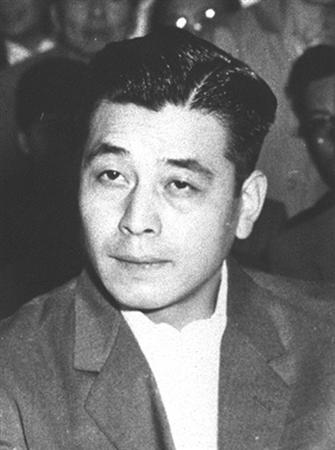
Hirasawa on the first day of his trial.

Many books have been written, documentaries and movies made on the famous Teigin Case.

It was a murder and robbery case in 1948, where a man disguised as a Government health worker entered a Teikoku Bank (“Teigin“) branch and told the employees that there was a sudden outbreak of dysentery and  the US occupation forces ordered to drink medicine. The “medicine” given by the man was in fact poison. The workers obeyed and 12 people were killed. The man fled with cash and checks from the bank.

The investigators believed that the poison used in the murder was a rare poison, obtained by few people, such as those working for a secret Unit 731 of the Japanese army during the WWII, which is said to have conducted experiments on human beings.

However, the police arrested Sadamichi Hirasawa, then a famous painter. Hirasawa was sentenced to death in 1950 by the trial court. He died while on death row in 1987 at the age of 95.

Read about the ongoing efforts to exonerate Hirasawa here.

Excerpt:

TOKYO (Kyodo) — When a death row inmate convicted of a 1948 mass murder died of natural causes 25 years ago, most people believed the “Teigin Incident” had left unanswered questions that would now never be solved.

However, a group of lawyers and experts in pharmacy and psychology are still struggling to unearth the truth behind the most notorious mass-poisoning case in postwar Japan and exonerate Sadamichi Hirasawa, who passed away on May 10, 1987, at a prison hospital in Tokyo at the age of 95.

“We will complete presenting new evidence by the end of next year to reopen the case,” said Nobuyoshi Araki, one of the lawyers involved in the petition for a posthumous retrial of Hirasawa, who was a painter.

The 19th petition was filed with the Tokyo High Court by Hirasawa’s adopted son, Takehiko, on May 10, 1989, the second anniversary of his death. The first had been filed in 1955 and rejected the next year.

One of the focuses in the petition is on the poison used to kill the 12 victims ……While the courts determined the murderer used potassium cyanide, Hiroyoshi Endo, former dean of the pharmacology department at Teikyo University, said, “I can’t specify what the poison was, but as a scientist, I can say it was not potassium cyanide.” Continue reading
High Court to Rule on Whether to Grant a Retrial for Nabari Case on May 25, 2012

86-year-old Masaru Okunishi is still on death row. He has spent more than half of his life in custody, 40 years on death row. Will he get a retrial? The Nagoya High Court will rule later this month, on May 25 on the 51-year-old Nabari Case. (See Mark Godsey’s previous post about this case here)

In March 1961, 5 people were killed and 12 got ill in a rural town in Mie Prefecture. They were at a gathering in the town and drank a bottle of wine, which was poisoned with pesticide. Since Masaru Okunishi was the one who delivered the wine to the gathering and because both his wife and lover were killed in the incident, he soon became a suspect. The police’s theory was that he put the poison in wine and killed his wife and lover, getting rid of the “love triangle” relationship. After 5 days of intense interrogation, he confessed. He was charged for the murders.

The main evidence against him were: 1. his confession, 2. the fact that the wine was in his possession right before the incident, 3. the bite mark that was left on the lid of the wine bottle which the prosecution alleged to have matched his.

The Tsu District Court handed down the decision in December 1964. The court found Okunishi “not guilty” of the crime. The Court said that the confession was unreliable, the witnesses’ testimony on the delivery and possession of the wine was unreliable and the bite mark on the lid could not be determined as his.

The prosecutors appealed and the Nagoya High Court reversed, sentencing Okunishi to death in 1969. Continue reading

Implicated by DNA, Exonerated by DNA – The Ashikaga Case

I once had a conversation with a retired judge in Japan. He said that although there seems to be a strong belief that the DNA testing is a new golden solution, he thinks we still need to be careful. He suggested that the fact that there was a “match” of DNA evidence found at the crime scene (or from the body of the victim etc.) alone should be used to exonerate someone, but not to implicate someone.

Yes, there is always a possibility that the state-of-the-art DNA testing result is faulty: there might have been a contamination of the materials or the testing might not have been conducted properly, and there have definitely been mistakes made in the past that were revealed later.

Indeed, there is a very well known case in Japan (Ashikaga Case)  where a man was implicated by faulty DNA evidence and later exonerated by more sophisticated DNA evidence.

In May of 1990, the body of a 4-year-old girl was found dead near the Watarase River in Ashikaga City. The clothing of the victim was found from the river. The clothing had the perpetrator’s semen on.

Many became suspects until in November 1990 the police began to suspect Toshikazu Sugaya, who was a school bus driver. Continue reading

Still a Long Way to Abolishing Death Penalty in Japan?

As Carole posted today, it has been 10 years since the signing of European Protocol 13, which abolished the death penalty. According to Amnesty International, more than two thirds of the countries in the whole world are either abolitionist or abolitionist in practice.

There is (I’d like to say) a trend in the United States towards abolition. So where is Japan at?

As I have posted here through Mark, Justice Minister Toshio Ogawa sent three people to gallows in March this year.

Just before he signed the order for the executions, he terminated Justice Ministry’s internal study panel on death penalty. In 2010, the then Justice Minister Keiko Chiba set up the panel to review whether to retain or abolish the death penalty and discuss about the conditions on death row. It aimed to get the debate going in the country, and was supported by Chiba’s successors.

However, Ogawa terminated the study panel and cancelled the plans to set up another discussion panel with experts on the matter. Continue reading

A Dubious Arson Case – Higashi-Sumiyoshi Case (Part 2 of 2)

A Picture of the Experiment in 2011.

Continued from Part 1

Aoki and Boku’s appeals to the Supreme Court were rejected in 2006, but their supporters continued the fight to get a retrial for them.

Boku filed a petition for retrial to the Osaka District Court on July 7, 2009. Aoki also filed her petition one month later.

The Criminal Procedure Code of Japan states that one of the instances where a retrial should be granted is “When clear evidence has been newly discovered that in regard to a person pronounced guilty Continue reading

A Dubious Arson Case – Higashi-Sumiyoshi Case (Part 1 of 2)

ImageThe excellent documentary film “Incendiary” (read more about the film here) reminded me of an arson case in Japan, the so-called Higashi-Sumiyoshi Case. Its retrial petition is currently being reviewed by Osaka High Court.

In the late afternoon of July 22, 1995, an 11 year old girl was killed in her own house in Higashi-Sumiyoshi Ward, Osaka, when a fire broke out. She was taking a shower and could not escape from the fire. The house was built mainly with wood and the fire was said to have broken out from the car parked on the first floor in the garage of the house. Her mother (Keiko Aoki), Aoki’s common-law husband (Tatsuhiro Boku) and Aoki’s son were able to escape from the fire.

The initial investigation by the fire department concluded that the cause of the fire was unknown. However, since (1) Aoki and Boku had life insurance coverage on the girl, and (2) the house was locked from the inside, the police suspected that it was an arson case. Their theory was that Aoki and Boku conspired together to get the insurance money by killing the girl. Thus, they tried to get the evidence by interrogating the couple.

The police arrested Aoki and Boku on September 10, 1995, after “voluntarily” taking them to the police station and obtaining their confession after a “voluntary” interrogation which took place from the morning. Aoki recanted her confession before the indictment Continue reading

Watch an International Symposium on Death Penalty Online!

The delegation of the European Union (EU) to Japan will hold an International Symposium “Towards Death Penalty Abolition: European Experience and Asian Perspectives” at Waseda University (Tokyo) tomorrow. You can watch the symposium online here!

The symposium will start at 13:30 on Wednesday, 18 April, 2012 (Japan Standard Time =5:30 on 18 April GMT, 0:30 on 18 April EST).

There will be speakers from EU, Asia and the USA. Speakers will include former Japanese Justice Minister Hideo Hiraoka, Mongolia’s Presidential Advisor Sosormaa Chuluunbaatar, Professor William Schabas (National University of Ireland), David T. Johnson (University of Hawaii) and more. Simultaneous interpretation is available.

Click here for details of the Symposium.


One More Reason to Worry about Death Penalty in Japan

Many facts surrounding death penalty in Japan are unclear, including how exactly the candidates for the next execution are chosen and when they will be executed. It is up to the Justice Minister to sign the final death warrant. Read here and here about recent executions in Japan.

The following news was revealed yesterday. (Courtesy of Professor Kenji Takeuchi (Kyushu University))

Former Justice Minister Eisuke Mori, while in office in 2009, ordered senior officials of the Ministry to consider putting death row inmates on the list of candidates for execution, even if they were seeking retrial. Fortunately, his intensions were not fulfilled at the time.

The factors that Ministry of Justice takes into consideration when picking candidates are not clear. Nevertheless, it has been indicated in the past Continue reading

Recent Developments in 46 Year-Old Hakamada Case

Iwao Hakamada is a 76 year old death row inmate at Tokyo Detention Center, who was convicted of the 1966 murder of a family of four, a crime he claims he did not commit. He has been held in confinement for over 45 years.

Recent developments have given Hakamada and his supporters a beacon of hope. The result of a DNA analysis on bloodstains found on a T-shirt came back. The T-shirt was claimed to have been worn by Hakamada at the time of the crime and was a crucial piece of evidence at the original trial. Although the stains on the right shoulder of the T-shirt were alleged to have come from him at the original trial, the new findings by DNA experts stated that the DNA type did not match his.

Supporters for Hakamada claim that this finding very well supports the long claimed theory: the main pieces of evidence were planted by the prosecution during his original trial. The prosecutors say they reserve comment until they finish analyzing results.

Hakamada was sentenced to death in 1968 Continue reading

Audio and Visual Recording of Interrogations by Public Prosecutors

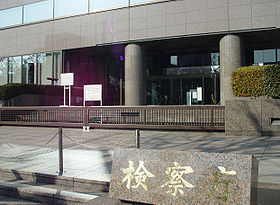
The Entrance of Public Prosecutors Office in Tokyo

The Entrance of Public Prosecutors Office in Tokyo

One of the critical tasks for the Japanese prosecutors is to interrogate the suspects themselves. I posted here about how police interrogations are partially recorded in some cases today. So what about interrogation by prosecutors? Are they recorded?

The answer is yes and no. Yes, they are sometimes recorded but only a few cases are recorded entirely, and most cases are not recorded at all.

In May 2006, the Supreme Public Prosecutor’s Office announced that they will start recording some interrogations on an experimental basis. Only serious cases were chosen, and the final part of the interrogation – the scenes where the suspect has confessed and signs the dossier – was recorded. It was up to the prosecutors’ discretion which cases and which part of those cases should be recorded.

Then there was an unprecedented scandal in 2009, involving a public prosecutor by the Special Investigation Division in Osaka Public Prosecutors Office . Continue reading

More Executions will Follow — Justice Minister Says

An execution chamber at the Tokyo Detention Center which was revealed in 2010 for the first time

Justice Minister Toshio Ogawa, talking about his recent decision  to execute three inmates, says that he will not hesitate to send more death row inmates to the gallows.

He stated that there is a broad support for death penalty in the Japanese society and as a justice minister he has a duty to issue executions. He emphasized that lay judge trials have resulted in death sentences and the majority of the population supports capital punishment in recent surveys.

His two predecessors had different views on execution, which resulted in a 20-month blank period of executions. Satsuki Eda, then Justice Minister expressed reservations in August 2011 that it is time to consider the issue. Ogawa’s immediate predecessor Hideo Hiraoka also emphasized the need for a national debate. Read more about Ogawa’s views on death penalty here.

Although Ogawa suggested that those death row inmates who are seeking retrial are unlikely to be executed, the standard for determining who will be executed is still unclear. Recently, it was revealed that there was an instance in 2004 where an inmate who was preparing to request a retrial became a candidate, and execution was averted at the last minute. Read more about this news here (in Japanese).

小川敏夫法相は、3月29日の死刑執行後、法務大臣としての職責として、今後も死刑を執行することを検討すると話した。法相は、裁判員裁判でも死刑が言い渡されていること、世論調査において死刑制度への支持が高いことを強調した。

再審請求中の死刑確定者については、執行の対象としないことも示唆された。しかし、2004年には、再審請求に向けて準備中の死刑確定者が死刑執行の候補者リストに入れられ、執行命令直前になって法務省が事実を確認し、候補者から除外したという事件があったことも最近明らかにされている(中国新聞2012年4月3日報道)。

Proposed “Expansion” of Partial Recordings of Police Interrogations

The National Police Agency (NPA) started audiovisual recordings of parts of police interrogations on an experimental basis in 5 police departments across Japan back in September 2008. NPA extended the experiment to include all police departments from April 2010. Recently in March, it expanded the partial recordings to interrogations in more cases.

Previously, partial recordings of interrogations aimed to strengthen the prosecution’s case in proving the voluntariness of confessions at trial. They only recorded in those cases where 1. the trial was subject to a mixed-judge panel trial (with lay judge participation = most serious cases), 2. the suspect had already confessed, 3. the “truth-finding” function of the interrogation was not compromised, 4. there was no difficulty in recording, and 5. the voluntariness of the confession might be challenged at future trial.

In these cases, interrogations by police were partially recorded, only after suspects confessed: there was no recording during the process leading up to the confession itself. Read the NPA report on these experimental recordings in June 2011 here (in Japanese).

An internal study panel of the National Public Safety Commission issued a report in February 2012. It called for the expansion of partial recordings, although it did not recommend the recordings of the entire process of interrogation. Read the report here (in Japanese).

As recommended by the February report, Continue reading