Yearly Archives: 2012

Wednesday’s Quick Clicks…

  • Utah Supreme Court hears oral arguments in the Debra Brown case, as the State seeks to overturn her exoneration
  • New Zealand exoneree David Bain’s compensation case “full of complexities”
  • More on the Connecticut Supreme Court’s ruling to allow expert trial testimony on eyewitness identification
  • Pennsylvania Innocence Project encourages Philadelphia DA to create a new conviction integrity unit
  • Midwest Innocence Project says Missouri Supreme Court should grant Mark Woodworth a new trial
About Bite Mark Evidence - Forensic Odontology

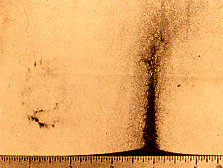
The most famous bite mark case in the US, and perhaps the world, is that of serial killer Ted Bundy. On Jan. 15, 1978, Bundy broke into the Chi Omega sorority on the Florida State University campus, assaulting and killing three women. During the crime, Bundy left a bite mark on the buttocks of Lisa Levy, whom he raped and killed. It was this bite mark that was primarily responsible for his conviction. He was executed in Florida’s electric chair on Jan. 24, 1989. Shortly before his execution, he confessed to 30 other murders in seven states, but it is believed that he may have been responsible for as many as 100 deaths.

Here are photos of the bite mark on Lisa Levy’s buttocks, and the wax impresstion that was made of Bundy’s lower dentition:

Continue reading

Tuesday’s Quick Clicks…

  • A judge overturned the conviction of Noe Moreno, a client of the Duke Law Wrongful Convictions Clinic who had been incarcerated since 2006, on Aug. 31. North Carolina Superior Court Judge Richard Boner vacated Moreno’s conviction and ordered charges against him dismissed, based on evidence of his innocence developed by students and presented by Theresa Newman ’88, co-director of the clinic, and David Pishko ’77, who worked pro bono on the case. Details here
  • Judge in Texas grants DNA testing to 4 inmates convicted of rape and murder in 1992
  • More on New Zealand exoneree David Bain’s bid for state compensation here and here
  • Utah Supreme Court to hear state’s appeal for exoneration of Debra Brown, client of Rocky Mountain Innocence Center
  • A district judge has ruled that a Dallas area man wrongfully imprisoned for more than two dozen years must pay his ex-wife a share of any compensation the state gives him. The Dallas Morning News reports that Steven Charles Phillips was cleared in 2008 of a string of sex crimes committed by another man in the 1980s. He spent more than two dozen years in prison. Phillips and his wife, Traci Tucker, divorced in 1991. She sued him after his release, arguing that she too had suffered when he was wrongfully imprisoned. Judge Lori Hockett on Friday ruled that Tucker was due $114,000 in lost wages and an additional $39,000 for attorneys’ fees and expenses.

More Habeas Hypocrisy…

As the article below discusses, the California Supreme Court last week issued a decision putting strict page limits on habeas briefs. What is ironic to me, however, is that courts have created the situation where attorneys feel they must file ridiculously thick briefs due to all the strict procedural rules created by courts aimed at causing habeas petitioners to default claims for not properly raising or exhausting them. At the Ohio Innocence Project, we’ve learned through experience that we even have to raise issues that we feel are not supported by the evidence (and possibly subject to Rule 11 sanctions), just to keep the courts from later ruling that we have not properly preserved issues (see story here).

From Law.com:

SAN FRANCISCO — Frustrated by 500-page briefs in capital habeas corpuscases, the California Supreme Court issued its own 120-page ruling Thursday laying out strict new limits and warning of sanctions if they’re not followed.

The court harshly criticized the defense lawyers in In re Reno, 12 C.D.O.S. 10049, labeling various portions of their petition “untimely,” “improper,” “patently meritless,” “grossly misleading” and based on “stock justifications.” But it stopped short of issuing sanctions, as it had threatened to do beforeargument in the case, which had caused a storm in the capital defense bar. Instead, the court cautioned that violating its new rules, which include a 50-page limit on successive habeas petitions, could lead to sanctions and State Bar discipline in the future.

Abusive habeas petitions “along with other factors have created a significant threat to our capacity to timely and fairly adjudicate such matters,” Justice Continue reading

Saturday’s Quick Clicks…

Bad Chemist May Have Caused Many Wrongful Convictions in Massachusetts….

From WBUR.org:

BOSTON — A chemist at the Massachusetts State Police crime lab in Jamaica Plain improperly handled drug evidence and breached procedures, leading police to worry about wrongful convictions and potential “miscarriages of justices” by corrupted evidence, state police said Thursday afternoon.

Gov. Deval Patrick ordered state police to shut the lab down early Thursday as police and the attorney general’s office investigate possible “malfeasance” of a chemist at the lab that could affect thousands of drug cases over several years.

Patrick ordered the lab closing after additional evidence came to light as part of an ongoing investigation looking at “improprieties” at the lab that conducts tests in drug cases. Within the last five days, state police investigators uncovered more improprieties than they originally thought, state police said during a press conference held at the Framingham headquarters. Investigators are looking at one chemist, who resigned in March. Police did not release the woman’s name.

Thousands of drug cases will now have to be reviewed, Massachusetts State Continue reading

Prosecutor-Driven Exoneration in Chicago Today…

From the SunTimes.com:

The Thursday jailhouse phone call began not much different than usual.

“How’s your day going?” the inmate’s attorney, Kathleen Zellner, asked.

“Pretty much like any other day in prison,” replied Alprentiss Nash, a 37-year-old Chicago man who’s spent the last 17 years in prison professing his innocence.

“ ‘Well, you’re going to be a free man tomorrow,’ I told him,” said Zellner. “He just started yelling and shouting and praising God. It was great.”

Nash is expected to walk out of the Menard Correctional Center in downstate Menard at 11 a.m. Friday-a day after prosecutors with Cook County State’s Attorney Anita Alvarez’s office went to court and asked a judge to vacate murder charges against him.

Convicted in January 1997 of the 1995 armed robbery and murder of Leon Stroud in his West Pullman home, Nash becomes the first person ever to have his murder conviction overturned solely by that office after a re-investigation by its new Conviction Integrity Unit, which Alvarez created in February.

“The decision to vacate this conviction comes as a result of a comprehensive investigation into the facts of this case,” the state’s attorney said at a news conference, announcing that the unit had reviewed DNA evidence, old court and police records, and even re-interviewed witnesses to arrive at the decision.

“Based upon the new DNA evidence and the collective results of our investigation, it is my assessment that we do not have the evidence that is required to sustain this murder charge,” said Alvarez, who established the six-person unit solely to investigate wrongful conviction claims.

Zellner’s client was arrested and jailed shortly after the April 30, 1995 crime in the 11700 block of South Wentworth; convicted on eyewitness testimony that had been substantially discredited at trial; and sentenced to 80 years.

The killer wore a black ski mask during the crime. One was recovered from a gate post near Stroud’s home. During a post-conviction appeal, Nash, acting as his own attorney, had sought DNA testing of the mask. That was opposed by Alvarez’s office and subsequently dismissed by the Cook County Circuit Courts.

The Illinois Appellate Court later reversed that decision, ordering the DNA testing that in 2010 came back with a genetic profile matching a prison inmate paroled within the last year after serving time on a drug conviction.

“The investigation into the murder of Leon Stroud remains open and will continue,” said Alvarez, confirming her office has interviewed that parolee.

“Today’s action demonstrates the commitment that I made when we began the unit, that we would proactively investigate and review cases that involve possible wrongful or questionable convictions and take action,” Alvarez said.

The unit already has 100 cases, referred by lawyers, families and defendants.

Nationally known for taking such cases — Nash is the 13th wrongfully convicted man she has helped exonerate — Zellner applauded Alvarez.

“It’s courageous of her to do this,” said Zellner. “There are other cases where there’s been DNA results, and different counties still have not acted, or released the person. So we’re extremely excited. Nash is our lucky 13.”

When he walks out Friday, Nash, after his journey, says he’ll harbor no anger.

“Well, I’m shocked,” he said through his lawyer Thursday. “Finally I’m getting justice. But I’m not mad at anybody. I just want to get on with my life.”

Jason Puracal Supporters Hold Vigils; Deliver Petition to Nicaraguan Embassy…


From newssource:


It’s been exactly one year since a Tacoma man was sentenced to 22 years in prison for drug trafficking and money laundering in Nicaragua.

Jason Puracal’s family and hundreds of supporters have stood by him, claiming he was wrongfully convicted without evidence.

On Wednesday, the effort to free Puracal will strengthen with an event in Los Angeles and one in Seattle.

Supporters with Change.org plan to deliver a petition to the Nicaraguan embassy in L.A., demanding Puracal’s release. Organizers claim to have gathered more than 100,000 signatures.

At the University of Washington, supporters and Jason’s family will gather at Red Square at 8:00 p.m. for a candlelight vigil.

Jason’s sister, Janis, recently returned from Nicaragua, where an appeals court heard Jason’s case last week. The family is now awaiting a judge’s decision.

“I know there’s no evidence against Jason,” Janis said. “I want to say I’m confident he’s coming home, [but] it’s hard for me to put a lot of stock in that system after two years of fighting it.”

The family maintains there was never any evidence linking Jason to drugs, money or any of the other 10 defendants convicted of the crimes.

Jason’s health has improved in prison, but he continues to struggle with depression. According to Janis, he was recently planed on suicide watch.

New York to Pay $3.5 Million Settlement for Prosecutorial Misconduct

Outraged by the lack of disciplinary action against prosecutorial misconduct that cost 13 years of his life, Shih-Wei Su sued, and New York State will now pay him $3.5 million.

At age 17, Su was convicted of attempted murder and related charges and sentenced to 16 to 50 years in a weak case based on conflicting eyewitness Continue reading

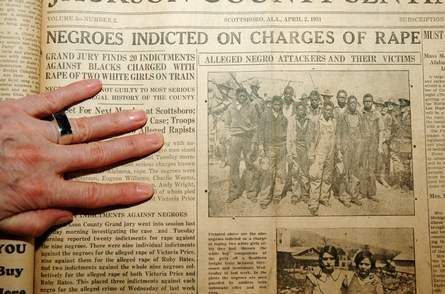
A Movement to Exonerate the “Scottsboro Boys”…

From the GadsenTimes.com:

MONTGOMERY — It began 81 years ago, with young black and white men and boys, a white woman and a girl on a train between Chattanooga and Paint Rock in Northeast Alabama.

Within days, eight of the nine young blacks would be convicted of raping the woman and girl and sentenced to death in Alabama’s electric chair. A 12-year-old black boy would be sentenced to life in prison.

Eventually no one was executed and all were released from prison, their lives ruined by the miscarriage of justice. In 1976, after decades of hiding, one of the nine, Clarence Norris, was pardoned by the state of Alabama.

Now, a north Alabama woman and a writer want final closure to the travesty known to history as the Scottsboro Boys Case, which awakened a nation to just how things were done in the Jim Crow system of the Deep South.

Read full article…..


Prosecutor’s Viewpoint Shouldn’t Obscure: We Can Do Better

Yesterday, Mark Godsey posted on a commentary written by Erie County (NY) District Attorney Frank A. Sedita III and published here in the BuffaloNews.com. It has drawn considerable commentary from those who read this blog. However, for persons uneducated on the subject of wrongful conviction, the prosecutor’s viewpoint might serve to downplay concerns about miscarriages of justice and discourage the public from supporting criminal justice reforms. That would be a shame.

Mr. Sedita’s commentary plays on the universal fear of crime and criminals. The tide of public concern has been turning, however, Continue reading

Tuesday’s Quick Clicks…

An MRI Polygraph ?? Beware

Over the past few years, some researchers have been looking at the possibility that an MRI (magnetic resonance imaging) brain scan can reveal whether or not someone is lying. In experiments, subjects are instructed to lie about certain things while an MRI monitors their brain activity. When the subject lies, the researchers look for differences in the patterns of brain activity. They have observed ‘differences’ when a subject is lying as opposed to when the subject is telling the truth.

Here are two recent articles on the subject:

…….. From yesterday’s Washington Post Laris M. MRI polygraphy. Wash Post, 2012-08-26

…….. From the August, 2010 IEEE Spectrum (the official publication of the Institute of Electrical and Electronic Engineers) MRI Polygraph

There is even a company called No Lie MRI that is trying to commercialize the phenomenon. http://noliemri.com/

Now, let me comment on these developments from the standpoint of the scientific method, design of experiments, and logic. These “experiments” are nothing more than observational studies. The experiment may have a hypothesis, that is, when the subject “lies” we’ll see differences in brain activity, which, in the experiment, would be the “dependent variable”. However, this is very non-specific. What areas of the brain? What kind of activity? What extent of activity? What level of activity indicates a “lie” over a statistically significant population of subjects of representative ages, races, genders, IQ’s, and physical & mental health? And the most glaring shortcoming of these experiments is lack of control over independent variables. A properly designed experiment should have a single dependent variable and all independent variables should be controlled. That is, if the independent variable being measured is “lie or no lie”, all other independent variables must be constant throughout the experiment - age, race, gender, mental and physical health, IQ, amount of sleep, state of mind, …………..

It has already been observed that the MRI can be “fooled” if the subject imagines imperceptibly wiggling a finger or toe while lying.

I fear that we might be seeing yet another forensic junk science in the making. Conclusions based upon these studies are another example of forensics being driven by anecdotal, observational studies that get pushed through a process of flawed inductive reasoning. “I’ve seen a hundred roses, and they’re all red; therefore, all roses are red.” Or, “I’ve never seen anything like that before; therefore, it must be unique.”

So far, this technology also fails the question that most all forensics fail; “Show me the statistically valid data from which I can compute a probability of occurrence.” And by the way, even “fingerprints” fails this question.

One saving grace of many forensic disciplines is that they can be statistically valid in excluding a suspect from consideration. I don’t see that MRI scans are legitimate enough to even do that.

Science is in its infancy in terms of truly understanding the functioning of the human brain. MRI lie detection may some day be legitimate, but my prediction is that it will be decades, if not generations, from now.

A Prosecutor’s View on Wrongful Convictions…

WCB readers, this is a must read. Enjoy!!!

From the BuffaloNews.com:

By Frank A. Sedita III

Every prosecutor in New York agrees that the conviction of an innocent man is a grave injustice and is unquestionably unacceptable. Accordingly, the Office of the Erie County District Attorney employs a rigorously enforced standard before a case, especially a felony case, can be prosecuted: the credible evidence, which is likely admissible in court, must prove the offense charged.

We do not prosecute a felony case because a complainant made an allegation or a police officer arrested someone. Every assistant district attorney assigned to a felony case must independently and critically review it for its prosecutorial viability. The case is again reviewed by the assistant district attorney’s supervisor. Should the grand jury vote to indict the defendant, the proposed indictment and its underlying proof is again reviewed before the defendant is formally accused and arraigned.

Our policy of critically and repeatedly reviewing cases at the pre-indictment stage has resulted in some cases being dismissed because the defendant is innocent. Since January 2011, my office has reviewed 4,764 potential felony cases for presentation to the grand jury or other disposition. Thirty-three of the defendants (0.7 percent) charged by the police were probably innocent. One such defendant was exonerated after indictment but well before trial. The remaining 32 defendants were exonerated before they were indicted by a grand jury.

None of the foregoing exonerations occurred after a wrongful conviction. None of the convictions obtained during my administration has been overturned because the defendant was innocent. My predecessor, District Attorney Frank J. Clark, served for 12 years (1997 to 2008) and none of the thousands of defendants convicted during his three terms has been exonerated as innocent.

In reality, it is the prosecutor who usually exonerates the wrongly accused, often without prodding from a defense attorney, and almost always well before a trial. Indeed, a critical review of every felony case, by professional prosecutors and at the earliest practicable stage of the proceedings (i.e. before indictment), prevents wrongful indictments and thus, prevents wrongful convictions.

Once a defendant is indicted, New York is one of the most difficult states in which to achieve a criminal conviction, precisely because of the rights already afforded to the defendant and because of the procedures already in place to prevent a wrongful conviction. A typical felony case will run a gauntlet ofsix separate judicial reviews before the conviction will be allowed to stand. Convictions are occasionally overturned by appellate courts, but usually because of procedural errors or because the trial court allowed the jury to hear evidence of guilt that “prejudiced” the defendant’s rights. In New York, it is rare for a conviction to be overturned because of insufficient evidence, and rarer still for a conviction to be overturned because the defendant was innocent.

While no one can deny that wrongful convictions have taken place, their rate of occurrence has been obscenely exaggerated. In reality, wrongful acquittals are much more common than wrongful convictions. I can point to at least four trials this year alone in Erie County that resulted in an acquittal despite overwhelming evidence of the defendant’s guilt. Post-indictment dismissals, usually because of technical procedural issues or because the court suppresses key prosecution evidence at the request of the defense, are more common still. Citizens are amazed to learn that under our legal system, the prosecution can rarely appeal a dismissal and can never appeal an acquittal.

Despite the infrequency of wrongful convictions and the procedures in place that prevent them, there are those who believe that more statutory reform is required. A thoughtful reading of the fine print, however, often reveals that the introduction of insurmountable procedural hurdles coupled with punitive sanctions is what is really intended by the so-called reform. The chief proponents of these Trojan horse statutes also neglect to mention that criminals will be the chief beneficiaries of the additional hoops through which the police and prosecutors must jump in order to obtain justice for crime victims.

I agree that the system is flawed, but in a manner that benefits the accused. I can accept that. Our system presumes a man innocent until he is proven guilty beyond a reasonable doubt. Ours is the greatest criminal justice system ever devised and I am proud to play a role in it. What I cannot accept is deliberate deception heaped upon an unsuspecting public. In my view, these so-called legislative reforms, offered under the pretense of preventing an injustice, are not intended to protect the innocent from wrongful conviction but are instead designed to shield the guilty from any conviction.

A Defense Attorney Prosecuting a Prosecutor…

From the NYTimes.com:

HOUSTON —The key to Rusty Hardin’s extraordinary career, in his view, has been his ordinariness. He is just a regular guy.A regular guy whose expansive office on the 22nd story of a Houston high-rise frames the city’s skyline. A regular guy who is famous for his ice-cream-colored suits. A regular guy whose walls are lined with newspaper photos of his superstar clients, including Roger Clemens, Wade Boggs and Warren Moon.

“If I ever thought I was special for a moment, I’d lose every bit of advantage I have,” said Mr. Hardin, a 70-year-old lawyer and native of a small town in North Carolina, chatting comfortably in a light-gray pinstriped suit and a bubble-gum-pink tie. “So I’m glad I’m not pretty or anything.”

As a top prosecutor in Harris County, Mr. Hardin tried high-profile murder cases and sent 14 criminals to death row. Since switching to the defense in 1990, he has developed something of a specialty in representing famous clients, particularly athletes.

This winter, his experiences as a prosecutor and a defense lawyer will collide in a courtroom drama that lawyers, judges and legal scholars nationwide are watching carefully because of its potentially powerful consequences for the legal system. Louis Sturns, the state district judge in charge of the inquiry, appointed Mr. Hardin to serve as special prosecutor in an unusual court of inquiry that will start on Dec. 10. It will determine if Ken Anderson, a former Williamson County district attorney, will face criminal charges for his role in the wrongful conviction of Michael Morton. Prosecutors rarely face criminal charges in cases of wrongful conviction.

Mr. Morton, who was convicted in 1987 of murdering his wife, Christine Morton, spent nearly 25 years in prison before DNA testing last year linked the killing to Continue reading

Sports world’s justice system often unfair to the accused

As hard as the presumption of guilt can be to overcome in the world’s court systems, it apparently is even harder in the international anti-doping bureaucracy headed by the Court of Arbitration for Sport, where even high-profile athletes like Lance Armstrong don’t stand a chance.

As Sally Jenkins of The Washington Post notes:

“Anyone who thinks an athlete has a fair shot in front of CAS should review the Alberto Contador case. Contador was found to have a minuscule, insignificant amount of clenbuterol in his urine during the 2010 Tour de France. After hearing 4,000 pages of testimony and debate, CAS acknowledged that the substance was too small to have been performance-enhancing and that its ingestion was almost certainly unintentional.

Therefore he was guilty. He received a two-year ban.”

Even worse, Jenkins said, one year of that ban was exacted because the prime minister of Spain dared to defend Contador’s innocence. You can read Jenkins’ full commentary here.

Texas Man Not Bitter After Two Decades of Wrongful Imprisonment

After serving 23 years in prison for a rape DNA proved he didn’t commit, David Lee Wiggins, 48, walked out of prison and into freedom via courthouse doors in Fort Worth, Texas, yesterday with his brother, his sister, and Innocence Project attorney Nina Morrison. As has been the case with many other exonerees, he expressed no bitterness after his long ordeal.

As reported here on Monday, the Wiggins case was one of misidentification, a contributor in about 75 percent of DNA-proven wrongful convictions. He was Continue reading

Mother Released from Prison Pending State’s Decision on New Trial

After serving 16 years in prison, Kristine Bunch, 38, was freed Wednesday, following the Indiana Court of Appeals March ruling that granted her a new trial in the state-alleged arson murder of her young son in a mobile home fire.

The Appeals court found that the forensic evidence used to convict Bunch was outdated and discredited and that prosecutors withheld from the defense a lab Continue reading

Sentencing “Rules” and “Guidelines” - Have Things Gone Too Far?

Anders Breivik, the Norwegian who meticulously planned and carried out an attack that killed 77 people, has been found sane, and sentenced to 21 years. See the NY Times article here.

Meanwhile, this past May, Marissa Alexander, a Florida woman, who was in a fight with her abusive husband, fired a warning shot into a wall without injuring anyone, and was sentenced to 20 years. See GlobalPost article here.

Does anybody else see a problem here?

And then there are the “three strikes” laws. Under these laws people who have committed three felonies, albeit non-violent and minor, can be sentenced to life in prison. 24 states currently have some form of “three strikes” law. The intention was to reduce crime from repeat offenders, but no statistically valid causal correlation with reduced crime has been shown. However, it has been observed that offenders in jeopardy of a “third strike” are more likely to violently attack police.

Something is seriously out of kilter here.

Idaho Innocence Project on Dateline NBC Tonight in U.S….

An Idaho murder case from 1996 is coming under new scrutiny with the help of the Idaho Innocence Project. On Friday, Aug. 24, NBC-Dateline will air “The Confession. A mother fights to free the man convicted in her daughter’s murder.”

The Emmy award winning program will showcase an all new one-hour special about Angie Dodge’s murder in her Idaho Falls apartment and the confession of Chris Tapp, who currently is serving a sentence of 25 years to life for the crime. The show airs at 9 p.m. on KTVB Channel 7.

The Idaho Innocence Project believes that Tapp is innocent. Biology and criminal justice professor Greg Hampikian is working on DNA aspects of the case, which is being handled by Rick Visser, IIP assistant director and staff attorney. Several Boise State students also have assisted in research and investigation.