Category Archives: uk

UK’s restrictive compensation scheme for exonerees upheld by High Court

In a long running issue over exoneree compensation in the UK - or the lack of it - that I have blogged on previously (here…,here… and here) Sam Hallam and Victor Nealon, who spent 24 years in prison between them, have now lost their argument that UK law wrongly restricts compensation in miscarriage of justice cases. Hallam and Nealon’s solicitors had judicially reviewed the government decision to not compensate them for the years they spent imprisoned when innocent.untitled
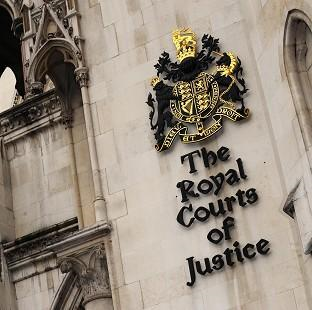
The Secretary of State for Justice denied Nealon compensation for his years in jail, on the grounds that the Court of Appeal’s verdict - which said that “the fresh evidence has not ‘demolished’ the prosecution case” - meant that he was not a victim of a miscarriage of justice. In Hallam’s case - his appeal judgement partially laid the blame for his wrongful conviction at his door as the phone evidence that exonerated him 7 years after his conviction had been in his possession.

On Monday, Nealon and Hallam lost their bid to persuade British judges to accept that denying compensation broke the European Convention on Human Rights. The case is the first legal challenge to be heard to the decision to narrow eligibility grounds for compensation, which effectively requires people to prove that they did not commit the crime.

Wrongfully jailed men lose high court actions in battle for compensation

Irish man fails in compensation bid against British government

Victor Nealon falsely imprisoned for 17 years denied compensation
 

UK’s Criminal Cases Review Commission (CCRC) subject of critical report.

The Criminal Cases Review Commission of England and Wales (Scotland has their own Commission) has been the subject of a recent inquiry by the UK Parliament’s Select Justice Committee (see here). The inquiry received 47 written submissions and heard oral evidence from a select group of experts, lawyers and campaigners on miscarriages of justice. The Committee today released it’s highly critical report that can be read here…. It made a series of recommendations including increased funding from government, but also that the CCRC ‘relax’ it’s narrow interpretation of the ‘real possibility’ test when referring cases back to the Court of Appeal. There have been media reports highlighting the critical tone of the report:

Miscarriage of justice review body is dismissed as the Court of Appeal’s ‘lap dog’ in hard-hitting report

The report concluded:

19. We conclude that the CCRC is performing its functions reasonably well, and we have identified areas for improvement, but we were struck by the disparity between what critics believe it to be doing and what it claims that it is doing. At times there was complete disagreement, even on objective and factual matters. This indicates that at the very least the CCRC has a problem with public perception, including with the awareness of applicants as to what it can do for them and of all stakeholders, including applicants, their representatives, and others, as to how it operates. The CCRC will never convince its most vociferous detractors, but it could be doing more to ensure that its work and processes are well understood. (Paragraph 54)

20. The level of successful referrals from the CCRC shows that it remains as necessary a body now as when it was set up. We received very little evidence advocating its abolition, and even its strongest critics have said that they simply want it to improve. The existence of the CCRC is not enough in and of itself; it must be given the resources and powers it requires to perform its job effectively. The fundamental constitutional principle on which our criminal justice system rests and which the Commission exists to uphold is that the guilty are convicted and the innocent go free. (Paragraph 55)

Protest by those ‘insufficiently innocent’ to receive compensation

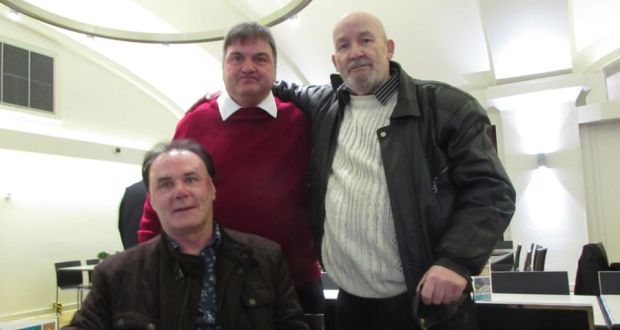
There has been a lot of publicity surrounding a protest by four individuals who spent years in prison for crimes they did not commit, and have subsequently been refused any compensation. The ‘Global Law Summit’ being held in London, already controversial for ‘celebrating’ the rule of law in the UK - at a time when the justice system is being decimated by government cuts - was the focus of the protest by Victor Nealon, Barry George, Martin Foran and James Boyle, each having suffered a miscarriage of justice but denied any compensation. A couple of news items on their protest appear here…

Why is Britain refusing to compensate victims of miscarriage of justice?

Barry George slams decision not to give him compensation cash

Exonerees in the UK: left penniless and abandoned.

Were it not shocking enough that we continue to wrongly convict people in England and Wales and make it ever harder for them to win their appeal, we are abandoning those individuals who manage to win their freedom, penniless, often homeless, and always damaged. With the recent showing of a compelling TV documentarly that investigates whether there has been a number of health professionals wrongful convicted of murder, concerns are once again being raised about what happens to victims even after they win their freedom. The case of Victor Nealon, wrongfully convicted and released miles from any support (he had to walk to a local journalists house and ask for a bed for the night), is sadly just one recent example. Post-conviction compensation for those wrongly convicted in the UK has always been hard won and almost always pitiful. However, the ‘crackdown’ on what constitues a ‘miscarriage of justice’ now means that almost no-one will receive compensation in the future. Individuals have to prove ‘beyond a reasonable doubt’ that they did not commit the crime. DNA from another individual on crime exhibits may suffice to have your conviction overturned at the Court of Appeal, but is insufficient to prove you are not the perpetrator and worthy of compensation. See the latest news item here on this shocking development:

Miscarriage of justice victims will find it harder to get compensation, lawyers say

In a perhaps even more sobering tale, Tony Poole, exonerated in 2003 of a untitledmurder after years protesting his innocence, is now on trial again for murder. The people who helped him win his freedom have talked about how prison saw Tony brutalised, and hooked on heroin. His release saw him eventually spiral out of control until he was isolated and addicted to hard drugs. This tale should highlight the struggle that continues for exonerees after their release, the very least the government can do is financially compensate these individuals. See Tony Poole’s sad story here…

Tony Poole given little support after release for wrongful murder conviction, it is claimed

Ireland: Inaugural International Wrongful Conviction Conference & Film Festival

The Irish Innocence Project, working since 2009 at Griffith College, has announced Ireland’s Inaugural International Wrongful Conviction Conference and Film Festival - to newlogo2be held 26th and 27th June 2015. They have also launched a crowd funding appeal: “Be the Key: Set an Innocent Free”, to help the college students to work on overturning wrongful convictions in Ireland.


300914 Wrongful Conviction CR Shutterstock_0_0

See more details of the conference and film festival - with great speakers, and the crowd funding appeal here:

Inaugural International Wrongful Conviction Conference & Film Festival

Great day in UK for Innocence: Cardiff University Justice Project Overturns Wrongful Conviction

The news coming from the UK in recent months, if not years, has rarely been good. Today (9th December 2014) is different, for today, the Criminal Court of Appeal found the conviction of Dwaine George ‘unsafe’ and overturned his _79607026_ico12-1conviction for murder. George, convicted of shooting dead a teenager in a gang related incident in 2001, served 12 years of his life sentence behind bars, and was released last year.



Professor Julie Price and Dr Dennis Eady, who run Cardiff’s Innocence Project, were joined at the Royal Courts of Justice by 30 Cardiff law students, past and present, to hear the result of the students’ investigative work. Dr Eady said: “It has taken nine years of hard work since the project was launched to get to this point, and based on our students’ efforts the Court of Appeal has decided that Mr George’s conviction is unsafe.We appreciate that today’s decision will be difficult for Daniel Dale’s family, but if the wrong person was jailed then the right outcome has today been achieved.”

Prof Price added: “For Cardiff Law School Innocence Project, and other university projects working on alleged wrongful conviction cases, this is a significant day. It demonstrates that universities are about more than research, and can show public impact from innovative teaching and learning. This result has been achieved by collaborative effort. A huge thanks to our many supporters and students past and present.”

Sir Brian Levenson said in his ruling: “In addition to expressing our gratitude to the Criminal Cases Review Commission, we pay tribute to the work of the Innocence Project and Pro Bono Unit at Cardiff Law School, which took up the appellant’s case and pursued it so diligently.”

With the recent turmoil amongst those working in universities across the UK and their Innocence Projects (mostly called Justice Projects today because they do not satisfy the criteria for the title ‘Innocence Project’) this is a great victory. Many staff work tirelessly for little or no recognition, with students facing ever greater hurdles to have their work and dedication praised. Cardiff University;s staff and students will continue to work tirelessly and have many other cases that are working their way, slowly, through the CCRC. One can only hope that this is the first success of many. But today is a also shot in the arm for all of those working on behalf of the innocent - sorely needed, and richly deserved.

Watch news item and interviews here:

Cardiff Uni students help Dwaine George win murder appeal

Read more here:

UK judge praises students for helping overturn murder conviction

Judge praises Cardiff University law students for helping overturn Dwaine George’s murder conviction

Ex-gang member Dwaine George cleared of 2002 murder on appeal

Monday’s Quick Clicks…