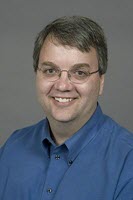
Author Archives: Mark Godsey

Submit Papers for Innocence Network Conference…

The Innocence Scholarship Committee of the Innocence Network is seeking high quality social science and legal scholarship for presentation at the 2015 Innocence Network Conference in Orlando, Florida on May 1-2 (http://www.innocencenetwork.org/conference).

Areas of research are open but should touch upon the multifaceted causes, implications, and/or remedies of wrongful conviction. International papers are welcome but must be submitted in English. Please submit a title and paper proposal to the Innocence Scholarship Committee at this G-Mail account: innocencescholarship@gmail.com by February 13, 2015. Paper proposals must be no more than 200 words. Completed drafts must be submitted to the Committee by April 17th, 2015.

The Innocence Scholarship Committee is actively seeking publication for those papers accepted for Conference presentations in a law review symposium edition. More information about that is forthcoming.

The Innocence Scholarship Committee is comprised of the following Members: Professor Aliza Kaplan, Oregon Innocence Project, Lewis & Clark School of Law, Portland, Oregon; Professor Valena Beety, West Virginia Innocence Project, West Virginia School of Law; and Dr. Robert Schehr, Arizona Innocence Project, Northern Arizona University.

Center for Prosecutor Integrity Surveys Rise of Conviction Integrity Units

Press release from Center for Prosecutorial Integrity….

WASHINGTON / December 4, 2014 — Since 2007, state and federal prosecutors have established 16 Conviction Integrity Units to assure the accuracy of convictions obtained by their offices, according to a White Paper released today by the Maryland-based Center for Prosecutor Integrity.

Prosecuting attorneys in districts from Santa Clara County, California to Washington, D.C. began establishing the units after DNA evidence led to a rising number of exonerations.

The White Paper, titled “Conviction Integrity Units: Vanguard of Criminal Justice Reform,” outlines the structure and administration of the 16 conviction integrity units now existing in the U.S. The report reveals that the nine units established by the end of 2013 accomplished nearly 7,000 case reviews, resulting in 61 exonerations.

Gina Lauterio, Program Director of the Center for Prosecutor Integrity, said the report is the first to reveal how the number and effectiveness of the units has grown in recent years. “I hope that all District Attorneys in the country will consider what’s being done in these 16 districts and adopt similar practices.”

Lauterio noted the nonprofit Center encourages scholarship on the causes of wrongful convictions and efforts to minimize them. “We commend the growing number of prosecutors who are now devoting resources to reexamine questionable cases.”

The report is available on the Center’s website:  http://www.prosecutorintegrity.org/wp-content/uploads/2014/12/Conviction-Integrity-Units.pdf

Wednesday’s Quick Clicks…

Are Prosecutors Above the Law?

From the DailyKos.com:

By Susan Grigsby

There is something terribly wrong with a justice system that allows an inordinate amount of power to reside in the hands of one office that not only has no real accountability or oversight, but is insulated from the consequences of its actions by court-granted immunity. And no, I am not talking about Supreme Court justices, but about prosecuting attorneys.

The prosecuting attorney—whether local, state, or federal—has an incredible amount of authority and discretion in how to exercise that authority. The prosecuting attorney decides how many, and what kind of charges are brought in criminal prosecutions. The prosecuting attorney has the ability to directly charge a crime, or to use a grand jury for more serious crimes, to indict a defendant. The prosecuting attorney has the authority to offer plea bargains.

And while there should be some type of accountability other than election, and while the fiction exists that prosecuting attorneys could be disbarred, in reality, they face little punishment for abusing their discretion or authority.

According to the Center for Prosecutor Integrity, almost half of all wrongful convictions arise from the misconduct of prosecutors or other officials. Steve Weinburg has broken down the types of prosecutorial misconduct, as you can read below the fold:

  • Courtroom misconduct (making inappropriate or inflammatory comments in the presence of the jury; introducing or attempting to introduce inadmissible, inappropriate or inflammatory evidence; mischaracterizing the evidence or the facts of the case to the court or jury; committing violations pertaining to the selection of the jury; or making improper closing arguments);
  • Mishandling of physical evidence (hiding, destroying or tampering with evidence, case files or court records);
  • Failing to disclose exculpatory evidence;
  • Threatening, badgering or tampering with witnesses;
  • Using false or misleading evidence;
  • Harassing, displaying bias toward, or having a vendetta against the defendant or defendant’s counsel (including selective or vindictive prosecution, which includes instances of denial of a speedy trial); and
  • Improper behavior during grand jury proceedings.

Prosecutors are the most powerful officials in the criminal justice system. Their routine, everyday decisions control the direction and outcome of criminal cases and have greater impact and more serious consequences than those of any other criminal justice official. The most remarkable feature of these important, sometimes life-and-death decisions is that they are totally discretionary and virtually unreviewable.

Angela J. Davis, professor at the American University School of Law and former director of the District of Columbia Public Defender Service, wrote the above in Arbitrary Justice: The Power of the American Prosecutor. Further into her book, Davis makes clear that prosecutorial discretion is essential for the functioning of our judicial system. That does not mean that there are no problems with it.

In most jurisdictions, 95 percent of all cases are decided in the district attorney’s office, never going to trial. Since prosecuting attorney acts as judge and jury, out of the public eye, determining the true amount prosecutorial misconduct is almost impossible.

Katherine Goldwasser, a law professor at Washington University in St. Louis who served as a prosecutor in Chicago before joining academia, suggested that misconduct often occurs out of sight, especially in cases that never go to trial. Those cases by definition do not generate appellate opinions (and thus are for the most part beyond the scope of the Center study). Goldwasser told the Center. “It is not a safe assumption that cases ending with guilty pleas are absent prosecutorial misconduct.”

The most difficult form of misconduct to prove is a violation of the Brady Rule, or the failure to disclose exculpatory evidence. The Supreme Court ruled in 1963, in Brady v. Maryland, that prosecutors’ failure to provide evidence “material either to guilt or to punishment” violates the due process clause of the Fourteenth Amendment. The most common remedy for an egregious violation of the Brady Rule is an overturned conviction; however, the prosecutor who violated the rule is rarely held accountable.

The Center for Public Integrity has analyzed 11,452 cases that were reviewed by appellate courts for prosecutor misconduct. In the majority of the cases, the conduct was considered a harmless error and the convictions were allowed to stand. In 2,012 of the cases, the convictions were overturned, sentences were reduced, or indictments dismissed.  And in 513 cases the appellate judges felt the misconduct was serious enough to warrant additional discussion.

But that left thousands of convictions intact under the doctrine of harmless error. In order to get a verdict reversed, a defendant would have to show that the error was such that without it, the jury would not have convicted. According to Radley Balko:

The policy may seem more sensible than one of setting guilty people free because of low-level prosecutorial misconduct that had no impact on the verdict, but civil liberties advocates say it sets the bar too high. “It requires appellate court judges to sit as jurors,” says Steven Benjamin, president of the National Association of Criminal Defense Lawyers. “It puts them in a role they were never intended to be in, and asks them to retroactively put themselves at trials they didn’t attend. It takes a really extreme case to overturn a conviction.”

As for grand jury proceedings, Davis writes in Arbitrary Justice: The Power of the American Prosecutor:

Neither the defendant nor the defense attorney is allowed to be present during the process. Thus, the witnesses are not subject to cross-examination, which could potentially expose weaknesses in their testimony. The defense may not present exculpatory evidence to the jury unless the prosecutor agrees, and if she does, the defense attorney may not be present during the witnesses’ testimony. In federal prosecutions and in most states, prosecutors are not required to present exculpatory evidence to a grand jury, and they rarely do. With only one side of the story being told, it’s very easy for the prosecutor to convince the grand jurors that the relatively low standard of probable cause has been met. In essence, the grand jury is a very one-sided process entirely controlled by the prosecutor. As a result of this pro forma process, grand jurors rarely decline to return an indictment.

What we saw in Ferguson was a case in which, as Jeff Roorda stated this week during All In With Chris Hayes, Bob McCulloch did not feel that Darren Wilson had broken any laws but proceeded with a grand jury hearing in order to silence the public outcry. Which means that instead of acting as the prosecutor, McCulloch’s office acted as the defense attorney throughout the grand jury hearing. Witnesses were included that the prosecution knew were unreliable at best, and likely to be committing perjury at worst. All possible exculpatory evidence was presented and the defendant was allowed to testify with no cross examination.

Davis also points out that the prosecutor is responsible for informing the grand jurors of the laws that must be applied in order to determine if probable cause exists. One of those laws in the Ferguson case involved a law enforcement officer’s appropriate use of deadly force.

Lawrence O’Donnell has been asking questions about the actions of the prosecutor’s office during the Ferguson grand jury since November 26, 2014. He was especially interested in how, and why, the wrong law was presented to the grand jury concerning the use of force, and why the correction was held until the very last minute and not fully explained to the jury.

O’Donnell’s questions to officials in Missouri include the following:

  • How many times has assistant district attorney Kathi Alizadeh submitted the wrong law to a grand jury as its legal framework for an investigation?
  • How many times has the District Attorney’s office submitted the wrong law to a grand jury as its legal framework for its investigation?
  • Is the Michael Brown case the first time the District Attorney’s office submitted the wrong law to a grand jury as the legal framework for its investigation?

On Wednesday he got an answer. Sort of. From Missouri Attorney General Chris Koster:

Among the problems that Ferguson has brought to light is the need to update Missouri’s use of deadly force statute. This statute is inconsistent with the United States Supreme Court’s holding in Tennessee v. Garner. Consequently, it is important this statute is amended by the Missouri legislature to incorporate the Garner decision and to avoid confusion within the criminal justice system.

From the district attorney’s office that was overseeing the prosecutors working the grand jury hearing, not so much:

But even if the wrong law was explained at the beginning of the procedure and the right law was not explained but only handed to the jurors on the last day of the hearing, so what? Even if O’Donnell’s investigation had produced actual evidence of prosecutorial misconduct, would it matter?

Nine studies have looked at misconduct over 50 years, on both state and national levels, and found 3,625 instances. Of those, public sanctions were imposed in 63 cases, less than 2 percent of the time. Those sanctions rarely exceeded the costs of the disciplinary proceedings.

Indeed, when a prosecutor violates ethical precepts, judges and appellate courts seemingly bend over backwards to excuse the conduct. Even in the most reprehensible cases, judges typically do not refer the case for disciplinary action and ethics boards fail to apply sanctions.

Why is there no accountability?

The people closest to the misconduct, the defense attorneys, have good reason not to report any prosecutorial misconduct. The report could seriously damage the working relationship between the defense attorney and the prosecutor’s office. More importantly, the misconduct can be used by the defense attorney as a bargaining chip in getting concessions for his client. Since his client’s defense is his first priority and any such deal he can make would prohibit disclosure, he is unlikely to report the prosecutor for wrongdoing.

Judges may be wary of violating the separation of powers since prosecutors work for the executive branch of the government, tasked with enforcing the laws enacted by the legislative branch.

Another barrier to accountability is what Radley Balko calls the Christmas Party problem:

“You have to remember that nearly all judges are former prosecutors,” Dalton says. “There’s an undercurrent of alliance between judges and prosecutors, so there’s a certain collegiality there. They run in the same social circles. They attend the same Christmas parties.”

An individual wishing to sue a prosecutor for damages caused by prosecutorial misconduct will find multiple barriers in the way.

The U.S. Supreme Court ruled out torts law as an option for plaintiffs nearly a century ago. And in the 1976 case Imbler v. Pachtman, the court ruled that under federal civil rights law, prosecutors also enjoy absolute immunity from any lawsuit over any action undertaken as a prosecutor. The court later extended this personal immunity to cover supervisory prosecutors who fail to properly train their subordinates.

Now even a prosecutor who knowingly submits false evidence in a case that results in the wrongful conviction—or even the execution—of an innocent person can’t be personally sued for damages. The only way a prosecutor can be sued under present law is if she was acting as an investigator in a police role—duties above and beyond those of a prosecutor—at the time she violated the defendant’s civil rights. But even here, prosecutors enjoy the qualified immunity afforded to police officers: A plaintiff must still show a willful violation of well-established constitutional rights to even get in front of a jury.

Prosecutors do need some level of immunity in order to properly perform their duties. And they require prosecutorial discretion in order to keep the wheels of justice turning. We have seen how efforts to restrict judicial discretion resulted in mandatory minimum sentences, removing a judge’s discretion in sentencing entirely. (Now it is the prosecutor who determines the sentence by exercising his discretion in deciding what charges an offender will face.) But there does need to be some limit, some oversight to a prosecutor’s office.

If grand juries only exist to give the result the prosecutor desires, what is the point of using them? Initially, they were to allow citizens some input into the system, but as that system has become more complicated and more laws have been enacted to criminalize behavior, most citizens do not have the knowledge necessary to fulfill that role. Since all of their actions are taken in secret, and since they are never allowed to reveal what happened within the jury room, it is impossible to determine if they are working the way they were intended.

The most powerful office in the justice system, whose decisions carry the greatest impact and consequence, is still occupied by human beings, subject to all of the normal human failings. In order to ensure that the power is used properly, sunshine, oversight, and accountability must become part of the system.

Material Indifference: How Courts Are Impeding Fair Disclosure in Criminal Cases

Recently, NACDL and the Veritas Initiative at Santa Clara Law School released a major Brady study, titled-above.  NACDL’s description of the report reads:

Washington, DC (Nov. 17, 2014) – Today, at the National Press Club in Washington, DC, NACDL is officially releasing its latest report, Material Indifference: How Courts Are Impeding Fair Disclosure in Criminal Cases, a major study produced jointly with the VERITAS Initiative at Santa Clara Law School. Today’s event will feature comments by NACDL President Theodore Simon, NACDL Executive Director Norman L. Reimer (who also will moderate the event), and special guests David W. Ogden, former Deputy Attorney General who is now a partner at the WilmerHale firm, and the Hon. Alex Kozinski, Chief Judge of the Ninth Circuit Court of Appeals. The report’s co-authors – VERITAS Initiative Director and Professor Kathleen “Cookie” Ridolfi, NACDL White Collar Crime Policy Counsel Tiffany M. Joslyn, and VERITAS Initiative Pro Bono Research Attorney Todd H. Fries – will also be discussing their findings and recommendations. NACDL Executive Director Norman Reimer will moderate the discussion.

“This groundbreaking study documents one of the major problems facing the nation’s criminal justice system today: the failure to ensure full, fair and timely disclosure of information favorable to an accused person in a criminal action. It is a significant step towards achieving the vital reforms necessary to guarantee a fair trial for every accused person,” NACDL President Theodore Simon said.

Over 50 years ago, in Brady v. Maryland, the Supreme Court declared that failure to disclose favorable information violates the constitution when that information is material. This guarantee, however, is frequently unmet. In courtrooms across the nation, accused persons are convicted without ever having seen information that was favorable to their defense. The frequency with which this occurs and the role it plays in wrongful convictions prompted NACDL and the VERITAS Initiative to undertake an unprecedented study of Brady claims litigated in federal courts over a five-year period. The study asked: What role does judicial review play in the disclosure of favorable information to accused? The results revealed a troubling answer—the judiciary is impeding fair disclosure in criminal cases and, in doing so, encouraging prosecutors to disclose as little favorable information as possible.

The study’s findings are extensive and dramatic including, for example:

  • The materiality standard produces arbitrary results and overwhelmingly favors the prosecution. Indeed, in those decisions where the prosecution failed to disclose favorable information, it still won 86% of the time, with the court concluding that the information was not material.
  • Courts almost never find Brady was violated by the late disclosure of favorable information. Of the 65 decisions that involve late disclosure of favorable information, only one resulted in a Brady violation finding.
  • Favorable information is more likely to be disclosed late or withheld entirely in death penalty decisions. Favorable information was never disclosed or disclosed late by the prosecution in 53% of decisions involving the death penalty, but only 34% of all the decisions studied.

In his dissent to the Ninth Circuit’s 2013 decision denying a rehearing en banc in United States v. Olsen, Chief Judge Alex Kozinski acknowledged that “[t]here is an epidemic of Brady violations abroad in the land” which in his view, “[o]nly judges can put a stop to.” Material Indifference: How Courts Are Impeding Fair Disclosure in Criminal Cases documents that epidemic and sets forth a prescription for how to contain and ultimately cure it. As former Deputy Attorney General David W. Ogden wrote in his foreword to this report, “judges have an indispensable role and obligation to oversee the system’s guarantees of fairness and to make sure that its truth- and justice-seeking mission is fulfilled in each case.”

According to report co-author Cookie Ridolfi, “despite the clear correlation between withholding evidence and wrongful conviction, the results of this study demonstrate that courts persist in tolerating prosecutors’ failure to timely disclose favorable information.” “Judicial indifference toward late disclosure fosters non-compliance with disclosure obligations. The data strongly suggests that the practice of late disclosure has become a trial tactic rather than an allowance for exceptional circumstances,” added co-author Todd Fries. Co-author Tiffany M. Joslyn was clear, “at its core, judicial adherence to the materiality standard following conviction encourages prosecutors to use that same back-end standard to narrow their front-end disclosure obligations. Our study not only confirms this, it demonstrates that front-end reform is necessary and overdue.”

The report concludes by offering three reform proposals that would serve as mechanisms for increasing fair disclosure in criminal cases. First, in each case defense attorneys should request, and judges should grant ethical rule orders – orders for the prosecution to disclose all favorable information in accord with American Bar Association Model Rule 3.8(d). Second, the judicial rules and policies should be amended to require fair disclosure of information. Finally, the most effective mechanism would be to adopt legislation codifying fair disclosure in criminal cases.

Complete copies of the report, executive summary, and fact sheet are available at www.nacdl.org/discoveryreform/materialindifference. And by sometime on Tuesday, November 18, 2014, a link to the complete video of today’s release event featuring Chief Judge Kozinski, former Deputy Attorney General David Ogden, NACDL President Theodore Simon, and the report’s co-authors will also be available at that web address.

Here is C-SPAN’s coverage of the report’s release:  http://www.c-span.org/video/?322781-1/discussion-fair-disclosure-criminal-trials

Strangers Around the World Donate Nearly $57k to Help Newly Exonerated Man Get New Start

Less than 2 weeks ago, Ricky Jackson and his co-defendants, Wiley and Ronnie Bridgeman, were exonerated in a Cleveland court after serving nearly 40 years in prison for a murder they didn’t commit.  Prior to exoneration, the Ohio Innocence Project, which represented Jackson, set up a gofundme.com account for Ricky.  Since that time, nearly $57,000 has been donated to help Ricky get a new start.  More than $44k was donated directly on http://www.gofundme.com/rickyjackson, while another $12.5k was donated to Ricky outside of the website, through the OIP’s Phoenix Initiative fund.  Donations came in from all over the world, after the case received international press.  More than 15k has been donated to Wiley Bridgeman’s fund.

Because of the generosity of strangers, Ricky will have enough money to buy a car and get an apartment, and take his time receiving training in order to get a job, without being homeless and destitute in the meantime.

Thanks to everyone for this amazing show of support.

Donate to Rick here:  http://www.gofundme.com/rickyjackson

Donate to his Wiley Bridgeman here:  http://www.gofundme.com/wiley

Thursday’s Quick Clicks…

Tuesday’s Quick Clicks…

Leighton Hay Exoneration in Canada…

From the Canada Times:

The charges opposite Leighton Hay, a Toronto male convicted of an execution-style murder in 2002, were cold this morning and he walked out of probity a giveaway male after some-more than 12 years in prison.

The Crown said it is no longer in a open seductiveness to pursue a case.

Hay, 19 during a time, was found guilty of first-degree murder in the July 2002 murdering of 51-year-old Colin Moore. But he appealed based on debate contrast on hairs found in his apartment.

Hay’s case was taken on by a Association in Defence of a Wrongly Convicted in 2011, that called it “factual innocence.”

Leighton Hay

Leighton Hay was 19-years-old when he was convicted of a murder he did not commit. (CBC)

“Leighton has been by a calamity for all these years,” pronounced James Lockyer, a association’s comparison counsel, who pronounced before Hay was expelled that his “walk into leisure today” would be ”momentous for him.”

“This was a miscarriage of probity of a top order,” Lockyer added.

Hay’s lawyers have asked Justice John McMahon to apologize on interest of a probity system.

Hair Justification Pivotal To Case

On Jul 6, 2002, Moore was hosting an eventuality during a nightclub in a Toronto suburb of Etobicoke. At 1:13 a.m. ET, dual group armed with handguns stormed into a nightclub, and shot and killed Moore.

Police identified one of a gunmen as Gary Eunick.

Eunick had borrowed a automobile of Hay’s mom and was pushing it a night in question, according to police.

When military found a automobile during Hay’s home, they arrested both Eunick and Hay.

Witnesses from a nightclub described a second gunman as carrying “two in. picky dreads” — longer hair than what Hay had during a time.

Leighton Hay leaves court

Leighton Hay and his father Lasalle travel from a Superior Court on Friday morning. (Michelle Cheung/CBC)

The Crown argued during his strange hearing in 2004 that Hay returned home after a sharpened and had a haircut.

The military searched for justification of a haircut during Hay’s home, and found some really brief hairs in a journal in a rubbish bin and on an electric razor in his bedroom.

Hay’s lawyers presented justification during a interest — a second interest on a crime — that questioned either Hay indeed got a haircut.

Hay’s lawyers also highlighted one declare who identified Hay with “80 per cent” certainty as a gunman during a nightclub. Two weeks later, the same declare did not name Hay’s print in a lineup.

Weekend Quick Clicks…

Monday’s Quick Clicks…

Monday’s Quick Clicks

Tuesday’s Quick Clicks…

  • RIP exoneree Darby Tillis
  • Chicago Tribune review of Parade, a musical about a wrongful conviction
  • How the criminal justice system fails the deaf community
  • A Catholic monsignor has been exonerated by the Vatican for alleged child abuse, after being suspended from the church for more than a decade.   [Editors note:  While I don’t know anything about this case, and whether this monsignor is innocent or guilty, knowing what I know about the criminal justice system and how we humans are prone to the witch hunt mentality (like we saw with the “Day Care Hysteria Cases“), I wouldn’t be surprised if some of the abuse cases against Catholic priests coming in the past 15-20 years are bogus.]

Monday’s Quick Clicks…

Thursday’s Quick Clicks…

Tuesday’s Quick Clicks…

Monday’s Quick Clicks…

  • South China Morning Post:  Reduction in number of crimes eligible for death penalty move in right direction
  • Recent exoneree Michelle Murphy discusses life outside of prison
  • Innocence Project (Cardozo) says DNA clears Minnesota man of murder; prosecutors disagree
  • The Mississippi Supreme Court has ruled the state’s program that provides compensation to inmates wrongfully convicted of crimes covers not only time behind bars but also house arrest.

Friday’s Quick Clicks…

Tuesday’s Quick Clicks…

Ohio Innocence Project’s 10 year anniversary Gala Video….

The Ohio Innocence Project had its 10 year anniversary gala last night at the Hyatt in Cincinnati.   With nearly 400 people in attendance, with sponsorships it raised about $175,000.    Here is a video showing the 10 year history of the OIP, with the 17 innocent people freed….