Author Archives: Mark Godsey

Report on Ted Stevens trial suggests suspensions for two Alaska-based prosecutors

From AlaskaDispatch.com:

The long-awaited internal report from the Justice Department on the botched prosecution of former Alaska Sen. Ted Stevens was released on Thursday. This report falls on the heels of and mirrors the report conducted at the request of the judge in the case that was released in March.

That 525-page report was compiled by special investigator Henry F. Schuelke III, appointed by U.S. District Court Judge Emmet Sullivan, who presided over Stevens’ 2008 trial. The appearance of prosecutorial misconduct during the trial, Continue reading

Friday’s Quick Clicks…

Virginia Reconsiders Eyewitness Identification Policies with Help of Professor Brandon Garrett…

Prof. Brandon Garrett

Press release from U. of Virginia Law School:

Marvin Anderson, who served 15 years for rape before he was exonerated by DNA testing in 2001, was convicted in Hanover County, Va., in 1982 on the basis of the victim’s eyewitness testimony.

The victim had picked Anderson out from a photo array, in which his was the only color photo, as well as the only photo from an employer I.D.  He was also the only person Continue reading

Breaking News: Texas Judge Recommends Exoneration for Woman on Death Row; Says Conviction Was Based on Junk Science…

Cathy Lynn Henderson

From Statesman.com (video story here):

The state’s highest criminal court should overturn the capital murder conviction of Cathy Lynn Henderson, once two days from execution for the 1994 death of an infant she was baby-sitting, a Travis County judge has recommended.

District Judge Jon Wisser said scientific discoveries into the causes of head trauma similar to the injury suffered by 3-month-old Brandon Baugh — and a change of heart from the prosecution’s star witness, former medical examiner Roberto Bayardo — mean no reasonable juror would convict Henderson if presented with the new evidence at trial.

“Testimony of the state’s chief experts was, at bottom, scientifically flawed,” Wisser wrote in findings dated May 14 and delivered Tuesday to the Court of Criminal Appeals.

After reviewing evidence via testimony and briefs, Wisser recommended that the appeals court dismiss Henderson’s conviction and return her case to Travis Continue reading

Breaking News: California Innocence Project Exonerates Brian Banks Today…

BRIAN BANKS

California Innocence Project director Justin Brooks blogged about this case previously here.

Today, Brian Banks, former football star and USC Trojan recruit, was exonerated….The “victim” recanted and admitted she lied at trial (the sex was actually consensual).  She did not come forward earlier because she didn’t want to “give the money back”–meaning the settlement that she obtained from the school where the rape allegedly occurred.   News coverage here, here, and here….

Coverage from earlier today about today’s court hearing here, here, and here

CNN video about his dreams of playing in the NFL here

CONGRATS TO BRIAN AND JUSTIN!!!!!

The “Mr. Big” Police Tactic in Canada Leads to False Confessions…

From Canada.com:

A controversial made-in-Canada police tactic designed to elicit confessions from suspects in murders and other serious crimes is “ingenious” but also carries a “high risk of incriminating the innocent,” says a Canadian professor.

Timothy Moore, chair of the psychology department at York University, is scheduled to give a presentation about “Mr. Big” undercover sting operations Thursday before an international conference of law enforcement investigators and academics in Toronto. He provided an advance copy of his speech, titled “Eliciting the Truth by Telling Lies,” to Postmedia News.

In the speech, Moore says the technique has been successful in catching and convicting “very bad guys” who might have gotten away with murder. But he also calls Mr. Big tactics “extraordinarily invasive and psychologically manipulative” Continue reading

Exoneree Band to Perform in Utah…

From the Salt Lake Tribune:

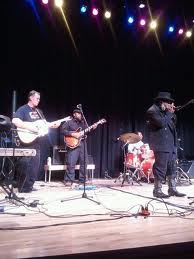
The group of musicians performing at the Rose Wagner Performing Arts Center June 10 not only share a love for music but also share a similar life experience.

The band members all spent years in prison for crimes they did not commit and were later exonerated and freed by DNA evidence. They will play to benefit the Rocky Mountain Innocence Center, which works to exonerate people wrongly convicted of crimes.

The group began playing together two years ago at the National Innocence Network’s annual conference in Cincinnati, Ohio, with the help of Salt Lake City based performer and producer, Kate MacLeod.

“This is a very special group of musicians. Their stories are amazing, and they absolutely bring down the house with their original songs and soulful performances,” MacLeod said. “I am excited to bring them to my home town.”

The musicians include Eddie Lowery, Raymond Towler, Darby Tillis, William Dillon and Antione Day.

Squatters Pub will host a pre-concert party.

The concert will help raise money for Utah’s Rocky Mountain Innocence Center, which is based in Salt Lake City and investigates innocence claims in Utah, Nevada and Wyoming using DNA tests, or non-DNA cases with old-fashioned detective work. The nonprofit receives about 20 requests from inmates claiming innocence each month.

Thursday’s Quick Clicks…

  • Appellate decision in Wisconsin will make it easier for exonerees in that state to obtain compensation; a judicial finding during exoneration that no evidence supports the conviction legally meets the exoneree’s burden to prove innocence in the compensation suit by clear and convincing evidence
  • Transcript of interesting cross-examination by defense attorney of eyewitness identification expert who testified for the prosecution
  • Support grows for the Wilmington 10 in North Carolina in their bid for a pardon and declaration of innocence from the governor
  • Bill introduced in New York to make eyewitness identifications double-blind
  • Review of the new wrongful conviction feature film The Paperboy

Minnesota Supreme Court Overturns Conviction Based on Prosecutorial Pressure on Medical Examiners…

I have blogged previously (and here) regarding the need for forensic experts to be independent from the prosecution.  Now the Supreme Court of Minnesota has overturned a murder conviction based on evidence that prosecutors  used their leverage to intimidate medical examiners to get the results they wanted.  Opinion below in embedded link……

From the MPRnews.com:

ST. PAUL, Minn. — The Minnesota Supreme Court has reversed the conviction of a 17-year-old for the murder of her newborn child, in a sharply worded opinion that found prosecutors improperly tried to intimidate medical examiners who wanted to assist the defense.

Nicole Beecroft has been serving a life sentence for the 2007 murder of her infant daughter. She admitted to stabbing the baby shortly after giving birth by herself in the laundry room of her mother’s Oakdale home.

However, medical examiners disagreed on whether the baby was already dead at the time of the stabbing. Beecroft’s attorneys struggled to convince the dissenting medical examiners to participate in the defense, in part because the medical examiners feared they would be fired, the Supreme Court found.

The Court’s opinion, written by Justice Paul Anderson, cited emails sent by Dakota County Attorney James Backstrom to Dakota County Medical Examiner Lindsey Thomas in which Backstrom argued that it would be a conflict of interest Continue reading

Wednesday’s Quick Clicks…

Reaction to Exoneration Registry Outside the U.S. Focuses on Death Row…

The big news yesterday was the release of the exoneration registry, which compiles more than 2,000 exonerations in the U.S. in the past 23 years.

Judging by media appearances today, the press outside the U.S. seems concerned mostly with what the registry shows about capital punishment in America….Examples:

US death row inmates exonerated nine times more often…(from the Turkish Press)

How America’s death penalty murder innocents…(from the UK)

A Renewed Call for Forensic Lab Independence in the U.S….

From the National Law Journal:

On April 17, Indianapolis’ police chief stepped down after his department botched the handling of evidence in a high-profile case involving one of its own: an officer who may have been legally drunk when he drove his police car into two motorcycles stopped at a red light. The tainted blood sample has fueled allegations of a possible police cover-up in the case.

The Indianapolis incident provides another reminder that there needs to be a wall of separation between forensic science and law enforcement.

One city that’s on the right track is Houston, where Mayor Annise Parker has called for an independent crime lab, which would report to an independent board, rather than the police or prosecutor’s office.

Parker has the right idea — first, and foremost, because it matters who’s boss.

If you work for the police, you tend to see things from that point of view. Same goes for the prosecution. Usually, it is not a conscious thing. You want to be fair and unbiased, and you think you are. But when the boss hopes you’ll find evidence to support her point of view, your mistakes may lean in that direction.

That’s what happened in Houston, where an independent audit in 2006 found several cases in which forensic scientists in the crime lab had skewed reports — Continue reading

Important Eyewitness ID Case Out of Hawaii….

From BNA.com:

Last week, the Supreme Court of Hawaii held that “a trial court must grant a defendant’s request to give special cautionary jury instructions on the accuracy of eyewitness identification testimony whenever such testimony is central to the prosecution’s case, the Hawaii Supreme Court ruled May 17.  (State v. Cabagbag, Haw., No. SCWC-30682, 5/17/12).  Citing the “widely-recognized perils of eyewitness identification testimony” and numerous studies confirming that false identifications are more common than previously known, the court followed the lead of several other jurisdictions that have decided to abandon the discretionary approach and now require trial courts to grant a defense request for a cautionary instruction whenever eyewitness identification plays a critical role in the case.

Decision here

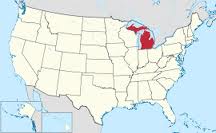
Michigan Innocence Clinic Sues Detroit Police Department…

From AnnArbor.com:

The City of Detroit lost access to records of murders and other crimes that occurred before 2004 because it failed to pay its bill to a storage company, the Michigan Innocence Clinic alleges in a lawsuit.

The clinic, a center within the University of Michigan Law School that investigates cases that may have resulted in a wrongful conviction, is in the process of settling a suit that alleges theDetroit Police Department violated the Freedom of Information Act nine times in the past year.

The lawsuit, which was filed April 19 in the Washtenaw Circuit Court, claims Continue reading

Tuesday’s Quick Clicks…

  • Discussion of new eyewitness identification law in Texas, which takes effect September 1st
  • Recent Colorado exoneree Robert Dewey is still struggling to survive. He’s now living off of food stamps and the generosity of a non-profit group that helps wrongfully convicted inmates.  “It was like being in a room full of people and you’re yelling and no one can hear you, that’s what it felt like,” added Dewey when asked to describe his time in Colorado’s Limon Correctional Facility
  • Pics and award winners of the Innocence Project of Florida’s recent annual gala
  • North Carolina Innocence Commission identifies William James Grimes, convicted of rape, as innocent, and sends his case to a 3-judge panel for further analysis
  • Tampa Bay Times calls for bold reforms in Florida to address wrongful convictions

New Zealand Detective Supports Innocence of Man He Helped Convict…

From the New Zealand Herald:

An innocent man has spent almost 20 years in jail for one of New Zealand’s most notorious cases of rape and murder, says a detective with expert knowledge of the crime.

Susan Burdett was brutally raped and murdered in her Papatoetoe home in 1992 after an evening out 10-pin bowling.

The 39-year-old accounts clerk, who lived alone, was bashed repeatedly on the head with a softball bat that she kept in her bedroom for protection.

A colleague found her naked body on her bed after she failed to turn up for work the next day.

The case horrified the public and baffled police, who had no firm leads for almost a year.

Eventually, a 17-year-old gang associate, Teina Pora, was arrested and convicted of the crime in 1994 after making inconsistent confessions.

But in 1996, DNA testing showed the semen inside Mrs Burdett belonged to serial rapist Malcolm Rewa, who was unknown at the time of Pora’s trial but was convicted in 1998 of sexually assaulting 24 women.

Now the detective whose expert testimony convicted Rewa says he is convinced police got the wrong man for Mrs Burdett’s murder.

“It’s one that has stuck in the craw,” Dave Henwood told the Weekend Herald this week. “There’s no doubts in my mind.”

Mr Henwood, a multi-award-winning criminal profiler who also helped catch Continue reading

Exonerated But Broke…

From Salon.com:

Glen Edward Chapman, or “Ed,” was exonerated in 2008 after spending 15 years on death row for crimes he did not commit. Though North Carolina is one of the 27 states with statutes that provide some level of compensation for the wrongfully convicted, the state continues to refuse Chapman any compensation for the loss of his freedom, reputation, family, friends and much more.

Chapman was sentenced to death in 1994 at the age of 26 for the murders of Betty Jean Ramseur and Tenene Yvette Conley in Hickory, N.C. After more than a decade of court appeals, Superior Court Judge Robert C. Ervin ordered a new trial based on revelations that detectives “lost, misplaced or destroyed” several pieces of evidence that pointed to another suspect. It was also discovered that lead investigator Dennis Rhoney lied on the witness stand at Chapman’s original trial. Shortly thereafter, the district attorney dismissed all charges against Chapman due to lack of sufficient evidence leading to his exoneration in 2008.

Chapman is just one of a growing number of wrongfully convicted inmates who have been cleared thanks to criminal justice reforms and new DNA testing laws put in place over the last decade. But oftentimes the hardship doesn’t end there.

In 2007, the New York Times interviewed 137 former prisoners exonerated by modern DNA testing methods and found that half were “struggling — drifting from job to job, dependent on others for housing or battling deep emotional scars. More than two dozen ended up back in prison or addicted to drugs or alcohol.”

According to a 2009 report by the Innocence Project, an organization devoted to exonerating the wrongfully convicted, an astounding 40 percent of people exonerated by DNA testing have received zero compensation, due in part to the 23 states around the country that do not offer assistance to the wrongfully convicted. That leaves exonerees like Alan Northrop, who lost 17 years behind bars in the state of Washington, with little to no help in rebuilding their lives.

Even in states that do offer compensation, the amount is often woefully inadequate in helping exonerees reestablish themselves, though compensation Continue reading

Prosecutorial Candidates Run on “Ending Wrongful Convictions” Platforms…

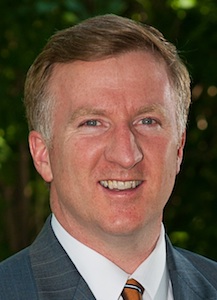
Chris Kennedy

In Lake County, Illinois, candidate Chris Kennedy first came out with “bold plans” to end wrongful convictions here.  He has made strong statements about his intent to change the ways of the past, and to ensure that wrongful convictions are eradicated as much as is humanly possible…

The campaign promise of his opponent Mike Nerheim is similar:

A wrongful conviction is the worst thing that can happen in any case.  As Lake County State’s Attorney, I will immediately put procedures in place to ensure wrongful convictions never happen again. Preventing wrongful convictions is one of my top priorities and I’m not waiting until the election to tackle this important issue.

When I announced my candidacy last summer, I laid out specific actions I am prepared to take, including the creation of an independent Case Review Panel, developing protocols for the prosecution of cases with forensic evidence, and improving training for prosecutors and law enforcement.  As the campaign proceeds, I have been meeting with law enforcement, legal, judicial and all members of the community that this effects–including victims, victim’s rights advocates and civil rights leaders–sharing perspectives to address the most common causes of wrongful convictions.

I recognize that being State’s Attorney is about making tough decisions and the toughest decision a State’s Attorney has to make is deciding when not to charge cases where there is insufficient evidence. Rest assued that I have the courage and confidence to make these difficult decisions and stand behind them.  I’m committed to being tough on crime and making sure everyone is treated fairly…and that justice is served.

My pledge to you–the citizens of Lake County–is to promote a culture in the State’s Attorney’s Office that is open to looking at all different kinds of evidence to ensure the right people are being prosecuted. This is not just an issue about DNA. This is an issue of justice, and an issue of making the changes in policy, procedures, and training as well as bringing a fresh perspective to the office of State’s Attorney that all citizens of this great county deserve.

Monday’s Quick Clicks…

  • Experts say Lake County, Illinois must treat its wrongful conviction problem like the medical field would treat the outbreak of a disease
  • UK exoneree Sam Hallam says he’ll need time to recover from his terrible ordeal of wrongful conviction
  • Forensic pathologist accepts $100,000 settlement in defamation suit against the Innocence Project
  • Innocence Network UK founder Michael Naughten radio interview discussing the Sam Hallam exoneration and how he believes more the CCRC has failed to overturn more than 100 unsafe convictions

Breaking News: Groundbreaking Registry Unveiled Today Details 2,000 Wrongful Convictions in U.S. Since 1989…

New Report Reveals Many More Exonerations and False Convictions than Previously Found, but Represents Only “the Tip of the Iceberg”

More than 2,000 people who were falsely convicted of serious crimes have been exonerated in America in the past 23 years.

Nearly 900 of these exonerations are profiled, with searchable data and summaries of the cases on the National Registry of Exonerations, a new joint project of the University of Michigan Law School and the Center on Wrongful Convictions at Northwestern University.  The Registry, available atexonerationregistry.org, will be updated on an ongoing basis. It is by far the largest collection of such cases ever assembled – and the most varied.

More than 1,000 additional cases are “group exonerations” that occurred in response to 13 separate police corruption scandals, most of which involved massive planting of drugs and guns on innocent defendants. The group exonerations are described in a Report from the National Registry, Exonerations in the United States, 1989 – 2012, but are not included in the Registry itself.

As the Report documents in detail, there are many more false convictions and exonerations that have not been found

“The National Registry of Exonerations gives an unprecedented view of the scope of the problem of wrongful convictions in the United States,” said Rob Warden, Executive Director of the Center on Wrongful Convictions. “It’s a widespread problem.”

“It used to be that almost all the exonerations we knew about were murder and rape cases. We’re finally beginning to see beyond that,” said Michigan Law professor Samuel Gross, editor of the Registry and an author of the Report. “This is a sea change.”

The Report includes the following cases, most of which do not appear in any previous compilation:

·      58 exonerations for drug, tax, white collar and other non-violent crimes.

·      39 exonerations in Federal cases.

·      102 exonerations for child sex abuse convictions.

·      129 exonerations of defendants who were convicted of crimes that never happened.

·      135 exonerations of defendants who confessed to crimes they didn’t commit.

·      71 exonerations of innocent defendants who pled guilty.

Plus more than 1,000 group exoneration cases – including over 200 drivers who were framed for drunk driving by police officers, who usually stole money from their wallets in the process.

According to Gross, the cases in the Registry show that false convictions are not one type of problem but several that requiredifferent types of solutions.

·      For murder, the biggest problem is perjury, usually by a witness who claims to have witnessed the crime or participated in it. Murder exoneration also include many false confessions.

·      In rape cases, false convictions are almost always based on eyewitness mistakes – more often than not, mistakes by white victims who misidentify black defendants.

·      False convictions for robbery are also almost always caused by eyewitness misidentifications, but there are few exonerations because DNA evidence is hardly ever useful in robbery cases.

·      Child sex abuse exonerations are almost all about fabricated crimes that never occurred. (See Table 13.)

The ten states with the most exonerations are Illinois, New York, Texas, California, Michigan, Louisiana, Florida, Ohio, Massachusetts, and Pennsylvania (not counting the 39 exonerations in Federal cases).  The states with most exonerations are not necessarily those where most false convictions have occurred. (See Table 7.)

“It’s clear that the exonerations we found are the tip of an iceberg,” said Gross. “Most people who are falsely convicted are not exonerated; they serve their time or die in prison. And when they are exonerated, a lot of times it happens quietly, out of public view.”

For example, most people in the United States live in counties in which there have been no exonerations – including counties like San Bernardino in California and Bexar in Texas that have populations in the millions. “Obviously there are false convictions in those counties – and no doubt exonerations in some cases,” said Gross, “we just don’t know about them.”

According to Warden, “this is a good start – a milestone – but there’s a long way to go before we have a complete picture of wrongful convictions in the United States.”

“We’ve begun to find exonerations that don’t fit the mold we’re used to – some that were initiated by prosecutors or police, and some that were deliberately concealed – but we know there are many more that we haven’t found, at least not so far,” said Gross.

“If you’ve been exonerated and aren’t in this Registry, or if you know someone who has been exonerated and isn’t included, we want to know about it,” said Gross.

“The more we learn about false convictions, the better we’ll be at preventing them – or if that fails, at finding and correcting them as best we can after the fact,” said Gross.

Registry here…

Washington Post article here….

Chicago Sun-Times here

From USA Today:

Perjury, faulty eyewitness identification and prosecutorial misconduct are the leading reasons for wrongful convictions, according to the first national registry of exonerations compiled by university researchers.

The database, assembled in a collaboration by theUniversity of Michigan and  Continue reading