Author Archives: Mark Godsey

New Facebook Group on Wrongful Convictions Issues…

If you’re interested in staying up on wrongful conviction issues on Facebook, I’ve started a new group called Blind Injustice.   It will also be a place people can discuss these issues, etc. in an open forum.

Join the group here:  https://www.facebook.com/groups/742898605877949/

Trump Administration kills Forensic Commission

Horrible, horrible news for those who care about accuracy in our criminal justice system.  Read story here.


Breaking News: Arson Conviction Based on Bad Science Tossed in Illinois

Defendant Bill Amor represented by Illinois Innocence Project.  Click for decision… amor.opinion.dupage.

More pics of the big exonerations in South Africa

Blogged about yesterday here

.


Thursday’s Quick Clicks…

  • Maine law makers consider expanding timeframe for inmates to bring innocence petitions with new evidence beyond current one-year limit; prosecutors oppose.
  • New study suggests that when indigent defendants get to choose their public defender, the system works better
  • A new bill under consideration in Montana would require prosecutors to tell defendants that they plan to use an incentivized witness and the terms of the deal made in exchange for testimony. It also would allow defense counsel to request a pre-trial hearing where a judge can weigh the credibility of the testimony and if there is enough other evidence to corroborate the witness’ story. The judge could then choose to bar the testimony as inadmissible or issue a jury instruction, similar to how courts currently review the credibility of some scientific witnesses before a trial starts.
  • Dallas’ exonerees mission to free the wrongfully convicted is the focus of a new film

Big Win for Innocent Men and the Wits Justice Project in South Africa

From the Daily Maverick:

Before convicted murderers Samuel ‘Sampie’ Khanye and Victor Moyo walked out of Kgosi Mampuru’s spiked prison gates on 24 March, Khanye had just one request which wasn’t granted. He wanted to tell prison director Mabuti Tshele that the Constitutional Court had overturned the men’s life sentences and convictions on four counts – including murder and robbery – and ordered their immediate release: “Officials say all inmates sing the same song and Tshele called me a liar when I said I knew nothing about this crime. After 14 years in jail for a crime I didn’t commit, the Court has proved I’m innocent.”

After struggling to prove their innocence for what seemed a lifetime, an elated Khanye (37) and Moyo (35) were vindicated by order of the highest court in the land. Thanks to the combined efforts of the Wits Justice Project (WJP), human rights attorney Egon Oswald, respected Advocate Carol Steinberg and wrongfully convicted co-accused Thembekile Molaudzi, the men left the prison carrying little else besides a heavy burden of betrayal by the criminal justice system. Ironically, North West Judge President Monica Leeuw, who convicted the men in 2004, also signed their warrant of liberation.

Both men had protested their innocence since their 2003 arrest when they were rounded up as suspects – along with six others – following a botched hijacking and murder of Mothutlung policeman Dingaan Makuna. Hoping truth would prevail, Khanye recently agreed to participate in a prison Victim-Offender Dialogue (VOD) programme, to meet Makuna’s family and “tell the truth” to help both obtain psychological closure.

“I told the truth,” says Khanye, “I said I never committed the murder. When I started crying, Tshele, who was at the meeting, told me to stop shedding crocodile tears and obstructing the course of justice.” Moyo refused to meet the family: “I never killed anyone. I know nothing about this crime. The worst part was no one believed me. I saw a psychologist but all she could tell me was ‘be strong’.”

Failed by the police, the courts, legal aid lawyers, private attorneys and an advocate appointed by the Johannesburg Bar Council, Khanye and Moyo can expect no compensation from the State. Nor will Leeuw shoulder any legal consequence for the lost years and shattered dreams of five co-accused men – including Khanye and Moyo – she convicted and sentenced to life in 2004. (The men’s convictions have subsequently all been overturned by the ConCourt.)

“I’m excited but I’m scared to face the real world,” Moyo said outside the prison gates. “I’ve been here a long time and everything is different now.” Luckily, Khanye and Moyo can turn to “old-timer” exonerees Molaudzi, Boswell Mhlongo and Disco Nkosi for support, as they attempt to rebuild their broken lives in the weeks ahead. Mhlongo and Nkosi’s convictions were the first to be overturned in a precedent-setting 2015 ConCourt case.

Mhlongo and Nkosi’s exonerations paved the way for Molaudzi, who spearheaded the long battle to prove the men’s innocence, to appeal his own conviction, and motivated Khanye and Moyo to fight for their freedom. “When Thembekile left prison, he promised he’d do everything in his power to help us,” Khanye says. “He’s a man of his word. Whatever he says, he fulfils.”

It was Molaudzi who first alerted the WJP to Khanye and Moyo’s predicament and persuaded Khanye and Moyo to lodge their ConCourt appeal. This was no easy feat. For starters, Legal Aid was unwilling to assist them and neither could afford R6,000 to print 25 copies of their trial record as required by the court. “My brother gave me R3,000 and I earned R60/month as a cook in prison,” Khanye says, “and I saved every cent my brother and sister gave me for toiletries.”

“I only managed six copies,” Moyo explains. “That’s why I was the second applicant and why we lodged a joint application. I come from a poor family. My father was killed in a hit-and-run a car accident two years before our arrest and my mother lived in a shack when I went to prison. There was no one to help me. My mother was an only child. I have no aunty or uncle. Only she and two of my five siblings stood by me….”

Eventually the men scraped the money together. Assisted by Johannes Mogoba, a fellow-inmate studying law with Unisa, Khanye and Moyo lodged a joint ConCourt application for leave to appeal in April last year. The final ugly twist in the men’s unfortunate tale came after the ConCourt asked the Johannesburg Bar Council to appoint an advocate to represent the men on a pro bono basis and prominent Johannesburg advocate Naome Manaka took on the case last July.

Initially overjoyed, the men’s excitement was short-lived. Manaka never consulted with her clients or informed them of progress, and mostly would not take their calls. The ConCourt fared no better in its attempts to chivvy Manaka along. In spite of letters sent to her on behalf of Justice Johan Froneman and three subsequent letters from the Registrar of the Court asking when submissions would be filed, Manaka failed to respond or even meet her own deadlines. Nor did Manaka respond to four requests by the WJP for comment.

More than five months after Manaka’s appointment, Khanye heard fortuitously via the prison grapevine that she had submitted heads of argument on his behalf to the court: “One of my co-accused heard from his legal representative Advocate Laurence Hodes. I phoned Manaka and asked to see the papers. She said she never had copies, not even in her computer.”

Manaka claimed the delays resulted from the fact that the court was unable to provide her with trial transcripts – an easily rectifiable situation had she consulted her clients, or taken up repeated offers by the WJP to provide her with the transcripts and other documentation.

By the end of January this year, the two inmates were desperate and Molaudzi asked the WJP to obtain copies of Manaka’s submissions from the court. To their horror, they discovered Manaka had only made submissions on Khanye’s behalf, she had conflated and confused the two men’s alibis, the arguments contained material discrepancies and she hadn’t dealt with all the relevant issues. “Manaka just wanted to get rid of our case,” Moyo notes. “She never cared about us, or our freedom….”

Moyo sought solace in prayer, going down on his knees sometimes five times a day. The men knew only too well that the ConCourt was the last port of call in a protracted legal battle to prove their innocence. With their liberty at stake and buoyed by the support of the WJP, who roped in attorney Oswald to help, the two indigent inmates took an extraordinarily brave decision: They instructed the Bar Council to terminate Manaka’s mandate and requested the urgent appointment of alternative counsel.

Steinberg, who last month successfully argued the Sassa matter in the ConCourt on behalf of Corruption Watch, stepped into the breach and lodged replacement heads of argument three weeks later. A few days later, the State conceded that Khanye and Moyo should never have been convicted and the court ordered their immediate release with formal judgment to follow.

The five men’s freedom rested on complicated legal arguments relating to the admissibility of extra-curial evidence of a co-accused which the ConCourt deemed unconstitutional after Mhlongo and Nkosi’s appeal. All five were convicted on the recanted, uncorroborated hearsay evidence of Accused Number One whom a full bench of the NW High Court deemed “a reckless liar”.

A bungled SAPS investigation failed to produce gun residue, independent witnesses, fingerprints or any other form of tangible evidence linking the five men to the crime. In Khanye and Moyo’s cases, identification parade evidence was so poor the court disregarded it. And Khanye told the court during a trial-within-a-trial that he was forced to make a statement after being tortured by the police.

“The police assaulted and beat me until I agreed to co-operate,” the former Brits golf caddy says. “They put my head inside a car tyre tube and covered my face so I couldn’t breathe. Then they beat me with a hosepipe and broomstick. They tortured us for two days, also with electric shocks, to make us confess. They said they wouldn’t stop torturing us unless we told the magistrate what they said. In the end, I signed the statement they gave me.”

Two weeks before the conclusion of their nine-month trial, Khanye was subjected to suffering of a different order: His 55-year-old father, Elsas, had a fatal heart attack and the “high-risk offender” was not allowed to attend his funeral.

“The police kept saying I was the murderer and I was very badly assaulted,” Moyo recalls. “They gave me a statement and told me what to say but I refused. I was at a 21st party in Polokwane. I knew nothing about the murder and had never been to Mothutlung. I brought three people to testify who were at the party. It didn’t make any difference. The court accepted three statements of Accused Number One which all contradicted each other…”

When the men arrived at Kgosi Mampuru C-Max after sentencing, they claim they were forced to strip naked, assaulted, shocked with electric shock shields and tortured for no apparent reason in front of female warders. After their transfer to Kokstad’s eBongweni C-Max prison, designed to house the country’s most dangerous criminals, they were assaulted and tortured again.

Throughout their ordeal, Khanye and Moyo leant heavily on Molaudzi for emotional and practical guidance as they struggled to obtain their transcripts that were needed to appeal their case. Eight years after their conviction, prison warder Levy Maphakane took pity on Molaudzi and asked the WJP for help. Prior to this, the Legal Aid advocate who initially represented Molaudzi claimed his office burnt down and he’d lost all his records.

After a second Legal Aid advocate failed to find the records, Molaudzi, Khanye and Nkosi’s families raised R18,000 between them and paid private attorneys to find the records, even though indigent inmates are entitled to these documents at State expense. When the attorneys eventually delivered the transcripts two years later, more than half the 1,023 page record – including the most crucial evidence – was missing. “We didn’t commit a crime,” Molaudzi says, “a crime was committed against us…”

After repeated requests, Leeuw finally agreed to retranscribe the records and the men were in a position to appeal their case – a constitutional right and a delay Justice Edwin Cameron subsequently described as “egregious”. Their appeal was dismissed by a full bench of the NW High Court. Subsequent Supreme Court appeals were also dismissed without reason.

Despite Molaudzi’s indefatigable personality and constant attempts to buoy their spirits, the men were growing increasingly despondent. Mhlongo had twice attempted to end his life and a third attempt landed him in a six-month coma. “There were many times when I lost hope and thought I can’t continue – especially when Boswell tried to commit suicide,” Moyo says. “He left a note telling his mother it was better for him to die. I felt the same. If it weren’t for my mom who stood by me and my son, Jimmy, who is now 14, I’d have killed myself long ago…

Clearly, Dingaan Makuna and his family were not the only victims of a monstrous crime.

Unlike Moyo, Khanye never saw his mother for two years before his release: “I didn’t want her to visit. Every time she came she cried the whole time until visiting hour was over. I disappointed my whole family. If I wasn’t in this mess, maybe my father would still be alive?”

Fourteen years later, five men and their families are proof of the human cost of judicial error, the fallibility of an increasingly dysfunctional criminal justice system and the fact that not only guilty people find themselves behind bars – especially if they’re poor. “It’s not only me and Victor in prison for nothing,” Khanye says. “There are many, many others….” Sometimes truth is stranger than fiction. DM

Raphaely is a senior journalist with the Wits Justice Project (WJP) based in the journalism department of the University of the Witwatersrand. The WJP investigates miscarriages of justice and human rights abuses related to the criminal justice system.

Photo: After 14 years behind bars for a crime they did not commit, Sampie Khanye and Victor Moyo were welcomed at the prison gates by their lawyer Egon Oswald, Wits Justice Project’s Carolyn Raphaely and one of their also wrongfully convicted co-accused Thembekile Molaudzi. (Photo:Roz Berzen)

Front: Previously wrongfully convicted Thembekile Molaudzi in blue t-shirt

Middle: Wits Justice Project’s Carolyn Raphaely and wrongfully convicted just released Sampie Khanye.

Back: Wrongfully convicted just released Victor Moyo and lawyer Egon Oswald


Passing of TX exoneree Billy Smith

By Mike Ware, executive director, IPTX
On March 25, 2017, Billy Smith passed away in Dallas, Texas. Billy was one of the Dallas DNA exonorees who spent 20 years in prison for a crime for which he was proven innocent by DNA. Billy spent the ten years after his release from prison working tirelessly to improve the Texas criminal justice system and to obtain the release of other wrongfully imprisoned persons.
 
The tragedy of Billy’s wrongful imprisonment was compounded by the way he was treated by the Dallas County District Attorney’s Office. In 2001 Billy filed a request for a DNA test to prove his innocence. For the next five years the District Attorney’s Office fought against Billy receiving this test. In 2005 a unanimous opinion from the Texas Court of Criminal Appeals ordered the DNA test to proceed in Billy’s case. The court’s opinion, in strong and clear language, recognized that the District Attorney’s Office never had a legitimate basis to oppose Billy receiving the DNA test. The DNA test was then performed, proving Billy’s innocence and in 2006 he was finally released from prison.
 
The resistance to Billy receiving a DNA test was by the Dallas County District Attorney’s Office prior to Craig Watkins taking office as District Attorney in 2007 and establishing the nations first District Attorney’s Office Conviction Integrity Unit. Since it’s inception the Dallas County Conviction Integrity Unit has identified other wrongfully imprisoned persons who were also denied DNA testing under the previous District Attorney’s administration and worked to ensure that innocent persons are not in prison.
 
Nevertheless it is important that we not forget what the “old days” were like. Under the attitude and approach taken by the Dallas District Attorney’s Office when Billy was fighting to prove his innocence, justice took a back seat to protecting and upholding convictions. And that attitude and approach is still prevalent in prosecutor’s offices throughout Texas and the entire country. Even some Dallas County prosecutors believe the District Attorney’s Office should go back to the old way of doing things. It will be a fitting tribute to Billy Smith if his case is cited as a cautionary tale of what goes wrong when prosecutors forget that their job, above all else, is to do justice.
billysmith

Innocence Project Northwest Client Freed

Lester Juan Griffin Jr. walked free last week after serving 8.5 of a 24-year sentence for burglary and assault.  Story here, earlier decision in the case, overturning conviction, here.  Congrats IPNW!

DOJ recommends eyewitness ID best practices for all federal law enforcement

From DOJ press release:

(Washington, D.C. – January 6, 2017) Today Deputy Attorney General Sally Yates issued a memo to federal law enforcement agencies and prosecutors recommending that all departments adopt eyewitness identification procedures that have been scientifically proven to reduce misidentification.  The recommendations include those from a 2014 National Academy of Sciences (NAS) report that reviewed three decades of basic and applied scientific research on eyewitness identification as well as recommendations included in President Obama’s Task Force on 21st Century Policing. The Innocence Project has long advocated for these eyewitness identification best practices as a way to prevent eyewitness misidentifications, which have contributed to 70 percent of the wrongful convictions later overturned by DNA evidence in the United States.


“We applaud Deputy Attorney General Sally Yates for taking such a critical stance to prevent wrongful convictions,” said Peter Neufeld, co-director of the Innocence Project, which is affiliated with Cardozo School of Law.  “The recommendations she has made to all federal law enforcement agencies and prosecutors are based on the best science on memory and identification and will go a long way toward preventing injustice and ensuring that the real perpetrators of crimes are identified.”


The recommendations to federal law enforcement agencies include:


  • The officer administering the identification procedure should be unaware of the identity of the suspect so that he or she can’t intentionally or unintentionally influence the witness;
  • The witness should be told that the perpetrator may or may not be present in theprocedure and that the investigation will continue regardless of whether he or she selects a suspect;
  • Photos should resemble the witness’s description of the perpetrator; and
  • Immediately following the procedure, the witness should be asked to describe in his or her own words how confident he or she is in the identification.


The recommendations apply to all federal law enforcement agencies, including the Federal Bureau of Investigation, United States Marshals Service, Federal Bureau of Prisons, Bureau of Alcohol, Tobacco, Firearms and Explosives, Drug Enforcement Administration and the Office of the Inspector General.  Nineteen states have already adopted these best practices through law, policy or court action, and many jurisdictions around the country have voluntarily adopted policies embracing these practices.


“By making these important recommendations, the Department of Justice has recognized the value of evidence-based practices which will improve the quality of evidence and protect the innocent. This is a step forward in a sea change that we have observed at the state level. Just four years ago, only 7 states had implemented best practices in this area; today, that number has nearly tripled to 19 states,” said Rebecca Brown, Innocence Project policy director.  “This is also reflective of leadership in the law enforcement community, from the International Association of Chiefs of Police’s Model Policy on Eyewitness Identification, which was issued in 2010, to the recommendations of the President’s Task Force of 21st Century Policing just this year, which called for implementation of scientifically supported procedures and specifically highlighted the recommendations of the NAS Report.”


According to the Innocence Project, eyewitness misidentification contributed to 70 percent of the 347 wrongful convictions that were later overturned by DNA evidence.  The real perpetrators were eventually identified in 98 (40 percent) of these cases.  While the innocent were languishing behind bars in these cases, the real perpetrators committed an additional 100 violent crimes.

European Innocence Network Conference Held in Prague

03254-EIN-100

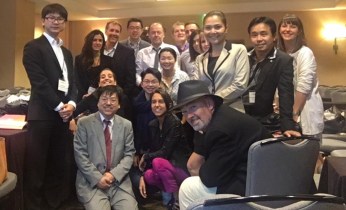
On June 16-17, a full house packed the meeting room at the Czech Parliament Building in Prague for the first European Innocence Network Conference.  Representatives were present from England, Wales, Ireland, the Netherlands, Italy, Spain, Poland, the Czech Republic, Greece, Armenia, Israel, Norway, Switzerland, Sweden and Germany, among others.  The program is available here, and included talks and panels on the causes of wrongful conviction across national borders, how to start an innocence organization, and the vision of future structure of the European Innocence Network moving forward.  Day One consisted of formal presentations and panel discussions, while Day Two was dedicated to discussing the structure, the by-laws, the sub-committees, and the future activities of the European Innocence Network.

The conference was sponsored by Daniel Vanek of the Innocence Program Czech Republic, and the Center for the Global Study of Wrongful Conviction at the University of Cincinnati College of Law (part of the Ohio Innocence Project).

The group agreed to meet again in the fall to continue discussing the structure of the Network, to hammer out membership criteria, and to elect board members, etc..  The Network will be housed at the University of Milan, Italy.

As a participant in the conference, I can attest that the energy in the room was high and spirits were soaring.  Everyone left the conference committed to continuing and growing the collaboration in the future.  The fall meeting will be held in either Italy or Dublin on dates to be determined.  The conference in 2017 will be held in Italy (either Rome or Milan), and the 2018 conference will be held in Amsterdam.

Below are some pictures from the event….


Monday’s Quick Clicks…

Wednesday’s Quick Clicks…

National Registry of Exonerations Launches Mobile App

The National Registry of Exonerations has just launched a free mobile app that notifies users each time an exoneration is added to the registry. It also provides mobile users with access to the exoneration counter and recently posted exoneration stories. The app is available for both iOS (iphone, iPad, etc.) and Android devices, just search “exonerations” in the App store and  Google Play.

2016 Innocence Network Conference San Antonio

Over 500 hundred people attended this year’s conference in San Antonio, making it the most attended conference in the history of the Innocence Network. Below are a couple highlights from the conference.

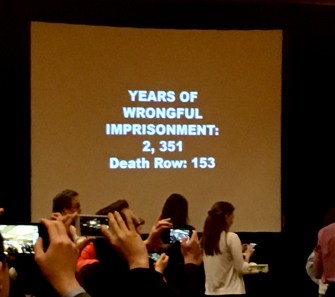
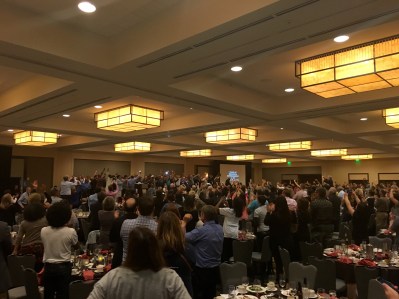
2,351 Years of Wrongful Imprisonment: 2016 Exoneree Induction Dinner

IMG_2113

Of the 500 attendees,  150 were exonerees who together served 2, 351 years in prison and 153 years on death row for crimes they did not commit. This year’s induction ceremony saw the addition of 31 newly exonerated men and women, including Marvin Roberts, George Frese, Kevin Pease, and Eugene Vent, better known as the “Fairbanks Four,” whose release in 2015 after 18 years of wrongful incarceration gave The Alaska Innocence Project its first victory.

The remaining 27 inductees came from all over the country representing years of dedication and hard work by attorneys and students from several projects in the network:

Expansion of International Innocence Movement Continues…

IMG_2194

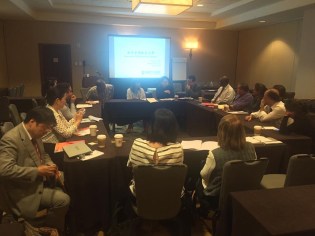
Members of the International Innocence Network meet in San Antonio to discuss expansion

Representatives from Canada, U.S., Israel, Argentina, Switzerland, Italy, Taiwan, Thailand and Japan met in San Antonio to discuss developments in the International Innocence Movement and the creation of Innocence Networks on other continents.

IMG_2193

The 2017 Innocence Network conference is scheduled to be held in San Diego. See you all there!


Oops, We Took 20 Years of Your Life by Mistake. Have a Nice Day: What society owes the exonerated

From TheMarshallProject.org

By: Jarrett Adams

The recent and tragic suicide of my friend and fellow exoneree Darryl Hunt is a stark reminder that no monetary compensation can make up for the psychological toll of wrongful conviction. When a wrongfully convicted person is released from prison, it’s often to a throng of reporters clamoring to capture images of an emotional reunion with his smiling family and friends, and lawyers. These images instill a sense of vindication and a happy ending. But what is too often unseen is how difficult it is to re-enter society after years or decades of confinement — especially if you are innocent. These are the unseen scars, and too many states pay them inadequate attention, or none at all.

In 1984, when he was 19, Darryl, an African-American man, was convicted of a crime he didn’t commit, the rape and murder of a young white woman in Winston-Salem, North Carolina, on the basis of a tentative eyewitness identification and the pressured testimony of a girlfriend who later recanted. It was a racially charged trial. Darryl consistently professed his innocence, even refusing a plea that would have set him free years before his 2004 exoneration. After DNA evidence exonerated him, Darryl had to file a lawsuit to win compensation; he was awarded a settlement of $1.7 million in 2007. North Carolina has since updated its compensation statute to provide job-training and college tuition for exonerated inmates, but compensation is now capped at $750,000, an inadequate amount for someone who paid for another man’s crime with 20 years of his life.

Darryl would later found the Darryl Hunt Project for Freedom and Justice to help the wrongfully convicted and he recently attended a Department of Justice “listening session”, at which he discussed the need for comprehensive medical assistance and Social Security for exonerees. Despite this advocacy, Darryl struggled to put back together the pieces of his own life.

I saw Darryl regularly at the annual Innocence Network Conference, a gathering of innocence organizations from around the country and world. Each time that we met, he would tell me how proud he was of me for becoming an attorney. We talked about our struggles and my frustration that Wisconsin has still not provided me compensation. (Of the 30 states with compensation statutes, Wisconsin’s law is one of the worst, with a high barrier to eligibility and a lifetime cap of $25,000, regardless of the number of years served.) These conversations made me grateful that I had come home at 26, a much younger man than Darryl, and still had a reasonable chance to put my life back together. I had been mentored by a fellow inmate who urged me to study my case and the law while in prison. When my conviction for sexual assault was discredited — with the help of the Wisconsin Innocence Project — after eight years of incarceration, I went to community college and then earned a law degree from Loyola University Chicago. My story is extraordinary and is not a validation of the ethos of pulling oneself up by the bootstraps. Yes, I worked very hard to get where I am, but luck and youth had a whole lot more to do with it. Many exonerees, like Darryl, come home in their 40s or older, and most are not as lucky as I was.

Lucky or not, we all find ourselves mentally battered from fighting to get out, to re-enter society and win compensation. Before prison, I was a 17-year-old who enjoyed cookouts and holidays with aunts and uncles. When I came home, many of those aunts and uncles were near death, and new family members had been born who knew me only as a face in a picture or a voice on the other end of a prison phone call.

In the months following my exoneration, I suffered from depression, anger and confusion. How could a system that reversed my conviction leave me with nothing – not even a mental or physical evaluation? I was released with no secondary education, no job training, no credit, no savings, no health insurance and no way to explain to future employers the 10-year-gap in my resume. My struggle was difficult at my age, but I can only imagine how disheartening it must be to win exoneration and come home at the age of retirement with absolutely nothing. Yet 20 states have no statute assuring that people wrongfully deprived of their freedom are helped back into society and compensated for the stolen years.

It is only fair and humane that every state provide the exonerated with reentry services such as education, job training, healthcare and other social services, and enact robust compensation statutes. In 2004, Congress and President Bush recommended compensation of $50,000 per year of unjust incarceration, and up to double that for years spent on death row. Adjusted for inflation, that is $63,000. It’s a small price to pay for a profound injustice. The unseen scars can never be fully healed; nonetheless, society has a moral responsibility to treat them.

Jarrett Adams, J.D. was wrongfully convicted of a sexual assault. After his release he earned a law degree and is now clerking in U.S. District Court in the Southern District of New York.

Thursday’s Quick Clicks…

Tuesday’s Quick Clicks…

New Report Details Need for Greater Transparency and Accountability for Prosecutors

The Innocence project (NY) has announced the release of a new report calling for greater transparency and accountability for prosecutors.

On the fifth anniversary of the U.S. Supreme Court’s decision in Connick v. Thompson, which granted prosecutors broad immunity for their misconduct, a coalition of innocence organizations today released a new report, Prosecutorial Oversight: A National Dialogue in the Wake of Connick v. Thompson, calling for greater transparency and accountability for prosecutors. Although prosecutors have long argued that there are sufficient systems in place to guard against misconduct, the report reviewed court findings of misconduct over a five year period for five states, documenting 660 findings of misconduct – a likely undercount given the difficulties in identifying this behavior. Of these cases, we know of only one prosecutor who was disciplined for his misconduct, and that took a change of law by the Texas Legislature. The report, which was produced in conjunction with forums featuring a broad array of criminal justice stakeholders in the five states surveyed, provides a list of recommendations that states should pursue to increase prosecutorial transparency and accountability.
This report was a collaborative effort by several organizations that oversaw the design and implementations of the research process. The organizations primarily responsible were the Innocence Project, the Veritas Initiative at Santa Clara University School of Law, Innocence Project New Orleans and Resurrection after Exoneration. A number of additional organizations also provided support in hosting and presenting the prosecutorial oversight forums. These included the Arizona Justice Project, the Pennsylvania Innocence Project and the Actual Innocence Clinic at the University of Texas School of Law.

Dutch Supreme Court reopens Knoops’ Innocence Project Case

The Knoops’ Innocence Project (NL) has announced the reopening of the case of Mr. Riebeek, who was convicted for 188 hours of community service for the smuggle of soft drugs and driving without a driver’s lisence.

In 2008, Mr. Riebeek was convicted for a crime he did not commit. At the time of his arrest, the suspect mentioned the name of Mr. Riebeek instead of his own. In 2014, a request for review was drafted and filed. Last week the Dutch Supreme Court accepted the request to reopen the case against Mr. Riebeek, based on the evidence the Knoops’ Innocence Project retrieved in order to show that he was wrongfully convicted.

Last Tuesday we received the good news from the Dutch Supreme Court. Mr. Riebeek is very happy as well and hopes that, in the end, the Court of Appeals will acquit him. The verdict in appeal will be expected next year.At the time of the arrest, the suspect mentioned the name of Mr. Riebeek instead of his own. His identity was never verified: no DNA was taken, no fingerprints were taken and they did not take any pictures of the suspect.

After the conviction, the real perpetrator stated several times that he committed the crime and not Mr. Riebeek. Next to that, an extensive investigation by Knoops’ Innocence Project showed that Mr. Riebeek had a conclusive alibi at the time of the crime. The investigation showed that this was a case of mistaken identity. The advocate-general at the Supreme Court advised that the request for review were to be accepted. The Supreme Court accorded to that conclusion and referred the case to the Court of Appeals of the district Arnhem/Leeuwarden.

Launch of Innocence Project Japan

This weekend I had the good fortune to speak at two events, one in Tokyo and one in the Kyoto/Osaka area, kicking off the Innocence Project Japan.  Given the enthusiasm, passion and energy witnessed during these events, I am quite optimistic that this project will before too long free the innocent and reform the Japanese legal system.  More than 120 people attended the kick-off symposium on Friday in Tokyo, and more than 150 attended the more extensive event in Osaka/Kyoto.  And both of these events received such great attendance during what was a three-day holiday weekend!  The team putting the IP Japan together include law professors, scientists, defense lawyers, and other professionals. Law professor Kana Sasakura of Konan University, who is also a contributing editor on this blog, and Engineering professor Mitsuyuki Inaba of Ritsumeikan University in Osaka, have taken the lead in organizing these efforts.

Japan has already seen a number of high-profile exonerations.  But they have more work to do.  Currently, police are allowed to interrogate suspects for days on end.  And there is no widespread use of electronic recording during these interrogations.  So interrogation reform aimed at curbing false confessions must be a primary goal of the new project.  But Japan has some advantages other countries don’t have.  For example, currently incentivized snitch testimony is not allowed, although proposals to introduce this type of troublesome testimony are lurking.  And given Japan’s world leadership in technology, the country has a solid stepping off point for ensuring access to DNA testing and proper forensic controls in the future.

A lawyer who obtained a recent exoneration in an arson/murder case gave a stirring presentation about how his defense team reconstructed the house in which the fire occurred, and then performed numerous experiments with the reconstructed house which demonstrated that the fire could not have happened in the way his client said in his confession.  This proved the confession to be false.  Interestedly, the prosecution then reconstructed the house as well, and performed it’s own experiment.  This too demonstrated that the inmate’s confession was false.  The case ended in an exoneration. The defense effort in this case was top-notch, and would have made any innocence organization anywhere in the world quite proud.

Members of the Taiwan Association for Innocence attended the event.  They spoke about their recent success, including one exoneration and two grants of retrial based on new evidence of innocence.  They presented the IP of Japan with a beautiful sculpture of a horse, which represents moving forward with speed.

Innocence organizations now exist in Japan, Taiwan, Singapore and the Philippines in Asia, with organizations forming in China and Thailand.  Asia may have enough innocence efforts at this point to begin coordinating efforts, or possibly form an Asian Network.  Whether they form a Network will depend on political realities, but they intend on working together to bring international collaboration to their work.

Here is the powerpoint presentation used by founder Inaba that you might find interesting.  It describes the structure of the new project:  IPJ_kickoff_Mar2016_Inaba

And here are some pictures from the events…..