Category Archives: Australia/New Zealand

Thursday’s Quick Clicks…

click
  • In this week’s Ohio exoneration of Douglas Prade, Prade’s daughters believe he is innocent; and the Cleveland Plain Dealer tells prosecutors they should take another look at the evidence and let the case drop
  • A grand jury investigating the death of 6-year-old beauty queen JonBenet Ramsey voted to indict her parents 13 years ago, but the district attorney in Boulder, Colo., refused to prosecute the case
  • In New Zealand, David Bain has filed a claim today at the High Court in Auckland against the Minister of Justice over the way she handled his compensation case.  Bain supporter Joe Karam said Bain is seeking a judicial review of the actions taken by Judith Collins since she received a report in late August 2012 by former Canadian judge Ian Binnie into whether Bain should get compensation for spending more than a decade in jail, including the “secret process” which culminated in the peer review by New Zealand lawyer Robert Fisher.

Wednesday’s Quick Clicks…

click

International Expansion of the Innocence Movement in 2012

The purpose of this post is to briefly summarize organized innocence activity around the world during 2012 (If I have left items out, please let me know so I can supplement this post).  The calendar year 2012 undoubtedly saw the largest expansion of organized innocence work in history.  Well-attended innocence conferences were held in 5 different continents.  Organizations designed to free the innocent operated in every inhabited continent, and new projects launched in various Latin American countries, France, the Netherlands, the Philippines, Israel, and Taiwan, among others.  Here is a brief summary:

  • The Innocence Network, which currently consists of more than 60 member projects in the U.S., UK, Canada, the Netherlands, and Australia, issued its 2012 report, which lists the members and summarizes the 22 exonerations  its members obtained in the calendar year.  Major conferences on the subject were held in Australia, the UK and the U.S.
  • A network of organizations fighting for the innocent was launched in Latin America, Red Inocente (website here).  Red Inocente held its first annual conference in July, which was attended by more than 70 representatives from various Latin American countries.  Presentations were made about innocence efforts underway in Argentina, Bolivia, Chile, Mexico, Nicaragua, Paraguay, Peru, and Puerto Rico.  Details of conference here.  The second annual conference will be held in 2013 in Buenos Aires.  Red Inocente has already seen its first exoneration, which occurred this year in Argentina.
  • In Europe, the UK has had a rich history of innocence work for decades, most recently spearheaded by the Innocence Network UK, and many other university-based groups not part of INUK.  This past year has seen innocence organizations launch in the Netherlands and in Lyon, France.  The Innocence Law Clinic in Warsaw, Poland, successfully continued its operations, which have been ongoing since 1999, and the Supreme Court of Poland held a lecture on the international expansion of the Innocence Movement, sponsored by the Helsinki Foundation.  Also in Poland, a conference was held in Krakow on on the topic of wrongful convictions, attended by judges and prosecutors from across the country.  In the Czech Republic, lectures on wrongful convictions were held at 2 major law schools, summarized in this news clip.  Interest in starting an innocent project is budding in Italy, with representatives from a major law school there planning to attend the 2013 Innocence Conference and to shadow the Ohio Innocence Project this summer.
  • In Africa, the highly-organized Wits Justice Project in South Africa continued its operations with many successes; and a new Innocence Project South Africa launched
  • The Israeli Wrongful Convictions Clinic launched
  • In Asia, projects launched with much acclaim in Taiwan and the Philippines.  China held its first major conference on the topic of wrongful conviction, attended by hundreds of judges, prosecutors, professors and defense attorneys.  Two books on wrongful convictions, False Justice and Illustrated Truth, were translated and published in China.

Friday’s Quick Clicks…

  • clickFlorida exoneree Bill Dillon pardoned for former drug conviction
  • In Ireland, a movement to exonerate Myles Joyce 130 years after he was hanged for a crime many believe he didn’t commit
  • In New Zealand, police accused of causing the wrongful conviction of David Bain fight back

New Zealand Compensation Case Gets Interesting…

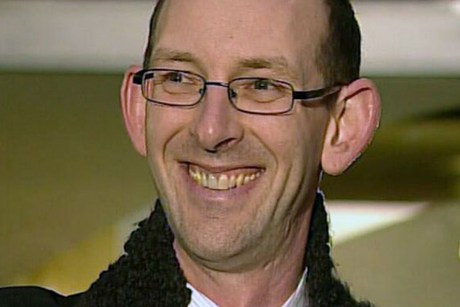
Exoneree David Bain

Exoneree David Bain

Exoneree David Bain’s compensation case in NZ has gotten quite controversial.  A retired Canadian judge was hired to review the case and decide whether Bain should be compensated.  A Canadian judge was selected for neutrality and because the compensation scheme in Canada is similar to that in New Zealand.  But after the judge reviewed the case and recommended in favor of compensation, the Justice Minister Judith Collins has refused to accept the results and gone on a sort of political campaign to avoid paying compensation.  The debate has been very public and has gotten quite heated.  Story here.  Justice Minister’s attack on the ruling detailed here.  Justice Ian Binnie’s response here.

Tuesday’s Quick Clicks…

Wednesday’s Quick Clicks…

  • New project launched at University of Greenwich in England
  • In Australia, court exonerates convicted murderer, Fred McDermott, posthumously
  • The Texas Center for Community Journalism at Texas Christian University is embarking on a statewide initiative to investigate the fairness of in the Texas criminal justice system, especially in cases that deal with indigent defense. The project is being underwritten by the Hood County News.  Kathy Cruz, staff writer for the News and a consultant in investigative reporter for the Center, is writing the series about the quality of legal services in Texas and the impact of the justice system on those who are accused of crimes, as well as the impact on their families.   The stories are being provided to community newspapers throughout the state free of charge, and papers will be encouraged to investigate the quality of legal services within their own counties.

Monday’s Quick Clicks…

  •  Worried about wrongful convictions, High Court in Bombay, India rules that a conviction cannot be based solely on a dying declaration
  • Federal judge criticizes a prosecutor for his role in a wrongful conviction case
  • Honoring the role of defense attorneys in New Zealand
  • Video of John Montgomery’s family thanking the Mid-Atlantic Innocence Project
  • Exoneree Jerry Hobbs’ lawsuit against Chicago area prosecutor continues to move forward
  • State Rep. Jamilah Nasheed urges Missouri AG to drop appeal of exoneration of George Allen
  • Discussion of recent symposium on false confessions held at Temple Law School and sponsored by the Pennsylvania Innocence Project
  • Erie County, New York District Attorney Frank A. Sedita III is looking into the possibility that a man who pleaded guilty six years ago to a double murder on Buffalo’s West Side was wrongfully convicted.  Sedita said he became aware of the possibility about a week ago, when he learned that federal authorities were charging three other men with the murders of Nelson and Miguel Camacho in 2004.  Josue D. Ortiz, the man originally convicted in the killings, has spent the past six years in prison.

Supporting acquittals in the face of public outrage: some thoughts.

In the UK and Australia, as elsewhere,  there have been high profile acquittals of persons who were considered ‘guilty’ in the media. I have long thought that while we often do not do enough to heed the lessons of wrongful convictions, we should also be taking note of acquittals and seeing what wider lessons they may also hold. Two such cases this week have given me pause to consider the criminal process when it ‘works’ and how this can be portrayed in the media in such as way as to be damaging to public confidence in the criminal justice system. While it can be difficult and unpopular, I believe those working to prevent wrongful convictions, should not be afraid to support these cases and speak up in support of the protections that have led to the acquittals.

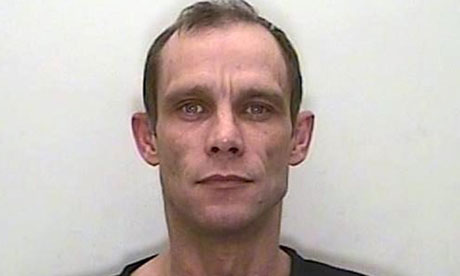
In the UK, the case of Christopher Halliwell (called a ‘dangerous predator here) hit the headlines. Halliwell was arrested on suspicion of kidnapping Sian O’Callaghan and upon arrest, was driven to a deserted spot and grilled by a detective. While he pleaded to see a solicitor, he eventually buckled and led the police to Sian’s body. After subsequent questioning, all still outside of the bounds of legality, Halliwell led the police to a second body.  Under the rules of evidence in England and Wales, his ‘confession’ to the second murder (which had occurred 8 years previously) was not admissible, and as there was no other evidence, Halliwell could not be tried for that murder. Halliwell is clearly guilty of 2 murders, and yet can only be convicted of one, with an understandable ensuing outcry led by the victims mother. Commentators have also taken the opportunity to bemoan the plentiful ‘rights’ that are afforded suspects and how these obstruct justice, pledging support for the now suspended detective. However, these rules on confessions and police conduct  of interviews are there for a purpose. There is a long history of false confessions that have been co-erced or even beaten out of suspects, who have gone on to be convicted and serve many years in prison wrongfully. It took many years of campaigning to get these rights enshrined in law and we lose them at our peril. I have faced down critics on more than one occasion, for standing up for the rights of suspects, including those of murderers. (Read more on Halliwell case here and how he ‘evaded trial’).

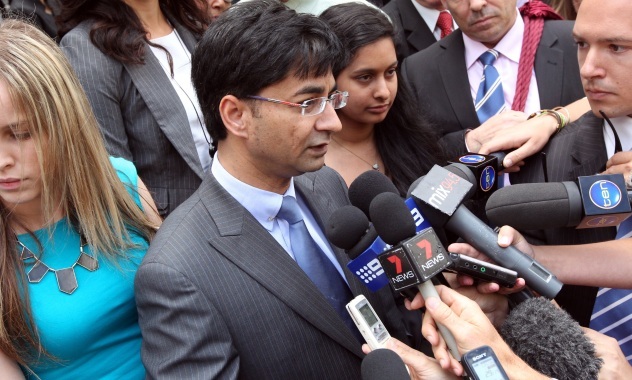
In Australia this week, a high profile acquittal was covered in the media with much accompanying outrage. Lloyd Rayney has been cleared of murdering his wife after the ‘trial of the decade’ (see here and see here). The beauty of this trial is that it was a judge-only trial, and you can read the judge’s statement here... The reasoning reasserts that it is for the prosecution to prove beyond a reasonable doubt the guilt of the accused and the accused does not have to prove his innocence. He goes on to explain that in this case: “Endeavours by the State to fill critical gaps and explain away improbabilities are primarily no more than speculation without foundation in the evidence.”

This echoes a prior acquittal, in the case against Francis Marshall, again in a judge-only trial in Australia in 2010, where the judge stated: “I’m satisfied that the accused had a motive, and find that there are a number of suspicious circumstances which implicate the accused as the killer of Bernadette Liston,… But motive, by itself, is insufficient to find the accused guilty, (and) suspicion piled upon suspicion does not equate to proof beyond reasonable doubt.”

Perhaps there is something to be said for holding more ‘judge only’ trials. That is a debate for another day. What I do believe, is that we need to support these acquittals, even in the face of strong criticism. We cannot allow the media to use such cases to fight against removal of any hard-won protections for suspects and defendants.

The case of Johnny Montani will hopefully be successful and instructive (read more here). Montani’s brother has lodged a complaint with the Australian Corruption and Crime Commission over his three trials (and acquittals), three years on remand and huge legal bill. Montani is alleging police misconduct for adducing erroneous evidence. Being put on trial for a crime you didn’t commit should not be considered a minor inconvenience. Lives can be shattered, just as with a wrongful conviction.

In many of these ‘near misses’, there are lessons for all the participants in the criminal process to learn. These people mentioned here are fortunate to not now be fighting for their wrongful convictions to be overturned. It is important that we do not allow the media to use such cases to argue against due process rights.

The Fallibility of Human Fact Finding…

This is a really interesting article by a Supreme Court Justice in Australia about how our fact-finding processes are not up to date with current understandings in the field of psychology, etc.   Wish more judges were this enlightened.

Problems with Fact-finding [1]
Justice David Ipp[2]

HE: I can remember everything as if it were yesterday. We met at nine.
SHE: We met at eight.
HE: I was on time.
SHE: No, you were late.
HE: Ah yes, I remember it well. We dined with friends.
SHE: We dined alone.
HE: A tenor sang.
SHE: A baritone.
HE: Ah yes, I remember it well. That dazzling moon …
SHE: There was none that night. And the month was June. [3]

This lyric illustrates the unreliability of human memory as well as the difficulties attendant on making findings of fact. 

Fact-finding is labour on the factory floor of the judicial system. It is not glamorous work. Judgments on fact go unreported; they have no enduring fame. Nevertheless, justice depends on correct factual findings, and a fundamental measure of a legal system is the accuracy and skill with which facts are found. It is curious how little attention has been given to this facet of the judicial task [4]. We accept with a knowing smile the virtual impossibility of remembering with accuracy past events in the ordinary course of life, such as those about which Maurice Chevalier and Leslie Caron so nostalgically sang. Nevertheless, the justice system has, as one of its basic foundations, the assumption that witnesses are capable of accurately describing events that took place years ago, and that judges can reliably tell what evidence is true and what is false. 

Witnesses may be deliberately untruthful, but there may be many other causes of inaccuracy in a witness’s testimony. These include imperfect observation, faulty memory, an over-active imagination, emotional disturbances, self-interest, and other biases. Witnesses may be dishonest about only parts of their evidence. Little is more Continue reading

Thursday’s Quick Clicks…

Australia: Time for a review body for wrongful convictions.

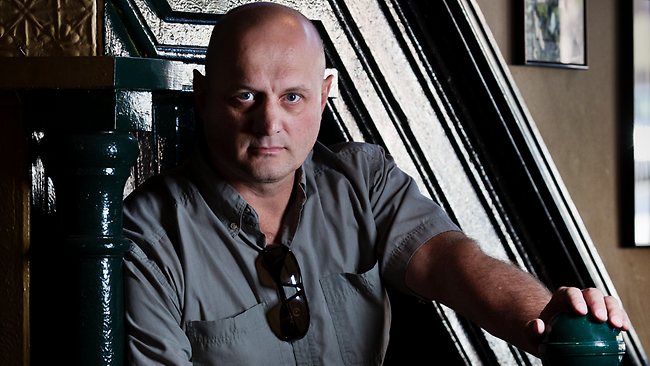
David Eastman was convicted of murdering Colin Winchester in 1989 and is serving life imprisonment. His case has featured on the ‘Charles Smith Blog’ here….  His conviction is in significant doubt, and now a retired South Australian Supreme Court judge has been appointed to conduct an inquiry into the conviction: read story here…..

Commentators are now using the case to argue for a body in Australia, like the UK’s Criminal Cases Review Commission, to investigate potential wrongful convctions, to obviate the need for full-blown inquiries like this and previous ones. Read more here…..


Wednesday’s Quick Clicks…

  • Utah Supreme Court hears oral arguments in the Debra Brown case, as the State seeks to overturn her exoneration
  • New Zealand exoneree David Bain’s compensation case “full of complexities”
  • More on the Connecticut Supreme Court’s ruling to allow expert trial testimony on eyewitness identification
  • Pennsylvania Innocence Project encourages Philadelphia DA to create a new conviction integrity unit
  • Midwest Innocence Project says Missouri Supreme Court should grant Mark Woodworth a new trial

Tuesday’s Quick Clicks…

  • A judge overturned the conviction of Noe Moreno, a client of the Duke Law Wrongful Convictions Clinic who had been incarcerated since 2006, on Aug. 31.  North Carolina Superior Court Judge Richard Boner vacated Moreno’s conviction and ordered charges against him dismissed, based on evidence of his innocence developed by students and presented by Theresa Newman ’88, co-director of the clinic, and David Pishko ’77, who worked pro bono on the case. Details here
  • Judge in Texas grants DNA testing to 4 inmates convicted of rape and murder in 1992
  • More on New Zealand exoneree David Bain’s bid for state compensation here and here
  • Utah Supreme Court to hear state’s appeal for exoneration of Debra Brown, client of Rocky Mountain Innocence Center
  • A district judge has ruled that a Dallas area man wrongfully imprisoned for more than two dozen years must pay his ex-wife a share of any compensation the state gives him.  The Dallas Morning News reports that Steven Charles Phillips was cleared in 2008 of a string of sex crimes committed by another man in the 1980s. He spent more than two dozen years in prison.  Phillips and his wife, Traci Tucker, divorced in 1991. She sued him after his release, arguing that she too had suffered when he was wrongfully imprisoned.  Judge Lori Hockett on Friday ruled that Tucker was due $114,000 in lost wages and an additional $39,000 for attorneys’ fees and expenses.

Wednesday’s Quick Clicks…

Tuesday’s Quick Clicks…

  • In Australia, David Harold Eastman one step closer to overturning his conviction based on fresh evidence of possible innocence
  • Michigan Supreme Court limits expert testimony regarding false confessions
  • Video:  Patrick Joseph Hill, one of “The Birmingham Six” in the UK, gives a visceral account of the anger and ongoing trauma faced by him and other victims of wrongful conviction.
  • Zackary Stewart, imprisoned for four years for a murder he didn’t commit, filed a civil suit against three law enforcement officers who investigated the case and the Stone County Sheriff’s Department in Missouri.  In the complaint filed Friday, Stewart alleges Stone County investigators violated his constitutional rights, had inadequate training, and abuse of police and arrest power on the citizens of Missouri.  The lawsuit in U.S. District Court cites seven points, including malicious prosecution, false arrest, and wrongful incarceration.  Video here
  • Thomas and Raymond Highers, brothers, granted new trial in Michigan based on new evidence of innocence
  • Video of exoneree Brian Banks on the Tonight Show in the U.S.
  • An article summarizing the American press on the death of the Lockerbie Bomber, who many outside of the U.S. believe was wrongfully convicted

“Hobbit” Director Peter Jackson and Damien Echols of the West Memphis 3…

From news source:

A CONVICTED US killer, set free through the help of filmmaker Peter Jackson, says New Zealand is now like a second home – and one where he might like to live permanently.

West of Memphis, directed by American filmmaker Amy Berg and produced by Jackson, had its international premiere in Wellington on Sunday night as part of the New Zealand Film Festival.

The film centres on Damien Echols, one of the West Memphis Three convicted of the 1993 murders of three eight-year-old boys in West Memphis, Arkansas.

His co-accused, Jason Baldwin and Jessie Misskelley, were both sentenced to life imprisonment for the crimes; Echols was sentenced to death.

But as evidence mounted to show they were wrongfully convicted, the trio were freed from prison last year under a rare plea bargain – which means they can never be exonerated, unless the real killer is brought to justice.

As the film’s closing credits rolled, the 800 audience members at the sold-out Embassy Theatre screening gave a standing ovation, ahead of a question and answer session with Jackson, Echols and his wife and number one campaigner, Lorri Davis.

While he would like to see the real killer brought to justice – with the film pointing toward a potential suspect – his concerns about the Arkansas justice system, which time and again rejected appeals and new evidence in the case, leaves him without much hope.

Without the killer being caught, the West Memphis Three cannot be exonerated.

“If they were to arrest the person who did it, it would mean they were admitting to making a mistake when they put us in prison, and if they do that, it once again opens them up to a lawsuit, and their number one priority will always be protecting themselves, protecting the state,” Echols said.

“If that means letting a murderer go free in order to keep from having to face a lawsuit, then that’s what they’ll do, so my hopes aren’t very high at all.”

Jackson, who with wife Fran Walsh has bankrolled Echols’ defence in recent years, says the film was borne out of frustration at how authorities were dealing with the case.

“We do think that Arkansas would prefer not to investigate the murder of these three little boys if they could get away with it, and so we are holding them to task and saying: ‘Here’s a possible person; you guys do your job properly and go figure it out’.”

Echols says New Zealand has been an incredibly healing place for him.

“Even when I hear the New Zealand accent now, it gives me that feeling of home, just because it took me in when I didn’t have anywhere else to go, and it gave me time just to rest.”

Echols added that he’s not adverse to the idea of living in New Zealand – and perhaps working with Jackson more – in future.


Saturday’s Quick Clicks…

  • More on New Jersey’s new eyewitness identification instructions for jurors
  • Retired detective in New York still trying to solve murder case that sent innocent man Steven Barnes to prison
  • Ken Bates, the Australian senior prosecutor in the wrongful conviction of Andrew Mallard for murder, has conceded he failed to comply with his duty to disclose that the victim’s injuries did not match a wrench alleged to have been used in the crime.  Bates has been fined $10,000 in the State Administrative Tribunal following an allegation brought by the Legal Profession Complaints Committee that he engaged in unsatisfactory professional conduct as a prosecutor on behalf of the crown during the 1995 trial of Mr Mallard.
  • New book on the Amanda Knox case
  • In Ireland, prosecutors have lost a bid to stop Mr Justice Adrian Hardiman from being part of an appeal court that will decide whether a man’s conviction 40 years ago for the manslaughter of a young woman was a miscarriage of justice.  The three-judge Court of Criminal Appeal dismissed the “special and unusual” application by the DPP for Mr Justice Hardiman to recuse himself from further hearing the case of Martin Conmey. His conviction for the manslaughter of Una Lynskey (19) was overturned two years ago and he wants a declaration of a miscarriage of justice.
  • Vermont may be close to first DNA exoneration

Reforms Recommended in Australia…

On the 18th, July 2012 the South Australian Legislative Review Committee on the CCRC Bill reported that it would not be recommending that a CCRC-style body be established in South Australia.

It did, however, make seven reform recommendations.  Recommendation 3 was for a new statutory right for certain qualifying offences to provide that a person may be allowed at any time to appeal against a conviction for serious offences if the court is satisfied that:

· the conviction is tainted;

· where there is fresh and compelling evidence in relation to the offence which may cast reasonable doubt on the guilt of the convicted person.

Also of particular significance, Recommendation 5 was that the Attorney-General considers establishing a Forensic Science Review Panel to enable the testing or re-testing of forensic evidence which may cast reasonable doubt on the guilt of a convicted person, and for these results to be referred to the Court of Criminal Appeal.

The Full Report is here.

Failing to punish or discipline those who cause wrongful convictions.

One of the many frustrations of those involved in wrongful convictions, is the fact that it is almost unheard of to get those professionals who were responsible for the injustice disciplined or punished. Most in fact continue to practice, police, prosecute, or judge. Even those paltry efforts that are made to discipline or punish these individuals are often met with obfuscation and are rarely successful (for the recent attempts to prosecute the police officers responsible for the wrongful conviction of the UK’s Cardiff Three case see earlier post here…). Now in Scotland, a former police inspector has been jailed for five years for witholding and fabricating evidence when investigating a murder in Scotland 17 years ago, the resulted in the wrongful conviction of two men.  In sentencing him, the judge said: “You were in a position of trust. The criminal justice system depends upon police officers acting with honesty and integrity.”  Read more here…  This is welcome news, but sadly, very unusual.

Meanwhile in Australia, the prosecutor in a notorious miscarriage of justice which saw Andrew Mallard convicted of murder and spend 12 years in prison, has been fined AU$10,000 for his involvement in the wrongful conviction. Whilst one may  be tempted to think that this is again some good news, along with the finding that his practice fell below the standard expected of legal practitioners, Ken Bates was allowed to step down from the prosecution service in 2009 with a payout of AU$270,000 and without facing disciplinary action. The fine makes hardly a dent in his large payout. Read more here…  It is regrettable that criminal charges were not brought, and this was the maximum fine available to the Administrative Tribunal that heard the case.

I firmly believe that we should not accept that in many cases of wrongful convictions, there is not someone, or many people, who acted negligently, their work fell below acceptable standards, or they were simply corrupt and acted criminally. To be taking wrongful convictions seriously, we need to see more of these individuals disciplined and punished.