Category Archives: Commissions/Innocence Commissions/Governmental Case Review Agencies

Fingerprint on Banana May Exonerate North Carolina Man…

From the Citizen-Times.com:

RALEIGH — A North Carolina panel that’s unique in the country determined Wednesday that a man serving a life sentence for rape should get a chance at freedom, thanks largely to fingerprints on bananas.

The state Innocence Inquiry Commission decided unanimously that enough credible evidence of innocence exists to refer the case of Willie Grimes to a three-judge panel that will ultimately decide whether Grimes should be declared innocent of the crime.

Grimes, 65, reacted to the news by saying, “That’s good. That’s very good,” according to his lawyer, Christine Mumma, director of the N.C. Center on Actual Innocence. The center advocates for convicts seeking exoneration.

Two men cleared by the commission for the review were exonerated of a Buncombe County homicide last year.

A special three-judge panel freed Kagonyera and Wilcoxson in September after determining there was clear and convincing evidence they didn’t commit.

Grimes has always maintained his innocence in the rape of a 69-year-old woman in Hickory on Oct. 24, 1987, even refusing to participate in prison programs that Continue reading

Miscarriage of Justice: What does it really mean?

The term miscarriage of justice is frequently and notoriously invoked, but very little has been done by way of decisions clarifying the term. The United Kingdom Supreme Court appears to have come to a settled definition of the term; at least in connection with post-conviction claims of innocence, and thence, for compensation thereof. Readhttp://www.guardian.co.uk/law/2011/may/11/barry-george-compensated-supreme-court?INTCMP=ILCNETTXT3487

In a judgement given on the  11th of May, 2011 the UK Supreme Court formulated the test in determining whether a miscarriage of justice has occured. The court said that there would be a miscarriage of justice – ‘When a new or newly discovered fact shows conclusively that the evidence against a defendant has been so undermined that no conviction could possibly be based upon it’. Read full judgement herehttp://www.supremecourt.gov.uk/decided-cases/docs/UKSC_2010_0012_Judgment.pdf . It is however going to be very difficult (but the decision can be distinguished) to apply this in every concieveable situation and circumstance, except to say that the decision should serve as a starting point when attempting to apply it beyong innocence cases. It should be noted that the decisions itself was arrived at by a very  narrow majority, leaving the Supreme Court in a position to ‘possibly’ reverse itself someday. The decision left some of the appellants in this case still clearly dissatisfied. Barry George for instance.

Sunday’s Quick Clicks…

  • Recent Virginia exoneree Michael Hash enjoying his taste of freedom
  • Group of former judges and law enforcement officials file amicus brief asking appellate court to affirm a lower court decision awarding a new trial to Virginia death row inmate Justin Wolfe, who had his conviction overturned after the state’s key witness, a snitch, said he lied at trial to save his own skin
  • Sister of defendant in case that Innocence Network UK wants reviewed by CCRC for possible innocence says she will fight tooth and nail to keep her “guilty” sister from getting relief
  • Defendants in Virginia receive inadequate defense representation on a daily basis
  • Pending legislation in Hawaii would improve eyewitness id procedures
  • New York Times article on the fight of Kerry Max Cook to clear his name
  • Missouri AG signals in court filing that it will oppose the exoneration of Innocence Project client George Allen Jr., after DNA testing excludes him from semen found at crime scene

Major London Conference Tomorrow on Reforming the CCRC

Details of conference here.   Prior coverage of INUK’s challenges to the CCRC here.  INUK’s extensive report on the 45 cases of “plausible innocence” that the CCRC has rejected here.

Speakers at tomorrow’s conference include:

Chris Mullin (Former MP)
Professor Michael Zander QC (Emeritus Professor, LSE and Member of the
Royal Commission on Criminal Justice)
Mark George QC (Garden Court North)
Mark Newby (Solicitor Advocate, Jordans Solicitors)
Dr Michael Naughton (Founder and Director, Innocence Network UK)
Laurie Elks (Ex-Commissioner of the Criminal Cases Review Commission)
David Jessel (Ex-Commissioner of the Criminal Cases Review Commission) Professor Richard Nobles (Queen Mary University, London)
Dr Eamonn O’Neill (Investigative Journalist, University of Strathclyde)
Paddy Joe Hill (One of the Birmingham Six)
Susan May and Eddie Gilfoyle (alleged victims of wrongful conviction)
Bruce Kent (Chair, Progressing Prisoners Maintaining Innocence
Russ Spring (West Midlands Against Injustice)

A rush to judgment is never a good thing

Hysteria over what seems to be a particularly egregious crime often leads to a wrongful conviction. The world has seen this many times, but it always seems to forget that lesson when another incident causes outrage, as has the shooting death Florida teenager Trayvon Martin.

The death of an unarmed kid is an obvious tragedy. But no matter how misguided George Zimmerman, the man who shot Martin, might seem, it’s important to keep in mind that everything that occurred that night is not yet known. That’s why the calls from some corners for vengeance before all the facts are known are disturbing. A rush to judgment from stage left is no more palatable than a rush to judgment from stage right, from which they more often come.

Miami Herald columnist Glenn Garvin made that point today, when he wrote:

“I’ve read tens, maybe hundreds, of thousands of words on the shooting death of Trayvon Martin, the South Florida teenager whose shooting death last month at the hands of a neighborhood watch volunteer has become a national symbol of continuing American racism. But in all those words, there are three that haven’t come up that seem worth remembering to me: Duke lacrosse team.” Read more here.

Name of suspect in Morton murder surfaces in third case

Mark Norwood, the man accused of killing the wife of Michael Morton, the wrongly convicted Texas man whose case was featured Sunday on 60 Minutes, is also a suspect in another murder of an Austin woman. Now he has now been named as an alternate suspect by an appeals attorney representing Dennis Davis, who was convicted last year in a third strikingly similar murder case. In all three instances, the Austin-area women were bludgeoned in the mid-1980s while sleeping.
 
Unlike in the Morton case, in which prosecutors resisted requests for DNA testing for years, the prosecutor in the Davis case has readily agreed to re-examine the case and look for evidence that might be subjected to DNA testing. Brandi Grissom, whose previous article in the Texas Tribune raising questions about Davis’ conviction prompted the review, writes about the latest developments here.

Innocence Network UK Challenges CCRC to Change its Ways…

Leading up to a major conference on the CCRC later this week (which I’ll blog about in a day or two), the Innocence Network UK has released a report describing 45 cases of “plausible innocence” that the CCRC has refused to consider.  For years the INUK has criticized the CCRC, which has a 96% rejection rate, for not living of to its intended mission of identifying and overturning the convictions of the wrongfully convicted.  Anyone interested in the viability of innocence commissions should follow this ongoing debate in the UK.  Details here and here….

Sheriff Calls For An Innocence Commission and a “Prosecutorial Misconduct” Commission in Virginia

From the StarExponent:

No agencies or commissions exist in Virginia to investigate prosecutorial misconduct and wrongful convictions, and University of Virginia Law Professor Brandon Garrett said that needs to change.

“What the public needs to know is how many more murder convictions have been a result of these errors,” said Garrett, who joined the faculty in 2005 and specializes in wrong convictions. “There needs to be some sort of audit or investigation done, but that’s very rare.”

Albemarle County Sheriff J.E. “Chip” Harding said Virginia needs two commissions: One that looks into police and prosecutorial procedures, and a second that investigates cases and convictions after the fact. He even has an idea for how to staff them. Continue reading

L’affaire d’Outreau and the Parliamentary Investigation Commission

One of the most intriguing wrongful conviction cases I uncovered in France is called, L’affaire d’Outreau (this link is to the original French article but can be translated online). This is a 2004 case of alleged sexual abuse of children producing 17 indictments, 4 convictions, and 12 acquittals. The case was built around testimony of one of the co-defendants who lied about the involvement of the others. Like so many of the cases investigated by innocence organizations in the United States, there was no physical evidence, only the word of an accuser.

Between January 10 and April 12 of 2006, a Parliamentary investigation was undertaken to identify those factors leading to the wrongful convictions. The commission members heard from 221 people for more than 200 hours of testimony. Witnesses included alleged victims, defendants, prosecutors, police officers, judges, sociologists, psychologists, linguists, and others. Questions focusing on oral testimony sought insight into the following: “How to listen and transcribe depositions, interrogations and confrontations,” “What form of orality is more conducive to the emergence of the truth?,” “What is the validity of orality in the construction of the judicial process?”

It is important to note that, largely in response to public outcry over the Outreau convictions, the French Parliament saw fit to establish an investigatory commission to review the entire investigation and trial to determine where fault should lie, and how procedural improvements could be made. While US legal scholars have conducted postmortem analysis of wrongful conviction cases to determine their causes, nothing similar to the French Parliamentary commission investigating Outreau has occurred in the US. This is precisely the kind of transnational sharing of information and experiences that can prove invaluable and inspirational to the human rights movement seeking justice for the wrongly convicted. For example, Barry Scheck, Peter Neufeld, and I have each on different occasions argued for the creation of a federal level review body with the mandate to investigate the causes of wrongful convictions. I have referred to such a body as the National Safe Conviction Board (NSCB). This NSCB would have full subpoena authority and would serve to generate a set of national priorities based on its investigations (see Robert Schehr. 2010. “A View From the United States,” in M. Naughton (ed.), The Criminal Cases Review Commission: Hope for the Innocent? pp. 205-218.). Regardless of what it’s called, the purpose of a federal commission authorized to hold hearings to deconstruct the causes of wrongful convictions, and to publish its findings and recommendations for investigation and due process remedies, is something that I strongly believe we should lobby for in the United States.

The French Parliamentary commission appears to have operated much like a truth in reconciliation  that privileges parrhesia – the ability to speak freely, candidly, with a  degree of risk. Some of the statements made by the exonerees are compelling:

Sandrine Lavier: “We were never heard. We told them we were innocent, we were talking to a wall.” When asked “Who was this wall?” “Investigators, Judge Burgaud, the prosecutor, the juvenile judge, the Board of Appeal, all.”

Frank Lavier: “To prove our innocence, it’s like you say it’s windy but you do not see it. There is a difference: one is innocent, but we cannot prove it to you. The wind is there but does not see.”

The Commission members admitted the difficulty of attempting to determine innocence and guilt when, as in this case, there is no physical evidence.

The takeaway from reading about the Outreau affair is that, at least in this one case, the French appear to share much in common with those of us operating in adversarial systems. Perhaps the more compelling lesson for those of us operating within the United States is that we can follow in France’s footsteps by creating a National Safe Conviction Board to conduct postmortem review of exoneration cases.

March 20th: Matthew Puckett to Keep a date with the hangman’s noose

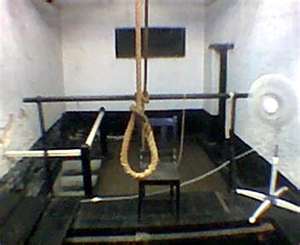
Matthew Puckett is slated for ‘execution’ by the state of Mississippi on March 20th, 2012. The death penalty – regardless of the heinousness of the crime – continue to raise dust and controversy wherever it is applied worldwide. It is about time we re-engage with the rationale, the humanity, as well as the emotional and spiritual arguments against the death penalty; especially, when it potentially raises the possibility, however slightly, of a wrongfully convicted person being taken to the gallows.

Jamie Arpin-Ricci (Author and Pastor) makes a powerful, emotional and ‘reasoned plea’ why Mathew Puckett should be spared the guillotine.Read herehttp://www.huffingtonpost.com/jamie-arpinricci/death-penalty-is-not-christian_b_1341706.html There is still enough time left to stretch the law to its limit. How you may ask? By signing the petition or contacting Mississippi’s Governor, Phil Bryant. A link is provided at the penultimate paragraph of the article

Innocence Network UK (INUK) and the CCRC

Dr. Michael Naughton, founder and director of the Innocence Network UK (INUK) has been quite vocal in his criticisms of the British Criminal Case Review Commission, the government agency designated to inquire into alleged wrongful convictions and refer cases back to the Court of Appeals.   Of the most than 13,000 applications it has received since its creation in 1995, less than 4% have been referred back to the Court of Appeals for further proceedings (far less than the CCRC’s predecessor, which was viewed as inefficient and too restrictive).  Naughton’s detailed criticisms of the CCRC process are outlined here and here.  Anyone interested in how Innocence Commissions functions would be wise to become familiar with Naughton’s scholarship on the subject (link to his book and a series of articles here).

INUK is sponsoring a major symposium on the need to reform the CCRC on March 30th, details here.  Speakers include:

Chris Mullin (Former MP)
Professor Michael Zander QC (Emeritus Professor, LSE and Member of the
Royal Commission on Criminal Justice)
Mark George QC (Garden Court North)
Mark Newby (Solicitor Advocate, Jordans Solicitors)
Dr Michael Naughton (Founder and Director, Innocence Network UK)
Laurie Elks (Ex-Commissioner of the Criminal Cases Review Commission)
David Jessel (Ex-Commissioner of the Criminal Cases Review Commission) Professor Richard Nobles (Queen Mary University, London)
Dr Eamonn O’Neill (Investigative Journalist, University of Strathclyde)
Paddy Joe Hill (One of the Birmingham Six)
Susan May and Eddie Gilfoyle (alleged victims of wrongful conviction)
Bruce Kent (Chair, Progressing Prisoners Maintaining Innocence
Russ Spring (West Midlands Against Injustice)

New book on investigating miscarriages of justice in England & Wales

A new collection of essays on the investigation of alleged wrongful convictions in England and Wales has been released and is now available to download here…

Extensive Piece on Dr. Michael Naughton and the Innocence Network UK

Here is a is very nice piece on the founding and evolution of the Innocence Network UK.  The article also discusses Founder and Director Dr. Michael Naughton’s criticisms of the CCRC (Criminal Case Review Commission), a point that Naughton has been quite outspoken about.  Very interesting read.

Dr. Michael Naughton of Bristol U.

Naughton’s book on the CCRC available here.  A series of articles by Naughton on the CCRC and innocence work in the UK available here.


DA-turned bestselling novelist reveals ‘dirty little secret”

William Landay’s brilliant new legal thriller, Defending Jacob, has created quite a buzz. It has been compared favorably with Scott Turow’s Presumed Innocent, which is pretty heady territory.

Like Turow, Landay is a former prosecutor. And like Turow, Landay issues an indictment of our criminal-justice system on several levels.  Defending Jacob is not about a wrongful conviction. It is as much a family drama as it is a legal one, and it takes many dramatic turns before what one seasoned reviewer called its “astonishing” ending.

Continue reading

The galvanizing Troy Davis case taught lessons beyond death penalty

Massive attention in America and internationally on the Troy Davis case appropriately focused on the death penalty, but this case was a call to action regardless of one’s position on capital punishment. The troubling uncertainty that followed Troy Davis to the death chamber on September 21, 2011, should prompt widespread recognition that the U.S. criminal justice system can do better, and Americans must require it.

When Davis’s guilt was called into question following the recantation of most key witnesses, thousands protested but were unable to stop the train that had left the station twenty years earlier. That’s when a jury, after weighing evidence Continue reading

Thoughts on the Oklahoma Innocence Collaboration Act

The newly formed Oklahoma Innocence Project, headed by well-known innocence attorney Tiffany Murphy, is working with legislators to pass the Oklahoma Innocence Collaboration Act.  A House subcommittee passed the bill 9-0 last month, and it now is heading to Appropriations and Budgets Committee.  The bill appears to set up a mandated structure where the Oklahoma Innocence Project could send cases it felt involved problematic scientific analysis for review to the forensic labs at University of Central Oklahoma.  The university department would analyze the case and write a report, and then the case would be sent to the Oklahoma State Bureau of Investigations, which would review the findings and take action if necessary.

I wonder how this system will work in practice.  The structure seems to take the case out of the adversarial system.  Instead of relying on their own experts to evaluate the case, and then present those findings in court, the case will be reviewed by state officials (at the Oklahoma Innocence Project’s referral), who, as anyone in this field knows, often suffer from tunnel vision or are loathe to admit a mistake.  The attacks by prosecutors last week against the North Carolina Innocence Commission are just one recent example of this problem.

But the following quote from the bill’s sponsor caught my attention:

“We’re the only state that doesn’t allow people that are incarcerated when new evidence comes along to use that evidence to prove their innocence.”

Can this actually be true?  Oklahoma doesn’t have a “motion for new trial” rule or Continue reading

Prosecutors Attack North Carolina’s Innocence Commission, And Demand Changes, After it Exonerates Wrongfully Convicted

On the heels of having exonerated several inmates in North Carolina, prosecutors are challenging the laws establishing and setting the standards for North Carolina’s Innocence Inquiry Commission.  Prosecutors want the burden for inmates to obtain relief raised from “clear and convincing” evidence of innocence to proof of innocence “beyond a reasonable doubt.”  They also want a chance to cross-examine defense witnesses at an earlier stage in the investigative process, rather than at the 3-judge panel hearing that occurs after initial investigation.  A law to make these changes passed the House last year, but died in the Senate.   Prosecutors are beating the drum again this year, after the Innocence Inquiry Commission exonerated two men a few months ago.

Christine Mumma, director of the North Carolina Center on Actual Innocence opposes the changes.  So does attorney Brad Bannon, who serves on the board of N.C. Legal Prisoner Services.  He says, “Simply put, these changes would make it more difficult for innocent, wrongly convicted people to gain their freedom. That turns the entire idea of the Innocence Commission, if not justice itself, upside down.”

Indeed, why anyone would want an inmate to remain in prison–or on death row–when there is clear and convincing evidence of his innocence, is hard to fathom.  Changing the law to require proof of innocence “beyond a reasonable doubt” would make exonerations extremely difficult to attain.  Proving that someone committed a crime “beyond a reasonable doubt,” which is what prosecutors face at trial, is easier than proving innocence “beyond a reasonable doubt.”  We all know that proving a negative (that he didn’t do it) is nearly impossible to do, and is much more difficult than proving a positive (that he did it).   Continue reading