Category Archives: Editorials/Opinion

Conviction Error Demands Reexamination of Death Penalty

The following opinion piece with the title “Jim Petro: An intolerable rate of wrongful convictions” was published today in The Akron Beacon Journal (here).

Would you get on an airplane if there were a 2.3 percent chance it would crash? The equivalent of this “worse case” outcome in criminal justice is convicting an innocent person. There’s a special horror in convicting an innocent person of a death penalty crime. Well-documented research has found that our criminal justice system’s error rate in capital cases is at least 2.3 percent. This troubling record was underscored recently when senior U.S. District Judge Anita Brody overturned the conviction of James Dennis, who spent 21 years on death row. As reported by the Associated Press, the judge called the case “a grave miscarriage of justice” and said Dennis was convicted on “scant evidence at best.” Continue reading

The Wrongfully Convicted Sex Offender

RSO

(Editorial Note:  In no way do I want to minimize the issue of violence against women or children.  Rape is clearly a crime of violence, and must be dealt with appropriately.  Pedophile predation is abhorrant, and must also be dealt with sternly and appropriately.  But I think the issue has become – what actually is appropriate for dealing with the range of sex offenses, and in some cases, have we gone too far; and what does this mean for the wrongfully convicted?  It begs the age old question – does the punishment fit the crime?)

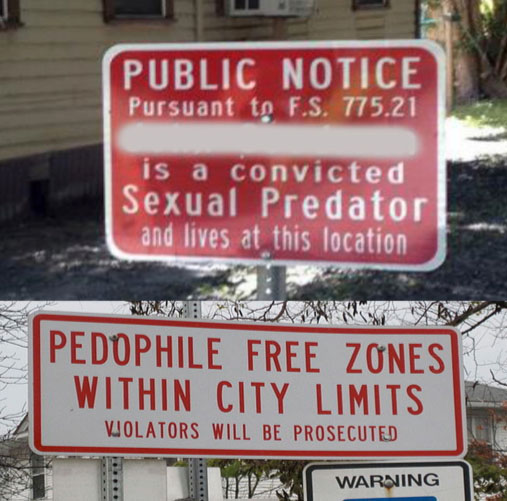
Woe be to the wrongfully convicted sex offender, because you’re not just a wrongfully convicted ‘felon.’  You’re a wrongfully convicted ‘sex offender,’ and the state makes sure you get some extra special attention.  Note that I’m careful to use the qualifier “wrongfully convicted” here, because in the case of sex offenders, when the justice system “gets it wrong,” the injustice gets amplified.  I’m not saying we should let actually guilty sex offenders off the hook, but the punitive measures have become so severe, that when someone is wrongfully convicted of a sex offense, the consequences they are forced to endure magnify the injustice.

Continue reading

Brian Banks Released from Falcons, but his Impact Continues

As reported yesterday by USA Today (here), Brian Banks was one of ten players cut from the roster of the Atlanta Falcons on Friday. Legions of fans—football followers or not—were cheering Banks on in his uphill bid to play with the NFL, an effort delayed ten years by a false accusation, wrongful conviction, prison, and his eventual exoneration when his accuser admitted the sexual assault never happened. USA Today called his determined effort the “summer feel-good story.” Continue reading

Ohio to Assist Ex-cons Seeking Work; The Peculiar Place of the Exonerated

Getting a job with prison on your resume isn’t easy. That’s an understatement, but tomorrow ex-offenders in Ohio will get free advice—including information on starting a business and finding the resources to return to school—and even free proper business clothing to help them get back into the workplace. The event, free and open to ex-offenders, will be held at Columbus State Community College. Thanks to several government agencies involved and to Ohio Development Director David Goodman for this initiative. Goodman also sponsored Senate Bill 77, the bill that enacted best practice reform aimed at reducing wrongful conviction.

Which brings to mind the peculiar place of the exonerated. One would presume that tomorrow’s program would also welcome those wrongfully convicted, because, unfortunately, many still face the stigma of prison even though they did not deserve to be there. Continue reading

Obama’s poor clemency record under attack

The ultimate safety valve for miscarriages of justice in the United States, be they wrongful convictions or unjust sentences, is the clemency process. But as politicians escalated the ”war on crime” over the past 40 years, the number of convicts receiving pardons or commuted sentences at both the state and federal level has plummeted.

President Barack Obama’s promise to change the skyrocketing incarceration rate during his 2008 campaign never materialized in his first term. While the recent promise of Obama’s attorney general, Eric Holder, to reduce the federal incarceration rate by not pursuing as many stiff sentences offers hope, Radley Balko notes here that Obama could easily help correct injustices by issuing commutations, but his record is depressingly dismal.

Balko quotes a ProPublica report that while an applicant for commutation’s chance for success under Presidents Reagan and Clinton was 1 in 100, it fell to 1 in 1,000 under President George W. Bush and is only slightly less than 1 in 5,000 under Obama. It may be time for Obama to walk the walk and not just talk the talk.

Texas Running Out of Execution Drug

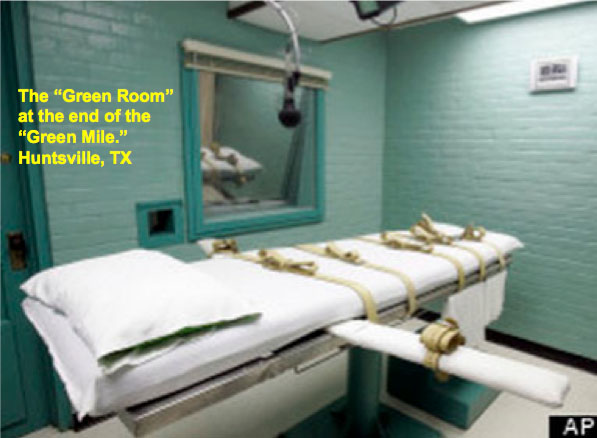
TX ex drugTexas has been on such an execution “roll,” they’re actually running out of pentobarbital.  It takes a 5.0g dose to execute a prisoner, and they only have 23 doses left.

And apparently, the manufacturers of the drug are trying to clamp down on its use for executions.  What’s Texas to do?  They have a long history with both hanging and the electric chair, so maybe they could go “retro,” but that could be a big political/public relations problem.

Read the HUFFPOST story here.

Death Investigation in the US – Medical Examiner or Coroner?

autopsy table

It’s common, in cases which involve a death, for the determination, by autopsy, of manner and cause of that death to result in criminal charges being filed against a suspect.  And in many cases, the results of that autopsy will be the evidence that convicts or acquits that suspect.  Unfortunately, it’s all too common for the results of an autopsy to be unreliable or downright wrong.

A wrong result from an autopsy?  How can this happen?  Accurate determination of manner and cause of death by autopsy requires a medical examiner, or coroner, with a high level of competency and with special training.  Sadly, there are both coroners and forensic pathologists practicing in this country who are unfit for the job.  To understand how this can be, it’s important to understand the distinction between a “medical examiner” and a “coroner.”  Medical examiners are appointed, or hired, by the responsible governmental body, and are uniformly qualified as forensic pathologists.  Coroners are politically elected, and in some states, are not even required to be a doctor.  In fact, South Carolina only recently required that a coroner be a high school graduate.  Coroners who have no medical credentials what so ever will commonly hire or contract forensic pathologists to perform the actual autopsies, but the competence and credentials of those pathologists may be of little concern to the hiring coroner, and the most important determining factor controlling those hiring decisions will be the budget.  There is also evidence to suggest that because the coroner is an elected political position, that those officials may unduly favor law enforcement in the decisions that they make.

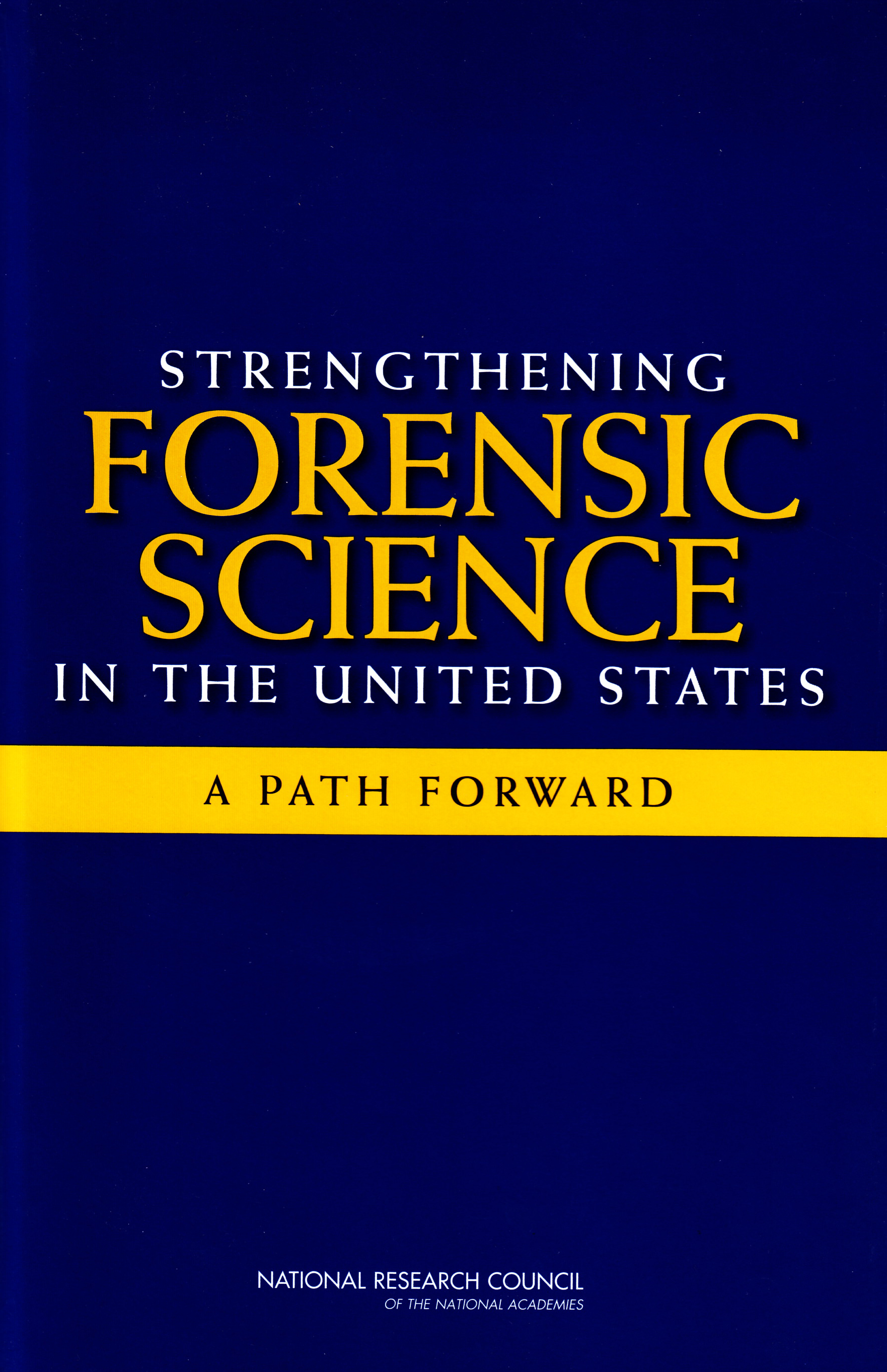
The problems with the coroner system have been egregious enough that the National Academy of Sciences, in it’s landmark 2009 report “Strengthening Forensic Science in the United States, A Path Forward,” recommended that the coroner system be abolished.

In February, 2011, PBS aired an hour long investigation into the coroner system in the US titled ‘Post Mortem.’  I personally found this to be illuminating, eye-opening, infuriating, and riveting.  You can watch the video, PBS Frontline, “Post Mortem” here.

Interview with Timothy Langdale QC on Birmingham Six Case

Daniel Chen, a recently graduated student leader of the Singapore Innocence Project, has published an interview he conducted with Timothy Langdale on the Birmingham Six Case (click here). The students of the Singapore Innocence Project have written and compiled some interesting commentaries and articles relevant to the prevention of wrongful conviction in Singapore on their website (click here).

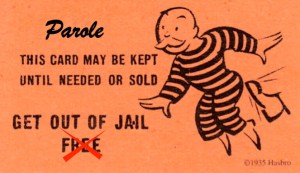
The ‘Catch 22’ of Parole for the Wrongfully Convicted

gojfc

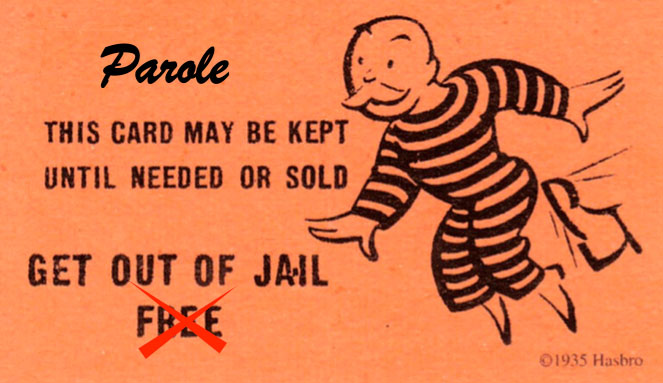
Parole.  Parole is the release from prison, prior to completion of full sentence, under supervised conditions.  The parolee is still considered to be serving his/her prison term.  The granting of parole is determined by a parole board, whose members are typically appointed by the governor of the state.  Currently, sixteen states have abolished parole completely, and four more have abolished it for violent felons.  This leaves 30 – 34 states where parole is still a potential path to early release for inmates.  The preconditions for parole are generally:  good behavior in prison, having achieved sufficient rehabilitation, believed not to be a danger to society, and means of support and a place to live after release.

Parole systems tend to operate in the “shadows” of the justice system.  Parole system activities rarely attract media coverage, unless it involves a very high profile case, like Charles Manson, and even then, the only coverage is “was parole granted or not?”  Parole boards cannot, and do not, determine innocence or guilt.  They absolutely presume guilt, and based upon that, can only determine whether a prisoner is suitable for early release.  I expect that the general public is largely clueless about how parole systems operate.  And as far as I can tell, parole boards are subject to no oversight, and have no accountability.

One of the less recognized aspects of the conditions required for grant of parole has to do with “having achieved sufficient rehabilitation.”  Parole boards commonly require that a prisoner “admit guilt and express remorse” before they will grant parole.  The parole officials in some states will insist that admission of guilt is not a precondition.  California law prohibits “admission of guilt” as a precondition for parole, and New Jersey parole board officials insist that “admission of guilt” is not a precondition for parole to be granted.  But it seems that this is an area where “theory” and “practice” do not necessarily agree.  And as I mentioned above, as far as I can tell, parole boards have no accountability or oversight to ensure that “admission of guilt” is, in fact, not a precondition.

Now, here’s the Catch 22.  An actually innocent, wrongfully convicted person serving a long prison term will, more likely than not, have to admit guilt and express remorse to be granted parole.  Not only does this mean that the innocent person would have to compromise his or her principles, and admit to a crime they did not commit, but in admitting guilt he or she also closes out any options they may have for eventual exoneration.

Continue reading

What About the Prosecutor in the Zimmerman Case?

corey-zimm

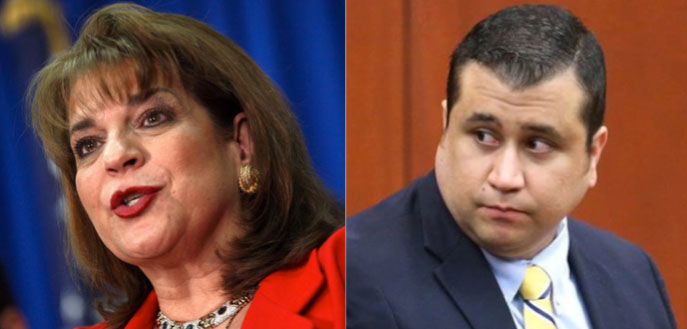
As expected, the verdict in the Zimmerman case has created a furor.  My belief is that this is largely (as we have lamented several times before on this blog) because the case was openly tried in the media.  EVERYBODY had an opinion that was primarily a consequence of their own prejudices.  Unfortunately, all the public hears from the media is sound bites filled with spin.  The public doesn’t get to read all the reports, analyze all the evidence, and hear all the testimony.  I’ll make no judgement about whether the verdict was ‘right’ or ‘wrong,’ but I will point out that this case has been a horrible example of how the justice system is supposed to work – particularly on the part of the prosecution.

Just as with the Casey Anthony case, the prosecution got greedy.  Spurred by career and political ambition, they “over charged” with second degree murder; a charge that the court allowed to be entered as the result of a false affidavit being filed by the prosecutor.  And just as with the Anthony case, the jury didn’t agree.  A manslaughter charge “could”  have been achievable.

Here is a fascinating interview with Harvard law professor Alan Dershowitz about the conduct of the prosecutor in the case, Angela Corey.  He even goes so far as to say that Angela Corey should be disbarred.  See it here.

Fourth of July Celebration Should Embolden Policy Advocates

To all Americans: Happy Fourth of July!

Americans love our Independence Day celebration in summer’s glow, and we don’t lose sight of it’s meaning amidst the holiday fun. A giant waving American flag silhouetted by cracking fireworks and accompanied by favorite patriotic songs punctuate a genuine celebration of a great, unique, and wondrous nation.

Like America itself, our celebration is brash, bold, and colorful. There’s a touch of rebellion in the in-your-face young men and women playing to the camera crew during live coverage of the fireworks, but we know young faces like these have always responded to threats to the freedoms we celebrate today. Continue reading

Shaken Baby Syndrome: Perspectives on a Controversial Diagnosis

The Medill Justice Project at Northwestern University has recently produced a video featuring a number of notable participants in the current SBS debate.  The title is Shaken Baby Syndrome: Perspectives on a Controversial Diagnosis.

You can see that video here.

Thanks to Sue Luttner at OnSBS.com for the notice about this video.

The NAS Report – Aftermath

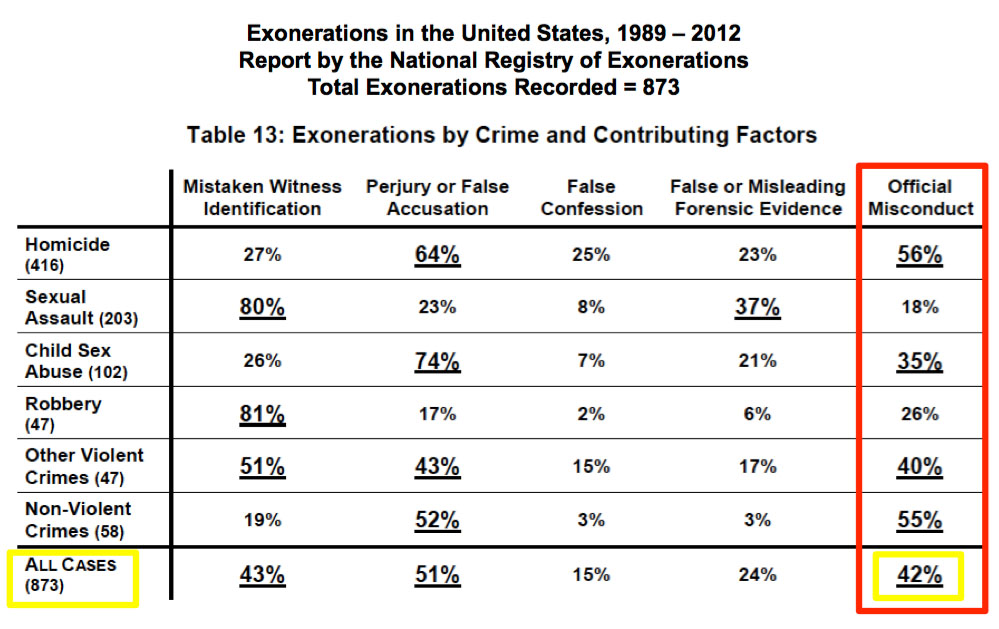
NASIt’s been four years since the National Academy of Sciences published its landmark study of forensics in the US —  Strengthening Forensic Science in the United States – A Path Forward (commonly known as ‘the NAS report’).  The report was nothing short of a “bombshell,” detailing the substantial scientific deficiencies of essentially all forensic disciplines, with the exception of DNA.  A report by the National Registry of Exonerations, covering 873 wrongful convictions from 1989 to 2012, shows that “false or misleading forensics” was a contributing cause in 24% of those cases.  The NAS report has been previously covered on this blog here and here.

The NAS report was met with “stonewall” and dismissive resistance by the extant forensic community, as well as the National Association of District Attorneys.  This is not surprising, since the members of these groups have much personally invested in the existing (but scientifically invalid) methods of forensics – not the least of which is careers.  The inertia to be overcome in “fixing” forensics is monumental, and for this reason, many of us in the innocence world (this editor included) feared that the NAS report would languish on the bookshelves of the legislators.

I am happy to report, however, that a significant first-step action is now underway at the federal level.  The Justice Department has announced that, in cooperation with the National Institute of Standards and Technology (NIST), it is forming the National Commission on Forensic Science.  The commission will have responsibility for developing guidance concerning the intersections between forensic science and the courtroom and developing policy recommendations, including uniform codes for professional responsibility and requirements for training and certification.

Now, before jubilation sets in, note that the commission’s responsibilities are described as “guidance” and “recommendations.”  The commission has not been endowed with the powers of oversight, enforcement, or establishing standards.  So, clearly, this is just a first step in the journey toward “fixing” forensics.  But as the old proverb says, “A journey of a thousand miles begins with but a single step.”  Nothing is going to happen quickly, but it is a start, and we’ll take it.

Continue reading

California Innocence Project Wins Exoneration in Sexual Assault Case

An emotional Uriah Courtney, 33, became the eleventh person to be exonerated through the efforts of the California Innocence Project (CIP), with assistance from students at the California Western School of Law, yesterday. Courtney had served eight years of a life sentence in prison for a 2004 rape and kidnapping of a sixteen-year old girl in Lemon Grove, California.

The exoneration was possible because evidence from the crime was retained and could be retested with more advanced DNA technology. The results not only eliminated Courtney but linked to another man, who closely resembled Courtney, and lived within three miles of the crime. Continue reading

New Yorkers: Urge Passage of Criminal Justice Reform Now

The Innocence Project is urging New York citizens to voice support of criminal justice reform to their legislators before the current legislative session ends on June 21.  The legislation is designed to reduce wrongful convictions by requiring the full recording of interrogations in serious felonies and by improving police witness eyewitness identification procedures.

The Innocence Project has made it easy to voice support for the legislation with a prepared message (here). Continue reading

Shaken Baby Syndrome – Where Are We? – A Reality Check

The task of bringing true science to bear on the issue of shaken baby syndrome has proven to be incredibly difficult.  Progress has been meager and slow, and for those committed to seeing that true justice is done in these cases, the work is extremely frustrating.  The extant pediatric medical community continues to wrap itself ever tighter in their beliefs in the medical folklore that has resulted in so many wrongful convictions based upon rigid, unyielding diagnostic dogma that has been discredited.  For background on the SBS problem, please see previous WCB posts herehere, here, herehere, here, and here.

Dr. Steven C. Gabaeff is a California physician who has specialized in child abuse cases, and is a member of the Los Angeles Superior Court Expert Witness Panel.  Dr. Gabaeff is also one of those rare medical practitioners who is board certified in Emergency Medicine, and who understands the flaws in the currently prevailing views of SBS.  He recently responded to an SBS online bulletin board posting concerning an article about a man who has been charged for a second time with  infant abusive head trauma.  I believe that his response provides an insightful view of what the situation is today, and also reveals some of the frustration that so many of the people who are dedicated to this cause have to deal with.  That response is posted here with his permission.

___________________________________________________

Regarding the case … the likely etiology of the problems with the second newborn was perinatal subdural hematoma rebleed from moderate trauma, and probably other treatment failures that would never see the light of day in an article like this in the newspaper, that resulted in severe brain damage.

What can he do?  He should have moved to another country… until we solve this.

Most of the time we look like Don Quixote, and unfortunately we are not addressing the issues here on the scale required. The authorities’ MO (modus operandi) has not changed an iota in 40 years: they diagnose abuse and only abuse, repress contradictory evidence, and abuse their ill-gotten authority to accuse, convict, intimidate, and to clone a new generation prescreened to be the same or better at executing the same conviction-producing MO as the old timers. There really isn’t that much evidence that what we’re doing is preventing what happened to this guy already or even what will happen to him in the near future.

Continue reading

Can Eyewitness Identification Alone Meet the Standard of “Beyond a Reasonable Doubt”?

Joel Freedman, a frequent contributor to MPNnow of Canandaigua, New York, has posed a question very important to the Rosario family whose gatherings take place at Sing Sing Correctional Facility in Ossining, New York. His opinion piece (here) asks, “Why is Richard Rosario still in jail?” The question has a short answer, but it elevates a troubling issue in DNA-era criminal justice. Continue reading

Wisconsin Innocence Project’s Work Prompts Judge to Overturn Rape Conviction

Winnebago County (Wisconsin), Circuit Court Judge Daniel Bissett has overturned the 1994 rape conviction of Joseph Frey, who has been serving a 102-year sentence for the crime, which involved the rape at gunpoint of a University of Wisconsin student in her apartment. According to a Wisconsin State Journal report (here), the judge said Frey’s “conviction must be vacated ‘in the interest of justice.’” Frey remains in jail as prosecutors decide whether or not to retry him. Continue reading

Prosecutorial Misconduct – What’s to be Done? A Call to Action

pros-scale

                                                        (Graphic:  The Veritas Initiative,  link)

Let me begin this post with an apology to all the prosecutors out there who are personally committed to upholding the highest standards of ethics and the law.  That being said, you know what they say about “a few bad apples.”

Prosecutorial misconduct.  Well folks, this one is a hot button of mine.  Ask the average citizen, and they are totally unaware that such a thing ever happens.  After all, prosecutors are honorable people who are committed to ethics, justice, upholding the law, and to helping protect the public by ensuring that the  “bad guys” are sternly dealt with, and if necessary, isolated from society, or even put to death.  At least this is what they tell us in their campaign speeches when they’re running for election or re-election.  But prosecutorial misconduct and misdeeds happen, and they happen more frequently than any normal citizen would imagine.  Let’s look at some data.  The National Registry of Exonerations has compiled detailed data for 873 exonerations (wrongful convictions) for the period 1989-2012.  You can see the full report here – exonerations_us_1989_2012_full_report.  Here is Table 13 from that report showing frequency of causes contributing to wrongful convictions:

Exoneration Table

The red box highlights the cause of “official misconduct.” (Note that the percentages for each type of case total to more than 100%.  This is because any wrongful conviction can have more than one contributing cause.)  The average for all 873 cases in which “official misconduct” was a contributing factor is 42%.  This figure includes both police misconduct and prosecutorial misconduct, and the table does not separate the data for the two.  However, if we assume a 50/50 split, this yields an occurrence of prosecutorial misconduct in 21% of wrongful convictions.  And keep in mind, this data set includes only data for known wrongful convictions.  Who knows how many more times this happens, and it doesn’t “get caught?”  I think we can safely say that prosecutorial misconduct is not an “ignoreably rare” phenomenon.

Continue reading

Open-discovery rules won’t necessarily stop prosecutors from cheating

Sunday’s New York Times hits the nail on the head in an editorial here in which it laments that violations of the U.S. Supreme Court’s 50-year-old Brady rule, which requires prosecutors to disclose exculpatory evidence to the defense, remain ”widespread.” The Times might be overly optimistic, however, in its belief that open-files reforms like those adopted in North Carolina and Ohio that require full disclosure of law enforcement’s investigative files in a case will necessarily solve the problem.
 
Such rules will work only if prosecutors and law enforcement agencies follow them, and that’s far from guaranteed. In an Ohio case I am currently investigating, for example, information about the identification of an uncharged suspect was disclosed only after we learned from a witness that she had picked the man out of a photo lineup. The identity of a second suspect, which a co-defendant says she gave to both a detective and the prosecutor before she pleaded guilty, has still not been disclosed, nor has a summary of her statement that the only other person charged in the crime was not involved.
 
Defense attorneys and investigators should remain skeptical that prosecutors will always follow open-discovery rules any more than they always follow the Brady rule.
 
They should also be aware that another reform — the use of blindly administered sequential photo lineups — can still lead to misidentifications in the era of social media. In this same case, a witness admitted that she and others looked up the defendant’s photo on Facebook once they learned his name, which made picking out his photo later fairly easy. She now admits she was wrong.