Category Archives: Editorials/Opinion

New Study Predicts Wrongful Conviction Rate in U.S. at 5,000 to 10,000 Per Year

Prof. Marvin Zalman

By Professor Marvin Zalman.   Full article here.

The conclusion states:

The ultimate question is whether the prospect of, at a minimum, 2,000 innocent defendants going to prison every year (with capital murder defendants a disproportionately higher part of this total as their wrongful conviction rates are demonstrably higher than 0.5%), and another 3,000 receiving lesser felony sentences, should move the innocence reform agenda. That question will be decided in the political and policy arenas. Whatever activists or policy makers do, scholars have an obligation to think clearly about the issue. This obligation led me to rethink the bases of my belief that the Estimate of a general wrongful felony conviction rate of 0.5% to 1.0% is correct, which reconsideration has been explained at length herein.

As the Estimate is an estimate it could be wrong in either direction. It is likely that the number-of-wrongful-convictions-is-vanishingly- small hypothesis is the ideologically tinged wishful thinking or defensive reaction of some judges and prosecutors. Against such a conclusion, I hold to the Estimate beyond a reasonable doubt (in the law’s terminol-ogy) or almost certainly (using words of estimative probability).  It may be that the actual general rate of wrongful convictions across the nation is higher, a possibility that is limited by the fact and the conjecture that wrongful death sentences are higher, at about 3%.  It is also cabined by the opinion surveys of justice system actors.  Against the Estimate being wrong in that direction, I hold to it with less firmness. In legal terms I believe that clear and convincing evidence and reasoning supports the Estimate against a higher error rate. Applying terms of estimative probability, the Estimate is probably correct against a higher error rate.

Acceptance of the Estimate creates a moral obligation to correct the factors that most likely generate wrongful convictions. If the Estimate is wrong as against higher estimates of 2 or 3% or higher, moral and professional reasons to enact innocence reforms become stronger. The more difficult issue is whether an error rate of 0.5 or 1% justifies reform efforts. I believe that most Americans would say that one out of 100, or even one out of 200 unnecessary infections contracted by hospital patients because of preventable systemic problems is too high in an advanced technological society. I believe that most Americans would say that one out of 100, or even one out of 200 innocent defendants convicted of felonies because of a range of preventable systemic errors by the very governmental system designed to provide justice is too high in a society guided by the rule of law. Arguments to the contrary are based either on ignorance of criminal justice realities or on faulty cost-benefit analyses. The intuition of those who support justice system reforms designed to prevent wrongful convictions, that wrongful convictions are large in number, is supported by a sober look at the realities of the criminal justice. The imperative to act and to keep as few as 2,000 innocent inmates a year out of prison is supported by our ideals of justice and our com- mitment to professionalism in the justice system.

How Bad Lawyering Advances Wrongful Conviction: The Case of Jamel Parker

We place tremendous emphasis on prosecutorial tunnel vision, and rightly so. However, bad lawyering by defense counsel rarely ever attract the same condemnation. Bad representation contribute significantly to incidences of wrongful convictions or miscarriage of justice, except that it hardly get mentioned. As Jamel Parker picks up the pieces of his appeal and plans to challenge his conviction, an important lesson needs to be learnt: that good representation is key to the fair dispensation of justice. I think this is a shared responsiblity. It lies not only with the accused person, it behooves the bench at every stage of the trial to ensure that an accused person is getting the best at every stage of the trial. Again, lax professional conduct rules; the failure of disciplinary boards to take seriously complaints by clients of bad lawyering, play a major role.  We hope that Jamel’s second bite of the cherry (his proposed appeal) will ensure that all the facts and law are properly placed before a judge and jury. Read more herehttp://www.thepetitionsite.com/1/free-jamel-parker-wrongful-convicted/

“Ripple Effect” of Wrongful Conviction Highlighted by Judge

“…For 21 years, you woke up and went to sleep knowing that an innocent man, Kenneth Ireland, was sitting in prison,” said Connecticut Superior Court Judge David P. Gold in sentencing Kevin Benefield to the maximum 60 years in prison for the 1986 rape/murder of Barbara Pelkey.

Judge Gold referenced, as reported in a New Haven Register article here, the “ripple effect” of the crime that robbed Pelkey’s four children of their mother, financial and emotional security, and their father, who Continue reading

Exonerated Man to Receive Payment From Police Officers Allegedly Responsible For Coerced Confession

Harold Hill was exonerated in 2005, after 12 years in prison, for a rape/murder conviction based on a confession he says was beaten out of him. As reported here in the Chicago Tribune, two police officers allegedly involved in this and other similar coerced confessions will personally pay part of a $1.25 million settlement with Hill by the City of Chicago.

The officer’s payment of $7,500 each is a small part of the settlement, but it was important to Hill. Rather than receiving payment from a “faceless” government Continue reading

Criminal Justice Reporting and Crime Reporting Distinguished: The Proper Role of the Media.

In light of the recent media blitz in the Trayvon Martin case, and indeed, more recent ones before it, like the Casey Anthony and Amanda Knox cases; it’s absolutely important that we properly contextualise the role of the media. In this connection, I find the article by two distinguished Attorneys – William R. Montross, Jr & Patrick Mulvaney – very apposite in understanding the polemics the media deploys in such situations. Both Attorneys deliberately set out to make a nuanced distinction, and rightly so, between ‘justice reporting and crime reporting’. Read this: ‘Where crime reporting purports to answer the questions, Who? What? When? and Where? criminal justice reporting attempts to initiate conversation and debate about the far harder question of Why? Why is the man on death row? Why are people who kill a white person 400 to 500 percent more likely to receive the death penalty than people who kill a black person. Why do courts seem more concerned with protecting a death verdict than ensuring that justice was done? Criminal justice reporting is the opposite of crime reporting. Where crime reporting is salacious, criminal justice reporting is reasoned; where crime reporting ignores nuance,  criminal justice reporting is full of complexity. Crime reporting appeals to a limited range of base emotions; criminal justice reporting elicits a far more complex emotional response, and, more importantly, it engages the intellect.

Read their full treatise in Volume 61, Issue 6 in the Stanford Law Reviewhttp://www.stanfordlawreview.org/sites/default/files/articles/Montross-Mulvaney.pdf. The article goes on to provide anecdotal evidence of these as it appears in the media. They were also scathing of Texas’ ignoble epithet of being America’s most notorious killing state.

Exonerated Former Death Row Inmate is Living Proof of Wrongful Execution Risk

Ray Krone was a former supporter of the death penalty in the U.S. when he believed that it was fair punishment for the worst-of-the-worst monsters in our society. That was before he was wrongfully portrayed by police and prosecutors as one of those monsters.

A seven-year postal worker, who had served in the military and had no criminal record, Krone was wrongfully convicted on dubious bite mark evidence of the murder of a 36-year-old Phoenix woman in a bar where she worked.  He was sentenced to death and spent more than ten years in prison before crime scene DNA proved his innocence and linked to Kenneth Phillips, an incarcerated felon who had lived near the victim.

Ray Krone, the 100th death row inmate freed due to innocence since reestablishment of the death penalty in the U.S. in 1976, now works for Continue reading

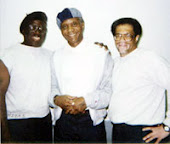
‘Bloodiest Prison in the South’: The Angolan 3

The case of the Angolan 3 continues to interrogate and question the reach of the criminal justice system in America. I am sure you will find this link a compelling read.http://www.angola3.org/thecase.aspx.  The narrative centers around the murder charges leveled against Herman Wallace,  Albert Woodfox and Robert King. It provides you with different dimensions to their odyssey and struggles finding justice; the twists and turns of over 4 decades. The lesson it teaches: why we must continually seek to reform and re-engineer the machinery of justice, for, it is better to set a thousand guilty persons free, than to allow one innocent man suffer miscarriage of justice.

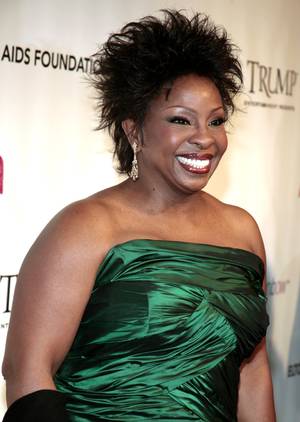
Motown Legend Gladys Knight Headlines Oklahoma IP Gala Tonight…

Full story here:

Gladys Knight

Grammy Award-winning singer Gladys Knight will headline the Oklahoma City University School of Law‘s “A Night for the Innocent” gala Thursday at the historic Farmers Public Market

The black-tie gala benefits OCU Law’s Oklahoma Innocence Project (OIP), which seeks to rectify wrongful convictions in Oklahoma.

“A Night for the Innocent” will include food, fine wine and a live auction, in addition to Knight’s performance of hits such as “I Heard it Through the Grapevine,” “Neither One of Us (Wants to Be the First to Say Goodbye)” and the No. 1 smash “Midnight Train to Georgia.” The reception starts at 6 p.m. and dinner at 7 p.m.

Honorary co-chairs Melvin and Jasmine Moran and Jerry and Jackie Bendorf will present the Beacon of Justice Award to Drew Edmondson, Barry and Becky Switzer and Dr. R. Cullen and Bonnie Thomas.

Read more: http://newsok.com/gladys-knight-will-headline-oklahoma-city-university-law-schools-innocence-gala/article/3665250#ixzz1rpe4eHGR

Cops in Connecticut Drop Case Saying Eyewitness ID Evidence Often Too Shaky To Stand Alone…

Chief Duane Lovello

Full article here….the important quote is here:

“If you are going to seek an arrest warrant based solely on eyewitness identification, you are treading on dangerous waters,” said Darien Police Chief Duane Lovello, a member of the state’s Eyewitness Identification Task Force. “It’s not something police want to do.”

It’s good to see all the research from the Innocence Movement started to have real world impact with officers who are up to date with science and open to reforming the system for the better.

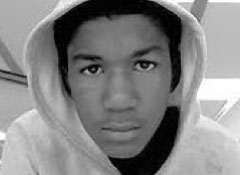
Twists and Turns to the Trayvon Martin Saga

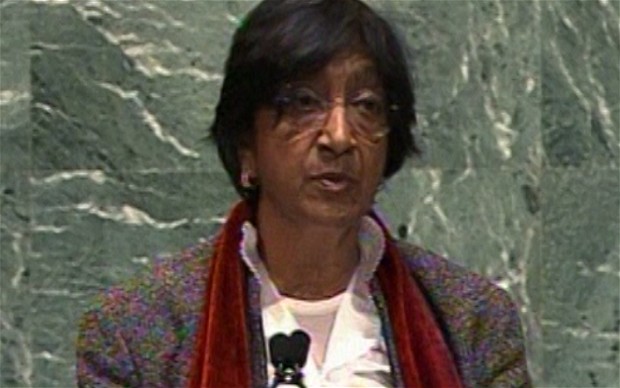
Now, the UN High Commissioner for Human Rights has descended into the fray. She wants an ‘immediate investigation’ of not only this, but similar cases that calls into question the quality of justice delivery. Read http://www.telegraph.co.uk/news/worldnews/northamerica/usa/9189884/Trayvon-Martin-killing-UN-human-rights-chief-calls-for-investigation.html. Some would charge that this is presumptuous, since the matter is still under investigation. The question in retort is, for how long should this investigation drag?

Although some media networks have attempted to unduly hype, and in some cases ‘tweak’ the facts -an MSNBC reporter was recently relieved of his job for doing just that – the point remains that the due process has been sluggish. It appears the Special Prosecutor will be undermining convoking a grand jury and proceed to make her report/opinion public soon, after reviewing all of the facts. She will then decide one way or the other, whether to cause Zimmerman’s arrest and prosecution and/or instruct on what steps to take to resolve this tragic incident.

The morale of this case should not be lost. It’s about scrupulous adherence to the law. For me, it’s about justice for all concerned – both to Trayvon Martin and George Zimmerman- so that at the end, everybody would be rest assured that justice was done. At the moment, leaving the case in abeyance has tended to throw in extraneous and sometimes irrelevant considerations. Experience shows that, these usually are the warning signals and precursor to wrongful conviction cases, when the facts are ‘everywhere’. We all await the decision of the Special Prosecutor.

Central Park case showed how media fuels injustice

Sarah Burns’ book The Central Park Five: A Chronicle of a City Wilding, is one of the best books on a wrongful-conviction case in recent years. The documentary she is now producing with her father, Ken Burns, promises to be equally compelling.

The book and film focus on the wrongful conviction of five black and Latino teenagers in 1990 for the particularly vicious assault and rape of a white woman while jogging through New York’s famed Central Park on the evening of April 20, 1989.

The case set off a media frenzy in the crime-plagued city that soon spread across the United States after police announced that the five youths had confessed that they had committed the rape as one of a series of random assaults they and other teens committed in the park that night, a process they supposedly called “wilding.”

Burns adeptly dissects this case the skill of a surgeon. She shows how police jumped to conclusions and then manipulated and intimidated the five boys into highly inconsistent confessions that were greatly at odds with the facts. In the process, Burns shows how the police ignored the similarities between the rape of Continue reading

Good Cop Kristen Ziman Doesn’t Know How Good She Is: Tunnel Vision About Tunnel Vision

Nancy Petro commented in her post yesterday about Aurora, Illinois, police commander Kristen Ziman’s editorial It Shouldn’t Be A Surprise When Cops Do the Right Thing, and I’d like to add a few words.  By way of background, I previously blogged here and in a post entitled Good Cops Warm the Heart, about the fact that Kristen Ziman’s department has taken affirmative steps when new information comes to light to open-mindedly look into old convictions to make sure that the right person is in prison.  In one instance, her department’s pro-active “second-look” policy resulted in the exoneration of an innocent man.  Thus, the national acclaim was quite justified.

Ziman’s recent editorial shows that she was surprised (and a little offended) that blogs like this one were so congratulatory of her department’s good deeds.  The reaction to her office’s conduct was offensive to her because it carries with it an implicit suggestion that her department’s conduct is not typical.  It carries with it an assumption that other police departments would sometimes fail to act on new evidence that shows an inmate might be innocent.

In defense of her profession, Ziman recognizes that there are a few bad apples in police departments here and there, but correctly notes that there are bad apples in all walks of life.  Thus, she suggests that police departments as a whole are perhaps not deserving of such criticism because of a few bad apples.  Accordingly, she says, police departments have a lot of work to make the public realize that its perceptions are unfair and do not match reality.

I agree with Ziman that most police officers (and prosecutors) are honorable and want to do the right thing.  I also agree with her that there are just a few bad apples in police departments and prosecutors’ offices here and there, and not at any higher ratio than in other professions or organizations (such as law schools or Innocence Projects or any other entities).

I believe, however, that Ziman has completely missed the point, as have most Continue reading

Police Departments, We Have a Problem: An Erosion of Trust

Aurora (IL) Police Commander Kristen Ziman was both surprised and a bit offended by praise heaped on the Aurora Police Department for its reinvestigation of a case that prompted the exoneration of Jonathan Moore. Moore had served twelve years for murder when new evidence suggested that he wasn’t the perpetrator. Ziman didn’t think the decision to reinvestigate the case was unusual. It’s the kind of integrity her department shows every day. Doing the right thing, she reasoned, should not be so exceptional as to receive widespread recognition and praise.

What garnered all of the attention? Continue reading

Shaken Baby Syndrome (SBS) Blog

Sue Luttner is a San Francisco Bay area technical writer and journalist who found herself following the polarized professional debate that’s surrounded shaken baby syndrome (SBS) for the past two decades. After years of research, she has concluded that well-intentioned child-abuse professionals working with an overly simple model of SBS are, in some cases, convicting innocent people and tearing apart innocent families.

Sue maintains a blog on the subject, onsbs.com, and here is a link:

http://onsbs.com

Child Abuse Medical Hubris – Will it Ever End?

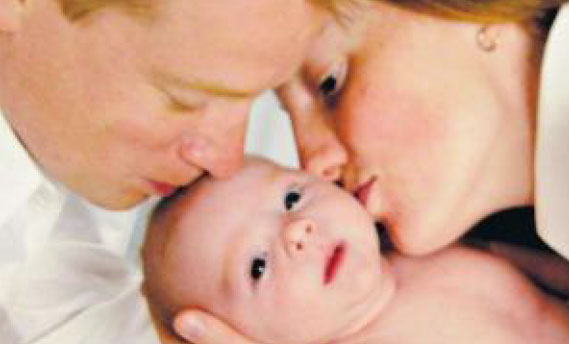
This is a picture of Baby Allysa with her parents.  Allysa has since died of a genetic condition, spinal muscular atrophy, that is fatal in infants.  Tragically, her death came after the death of her parents who were under investigation for child abuse because of the broken bones in Alyssa’s legs.  Allysa had been taken from her parents at 3 months and given to a foster mother.  Facing imminent arrest, Allysa’s father, increasingly despondent and distraught, shot his sleeping wife in the head, and then killed himself.  It was shortly after this that Alyssa’s genetic condition, which explains the broken bones, was finally diagnosed.

Dr. John Plunkett recently posted an article on this case on the SBS Listserv, with this comment:

“Physicians, not social workers, initiate and propagate the incorrect diagnoses.”

A copy of the article from the Dnever Post is here:

Olinger D. Spinal muscular atrophy. Denver Post, 2012-04-01

This is a heart breaker, but aren’t they all.  I have to agree with Dr. Plunkett’s view. The medical community is going to have to take the elevator down from their ivory towers, deflate their bloated egos, and admit there is much they don’t know, and that they are not always right.  I can’t blame the pediatric medical community for wanting to “protect the babies”, but they have to get it right, and not be locked-in to predispositions about abuse diagnoses.

Phil Locke

Wrongful Conviction: A Worthy Topic for Continuing Legal Education

The Innocence Project model—the free legal clinic that utilizes DNA analysis of crime scene evidence to prove the innocence of the wrongfully convicted—has now been widely duplicated across the United States and the globe. While most Innocence Project clinics are attached to law schools and rely upon selected law students who earn academic credit and hands-on legal experience in challenging post-conviction efforts, wrongful conviction per se is not an emphasis in the curriculum of most law schools. It’s therefore troubling but not surprising that many lawyers are unfamiliar with the primary causes of wrongful conviction, the implications wrongful convictions have had on the reliability of important forms of evidence such as eyewitness testimony and confessions, and recommended reforms that can reduce conviction error.

After all, the lessons of DNA are relatively recent. Just two decades ago most Continue reading

Brian Banks: The Case for Taking on Post Release Sex Offender Innocence Cases

Brian Banks had the world in his hands.  He was a star high school football player. Every major college program in the country wanted him to play for them.  There was already talk of an NFL career.  That all ended when he was falsely accused of rape.  His lawyer told him to plea bargain even though there was no physical evidence of the crime.  He was told that he might spend the rest of his life in prison even though the case was built on the shaky testimony of his alleged victim, a fellow high school student.

Brian took the deal and went to prison for several years.  His scholarship disappeared, his dreams disappeared, but when he got out of prison he was determined to get those dreams back.   Had he been convicted of any other crime, even a murder, he would have had an easier time, but convicted sex offenders are  in a class all their own.  The time is never served.  For the rest of his life he would be on sex offender lists, the government would need to know where he lived, and he would have trouble getting jobs or coping with the relationship issues that come with explaining to your girlfriend that you were convicted of rape, you plead, but you were actually innocent.

All innocence projects are overwhelmed with work.  Thus, as directors we must make tough decisions about what cases to take on.  In reviewing cases, priority is often determined based on the punishment the potentially innocent person is facing.  Death penalty cases have the highest priority.  Life cases are just behind them.  Cases with significant terms of years are third.  Most of us never get to the cases where a client has been released.  There are too few resources.  The cases take too much time and too much money.

Sex offender cases should be treated differently than other cases.  They are life sentences.  Brian’s case is a reminder of what gets taken away when someone is falsely accused of rape.  It is also a call for all projects to at least consider taking on these cases.

Brian Banks Website

Senate Commerce Committee Holds Hearing on “The Science and Standards of Forensics”

Sarah Chu

This entry was written and submitted by Sarah Chu, Forensic Policy Advocate at the Innocence Project:

On March 28, 2012, the Senate Commerce Committee held a hearing on “The Science and Standards of Forensics.”  This Committee of Congress has jurisdiction over the science agencies of Congress – the National Science Foundation (NSF), the National Institute for Standards and Technology (NIST), and the National Academy of Sciences (NAS).  Our hope is that these science agencies will have a new or more significant role in the future of forensic science.  An articulation of their roles will further demonstrate to the American public that forensic science should be grounded as a scientific endeavor.  Dr. Eric Lander (Innocence Project Board Member, President and Founding Director of the Broad Institute of Harvard & MIT, and Co-Chair of the President’s Council of Advisors on Science and Technology), Dr. Patrick Gallagher (Director of NIST), and Dr. Subra Suresh (Director of NSF) were the invited panelists.

In his opening statement, Senator Rockefeller stated, “I don’t often get the chance to say that a Commerce Committee hearing is about truth and justice.  But that’s exactly what this hearing is about today.  It’s about using more science in our criminal justice system.  And it’s about creating standards that judges, prosecutors, defense lawyers, and juries all can trust.”  He called attention to the need to create a culture of science because “Too often, their conclusions are subjective and lack scientific validation and standards.  Without properly analyzed evidence, it’s harder for law enforcement to apprehend and prosecute criminals.  And it’s more likely that our system will wrongfully convict innocent Continue reading

Trayvon Martin and Casey Anthony – We Don’t Know What We Don’t Know

The Trayvon Martin case has been getting LOTS of media coverage.  Of course – this is a racially charged situation.  But I would like to echo Martin Yant’s previous post on the danger of a “rush to judgement”.  You cannot – I repeat, CANNOT – try these cases in the media.  There is no way “Joe citizen” can possibly be cognizant of all the details, and facts, and intricacies of a case like this.  And there is great probability that neither the prosecution nor the defense can either.

With all the media hype, people make a quick determination based upon their own set of prejudices, and then form an emotional attachement to that determination.  Then “confirmation bias” kicks in big time.

And at this point in time, the investigation hasn’t even been completed.

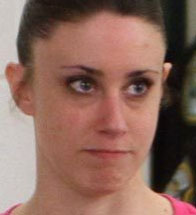
Another case in point is the Casey Anthony case.  Now …. did Caylie Anthony die? Yes.  Was her body found in a garbage bag?  Yes.  Did her mother have any kind of involvement in her death and the coverup?  Probably.  But was it premeditated, 1st degree, capital murder?  The jury said “no”.  And the jury did the right thing.  The prosecution did not prove it’s case.  In their rush to “make big headlines” and “build careers” they got greedy.  A lesser charge would have returned a “guilty” verdict in a minute.

Whether you be prosecution or defense, this is supposed to be about facts, and truth, and logic, and JUSTICE.

Wednesday’s Quick Clicks…