Category Archives: Editorials/Opinion

Prosecutorial Ethics in Inquisitorial Systems…April 2012 Thoughts….

Anyone who does innocence work in the U.S. is familiar with prosecutorial tunnel vision, stiff prosecutorial resistance to innocence claims, and all the nasty and unreasonable responses we often get from prosecutors that we tend to chalk up as a by-product of our adversarial system of justice.

After reading Huff and Killias’ book Wrongful Convictions:  International Perspectives on Miscarriages of Justice, I became very interested in prosecutorial training and ethics in the inquisitorial justice systems of Western Europe.  Many of the articles in the book depict the inquisitorial systems of justice as ones in which prosecutors take very seriously their duty to remain neutral and seek justice over victories.  Anyone interested in this issue should read the Huff and Killias book, as they do a convincing job of highlighting some strengths in the inquisitorial systems.  This book, and conversations with some of the authors in the book, caused me to say in a forthcoming article:

In recent years, I have spent quite a bit of time outside of the United States helping attorneys and scholars set up the framework for innocence organizations in their home countries.  In Western European countries, where the systems are inquisitorial rather than adversarial, scholars tell me that the prosecutors are trained early on to seek the truth and to be as objective as possible.  This Continue reading
Keith Findley: Mounting Evidence Questions the Justice in Shirley Smith Case

Written and submitted by Keith Findley, Wisconsin Innocence Project director and President, Innocence Network Board of Directors:

NPR disclosed last week that a senior pathologist in the Los Angeles County coroner’s office has sharply questioned the forensic evidence used to convict Shirley Smith, a 51-year-old grandmother, of shaking her 7-week-old grandson to death.  The disclosure comes three months after the U.S. Supreme Court reinstated Shirley Smith’s conviction and sentence for felony child endangerment by summarily reversing the 9th Circuit’s grant of habeas relief in Cavasos v. Smith.

According to NPR, the newly disclosed report by the pathologist, James Ribe, details eight “diagnostic problems” with the coroner’s 1996 ruling that the child had died from violent shaking or a forceful blow to the head.  Ribe’s report notes that there was no evidence of abuse, and that the child’s brain injuries were relatively minor and could have been caused by suffocation from sleeping face down on a couch cushion or even from the birth process.

These revelations make the Supreme Court’s summary reversal in Smith’s case all-the-more troubling.  The Court’s per curiam majority treated this as a routine decision mandated by established principles requiring deference to juries in Continue reading

NY Landmark Ruling Allows Expert Witnesses on False Confessions at Trials; Defendant in Case, However, Does Net Meet the Criteria

Story by Emily Horowitz, Director, National Center for Reason and Justice (www.ncrj.org)

On Thursday, March 29, 2012, New York’s highest court made a landmark ruling, saying that expert testimony about false confessions should be allowed at trial. Shamefully, the 5-2 decision upheld the conviction of Khemwatie Bedessie, the defendant represented by Ron Kuby, who was not allowed to have an expert witness on false confessions at her 2007 trial, saying that in her particular case a false confession expert was not needed. The Bedessie case, fiscally sponsored for 5 years by the National Organization for Reason and Justice (http://ncrj.org/Bedessie/), is reminiscent of the classic daycare panic case of the 1980s/1990s, where daycare centers were centers epicenters of false allegations of sexual abuses – and some of those notorious cases included false confessions.

In the New York Time article about the ruling, it says that Bedessie confessed “twice” to sexually abusing a young boy at the daycare center where she worked Continue reading

Wrongful Conviction Declared 179 Years too Late

“…I am as innocent ‘an an unborn child'” were the last words of Catherine Snow before she was hanged in Newfoundland after being convicted of her husband’s murder in 1833. The verdict by an all-male jury was based on circumstantial evidence, including her known infidelities, and prejudice. While she admitted that she was “a wretched woman,” she proclaimed her innocence in her husband’s death. According to a CBS News report here, the case troubled jurists for years. A modern-day jury, with new perspectives and equipped with current understandings of wrongful conviction, has reviewed the evidence and has acquitted Snow.

Clemency Consideration in California May Shed Light on Shaken Baby Case

Shirley Ree Smith, 51, spent 10 years in a California prison after being convicted in the alleged shaken baby death of her infant grandson 15 years ago until the U.S. 9th Circuit Court  of Appeals reversed her conviction in 2006 based on a lack of “demonstrable support” of the prosecution’s theory. The U.S. Supreme Court urged the 9th Circuit to reconsider and has ordered the lower court to reinstate the conviction, but the ruling also noted that clemency—now being considered by Gov. Jerry Brown—might be appropriate for Smith, due in part to lingering doubts about her guilt.

The L.A. Times reports  here that Los Angeles District Attorney Steve Cooley has called upon three experts to review the autopsy reports, evidence and testimony Continue reading

New Research Suggests Lack of Oversight and Consequence for Prosecutorial Error

New research suggests a lack of oversight and consequence for prosecutorial error and misconduct. The research, detailed here, conducted by the Veritas Initiative—the prosecutorial accountability program of the Northern California Innocence Project—was released yesterday at a University of Texas Law School forum.

From 2004-2008 Texas prosecutors committed error in 91 cases documented in published trial and appellate court decisions. The courts “upheld the conviction in 72 of the cases, finding that the error was ‘harmless.’ In 19 of the cases, the court ruled that the error was ‘harmful’ and reversed the conviction.” From “2004 until November 2011, only one prosecutor was publicly disciplined by the Texas Bar Association.” Austin was the second stop of a national (United States) tour focusing on prosecutorial accountability organized by the Prosecutorial Oversight coalition.

Recent Rulings Suggest Prosecutorial Immunity Has Boundaries

U.S. District Court Judge Joe Billy McDade has ruled that two McLean County (IL) prosecutors are not immune from all claims of alleged misconduct in a lawsuit filed as a result of the wrongful murder conviction of Alan Beaman. Beaman served 13 years for the murder of  his former girlfriend Jennifer Lockmiller before the Illinois Supreme Court overturned his conviction. Pantagraph.com reports here that Judge McDade’s ruling is consistent with a recommendation from federal Magistrate Judge Byron Cudmore that prosecutors James Souk and Charles Reynard were immune from claims related to their prosecutorial roles but that immunity does not extend to their involvement in the case before arrest.

Beaman’s lawsuit alleges that the prosecutors conspired with Normal (IL) police officers and a McLean County Sheriff’s officer in framing Beaman for the murder. Continue reading

Is Massachusetts Set to Reconsider Basis for granting Legal Aid?

If David Linsky (Massachesetts State Rep) gets his way with his proposed new legislation, legal aid might be considerably withered down for certain types of offenses. The time tested basis for grant of legal aid – ‘means and merits test’ – will no longer, in themselves, suffice. Not even the ‘sufficient benefit test’ will be available to a sizeable chunk of cases, which will not fall within the proposed new basis for grant of legal aid. The legislation as it is being proposed, intends to make the basis of provision of legal aid, not solely upon the economic condition of the defendant, but whether the defendant is facing jail time or not. This effectively becomes the new and overriding test for granting financial assistance.

The arguments, for and against, continue to swirl; but one thing appears almost certain, this is one way of depriving thousands their right to legal representation. The right to legal representation is one of the canons for a fair trial. Read a report of the pros and cons herehttp://www.lawcrossing.com/lcviewblog.php?id=20075&utm_source=WNW&utm_medium=Email&utm_campaign=t_15327–dt_20120327-cid_34015-Did_121-ad_attorney&ces=12705727&draft=121&cid=34015#

A rush to judgment is never a good thing

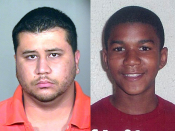
Hysteria over what seems to be a particularly egregious crime often leads to a wrongful conviction. The world has seen this many times, but it always seems to forget that lesson when another incident causes outrage, as has the shooting death Florida teenager Trayvon Martin.

The death of an unarmed kid is an obvious tragedy. But no matter how misguided George Zimmerman, the man who shot Martin, might seem, it’s important to keep in mind that everything that occurred that night is not yet known. That’s why the calls from some corners for vengeance before all the facts are known are disturbing. A rush to judgment from stage left is no more palatable than a rush to judgment from stage right, from which they more often come.

Miami Herald columnist Glenn Garvin made that point today, when he wrote:

“I’ve read tens, maybe hundreds, of thousands of words on the shooting death of Trayvon Martin, the South Florida teenager whose shooting death last month at the hands of a neighborhood watch volunteer has become a national symbol of continuing American racism. But in all those words, there are three that haven’t come up that seem worth remembering to me: Duke lacrosse team.” Read more here.

What Really Happened in the Amanda Knox Case?

I have followed the Amanda Knox case over its course, and was recently able to attend a talk given by Prof. Greg Hampikian of Boise State University on the subject.  Prof. Hampikian is also Director of the Idaho Innocence Project and an internationally recognized authority on DNA forensics.  Prof. Hampikian advised the Amanda Knox legal team on DNA issues.

After the dust had settled, I felt compelled to write a brief summary of the case based upon my own knowledge of the case combined with information from Prof. Hampikian’s presentation – just to try to put it all into perspective.  That summary follows.

Continue reading

A Suggestion for Virginia: Step Up Efforts to Locate Convicted Persons Excluded by DNA

Last Wednesday, James Moses Glass, 56, was indicted for the 1978 rape of a William & Mary coed. For more than 25 years this crime wrongfully defined Bennett Barbour as a rapist. He served 4-1/2 years in prison, which cost him his marriage, marred his relationship with his daughter, and labeled him a violent felon. Two years ago, as a result of Virginia Governor Mark Warner’s 2005 order to retest all DNA samples obtained from 1973 to 1988, Barbour was excluded as the rapist. The DNA instead linked James Glass to the crime. Glass was in the database due to a 1979 rape conviction in New York. But, if it weren’t for a private attorney’s pro bono efforts, Barbour might never have known that the innocence he has always claimed finally had been proven.

According to a Richmond Times-Dispatch article here 76 felons have been excluded as the source of the DNA evidence in their cases, but as of January of this year, 29 of those still assumed living had not been notified of these results. It seems that Virginia hasn’t been very successful in notifying those who would benefit most from the results (or apparently of notifying the crime victims or of reinvestigating the cases where conviction error is suspected).  Private Continue reading

U.S. News Programs Explore Systemic Wrongful Conviction Issues

Millions of Americans had their eyes opened to two important criminal justice issues—prosecutorial misconduct and wrongful conviction compensation—as national television news programs explored topics related to wrongful conviction last night, Sunday, March 25, 2012. Ohio Innocence Project Director Mark Godsey previously announced these programs on this blog. If you missed them, see the video link here to the 14-minute segment of CBS’s 60 MINUTES with Michael Morton, who spent 25 years in prison before DNA proved he didn’t murder his wife. The piece explores the case that has prompted a rare judicial inquiry into allegations of prosecutorial Continue reading

Trayvon Martin, as Metaphor for Due Process and Justice

The facts and facts in issue are still foggy. However, there is a groundswell of ‘opinion’ in the public domain, tending to suggest that the circumstances and events leading up to the death of young Trayvon Martin, will severely test the due process, policing techniques and strategies, and importantly, why that process is not playing itself out, sooner than most people expect. Parties must eschew playing the ‘race card’ because that will not be the real lesson to be learnt, rather, this is about justice for a young boy brutally gunned down in his youth. As all parties to this crime – the victim and the alleged accused- are busy marshalling their cases, it is important we dont lose focus of the issues, nuances and process; because, ultimately it is the ends of justice that will be best served if we keep our focus. Read and watch CBS News video here http://www.cbsnews.com/8301-505263_162-57403856/trayvon-martin-case-escalates-into-a-cause/

The lessons of the last 4 decades has taught us to be very wary and circumspect of eyewitness accounts; expert evidence/witnesses, science and forensic. The legal maxim still holds true today, and in relation to this case, that, it is better to set 1000 guilty persons free, than allow one innocent person to be convicted and sent to prison. Mindful of this dictum, it behooves the authorities to set legal protective mechanisms in place, whilst asking probing questions, engaging with the law and ensuring all revelant facts are unearthed and placed before a proper judicial authority -judge, jury and grand jury. As the facts continue to unfold, we must be guided by fairness and the law, in order to avoid convicting the innocent. On the flip side, the full weight of the law must be brought to bear on George Zimmerman if he is found guilty of killing Martin Trayvon. This is one killing too much!

Judicial Independence – How Do We Get There?

An independent judiciary – one that is not influenced by campaign contributors or special interest groups or religions or political parties or other power brokers.  Sounds like it should be the bedrock of a fair and impartial criminal justice system, doesn’t it?  Well … I’m afraid that ain’t what we got.

With the exception of Arizona (judges are appointed by the governor or elected on a non-partisan ballot), all US state level judgeships are elected political positons (just like prosecutors).  We all know that “Job 1” for any elected official is  to to get reelected.  This automatically sets in place a host of the “wrong” incentives for judicial job performance.  It’s human nature, and it’s a fact.  There will be pressure for politically elected judges to make judicial decisions that will accommodate the political base.  And I will have to opine that appointees by a governor, while not having to campaign for reelection, are also political postions.

Continue reading

Ohio Attorney General DeWine Against Proposal to Restrict Compensation to Wrongfully Convicted

A provision to deny compensation to a wrongfully convicted person if he or she had a previous felony or violent misdemeanor record does not have the support of Ohio Attorney General Mike DeWine. In fact, his office will advocate against it. The measure was submitted by his staff but he did not see or approve the restriction. In a Columbus Dispatch article here, DeWine said, “This doesn’t make sense to me.”

Governor Kasich’s spokesman said that the governor’s office would not oppose removal of the proposal from the massive budget bill.

Thanks to Attorney General Mike DeWine and Ohio Governor John Kasich for their positions on the removal of this provision, and to Ohio Innocence Director Mark Godsey for speaking out forcefully against it, noting the difficulty exonerees often have in getting compensation for years spent in prison for crimes they did not commit, “It’s too difficult as it is, ” Godsey said. “There’s only a few that have been able to do it.”

Important Court of Appeals Ruling Yesterday May Inform Other Arson Appeals

The Indiana Court of Appeals vacation of the arson conviction of Kristine Bunch, who spent 16 years in prison after a mobile home fire killed her young son, will likely be raised in other arson convictions.  More on this case here  and here. The court cited advances in fire science that discredit forensic testimony used in this and many arson cases. Bunch is now presumed innocent. Prosecutors must decide if they will re-try her. The Indiana Attorney General’s office disagrees with the ruling and has 30 days to ask the Court of Appeals to rehear the case or appeal to the Indiana Supreme Court. The Center on Wrongful Convictions at Northwestern Law and former federal prosecutor Ron Safer and his colleagues at Schiff Hardin, who worked pro bono, championed this case.

Innocence Project Legal Directors Praise State’s Attorney and Police for “Model Response”

In a Chicago Tribune article today here, John Hanlon, legal director of the Downstate Illinois Innocence Project, and Steven Drizen, legal director of the Center on Wrongful Conviction at Northwestern Law praise Kane County (IL) State’s Attorney Joe McMahon and Aurora Police Chief Greg Thomas for pursuing truth even after a conviction, which resulted in the vacation of the murder conviction of Jonathan Moore. Key to this “model response”: Not having tunnel vision or defending a conviction in the face of significant new evidence, but instead dedicating resources—and “fresh” investigators—to a reinvestigation.

Matthew Puckett: The last hour or two, or Reprieve!

It now appears down to the US Supreme court to decide the fate of Matthew Puckett. His lawyers last week filed a petition with the supreme court for a reprieve. In the next couple of hours -that is, if the supreme court hasn’t already decided the petition for stay of execution, one way or the other; the State of Mississippi will either carry out the execution of Matthew Puckett, or grant him reprieve. Read views by Matthew Puckett himself and his supporters in The Republichttp://www.therepublic.com/view/story/c1713c9ba2024f66b35f204c243658d8/MS–Mississippi-Executions/

But there seems to be grave concerns from responsible quarters, that the trial leading to the conviction ‘may’ have been flawed in some way and therefore unsafe. There are procedural concerns; the quality of legal advice and representation that was available to him; circumstantial evidence which points in other possible directions.  Matthew Puckett continue to deny he is guilty. Hear him – ‘Like a lot of people, I thought if someone was convicted of a crime, they were probably guilty. But if this can happen to us, it can happen to anyone’.

The real concern here is the possibility of a wrongfully convicted person being executed; where that decision has been aided and abetted by the justice system. Jim Craig of the Louisiana Capital Assistance Center (a non profit law office) thinks the appeal was ‘fake’. He said further ‘We are here to, among other things, expose a fraud at the center of the Mississippi system of justice’.

We all hope there is still enough time left!

Lawsuits continue in wake of infamous “Beatrice Six” wrongful convictions

Sometimes an outrageous injustice prompts legislative steps toward reform. In the U.S., the state of Nebraska’s first DNA exoneration was the infamous case of the so-called “Beatrice Six.” Five falsely confessed (in exchange for lighter sentences) to the brutal 1985 rape-murder of 68-year-old Helen Wilson in Beatrice, NE. The sixth, Joseph White, insisted he was innocent, was convicted, and sentenced to life. After losing on appeal, he battled the state for years for the right to test the crime scene DNA. When finally tested in 2008, it excluded all six and linked to the true perpetrator.

Nebraska Attorney General Jon Bruning proclaimed the Beatrice Six “100 percent innocent.” They had served more than 76 years in prison. Publicity about Continue reading

Bryant “Rico” Gaines to Walk Free Today in Ohio: Reflections on System Resistance to Innocence

Later today, Ohio Innocence Project client Bryant “Rico” Gaines will walk free after serving 9 years of a life sentence for a murder he did not commit.  (Details of case, and grounds of innocence, available  here).  OIP attorney Karla Hall and Cincinnati defense attorney Bill Gallagher, along with scores of students, worked very hard over the years to bring about Rico’s freedom, and they deserve many congratulations.  But Rico will not be going home cleared of all charges, despite the fact that he is innocent.  He walks free today after deciding to  take a plea deal to a reduced charge of “conspiracy to commit involuntary manslaughter.”  His decision was simple.  He has two daughters, including an 11-year old daughter that he has barely seen since she was 2 when Rico was locked up.  Rico knows he had nothing to do with the murder in this case, but after having clear evidence of  innocence in his favor for many years, and seeing how the prosecutors and courts refuse to listen, he decided that taking a plea and lying about his involvement in the murder was the price to pay for freedom and being reunited with his daughters immediately.

Rico’s case is a testament to three things:  (1) how difficult it is for an innocent man to win his freedom when there is no DNA in his case; (2) the lengths that the system will go to deny admitting a mistake; and (3) how difficult it is for a Continue reading