Category Archives: False confessions

Saturday’s Quick Clicks…

  • Ohio Innocence Project wins new trial in Roger Dean Gillispie rape case based on new evidence of alternative suspect.  Decision here
  • DNA frees innocent man, but not in typical way; he was in jail for failure to pay child support and DNA testing proved the child wasn’t his
  • Article about many successes of Innocence Project of Florida
  • Baltimore police department moving toward recorded interrogations
  • Michigan Innocence Clinic case is stalled because, astonishingly, the court has lost all the filings and paperwork in the clinic’s post-conviction murder case
  • Full version of documentary 6,149 Days, the story of the wrongful conviction of Greg Taylor in North Carolina
  • Great Wall Street Journal article on weakness of eyewitness id

Audio and Visual Recording of Interrogations by Public Prosecutors

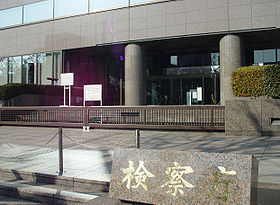
The Entrance of Public Prosecutors Office in Tokyo

The Entrance of Public Prosecutors Office in Tokyo

One of the critical tasks for the Japanese prosecutors is to interrogate the suspects themselves. I posted here about how police interrogations are partially recorded in some cases today. So what about interrogation by prosecutors? Are they recorded?

The answer is yes and no. Yes, they are sometimes recorded but only a few cases are recorded entirely, and most cases are not recorded at all.

In May 2006, the Supreme Public Prosecutor’s Office announced that they will start recording some interrogations on an experimental basis. Only serious cases were chosen, and the final part of the interrogation – the scenes where the suspect has confessed and signs the dossier – was recorded. It was up to the prosecutors’ discretion which cases and which part of those cases should be recorded.

Then there was an unprecedented scandal in 2009, involving a public prosecutor by the Special Investigation Division in Osaka Public Prosecutors Office . Continue reading

Central Park case showed how media fuels injustice

Sarah Burns’ book The Central Park Five: A Chronicle of a City Wilding, is one of the best books on a wrongful-conviction case in recent years. The documentary she is now producing with her father, Ken Burns, promises to be equally compelling.

The book and film focus on the wrongful conviction of five black and Latino teenagers in 1990 for the particularly vicious assault and rape of a white woman while jogging through New York’s famed Central Park on the evening of April 20, 1989.

The case set off a media frenzy in the crime-plagued city that soon spread across the United States after police announced that the five youths had confessed that they had committed the rape as one of a series of random assaults they and other teens committed in the park that night, a process they supposedly called “wilding.”

Burns adeptly dissects this case the skill of a surgeon. She shows how police jumped to conclusions and then manipulated and intimidated the five boys into highly inconsistent confessions that were greatly at odds with the facts. In the process, Burns shows how the police ignored the similarities between the rape of Continue reading

Proposed “Expansion” of Partial Recordings of Police Interrogations

The National Police Agency (NPA) started audiovisual recordings of parts of police interrogations on an experimental basis in 5 police departments across Japan back in September 2008. NPA extended the experiment to include all police departments from April 2010. Recently in March, it expanded the partial recordings to interrogations in more cases.

Previously, partial recordings of interrogations aimed to strengthen the prosecution’s case in proving the voluntariness of confessions at trial. They only recorded in those cases where 1. the trial was subject to a mixed-judge panel trial (with lay judge participation = most serious cases), 2. the suspect had already confessed, 3. the “truth-finding” function of the interrogation was not compromised, 4. there was no difficulty in recording, and 5. the voluntariness of the confession might be challenged at future trial.

In these cases, interrogations by police were partially recorded, only after suspects confessed: there was no recording during the process leading up to the confession itself. Read the NPA report on these experimental recordings in June 2011 here (in Japanese).

An internal study panel of the National Public Safety Commission issued a report in February 2012. It called for the expansion of partial recordings, although it did not recommend the recordings of the entire process of interrogation. Read the report here (in Japanese).

As recommended by the February report, Continue reading

Officers Involved in Juan Rivera False Confession Now Teaching Other Cops…

Press release from the Center on Wrongful Convictions:

It’s hard to imagine anything more perverse: Two Lake County, Illinois, law enforcement officials involved in the false-confession cases of Juan Rivera and Jerry Hobbs have been teaching state-mandated courses required for state certification of lead homicide investigators.

Journalist Dan Hinkel discloses the situation in this morning’s Chicago Tribune:

http://www.chicagotribune.com/news/local/ct-met-police-training-20120406,0,7358533.story?page=1&track=rss

State Senator William Haine, a former prosecutor who pushed for the certification program, told the Tribune he was “shocked” to learn that the two Lake County officials — Lou Tessmann and Jeffrey Pavletic — were teaching the course.

Tessmann and Pavletic, in Haine’s words, “have more baggage than a Greyhound bus.”

Steve Drizin, legal director of the Center on Wrongful Convictions, said the courses taught by Tessmann and Pavletic threaten to spread Lake County’s flawed investigative practices throughout the state “like a virus.”

Lake County may be an extreme example, but Tessmann and Pavletic are hardly the only rogues who have been elevated to the status of role models for future renegades. It’s a national problem.

Rob Warden, Executive Director

NY Landmark Ruling Allows Expert Witnesses on False Confessions at Trials; Defendant in Case, However, Does Net Meet the Criteria

Story by Emily Horowitz, Director, National Center for Reason and Justice (www.ncrj.org)

On Thursday, March 29, 2012, New York’s highest court made a landmark ruling, saying that expert testimony about false confessions should be allowed at trial. Shamefully, the 5-2 decision upheld the conviction of Khemwatie Bedessie, the defendant represented by Ron Kuby, who was not allowed to have an expert witness on false confessions at her 2007 trial, saying that in her particular case a false confession expert was not needed. The Bedessie case, fiscally sponsored for 5 years by the National Organization for Reason and Justice (http://ncrj.org/Bedessie/), is reminiscent of the classic daycare panic case of the 1980s/1990s, where daycare centers were centers epicenters of false allegations of sexual abuses – and some of those notorious cases included false confessions.

In the New York Time article about the ruling, it says that Bedessie confessed “twice” to sexually abusing a young boy at the daycare center where she worked Continue reading

Li Zhuang: Chinese Defense Lawyer Who Was Found Guilty of Suborning Perjury

Background

In November 2007,  Bo Xilai , one of the Chinese best-known politicians, was appointed as the Communist Party of China Chongqing Committee Secretary, first-in-charge of the Western interior municipality with 30 million people.

Bo initiated an ambitious campaign against organized crime in July 2009. It was directed at the gangsters and powerful officials who control the gangs and enable them to flourish. Wang Lijun, police chief of Chongqing, was the campaign’s overlord. Some 6,000 people, amongst whom were wealthy businessmen, police officers, judges and legislators, have been arrested.

Wang Lijun (left) and Bo Xilai

This powerful campaign drew national attention and brought fierce controversy. Many applauded it for making the city safer, but others criticized it for neglecting due process.

In the campaign, li Zhuang Case(李庄案) received the most attention. Li, a Beijing-based lawyer, was sentenced to eighteen months for perjury after his client, a suspected gangster, reported to the police that Li incited him to lie to the court that police officers tortured him during his interrogation.

This case galvanized lawyers across China. They support Li publicly, and criticize the Chongqing government sharply.

The Li Zhuang case is so important because it is an indicator of how far China has come on its legal reform,”said a Peking University law professor, He Weifang(贺卫方), who also posted a letter to the legal professionals in Chongqing on his blog. In the letter he claimed that the campaign causes people “to feel that time has been dialed back, that the Cultural Revolution is being replayed, and that the ideal of rule of law is right now being lost”.

Season 1

In June 2009, Gong Gangmo(龚刚模), an alleged mafia boss, was arrested by Chongqing police for a string of felonies that included murder, illegal weapons trade, drug Continue reading

Saturday’s Quick Clicks…

Many Question Conviction of Man on Japan’s Death Row for 40 Years…

From News source:

After four decades awaiting execution, a recent court development offers hope of retrial for Masaru Okunishi.

An evening in March 1961, in the central Japanese village of Kuzuo: Masaru Okunishi, a farmer in his mid- thirties, attended a meeting at a local community centre.

Among those gathered that night at the community centre were Okunishi’s  wife – and his mistress.

Wine was served to the women, which Masaru Okunishi had carried to the meeting. The men drank sake and everyone toasted to success for their further networking.

But suddenly the evening started to go wrong. After a glass or two, Okunishi’s wife, his mistress and three other local women suddenly felt unwell. A doctor was frantically summoned, but the five women died shortly afterwards. Twelve other women were taken seriously ill. Continue reading

The Police Chief on Tunnel Vision and Wrongful Convictions…

Thanks to Michael D. Ranalli, Chief of Police, Glenville, New York, Police Department for his insightful and important article that appears this month in The Police Chief (magazine) about how system failures lead to tunnel vision and wrongful convictions.  Ranalli compares an officer who elicits a false confession from a suspect to an officer who is lax on the job and as a result gets physically beaten by a suspect.  Both occur, says Rinalli, as a result of cutting corners and a lack of focus and vigilence.  Some highlights:

Officers consciously or unconsciously need to come up with a theory of the case that makes sense. Once that is done, there can be a tendency to have tunnel vision. Other leads or avenues that do not fit into this theory may be ignored or are viewed in the light of confirmatory bias. In other words, the facts that fit the theory are accepted and followed up on, and the ones that do not confirm the theory are either dismissed or made to fit the theory. It is human nature for officers to apply their own knowledge and experience to the examination of the actions of others. For many officers, it would not make sense  Continue reading

Sunday’s Quick Clicks…

Lawsuits continue in wake of infamous “Beatrice Six” wrongful convictions

Sometimes an outrageous injustice prompts legislative steps toward reform. In the U.S., the state of Nebraska’s first DNA exoneration was the infamous case of the so-called “Beatrice Six.” Five falsely confessed (in exchange for lighter sentences) to the brutal 1985 rape-murder of 68-year-old Helen Wilson in Beatrice, NE. The sixth, Joseph White, insisted he was innocent, was convicted, and sentenced to life. After losing on appeal, he battled the state for years for the right to test the crime scene DNA. When finally tested in 2008, it excluded all six and linked to the true perpetrator.

Nebraska Attorney General Jon Bruning proclaimed the Beatrice Six “100 percent innocent.” They had served more than 76 years in prison. Publicity about Continue reading

Why Do Innocent People Confess?

This question has puzzled criminologists, psychologists and criminal lawyers for  centuries. It goes against the grain of all rational permutations, why a person would, on his own ‘volition’ own up to a crime he did not commit. Prof. Mark Godsey succintly restated the befuddling conundrum this way: ‘The idea that a suspect would falsely confess to a crime that he did not commit seems counterintuitive and nonesensical. Psychiatrists and social scientists are examining the reasons why false confessions occur, and we have a long way to go before we will have a complete answer’.

David K. Shipler in his article in the New York Times of February 23, 2012 attempted to grapple with the question. He identified shoddy police investigation; suspects apprehension and fear of the system – ‘They are susceptible to suggestion, eager to please authority figures, disconnected from reality, or unable to defer gratification’. In the case of children, he states: ‘Children think they will be jailed if they keep up their denial and will get to go home if they go along with interrogators’. As for adults, he opined that ‘Matured adults of normal intelligence have also confessed falsely after being manipulated’.

The penultimate and concluding paragraphs offers 2 suggestions which I consider apposite. He says –

1. ‘The police could be prohibited from lying about nonexistent evidence; from inducing a suspect to imagine leniency; from questioning minors without a parent or a lawyer present. They could be required to corroborate a confession with stringent evidence:

2. Finally, post-conviction challenges of confessions could be assigned to judges and prosecutors other than those who tried the original cases. The natural unwillingness to admit a grave error should not have to be overcome for justice to be done’

The full text of the article can be read herehttp://www.nytimes.com/2012/02/26/opinion/sunday/why-do-innocent-people-confess.html?pagewanted=2&_r=1&ref=falsearrestsconvictionsandimprisonments

Opinion piece references impact of plea bargains on wrongful conviction

Writer Michele Alexander raises the wrongful conviction issue as it relates to plea bargaining. As an example, she writes, Erma Faye Stewart, a single African-American mother of two, arrested in 2000 in a drug sweep in Hearne, TX., claimed innocence, but was very worried about her children’s care while she was in jail. Her court-appointed lawyer told her to take the prosecutor’s deal: plead guilty for probation. She pled, was sentenced to 10 years’ probation, and a $1,000 fine. But now she was a felon. Barred from food stamps, evicted from public housing and homeless, her children were taken and placed in foster care. Read the full New York Times op-ed piece here.

More than 90 percent of U.S. criminal cases are not settled in a trial or by a jury. The plea bargaining system is seemingly essential to a criminal justice system that incarcerates about one in 100 adult Americans. But how often do innocent people plead to avoid the costs—in time and resources—of pursuing a trial or to avoid the risk of conviction and incarceration?

What should Americans expect of public officials AFTER a wrongful conviction?

In most endeavors a costly mistake results in immediate efforts to identify what went wrong and how it can be prevented. Curiously, in the criminal justice system, officials too often respond to the tragic error of convicting an innocent with defensiveness and denial. Such miscarriages of justice should prompt important improvements in the system, but these will be derailed or hard won until Americans clarify our expectations of officials after justice stumbles.

Following a wrongful conviction, public officials can go a long way toward restoring trust in the system by following a 7-step process—mandated by both decency and public relations 101—that includes (1) honestly acknowledging that a Continue reading

New Scholarship Spotlight: Convenient Scapegoats: Juvenile Confessions and Exculpatory DNA in Cook County, Il

The above-titled article, written by the Innocence Project’s Craig Cooley and two others, was posted this week on SSRN.  Download here.  The abstract states:

In the Winter of 2011-2012, in two different cases known as the Dixmoor Five and the Englewood Four, nine men were exonerated of rapes and murders based on exculpatory post-conviction DNA testing. Seven of these nine men actually confessed to the crime. This article explores these two cases and how the Cook County law enforcement agencies, including the State’s Attorney’s Office, dealt with the powerful new DNA results.


Saturday’s Quick Clicks….

The polygraph and false confessions

False confessions are a leading cause of wrongful convictions. According to the Innocence Project, about 25 percent of the documented DNA exoneration cases involved incriminating statements, full confessions or guilty pleas by innocent suspects.

The polygraph is an important tool in the extraction of false confessions. Despite the well-documented inaccuracy of the polygraph, police in North America (less so in Europe and other areas) still rely heavily on the “lie detector” and its even less accurate cousin, the voice stress analyzer, in the investigative process.  If an innocent suspect fails the polygraph exam, police will use the results to persuade him or her that they must be guilty. In some cases, police will tell the suspect that they failed the exam even when they didn’t in an attempt to obtain a confession.

Given the polygraph’s inaccuracy and record of being used to obtain confessions, I am continually amazed to come across cases in which defense attorneys Continue reading

Wednesday’s Quick Clicks…

U.S. Federal Judge Denies Prosecutorial Immunity

Federal Judge Elaine Bucklo has denied prosecutorial immunity to former Illinois Assistant State Attorney Mark Lukanich in a law suit brought by Ronald Kitchen who spent 21 years in prison for a crime he didn’t commit. Kitchen’s confession was extracted during the reign of disgraced imprisoned former Chicago Police Commander Jon Burge, notorious for torturous interrogations. Kitchen says that Lukanich was aware of his torture because he was nearby during the interrogation. The judge has ruled that Lukanich’s alleged role was part of the investigative part of the case and therefore not covered by prosecutorial absolute immunity.

Nearly a year ago, as reported by the Chicago Tribune, Judge Bucklo wondered aloud why the City of Chicago had sent an army of lawyers to fight the law suit brought by Kitchen. “I don’t understand this case. Why don’t you settle? [Kitchen] was declared innocent. Burge is in jail. Have you tried to settle this?” she asked. The Tribune editorialized that the longer Chicago refuses to settle multiple cases relating to the coerced confessions, the more the reputation of the city would suffer.