Category Archives: Habeas Corpus

Northern California Innocence Project Wins Release for Innocent Man Wrongly Convicted of Arson and Triple Murder Based on Faulty Fire Science

George Souliotes and his legal team (from left): Orrick Attorney Shannon Leong, NCIP Legal Director Linda Starr, George Souliotes, Orrick Attorney Jimmy McBirney and former Orrick Attorney Megan Crane

George Souliotes and his legal team (from left): Orrick Attorney Shannon Leong, NCIP Legal Director Linda Starr, George Souliotes, Orrick Attorney Jimmy McBirney and former Orrick Attorney Megan Crane

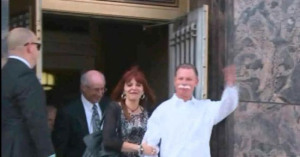
SANTA CLARA, Calif., April 15, 2013 –The Northern California Innocence Project (NCIP) at Santa Clara University School of Law and Orrick, Herrington, & Sutcliffe, LLP announced that on April 12, a California federal district court judge overturned the wrongful conviction of George Souliotes for arson and triple murder. Souliotes, 72, has served 16 years of his sentence of three life terms without parole.

In granting his release, District Judge Anthony W. Ishii found Souliotes had received ineffective assistance of counsel at trial. That finding came a year after his attorneys persuaded the judge of Souliotes’ “actual innocence,” successfully arguing his conviction was based on faulty fire science and that no reasonable juror today would convict him.

The judge ordered his release unless the State of California not only notifies the court that it intends to retry Souliotes, but also takes concrete and substantial steps to do so within 30 days. The order does not specify when he is to be released, but his attorneys expect it to be within 30 days.

“After more than 10 years of fighting for Mr. Souliotes’ freedom we are gratified that the court has found him innocent and ordered his release,” said Linda Starr, NCIP’s legal director. “Mr. Souliotes’ conviction was a tragedy, and we now know it was based on faulty fire science that has since been discredited. We hope the California Attorney General will honor the judge’s ruling and not take any further action that might needlessly delay Mr. Souliotes’ long overdue return home. ”

Background

On January 15, 1997, a rental property owned by Souliotes in Modesto, Calif., burned to the ground in the middle of the night and three tenants died in the fire.

The prosecution’s case against Souliotes was based almost entirely on two forensic pieces of evidence that new developments in fire science have since discredited: First, investigators based their arson determination on certain indicators that were long believed to be evidence of arson — but developments in modern fire science have shown these indicators are just as consistent with accidental fires or any fire where the temperature reaches “flashover” conditions.

Second, forensic tests revealed a chemical compound known as a medium petroleum distillate, or “MPD,” was found at the fire scene and on Souliotes’ shoes. MPDs are a chemical compound that exist in some ignitable liquids such Continue reading

California Innocence Project Succeeds in Freeing Daniel Larsen After a Decade

DLarsen

Daniel Larson spent 13 years in prison for a crime he did not commit. He was a victim of California’s “three strikes” law, and was sentenced to 27 years to life.

A federal judge has declared him “actually innocent”, and he is free on bail while the prosecutor’s appeal in underway.

Read the full story here.

Federal Magistrate Recommends Granting the Petition in NCIP Arson Case

From the NCIP….

This case has been covered previously here. Yesterday, the Northern California Innocence Prorjct receive the Report and Recommendation of Magistrate Michael Seng of the U.S. District Court for the Eastern District of California. The Magistrate recommended that the habeas petition be granted on three of the seven claims: ineffective assistance of trial counsel for failure to present a fire expert at petitioner’s retrial, ineffective assistance of trial counsel for failure to call additional defense witnesses—after promising the jury in opening statements that he would do so—and cumulative error. The court did not grant the petition on the ground that false evidence of arson was admitted (all of the “scientific” evidence has been conceded by the state to be unfounded), but noted that it had already found [in its ruling on Schlup—see earlier posting] that if that unreliable evidence had not been admitted at trial, Souliotes would have been acquitted. The Magistrate really presents a bullet-proof analysis under Strickland. Now, the AG has two weeks to file objections before the District Court either adopts, rejects, or revises this recommendation.

Notably, the Magistrate recommended that Mr. Souliotes, who is now 71 years old, be released within 30 days if the State does not decide to retry him. Such a retrial, in light of the stipulated lack of evidence of arson, is pretty much unthinkable.

Michael Hash Sues Current and Former Public Officials after Wrongful Conviction

Michael Hash, who served nearly 12 years in prison before U.S. District Court Judge James C. Turk granted his release on a Habeas Corpus ruling, has filed a lawsuit in federal district court in which he is seeking damages to be awarded—as reported in The Free Lance-Star of Fredricksburg (here)—“in such amounts as the Court and jury find fair and reasonably supported by the evidence and that will deter such conduct by defendants in the future.” Hash has asked for a jury trial.

The defendants named in the lawsuit are former Culpeper (VA) County Commonwealth’s Attorney Gary Close; three Culpeper Sheriff Continue reading

Missouri Judge Throws Out Rape/Murder Conviction After 29 Years

Cole County (MO) Circuit Judge Dan Green has thrown out the 1983 conviction of George Allen Jr., 56, who has served 29 years of a 95-year sentence for the rape/murder of Mary Bell of St. Louis.

The Innocence Project accepted Allen’s case in 2010. A diagnosed schizophrenic, Allen had confessed but Innocence Project lawyers argued the confession was Continue reading

Eyewitness Scientific Research Persuasive in Federal Court Ruling

In a ruling that may influence other courts in evaluating eyewitness testimony, the U.S. Court of Appeals for the Second Circuit unanimously upheld Western District U.S. Magistrate Judge Victor Bianchini’s decision to grant defendant Rudolf Young’s petition for a writ of habeas corpus and vacate his conviction of robbery and burglary.

According to Joel Stashenko writing in the New York Law Journal (here), the Circuit ruled in Young v. Conway (here) that prosecutors could not use the eyewitness testimony of Lisa Sykes, whose home was broken into in March 1991. While Continue reading

Sixth Circuit Finds Evidence of Actual Innocence in Ohio Murder Case

Ohio inmate Al Cleveland, convicted of murder in 1996, has been a client of Jennifer Bergeron of the Ohio Innocence Project for many years. His case has also been investigated at various points in time by the Center on Wrongful Convictions at Northwestern University and private investigator Martin Yant.

Today, the 6th Circuit Court of Appeals ruled that the evidence compiled over the years is sufficient to meet the “actual innocence” Shlup exception, and overturned the lower court’s decision and remanded the case for further proceedings. The fantastic opinion is here. All the details of the case are contained in the opinion. News report here and in WSJ here

This the type of victory that reflects determination and persistence. Bergeron worked against great odds for years to get to this point. It is a sweet victory for Al, and a sweet victory for Jennifer.

Below is a painting that Al created in prison, entitled Flood of Lies, which reflects his feelings about his plight. About the painting, Al wrote:

I don’t have many words to describe this piece, but it represents the end of the artistic confines to which I have been bound for years, and marks the beginning of an inward journey of truth-telling in art and the expression of such by all means despite the look. No beauty right now, just a soul under pressure and an able hand in need, coming to grips with a few dreams it must let go. Upon further thought, this represents the feeling of many of us wrongfully incarcerated, serving Life sentences.

Flood of Lies

More Habeas Hypocrisy…

As the article below discusses, the California Supreme Court last week issued a decision putting strict page limits on habeas briefs. What is ironic to me, however, is that courts have created the situation where attorneys feel they must file ridiculously thick briefs due to all the strict procedural rules created by courts aimed at causing habeas petitioners to default claims for not properly raising or exhausting them. At the Ohio Innocence Project, we’ve learned through experience that we even have to raise issues that we feel are not supported by the evidence (and possibly subject to Rule 11 sanctions), just to keep the courts from later ruling that we have not properly preserved issues (see story here).

From Law.com:

SAN FRANCISCO — Frustrated by 500-page briefs in capital habeas corpuscases, the California Supreme Court issued its own 120-page ruling Thursday laying out strict new limits and warning of sanctions if they’re not followed.

The court harshly criticized the defense lawyers in In re Reno, 12 C.D.O.S. 10049, labeling various portions of their petition “untimely,” “improper,” “patently meritless,” “grossly misleading” and based on “stock justifications.” But it stopped short of issuing sanctions, as it had threatened to do beforeargument in the case, which had caused a storm in the capital defense bar. Instead, the court cautioned that violating its new rules, which include a 50-page limit on successive habeas petitions, could lead to sanctions and State Bar discipline in the future.

Abusive habeas petitions “along with other factors have created a significant threat to our capacity to timely and fairly adjudicate such matters,” Justice Continue reading

Errol Morris examines Jeffrey MacDonald case in new book

Academy Award-winning director Errol Morris, who convincingly documented the innocence of Randall Dale Adams in his 1988 film The Thin Blue Line, has now tackled the bizarre 1970 murder case of Jeffrey MacDonald. Morris’ weapon of choice in this case, though, is a book rather than a movie. In A Wilderness of Error, Morris’ goal isn’t so much to prove MacDonald’s innocence but to indict the legal system that has made it virtually impossible to reach a sound conclusion because of the way the investigation was handled and the subsequent trial and appeals distorted the facts. Wendy Kaminer writes about the book here.

More on Northern California Innocence Project’s Souliotes Case…

By Linda Starr, Legal Director, Northern California Innocence Project:

This blog has reported here and here on Chief Federal District Court Judge Anthony Ishii’s decision adopting Magistrate Judge Michael Seng’s 99 page Findings and Recommendation that Mr. Souliotes had made a sufficient showing of actual innocence to serve as an exception to the federal one year statute of limitations, and is entitled to have the merits of his underlying claims heard, regardless of whether the federal petition had been filed 5 days late. Judge Ishii sent the matter back to Magistrate Judge Seng for further adjudication. We at the Northern California Innocence Project at Santa Clara University (NCIP), along with the law firm of Orrick, Herrington and Sutcliffe, have represented Mr. Souliotes for more than 10 years, and are now preparing to litigate the underlying claims of our federal petition for writ of habeas corpus. The tortured history of this case is worth detailing for others who fight these cases as well as to generate waves of good blog karma to support Mr. Souliotes in his fight for freedom.

In 2000, a Modesto, California jury convicted Mr.Souliotes of a 1997 arson and triple homicide after the state argued that Mr. Souliotes had set the fire that killed a woman and her two children who were living in his rental property. The district attorney argued that arson investigators had determined that the fire was an arson and that a substance on Mr. Souliotes’ shoes (“MPDs”) matched a substance at the scene that could have been used as an accelerant and that “the shoes tell the tale”. This was Mr. Souliotes’ second trial after the first jury was unable to reach a verdict. In both trials the prosecution sought the death penalty, but after the conviction, the jury declined to impose death and imposed 3 sentences of life without possibility of parole.

NCIP and Orrick have litigated this case throughout the state and federal courts for years, arguing that new scientific evidence provided by Mr. Lentini showed that the MPDs from the scene were in fact different from those from Mr. Souliotes’ shoes, and that Mr. Souliotes received ineffective assistance of counsel when counsel failed to call any witnesses at the second trial, after multiple witnesses testified at the first, including an expert who testified that the fire could not be determined to be an arson, financial experts who testified that Mr. Souliotes had no financial motive to set the fire and would not profit from any insurance proceeds, a prospective buyer who testified that he had offered to buy the home for fair market value, and evidence that Mr. Souliotes had voluntarily permitted the tenants to stay in the home, despite having an enforceable eviction order, when their trailer park flooded.

After losing in state court without a hearing, we filed our petition in federal district court. The district court dismissed our petition as untimely by 5 days when the petition was filed according to a confusing docket entry. The docketing procedure has since been changed to avoid confusion to others, but was not considered sufficient to excuse the filing. We obtained a certificate of appealability to the 9th Circuit and began litigating the issues of whether statutory tolling would apply to permit the MPD evidence issue to be litigated, whether the Schlup actual innocence gateway applies to excuse statute of limitations violations and that we met the gateway standard. While our case was pending, another panel of the 9th held that Schlup did not apply to statute of limitations violations (Lee v. Lampert, 610 F.3d 1125, 1128-31 (9th Cir. 2010) and our panel was forced to follow that decision and deny consideration of our underlying constitutional claims, including IAC. We won the statutory tolling issue in the 9th and the court sent us back to the district court to see if we could establish statutory tolling, but that would permit consideration only of a freestanding actual innocence claim. We then worked with the Network and with NACDL to file amicus briefs in Lee to support a petition for rehearing en banc. The 9th reversed Lee en banc (Lee v. Lampert, 653 F.3d 929 (9th Cir. 2011) (en banc) and held “that a credible claim of actual innocence constitutes an equitable exception to AEDPA’s limitations period, and a petitioner who makes such a showing may pass through the Schlup gateway and have his otherwise time-barred claims heard on the merits.” Id. at 931-32. Following this reversed decision in Lee, the 9th then expanded our hearing in the district court to include a Schlup hearing.

In the hearing this past February, the state was forced to concede that the fire could not be determined to be an arson and that the MPD evidence from the shoes and at the scene are in fact different substances. Nonetheless, the state argued that an eyewitness’s testimony that she had seen Mr. Souliotes that night supported the conviction. Both the magistrate and district court judge agreed that the eyewitness’s testimony completely lacked credibility and that without the concededly bad fire science and MPD evidence, it was more likely than not that no reasonable juror would have found Mr. Souliotes guilty. Thus, under the standard articulated in Schlup v. Delo, 513 U.S. 298, 327 (1995) and House v. Bell, 547 U.S. 518, 537 (2006), Mr. Souliotes was entitled to pass through the Schlup gateway and argue his underlying claims.

NCIP and Orrick have been fighting to get Mr. Souliotes his day in court for more than a decade. The state has raised one ridiculous argument after another, has continually misstated the law and has flatly refused to consider any possibility that they got this wrong.

We are thrilled for Mr. Souliotes and his family and eager to show the court that Mr. Souliotes’s trial counsel was ineffective and that he is not only innocent enough to permit consideration of his claims, but undisputedly innocent and should have his conviction reversed.

Our client is now 71 years old, and the court has continued to remind all parties that the matter should be handled in an expedited fashion. We are hoping that we will soon be able to report to you on a successful result for Mr. Souliotes.

Another Federal Court Finds Schlup “Actual Innocence” Gateway Based on New Scientific Understandings…

I blogged here recently about a federal court in California finding the Schlup actual innocence gateway satisfied for federal habeas based on new understandings in fire science that undermined the prosecution’s evidence at trial. Yesterday, The Second Circuit Court of Appeals found Schlup satisfied on similar grounds in Rivas v. Fischer. In this case, new scientific understandings pointed the time of death being during a window of time for which the defendant had an alibi…

Decision here

Arson, Fire Science, and Habeas - Case Details, CA vs. Souliotes

Mark Godsey recently posted an article on a US District Court ruling about a “time-bar” exemption to habeas law in an arson case that was driven by new developments in fire science. See that post here.

For those of you who may be interested in the details of the case, here is the original magistrate’s ruling that was upheld by the US District Court:

Habeas Ruling New Fire Science

This was made available by renowned fire scientist John Lentini, who worked on the case.

FYI. It was necessary for me to post this as a new post, rather than a comment to Mark’s original post, because I can’t embed a document in a comment. Thank you.

Federal Judge Finds the Schlup “Actual Innocence” Exception to Apply to Otherwise Time-Barred Habeas Case Based on New Advances in Fire Science…

As those who litigate federal habeas cases know, there are strict timelines to bring federal habeas cases. If an inmate’s lawyer misses the deadline, the inmate is out of luck unless he can meet the gateway “actual innocence” standard from Schlup v. Delo. A federal judge has found that new advances in fire science, which undermine the basis for the original conviction, satisfy this standard.

From the Los Angeles Times:

By Maura Dolan, Los Angeles TimesJuly 7, 2012
A federal judge has ruled that a Modesto man convicted of setting a fire that killed his tenant and her two children has shown “actual innocence” and may now challenge his conviction on other grounds.Chief U.S. District Judge Anthony W. Ishii upheld the findings of a magistrate who examined the evidence against George Souliotes, 72, and concluded that no reasonable juror would have convicted him given the state of the evidence today.But the court’s finding will not necessarily free Souliotes, convicted of setting a 1997 fire in a rental home he owned.

His lawyers missed a legal filing deadline, and under the law, Souliotes had to prove his innocence before he could appeal his conviction on other grounds, including inadequate legal representation at trial.

In determining actual innocence, the judge considered both old and new evidence, regardless of its admissibility at trial. His decision was based on whether he believed it was “more likely than not” that a reasonable juror with that information would have found the inmate guilty beyond a reasonable doubt.

Ishii said in his ruling that the appeal should now proceed quickly. Citing Souliotes’ age, Ishii said the innocence determination “only heightens” the urgency required.

Fire scientists have discredited evidence that was used to convict Souliotes, and the state has conceded that it no longer can prove that the deadly 1997 blaze was Continue reading

J. Barry on Actual Innocence and the Double Jeopardy Clause

I came across a great article by Professor Jordan Barry of University of San Diego School of Law on prosecution of the exonerated.

Jordan Barry, Prosecuting the Exonerated: Actual Innocence and the Double Jeopardy Clause, 64 Stanford Law Review 535 (March, 2012). It is obtainable on SSRN.

Here is the abstract:

In certain circumstances, a prisoner who challenges her conviction must convince a court that she is actually innocent in order to get relief. Unfortunately, such judicial exonerations often fail to persuade prosecutors, who are generally free to retry prisoners who successfully challenge their convictions. There have been several instances in which prisoners have convinced courts of their innocence and overturned their convictions, only to have prosecutors bring the exact same charges against them a second time. This Article argues that the Double Jeopardy Clause protects these exonerated defendants from the ordeal of a second prosecution. Permitting prosecutors to continue to pursue such individuals contradicts established Supreme Court case law, violates the policies animating the Double Jeopardy Clause, and impairs the operation of the criminal justice system.

Many Medical Practitioners In Netherlands Aware of Scientific Fraud

Post written by Jaron Daniël Schoone, MA, of the Knoops Innocence Project in the Netherlands:

One in seven medical practitioners has witnessed that scientific results were fabricated. And nearly one in four has witnessed that only those results were used which were personally favored by the researcher.

These are just two results of a Dutch survey under 800 medical practitioners. The results will be published this week in the “Medisch Contact” (Medical Contact) journal, in a special about the scientific enterprise.

(http://medischcontact.artsennet.nl/Nieuws-26/Nieuwsbericht-1/113364/Veel-artsen-weten-van-wetenschapsfraude.htm)

15% of the medical practitioners state that they have witnessed the fabrication of results. 22% have witnessed that data was selected or edited to obtain more significant results. 36%, or one in three practitioners, have witnessed that a person was added to the list of authors of a research article who was not in any way involved in the research.

Another striking fact: 72% of the medical practitioners believe that important clinical questions in their scientific field have not yet been properly researched.

It is becoming ever more apparent, at least in the Netherlands, that scientific research and published articles are not always based on proper science. For us as an innocence project this is of course a well-known fact, but it is good to see that the general public is being educated in this area as well.

New U.S. Supreme Court Decision on Ineffective Assistance of Counsel….

Full decision here.

MARTINEZ v. RYAN, DIRECTOR, ARIZONA DEPART-MENT OF CORRECTIONS

CERTIORARI TO THE UNITED STATES COURT OF APPEALS FOR THE NINTH CIRCUIT

No. 10–1001. Argued October 4, 2011—Decided March 20, 2012

Arizona prisoners may raise claims of ineffective assistance of trial counsel only in state collateral proceedings, not on direct review. In petitioner Martinez’s first state collateral proceeding, his counsel did not raise such a claim. On federal habeas review with new counsel, Martinez argued that he received ineffective assistance both at trial and in his first state collateral proceeding. He also claimed that he had a constitutional right to an effective attorney in the collateral proceeding because it was the first place to raise his claim of ineffec­tive assistance at trial. The District Court denied the petition, find­ing that Arizona’s preclusion rule was an adequate and independent state-law ground barring federal review, and that under Coleman v. Thompson, 501 U. S. 722, the attorney’s errors in the postconviction proceeding did not qualify as cause to excuse the procedural default. The Court of Appeals for the Ninth Circuit affirmed.


Held:

1. Where, under state law, ineffective-assistance-of-trial-counsel claims must be raised in an initial-review collateral proceeding, a procedural default will not bar a federal habeas court from hearing those claims if, in the initial-review collateral proceeding, there was no counsel or counsel in that proceeding was ineffective. Pp. 5–14.

Breaking News: Virginia Supreme Court Issues Decision Clearing Way for Exoneration of Edgar Coker

The University of Virginia’s Innocence Project Clinic won a major victory in the Virginia Supreme Court today in the rape case of Edgar Coker. The lower courts had denied his habeas claims of innocence solely on the ground that they lacked jurisdiction because Coker had been released on parole before he filed (under the lower court’s ruling, habeas is a remedy only for those still incarcerated when they file). But the Virginia Supreme Court held that Coker may avail himself of the habeas remedy even while out on parole, and remanded for a hearing on the merits. The details of Coker’s innocence claim, which includes a compelling recantation from the alleged victim, are set forth here.