Category Archives: Inquisitional and adversarial systems of justice

Prosecutors often challenge DNA evidence that could clear the convicted

From the ChicagoTribune.com:

When Terrill Swift was released from prison after serving 15 years for rape and murder, he sought DNAtesting because he wanted to prove his innocence. Cook County prosecutors opposed his efforts but relented last year after the Tribune made inquiries about Swift’s request.

After the DNA from semen in the victim’s body was matched to a convicted murderer and rapist, Swift went to court to get his conviction thrown out. But prosecutors opposed that effort, saying the DNA was meaningless, especially when considered against Swift’s confession.

A judge turned aside prosecutors’ arguments, saying the DNA was powerful evidence, and earlier this year the judge vacated Swift’s conviction.

And last month, when Swift went to court to obtain a certificate of innocence to expunge the record of his arrest and conviction and clear the way for him to seek Continue reading

Competing Perspectives on the Wrongful Conviction Issue…

From the Deseret News:

Judge Michael DiReda of Utah’s Second District is convinced that Debra Brown didn’t do it. He found her “factually innocent” in May 2011, after she served 17 years in prison. Attorney General Mark Shurtleff is convinced she did do it.

In dispute is the cold-blooded murder of Brown’s former employer, shot in his sleep near Logan in 1993. Today, Brown is free, reunited with her children and grandchildren. But the attorney general has filed for a new trial, likely to begin in the fall of 2012.

Since the 1989 advent of DNA analysis, 290 convicted Americans have been exonerated through biological evidence, according to the Innocence Project, the national clearing house for investigating and pursuing innocence claims. The most recent DNA exoneree is a Colorado man released this month.

Most overturned convictions lacked DNA and were based on circumstantial evidence and eye witnesses. Proving errors in such cases is difficult, as they often come down to disputed reconstructions of fading memories.

False convictions are a particular concern for those lacking economic resources, according to Daniel Medwed, a professor at the University of Utah law school.

“Poor people lack the financial resources to mount a vigorous and thorough defense,” Medwed said. “All too often, indigent defendants are represented by public defenders who themselves are underfunded and overworked.”

In the absence of DNA, no one knows how many innocents are mistakenly languishing in prison. If the false conviction rate is .027 percent, as U.S. Supreme Court Justice Antonin Scalia suggested in 2006, most experts on all sides would view this as regrettable but inevitable. But if the rate is closer to 3.3 percent or 5 percent, as Michael Risinger of Seton Hall University has suggested, most would agree a civilized system would demand strong correctives.

Combatting ‘urban myths’

With real numbers elusive, people imagine reality through stories. Even innocence advocates admit such stories are often distorted and counterproductive.

Joshua Marquis, district attorney of Clatsop County, Ore., is a feisty, outspoken and widely quoted defender of the law enforcement and prosecutors, whom he sees as unfairly maligned by news media and reform advocates.

Exhibit A for Marquis is an acclaimed off-Broadway play, “The Exonerated,” which features actors playing six “exonerated” death row convicts. The play ran for two years in the early 2000s, became a made-for-TV movie with Mimi Rogers and has since toured college campuses around the country.

In Marquis’ view, the errors in the play typify public misunderstanding and Continue reading

Role of Prosecutors in Postconviction Proceedings

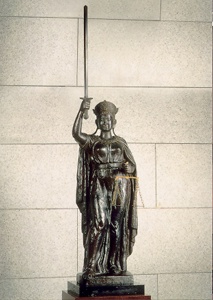
Lady Justice, in the Supreme Court of Japan

As I posted on Thursday, there was a decision by the Tokyo High Court to grant a retrial to Govinda Mainali. The High Court also ordered his release. He was finally released after 15 years of confinement. Since he has a conviction for visa violations, he is placed in immigration custody, and will be sent back home to Nepal, to his family.

However, the Tokyo High Public Prosecutor’s Office immediately filed an objection to the High Court. Even if the Court denies the objection, they can still file an appeal to the Supreme Court. Deputy chief prosecutor of the Tokyo High Public Prosecutor’s Office was quoted as saying that the Court’s decision to grant Mainali a retrial was “absolutely unacceptable”.

Meanwhile, Asahi Shimbun news reported on June 3rd that the Supreme Public Prosecutor’s Office will be holding the first meeting ever with the public prosecutors who deal with postconviction claims of innocence. They are apparently alarmed about the relatively high number of recent court decisions to retry cases. Of the eleven decisions (in death penalty or life sentence cases) to grant a retrial since the end of WWII, five  were handed down after 2009 (decisions in Ashikaga, Fukawa, Fukui, Higashi Sumiyoshi, and Mainali cases. Note that four of these involve false confessions).

The court decisions in these cases were made possible in part by the state-of-the-art DNA testing. As the exonerations all over the world have made it clear, DNA is a strong tool to prove innocence of the wrongfully convicted.

However an exoneration means the police and prosecutors who investigated, prosecuted, and helped to convict an innocent person will be criticized by the public. Thus, it was reported that the prosecutors are worried that these decisions to retry cases “will undermine the public’s trust to the investigation process, and therefore worrisome from the standpoint of public safety”. An executive prosecutor said that they “will do their best to battle these retrial claims by developping prosecution’s scientific knowledge.”

If the prosecutors truly believe what they said in these media reports, it is an evidence that the public prosecutors are worried more about “winning” postconviction cases than finding out the truth. Continue reading

Knoops Innocence Project in the Netherlands Files For Exoneration for Multiple Defendants in Murder Case

By J.D. Schoone of the Knoops Innocence Project in Amsterdam:

According to the Attorney-General of the Supreme Court of the Netherlands, six people might have been wrongfully convicted in a murder case. The case centers on the murder of a Chinese woman in a Chinese restaurant in 1993. The six suspects, most of them teenagers at that time, were convicted in 1994 with sentences of 2 years imprisonment (for the three female suspects) and 10 years imprisonment (for the three male suspects).

Now, with so much information on the causes of wrongful convictions, the case has been re-examined. It became evident that the suspects have been pressured by the police to confess to the crime. They were also shown photos of the crime scene, which resulted in knowledge of the crime scene which was later used against the suspects. Furthermore, exculpatory testimonies of eyewitnesses were not submitted to the defense or to the court. Finally, forensic experts which have reexamined blood traces found at the crime scene have concluded that the DNA corresponds to an Asian male, whereas none of the six suspects are of Asian origin.

The Knoops’ Innocence Project, representing three of the six suspects, will file a supporting revision request with the Supreme Court of the Netherlands, in addition to the lengthy request (160 pages) of the Attorney-General. If revision is granted, then the six suspects will receive a retrial. The Knoops’ Innocence Project hopes that this case shows that wrongful convictions are not only an American phenomenon, but happens worldwide. So far, four wrongful convictions have been overturned in the Netherlands. With these six and other possible wrongful convictions currently being investigated, this number can rise drastically in the following years.

Breaking News: Houston City Council Takes Crime Lab Away From the Police…

From Chron.com:

City Council has appointed a nine-member board to oversee the city’s crime lab, the first step in yanking it from police department control and setting up a publicly funded non-profit corporation to do evidence testing.

The vote was 15-2.

For a decade the Houston crime lab has been mired in controversy over decrepit facilities, a backlog of more than 6,600 rape kits and past audits that raise questions about the integrity of testing. Several men have been exonerated after serving years in prison after convictions largely based on crime lab evidence that was later discredited.

Though Council members supported the mayor’s proposal to try to insulate the crime lab from pressure from police,  prosecutors and politicians, some raised questions about the city’s plan to go it alone when the county is about to build its own forensics tower.

“There’s so many areas the city and county can save taxpayers money, and this is one of them,” said Councilman Jack Christie, who voted no. Councilwoman Helena Brown, the other no vote, called the plan “a political stunt” that wastes taxpayer money by failing to cooperate with the county.

Councilman Ed Gonzalez, a former Houston police officer,  said he would like to see a city-county operation. However, he said,  the crime lab needs reform now and the Council can’t wait “for ships that may never come in.” Gonzalez and others said the city had an obligation to change the governance of the crime lab, regardless of whether it does so with the county’s cooperation.

Councilman Larry Green agreed.

“How long do we have to wait for justice?” Green said.

Mayor Annise Parker said the plan does not preclude the future participation of the county.

Earlier piece from Chron.com:

The City Council on Wednesday could wrest control of Houston’s crime lab from the police department and outsource it to a publicly funded nonprofit Continue reading

Friday’s Quick Clicks…

Breaking News: Texas Judge Recommends Exoneration for Woman on Death Row; Says Conviction Was Based on Junk Science…

Cathy Lynn Henderson

From Statesman.com (video story here):

The state’s highest criminal court should overturn the capital murder conviction of Cathy Lynn Henderson, once two days from execution for the 1994 death of an infant she was baby-sitting, a Travis County judge has recommended.

District Judge Jon Wisser said scientific discoveries into the causes of head trauma similar to the injury suffered by 3-month-old Brandon Baugh — and a change of heart from the prosecution’s star witness, former medical examiner Roberto Bayardo — mean no reasonable juror would convict Henderson if presented with the new evidence at trial.

“Testimony of the state’s chief experts was, at bottom, scientifically flawed,” Wisser wrote in findings dated May 14 and delivered Tuesday to the Court of Criminal Appeals.

After reviewing evidence via testimony and briefs, Wisser recommended that the appeals court dismiss Henderson’s conviction and return her case to Travis Continue reading

The “Mr. Big” Police Tactic in Canada Leads to False Confessions…

From Canada.com:

A controversial made-in-Canada police tactic designed to elicit confessions from suspects in murders and other serious crimes is “ingenious” but also carries a “high risk of incriminating the innocent,” says a Canadian professor.

Timothy Moore, chair of the psychology department at York University, is scheduled to give a presentation about “Mr. Big” undercover sting operations Thursday before an international conference of law enforcement investigators and academics in Toronto. He provided an advance copy of his speech, titled “Eliciting the Truth by Telling Lies,” to Postmedia News.

In the speech, Moore says the technique has been successful in catching and convicting “very bad guys” who might have gotten away with murder. But he also calls Mr. Big tactics “extraordinarily invasive and psychologically manipulative” Continue reading

A Renewed Call for Forensic Lab Independence in the U.S….

From the National Law Journal:

On April 17, Indianapolis’ police chief stepped down after his department botched the handling of evidence in a high-profile case involving one of its own: an officer who may have been legally drunk when he drove his police car into two motorcycles stopped at a red light. The tainted blood sample has fueled allegations of a possible police cover-up in the case.

The Indianapolis incident provides another reminder that there needs to be a wall of separation between forensic science and law enforcement.

One city that’s on the right track is Houston, where Mayor Annise Parker has called for an independent crime lab, which would report to an independent board, rather than the police or prosecutor’s office.

Parker has the right idea — first, and foremost, because it matters who’s boss.

If you work for the police, you tend to see things from that point of view. Same goes for the prosecution. Usually, it is not a conscious thing. You want to be fair and unbiased, and you think you are. But when the boss hopes you’ll find evidence to support her point of view, your mistakes may lean in that direction.

That’s what happened in Houston, where an independent audit in 2006 found several cases in which forensic scientists in the crime lab had skewed reports — Continue reading

Reflections on System Resistance to Innocence Part II

In a blog post that appeared on March 14, 2012 entitled Bryant ‘Rico’ Gaines to Walk Free Today in Ohio:  Reflections on System Resistance to Innocence (Blog Post), I expressed frustration over how the criminal justice system in Cincinnati reacted to a post-conviction claim of innocence, in the context of a specific case, in a way that I felt did not comport with a prosecutor’s duty to search for truth and ‘do justice.’

After the Blog Post was published, I heard that at least one member of the Prosecutor’s Office was upset because he or she believed that the Blog Post contained some inaccurate facts.  As a result, I invited the Prosecutor or his representative to respond to the Blog Post in the comment section and asked them to specifically address any mistakes I had made so that we could flesh them out through discussion.

I later received this 10-page letter dated April 3, 2012 (‘the Letter’).  After receiving the Letter, representatives of the Prosecutor’s Office confirmed that it was intended as a public response to the Blog Post and encouraged me to post it in my blog, which I have done above.  [Note:  The Letter responded to my Blog Post by using the names of the various actors in the case.  I did not use names in the original Blog Post because I see this as an academic discussion about the criminal justice system broadly rather than a discussion that is personal in nature.  Therefore, I have redacted most names from the Letter.]

My response to the Letter:

I.  Global Comments

A.   Prosecutorial Tunnel Vision and Resistance to Innocence Claims

First, I would like to clarify the point of my Blog Post.  I intended to explore the concept of prosecutorial tunnel vision in post-conviction cases and to allow blog readers to contrast the reaction of the Prosecutor’s Office when presented with post-conviction evidence of Gaines’ potential innocence with how police and prosecutors have reacted in other similar cases I have celebrated on the blog, such as in the articles herehereherehereherehere, and here.

Specifically, in the Blog Post, I pointed out examples of prosecutorial behavior Continue reading

On July 1st, Virginia to Finally Release Reports on 78 Inmates Excluded by DNA Testing; Project Suggests 6% Wrongful Conviction Rate…

Nancy Petro previously reported on this issue here, when Virginia was refusing to release the names and reports of the inmates where DNA testing had excluded the inmate as the source of the biological material from the crime scene.

From the Richmond Times-Dispatch:

Reports on 78 convicted people whose DNA was excluded in Virginia’s post-conviction testing project — and whose identities have largely been kept secret by the state — will be released under the Freedom of Information Act after July 1.

An amendment in the state budget, passed by the General Assembly last month, directs the release of the reports unless prosecutors deem them critical to a current investigation.

Gail Jaspen, chief deputy director of the Virginia Department of Forensic Science, told the Board of Forensic Science on Wednesday that the amendment appears to have been a response to FOIA requests for the information from the Richmond Times-Dispatch and the Mid-Atlantic Innocence Project.

The forensic science department had previously refused to release the information to The Times-Dispatch and the Innocence Project, citing its discretion under an FOI exemption. But now, in light of the budget amendment, it is preparing to comply with FOIA requests submitted after July 1, Jaspen said.

Any identifying information about victims, their families and their consensual partners will be redacted, she said.

Wednesday’s development comes in the wake of a Williamsburg case first Continue reading

Wednesday’s Quick Clicks…

Chicago Prosecutors Blind to False Confession…

Press release from the Center on Wrongful Convictions at Northwestern University….

Dear Friends,

This morning’s Chicago Tribune carries an excellent front-page story by Steve Mills detailing how the Cook County State’s Attorney’s Office has been giving short shrift to evidence that CWC client Daniel Taylor is innocent of the 1992 double murder for which he is serving life in prison without parole.

Taylor’s conviction rested on a confession that quite obviously is false; he couldn’t have been involved in the crime because he was in police custody when it occurred. For details, see the Mills story:

http://www.chicagotribune.com/news/local/ct-met-murder-reinvestigation-20120507,0,6204252.story

As hard as it is for some people to believe that false confessions occur, they are in fact amazingly frequent. Since 1986, there have been 104 documented wrongful convictions in Illinois, and, counterintuitive as it may seem, more than half of those involved false confessions. For details, please see:

http://www.law.northwestern.edu/cwc/issues/causesandremedies/falseconfessions/FalseConfessionsStudy.html

Rob Warden, Executive Director

Florida Governor Eliminates Innocence Commission…

From the Miami Herald:

With the stroke of a pen, Connecticut Gov. Dannel P. Malloy abolished the death penalty last week making that state the 17th in the country to abandon capital punishment.

In the last five years, New Jersey, New Mexico, New York and Illinois also have repealed the death penalty. California voters will decide the issue in November.

Also last week, with pen in hand, Florida Gov. Rick Scott eliminated funding for the crucial Florida Innocence Commission created by the Florida Supreme Court to study wrongful convictions and advocate for reform. It’s set to expire in June.

Since 1973, an incredible 140 people in 26 states have been released from death Continue reading

Public Records Access Laws at the Foundation of Innocence Work, Democracy…

I’ve dealt with public records access laws my entire career.  As a prosecutor, I had to respond to public records request from news media from time to time (or more accurately, as I was taught,I had to come up with some reasonable-sounding explanation as to how the case might still be considered “open” so we wouldn’t have to turn over the records).

And I’ve sent out my fair share of public records request letters over the past decade while doing post-conviction innocence work for the Ohio Innocence Project.

But at no time in my career have I better understood or appreciated the deep importance that public record access laws have on our system than right now.  Two things have brought the importance of these laws to the forefront in the past year or two. Continue reading

Chair of UK’s CCRC Responds to Criticisms…

We have covered here, here and here the criticisms of the UK’s CCRC, coming from the Innocence Network UK.  Now Richard Foster, Chair of the CCR responds.   Original link here:

The Gazette article about the Criminal Cases Review Commission (CCRC) was both biased and inaccurate. It was based largely on a symposium organised by Michael Naughton of the Innocence Network UK (INUK) to discuss reform of the CCRC. The CCRC was not invited to this event.

The article ignored anything other than negative criticism of the CCRC heard at INUK’s symposium. This is particularly surprising when you consider that one of the event’s main speakers was no less a figure than Professor Michael Zander. He had been specifically asked to address the question of whether the CCRC lives up to what the Runciman Royal Commission on Criminal Justice envisaged.

Professor Zander is particularly well placed to comment since he was a member of the Runciman Commission. The question is an important one for INUK founder Michael Naughton because much of its regular criticism of the commission has increasingly been based on the premise that the CCRC is not what was envisaged. However, Professor Zander’s answer to the symposium was simply: ‘I believe the CCRC as established by the Criminal Appeal Act 1995 does broadly live up to what the Royal Commission envisaged.’

Professor Zander’s paper for the symposium had plenty more to say on the subject. As he explained, INUK’s analysis of the commission’s fundamental ‘real possibility’ test, as set out in statute, is essentially that it makes the CCRC subordinate to the Court of Appeal and fails the innocent. It proposes that the test be replaced with one whereby the CCRC refers convictions ‘if it thinks that the applicant is or might be innocent’. Professor Zander told the symposium: ‘I do not share INUK’s analysis and I do not support its proposals.’ In relation to the claim that the real possibility test means that the CCRC is not independent of the Court of Appeal, Professor Zander’s paper said: ‘I do not think the Royal Commission would have agreed.’

I think Professor Zander is right. In my own view, moving from the safety of the conviction to an ‘innocence test’ would be a reactionary step: it would lessen current protections not increase them. The article also repeated unchallenged some claims that impugned the work of the commission, the quality of our investigations and the professionalism of our staff.

Each case is different

Charges of inconsistency are misguided. As every lawyer knows, each criminal Continue reading

Friday’s Quick Clicks…

Prosecutorial misconduct may be worse in U.S.

C. Ronald Huff, a University of California, Irvine, professor whose research in the early 1980s helped spur greater international interest in wrongful convictions, says research shows that police and prosecutorial misconduct may be worsened by the adversarial system used in the United States and some other countries.

Drawing on research presented in Wrongful Conviction: International Perspectives on Miscarriages of Justice, a book he co-edited with Martin Killias of the Universities of Zürich and Lausanne, Huff noted in a recent address before the European Association of Psychology and Law that official misconduct “appears to be less frequent in European nations with the continental/inquisitorial system than in the U.S.”

When it comes to prosecutorial misconduct, Huff said, “a key factor differentiating U.S. prosecutors from most European prosecutors is that U.S. prosecutors are elected, which introduces a strong political element in their motivations, and the fact that sanctions for such behavior are extremely rare.”
Huff said that the adversarial system, with its greater emphasis on competition between the prosecution and the defense than exists in inquisitorial system often adds to the problem.

“However, neither system is perfect,” Huff cautioned. He cited the research of Chrisje Brants in the Netherlands, for example, who argues that the Dutch inquisitorial system has developed its own problems. First, he said, public pressure on prosecutors to punish criminals has caused them to “behave more like adversarial prosecutors bent on convictions, and since the defense is not expected to conduct its own investigations, this does not make for a level playing field.” Second, Huff said Brants’ research has shown, courts are more likely to “become victims of confirmation bias” because judges tend to be closer to prosecutors and procedures don’t permit adequate debate.

“Similar concerns have recently been voiced by defense attorneys in France, for example, who have indicated that they often wish they had some elements of the adversarial system,” Huff said. “Nathalie Dongois also notes that the proportion of decisions overturned in France is quite small in comparison to many other nations, suggesting the possibility that many errors may go undetected due to the very strict rules governing petitions of revision, thus protecting final decisions as really “final.”

Huff said he and Killias hope to search for solutions to these problems in a second book.

Mid-Atlantic Innocence Project Has Important Hearing Today in Brady Case…

From the Washington Post:

The brutal crime gripped the District: a mother of six fatally beaten, robbed and sodomized with a pole as she walked in her Northeast neighborhood on Oct. 1, 1984.Authorities linked the attack to members of a street gang called the Eighth and H Crew. Seventeen of them were arrested, two pleaded guilty in the death of Catherine Fuller, 48, and eight were convicted of first-degree murder in 1985.

On Monday in D.C. Superior Court, a judge will begin hearings to determine whether those convicted should get a new trial — or even be exonerated.
Evidence that wasn’t presented to defense attorneys before the trial “undoubtedly undermines confidence” in its outcome, an attorney wrote in a recent court filing.The men convicted, now in their mid-40s, were Kelvin Smith, Steven L. Webb, Levy Rouse, Clifton Yarborough, Timothy Catlett, Russell Overton and brothers Charles and Christopher Turner.

Webb, who wept and repeatedly claimed innocence during his sentencing in 1986, died in prison. Christopher Turner, who also maintained his innocence, was paroled in 2010 for good behavior after more than 25 years behind bars, according to an attorney familiar with the case.

Prosecutors outlined a horrific scenario during the trial: Fuller, a cleaning woman, left her K Street NE home on a rainy afternoon to fill a prescription. The suspects, then 17 to 21 years old, were smoking marijuana and listening to go-go music at a nearby park.

A group of about 30 confronted Fuller, prosecutors say. She was grabbed from behind and pushed into an alley, where she was beaten and a two-inch-thick metal pole was shoved into her rectum.

Her liver was shattered, a lung was punctured and four of her ribs were broken, according to authorities. Her body was found in a garage in the same alley that evening.

After the trial, defense attorneys examined hundreds of pages of previously unavailable grand jury testimony and discovered that several witnesses identified three other people who were either seen in the alley at the time of the attack or had allegedly confessed to the attack to friends.

Several witnesses told authorities they saw James McMillan, who house-sat on the alley where Fuller was killed. McMillan, now 46, is serving a life sentence in a Virginia prison for another deadly attack on a woman.

That information, defense attorneys argue, was known to detectives and prosecutors but not shared before the trial. Attorneys for Christopher Turner and the six men still in prison, with the assistance of the Mid-Atlantic Innocence Project and nearly a dozen volunteer criminal defense lawyers, began working for a new trial in 2010.

Full article here….

NC Judge Invokes “Racial Justice Act,” Sets Aside Death Penalty

Full story here:

 http://www.cnn.com/2012/04/21/justice/north-carolina-death-revoked/index.html?hpt=hp_t3

The response from the North Carolina Association of District Attorneys is “interesting” and entirely predictable (sadly).