Category Archives: Prosecutorial conduct (good and bad)

Editorial on Jailed Prosecutor Ken Anderson…

Below is the editorial I wrote on the Ken Anderson/Michael Morton saga last Friday.  I’ve received a lot of emails stating that the 10 day jail sentence was insufficient.  I agree, but you have to start somewhere!

From the Huffington Post:

Today in Texas, former prosecutor and judge Ken Anderson pled guilty to intentionally failing to disclose evidence in a case that sent an innocent man, Michael Morton, to prison for the murder of his wife. When trying the case as a prosecutor, Anderson possessed evidence that may have cleared Morton, including statements from the crime’s only eyewitness that Morton wasn’t the culprit. Anderson sat on this evidence, and then watched Morton get convicted. While Morton remained in prison for the next 25 years, Anderson’s career flourished, and he eventually became a judge.

In today’s deal, Anderson pled to criminal contempt, and will have to give up his law license, perform 500 hours of community service, and spend 10 days in jail. Anderson had already resigned in September from his position on the Texas bench.

What makes today’s plea newsworthy is not that Anderson engaged in misconduct that sent an innocent man to prison. Indeed, while most prosecutors and police officers are ethical and take their constitutional obligations seriously, government misconduct–including disclosure breaches known as Brady violations–occurs so frequently that it has become one of the chief causes of wrongful conviction.

What’s newsworthy and novel about today’s plea is that a prosecutor was actually punishedin a meaningful way for his transgressions.

I give speeches about the Innocence Movement, and tell stories from real cases, all around the world. No matter where I am, when I finish speaking the first question usually is, “What happened to the police/prosecutors who did this to the poor guy?” The answer is almost always, “Nothing,” or worse, “The police officer was promoted and now is the chief of his department.” The adage that the powerful go unpunished is no truer or more visible than with police officers and prosecutors in America–even when they send innocent people to prison from their misconduct.

My client Roger Dean Gillispie of Dayton, Ohio, for example, spent 20 years in prison as a result of police misconduct. In 2007, we presented overwhelming evidence that the police officers, like Anderson in the Morton case, failed to turn over evidence to the defense before trial that would have cleared Gillispie. We also supplied the court with evidence that the police officer in charge had harassed and intimidated witnesses helpful to the defense, and had manipulated the evidence. Before going to court to clear Gillispie, we met with the local prosecutors, hopeful that they wouldn’t tolerate such misconduct and would do a thorough (and neutral) investigation to get to the truth. Instead, they simply denied everything in knee-jerk fashion, and fought to keep Gillispie in prison until a federal court finally found government misconduct and threw out his charges in December 2011. To this day, the police officer in the case has not been investigated by a neutral, independent body. The only thing he has received is promotions.

Rogue cops and prosecutors going unpunished is the rule rather than the exception. In Illinois, two police officers whose improperly grueling interrogation techniques led to the wrongful conviction of Juan Rivera and others were not penalized when their 3rd degree tactics came to light. Rather, they were recently hired at taxpayer expense to teach interrogation courses to other police officers around the state.

A recent study found prosecutorial misconduct in nearly one-quarter of all capital cases in Arizona. Only two of those prosecutors have been reprimanded or punished. This led theArizona Republic to conclude:

There seldom are consequences for prosecutors, regardless of whether the miscarriage of justice occurred because of ineptness or misconduct. In fact, they are often congratulated.

Other studies/articles with similar troubling results can be found hereherehere, and here.

Fortunately, there is something very simple that judges across the country can do to eradicate this problem. All judges, state and federal, should issue the standing “ethical rule order” proposed by the Hon. Nancy Gertner and Innocence Project Co-Founder Barry Scheck. The proposed order requires prosecutors to disclose, pre-trial, all evidence that “tends to negate the guilt of the accused or mitigates the offense.” Details regarding the proposed ethical rule order, including all the justifications supporting it, can be found in this article by Barry Scheck.

The reason such standing ethical rule orders are important is that they allow prosecutors, like Ken Anderson, to be held in criminal contempt if they are later found to have engaged in misconduct. Anderson could be punished today only because such an order had been issued in the Morton case.

Today’s conviction of Ken Anderson stands out as an extreme aberration in a society where police and prosecutorial misconduct goes largely unpunished. But it is a step in the right direction. Hopefully, today’s result will deter rogue cops and prosecutors in the future from engaging in similar misconduct. But this will happen only if judges across the country do what the judge did more than 25 years ago in the Morton case: issue an order requiring that proper disclosure to the defense, or risk criminal contempt proceedings.


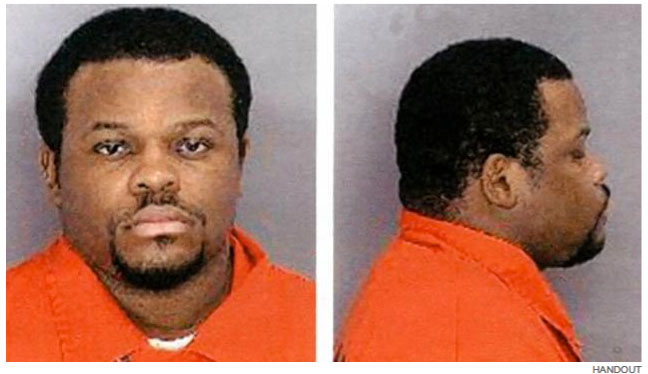
Kash Delano Register Free After Judge Overturns Decades-Old Murder Conviction

Register

After 34 years in prison for a murder he did not commit, Kash Delano Register is a free man.  How could this perversion of justice have happened?

This quote from the HuffPost story pretty much says it all.  “Superior Court Judge Katherine Mader threw out the conviction on Thursday, ruling that prosecutors used false testimony at trial and failed to disclose exculpatory evidence.”

Read the HuffPost story here.

With news of wrongful convictions occurring at a steady pace these days, it really causes one to ponder – how many more are out there?

Former prosecutor accepts deal with jail time

As reported by ABC News (here), former Williamson County (TX) District Attorney Ken Anderson, 61, accepted a plea deal Friday that will likely end criminal and civil cases against him as a result of his handling of the wrongful conviction of Michael Morton. Anderson will serve 10 days in jail. He also will be disbarred and will be required to serve 500 hours of community service.

Michael Morton, the man who served nearly 25 years in prison after being wrongfully convicted of the 1986 bludgeoning murder of  his wife, was present at the proceeding at the Williamson County Courthouse where Anderson recently resigned from his position as district judge.

Morton reportedly said, “It’s a good day.”

According to Morton’s attorney, all cases handled by Anderson will be subject to an audit to determine other possible misconduct.

Press Release: Center for Prosecutor Integrity Calls on Prosecutors to Root out Misconduct After AZ Report of Widespread Unethical Practices

WASHINGTON / November  6, 2013 – Following revelations that 22% of death sentence cases in Arizona involve judicial findings of impropriety, the Center forProsecutor Integrity is calling on prosecutors nationwide to take a proactive approach to hold unethical prosecutors accountable and restore public confidence in the criminal justice system.

The finding of widespread prosecutor misbehavior is based on a review of all death sentence convictions in Arizona in the past decade. These sentences are routinely seen by the state Supreme Court. Since 2002, there have been 82 death sentence cases reviewed by the state high court. In 18 of the cases – 22% of the total — the Supreme Court made a finding of impropriety.

Examples of unethical practice include presenting false testimony, resorting to emotional appeals in closing arguments, referring to mitigating evidence as “excuses,” and removing a jacket worn by a victim from a plastic evidence bag for the jury’s “smelling pleasure.”

The cases were assembled in an online database as part of a four-part investigative report by Michael Kiefer of the Arizona Republic newspaper:http://www.azcentral.com/news/projects/prosecutorial-conduct/

The Arizona study is important because previous analyses of prosecutorial misconduct focused on cases that were pre-selected based on defense counsel’s allegation of misconduct or a judicial determination of a wrongful conviction. The Arizona findings likely underestimate the true extent of wrong-doing because the most egregious cases of misconduct triggered a mistrial or led to a last-minute plea deal not carrying a death sentence.

“In the past, some prosecutors have insisted that unethical conduct is so rare that it doesn’t even deserve attention,” notes CPI spokesperson Sheryl Hutter. “But when a high court concludes more than one in five cases involve impropriety, taxpayers should be demanding accountability and lawmakers should be convening hearings.”

The CPI report, An Epidemic of Prosecutor Misconduct, concludes unethical conduct has become widespread throughout the country: http://www.prosecutorintegrity.org/wp-content/uploads/EpidemicofProsecutorMisconduct.pdf

The Center for Prosecutor Integrity is working to preserve the presumption of innocence, assure equal treatment under law, and bring an end to wrongful conviction through the enhancement of prosecutorial ethics.

Tuesday’s Quick Clicks…

click

Prosecutorial Misconduct – Spotlight on Arizona

Gray Area copy

Michael Kiefer covers courts and the death penalty for The Arizona Republic.  He has recently written a four-part series of articles about prosecutorial misconduct in the Arizona courts titled “The Gray Area of Courtroom Conduct.”

Here is an excerpt from the opening section of the Part 1 article:

“There seldom are consequences for prosecutors, regardless of whether the miscarriage of justice occurred because of ineptness or misconduct.  In fact, they are often congratulated.  Since 1990, six different prosecutors who were named prosecutor of the year by the Arizona Prosecuting Attorneys Advisory Committee also were later found by appeals courts to have engaged in misconduct or inappropriate behavior during death-penalty trials, according to The Republic’s examination of court documents.”

You can read Michael Kiefer’s four-part series here.

In editorial fairness, a group of Arizona prosecutors wrote a response to Mr. Kiefer’s articles, which was posted on azcentral.com, and you can read their letter here.  Now, exercising editorial privilege, I will have to say this letter could be one of the biggest crocks of BS I have ever read.  I particularly like this sentence from the prosecutors’ letter: “The system is designed for the defense in that there are ethical rules that apply only to prosecutors.”  So … never mind that prosecutors often pay no attention to those “ethical rules.”   The position of prosecutor is endowed with more power of discretion than almost any other elected position.  There are things prosecutors can decide and do that even governors cannot decide and do.  Additionally, the prosecution has the police, the crime labs, a staff of attorneys, and they are funded by the taxpayers; while the defendant has to pay for his own investigators, forensic testing, and attorneys.

In Mr. Kiefer’s articles, you’ll find frequent mention of Maricopa County.  You know, the place where Joe Arpaio is sheriff.  More about Maricopa County in future posts.

The Shame of Lorain – Redux

Smith & Allen

The case of Nancy Smith and Joseph Allen of Lorain, OH is a tragic tale of a badly broken justice system gone haywire.  Their story has been reported on this blog here and here.  And the fact that this sordid tale involves the Ohio Supreme Court makes it even worse.  They both spent almost 15 years in prison until a judge confirmed the charges against them were bogus, and had them released.  But the prosecution wouldn’t acknowledge this, and wouldn’t give up.  The Ohio Supreme Court ruled that the judge didn’t have jurisdiction, and another judge was assigned to the case.  The outcome was that “deals” were struck by the defense and the prosecution, and the results of those “deals” are reported below.

Any rational person who examines the facts of this case will conclude that Nancy and Joseph are absolutely innocent.  However, to avoid being sent back to prison after initial release, Nancy had to plead to a lesser charge and was given credit for time served, but had to give up any future possibility of exoneration.  Unfortunately, Joseph did not have even this option.  He is being sent back to prison and has to give up his right to further appeals.

You can read the story by Bob Chatelle here.

Ladies and gentlemen, this is shining example of the fact that for (most) prosecutors, it’s not about justice, it’s just about winning; and doesn’t that just suck.

Will Texas Admit It Executed an Innocent Man?

From the NYTimes:

Armed with what it says is new evidence of wrongdoing in the prosecution of Cameron Todd Willingham, the Innocence Project on Friday will ask Gov. Rick Perry to order the Texas Board of Pardons and Paroles to investigate whether the state should posthumously pardon Mr. Willingham, whose 2004 execution has become a lightning rod of controversy over the Texas justice system.

“This is a terrible thing to not only execute somebody who was innocent; this is an individual who lost his three children,” said Barry Scheck, co-founder of the Innocence Project, a legal group that focuses on wrongful convictions.

The organization says it discovered evidence that indicated the prosecutor who tried Mr. Willingham had elicited false testimony from and lobbied for early parole for a jailhouse informant in the case.

The informant, Johnny Webb, told a Corsicana jury in 1992 that Mr. Willingham had confessed to setting the blaze that killed his three daughters.

The Innocence Project also alleges that the prosecutor withheld Mr. Webb’s subsequent recantation. The organization argues that those points, combined with flawed fire science in the case, demand that the state correct and learn from the mistake it made by executing Mr. Willingham.

Former Judge John H. Jackson, the Navarro County prosecutor who tried Mr. Willingham, said the Innocence Project’s claims were a “complete fabrication” and that he remained certain of Mr. Willingham’s guilt.

“I’ve not lost any sleep over it,” Mr. Jackson said.

Mr. Willingham was convicted, largely on the testimony of a state fire marshal, who said Mr. Willingham started the 1991 fire that killed his daughters. Several fire scientists, though, have concluded that the science underpinning that conclusion was faulty. In April 2011, the Texas Forensic Science Commission agreed.

Now, Mr. Scheck said, his organization has discovered that prosecutors went to great lengths to secure false testimony from Mr. Webb, to repay him for helping secure the conviction and to hide the recantation.

During the trial, Mr. Webb, who was in jail on an aggravated robbery charge, said he was not promised anything in return for testifying. But correspondence records indicate that prosecutors later worked to reduce his time in prison.

In a 1996 letter, Mr. Jackson told prison officials Mr. Webb’s charge should be recorded as robbery, not aggravated robbery.

But in legal documents signed by Mr. Webb in 1992, he admitted robbing a woman at knife point and agreed to the aggravated robbery charge.

In letters to the parole division in 1996, the prosecutor’s office also urged clemency for Mr. Webb, arguing that his 15-year sentence was excessive and that he was in danger from prison gang members because he had testified in the Willingham case.

In 2000, while he was incarcerated for another offense, Mr. Webb wrote a motion recanting his testimony, saying the prosecutor and other officials had forced him to lie.

That motion, Mr. Scheck said, was not seen by Mr. Willingham’s lawyers until after the execution. Meanwhile, he said, prosecutors used the testimony to stymie efforts to prove Mr. Willingham’s innocence and prevent his death.

An investigation is needed, Mr. Scheck said, to improve the judicial process.

Mr. Jackson said he made no promises to Mr. Webb. He also said Mr. Webb had sent him a letter explaining that the recantation motion was untruthful but that he was forced to submit it by prison gang members who supported Mr. Willingham.

“There’s no doubt the arson report was based on archaic science, but from a practical standpoint I think the result was absolutely correct,” Mr. Jackson said.

The Innocence Project has worked for years to exonerate Mr. Willingham, but Mr. Perry has argued that he was guilty.

Scott Henson, author of the criminal justice blog Grits for Breakfast, believes the current effort may be successful when a new governor takes office in 2015, he said.

Mr. Henson added, “Perry has made his position on the case pretty clear.”


Thursday’s Quick Clicks…

click
  • Cambodia’s Supreme Court ordered the release of two men Wednesday who were wrongly convicted and jailed for the 2004 murder of a prominent opposition activist.  The court’s decision to drop all charges came amid renewed calls to free the men, whom leading international rights groups have called “scapegoats” in the murder of Chea Vichea and one of many examples of the country’s corrupt judicial system.  Rest of article here
  • Alaska Innocence Project files motions to free the Fairbanks Four
  • Judge Ken Anderson, former prosecutor who prosecuted Michael Morton, resigns
  • Tyra Patterson:  Interesting alleged false confession case in Ohio

‘False Justice: Eight Myths That Convict the Innocent’ – Why Did They Write It?

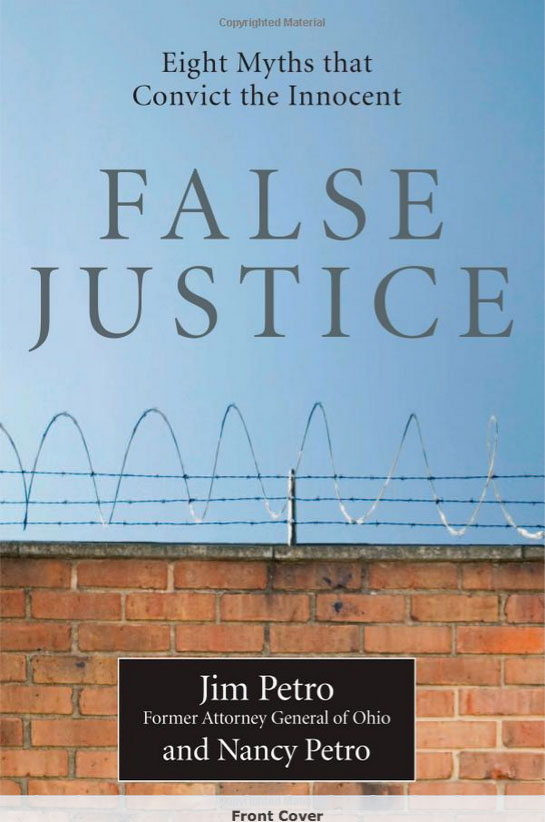
FalseJusticeI hope that you’re all familiar with, and in fact have read, the book by Jim and Nancy Petro, False Justice: Eight Myths That Convict the Innocent.

Jim&Nancy

.

.

.

.

Jim is a former Attorney General of the state of Ohio, and Nancy, among her many other endeavors, is also a contributing editor to this blog.

I recently just happened across this interview with Jim and Nancy at the Columbus Metropolitan Club in 2010.  They talk about what brought them to write the book.

It’s about an hour long, and I found it both fascinating and illuminating.  Definitely worth a watch.

Thursday’s Quick Clicks…

click
  • Exoneree says arrestee names should remain confidential
  • Murder conviction tossed in Georgia
  • An epidemic of prosecutor misconduct
  • Exoneree Fernando Bermudez to kick off ‘Dilemmas of Justice’ lecture series Sept. 24th
  • On Monday, the 9th U.S. Circuit Court of Appeals upheld a lower court ruling that freed a California man who was wrongfully convicted in 1999 of being in possession of a concealed knife under California’s Three Strikes Law.  Daniel Larsen was convicted based largely on eyewitness identification. Two officers testified that they saw Larsen throw a knife under a car located in the parking lot of the Golden Apple Bar in Los Angeles. Because he had prior felony convictions, Larson was sentenced to serve 28 years to life in prison.  Larsen spent nearly 14 years in prison before his conviction was reversed by a U. S. District Court judge in 2010 after the California Innocence Project, which began representing Larson in 2002, found witnesses who testified seeing a different man holding the knife.

Thursday’s Quick Clicks…

click
  • Duke Law School’s Innocence Program, which includes the Wrongful Convictions Clinic and Innocence Project®, has been awarded a $249,718 grant from the U.S. Department of Justice.
  • Irish Innocence Project joins the debate over a DNA database in Ireland
  • Wrongful convictions of women topic of panel discussion in Chicago on September 25th
  • The decision by Cook County State’s Attorney (Chicago) Anita Alvarez to set aside the convictions of two men Tuesday, leading to their release from prison and into the arms of family members and lawyers, underscored the fact that Illinois’ problems with wrongful convictions are far from over.  But Alvarez’s handling of the cases of Carl Chatman and Lathierial Boyd also may signal a shift in her approach to wrongful conviction cases, one that has given her a reputation as a prosecutor who slow-walks innocence claims and dismisses convictions only when she has no choice.  More…

Debra Milke Released Pending New Trial

Milke

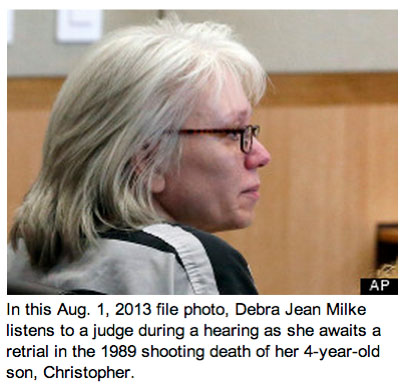
Debra Milke has been in prison since 1990 for arranging the shooting death of her 4-year-old son.  A detective, Armando Saldate, had testified that she had confessed to him.  She has steadfastly maintained her innocence.

Here is an excerpt from the court’s opinion:  “No civilized system of justice should have to depend on such flimsy evidence, quite possibly tainted by dishonesty or overzealousness, to decide whether to take someone’s life or liberty,” Chief Judge Alex Kozinski wrote for the court.

The court noted four cases in which judges threw out confessions or indictments because (detective) Saldate lied under oath and four instances in which cases were tossed out or confessions excluded because Saldate violated the suspect’s constitutional rights.

He was also suspended for accepting sexual favors from a female motorist he stopped and then lying about the encounter, the court said.

The prosecutor had withheld this information from the defense.

Read the full HuffPost story here.

Gubernatorial Candidate in Virginia Runs on Innocence Credentials…

ken_cuccinelli_virginia_getty_images-e1378234617700From dailycaller.com:

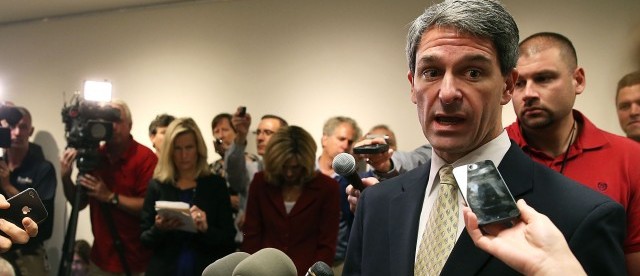
Often attacked by liberals as a conservative hardliner on social issues, Virginia gubernatorial candidate Ken Cuccinelli is airing a new, positive television ad that is being praised for showing the Republican’s compassionate side.

The advertisement tells the story of Cuccinelli’s work as attorney general of Virginia that led to the exoneration of Thomas Haynesworth, an innocent black man, who wrongly spent 27 years in prison on rape convictions, it was determined.

“After going through all of the evidence, I was convinced that Thomas Haynesworth was innocent,” Cuccinelli says in the ad. “And I took that case on myself.”

Haynesworth himself appears in the ad in support of Cuccinelli. “To me, he’s a hell of a guy.”

Political observers noted that the ad could help soften Cuccinelli’s image.

“Broadens image beyond divisive social issues,” University of Virginia politics expert Larry Sabato said Tuesday. “Where was this in spring?”

The ad comes after prognosticators like Sabato have said the race appears to be slipping from Cuccinelli in favor of Democratic nominee Terry McAuliffe. A recent Quinnipiac shows McAuliffe beating Cuccinelli 48 percent to 42 percent.

Journalists Never Gave Up on Haunting Case of Innocence

On June 28, 2013, Daniel Taylor, 38, walked out of prison after serving more than 20 years for murders he did not commit. He couldn’t have committed the crimes. Taylor was in jail the night of the murders. He’d been arrested and held there following a fight in a park. But despite his unique and compelling alibi, police and prosecutors used his false confession to convict him and others. Taylor might likely still be in prison if it weren’t for his letter written to Steve Mills, a reporter at the Chicago Tribune. He and his reporting partner on articles about wrongful conviction, Maurice Possley, a Pulitzer Prize winning journalist, were not only intrigued, they became committed to proving Taylor’s innocence. But they never imagined it would take twelve years. Read this remarkable story of determination, hard work, and patience (here) in The Atlantic.

Judge Overturns Conviction of Jimmy Dennis – on Death Row for 21 Years

Jimmy Dennis

In the Pennsylvania case of Jimmy Dennis, Judge Anita Brody vacated both the conviction and the death sentence in a scathing indictment of the prosecutor’s case. The Judge called the conviction against Dennis “a grave miscarriage of justice” based on “scant evidence at best” and found that authorities withheld evidence at the initial trial and that the case was based on shoddy police and prosecutorial work.

Read the NY Daily News story here.

Tuesday’s Quick Clicks…

click
  • Kenya scarred by wrongful convictions (and the government’s refusal to acknowledge them)
  • Was the Stanley Wrice wrongful conviction hearing in Illinois subverted by politics?
  • RIP exoneree Forest Shomberg, found dead in Wisconsin of apparent drug overdose
  • The Alaska Supreme Court is considering proposed rule changes that would require lawyers in the state to disclose evidence that suggests a person has been wrongly accused or convicted of a crime.  Alaska state prosecutors and defense lawyers are currently not required to turn over exculpatory evidence – facts that point toward a defendant’s innocence.  For the past four years, the Alaska Bar Association has called on the court system to add rules to the Alaska Rules of Professional Conduct, which govern lawyers across the state. The American Bar Association has promoted similar state-level rules around the country.  “This is designed to encourage lawyers to think about the consequences of not doing anything,” said Steve Van Goor, counsel for the Alaska Bar Association. “When you’re in a position to report evidence and don’t, an innocent person sits in prison.”
  • Clerk fired for helping wrongfully convicted man said she would do the same thing all over again
  • New newsletter of Innocence Network UK available here

Losing sight of justice…

tunnel-vision1There have been a couple recent examples in the news of the kind of unfortunate attitude those in the Innocence Movement see all to frequently from judges and prosecutors who have lost touch with the notion of putting justice over winning.  In Ohio, a judge berated a jury after they acquitted a man.  You can imagine what kind of message that sends to jurors in that county who are called for jury duty next month or next year.  Unbelievably unprofessional conduct by a judge.  And in Chicago, a former prosecutor talks about how she quit after being demoted because she did not want to press forward with what she believed was an untenable prosecution.  Kudos to her for having the courage to speak publicly.

Civil-forfeiture laws cost innocent as well as guilty

Presumption of innocence is thrown out the window in U.S. courts when it comes to civil-forfeiture procedures. ProPublica, a non-profit investigative organization, reports here that seizures of crime-related property have become big business for police agencies throughout the country.

ProPublica estimates that billions of dollars in cars, cash, real estate and other assets are seized every year throiugh civil forfeitures. Much of it comes from people who weren’t charged with a crime, let alone convicted of one.

The New Yorker weighs in on the same topic in a compelling article here that describes civil forfeiture as “the Guantanamo Bay of the legal system.”

Tuesday’s Quick Clicks…

click
  • Arizona prosecutor opposes ethical rule requiring prosecutors to disclose evidence of a wrongful conviction
  • Dallas DA Craig Watkins, champion of the wrongfully convicted, draws challenger for 2014 election
  • Oklahoma Innocence Project files brief to free to men featured in John Grisham’s book The Innocent Man and in the book The Dreams of Ada
  • Colorado exoneree Robert Dewey may receive $1.2 million in compensation