Category Archives: Reforming/Improving the system

More Detail on the David Ranta Exoneration

This is, sadly, all too typical.  False eyewitness identification, bogus lineup, jailhouse snitch, police tunnel vision.

Read the full CNN story here.  Below are some excerpts:

Since Ranta’s trial, another man’s widow has identified her now-dead husband as the killer; a onetime jail inmate has said he made up statements about Ranta to boost his own fortunes; and the man who, as a boy, picked him out of a lineup has come forward to say he was coached by a detective.

Menachem Lieberman was 13 years old when he identified Ranta in a lineup.  In 2011, he told investigators that he identified Ranta after being told by a detective to “Pick the guy with the big nose.”

Ranta’s attorney: “The detective work that was done on this case was at best shoddy and at worst criminal. And I don’t use that word lightly,” he told CNN. “But when a closer examination is done of the detective work … It becomes clear that there were so many leads that weren’t followed, there were so many notes that weren’t taken and just a general lack of attention to an investigation that required nothing but close scrutiny of the scene, of witnesses and so forth. That didn’t happen.”

David Ranta Freed After More Than 2 Decades in Prison

Ranta

New York (CNN) — A New York man has been freed after serving more than two decades in prison for the killing of a rabbi during a botched diamond heist, with a judge calling his conviction a miscarriage of justice.

Interestingly, the police are “standing by” the arrest, and deny any claims that there was any “witness coaching.”

Read the full story here.

California Innocence Project Succeeds in Freeing Daniel Larsen After a Decade

DLarsen

Daniel Larson spent 13 years in prison for a crime he did not commit.  He was a victim of California’s “three strikes” law, and was sentenced to 27 years to life.

A federal judge has declared him “actually innocent”, and he is free on bail while the prosecutor’s appeal in underway.

Read the full story here.

Center for Wrongful Convictions at Northwestern Law Focuses on Wrongful Convictions of Women

NWThis from the Spring 2013 issue of the Northwestern University alumni magazine, “Northwestern.”

“Northwestern’s Center on Wrongful Convictions established the first project in the United States to identify and rectify wrongful convictions of women.  CWC leaders developed the Women’s Project, because women face unique challenges when fighting a wrongful conviction.

“There is typically no DNA evidence in cases with female defendants, making their convictions harder to fight.” said Rob Warden, executive director of the CWC.  “Sometimes there was not even a crime at all.”

In addition to representation of selected clients, project leaders also plan to monitor potential cases of wrongfully convicted women across the country, and educate the public about this issue.”

You can read more about the CWC here.

Maddy DeLone, Executive Director of the Innocence Project, Speaks About Her Work

DeLone

Maddy DeLone is the Executive Director of the Innocence Project, a non-profit legal organization committed to exonerating the wrongly convicted through the use of DNA testing and criminal justice system reform. Since its founding in 1992, the Innocence Project’s work has resulted in many innocent people being released from prison and Death Row, many of whom had served over a decade of prison time. DeLone previously served as an attorney with the Prisoners’ Rights Project of the Legal Aid Society. A Skadden Fellow, she also worked as a staff attorney for Children’s Rights, Inc. and as a law clerk to the Honorable Robert W. Sweet.

You can see the video of her interview here.

Steubenville, OH Rape Trial – Something’s Not Right

If you’re not familiar with the situation in Steubenville, OH, in which two high school football players are accused of raping a drunk, 16-year-old girl, here is a recent news update.

It’s dangerous to try cases like this in the media.  We don’t have access to the evidence or the testimony, and the outcome must ultimately be up to the jury.

However, the following sentence in the news article caught my attention:

“The trial, which is likely to stretch into the weekend, is moving quickly to accommodate the schedule of the judge. A verdict is expected by Sunday.”

This is WRONG.  Very, very wrong.  Justice should not, cannot, must not be placed on a schedule.

Budget Crises Hit Public Defenders Hard

You have the right to counsel. Or do you?

Gideon

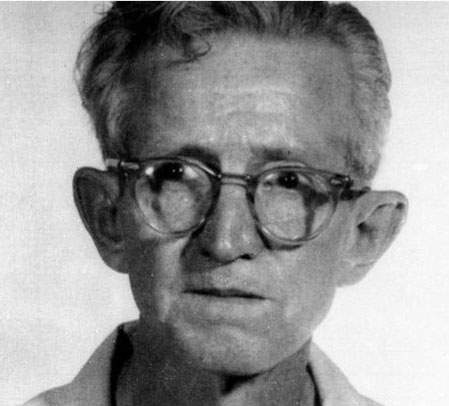
Above is Clarence Gideon, whose pro se petition to the Supreme Court resulted in the 1963 Supreme Court decision in the case of Gideon vs. Wainwright, confirming a constitutional guarantee of representation by counsel.

Recent budget crises across the country have been preventing Public Defenders’ offices from adequately staffing to carry the case load with which they are confronted.  Some Public Defenders are even refusing to take on cases if they don’t meet certain criteria for ‘gravity.’

See the USA Today story here.

New Study Show Statistical Factors Behind Wrongful Convictions…

From news source:

Why do innocent people go to jail in the United States every year for violent crimes they did not commit? It’s a serious question representing the ultimate miscarriage of justice—taking away the freedom of a factually innocent person while also allowing the guilty person to remain free. The U.S. Department of Justice’s National Institute of Justice (NIJ) wanted to learn answers to prevent wrongful convictions in the first place.

Jon B. Gould, J.D., Ph.D., a professor and the director of the Washington Institute for Public and International Affairs Research at American University and his team of researchers conducted a three year, first of its kind, large-scale empirical study Predicting Erroneous Convictions: A Social Science Approach to Miscarriages of Justice employing social scientific methods. It was funded by NIJ, and an NIJ video features Gould discussing wrongful convictions. After identifying 460 cases employing sophisticated analytical methods matched with a qualitative review of the cases from a panel of experts, 10 statistically significant factors were identified that distinguish a wrongful conviction from a “near miss” (a case in which an innocent defendant was acquitted or had charges dismissed before trial).

“Surprisingly unlike airplane crashes or near midair collisions where the FAA moves in to investigate and reconstruct events in an effort to prevent future catastrophes, wrongful convictions have rarely been investigated beyond a specific case study,” says Gould. “This is especially troubling since our criminal legal system is predicated on finding defendants guilty beyond a reasonable doubt before imprisoning them.”

10 Factors Identified in Wrongful Convictions

  •     State death penalty culture/state punitiveness
  •     Strength of prosecution’s case
  •     Prosecution withheld evidence (Brady violation)
  •     Forensic evidence errors
  •     Strength of defendant’s case
  •     Age of defendant
  •     Criminal history of defendant
  •     Intentional misidentification
  •     Lying by non-eyewitness
  •     Family witness testified on behalf of defendant


The resulting 10 factor model applied by Gould and his team can be used to accurately predict an erroneous conviction versus a “near miss” nearly 91 percent of the time and is a useful tool for jurisdictions around the country to adopt remedies to address the 10 weaknesses with little cost according to Gould. The biggest investment is time, training and the acknowledgement that there is room for improvement from police, prosecutors and defense interests. A key to the model’s development was the unprecedented cooperation of an expert panel composed of stakeholders from the Association of Prosecuting Attorneys, Police Foundation, National Innocence Project and National District Attorneys Association.

From the quantitative and qualitative analysis, Gould and his team determined that prevention begins at the police station starting with the interrogation and investigation of alibis. This is followed by several opportunities along the way to identify the innocent before they are wrongfully convicted. For example, if forensic testing was conducted earlier and the results became available sooner to investigators innocent suspects could be freed. But faulty identifications, absence of early forensic test results, and inadequate investigation of alibis leads to what Gould characterizes as a “perfect storm” of errors made worse by collective tunnel vision. It should be noted much of this is unintentional.

The 10 factors in various combinations create this tunnel vision where a prosecutor with a weak case focuses on an accused even more intently rather than considering alternative suspects precisely because tunnel vision has set in – in other words the case seems to add up from the investigation but is sufficiently weak relying on perhaps a misidentification. For Gould this was the most surprising result of his research because he and his team expected strong prosecutorial cases to result in wrongful convictions since the evidence was compelling for the prosecutor to seek conviction but instead the study revealed the contrary. This led the team to look at weak defense counsel, poor explanation/presentation of forensic evidence, and police practices that could trigger the course of events spiraling out of control to a wrongful conviction because the weak prosecution case in turn is not adequately challenged by the defense attorney and the prosecution for one reason or the other may fail to disclose exculpatory evidence- a Brady violation.

Finally, the wrongfully convicted skew toward young suspects as well as those who have a prior criminal record. In other words, the defendants are not in a strong position to demand more from prosecutors or even their own defense counsel because they do not have the wherewithal to challenge the charges.

The study concludes that the social science approach is valid and effective in studying miscarriages of justice and should continue. Gould especially is interested in more research on the “near miss” cases to better learn how the criminal justice system can “get it right” when confronted with an innocent defendant. In the coming weeks, Gould will present his research in Seattle, Miami, New York City, Albany, NY, and North Carolina.


Dog-Scent Lineups – One of the ‘Junkiest’ of the Junk Sciences

pointerA dog-scent lineup consists of matching a “scent” sample from a crime scene to a “scent” sample from a suspect by a dog.  The practice has been used in several states, including Alaska, Florida, New York, and Texas.  We know that dogs have an incredibly acute sense of smell, but the major problem has been with the handlers of these dogs, who have been proven to be fakes and charlatans.

The Innocence Project of Texas has published an excellent article about this practice in the state of Texas.  While 71 pages in total, the actual article is only 14 pages – the rest being appended affidavits from experts.  The link to the article is below:

Dog Scent Lineups-Junk Science-IPOT

The most infamous practitioner of this bogus science has been Deputy Keith Pickett of Fort Bend County, Texas.  From 1994 to 2009 he traveled all over the state of Texas with his dogs, conducting dog-scent lineups.  And he was always telling police and prosecutors exactly what they wanted to hear.  The prosecutors loved him, and he was something of a “justice system rock star.”  At one point, his status as an expert was even solidified by an appellate court decision.

The NY Times published an article about the wrongful imprisonment of Curvis Bickham in Texas.  He was linked to a triple murder through bogus dog-scent lineup evidence provided by Keith Pickett and his dogs.  Mr. Bickham was eventually released only because the real perpetrator confessed, and he had lost everything – his house, his cars, and his business.  See the article here.  And another NY Times article on the subject here.  In 2009, the dog-scent convictions in Texas started being overturned.  It’s about this time that Mr. Pickett “retired.”  Nobody has records of exactly how may cases Keith Pickett and his dogs were involved in, but it’s believed to be as high as 2,000.

There is a similar situation in Florida with a dog handler named John Preston.  See article here.  To this day, nobody knows how many innocent people are still in prison as a result of John Preston’s fakery.  Preston died in 2008 without ever having been charged for his fraud.

The most scientific approach to dog-scent lineups has been taken by the Dutch police, who have been establishing rigorous training & administration requirements and processes since the 1960’s.  What they have found is that, even under the best of conditions and with the most rigorous processes, dog-scent lineup evidence is only 85% accurate.  Dog-scent lineup evidence is not admissable in Dutch courts unless it is in conjuction with other evidence identifying the suspect.  This article has more detail on the Dutch police practices with dog-scent lineups.

Life Sentence Without Parole as an Alternative to Death Penalty?

From the Japan Times:

Opinion divided on life term without parole

by Daisuke Sato (Last In A Series), Feb 21, 2013

A 44-year-old man serving a life sentence in a prison in the Chugoku region believes that continuing to live a respectable life is the only atonement he can make for the families of the two people he killed.

The inmate, who has now served 15 years, has been behaving well and prison guards often describe him as an “exemplary” prisoner.

He was initially sentenced to death by a district court. However, a high court determined that there was a possibility he could be rehabilitated and reduced the punishment to a life term. This sentence was later finalized.

“The death penalty may have been upheld” if his trials had been conducted today because sentencing has gotten tougher, the inmate said in an interview in the prison’s visiting room.

Technically, inmates serving life terms can be released on parole if they serve 10 years, demonstrate signs of reform and meet other requirements. The reality, though, is that the period such inmates are actually serving has been getting longer, recently reaching an average of about 30 years, according to data released by the Justice Ministry.

Even so, the Chugoku inmate is happy just for the opportunity to atone. Continue reading

Eyewitness ID Bill Introduced in California…

From a press release:

Ammiano bill would reduce mistaken convictions

SACRAMENTO – Assemblymember Tom Ammiano today introduced AB 604, a bill that would promote the use of research-proven witness identification procedures to reduce the incidence of wrongful convictions.

“Prosecutors and police investigators are often under pressure to identify a culprit. It’s important to make sure they identify the right person,” Ammiano said. “The case of Ronald Ross shows that shoddy witness identification has horrible consequences.”

Ronald Ross is due to be released from prison this month after spending years in state prison on the basis of a wrong identification. Following efforts by the Northern California Innocence Project, prosecutors in Alameda County have said they will ask a judge to release Ross, who was convicted of attempted murder in a 2006 shooting.

“The injustice to Ronald Ross was not the only terrible result in the Alameda County case,” Ammiano added. “There was also the fact that the true culprit went free and committed other crimes because police stopped looking for him. This bill will reduce the chances of both of those problems.”

The bill requires trial judges to give juries instructions about witness identification procedures. The instruction would tell jurors they could take into account the way in which identification took place, and whether it met certain criteria. The presence of that instruction would create an incentive for investigators to use more careful procedures.

Among the procedures that improve the quality of identification are sequential presentation of photo lineups (as opposed to showing all photos at one time) and having double-blind administration, in which a party not directly involved in the case administers the lineup presentation.

In Ross’ case, there was not double-blind administration. As a result, the victim was reportedly pressured to make the identification of Ross as the shooter. The actual culprit was not included in the lineup.

The bill is sponsored by the ACLU of California, the California Public Defenders Association and the Northern California Innocence Project.

Why I Think the US Justice System is Broken – and Why It’s Not Getting Fixed

broken column 3I was recently made aware of a quote from the ancient Greek playwright, Euripides. “Ours is a universe in which justice is accidental, and innocence no protection.”  I often feel like this describes our current justice system exactly, but it’s not supposed to be that way, and it doesn’t HAVE to be that way.  As with any system established and run by “humans,” the justice system, including those who run it, is exposed to the entire gamut of human frailties – pride, ego, ambition, greed, envy, passion, deceit, prejudice, hate, intolerance, power, influence, and on and on.  The situation hasn’t really changed since ancient Greece, and I don’t see the nature of humanity changing radically any time in the next  few thousand years, but there are things that can be done to at least mitigate the effect of these human shortcomings on the justice system.  This post will be comprehensive and quite long – so, buckle up, and here we go.  I hope that those of  you who have the patience to read through to the end may find it interesting, enlightening, and hopefully thought provoking.

As you might guess from the title, this post will be “editorial” in nature.  I’ve been doing innocence work for five years now, and have worked with seven different Innocence Projects from across the US and one foreign country.  Over that time, I’ve been exposed to the fine details of over 40 different cases.  These are all post-conviction cases in which there is a belief by the associated Innocence Project in the actual innocence of the defendant, and thus belief of a “wrongful conviction” on the part of the justice system.  In addition, my research in these cases has exposed me to many other additional cases in which a wrongful conviction occurred.  Consequently, I’ve seen a lot of the things that can go wrong in the justice system, and have been able to make judgments about how they happen.  This post will coalesce my observations into statements about why I think the US justice system is broken.  I’m going to be painting a pretty dark picture, so keep in mind that my exposure has been to cases in which the justice system failed, but there are lots of them.  There really isn’t any substantiated data for how many wrongful convictions occur in the US every year, but recent data says it’s between 5,000 and 10,000 per year.  One is too many.  At the end of the post, we’ll talk about why it’s not getting fixed.

I’m not an attorney, and some may accuse me of being a naive, optimistic idealist (which I am) or of tracking muddy footprints through the hallowed halls of justice; but I am only reporting what I have observed.  And if you think I’m making some of this stuff up, I strongly recommend you read the book False Justice: Eight Myths That Convict the Innocent by Jim and Nancy Petro.  (It’s available from amazon.com for $16.)  Jim is a former Attorney General for the state of Ohio, and Nancy, in addition to being an author and advocate, is also a contributing editor to this blog.  Now, are there good and dedicated prosecutors and police out there who are absolutely committed to seeing that true justice is served?  Of course.  Are there qualified and capable attorneys who will do their utmost on behalf of their clients?  Of course.  Unfortunately, there are also “others.”

All that being said  ……..

Why I Think the US Justice System is Broken

(As a preview, we’ll touch upon Bad Lawyers, Prosecutors, Judges, Police, Juries, Junk Science Forensics, False Confessions, Shoddy Work by Medical Examiners, Testimony from Experts Who Aren’t Really Experts, Finality of Judgement, Highly Restrictive Rules for New Evidence, Eyewitness Identification, and Recantations.)

Continue reading

Families Suffer as NY Hesitates on Innocence Reforms…

From Buffalonews.com:

The only good thing that ever came from Anthony Capozzi’s wrongful conviction and imprisonment for rape was that Western New Yorkers were able to witness a demonstration of the twin virtues of devotion and grace under pressure. Capozzi’s parents, Mary and Albert Capozzi Sr., never lost faith in their son’s innocence while he was serving 22 years in prison.

Albert Capozzi died Monday at age 87 and, as New York continues to avoid taking responsibility for a criminal justice system that does too little to distinguish between the innocent and the guilty, the passing of this generous spirit should not go unnoticed. He and his family suffered a hell most of us cannot imagine as the unrecognized victims of the problem of wrongful conviction. Mary Capozzi died three years ago.

Through its refusal to act, Albany has been willing to turn its back on the direct victims of wrongful conviction. State officials will fork over some money to make up for the decades lost in prison, but they haven’t done anything to lessen the chances of future atrocities.

The state has also showed a criminal indifference to the future victims that wrongful conviction can produce. The man authorities should have arrested, Altemio Sanchez, continued to rape women while Capozzi deteriorated in prison, and then he began murdering his victims. Albany doesn’t worry about them too much, either.

These are the obvious victims, and plainly those with the most at stake. But the families of those who are wrongfully convicted bear a silent burden. Knowing their relative is innocent, they must nonetheless bear legal costs, travel costs to visit and the emotional burdens that go along with living in a community that believes your son is a criminal.

Perhaps those burdens don’t stack up against those of other victims of wrongful conviction, but the fact is that something can be done about all of it. There are common-sense reforms, backed by police and prosecutors, that would diminish the chances of convicting the wrong person.

Those reforms include better lineup procedures to prevent misidentification by witnesses and recorded interrogations to guard against the odd but real phenomenon of false confession.

Innocent suspects, under intolerable pressure and sometimes mentally ill, sometimes confess thinking they will then find relief from their interrogators. This sometimes happens when police inadvertently feed the suspect details of the crime that only the perpetrator would now. Recorded interrogations would provide a bulwark against that problem. Once police become accustomed to that procedure, they often come to appreciate it.

No system can fully protect against the problems of human nature, whether misidentification by witnesses or hasty decisions by police under pressure to get a criminal off the streets. But we can do better than we are now.

In his State of the State speech last month, Gov. Andrew M. Cuomo proposed changes to address the problems of witness misidentification and false confession. He should press them.

And if lawmakers don’t care about the Anthony Capozzis of the state or the women who might be alive if Sanchez had been captured earlier, they might at least think of Albert and Mary Capozzi and the other families that suffer in this state because of wrongful conviction.


New Innocence Reforms in DC…

From the Washington Post:

Courts and police in the nation’s capital will change how they conduct lineups of suspects, when they notify defendants about informants and how long they retain criminal trial records, all in response to errors that have put innocent people in prison.

A task force created by D.C. Superior Court Chief Judge Lee F. Satterfield recommended that police use computers and staff not associated with a particular case to administer photo lineups to prevent influencing potential witnesses.

The court acknowledged that DNA often has cleared defendants long after their convictions, so officials will by March begin keeping trial records permanently rather than destroying them after 10 years.

Local courts also will begin giving criminal defendants earlier notice of any information that might impeach police informants — such as their criminal record and whether they have been paid, won a plea deal or other inducement, or cooperated with police or prosecutors in the past. Such information will be turned over at least two weeks before trial if it does not endanger witnesses, officials said. Previously, defendants got that information a few hours or days before trial.

“The Superior Court strives to attain exemplary standards of practice in the criminal justice system,” Satterfield wrote in a letter Tuesday thanking the panel.

The changes place District authorities on a path undertaken by many state legislatures, police agencies and court systems in response to wrongful Continue reading

How psychological research can decrease defective verdicts

The current issue of Scientific American has an excellent article, titled ”Your Brain on Trial,” about how psychological research can help prevent flawed verdicts. Unfortunately, authors Scott O. Lilienfeld and Robert Byron note, ”Many well-established psychological findings have yet to exert much influence on the legal system, in part because of a resistance to change and in part because of differing traditions. Whereas science tends to question common intuitions regarding human nature, the legal system tends to embrace them.”

Lilienfeld and Byron give many examples of how relatively minor reforms based on scientific research could help prevent wrongful convictions. Some of the reforms concerning eyewitness identification and false confessions have received a great deal of attention on this blog. One that hasn’t concerns the futility of a judge telling jurors to disregard inadmissible statements or questions.

Once the cat’s out of the bag, they write, the judge can’t put it back all that easily. ”False beliefs often persist long after they have been discredited,” they write. They say research has shown that such ”belief perseverance” is less likely to persist if the judge explains why the stricken statement is unfair to the prosecution or defense. But judges rarely do that.

Lilienfeld and Byron also point out that, while videotaping interrogations is a good thing, the way police set the cameras up to focus on the person being questioned ”engenders bias against the suspect, probably because observers are prone to attributing cause — and blame — to whatever is most visually salient.” They say that researchers at Ohio University found that ”broadening the camera angle to include both interrogator and suspect diminishes this bias.”

Simple reforms like these could help ensure valid verdicts. Unfortunately, nothing is simple when it comes to rigid criminal-justices systems. You can read the whole article here.

The Death Penalty in California

The death penalty in the state of California continues to be a major focus, due in part to the burden it places on taxpayers. The California Innocence Project‘s goal with this infographic was to examine the facts, and the facts alone. Even though California’s Proposition 34 did not pass in the most recent election, this issue will continue to be argued and remain a pressing issue, especially during difficult economic times.

Death Penalty Infographic - An Infographic from CA Innocence Project

Embedded from the California Innocence Project

The Latest in the Medical Debate Over SBS/AHT (Shaken Baby Syndrome/Abusive Head Trauma)

Well, it seems we’ve got a situation of “dueling journal articles.”

Dr. Sandeep Narang has been one of the more cogent medical authors in support of the conventional SBS/triad theories, and has recently published a paper to that effect:  A DAUBERT ANALYSIS OF ABUSIVE HEAD TRAUMA/SHAKEN BABY SYNDROME.

Prof. Keith Findley, Prof. David Moran, Dr. Patrick Barnes, and Dr. Waney Squier have published a recent paper “in response.”   And by the way, this paper is the best overall summary of the SBS/AHT situation and directions that I have read to date. SHAKEN BABY SYNDROME, ABUSIVE HEAD TRAUMA, AND ACTUAL INNOCENCE:  GETTING IT RIGHT.

And in addition, Dr. Norman Guthkelch, who is the progenitor of the original SBS hypothesis has also published a recent paper in response as well.  PROBLEMS OF INFANT RETINO-DURAL HEMORRHAGE WITH MINIMAL EXTERNAL INJURY.

They may not be great “bedtime reading,” particularly Narang’s paper since it is quite long, but here they are if you’d care to read them:

Narang

Barnes PD. SBS and AHT. Getting it right. Hous J Health Law Poly 2012

Guthkelch AN. Preface to Narang. Hous J Health Law Poly 2012

Why Do Innocent People Confess?

Why do innocent people confess to the crimes they did not commit? Here’s an article on the cause of false confessions in Japan by Mariko Oi (BBC).  Watch the story online here.

Related articles about the Japanese Criminal Justice System: False Confessions as Major Cause of Wrongful Convictions in JapanAudio and Visual Recording of Interrogations, Fukawa Case, and Compensation for the Wrongfully Convicted.

2 January 2013 Last updated at 00:29 GMT

Japan crime: Why do innocent people confess?

By Mariko Oi BBC World Service, Tokyo

Japan has a conviction rate of more than 99%. But in recent months there has been a public outcry over a number of wrongful arrests where innocent people confessed to crimes.

It started with a threat posted on the city of Yokohama’s website in late June: “I’ll attack a primary school and kill all the children before the summer.”

In the months that followed, there were a number of similar threats posted on the internet – some threatening famous people, including the Emperor’s grandchildren.

After a police investigation, four people were arrested. Two, including a 19-year-old student, confessed whilst in custody.

But on 9 October, the real perpetrator sent an email to a lawyer – Yoji Ochiai – and local media, explaining how he or she made those threats by taking control of innocent internet users’ computers with a virus.

His or her purpose, as stated in the email to Ochiai, was “to expose the police and prosecutors’ abomination”.

And in a way, it did. It raised the question – why did the innocent people confess to a crime that they didn’t commit? What kind of pressure were they put under? Continue reading

2012: A Banner Year for the Cause of Reducing Wrongful Conviction

January 1, 2013

For those involved in the cause of improving criminal justice, the ringing in of a new year prompts reflection on mankind’s progress toward equal, fair, and accurate justice for all, the foundation of just societies and sustainable peace. By any measure, 2012 marked many advances for those dedicated to truth in criminal justice. Progress was made in achieving exonerations; expanding awareness, understanding, and activism; advocating for best practices in criminal justice policies and procedures; and increasing knowledge that can inform more accurate verdicts.

Here are ten notable advances achieved in the name of true justice in 2012: Continue reading

Witnessed Baby Shakings – Shaken Baby Syndrome

BabyShake

This article addresses Shaken Baby Syndrome, SBS (now officially renamed Abusive Head Trauma – AHT), and the so-called “triad” of symptoms that the bulk of the medical establishment and the justice system say are pathognomonic (exclusively indicative of) of SBS.  The “triad” consists of retinal hemorrhage, subdural hematoma, and diffuse edema of the brain, and according to largely prevailing medical wisdom, violent shaking or abusive head trauma is the only thing that can cause these symptoms in an infant or child – not diseases or genetic conditions or short falls.

Documented, witnessed baby shakings are a rare event.  Charges of SBS are almost universally brought against care givers in situations in which there are no witnesses, and the determination of SBS rests solely upon a medical opinion.  Prof. Deborah Tuerkheimer of DePaul University has said that a “post mortem determination of SBS is essentially a medical diagnosis of murder.”

Continue reading