Category Archives: Reforming/Improving the system

Audio and Visual Recording of Interrogations by Public Prosecutors

The Entrance of Public Prosecutors Office in Tokyo

The Entrance of Public Prosecutors Office in Tokyo

One of the critical tasks for the Japanese prosecutors is to interrogate the suspects themselves. I posted here about how police interrogations are partially recorded in some cases today. So what about interrogation by prosecutors? Are they recorded?

The answer is yes and no. Yes, they are sometimes recorded but only a few cases are recorded entirely, and most cases are not recorded at all.

In May 2006, the Supreme Public Prosecutor’s Office announced that they will start recording some interrogations on an experimental basis. Only serious cases were chosen, and the final part of the interrogation – the scenes where the suspect has confessed and signs the dossier – was recorded. It was up to the prosecutors’ discretion which cases and which part of those cases should be recorded.

Then there was an unprecedented scandal in 2009, involving a public prosecutor by the Special Investigation Division in Osaka Public Prosecutors Office . Continue reading

Civil commitment for unproven condition rejected

Imagine being wrongly convicted of a crime that never occurred, serving a long sentence and then, when you’re about to be released, having the government lock you up for crimes you might commit in the future.

Even worse, imagine that the reason the government wants to keep you locked up is that you have been diagnosed with a mental disorder that many psychologists don’t believe even exists.

That could happen if the federal government has its way with its attempts to civilly detain people it deems a dangerous sex offender because they have “hebephilia,” the sexual attraction to children who have reached puberty.

Fortunately, a federal judge last week rejected the government’s effort to detain a convicted sex offender based on what forensic psychologist Karen Franklin calls this “faux diagnosis.” You can read her post here.

Nigeria: Plea Bargaining Your Way to Cheat Justice, is Prosecutorial Misconduct.

There is no doubting the original intendment of plea bargaining, as part of the mechanism for the administration of justice. In addition to a range of other factors, it helps prosecutors in a variety of ways to get at the root of crime. It helps to identify those ‘most responsible’ for heinous crimes, by inducing lesser accused persons to ‘snitch’ at the ‘big fish’; or, for the big fishes to break ranks and come clean with the level of their involvement in a crime. This way, large criminal rings, gangsters, the leading light of organised crime; and crimes of an endemic nature can be bursted, and those accused and successfully prosecuted are put behind bars for good. Unfortunately, in Nigeria, with organised crime like corruption – whether state and/or private sector led, or a combination of both like the Halliburton case – which is very secretive and goes right to the very top of organisations and government.

It is becoming increasingly difficult to shift when that balance is struck between when to accept plea bargaining by an accused person, and when to ensure that justice is done on behalf of society regardless. Prosecutorial powers in Nigeria lies in a number of agencies and statutory bodies, unlike in the United Kingdom where they rest squarely with the Crown Prosecution Service. This multiplicity and layers of bodies with prosecutorial powers, in a sense impacts the quality of evidence gathering; the decision to prosecute or not to prosecute; the quality, reach and extant powers of these bodies to deal with specific cases. However, only the Attorney General of the Federation have sole discretionary powers to enter a nolle prosequi. This is rarely ever exercised. And to be fair, when he does, the decision is more political than legal.

The level of corruption in Nigeria  is alarming and way beyond tolerable limits, even by Transparency International standards. The recent initiative by the Economic and Financial Crimes Commission (EFCC) – the ‘apex’ corruption body – to give legal muscle to its powers to prosecute, decline to and accept plea bargaining, and on what terms should be commended. The National Assembly must make this an urgent national matter and deal with the legislation timeously. Nigerians are unanimous that corruption is one single enemy of Nigeria. Getting this legislation to pass through parliament is one sure way of combating it, to avoid the sort of miscarriage of justice where accused persons put on the dock for the theft of tens of millions of dollars, end up plea bargaining and making paltry sums of money in exchange, whilst getting away with their loot. For prosecutors to continue to allow this is to happen, is clearly prosecutorial misconduct.  Read report about this here http://www.tribune.com.ng/sat/index.php/politics-today/7036-plea-bargain-and-corruption.html


Proposed “Expansion” of Partial Recordings of Police Interrogations

The National Police Agency (NPA) started audiovisual recordings of parts of police interrogations on an experimental basis in 5 police departments across Japan back in September 2008. NPA extended the experiment to include all police departments from April 2010. Recently in March, it expanded the partial recordings to interrogations in more cases.

Previously, partial recordings of interrogations aimed to strengthen the prosecution’s case in proving the voluntariness of confessions at trial. They only recorded in those cases where 1. the trial was subject to a mixed-judge panel trial (with lay judge participation = most serious cases), 2. the suspect had already confessed, 3. the “truth-finding” function of the interrogation was not compromised, 4. there was no difficulty in recording, and 5. the voluntariness of the confession might be challenged at future trial.

In these cases, interrogations by police were partially recorded, only after suspects confessed: there was no recording during the process leading up to the confession itself. Read the NPA report on these experimental recordings in June 2011 here (in Japanese).

An internal study panel of the National Public Safety Commission issued a report in February 2012. It called for the expansion of partial recordings, although it did not recommend the recordings of the entire process of interrogation. Read the report here (in Japanese).

As recommended by the February report, Continue reading

Are Human Rights really Needed for Criminal Justice Reform in America?

To Jamie Fellner, her answer to the question is a resounding YES. Jamie is Senior Advisor to the U.S. Program at Human Rights Watch. Jamie’s position is well articulated in her piece entitled – The Human Rights Paradigm: The Foundation for  Criminal Justice System We Can Be Proud Of.

To drive home her point, she delved into the manifold issues of race discrimination, excessive sentences, the wretched prison conditions and disenfranchisement. She opines that human rights have not been fully integrated in the American criminal justice system. ‘Strangely’ though, she asserts international human rights treaties do not create judicially enforceable rights in America. This, for me, is an oxymoron and a telling indictment on America. Read her full article herehttp://www.hrw.org/news/2012/03/21/human-rights-paradigm-foundation-criminal-justice-system-we-can-be-proud

Miscarriage of Justice: What does it really mean?

The term miscarriage of justice is frequently and notoriously invoked, but very little has been done by way of decisions clarifying the term. The United Kingdom Supreme Court appears to have come to a settled definition of the term; at least in connection with post-conviction claims of innocence, and thence, for compensation thereof. Readhttp://www.guardian.co.uk/law/2011/may/11/barry-george-compensated-supreme-court?INTCMP=ILCNETTXT3487

In a judgement given on the  11th of May, 2011 the UK Supreme Court formulated the test in determining whether a miscarriage of justice has occured. The court said that there would be a miscarriage of justice – ‘When a new or newly discovered fact shows conclusively that the evidence against a defendant has been so undermined that no conviction could possibly be based upon it’. Read full judgement herehttp://www.supremecourt.gov.uk/decided-cases/docs/UKSC_2010_0012_Judgment.pdf . It is however going to be very difficult (but the decision can be distinguished) to apply this in every concieveable situation and circumstance, except to say that the decision should serve as a starting point when attempting to apply it beyong innocence cases. It should be noted that the decisions itself was arrived at by a very  narrow majority, leaving the Supreme Court in a position to ‘possibly’ reverse itself someday. The decision left some of the appellants in this case still clearly dissatisfied. Barry George for instance.

Keith Findley: Mounting Evidence Questions the Justice in Shirley Smith Case

Written and submitted by Keith Findley, Wisconsin Innocence Project director and President, Innocence Network Board of Directors:

NPR disclosed last week that a senior pathologist in the Los Angeles County coroner’s office has sharply questioned the forensic evidence used to convict Shirley Smith, a 51-year-old grandmother, of shaking her 7-week-old grandson to death.  The disclosure comes three months after the U.S. Supreme Court reinstated Shirley Smith’s conviction and sentence for felony child endangerment by summarily reversing the 9th Circuit’s grant of habeas relief in Cavasos v. Smith.

According to NPR, the newly disclosed report by the pathologist, James Ribe, details eight “diagnostic problems” with the coroner’s 1996 ruling that the child had died from violent shaking or a forceful blow to the head.  Ribe’s report notes that there was no evidence of abuse, and that the child’s brain injuries were relatively minor and could have been caused by suffocation from sleeping face down on a couch cushion or even from the birth process.

These revelations make the Supreme Court’s summary reversal in Smith’s case all-the-more troubling.  The Court’s per curiam majority treated this as a routine decision mandated by established principles requiring deference to juries in Continue reading

NY Landmark Ruling Allows Expert Witnesses on False Confessions at Trials; Defendant in Case, However, Does Net Meet the Criteria

Story by Emily Horowitz, Director, National Center for Reason and Justice (www.ncrj.org)

On Thursday, March 29, 2012, New York’s highest court made a landmark ruling, saying that expert testimony about false confessions should be allowed at trial. Shamefully, the 5-2 decision upheld the conviction of Khemwatie Bedessie, the defendant represented by Ron Kuby, who was not allowed to have an expert witness on false confessions at her 2007 trial, saying that in her particular case a false confession expert was not needed. The Bedessie case, fiscally sponsored for 5 years by the National Organization for Reason and Justice (http://ncrj.org/Bedessie/), is reminiscent of the classic daycare panic case of the 1980s/1990s, where daycare centers were centers epicenters of false allegations of sexual abuses – and some of those notorious cases included false confessions.

In the New York Time article about the ruling, it says that Bedessie confessed “twice” to sexually abusing a young boy at the daycare center where she worked Continue reading

A rush to judgment is never a good thing

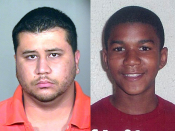
Hysteria over what seems to be a particularly egregious crime often leads to a wrongful conviction. The world has seen this many times, but it always seems to forget that lesson when another incident causes outrage, as has the shooting death Florida teenager Trayvon Martin.

The death of an unarmed kid is an obvious tragedy. But no matter how misguided George Zimmerman, the man who shot Martin, might seem, it’s important to keep in mind that everything that occurred that night is not yet known. That’s why the calls from some corners for vengeance before all the facts are known are disturbing. A rush to judgment from stage left is no more palatable than a rush to judgment from stage right, from which they more often come.

Miami Herald columnist Glenn Garvin made that point today, when he wrote:

“I’ve read tens, maybe hundreds, of thousands of words on the shooting death of Trayvon Martin, the South Florida teenager whose shooting death last month at the hands of a neighborhood watch volunteer has become a national symbol of continuing American racism. But in all those words, there are three that haven’t come up that seem worth remembering to me: Duke lacrosse team.” Read more here.

Ethiopia: A New Criminal Policy in Place to Combat the Scourge of Wrongful Convictions

Ethiopia has taken a giant step in reworking its criminal policy. Until now, no articulate policy document or guidance existed, that provided a clear cut approach to criminal procedure and process, indeed, to criminal law reform. In connection with the wrongfully convicted, the new policy document states inter alia: ‘ If a person who is convicted of a crime and subjected to a death sentence imprisonment, or a fine, is later found actually innocent by a court through post conviction proceedings, the person, their heirs, or their spouse is entitled to a commensurate compensation of moral and material damage suffered due to the decision which subjected the person to the sentence’

Amongst other novel scheme, the policy makes provision for plea bargaining. Attempts were also made to push for the retrial of persons initially wrongfully acquitted, but evidence later emerges which implicates and conclusively prove their guilt. It failed. If someone is wrongfully acquitted and later evidence proving his apparent guilt is discovered, the prosecutor under the usual practice, is not given the right to demand a revision of the first verdict acquitting such defendant. Prosecutors are still trying to come to terms with the policy. Read further commentary herehttp://allafrica.com/stories/201203270611.html

It will be sometime yet for the full impact of this policy to percolate down the system of administration of justice in Ethiopia, given the very ‘conservative’ nature of the society, and a constrained political environment.  Still, it is a good start.

U.S. News Programs Explore Systemic Wrongful Conviction Issues

Millions of Americans had their eyes opened to two important criminal justice issues—prosecutorial misconduct and wrongful conviction compensation—as national television news programs explored topics related to wrongful conviction last night, Sunday, March 25, 2012. Ohio Innocence Project Director Mark Godsey previously announced these programs on this blog. If you missed them, see the video link here to the 14-minute segment of CBS’s 60 MINUTES with Michael Morton, who spent 25 years in prison before DNA proved he didn’t murder his wife. The piece explores the case that has prompted a rare judicial inquiry into allegations of prosecutorial Continue reading

Trayvon Martin, as Metaphor for Due Process and Justice

The facts and facts in issue are still foggy. However, there is a groundswell of ‘opinion’ in the public domain, tending to suggest that the circumstances and events leading up to the death of young Trayvon Martin, will severely test the due process, policing techniques and strategies, and importantly, why that process is not playing itself out, sooner than most people expect. Parties must eschew playing the ‘race card’ because that will not be the real lesson to be learnt, rather, this is about justice for a young boy brutally gunned down in his youth. As all parties to this crime – the victim and the alleged accused- are busy marshalling their cases, it is important we dont lose focus of the issues, nuances and process; because, ultimately it is the ends of justice that will be best served if we keep our focus. Read and watch CBS News video here http://www.cbsnews.com/8301-505263_162-57403856/trayvon-martin-case-escalates-into-a-cause/

The lessons of the last 4 decades has taught us to be very wary and circumspect of eyewitness accounts; expert evidence/witnesses, science and forensic. The legal maxim still holds true today, and in relation to this case, that, it is better to set 1000 guilty persons free, than allow one innocent person to be convicted and sent to prison. Mindful of this dictum, it behooves the authorities to set legal protective mechanisms in place, whilst asking probing questions, engaging with the law and ensuring all revelant facts are unearthed and placed before a proper judicial authority -judge, jury and grand jury. As the facts continue to unfold, we must be guided by fairness and the law, in order to avoid convicting the innocent. On the flip side, the full weight of the law must be brought to bear on George Zimmerman if he is found guilty of killing Martin Trayvon. This is one killing too much!

Judicial Independence – How Do We Get There?

An independent judiciary – one that is not influenced by campaign contributors or special interest groups or religions or political parties or other power brokers.  Sounds like it should be the bedrock of a fair and impartial criminal justice system, doesn’t it?  Well … I’m afraid that ain’t what we got.

With the exception of Arizona (judges are appointed by the governor or elected on a non-partisan ballot), all US state level judgeships are elected political positons (just like prosecutors).  We all know that “Job 1” for any elected official is  to to get reelected.  This automatically sets in place a host of the “wrong” incentives for judicial job performance.  It’s human nature, and it’s a fact.  There will be pressure for politically elected judges to make judicial decisions that will accommodate the political base.  And I will have to opine that appointees by a governor, while not having to campaign for reelection, are also political postions.

Continue reading

Innocence Project Legal Directors Praise State’s Attorney and Police for “Model Response”

In a Chicago Tribune article today here, John Hanlon, legal director of the Downstate Illinois Innocence Project, and Steven Drizen, legal director of the Center on Wrongful Conviction at Northwestern Law praise Kane County (IL) State’s Attorney Joe McMahon and Aurora Police Chief Greg Thomas for pursuing truth even after a conviction, which resulted in the vacation of the murder conviction of Jonathan Moore. Key to this “model response”: Not having tunnel vision or defending a conviction in the face of significant new evidence, but instead dedicating resources—and “fresh” investigators—to a reinvestigation.

Matthew Puckett: The last hour or two, or Reprieve!

It now appears down to the US Supreme court to decide the fate of Matthew Puckett. His lawyers last week filed a petition with the supreme court for a reprieve. In the next couple of hours -that is, if the supreme court hasn’t already decided the petition for stay of execution, one way or the other; the State of Mississippi will either carry out the execution of Matthew Puckett, or grant him reprieve. Read views by Matthew Puckett himself and his supporters in The Republichttp://www.therepublic.com/view/story/c1713c9ba2024f66b35f204c243658d8/MS–Mississippi-Executions/

But there seems to be grave concerns from responsible quarters, that the trial leading to the conviction ‘may’ have been flawed in some way and therefore unsafe. There are procedural concerns; the quality of legal advice and representation that was available to him; circumstantial evidence which points in other possible directions.  Matthew Puckett continue to deny he is guilty. Hear him – ‘Like a lot of people, I thought if someone was convicted of a crime, they were probably guilty. But if this can happen to us, it can happen to anyone’.

The real concern here is the possibility of a wrongfully convicted person being executed; where that decision has been aided and abetted by the justice system. Jim Craig of the Louisiana Capital Assistance Center (a non profit law office) thinks the appeal was ‘fake’. He said further ‘We are here to, among other things, expose a fraud at the center of the Mississippi system of justice’.

We all hope there is still enough time left!

Texas’ Forensic Science Commission is Stepping Up

Many may remember the Texas Forensic Science Commission for its controversial role, at odds with the Innocence Project’s advocacy, in the Todd Willingham arson case. Now, with a new committed leader, the Commission is showing signs of stepping up to fill alleged voids in effective oversight of Texas’s forensic crime labs. An example is a letter the Commission recently sent to the El Paso Police Department demanding further steps to resolve unanswered concerns and questions regarding the controlled substances division at the El Paso Crime Lab.  The respected Grits for Breakfast blog details this effort here, highlighting forensic crime lab oversight issues that go well beyond Texas.

Public Pressure Builds for Sheriff in Michael Hash Wrongful Conviction Case to Resign…

Good for the freedom fighters and vigilant citizens of Culpeper, Virginia.  On the heels of the exoneration of Michael Hash, citizens are putting pressure on Scott Jenkins, the sheriff of Culpeper, Virginia, to resign immediately.  The prosecutor in the case has already resigned after the federal decision throwing out Hash’ convictions strongly condemned the conduct of both sheriff and prosecutors.  More than 150 people showed up at a rally last night to blast Jenkins and demand his resignation.  Excerpt from news coverage:

“Enough is enough,” said citizen Bob Buettgens, mentioning his background in law enforcement, and how he had never seen a judge opine to this level of criticism.

“We are not going to stand for it anymore. We don’t care about your politics or who you’re friends with. You need to step down and be done with it!”

The provoked gathering of young and old posed questions like: 1) if the sheriff broke the law as an investigator why couldn’t he just be charged, convicted and arrested like everyone else 2) are local media reports about what occurred in the case really true and 3) why isn’t Culpeper County Lieutenant of Courts James Mack being held more responsible for his role in the seemingly botched investigation.

Recall Petition organizer Wayne Stephens, a civil engineer from Rixeyville, said the thing that bothered him most was a statement in the judge’s report attributed to Jenkins in which the sheriff said he never believed Hash and his two teenage accomplices killed 74-year-old Thelma Scroggins in her Lignum home.

“Yet he participated in the prosecution of these three boys,” Stephens said. “To me that is a misuse of justice, not excusable by a deputy or a sheriff.”

The avid blogger and apparent activist said you can’t just hide behind the excuse, ‘My boss told me to.’ Stephens called that “a variation of the Nuremberg defense some Germans tried to use after World War II.”

News here and here.

Good Cops Warm the Heart

I reported previously about police in Southern Illinois working with the Downstate Illinois Innocence Project to exonerate Jonathan Moore.  Now, there is news that the police voluntarily re-opened the murder case of Barton McNeil.  McNeil was convicted of smothering his 3-year old daughter in 1998, but always claimed that his girlfriend at the time was the true perp.  After the girlfriend was convicted of another murder last year, the police decided to take a second look at McNeil’s case.  They contacted McNeil’s supporters and conducted numerous interviews, but have not yet been able to find any new evidence supporting innocence.  They state that they want to work on the case with the Downstate Illinois Innocence Project.  Article and video here.

It’s Done….Cuomo Signs NY Law Expanding DNA Collection for Database…

Details here.  Summary:  New York becomes the first “all crimes” state, where DNA will be collected for felonies and misdemeanors.  Cuomo unfortunately got his way in keeping innocence reforms–such as recorded interrogations and eyewitness identification–OUT of the bill.  The bill does have, however, a couple of bells and whistles helpful to innocent defendants:

• Expanded Access for Certain Criminal Defendants to DNA Testing: This legislation will allow defendants in certain criminal cases to obtain DNA testing prior to trial to demonstrate their innocence. Further, under appropriate circumstances defendants convicted after a guilty plea will be allowed access to such testing. Together, these reforms will help to ensure that innocent defendants are not convicted or, if convicted after a plea, are able to demonstrate their actual innocence.

Expanded Access to Discovery for Certain Criminal Defendants After Trial: In limited circumstances, defendants will be able to seek discovery of property and other materials to demonstrate their actual innocence after their conviction. Such discovery will provide the court with the evidence necessary to reach a proper decision on a defendant’s motion for such relief.

Prosecutor in DC Calls for Review of All Convictions Based on Microscopic Hair Comparison

I’ve blogged here about the problems with microscopic hair comparison and how some prosecutors are unfortunately continuing to tout its alleged reliability.  In contrast, the prosecutor in Washington D.C., after seeing several exonerations of men who were convicted as a result of this junk science, is ordering a comprehensive review of every single case where someone was convicted as a result of microscopic hair comparison.   From the article:

“We are announcing today that we are going to go back and do a sweeping review of cases going back decades,” said U.S. Attorney Ron Machen, “Some in the 70s and 80s and even earlier if we can find the records of cases where hair analysis was used in part to secure convictions.”

The U.S. Attorney’s Office just completed another review of more than 200 cases called into question by the wrongful conviction of Donald Gates, a man who went to prison in part due to the hair analysis testimony of an FBI agent.

“We are now not going to limit it to certain examiners,” said Machen, “We are going to go back and look at all prior convictions where hair analysis was used to identify a defendant regardless of who the specific examiner was to see if we have any questions about the integrity of those convictions.”

Kudos to U.S. Attorney Ron Machen….