Category Archives: Scholarship

Blume and Helm on Innocent Defendants Who Plead Guilty

John H. Blume of Cornell University and Rebecca K. Helm have posted the article “The Unexonerated: Factually Innocent Defendants Who Plead Guilty”, Cornell Legal Studies Research Paper (July, 2012) on SSRN. Here is the abstract:

Several recent high profile cases, including the case of the West Memphis Three, have revealed (again), that factually innocent defendants do plead guilty. And, more disturbingly in many of the cases, the defendant’s innocence is known, or at least highly suspected at the time the plea is entered. Innocent defendants plead guilty most often, but not always, in two sets of cases: first, low level offenses where a quick guilty plea provides the key to the cellblock door; and second, cases where defendants have been wrongfully convicted, prevail on appeal, and are then offered a plea bargain which will assure their immediate or imminent release. There are three primary contributing factors leading a criminal justice system where significant numbers of innocent defendants plead guilty to crimes they did not commit. The first is the perceived need that all defendants must plead. The second is the current draconian sentencing regime for criminal offenses. And, the final contributing factor is that plea bargaining is, for the most part, an unregulated industry. This article discusses cases in which innocent defendants plead guilty to obtain their release, thus joining the “unexonerated” and then propose several options the criminal justice system should embrace to avoid, or at least ameliorate the plight of innocent defendants who plead guilty.

New Scholarship Spotlight: Commissioning Innocence and Restoring Confidence: The North Carolina Innocence Inquiry Commission and the Missing Deliberative Citizen

Mary Kelly Tate, Director, Institute for Actual Innocence, University of Richmond School of Law, has posted the above-titled article on SSRN.  Downloand here.  The abstract states:

Since 1989, the United States has witnessed 289 DNA exonerations, with exonerees serving an average of thirteen years in prison.  Although DNA and its unmatched power for conclusive results is what brought popular attention to wrongful convictions, the scope of the problem is vastly larger than the number of known DNA exonerations.  The actual number of convicted individuals who are factually innocent is unknown. The state of North Carolina has recently responded to this national crisis via a newly created state agency. This essay applauds North Carolina’s response, but urges that ordinary citizens, qua jurors, be active participants in its important work.

New Scholarship Spotlight: After Exoneration: An Investigation Of Stigma and Wrongfully Convicted Persons

Several co-authors have published the above-titled piece available here.  The abstract states:

Research has demonstrated that stigma may affect the re-entry experiences of individuals who are exonerated of crimes they did not commit. In this study, we examined exoneree stigmatization by examining participants’ perceptions of exonerated individuals compared to parolees and average individuals. In addition, we varied the target’s race to examine if race played a role in stigma levied upon exonerated individuals. Results indicated that people who are exonerated and people who are actually guilty are stigmatized more than those with no criminal history. Race did not affect the level of stigma encountered, but further research is needed prior to concluding that race does not affect stigma for exonerated individuals.

New Article Spotlight: Prosecutor Elections, Mistakes, and Appeals

Economics Professor Bryan C. McCannon has posted the above-titled article on SSRN.  Download here.  Abstract states:

Public prosecutors exercise a significant amount of discretion in the criminal justice system. In the U.S. the dominant form of accountability is that prosecutors must be re-elected by the voters. Recent empirical work illustrates that election concerns open up the potential for distortion in the decisionmaking of prosecutors. Specifically, it has been shown that prosecutors take more cases to trial and plea bargain less when running for re-election. This effect is magnified when the incumbent is challenged. Does this hawkish behavior of prosecutors lead to inaccuracies in the criminal justice system? A panel data set of appellate decisions in western New York is analyzed. It is shown that if the initial felony conviction takes place in the six months prior to a re-election and is appealed, then the probability the appellate court upholds the lower court’s decision decreases by 5.1-7.1 percentage points. Thus, the popular election of prosecutors results in inaccurate sentences and wrongful convictions.

New Scholarship Spotlight: Pretrial Incentives, Post-Conviction Review, and Sorting Criminal Prosecutions by Guilt or Innocence

Michigan professor Samuel Gross has posted the above-titled article on SSRN.  Downloand here.  The abstract states:

A criminal defendant in the United States faces a stark choice: accept the conviction and punishment the prosecutor offers as a plea bargain, or go to trial and risk much worse. In most cases the defendant has an overwhelming incentive to plead guilty; that’s why very few criminal cases go to trial. Unfortunately that incentive is similar for defendants who are in fact guilty and for those who are not. As a result, some innocent defendants plead guilty. We know it happens – some innocent defendants who plead guilty are later proven innocent and exonerated – but we have no idea how often.

In this article I consider an alternative structure. We could offer defendants a different sort of pretrial option: not to plead guilty in return for reduced punishment, but to waive major procedural rights at trial in return for important procedural advantages on post-conviction review if they are convicted. In theory, this pretrial choice should be sufficiently more attractive to innocent defendants than to guilty ones that it will separate the two groups more effectively than our current practice. Along the way, if this option became regular practice, it might also reduce our reliance on plea bargaining, regain some lost ground for criminal trials, and improve the accuracy of fact finding in criminal cases.

Is this plan is practical? Is there a chance that it might be adopted somewhere? I wonder. I offer it as a thought experiment: an attempt to think through an alternative procedural universe in order to better understand the one we live in – which might lead to something useful.

New Scholarship Spotlight: Social Psychology, Information Processing, and Plea Bargaining

Professor Rebecca E. Hollander-Blumoff has posted the above-titled article on SSRN.  Download here:  Abstract states:

In this essay, I offer new arguments about why the rational actor paradigm in plea bargaining may not capture the reality of negotiation between prosecutor and defense counsel, and why lawyers may not be likely to lessen the effects of cognitive bias and heuristics. As others have acknowledged, cognitive biases and heuristics that interfere with accurate information processing are one threat to a rational economic model of plea bargaining. But modern psychology has recognized that cognitive biases and heuristics do not exist in a vacuum and are not the only systematic predictors of how individuals process information. Rather than suggesting that certain factors act as an impediment to rational decision making, the social psychological approach seeks to explain perception and decision making as a function of myriad individual and social factors.

This essay begins to explore psychological research on how motivation and the effects of social factors can affect information processing to shed light on such processing in the plea bargaining setting. In particular, I consider the effects of two factors, epistemic motivation and group identity and membership, on information processing as it may relate to plea negotiation. I begin by briefly reviewing the literature on how cognitive bias may affect plea bargaining. I then explore how epistemic motivation and group identity and membership affect information processing and the use of biases and heuristics more broadly, looking particularly at potential effects in the plea bargaining setting.

High-schoolers develop oral history project on wrongful convictions

Rob Warden, executive director of the Northwestern Center on Wrongful Convictions, shared this good news in an email:

Six Chicago high school students—five from Francis W. Parker and one from Whitney Young—recently completed an impressive oral history project focusing on clients and staff of the Center on Wrongful Convictions.

The interviews, both transcribed and video-taped, are posted here.

The project was led by Jeanne Polk Barr, chair of the Department of History & Social Studies at Parker, and Cliff Mayotte, director of Educational Programs for the Voice of Witness Program.

Cliff is a colleague of Parker alumnae Lola Vollen, who co-authored with David Eggers a remarkable book titled Surviving Justice, containing interviews with exonerated defendants.

The oral history project was done in cooperation with Facing History & Ourselves.

The Parker students who conducted interviews were Madison Mullen, Sydney Bronstein, Becca Lewis, Henry Cutler, and Willy Byrne Vogt. The Whitney Young student was Grace Zelle.

Please share this with anyone you think might be interested.

Can Dostoyevsky’s Crime and Punishment Help Us Distinguish between True and False Confessions?

Rinat Kitai-Sangero has posted the above-titled article on SSRN.  Download here.  Abstract states:

Dostoyevsky’s Crime and Punishment is also a story about confessions. Raskolnikov, who committed a double murder, and Nikolay, an innocent suspect, each confesses to the same crime. An analysis of Raskolnikov’s and Nikolay’s confession demonstrates the complexity of motives that drive the guilty and the innocent alike to confess and points to the distinction between true and false confessions. Finally this novel supports the conclusion that the accused should be required to provide significant details of the crime as a requirement for relying on his or her confession.

FAILED EVIDENCE: Why Law Enforcement Resists Science

Professor David Harris has published a new book with the title above.

From the book’s website:

Failed Evidence: Why Law Enforcement Resists Science (NYU Press) is a direct challenge to police and prosecution leadership that has failed to come to grips with the insights that science has supplied for routine types of traditional police work. We’ve all heard about the DNA-based exonerations of innocent people: almost 300 over the last two decades.  Failed Evidence starts with this topic, but pushes further.  There is now plenty of science about the basic things that go wrong in eyewitness identifications, in suspect interrogations, and in forensic science.  The science concerning these issues is rigorous, well documented, and replicated; moreover, it tells law enforcement not only what *not* to do in order to avoid miscarriages of justice (e.g., don’t do simultaneous lineups) but how to do the same tasks with much lower risk of mistakes (e.g., use sequential lineups).  Yet, with the exception of DNA work, law enforcement has not embraced science.  Most often, it has actively resisted science.  The question at the center of Failed Evidence is why.  If we can understand why, we will begin to understand what can be done to overcome this resistance, and how to have lasting change in the justice system.  The book contains recommendations for creating this kind of change, as well as examples of situations from states in which breakthroughs have happened.

Buy here

New Article Spotlight: The Pursuit of Innocence Compensation in Canada

Myles Frederick McClellan has posted the above-titled article on SSRN.  Download full article here.  The abstract states:

There is no doubt that the issue of wrongful convictions has grown in public awareness over the past twenty years, yet there is no legislated right to compensation in Canada for those who have suffered tremendous personal and financial damage as a result of a wrongful incarceration. The available remedies include the expensive and time consuming routes of litigation for malicious prosecution, negligent investigation, a Charter breach; a petition to a United Nations Human Rights Committee or the highly politicized exercise of mercy by government to make an ex gratia payment. Except for the very few, none of these remedies are efficacious. The need is great to employ a specialist tribunal that provides accessibility and transparency within a reasoned legislative framework.

Problematique:Stand Your Ground Law, What Does it Really Mean?

Stand your ground law and related concepts like, self-defense; the ‘castle doctrine’; and the duty to retreat, have continued to pose significant legal problems in different jurisdictions and States in the US.  Defendants are now more willing to resort to these defenses, when it appears all else have failed. This, in large part is due to the fluidity and overlapping nature of these defenses, and the different legal interpretations given to different sets of facts, even where in some cases, none of these defenses could ever avail the defendant. The Trayvon Martin and Zimmermann case, is just one, in a long line of cases, that have recently come to the attention of the public; highlighting the intricacies and difficulties of applying the stand your ground law.

In the last 2-3months, there have been an avalanche of legal commentaries and commentators taking and defending positions regarding the stand your ground law. None, in my opinion is as pungent and explanatory as that expressed by Prof. Sherry F. Colb in her article entitled: ‘Stand your ground’ laws and competing visions of ‘fight and flight’ in the real world. In the said article, she connects the dots, as well as delineate the fine distinctions between the duty to retreat, the castle doctrine and stand your ground law, providing examples and interesting case studies: connecting one with the other, and explaining lucidly where one defense begins and ends, and where the other defense(s) kicks in.

Her conclusions will no doubt reveal where she stands – particularly on the stand your ground law and the Trayvon Martin case, albeit sub judice – and how she thinks the concepts have been muddled up. Read full article here.

J. Barry on Actual Innocence and the Double Jeopardy Clause

I came across a great article by Professor Jordan Barry of University of San Diego School of Law on prosecution of the exonerated.

Jordan Barry, Prosecuting the Exonerated: Actual Innocence and the Double Jeopardy Clause, 64 Stanford Law Review 535 (March, 2012). It is obtainable on SSRN.

Here is the abstract:

In certain circumstances, a prisoner who challenges her conviction must convince a court that she is actually innocent in order to get relief. Unfortunately, such judicial exonerations often fail to persuade prosecutors, who are generally free to retry prisoners who successfully challenge their convictions. There have been several instances in which prisoners have convinced courts of their innocence and overturned their convictions, only to have prosecutors bring the exact same charges against them a second time. This Article argues that the Double Jeopardy Clause protects these exonerated defendants from the ordeal of a second prosecution. Permitting prosecutors to continue to pursue such individuals contradicts established Supreme Court case law, violates the policies animating the Double Jeopardy Clause, and impairs the operation of the criminal justice system.

Scholarship Spotlight: The Innocent Defendant’s Dilemma: An Innovative Empirical Study of Plea Bargaining’s Innocence Problem

Professor Lucian E. Dervan

Lucian E. Dervan of the Southern Illinois University School of Law, and Vanessa Edkins of the Florida Institute of Technology have posted the above-titled article on SSRN.  Download full article here here.  Abstract states:

In 1989, Ada JoAnn Taylor was accused of murder and presented with stark options. If she pleaded guilty, she would be rewarded with a sentence of ten to forty years in prison. If, however, she proceeded to trial and was convicted, she would likely spend the rest of her life behind bars. Over a thousand miles away in Florida and more than twenty years later, a college student was accused of cheating and presented with her own incentives to admit wrongdoing and save the university the time and expense of proceeding before a disciplinary review board. Both women decided the incentives were enticing and pleaded guilty.

That Taylor and the college student both pleaded guilty is not the only similarity between the cases. Both were also innocent of the offenses for which they had been accused. After serving nineteen years in prison, Taylor was exonerated after DNA testing proved that neither she nor any of the other five defendants who pleaded guilty in her case were involved in the murder. As for the college student, her innocence is assured by the fact that, unbeknownst to her, she was actually part of an innovative new study into plea bargaining and innocence. The study, conducted by the authors, involving dozens of college students, and taking place over several months, not only recreated the innocent defendant’s dilemma experienced by Taylor, but revealed that plea bargaining’s innocence problem is not isolated to an obscure and rare set of cases.

Strikingly, the authors’ study found that over half of the participants were willing to falsely admit guilt in return for a perceived benefit. This finding not only brings finality to the long-standing debate regarding the possible extent of plea bargaining’s innocence problem, but also ignites a fundamental constitutional question regarding an institution the Supreme Court reluctantly approved of in 1970 in return for an assurance it would not be used to induce innocent defendants to falsely admit guilt.

Revising Harmless Error: Making Innocence Relevant to Direct Appeals

Full article here.  Abstract states:

The direct appeal of a convicted defendant is almost never concerned with actual innocence. The system seems to privilege procedural claims, and it is extremely difficult, if not impossible, to get an appellate court to take seriously a claim of factual error such as the claim that a witness lied or was mistaken. The disconnect between appeals and actual innocence is ironic, since most jurisdictions provide funding for direct appeals, but not for collateral attacks where claims of actual innocence can be litigated. This article focuses on one aspect of appellate review that could in theory be made more likely to provide relief to the innocent through more reliable fact-finding: the harmless error analysis. It is in assessing whether an error was harmless that the courts come closest to thinking about innocence on appeal. According to the InnocenceProject, the leading cause of wrongful convictions is eyewitness misidentification, followed by “unvalidated/improper forensics,” false confessions, and informants. Current harmless error analysis runs contrary to these findings, giving undue weight to precisely the kind of evidence often implicated in wrongful convictions, and not sufficiently considering the impact of erroneously admitted evidence on the jury. This article looks at the history of harmless error analysis, how it is applied in cases where the likely causes of wrongful conviction are implicated, and what changes can be made to reinvigorate harmless error so that courts take seriously the possibility of innocence given what we have learned through DNA exonerations.

Blawg Review #323 – Memorial Day, the Rule of Law, & Human Rights.


While those of us in the US or UK may be taking a chance to relax or spend time with friends and family (28th May 2012 being Memorial Day, or Spring Bank Holiday in the UK), it is trite to point out (and for many of us, guilt-inducing) that many more will be continuing their struggles to improve the lot of humankind, or will be imprisoned, or lost to their loved ones. Today also marks the anniversary of the publication of the letter ‘The Forgotten Prisoners’ in The Observer newspaper in 1961, authored by Peter Benenson. Benenson’s call to arms to write letters of support for those whose human rights are breached is credited with starting the organization Amnesty International. The fight to uphold human rights is continued by millions around the world today and there are a plethora of blogs reflecting an interest in such human rights campaigns. (see list of some here)

Some of the more essential blogs for those interested in human rights, in the US, see this. Australian human rights lawyers are meanwhile well served by the great blog at the Castan Centre. UK lawyers should not go past The Human Rights Blog or the blog out of 1 Crown Office Row.

My interest in ‘injustice’ focuses on the criminal justice system and failings therein. Justice is about distributions – according persons their fair shares and treatment. The primacy of individual autonomy and rights is central to the ‘due process model’ of criminal justice, recognising that human fallibility and systemic failures can yield grave injustice. Embracing an ‘encompassing’ model of miscarriages of justice can stir debate over the proper focus of researchers and campaigners alike, with some claiming that an exclusive focus on the ‘innocence’ is vital. They prefer the term ‘wrongful conviction’ (although this too can have wider meaning, to include the factually and legally innocent as well as those convicted through unjust procedures), to distinguish those convicted but innocent, from those unjustly convicted.

The debate over taxonomy continues but does not detract from the work of many globally, trying to address the injustices caused by the criminal justice system. In the UK, many legal professionals and investigative journalists, have worked tirelessly alongside campaigners, to bring miscarriages of justice to light. Pressure groups such as Justice and Liberty have now pretty much abandoned this area, leaving it to smaller, largely unfunded organisations such as MOJO (Miscarriages of Justice Organisation) and Innocent (who maintain a wonderful resource rich website covering almost all the miscarriages of justice in the UK since 1993). An international source of information and links, originated in Australia, is ‘Networked Knowledge’, by Robert N. Moles. Single campaigns of course continue, with some great examples of webpages highlighting their cases, such as: Simon Hall and Sam Hallam (exonerated last week). University based Innocence Projects are also working tirelessly in the UK on alleged miscarriages of justice, (see Universities of Cardiff and Leeds for just two examples. This model is replicated from those Innocence Projects so successful in the US, and now expanding internationally.
The original Innocence Project in New York continues to be a source of inspiration and information. The work of the Innocence Project and the Innocence Network now has its own global dimension with The Center for the Global Study of Wrongful Conviction at the University of Cincinnati College of Law. Their blog is new but rapidly growing in prominence. Whilst covering breaking news, in terms of exonerations and legislative or political manouvres, it also features some great contributions on the causes of wrongful convictions. Many other individual Innocence Projects maintain great websites and blogs that are worth following, such as Northwestern Law Center on Wrongful Convictions. The University of Texas at Austin has an ‘Actual Innocence Awareness Database’ while Northwestern University and Michigan University have also launched a National Registry of Wrongful Convictions, a vital research tool for anyone interested in wrongful convictions in the US or elsewhere.

Of course, the ‘Innocence’ movement would not be what it is today without the advent of forensic DNA profiling, leading to the exoneration of many, and proving without doubt their innocence. Yet, while forensic science is acclaimed in the media, it has a blemished history in reality. Many infamous miscarriages of justice have had at their core, scientific evidence that was not disclosed, flawed, or misrepresented in court. This is not to assert that ‘scientific’ methods of identifying criminal perpetrators in particular, have not advanced dramatically. Lessening reliance upon inherently flawed eyewitness or other evidence has undoubtedly saved many innocent individuals from investigation or possibly, wrongful conviction. It is simply to concede that such ‘scientific’ methods of identification are not infallible. This is a focal point of my research, the contribution of ‘science’ to (in)justice. As such, there are a wealth of ‘forensic’ blogs to keep up with if one is to keep anywhere near ‘on top’ of developments in forensics.

Many, if not most, are maintained by forensic departments in universities, such as the Florida University Forensic Science Blog or by keen individuals (the

‘father’ of forensic blogging is ‘Zeno’. Forensic Suite 101 has a wealth of reading materials and great videos for those with strong stomachs. Some more recent newcomers include the Forensics Guy and one aimed at criminal defense lawyers, The Truth About Forensic Science. Covering forensic science and news about injustices and wrongful convictions, the blog by Peter Tillers also does a great job on discussing issues relating to evidence, while David Kaye, author of ‘The Double Helix and the Law of Evidence’ blogs at Double Helix Law on all things ‘DNA’ and law and also blogs on Forensic Science, Statistics & the Law. ‘The Charles Smith Blog’ blog was named after the infamous pathologist, responsible for much injustice in Canada. Maintained by a retired journalist, the blog now covers fascinating news on all things ‘criminal injustice’ related and is a must read.

The scale of injustice perpetrated by the criminal justice system itself may never be agreed upon. “How Bad Is The U.S. Wrongful Conviction Problem?” asks Brian Evans on the Human Rights Now Blog of Amnesty USA. However, it is easy to see that the issue coming to the fore globally now, more than ever. The work of the Innocence Network is unrivaled in this respect, but so too is the most often thankless (and costly) work done by individuals and campaigners, including criminal lawyers, working on cases and trying to bring about reform. Without the development of forensic DNA profiling, who knows whether this explosion of interest would have happened, or could have been maintained. While they may be sometimes at fault, it is good to see some great examples of forensic scientists also working hard to remedy injustices, and work to ensure the prevention of many more. Long may these individuals and organisations, which look out for our human rights, have our support.

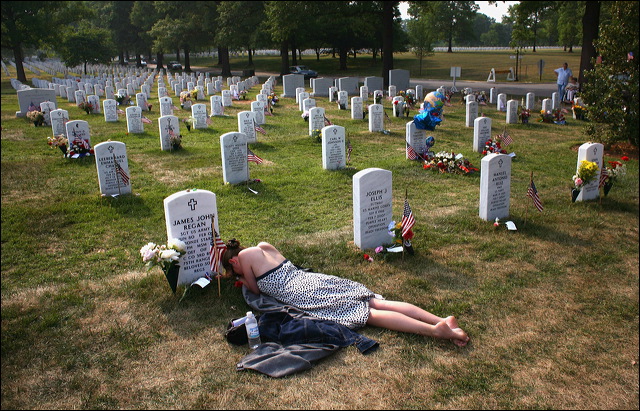
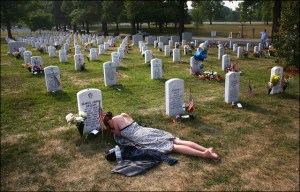
We begin this week’s Blawg Review #323 at the Innocence Blog, where the Innocence Project honors the wrongfully  convicted who had served in the military. Perhaps more to be honored on Veterans Day, former Army Sergeant Dennis Maher served almost six years on active duty before he was wrongfully convicted in 1984. Exonerated through DNA testing in 2003, Maher says “Because of my wrongful conviction, I missed the opportunity to serve my country because I was going to be a career soldier. I think about that on Memorial Day.”

Returning to the anniversary of Amnesty International,  #AmnestyReport2012 – an overview of state of human rights worldwide – is now available in full online here. Apparently, the US Department of State submitted the report to Congress, except the part about the USA noting, “The focus of the Human Rights Reports is on the human rights performance of other governments. We note that the United States does examine its own human rights record against its international commitments and obligations in many other fora. For example, in December, the United States submitted a lengthy report to the U.N. Human Rights Council on U.S. implementation of the International Convention on Civil and Political Rights. The United States also engages in the U.N. Universal Periodic Review process, through which the human rights records of the U.N.’s 193 Member States are reviewed and assessed once every four years. These reports are available on HumanRights.gov.”

“The military trial of the WikiLeaks suspect Bradley Manning is being conducted amid far more secrecy than even the prosecution of the alleged 9/11 plotters in Guantanamo, a coalition of lawyers and media outlets protest,” writes Ed Pilkington for the guardian in New York.

Kenneth Roth, Executive Director, Human Rights Watch, on Twitter points us to an editorial of the New York Times alleging a court covers up that concludes, “The judges should have given the government’s overwrought claims of national security and secrecy special scrutiny, not extreme deference.”

Daphne Eviatar reports on HuffPost that “perhaps the most closely watched Guantanamo-related case since the Supreme Court confirmed detainees’ right to judicial review in Boumediene v. Bush in 2008, Latif v. Obama raises a critical issue that goes to the heart of whether U.S. prisoners have a meaningful opportunity to challenge their detention. Must a court presume the accuracy of a government document introduced against a Guantanamo detainee, even if it’s not clear how that document was produced?”

Focussing upon a particularly pernicious abuse of human rights, The Renditon Project website was officially launched. UK legal action charity, Reprieve, issued a press release, in which Clare Algar, Executive Director of Reprieve said, ‘The Rendition Project will be an important tool in bringing the tangled web of the CIA’s illegal rendition programme to light. It is essential that we get to the bottom of what was one of the worst human rights abuses of the ‘War on Terror’ – including the involvement of the UK, a number of other European states, and major corporations.

A Pakistani doctor was sentenced to 33 years in prison Wednesday for helping the Central Intelligence Agency (CIA) locate Osama Bin Laden  reported JURIST news. “After a trial lasting two months during which Shakeel Afridi was not afforded the opportunity to defend himself, a tribal court convicted him of treason and spying.” Glenn Greenwald, in a provocative op-ed post on Salon.com says that “American rage at Pakistan over the punishment of a CIA-cooperating Pakistani doctor is quite revealing of The Imperial Mind.”

One of the most common human rights concerns in the USA, wrongful convictions, is reported by The Wrongful Convictions Blog and the ABA Journal as well as other media this week. The first-ever published report (PDF) of the National Registry of Exonerations, assembled by the University of Michigan Law School and the Center on Wrongful Convictions at Northwestern University School of Law, “highlights grave questions about the legitimacy of the legal justice system.”

On the Huffington Post Chicago, the president of the Chicago Innocence Project, David Protess, introduces the exonerated.

More than 200 men and women have been wrongfully convicted of serious crimes in California, six of whom were sentenced to death.  Here on Death Penalty Focus are some of their stories.
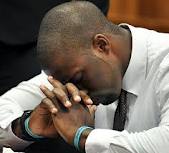
Brian Banks, former football star and USC Trojan recruit, was exonerated this week, as reported here on The Wrongful Conviction Blog. The “victim” recanted and admitted she lied at trial (the sex was actually consensual). She did not come forward earlier because she didn’t want to “give the money back”–meaning the settlement that she obtained from the school where the rape allegedly occurred.

The Innocence Blog points to a story on Salon.com that describes The Long Road From Exoneration to Compensation for the wrongfully convicted.

Meanwhile, on the other side of the Atlantic, there was an important victory for prisoners (and the public) in the European Court of Human Rights, with the Court RE-affirming earlier decisions, that there should not be a blanket rule disenfranchising prisoners. On the UK Human Rights Blog, Reuven Ziegler writes about the case for letting prisoners voteCharon QC notes the latest prisoner votes case from Europe on his blog, “The case is important.  For my part, I have no problem whatsoever with prisoners voting.  I rather hope that prisoners will return to society improved for paying their debt to society and be part of society.  Pie in the sky for recidivists… but an ideal to which we should aspire? I am, I suspect, in a sizeable minority.”

However, as the honest among us would readily admit, on the whole, our prison system does little to rehabilitate, in fact, as Alisa Roth on the ACLU Blog of Rights argues prisoners subjected to solitary confinement in particular are ““more broken than when they went in”. Meanwhile, Gideon, a public defender, looks at some reactions to the death penalty repeal  in CT and tells the tale in a post titled, Idiocracy.

A topic comes up time and again on the Wrongful Convictions blog, Conrad Black points to cases of prosecutor misconduct and asks, “How Many Wrongful Convictions Will the Public Stand for?

“Facing the truth is hard to do, especially the truth about ourselves,” says Bill Moyers. “Not surprising, Americans have been sorely pressed to come to terms with the fact that after 9/11 our government began to torture people and did so in defiance of domestic and international law. It’s no secret such cruelty occurred. It’s just the truth we’d rather not think about. But Memorial Day is a good time to make the effort because, if we really want to honor the Americans in uniform who died fighting for their country, we’ll redouble our efforts to make sure we’re worthy of their sacrifice. We’ll renew our commitment to the rule of law. For the rule of law is essential to any civilization worth dying for.”

Blawg Review has information about next week’s host, and instructions how to get your blawg posts reviewed in upcoming issues.

Wrongful Convictions in Singapore: A General Survey of Risk Factors

The above is the title of an article by Chen Siyuan and Eunice Chen; offering a deeper insight into the peculiar nature of wrongful convictions in Singapore. Given the endemic nature of the wrongful conviction phenomena in the ‘West’, particularly, in the United States, United Kingdom and much of mainland ‘Europe’;  the article  cautiously celebrates the Singaporean legal system. The abstract reads:

‘This article seeks to raise awareness about the potentials for wrongful convictions in Singapore by analysing the factors commonly identified as contributing towards wrongful convictions in other jurisdictions, including institutional failures and suspect evidence. It also considers whether the social conditions in Singapore are favourable to discovering and publicising wrongful convictions. The authors come to the conclusion that Singapore does well on a number of fronts and no sweeping reforms are necessary. However, there are areas of risk, viz the excessive focus on crime control rather than due process , which requires some tweaking of the system’.  Read full article.

It is the authors’ contention that Singapore is largely immune from the viral nature of wrongful convictions as we know them in Europe and America. That is thumps up to Singapore’s legal system, however, the caveat they have identified in their study, will require much more than tweaking of the system, but will additionally require robust vigilance. As the dictum goes, external vigilance is the  price of liberty. The article makes sense.

More laws and more cops means more wrongful convictions

One good way to reduce wrongful convictions is to stop passing more arcane criminal laws and funding more police officers to enforce them. But politicians in many countries have been doing just the opposite for the past 30 years.

In the United States, legislators have increased the number of federal offenses by 50 percent since the 1980s and state legislators have been following suit. They’ve also raised funding for increasingly militarized police forces to enforce those laws. This has had dubious impact on public safety while greatly increasing the chance of putting innocent people behind bars, often for mid-level drug offenses that usually don’t earn the attention of those who fight wrongful convictions. A disproportionate number of the innocents swept up in this process are minorities.

It’s time to try a different approach, according to a study released today by the Justice Policy Institute. Rethinking the Blues: How we police in the U.S. and at what cost documents how overpolicing contributes to “a criminal justice system that disconnects people from their communities, fills prisons and jails, and costs taxpayers billions.” You can read more here.

New Article by Davis and Leo on False Confession

Deborah Davis and Richard A. Leo, The Problem of Interrogation-Induced False Confession: Sources of Failure in Prevention and Detection, in Stephen Morewitz & Mark Goldstein, eds., The Handbook of Forensic Sociology and Psychology (Springer, 2013 Forthcoming) is now available on SSRN.

Abstract:

Interrogation-induced false confessions are a systemic feature of American criminal justice. In the last few decades, scholars have assembled evidence of instances of false confessions that resulted in wrongful convictions. Despite procedural safeguards and a constitutional prohibition against legally coercive interrogation techniques, American law enforcement continues to elicit false confessions. In particular, American law enforcement interrogation techniques display two problematic features that have the potential to increase the occurrence of false confessions: (1) an assumption of guilt that promotes the misclassification of innocent suspects as likely guilty; and (2) the still-coercive nature of interrogation tactics that include strong incentives promoting confession as the mechanism to achieve the best legal outcomes and that contaminate the content of the confessions they elicit.
In this article, we address two questions: (1) Why do false confessions occur, and what can be done to prevent them?; and (2) Why do false confessions remain undetected once elicited, and what be done to more successfully identify them when they do occur? We particularly emphasize the role of failures of relevant knowledge and understanding among those who elicit and misjudge false confessions.

Breaking News: Groundbreaking Registry Unveiled Today Details 2,000 Wrongful Convictions in U.S. Since 1989…

New Report Reveals Many More Exonerations and False Convictions than Previously Found, but Represents Only “the Tip of the Iceberg”

More than 2,000 people who were falsely convicted of serious crimes have been exonerated in America in the past 23 years.

Nearly 900 of these exonerations are profiled, with searchable data and summaries of the cases on the National Registry of Exonerations, a new joint project of the University of Michigan Law School and the Center on Wrongful Convictions at Northwestern University.  The Registry, available atexonerationregistry.org, will be updated on an ongoing basis. It is by far the largest collection of such cases ever assembled – and the most varied.

More than 1,000 additional cases are “group exonerations” that occurred in response to 13 separate police corruption scandals, most of which involved massive planting of drugs and guns on innocent defendants. The group exonerations are described in a Report from the National Registry, Exonerations in the United States, 1989 – 2012, but are not included in the Registry itself.

As the Report documents in detail, there are many more false convictions and exonerations that have not been found

“The National Registry of Exonerations gives an unprecedented view of the scope of the problem of wrongful convictions in the United States,” said Rob Warden, Executive Director of the Center on Wrongful Convictions. “It’s a widespread problem.”

“It used to be that almost all the exonerations we knew about were murder and rape cases. We’re finally beginning to see beyond that,” said Michigan Law professor Samuel Gross, editor of the Registry and an author of the Report. “This is a sea change.”

The Report includes the following cases, most of which do not appear in any previous compilation:

·      58 exonerations for drug, tax, white collar and other non-violent crimes.

·      39 exonerations in Federal cases.

·      102 exonerations for child sex abuse convictions.

·      129 exonerations of defendants who were convicted of crimes that never happened.

·      135 exonerations of defendants who confessed to crimes they didn’t commit.

·      71 exonerations of innocent defendants who pled guilty.

Plus more than 1,000 group exoneration cases – including over 200 drivers who were framed for drunk driving by police officers, who usually stole money from their wallets in the process.

According to Gross, the cases in the Registry show that false convictions are not one type of problem but several that requiredifferent types of solutions.

·      For murder, the biggest problem is perjury, usually by a witness who claims to have witnessed the crime or participated in it. Murder exoneration also include many false confessions.

·      In rape cases, false convictions are almost always based on eyewitness mistakes – more often than not, mistakes by white victims who misidentify black defendants.

·      False convictions for robbery are also almost always caused by eyewitness misidentifications, but there are few exonerations because DNA evidence is hardly ever useful in robbery cases.

·      Child sex abuse exonerations are almost all about fabricated crimes that never occurred. (See Table 13.)

The ten states with the most exonerations are Illinois, New York, Texas, California, Michigan, Louisiana, Florida, Ohio, Massachusetts, and Pennsylvania (not counting the 39 exonerations in Federal cases).  The states with most exonerations are not necessarily those where most false convictions have occurred. (See Table 7.)

“It’s clear that the exonerations we found are the tip of an iceberg,” said Gross. “Most people who are falsely convicted are not exonerated; they serve their time or die in prison. And when they are exonerated, a lot of times it happens quietly, out of public view.”

For example, most people in the United States live in counties in which there have been no exonerations – including counties like San Bernardino in California and Bexar in Texas that have populations in the millions. “Obviously there are false convictions in those counties – and no doubt exonerations in some cases,” said Gross, “we just don’t know about them.”

According to Warden, “this is a good start – a milestone – but there’s a long way to go before we have a complete picture of wrongful convictions in the United States.”

“We’ve begun to find exonerations that don’t fit the mold we’re used to – some that were initiated by prosecutors or police, and some that were deliberately concealed – but we know there are many more that we haven’t found, at least not so far,” said Gross.

“If you’ve been exonerated and aren’t in this Registry, or if you know someone who has been exonerated and isn’t included, we want to know about it,” said Gross.

“The more we learn about false convictions, the better we’ll be at preventing them – or if that fails, at finding and correcting them as best we can after the fact,” said Gross.

Registry here…

Washington Post article here….

Chicago Sun-Times here

From USA Today:

Perjury, faulty eyewitness identification and prosecutorial misconduct are the leading reasons for wrongful convictions, according to the first national registry of exonerations compiled by university researchers.

The database, assembled in a collaboration by theUniversity of Michigan and  Continue reading

New Scholarship Spotlight: Daubert Gatekeeping for Eyewitness Identifications

Professor Sandra Guerra Thompson has posted the above-titled article, fresh off the presses, on SSRN.  Full article here.  Abstract:

A key function of trial courts is their gatekeeping responsibility, by which courts advance the truth-seeking function of the trial process. This article makes the rather unremarkable argument that the Federal Rules of Evidence rest upon a “reliability paradigm” that undergirds almost every rule of evidence. For most rules, the evidentiary foundation required for admitting evidence ensures its reliability. Courts effectively conduct gatekeeping merely by applying the rules such as the hearsay exceptions in FRE 803 and 804. For other rules, the reliability paradigm has informed the interpretation of the rules as was the case for FRE 702 in Daubert v. Merrell Dow Pharmaceuticals, Inc. A general thesis of this article is that it is especially appropriate in criminal trials for courts to engage in gatekeeping for evidence shown to be fraught with reliability issues and highly prone to mislead the jury and cause a wrongful criminal conviction.

This article applies the holistic interpretation of the rules of evidence seen in Daubert to eyewitness identification, the leading cause of wrongful convictions. The analysis illustrates the manner in which evidentiary reliability gatekeeping should be applied to eyewitness identifications. Numerous scientific studies and overturned convictions show that traditional trial protections such as the right to counsel and cross-examination do not suffice to prevent wrongful convictions. Jurors do not possess the specialized knowledge necessary to evaluate the reliability of eyewitness identifications properly, nor is it feasible for them to obtain this knowledge during trial. Unfortunately for the wrongly accused, identification testimony has traditionally gotten a free pass under the rules of evidence, and the Supreme Court has recently reaffirmed that due process does not provide meaningful reliability screening (ironically, citing the “protective rules of evidence” as one of the sources of regulation).

The article examines a pair of recent New Jersey cases that attempt to provide more effective screening for eyewitness identification. While the cases do advocate the use of best practices by law enforcement in obtaining eyewitness identifications, the article contends that the rulings impose substantive and procedural limitations that will make the new gatekeeping regime largely ineffective. The immediacy of the erroneous identification challenge demands assertive judicial oversight. Only by fully embracing the gatekeeping role provided under rules of evidence will trial courts actually abate the leading cause of wrongful convictions in the absence of legislative reform. Daubert teaches that judicial initiative can start the process of rule revision that leads the advisory committee to make appropriate amendments. The last section of the article makes some preliminary suggestions for amendments to the FRE (and state counterparts) that would go a long way in making explicit the gatekeeping process necessary to prevent wrongful convictions caused by misidentification.