Category Archives: Scholarship

New Scholarship Spotlight: The Dichotomy of Factual Innocence and Innocence at Law in the Exoneration Process

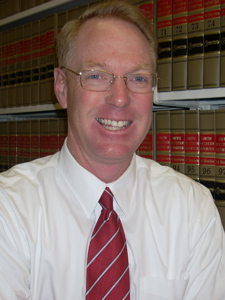
Myles Frederick McLellan

Myles Frederick McLellan of the University of Ottawa has posted the above-titled article, hot off the presses, on SSRN.  Obtain full article here.  Abstract states:

The efforts of numerous Innocence Projects in the United States, together with formal applications for the exoneration of the wrongfully convicted in Canada inexorably require a finding of factual innocence as a primary threshold for post-appellate review. In those jurisdictions where DNA testing is available for inmate’s fortunate enough to have such evidence to rely upon, a successful scientific result vaults over the factual innocence hurdle. For the vast majority of cases where there is no biologic evidence however, factual innocence may prove to be elusive even in the face of an acquittal which revitalizes the presumption of innocence. This paper argues that the standard of innocence at law is the fairest and most principled test to apply in the exoneration process.

After Exoneration: An Investigation of Stigma and the Wrongfully Convicted

The above is the title of the thesis by Oscar R. Molina of University of Florida. The research outcomes challenges a host of our conventional beliefs and misconceptions on how we treat exonerees. Excerpts from the abstract reads thus:

‘Research has demonstrated that stigma may affect the re-entry experiences of individuals who are exonerated of crimes they did not commit. In this study, we examined exoneree stigmatization by examining participants’ perceptions of exonerated individuals compared to parolees and average individuals. In addition, we varied the target’s race to examine if race played a role in stigma levied upon exonerated individuals. Results indicated that people who are exonerated and people who are actually guilty are stigmatized more than those with no criminal history. Race did not affect the level of stigma encountered, but further research is needed prior to concluding that race does not affect stigma for exonerated individuals’

The entire research can be accessed here

Ex MP Chris Mullin, Mauls over the Plight of the Innocent and Wrongfully Convicted

Chris Mullin is a mercurial British politician. He is passionate about the plight of the innocent, and those wrongfully convicted by the system. He writes about this in his blog entitled – Miscarriages of justice in the UK. He not only gives a personal account of his experiences with victims, and how in his own little way he interceded on their behalf; but identifies the problems, progress made thus far, and solutions. He says for instance that -‘In the long run only a complete overhaul of the recruitment, training and disciplinary codes of the police will make any difference. In the meantime it must be obvious that the single most useful reform that could be made is to outlaw convictions on the basis of uncorroborated confession. The only admissible confessions should be those recorded in the presence of a qualified solicitor’.

He lampooned the police; the judiciary and Judges; the Home Office; the state of forensic science  and concluded thus: ‘Locking up the wrong people is also very expensive. Tens of millions of pounds of public money has been wasted on apprehending, imprisoning and in due course compensating innocent people. Even those who do not care about the ruin of innocent lives, might at least reflect in these other aspects of a miscarriage of justice. Above all, however,  wrongful convictions rot public confidence in our system of justice and that ought to concern all of us who care about upholding it’ Read entire commentary herehttp://www.chrismullinexmp.com/speeches/miscarriages-of-justice

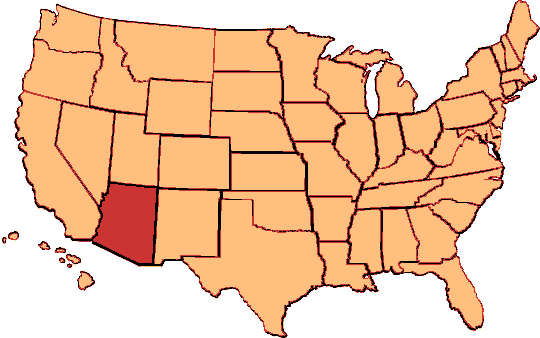
New Study Released Today On Prosecutorial Misconduct in Arizona…

From the crimereport.org:

A coalition of innocence projects, legal experts and wrongly convicted defendants will announce today that a study of prosecutorial misconduct in Arizona from 2004 through 2008 found prosecutors committed error in 20 cases.

The coalition—which includes The Innocence Project of New York, along with Veritas Initiative, a policy and research arm of theNorthern California Innocence Project, as well as Innocence Project New Orleans and Voices of Innocence—is convening in Arizona in the latest stop in a national tour aimed at exposing prosecutorial misconduct and initiating reform.
In 15 of the cases, the finding of error was deemed “harmless” and the convictions were upheld. In five of the cases, the errors were ruled to be “harmful” and the convictions were reversed.
During that same time period, three prosecutors were publicly disciplined by the State Bar of Arizona, but none of the prosecutors in the 20 cases found by Veritas were subject to any discipline.
One of those three prosecutors  disciplined was Kenneth Peasley— once considered the most feared prosecutor in Pima County, Arizona, where he won  conviction after conviction, some of which sent defendants to Death Row.
Keep reading here….

New Scholarship Spotlight: Two Windows into Innocence…

Rutger professor George C. Thomas III has posted the above-titled article on SSRN.  Download full article here.  The abstract states:

Stories about innocent defendants who serve many years in prison before they are conclusively exonerated by DNA testing are by now sadly familiar. Although the reaction of policy makers has so far been strangely muted, there are concrete steps that can be taken to reduce the risk of wrongful convictions at an acceptable cost. This essay examines two relatively modest but important changes that some states have made and recommends that they be made more broadly. According to the Cardozo Innocence Project, the Continue reading

How Your Right to Presumption of Innocence, Can Lead to Your Wrongful Conviction: Reality v. Theory

The above title is the fulcrum of Dr. Michael Naughton’s argument in his very illuminating article, in the Irish Journal of Legal Studies. He used the United Kingdom as his case study. He formulates his argument this way:

‘ — that the presumption of innocence and the burden of proof on the prosecution to prove its case beyond a reasonable doubt act in reality against the interests of those who might be innocent at every stage of the criminal justice process. This is because the presumption, in effect, render suspects of crime passive, which simultaneously justifies minimal resources to the defence, whilst the burden places pressure on, and directs the bulk of the resources to the police and the prosecution to chip away at the presumed innocent status and construct cases from only incriminating evidence that might obtain a conviction, rendering innocent victims vulnerable to wrongful convictions’

He then goes on to say –

‘As a result, the defence side of the adversarial equation, widely thought to be the key safeguard against wrongful convictions, is largely ineffectual as it is resource poor and reliant on police and prosecution evidence that is not suitable for defending against cases constructed from such evidence’

His thesis, at first, appears to be an attempt to stand the law on its head, but the article successfully wrestles with, and strive to undermine centuries of long held legal maxim, that now appears to be, either ‘obsolete’ or, at best obscures the search for justice. Read the full article here and come to your own conclusion(s)http://www.ijls.ie/Articles/IJLS_Vol_2_Issue_1_Article_4_Naughton.pdf

Prisons in Africa: An Evaluation from a Human Rights Perspective

http://www.surjournal.org/eng/conteudos/getArtigo9.php?artigo=9,artigo_sarkin.htm In this article, Jeremy Sarkin makes a poignant argument for prison reforms in Africa. One constant theme dominates his discourse: the debasement, abuse and violation of the individual rights of prisoners. In almost all of the countries in Africa he cited, the anecdotal evidence clearly suggest the need for a different pathway to dealing with the question of prison reform, from a human rights perspective. In Uganda, he states – ‘For instance, two-thirds of the 18,000 inmates in Uganda have yet to be tried’.  Ditto for South Africa, where as he contends; in South Africa Johannesburg prison, some inmates have not seen a judge in as many as seven years. In Nigeria, the situation is not any different, if not worse. He identifies the consequences of this parlous situation leading to – prison overcrowding; violation of pre-trial detention rights; dearth of prison resources and governance. He then concludes with solutions, which he narrows down to – alternative sentencing; the vigorous enforcement of prisoners’ rights vide the African Commission on Human and Peoples Rights; and the unique role of a Special Rapporteur on Prisons and Conditions. In conclusion, violation of prisoners’ rights is one veritable source, around which issues of wrongful convictions and the fight for the innocent, can be located, particularly in skewed systems in Africa, as highlighted by this article.

Law Schools: Add Wrongful Conviction to Core Curriculum

“Like many people, I [once] accepted one of the myths,” said Jeffrey Rosen, the New Republic’s legal affairs editor and law professor at George Washington University. The Los Angeles Times called Rosen “the nation’s most widely read and influential legal commentator.” A legal book author, he is a summa cum laude graduate of Harvard College, was a Marshall Scholar at Oxford University, and is a Yale Law School graduate. One of his specialty areas is criminal procedure. Yet, he recently humbly admitted that he’d gained a new understanding about our criminal justice system, namely, that it convicts the innocent far more often then most imagine.

Continue reading

Defense Lawyer Tunnel Vision…

Carrie Sperling

Carrie Sperling of the Arizona Justice Project has posted Defense Lawyer Tunnel Vision:  The Oft-Ignored Rule Defense Counsel Plays in Wrongful Convictions on SSRN.  Full paper here.

The abstract states:

This article discusses the sometimes forgotten role that defense lawyers play in wrongful convictions. Often, strong cases of actual innocence are thwarted by defense lawyers’ failure to preserve a defendant’s procedural avenues for relief. The article reminds lawyers that procedural errors have long-lasting consequences for the innocent who have been wrongly convicted.

Criminal Justice Reporting and Crime Reporting Distinguished: The Proper Role of the Media.

In light of the recent media blitz in the Trayvon Martin case, and indeed, more recent ones before it, like the Casey Anthony and Amanda Knox cases; it’s absolutely important that we properly contextualise the role of the media. In this connection, I find the article by two distinguished Attorneys – William R. Montross, Jr & Patrick Mulvaney – very apposite in understanding the polemics the media deploys in such situations. Both Attorneys deliberately set out to make a nuanced distinction, and rightly so, between ‘justice reporting and crime reporting’. Read this: ‘Where crime reporting purports to answer the questions, Who? What? When? and Where? criminal justice reporting attempts to initiate conversation and debate about the far harder question of Why? Why is the man on death row? Why are people who kill a white person 400 to 500 percent more likely to receive the death penalty than people who kill a black person. Why do courts seem more concerned with protecting a death verdict than ensuring that justice was done? Criminal justice reporting is the opposite of crime reporting. Where crime reporting is salacious, criminal justice reporting is reasoned; where crime reporting ignores nuance,  criminal justice reporting is full of complexity. Crime reporting appeals to a limited range of base emotions; criminal justice reporting elicits a far more complex emotional response, and, more importantly, it engages the intellect.

Read their full treatise in Volume 61, Issue 6 in the Stanford Law Reviewhttp://www.stanfordlawreview.org/sites/default/files/articles/Montross-Mulvaney.pdf. The article goes on to provide anecdotal evidence of these as it appears in the media. They were also scathing of Texas’ ignoble epithet of being America’s most notorious killing state.

New Scholarship Spotlight: False Justice and the “True Prosecutor”

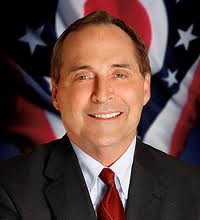
Jim Petro

Here is the final version of my latest article, which honors former Ohio AG Jim Petro and discusses the problem of prosecutorial tunnel vision and resistance to innocence claims…The abstract states:

This article is a review of False Justice: Eight Myths that Convict the Innocent by Jim and Nancy Petro. But this article is also a memoir, in that I tell the story, from my own perspective as Director of the Ohio Innocence Project, of how I have watched Jim Petro go from prosecutor and elected Attorney General of Ohio to a leading champion of the wrongfully convicted across the nation. The article is also a commentary in that, along the way, I address what makes Jim Petro so different from many prosecutors in this country. In this respect, I discuss problems in our criminal justice system that unfortunately lead some prosecutors, in far too many instances, to contest post-conviction claims of innocence in ways that I believe are contrary to our profession’s ethical standards. With this article, I hold out Jim Petro as a national model – an example that all other prosecutors should strive to emulate.

Are Human Rights really Needed for Criminal Justice Reform in America?

To Jamie Fellner, her answer to the question is a resounding YES. Jamie is Senior Advisor to the U.S. Program at Human Rights Watch. Jamie’s position is well articulated in her piece entitled – The Human Rights Paradigm: The Foundation for  Criminal Justice System We Can Be Proud Of.

To drive home her point, she delved into the manifold issues of race discrimination, excessive sentences, the wretched prison conditions and disenfranchisement. She opines that human rights have not been fully integrated in the American criminal justice system. ‘Strangely’ though, she asserts international human rights treaties do not create judicially enforceable rights in America. This, for me, is an oxymoron and a telling indictment on America. Read her full article herehttp://www.hrw.org/news/2012/03/21/human-rights-paradigm-foundation-criminal-justice-system-we-can-be-proud

New Scholarship Spotlight: Re-Imagining Criminal Prosecution: Toward a Color-Conscious Professional Ethic for Prosecutors

Justin S. Murray of Georgetown U. has posted the above titled article on SSRN.  Full article here.  Here’s the abstract:

Prosecutors, like most Americans, view the criminal-justice system as fundamentally race neutral. They are aware that blacks are stopped, searched, arrested, and locked up in numbers that are vastly out of proportion to their fraction of the overall population. Yet, they generally assume that this outcome is justified because it reflects the sad reality that blacks commit a disproportionate share of crime in America. They are unable to detect the ways in which their own discretionary choices — and those of other actors in the criminal-justice system, such as legislators, police officers, and jurors — contribute to Continue reading

New Scholarship Spotlight: Pretrial Procedures for Innocent People: Reforming Brady

Professor Lissa Griffin of Pace Law School in New York has posted the above titled article on SSRN.  Download article here.  The abstract states:

In this article, the author proposes that the prosecution’s obligation to disclose exculpatory information to the defense be formalized by statute, court rule, or internal protocol in ways that would reflect the current state of our knowledge of and experience with both Brady and wrongful convictions. This would improve on the current ineffective constitutional protection — and any existing statutory or rule-based regimes — in several Continue reading

New Article Spotlight: Cassell’s Skeptical Observations of Some Suggested Innocence Reforms

Professor Paul Cassell has posted Freeing the Guilty Without Protecting the Innocent: Some Skeptical Observations on Proposed New “Innocence” Procedures here.  The introduction gives you an idea of where his article takes you:

A recent thoughtful article by Tim Bakken discusses the plight of innocent defendants and proposes new procedures to prevent “factually” innocent defendants from being convicted at trial.1 Bakken quite rightly draws attention to the important subject of preventing the conviction of innocent persons—a fundamental goal of the criminal justice system. In proposing his prescribed solutions, however, Bakken stands on shakier ground. His untested and unprecedented proposals seem quite likely to free countless guilty defendants without doing much to aid the truly innocent. Indeed, by overwhelming the criminal justice system with frivolous claims of innocence, Bakken’s proposal seems likely to swell the size of the criminal justice haystack of purportedly innocent defendants, thus making it more difficult to identify the needle of the truly innocent defendant enmeshed in the system. To truly help the innocent, we should be looking at other, more discriminating reforms that offer better prospects of separating guilty from innocent defendants.

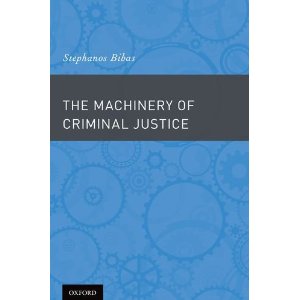
New Book: The Machinery of Criminal Justice

Penn Professor Stephen Bibas has published an interesting new book titled The Machinery of Justice.  Available for purchase here.  The abstract states:

Two centuries ago, the American criminal justice system was run primarily by laymen. Jury trials passed moral judgment on crimes, vindicated victims and innocent defendants, and denounced the guilty. But over the last two centuries, lawyers have taken over the process, silencing victims and defendants and, in many cases,
substituting a plea-bargaining system for the voice of the jury. The public sees little of how this assembly-line justice works, and victims Continue reading

‘Wrongful Convictions and the Accuracy of the Criminal Justice System’

The above title is taken from the feature article by Prof. H. Patrick Furman. (Patrick is a Clinical Professor of Law in the Legal Aid and Defender Program; and a Director of Clinical Programs at the University of Colorado School of Law). It is amazing how the issues we contend with today has always been there with us. The causes, effects, consequences and impact has always been the same. 

It’s like we never noticed. Yes, never noticed, until we look more intently at the skewed nature of justice; and how some unfortunate folks are at the receiving end of society’s negligence, indifference and sometimes, outrightly living in denial. Prof. Patrick’s article is well researched. Read the entire piece in ‘The Colorado Lawyer’ here http://lawweb.colorado.edu/profiles/pubpdfs/furman/03SeptTCL-Furman.pdf

What Can Innocence Reformers Learn from the Aviation and Engineering Fields?

Boaz Sangero and Mordechai Halpert of Ramat Gan Law School in Israel have posted a very interesting article on SSRN, entitled A Safety Doctrine for the Criminal Justice System (available here).  The abstract states:

Criminal law, unlike other risk-creating fields, currently lacks any modern safety doctrine. In light of the proven phenomenon of wrongful convictions and the severe harm it causes to both those wrongly convicted and society, this Essay focuses on the necessary preliminary stages in developing a safety doctrine for the criminal justice system. Under our conception criminal law is a “safety-critical system”: it deals with matters of life and death. We view false conviction to be a type of accident, similarly to a crash of a fighter airplane. This comparison is not only metaphorical, but quite literal when the damage is assessed from an economic standpoint. Care and Continue reading

New Scholarship Spotlight: Convenient Scapegoats: Juvenile Confessions and Exculpatory DNA in Cook County, Il

The above-titled article, written by the Innocence Project’s Craig Cooley and two others, was posted this week on SSRN.  Download here.  The abstract states:

In the Winter of 2011-2012, in two different cases known as the Dixmoor Five and the Englewood Four, nine men were exonerated of rapes and murders based on exculpatory post-conviction DNA testing. Seven of these nine men actually confessed to the crime. This article explores these two cases and how the Cook County law enforcement agencies, including the State’s Attorney’s Office, dealt with the powerful new DNA results.


New Scholarship Spotlight: Opening the Black Box: Democracy and Criminal Discovery Reform after Connick v. Thompson and Garcetti v. Ceballos

Professor Janet Moore of Cincinnati has posted the above-titled article on SSRN.com.  The article is forthcoming in the Brooklyn Law Review, and is available for download here.  The abstract states:

A leading cause of wrongful conviction and wasteful litigation in criminal cases is the nondisclosure of information beneficial to the defense by prosecutors and law enforcement as required by Brady v. Maryland. In Connick v. Thompson and Garcetti v. Ceballos, the Supreme Court weakened Brady’s enforceability by limiting the deterrent force of 42 U.S.C § 1983 liability. Connick highlights Garcetti’s Continue reading