Category Archives: Technological breakthroughs

Cell-phone evidence doesn’t always ring true

Dozens of people have been convicted in recent years greatly because of cell-phone evidence prosecutors claimed put the accused near the scene of the crime at the time the offense was committed. In many cases, prosecutors have used the records from a single cell phone tower to win a conviction.

Defense attorneys often let this kind of testimony from cell-phone company technicians and government agents go unchallenged, but not anymore. An attorney’s attempt to challenge a murder conviction with the testimony of expert Manfred Schenk, who claims that cell-phone tower locating is “junk science,” was featured on this blog last week. The judge in that case didn’t buy Schenk’s testimony, but others are starting to.

In March, a Michigan judge said in a ruling that he was “quite impressed” with Schenk’s testimony and credentials. He said Schenk’s analysis “destroyed” the testimony of the state’s expert, an FBI agent with one week of training who placed the defendant near the crime scene. Despite that, the judge upheld the conviction because of the defendant’s recorded confession.

Schenk and his associates explain here why using the data from a single cell-phone tower to show a person’s location, as prosecutors often do, is bad science that leads to bad justice. This type of testimony has already led to acquittals at trial, and it could prove equally helpful in reversing wrongful convictions.

Rutgers Professor Gets Grant to Solve Unanswered DNA Questions…

From news source:

The field of forensic science has seen tremendous growth in the last few decades. CSI and other TV series have helped to popularize the use of DNA samples to catch a suspect. DNA evidence, however, is not as cut and dry as modern television would have us believe.

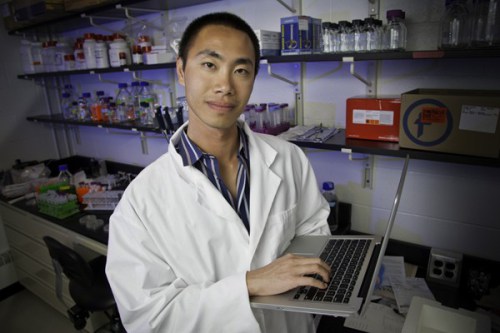
Rutgers-Camden professor Desmond Lun, in partnership with a team from Boston University and MIT, is trying to solve one of the biggest issues encountered with DNA evidence. The group recently received a $206,946 grant from the National Institute of Justice to develop a software program that will use statistical analysis to determine the usefulness of a particular DNA sample to a criminal investigation.

DNA evidence is often simplified in modern culture, but the forensic science community has been embroiled in a debate for the past decade about how to analyze samples that may be contaminated by DNA from people other than the subject.

In a perfect situation, Lun says that crime scene investigators collect a DNA sample from the scene, analyze its genotype and narrow the list of suspects down to a small class of individuals.

Unfortunately, this is rarely the case, Lun said. Most frequently, investigators “actually get a sample that is corrupted by a lot of contributors.”

Until now, there have been “no good answers,” said Lun. That is why he believes Continue reading

A Forensic Resources Blog

Sarah Rackley is Forensic Resource Counsel for North Carolina Indigent Defense Services, and she maintains a forensic resources blog. While it is, expectedly, a little NC-specific, there’s much good information there.

Here is a link:

http://ncforensics.wordpress.com/

Forensic DNA Technology has Stagnated in Africa

Forensic DNA technology has grown in leaps and bounds elsewhere in the world, except Africa. Whilst there is no doubting the utility of this technology to solving complex criminal investigation, African countries are still very reluctant to embrace it. There is only one forensic laboratory in Nigeria. It is located in Lagos and managed by the Nigerian Police Force. Given the serious credibility deficit by most government agencies, it is not unusual for serious applicants and accused persons to seek experts and expertise from outside Nigeria, in analysing forensic evidence. In Nigeria, post election appeals have tended to be heavily reliant on forensic evidence to determine or prove electoral fraud. And in almost all cases, the experts are imported from abroad. For more examples of how DNA could be used in Africa readhttp://www.forensicmag.com/article/dna-4-africa?page=0,0

DNA searches could go beyond law enforcement databases

Investigators trying to identify the source of an unidentified person’s DNA left at a crime scene may soon be able to expand their searches well beyond traditional law-enforcement databases. Researchers at Mount Sinai School of Medicine say they have developed a method to derive enough DNA information from non-DNA sources to clearly identify individuals whose biological data are stored in massive research repositories around the world. They warn, however, that this could create major privacy issues. You can read more here.

DNA-familial searching now allowed in The Netherlands

Post written by Jaron Daniël Schoone, MA, and Ms Evelyn Bell, LL.M, of the Knoops Innocence Project in the Netherlands:

This week a new law was enacted in the Netherlands, expanding the investigative capacities of police and prosecutors. (http://www.nu.nl/politiek/2778321/meer-ruimte-in-dna-onderzoek.html) The new law allows for DNA-familial searching in order to solve crimes. This type of DNA analysis can determine whether a blood tie of a person who’s DNA is included in the Dutch DNA database is the perpetrator of the crime. Until now, only profiles that fully matched resulted in a hit in the DNA database.

In the Netherlands only the DNA of suspects of serious crime (i.e. crimes threatened with a sentence of four years imprisonment or more) is stored. If the suspect is acquitted the DNA sample has to be removed from the database, but if the suspect is convicted the DNA remains in the database.

Just a day after the law came into power the news media reported that police and prosecutors were re-opening the investigation on an unsolved rape- and murder case in 1999 with the hopes that DNA-familial searching will solve this case. (http://www.nu.nl/politiek/2778321/meer-ruimte-in-dna-onderzoek.html)

It is our hope that this additional forensic tool will also have the future benefit of exonerating wrongfully convicted persons.

A New Zealand Study of How Panties Tear to Help Identify False Claims…

From a press report:

Forensic scientists are studying women’s knickers and how they tear to help police determine whether a sexual-assault complaint is authentic.

The Otago University study on how several types of common underwear fabric tear under force has been published in the latestForensic Science International journal.

Researchers said the results could be important in cases of false sexual assault accusations where underwear had been torn using scissors or a knife.

The paper said identifying a false sexual-assault Continue reading

Important New Vulture Study (yes the birds) Upends Forensics…

This article is really interesting. Excerpt below. Read full article here:

For more than five weeks, a woman’s body lay undisturbed in a secluded Texas field. Then a frenzied flock of vultures descended on the corpse and reduced it to a skeleton within hours.

But this was not a crime scene lost to nature. It was an important scientific experiment into the way human bodies decompose, and the findings are upending assumptions about decay that have been the basis of homicide cases for decades.

Experienced investigators would normally have interpreted the absence of flesh and the condition of the bones as evidence that the woman had been dead for six months, possibly even a year or more. Now a study of vultures at Texas State University is calling into question many of the benchmarks detectives have long relied on.

The time of death is critical in any murder case. It’s a key piece of evidence that influences the entire investigation, often shaping who becomes a suspect and ultimately who is convicted or exonerated.

“If you say someone did it and you say it was at least a year, could it have been two weeks instead?” said Michelle Hamilton, an assistant professor at the school’s forensic anthropology research facility. “It has larger implications than what we thought initially.”

The vulture study, conducted on 26 acres near the south-central Texas campus, stemmed from….read more

Eyewitnesses: As Certain as they were Wrong

One of the imponderables of behavioural science, is how we remain ‘certain’ of uncertainties. A lot of research work in this area of psycho-analysis still remain work in progress; still police and state prosecutors continue to place premuim, sometimes sole reliance on evidence of eyewitness(es) like they were ‘gospel truths’. It is interesting how what we think we know, saw or even percieve can be the diametric opposite. We are still a long way from developing a body, or set of scientific knowledge or proof to achieve exactitute with our conclusions. The last 2 - 3 decades witnessed such phenomenal leap in forensic science, biometrics, DNA and technology that we still dont yet know all that we need to ‘know’.

The New York Times columnist Adam Liptak in his article entitled ’34 Years Later, Supreme Court Will Revisit Eyewitness IDs’ made certain profound and provocative analysis and conclusions worth reading. The issues raised continue to be relevant in our search for justice for those unjustly treated by the system; or victims of the tunnel visions of prosecutors and shoddy investigative work by the police. The full article can be accessed and read here at http://www.nytimes.com/2011/08/23/us/23bar.html