Category Archives: United Kingdom

Flawed fingerprint expert won’t be getting job back…

One of the fingerprint experts at the centre of the Shirley McKie scandal in Scotland (see here…) has lost her bid to get her old job back. Fiona McBride wrongly identified a latent print at the centre of a murder case, which saw PC McKie tried for perjury and eventually compensated three quarters of a million pounds by the Scottish Government. McBride and others were suspended from work, but after a year re-training were re-instated. However, they were not allowed to sign joint reports, nor were they to be court-going experts. The fear was that the McKie misidentification would always come up and prosecutions could fail. McBride appealed to the Court of Sessions, who ruled that she need not be re-instated, but that the Employment Tribunal should re-consider if she should be paid compensation (depending on whether she contributed to her dismissal). Read more here….

921496438

McKie fingerprint expert Fiona McBride fails to win job back

Shirley McKie fingerprint expert loses job appeal

“Not innocent enough” victims of miscarriages lose claims for compensation

Barry George, (subject of previous blog post here…) and three others, have lost their claims for compensation from the government, following the overturning of their wrongful convictions. One of the claimants, DID win his claim. Ian Lawless served eight years for a murder that he did not commit. He was jailed for life in 2002 and yesterday, a UK High Court judge ruled that the decision not to award Mr Lawless compensation, was legally flawed, and the government must re-consider. This leaves the door open for him to succeed in gaining compensation (read here…)

Barry-George-should-be-en-003

However, the other four claimants LOST their appeals to the High Court, with ramifications for all victims of miscarriages of justice in the UK.

The Court ruled that the government decision to not award payouts to those against who there was evidence that could possibly indicate their guilt was legal, applying for the first time, the Supreme Court ruling that a miscarriage of justice ONLY occurs when: a miscarriage of justice occurs “when a new or newly discovered fact shows conclusively that the evidence against a defendant has been so undermined that no conviction could possibly be based upon it”. Thus, not all those who have convictions overturned will qualify for compensation: “Procedural deficiencies that led to irregularities in the trial or errors in the investigation of offences will not suffice to establish entitlement to compensation”. It was concluded that a jury could STILL find a verdict of guilt against Barry George, thus, he was not a clearly ‘innocent’ person and the government were justified in refusing him compensation.

There are a further 11 cases awaiting a hearing, but with this decision, it is highly unlikely that the High Court will waiver, and the Supreme Court’s ruling in 2011, will stand firm. Barry George therefore, along with many others, will continue to live with the cloud over their head, that they have yet to ‘prove their innocence’, as many media outlets are reporting. See here….

“Not innocent enough”: Barry George loses compensation bid over wrongful conviction for Jill Dando murder

Barry George loses compensation bid over Jill Dando conviction

Barry George loses compensation case

Monday’s Quick Clicks…

click
  • The Innocence Project recently filed a motion on behalf of Texas death row inmate Larry Swearingen seeking DNA testing of crime scene evidence that could support his longstanding claims of innocence. Swearingen, who is scheduled to be executed in six weeks on February 27, has been requesting the testing of the ligature used to strangle the victim, her fingernail scrapings, clothing and other evidence for years. As the motion notes, the current DNA testing statute was expanded by the Texas legislature in direct response to Swearingen’s unsuccessful requests for testing.
  • Will New York implement wrongful conviction reforms?
  • Exoneree Audrey Edmonds talks about her new book
  • Priest exonerated in Wales 350 years after his death

Friday’s Quick Clicks…

International Expansion of the Innocence Movement in 2012

The purpose of this post is to briefly summarize organized innocence activity around the world during 2012 (If I have left items out, please let me know so I can supplement this post).  The calendar year 2012 undoubtedly saw the largest expansion of organized innocence work in history.  Well-attended innocence conferences were held in 5 different continents.  Organizations designed to free the innocent operated in every inhabited continent, and new projects launched in various Latin American countries, France, the Netherlands, the Philippines, Israel, and Taiwan, among others.  Here is a brief summary:

  • The Innocence Network, which currently consists of more than 60 member projects in the U.S., UK, Canada, the Netherlands, and Australia, issued its 2012 report, which lists the members and summarizes the 22 exonerations  its members obtained in the calendar year.  Major conferences on the subject were held in Australia, the UK and the U.S.
  • A network of organizations fighting for the innocent was launched in Latin America, Red Inocente (website here).  Red Inocente held its first annual conference in July, which was attended by more than 70 representatives from various Latin American countries.  Presentations were made about innocence efforts underway in Argentina, Bolivia, Chile, Mexico, Nicaragua, Paraguay, Peru, and Puerto Rico.  Details of conference here.  The second annual conference will be held in 2013 in Buenos Aires.  Red Inocente has already seen its first exoneration, which occurred this year in Argentina.
  • In Europe, the UK has had a rich history of innocence work for decades, most recently spearheaded by the Innocence Network UK, and many other university-based groups not part of INUK.  This past year has seen innocence organizations launch in the Netherlands and in Lyon, France.  The Innocence Law Clinic in Warsaw, Poland, successfully continued its operations, which have been ongoing since 1999, and the Supreme Court of Poland held a lecture on the international expansion of the Innocence Movement, sponsored by the Helsinki Foundation.  Also in Poland, a conference was held in Krakow on on the topic of wrongful convictions, attended by judges and prosecutors from across the country.  In the Czech Republic, lectures on wrongful convictions were held at 2 major law schools, summarized in this news clip.  Interest in starting an innocent project is budding in Italy, with representatives from a major law school there planning to attend the 2013 Innocence Conference and to shadow the Ohio Innocence Project this summer.
  • In Africa, the highly-organized Wits Justice Project in South Africa continued its operations with many successes; and a new Innocence Project South Africa launched
  • The Israeli Wrongful Convictions Clinic launched
  • In Asia, projects launched with much acclaim in Taiwan and the Philippines.  China held its first major conference on the topic of wrongful conviction, attended by hundreds of judges, prosecutors, professors and defense attorneys.  Two books on wrongful convictions, False Justice and Illustrated Truth, were translated and published in China.

Wednesday’s Quick Clicks…

  • clickThe new West Virginia Innocence Project helps an exoneree clear his name from the sex offender registry
  • Irish barrister shadows Duke Innocence Project
  • Story on the documentary West of Memphis
  • Don’t let the Florida Innocence Commission die

Friday’s Quick Clicks…

  • clickFlorida exoneree Bill Dillon pardoned for former drug conviction
  • In Ireland, a movement to exonerate Myles Joyce 130 years after he was hanged for a crime many believe he didn’t commit
  • In New Zealand, police accused of causing the wrongful conviction of David Bain fight back

Thursday’s Quick Clicks…

  • clickOn Sunday, December 9, CBS’s “60 Minutes” is scheduled to air in the U.S. a piece examining the exonerations of the “Dixmoor Five” and the “Englewood Four,” two Chicago-area cases where juvenile defendants were wrongfully convicted of rape and murder largely on the basis of false confessions. The cases were handled jointly by the Innocence Project, the Center on Wrongful Convictions, the University of Chicago Law School Exoneration Project and cooperating private attorneys. The piece will likely also explore the resistance by State’s Attorney Anita Alvarez to the free the young men even though there was compelling DNA evidence pointing to other men with violent criminal histories in both of the cases.
  • Video of exoneree Brian Banks on CBS This Morning yesterday
  • Ireland’s Criminal Court of Appeal grants inmate Joe O’Reilly’s request for legal representation in his bid to show he was wrongfully convicted of murder
 

Wednesday’s Quick Clicks…

  • New project launched at University of Greenwich in England
  • In Australia, court exonerates convicted murderer, Fred McDermott, posthumously
  • The Texas Center for Community Journalism at Texas Christian University is embarking on a statewide initiative to investigate the fairness of in the Texas criminal justice system, especially in cases that deal with indigent defense. The project is being underwritten by the Hood County News.  Kathy Cruz, staff writer for the News and a consultant in investigative reporter for the Center, is writing the series about the quality of legal services in Texas and the impact of the justice system on those who are accused of crimes, as well as the impact on their families.   The stories are being provided to community newspapers throughout the state free of charge, and papers will be encouraged to investigate the quality of legal services within their own counties.

Monday’s Quick Clicks…

Landmark hearing at European Court of Human Rights on Weds. 14th Nov.

On Wednesday 14th November, there is to be a hearing in the Grand Chamber of the European Court of Human Rights in the case of Lorraine Allen (nee Harris) versus the UK.  Mrs Allen is claiming that the UK government wrongly denied her compensation for her wrongful conviction for shaking her baby son to death. Her conviction was overturned in 2005 (see details of her case here…). The hearing will consider whether somebody who wins an appeal and has their conviction overturned, is then to be considered ‘innocent’. As an article in The Independent newspaper explains:

Hugh Southey QC, Mrs Allen’s barrister, added: “The issue for the court is whether the UK has infringed her right to a presumption of innocence by refusing her compensation. Anyone who has been refused compensation on this basis will benefit. This is not an isolated case.”

The case, which will be heard by 20 judges, wound up in Europe after John Reid, then Home Secretary, refused an initial appeal for compensation in 2006. The High Court refused her attempt to challenge the decision by judicial review, and a subsequent appeal was dismissed in 2008.

In the UK, rules on compensation for victims of miscarriages of justice have been tightened up considerably, so that you have to be able to clearly demonstrate that a ‘newly discovered fact(s)’ used in your appeal shows that you are innocent. Many fail to satisfy the Home Office of this.

I, along with many others, await the ruling of the Court with anticipation. I hope that the 20 judges seize the opportunity to expound an unequivocal principle that those who are exonerated return to their original ‘innocent’ state and whilst they should be entitled to compensation, perhaps most importantly, they should be considered ‘innocent’ in the eyes of the State, and treated as such. I shall of course update readers as news comes in.


Supporting acquittals in the face of public outrage: some thoughts.

In the UK and Australia, as elsewhere,  there have been high profile acquittals of persons who were considered ‘guilty’ in the media. I have long thought that while we often do not do enough to heed the lessons of wrongful convictions, we should also be taking note of acquittals and seeing what wider lessons they may also hold. Two such cases this week have given me pause to consider the criminal process when it ‘works’ and how this can be portrayed in the media in such as way as to be damaging to public confidence in the criminal justice system. While it can be difficult and unpopular, I believe those working to prevent wrongful convictions, should not be afraid to support these cases and speak up in support of the protections that have led to the acquittals.

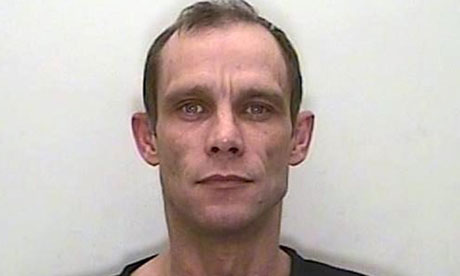
In the UK, the case of Christopher Halliwell (called a ‘dangerous predator here) hit the headlines. Halliwell was arrested on suspicion of kidnapping Sian O’Callaghan and upon arrest, was driven to a deserted spot and grilled by a detective. While he pleaded to see a solicitor, he eventually buckled and led the police to Sian’s body. After subsequent questioning, all still outside of the bounds of legality, Halliwell led the police to a second body.  Under the rules of evidence in England and Wales, his ‘confession’ to the second murder (which had occurred 8 years previously) was not admissible, and as there was no other evidence, Halliwell could not be tried for that murder. Halliwell is clearly guilty of 2 murders, and yet can only be convicted of one, with an understandable ensuing outcry led by the victims mother. Commentators have also taken the opportunity to bemoan the plentiful ‘rights’ that are afforded suspects and how these obstruct justice, pledging support for the now suspended detective. However, these rules on confessions and police conduct  of interviews are there for a purpose. There is a long history of false confessions that have been co-erced or even beaten out of suspects, who have gone on to be convicted and serve many years in prison wrongfully. It took many years of campaigning to get these rights enshrined in law and we lose them at our peril. I have faced down critics on more than one occasion, for standing up for the rights of suspects, including those of murderers. (Read more on Halliwell case here and how he ‘evaded trial’).

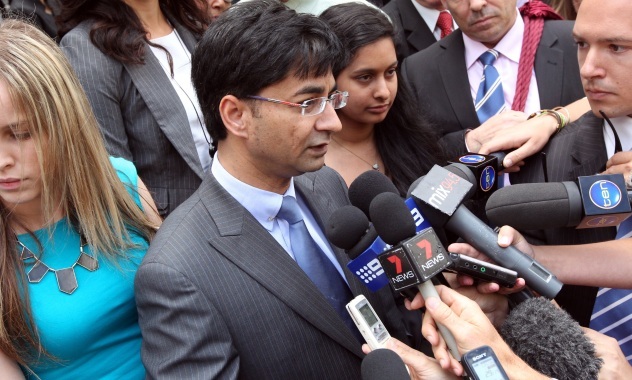
In Australia this week, a high profile acquittal was covered in the media with much accompanying outrage. Lloyd Rayney has been cleared of murdering his wife after the ‘trial of the decade’ (see here and see here). The beauty of this trial is that it was a judge-only trial, and you can read the judge’s statement here... The reasoning reasserts that it is for the prosecution to prove beyond a reasonable doubt the guilt of the accused and the accused does not have to prove his innocence. He goes on to explain that in this case: “Endeavours by the State to fill critical gaps and explain away improbabilities are primarily no more than speculation without foundation in the evidence.”
This echoes a prior acquittal, in the case against Francis Marshall, again in a judge-only trial in Australia in 2010, where the judge stated: “I’m satisfied that the accused had a motive, and find that there are a number of suspicious circumstances which implicate the accused as the killer of Bernadette Liston,… But motive, by itself, is insufficient to find the accused guilty, (and) suspicion piled upon suspicion does not equate to proof beyond reasonable doubt.”

Perhaps there is something to be said for holding more ‘judge only’ trials. That is a debate for another day. What I do believe, is that we need to support these acquittals, even in the face of strong criticism. We cannot allow the media to use such cases to fight against removal of any hard-won protections for suspects and defendants.

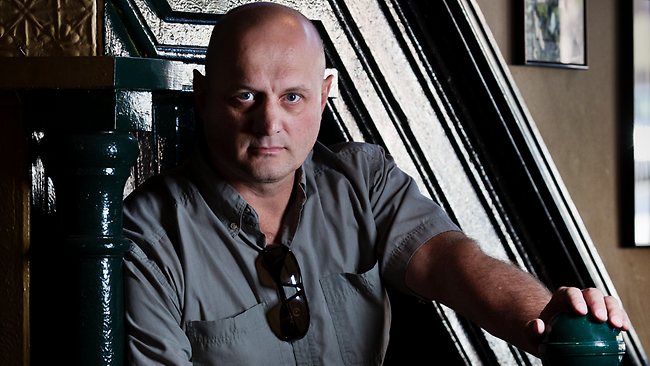
The case of Johnny Montani will hopefully be successful and instructive (read more here). Montani’s brother has lodged a complaint with the Australian Corruption and Crime Commission over his three trials (and acquittals), three years on remand and huge legal bill. Montani is alleging police misconduct for adducing erroneous evidence. Being put on trial for a crime you didn’t commit should not be considered a minor inconvenience. Lives can be shattered, just as with a wrongful conviction.

In many of these ‘near misses’, there are lessons for all the participants in the criminal process to learn. These people mentioned here are fortunate to not now be fighting for their wrongful convictions to be overturned. It is important that we do not allow the media to use such cases to argue against due process rights.

Tuesday’s Quick Clicks…

Monday’s Quick Clicks…


Monday’s Quick Clicks…

  • Two defendants exonerated of murder in NY last Friday, but ordered to be supervised by court for 90 days, cannot be released until Wednesday because that is when ankle monitors will be once again available
  • In the UK, The University of Bristol Innocence Project has received the 2012 Pro Bono Award at the Bristol Law Society’s Annual Awards in recognition of its work in obtaining an appeal for the 30-year old case of William (‘Wullie’) Beck.  The award, which recognises ‘excellence’ in pro bono work, was presented to UoBIP members for their work on the case of Wullie Beck, who was arrested in 1981 for an armed robbery of a post van. Mr Beck served six years of imprisonment for his conviction based exclusively on eyewitness identification.
  • Federal judge find parts of expert cell tower analysis inadmissible under Daubert
  • NPR story on case of Wisconsin Innocence Project (listen here):  New video enhancement technology could lead to a new trial for a man convicted of armed robbery. But some on the high court fear using new technology to challenge old convictions could overwhelm the courts with new cases.
  • A federal appeals court has overturned the guilty verdict of a Chicago woman who has been in prison for seven years for the strangulation of her 4-year-old son.  Details here.

Scottish judges, lawyers & advocates all fight to keep corroboration rule

The Scots have been making a lot of headlines in the UK this week after signing an agreement with the British Prime Minister that they can hold a referendum seeking full independence from the UK. However, they have always had their own legal system, entirely separate from England, Wales and Northern Ireland. This legal system has just been the subject of a major review, which has recently reported.

The Carloway Review has recommended the abolition of the Scots corroboration rule, that requires that each piece of evidence adduced during a trial is supported by two sources. This requirement has always been the subject of envy by those south of the border who work in the field of miscarriages of justice, albeit that there are still people wrongly convicted in Scotland. However, Lord Carloway’s recommendation that the rule be abolished, as it has ‘no place in a modern legal system’, is meeting with fierce resistance. Each of the professional bodies for judges, advocates, and lawyers, have come out against the move, arguing that it would seriously increase the risk of miscarriages of justice and decrease confidence in the legal system. Read more here…

The corroboration rule is one that acts as a significant safeguard against miscarriages of justice and it is a shame that the rule does not apply in English and Welsh courts. With each piece of evidence requiring corroboration, many false allegations of sexual assault etc. cannot be prosecuted as they cannot be supported independently. However, this is one reason the corroboration rule is at risk of being eradicated, because it makes it harder to achieve convictions, particular in cases of domestic violence or sexual offences where it can be merely one person’s word against another. We shall watch the Scottish debate with interest.

Barry George, victim of miscarriage of justice, appeals again for compensation

Barry George (L) who spent eight years in prison after being wrongly convicted of the murder of TV presenter Jill Dando, is fighting a test case for compensation

Barry George, who was wrongly convicted in 2001 of shooting dead TV personality, Jill Dando, is appealing again to the government for compensation. He spent eight years in prison before he won an appeal and was acquitted at a re-trial. His case had turned on seriously flawed gunshot residue particle evidence. When he applied for compensation however, the government refused, after the definition of ‘miscarriage of justice’ was changed in a Supreme Court ruling in 2011. In order to receive compensation, victims of miscarriages of justice could not ‘merely’ have their conviction quoshed, they had to be able to prove their innocence with new facts, so that a conviction could not possibly be supported by the evidence. This raised the bar for compensation significantly. Barry George is now set to challenge this definition and fight for compensation.  Read more here…. and here….

Wednesday’s Quick Clicks…

Monday’s Quick Clicks…

  • Judge in Philippines who believed man may have been wrongfully convicted re-opens case on motion of defendant, and then gets removed from office because the law in the Philippines does not recognize the re-opening of criminal cases after conviction
  • A Kentucky judge has denied Susan Jean King’s motion for a new trial on charges that she killed her ex-boyfriend, despite finding that another man who recently confessed to the crime provided a “startling level of detail about the murder.”  Spencer Circuit Judge Charles R. Hickman said the confession with “reasonable certainty” would change the result if King were granted a trial.  But he declined to order one because she pleaded guilty in 2008, while maintaining her innocence, and wasn’t convicted at trial.  “A motion for a ‘new trial’ logically suggests that there was an ‘old trial,’ and that is not the case ,” Hickman ruled Friday in an eight-page order.  King’s lawyer, Linda A. Smith, director of the Kentucky Innocence Project, said she was “beyond disappointed” in the ruling, which she said didn’t serve “the greater purpose of justice.”
  • Malta’s pre-trial system slammed as unjust
  • The four myths that convicted Amanda Knox
  • The Innocence Network UK’s fall 2012 newsletter available here

Tuesday’s Quick Clicks…

  • Montana Innocence Project files motion for new trial in murder case of Richard Raugust, based on new evidence that someone else committed the murder, and evidence that the judge improperly pressured the deadlocked jurors to reach a decision; Montana Innocence Project also files for new trial in the case of Robert J. Wilkes, who was convicted of killing his infant son, on the basis of new medical evidence showing the cause of death was a liver disorder
  • John Thompson, exonerated death-row inmate and founder and director of Resurrection After Exoneration, will visit the University of Toledo College of Law to share his story and describe his work to assist ex-offenders and individuals wrongfully convicted as they re-enter their communities.  Thompson will speak Tuesday, Sept. 18, at noon in the newly renovated Richard & Jane McQuade Law Center Auditorium.
  • Johnny Depp says of West Memphis 3:  “It could have been any of us.”
  • More on the Cardiff 3 case in Wales and the botched attempt to prosecute the police officers responsible