Category Archives: Defense lawyering (good and bad)

Arson, Fire Science, and Habeas - Case Details, CA vs. Souliotes

Mark Godsey recently posted an article on a US District Court ruling about a “time-bar” exemption to habeas law in an arson case that was driven by new developments in fire science. See that post here.

For those of you who may be interested in the details of the case, here is the original magistrate’s ruling that was upheld by the US District Court:

Habeas Ruling New Fire Science

This was made available by renowned fire scientist John Lentini, who worked on the case.

FYI. It was necessary for me to post this as a new post, rather than a comment to Mark’s original post, because I can’t embed a document in a comment. Thank you.

Federal Judge Finds the Schlup “Actual Innocence” Exception to Apply to Otherwise Time-Barred Habeas Case Based on New Advances in Fire Science…

As those who litigate federal habeas cases know, there are strict timelines to bring federal habeas cases. If an inmate’s lawyer misses the deadline, the inmate is out of luck unless he can meet the gateway “actual innocence” standard from Schlup v. Delo. A federal judge has found that new advances in fire science, which undermine the basis for the original conviction, satisfy this standard.

From the Los Angeles Times:

By Maura Dolan, Los Angeles TimesJuly 7, 2012
A federal judge has ruled that a Modesto man convicted of setting a fire that killed his tenant and her two children has shown “actual innocence” and may now challenge his conviction on other grounds.Chief U.S. District Judge Anthony W. Ishii upheld the findings of a magistrate who examined the evidence against George Souliotes, 72, and concluded that no reasonable juror would have convicted him given the state of the evidence today.But the court’s finding will not necessarily free Souliotes, convicted of setting a 1997 fire in a rental home he owned.

His lawyers missed a legal filing deadline, and under the law, Souliotes had to prove his innocence before he could appeal his conviction on other grounds, including inadequate legal representation at trial.

In determining actual innocence, the judge considered both old and new evidence, regardless of its admissibility at trial. His decision was based on whether he believed it was “more likely than not” that a reasonable juror with that information would have found the inmate guilty beyond a reasonable doubt.

Ishii said in his ruling that the appeal should now proceed quickly. Citing Souliotes’ age, Ishii said the innocence determination “only heightens” the urgency required.

Fire scientists have discredited evidence that was used to convict Souliotes, and the state has conceded that it no longer can prove that the deadly 1997 blaze was Continue reading

DNA for the Defense Bar

Courtesy of Fernanda Torres of the Innocence Project Northwest.

The National Institute of Justice issued a report titled “DNA for the Defense Bar“.

Summary: DNA for the Defense Bar is the newest addition to a series of NIJ guides that aims to improve the use of forensic DNA in the criminal justice system. Designed specifically for criminal defense lawyers, it:

  • Offers a primer on the science of DNA, from collection at a crime scene to laboratory analysis and findings.
  • Provides general discussions on working with a criminal defense client and preparing a defense, including the testimony of a DNA expert witness and cross-examining prosecution DNA witnesses.
  • Offers guidance regarding trial issues (for example, jury selection and opening and closing statements) and includes an in-depth discussion of the statistics with respect to CODIS match probabilities.
  • Include a discussion of post-conviction DNA testing.

This is the fourth publication in a series designed to increase the field’s understanding of the science of DNA and its application in the courtroom (see “Foreword” of this report). Other three are:

■■ Principles of Forensic DNA for Officers of the Court: nij.gov/training/dna-officers-court.htm.

■■ DNA: A Prosecutor’s Practice Notebook: nij.gov/training/dna-prosecutors-notebook.htm.

■■ DNA for Law Enforcement Decision Makers: nij.gov/training/dna-decisionmakers.htm.

Nigeria: Trading Justice for ‘Self Help’

Dispensing ‘jungle justice’ is a sign of the times in Nigeria. Truth be told, the Nigerian justice system is not only broken, it has completely failed, thence, the resort to self help. As BBC Andrew Walker’s report highlights, the activities of vigilante group who have completely taken over neigbouhood policing, is worrisome. It’s evidently the clearest indication yet, that it is everyman for himself and God for us all. The Hobbesian state. How did Nigeria get to this sorry state?

Ordinary people have completely lost faith in the police and the judicial system to help them seek justice. Despite the understandable constraints under which the police work, that is no excuse for bad policing, extortion of money, bribery and corruption, which seems to be the hallmark of how the ordinary Nigerian views the police and the outright failure to carry out their statutory duties. On the other hand, the ineffective judiciary is plagued with its own malaise of court delays, needless and endless adjournments, deliberate obfuscation of the court processes by lawyers who manipulate the rules of court with a view to ‘extorting’ money from clients, just to prolong cases unnecessarily - bad lawyering. And they find willing accomplices ‘sometimes’ from the bench. In the result, Nigerian citizens are left to their own mercies and fate. Do you really blame them when they now resort to jungle justice? Read Andrew Walker’s report here.http://news.bbc.co.uk/2/hi/africa/8021468.stm

The Nigerian state must find a way to redress this. Most of the institutions connected with the administration of justice should be re-jigged, particularly, the police and judiciary. Leaving this essential reform to international development agencies like DfID, is surely, but a stop gap measure. They can only compliment the efforts of government, not as a substitute for government implementing reforms.

‘Self-help’ undermines justice, due process and human rights of victims - however justified the vigilantes are. The likelihood of lumping and lynching an innocent person, by a vigilante ‘mob’, in a situation where there are no defined rules, processes and procedures, is very high. Innocent people have been known to have been killed.

Minnesota Innocence Project Trains Defense Lawyers on How To Avoid Wrongful Convictions…

From MPRnews.com:

ST. PAUL, Minn. — A man in a bathtub filled with blood. A dead woman, half-naked, lying face down in her kitchen. A child stabbed with a knife.

The photos, part of a lecture by the Hennepin County medical examiner, horrified the defense attorneys who had gathered in the dimly lit room. But they knew they needed to look. The lives of their clients depended on it.

The attorneys had gathered for a crash course on forensic science, organized by the Innocence Project of Minnesota, to help prevent wrongful convictions. Many in the room had followed media coverage of cases in which innocent people went to prison based on junk science and false testimony from forensic experts. The cases alarmed defense attorneys, who worried they lack the right kind of training to detect problems with science in the courtroom.

“You look at cases, and you wonder, if I got a report like that, would I have caught that problem?” said Mankato criminal defense attorney Allen Eskens, who attended the June 8 training at the Bureau of Criminal Apprehension in St. Paul.

In wrongful conviction cases, defense attorneys often blame the shoddy work of a handful of scientists and doctors, said public defender Christine Funk, one of the training instructors. The real question, she said, is how that shoddy work ended up in the courtroom in the first place.

“We need to be investigating when we get science,” Funk told the group.

Funk used the example of a Michigan man, David Gavitt, who was convicted of setting a fire that killed his wife and two daughters. Decades later, students at the University of Michigan’s Innocence Clinic reviewed his case and found problems Continue reading

Tuesday’s Quick Clicks…

  • Short news piece on the Alaska Innocence Project
  • Medill Innocence Project scandal makes the “top 1o” news stories at Northwestern University last year
  • Paradise Lost film series about the West Memphis 3 screening in New Haven, CT
  • Tim Masters writes book about his wrongful conviction
  • Sister of woman slain in the North Carolina case in which Gregory Taylor was wrongfully convicted wants police to reopen the investigation to try to find the real killer

Is the Age of Innocence Over for the Medill Innocence Project?

From the ChicagoReader.com:

The age of innocence is over

Did Willie Donald do it? The Medill Innocence Project no longer cares.

By Michael Miner

Willie T. “Timmy” Donald, who was convicted of murder in 1992, used to think he had good friends at the Medill School of Journalism. But now associate dean Mary Nesbitt won’t even answer his letters. I respect her position but have more sympathy for his.

In late April a letter from Donald came to me from out of the blue. “I’ve been incarcerated for twenty years for a crime I did not commit,” it began. Six years ago he’d asked the famous Medill Innocence Project to help him. “David Protess and his students started investigating my case. I enjoyed working with David and his students because they seemed eager to find the truth. In the early stages of 2009, crucial evidence began to surface, evidence so crucial it had the potential to exonerate me.”

But 2009 was the year Protess, founder of the Medill Innocence Project, began his fall from grace. Skeptical of the project’s claim that a prisoner named Anthony McKinney was innocent of a 1978 murder, Cook County state’s attorney Anita Alvarez subpoenaed the “notes, memoranda, reports and summaries” from the Protess team’s investigation. Medill and Northwestern University joined Protess in fighting the subpoena, but in 2010 the alliance collapsed. Medill and the university accused Protess of “knowingly making false and misleading statements” to university attorneys and Medill’s dean, and last spring Medill took away his classes. So Protess “retired,” declaring that he would launch a new, unaffiliated Chicago Innocence Project, open to students from anywhere.

In the uproar, McKinney’s petition for a new trial went nowhere. Donald, following the drama as best he could from a prison cell in Miami, Indiana, felt Continue reading

Eleventh Circuit Denies Federal Attempt to Obtain Post-Conviction DNA Testing Post-Osborne

From BNA.com:

Holding: The Rooker-Feldman doctrine blocks federal courts from second-guessing how states apply their post-conviction DNA testing laws to the particular facts of a case.

Potential Impact: If prisoners seeking DNA testing want to be heard in federal court, they must challenge the constitutionality of the law, not its application.

By Lance J. Rogers

The U.S. Court of Appeals for the Eleventh Circuit May 8 made clear that federal courts will not second-guess a state court’s refusal to grant a prisoner’s request for post-conviction DNA testing if the federal lawsuit boils down to a claim that state authorities erred in applying the state’s law on post-conviction testing to the facts of the case. (Alvarez v. Florida Attorney General, 11th Cir., No. 11-10699, 5/8/12).

Federal courts will get involved only when the post-conviction challenge involves a claim that the state statutory scheme for testing is itself unconstitutional, the court said in an opinion by Judge Stanley Marcus.

Ten Important Facts About the Wrongful Conviction of Carlos DeLuca, an Innocent Man Executed in Texas…

From the Daily Beast:

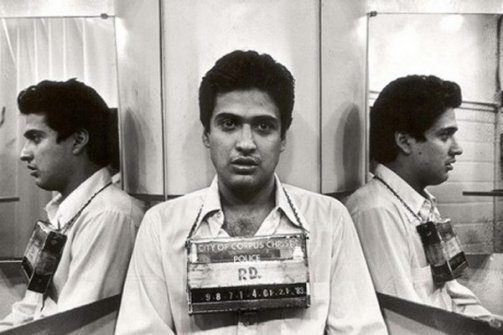
Los Tocayos Carlos: An Anatomy of a Wrongful Execution is a haunting chronicle of how Carlos DeLuna, a poor Hispanic man with a history of petty crime and the intelligence of a child, was wrongfully convicted and then executed for the 1983 murder of Wanda Lopez, a convenience-store clerk in Corpus Christi, Texas. An entire issue of the Columbia Human Rights Law Review has been dedicated to publishing the tale of how DeLuna was put to death and the real killer, a brutal thug named Carlos Hernandez, continued to roam free. The remarkable thing about the narrative is the utter banality of it in what the authors describe as a “case of the obscure accused of murdering the obscure.” Here are 10 of the most gripping and shocking parts of this tragic story.

Ignored By 911

Wanda Lopez was a divorced single mother and high-school dropout who worked the 3–10 p.m. shift behind the register at the Sigmor Shamrock gas station and convenience store. It was in a rough neighborhood inCorpus Christi, located next to a strip club called Wolfy’s. At 8:09 p.m., she called 911 in a panic. She immediately asked “[C]an you have an officer come to 2602 South Padre Island Drive? I have a suspect with a—a knife inside the store … He’s a Mexican. He’s standing right here at the counter.” Instead, the 911operator, Jesse Escochea, who wasn’t supposed to be answering calls and just picked up the phone because everyone else was occupied, quizzed her for 77 seconds because he thought she had “an attitude.” He didn’t dispatch a police car until after Lopez had been fatally stabbed in her chest while asking for help. It later emerged that the reason for her “attitude” was that she had previously called 911 about the same man loitering outside the door and was told to immediately call back if the man entered. If the regular 911 operator had answered, help would have come right away and Wanda Lopez might not have been stabbed.

The Arrest

Eyewitnesses saw two different men running in different directions near the gas station. The only actual witness to the crime saw the stabbing and then watched a Continue reading

Cuts to Legal Aid in NZ a Threat to Forensic Science and Justice?

An interesting short comment has appeared on The Forensic Group site (New Zealand based), questioning whether the cuts to legal aid in that country are having a detrimental impact on the commissioning of forensic tests. It also warns that some of the ‘best’ defence lawyers in New Zealand are moving out of criminal law because of the funding shortages. As they explain:

“The problem with losing good criminal defence lawyers is that access to justice will be compromised, there will be more appeals and, potentially, miscarriages of justice.”

Some very worthwhile questions asked…. read the full post here…

Legal Aid costs and forensic science: the cost of justice?

How Bad Lawyering Advances Wrongful Conviction: The Case of Jamel Parker

We place tremendous emphasis on prosecutorial tunnel vision, and rightly so. However, bad lawyering by defense counsel rarely ever attract the same condemnation. Bad representation contribute significantly to incidences of wrongful convictions or miscarriage of justice, except that it hardly get mentioned. As Jamel Parker picks up the pieces of his appeal and plans to challenge his conviction, an important lesson needs to be learnt: that good representation is key to the fair dispensation of justice. I think this is a shared responsiblity. It lies not only with the accused person, it behooves the bench at every stage of the trial to ensure that an accused person is getting the best at every stage of the trial. Again, lax professional conduct rules; the failure of disciplinary boards to take seriously complaints by clients of bad lawyering, play a major role. We hope that Jamel’s second bite of the cherry (his proposed appeal) will ensure that all the facts and law are properly placed before a judge and jury. Read more herehttp://www.thepetitionsite.com/1/free-jamel-parker-wrongful-convicted/

Defense Lawyer Tunnel Vision…

Carrie Sperling

Carrie Sperling of the Arizona Justice Project has posted Defense Lawyer Tunnel Vision: The Oft-Ignored Rule Defense Counsel Plays in Wrongful Convictions on SSRN. Full paper here.

The abstract states:

This article discusses the sometimes forgotten role that defense lawyers play in wrongful convictions. Often, strong cases of actual innocence are thwarted by defense lawyers’ failure to preserve a defendant’s procedural avenues for relief. The article reminds lawyers that procedural errors have long-lasting consequences for the innocent who have been wrongly convicted.

Lawyers in UK claim new rules to ‘speed up’ trials resulting in miscarriages of justice

A new policy, called ‘Stop Delaying Justice’, introduced to ‘streamline’ trials in the lowers courts in England and Wales (the Magistrate’s Courts), may be leading to an increase in miscarriages of justice according to lawyers. The strict time restrictions are forcing people to plead guilty without seeing the evidence against them first. In one case, a defendant was asked to plead guilty before seeing crucial fingerprint evidence. He refused, and the fingerprint evidence later proved his innocence. Read more about the investigation into such cases on the BBC:

Lawyers claim new policy causes miscarriages of justice

Police study shows how stress distorts memory

As contributing editor Phil Locke noted in a post yesterday, eyewitness misidentification is the leading cause of wrongful convictions. The reason, the experts and defense attorneys argue, is that memory is extremely fallible and malleable. Police and prosecutors insist otherwise. They argue that a witness to a crime, or a victim of one, is going to remember quite clearly what happened and who was involved.

Now, a new study of what someone involved in a stressful, potentially life-threatening situation, remembers backs up those who argue that witnesses are prone to mistakes. What sets this study apart, however, is that the participants in the study were cops.

As this article about the study reports, “After traumatic incidents, some officers remember things that didn’t happen. Some don’t remember things that did happen. Others confuse the sequence of events.”

This is exactly what researchers and defense attorneys have been saying about civilian crime witnesses and victims for decades. It’s nice to have a police study back them up.

Central Park case showed how media fuels injustice

Sarah Burns’ book The Central Park Five: A Chronicle of a City Wilding, is one of the best books on a wrongful-conviction case in recent years. The documentary she is now producing with her father, Ken Burns, promises to be equally compelling.

The book and film focus on the wrongful conviction of five black and Latino teenagers in 1990 for the particularly vicious assault and rape of a white woman while jogging through New York’s famed Central Park on the evening of April 20, 1989.

The case set off a media frenzy in the crime-plagued city that soon spread across the United States after police announced that the five youths had confessed that they had committed the rape as one of a series of random assaults they and other teens committed in the park that night, a process they supposedly called “wilding.”

Burns adeptly dissects this case the skill of a surgeon. She shows how police jumped to conclusions and then manipulated and intimidated the five boys into highly inconsistent confessions that were greatly at odds with the facts. In the process, Burns shows how the police ignored the similarities between the rape of Continue reading

Brian Banks: The Case for Taking on Post Release Sex Offender Innocence Cases

Brian Banks had the world in his hands. He was a star high school football player. Every major college program in the country wanted him to play for them. There was already talk of an NFL career. That all ended when he was falsely accused of rape. His lawyer told him to plea bargain even though there was no physical evidence of the crime. He was told that he might spend the rest of his life in prison even though the case was built on the shaky testimony of his alleged victim, a fellow high school student.

Brian took the deal and went to prison for several years. His scholarship disappeared, his dreams disappeared, but when he got out of prison he was determined to get those dreams back. Had he been convicted of any other crime, even a murder, he would have had an easier time, but convicted sex offenders are in a class all their own. The time is never served. For the rest of his life he would be on sex offender lists, the government would need to know where he lived, and he would have trouble getting jobs or coping with the relationship issues that come with explaining to your girlfriend that you were convicted of rape, you plead, but you were actually innocent.

All innocence projects are overwhelmed with work. Thus, as directors we must make tough decisions about what cases to take on. In reviewing cases, priority is often determined based on the punishment the potentially innocent person is facing. Death penalty cases have the highest priority. Life cases are just behind them. Cases with significant terms of years are third. Most of us never get to the cases where a client has been released. There are too few resources. The cases take too much time and too much money.

Sex offender cases should be treated differently than other cases. They are life sentences. Brian’s case is a reminder of what gets taken away when someone is falsely accused of rape. It is also a call for all projects to at least consider taking on these cases.

Brian Banks Website

Thursday’s Quick Clicks…

  • Article on the Kevin Lane murder case, one of the cases being pushed by the Innocence Network UK for CCRC review
  • Cincinnati public defender ousted from office after one year due to scathing independent report of her management style
  • Innocence conference in Rochester, New York on April 20th featuring John Jay College psychology professor Saul Kassin, an expert in false confessions; Peter Neufeld, co-founder of the Innocence Project; John Jay College Professor Jennifer Dysart, an expert in eyewitness identification; Steven Barnes, who spent 20 years in prison for a murder he didn’t commit; and Eugene Pigott Jr., an associate judge on New York’s highest court, the Court of Appeals
  • Article about exoneree Juan Rivera’s talk this week at Northern Illinois University
  • Joe McCulloch, director of the Palmetto Innocence Project in South Carolina, running for state Senate
  • Upcoming episode of U.S. TV show Pysch to focus on wrongful conviction case of an Innocence Project client
  • Death row exoneree Kirk Bloodsworth on Maryland’s annual failure to repeal the death penalty

Tuesday’s Quick Clicks…

A Plug …. for the National Association of Criminal Defense Lawyers

The 2012 National Innocence Network Conference has just concluded. The event was hosted this year by the University of Missouri Kansas City School of Law. We attend these events to sharpen our skills, increase our knowledge base, and forge relationships that will help us in our work; and this year’s conference did not disappoint.

On the Thursday prior to the conference, the National Association of Criminal Defense Lawyers (NACDL) (www.nacdl.org) conducts a full day seminar/tutorial, usually on some aspect of litigating forensics.

Here is the agenda from this year’s session dealing with “forensic pathology”.

NACDL

They bring in recognized experts to speak, and the day is jammed full of relevant and useful information. They do an excellent job, and they offer this free of charge to “qualified” (defense/innocence work) attendees.

I have had the distinct pleasure of attending three of these events, and I would rate them as outstanding.

The NACDL is funded by:

  • Membership dues revenue;
  • Non-dues revenue such as CLE programs, publications, and product sales; and
  • Funding support, including external grants and internal fundraising.

This is an organization that deserves your support.

Phil Locke

Sunday’s Quick Clicks…

  • Recent Virginia exoneree Michael Hash enjoying his taste of freedom
  • Group of former judges and law enforcement officials file amicus brief asking appellate court to affirm a lower court decision awarding a new trial to Virginia death row inmate Justin Wolfe, who had his conviction overturned after the state’s key witness, a snitch, said he lied at trial to save his own skin
  • Sister of defendant in case that Innocence Network UK wants reviewed by CCRC for possible innocence says she will fight tooth and nail to keep her “guilty” sister from getting relief
  • Defendants in Virginia receive inadequate defense representation on a daily basis
  • Pending legislation in Hawaii would improve eyewitness id procedures
  • New York Times article on the fight of Kerry Max Cook to clear his name
  • Missouri AG signals in court filing that it will oppose the exoneration of Innocence Project client George Allen Jr., after DNA testing excludes him from semen found at crime scene