Category Archives: Editorials/Opinion

Death Penalty Information Center’s 2013 Annual Report: Use of Death Penalty Declining

Today, December 19, 2013, the Death Penalty Information Center (DPIC) released its annual report on the latest developments in capital punishment in the United States. Read the full report, “The Death Penalty in 2013: Year End Report” (here).

According to Richard Dieter, DPIC’s Executive Director:

“Twenty years ago, use of the death penalty was increasing. Now it is declining by almost every measure. The recurrent problems of the death penalty have made its application rare, isolated, and often delayed for decades. More states will likely reconsider the wisdom of retaining this expensive and ineffectual practice.”

Highlights of the 2013 Death Penalty Information Center annual report include: Continue reading

Video

An Epidemic of ‘Brady’ Violations (Prosecutorial Misconduct)

Posted on December 18, 2013 by Phil Locke

An epidemic of Brady violations – those are not my words.  They are the words of Alex Kozinski, Chief Judge of the US 9th Circuit Court of Appeals in a recent decision in the case of US vs. Olsen.

Kozinski

If you don’t know what a ‘Brady’ violation is — it’s when the prosecution fails to turn over exculpatory evidence to the defense.  The US Supreme Court ruled in the case of Brady vs. Maryland (1963) that suppression of evidence by the prosecution violates the defendant’s due process rights.  Note, however, that the ruling does not specify sanctions for prosecutors who fail to comply with Brady disclosure.  It only stipulates that the defendant’s due process rights have been violated, thus making a Brady violation potential grounds for post-conviction relief.

Read the Huff Post story about Judge Kozinski’s opinion here.

This quote from judge Kozinski’s opinion:  “There is an epidemic of Brady violations abroad in the land. Only judges can put a stop to it.”  Kozinski’s statement is interesting, because it is recognizing that there is nothing in the law that punishes (sanctions) prosecutors for this unethical behavior.  They are supposedly subject to sanction from their bar association, but guess what – this just about never happens.

Continue reading

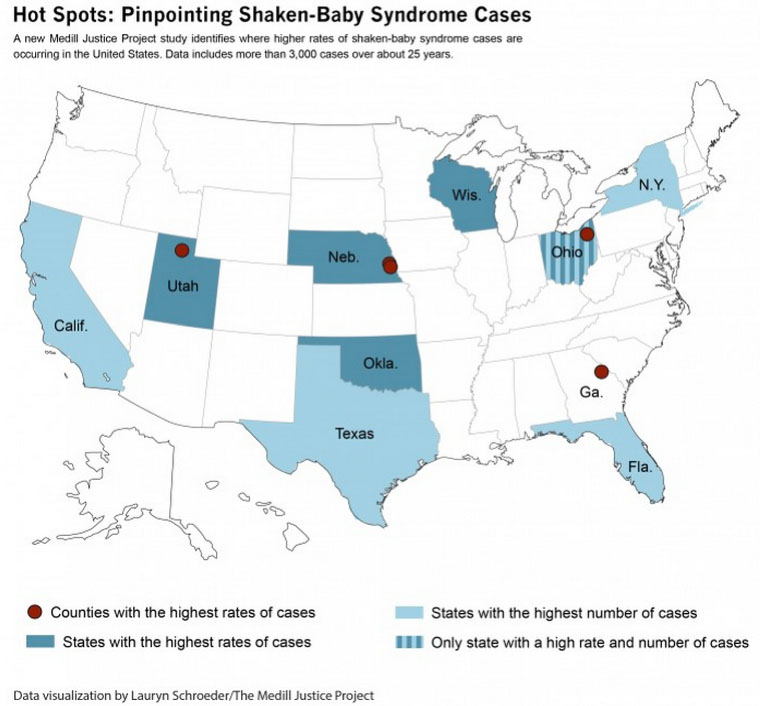
Are There Geographic “Hotspots” for Shaking Babies? Shaken Baby Syndrome.

The Medill Justice Project, in its now year-long effort to build a database of SBS cases, has published a portion of that data relating to the geographic occurrence of SBS.  The report identifies several SBS geographic “hotspots.”

Medill Map

What could cause this?  As Innocence Project co-founder Barry Scheck has jokingly suggested, maybe it’s “in the water.”  But this data does NOT support a theory that certain localities have higher percentages of more violent people who are more likely to shake their babies.  It DOES, however, support a theory that certain localities have higher concentrations of aggressive and dogmatic prosecutors and child abuse pediatricians* who ARE more likely to (wrongfully) accuse and prosecute someone for shaking their baby.  And given this, it raises serious questions with respect to the concept of “equal justice.”  What I mean by this is – if your baby experiences a short fall, and you take it to the hospital, and the baby presents with any or all of the triad symptoms, you are much more likely to go to prison if you live in Summit County, Ohio than if you live in Kane County, Illinois – even though you did NOT shake your baby.

You can read the Medill report here.

Sue Luttner has posted an article looking at this geography lesson on her blog OnSBS.  She has done a little more research on how rate of occurrence relates to geography.  You can read it here.

* (More about child abuse pediatricians in a future post.)

When is a Lawyer not a Lawyer?

We’ve written before about how bad defense lawyers are responsible for as many wrongful convictions as anything else (see the section on “bad lawyers” in Why I Think the US Justice System is Broken – and Why It’s Not Getting Fixed).  But what about on the prosecution side?  The thought of legally unqualified prosecution attorneys – and this includes staff – is scary.

So this brings us to the question – when is a lawyer not a lawyer?  Apparently, the answer may be – when they practice in Arizona.  Get this — it’s actually not illegal to practice law in Arizona without a license.

Karyl Krug is a highly regarded Texas attorney who was transplanted to Arizona.  What she encountered in the Arizona legal system was cause for profound dismay.  She tells her own story here.

Misbehaving Prosecutors Almost Always Get Off Scotfree

The Center for Prosecutor Integrity, in December 2013, published a white paper titled An Epidemic of Prosecutor Misconduct.

Appendix B from that paper is a table listing documented cases of prosecutorial misconduct and in how many of those cases sanctions were imposed.

Appendix B

(For the sources footnoted, please refer to the paper.)

Out of 3,625 documented cases of prosecutorial misconduct, sanctions were imposed in only 63 of them – 1.7%.

Isn’t it about time for some prosecutorial accountability and sanctions for misconduct?

Documentary Demonstrates that Michael Morton’s Case is Not Unique

Michael Morton’s remarkable story of wrongful conviction for the 1986 murder of his wife Christine, his 25 years of incarceration, and his exoneration, will be told to a national audience when the documentary “An Unreal Dream,” written and directed by two-time academy award nominee, Al Reinert, premiers on CNN tomorrow night, Thursday, December 5, at 9:00 p.m. ET and PT. According to CNN (here) the documentary seeks to “demonstrates that Morton’s story is not unique.” Continue reading

Center for Prosecutor Integrity to Establish ‘Registry of Prosecutorial Misconduct’

This (in my opinion) is huge.  By now, you’re probably familiar with the National Registry of Exonerations which has established a mechanism for collecting and documenting data about wrongful convictions across the US.  To date, it has logged data on 1,250 exonerations.  The registry will be a very powerful tool for justice system reform and improvement, because it provides incontrovertible, hard data that can be used to make known and describe the errors that can, and do, happen in this very imperfect system of ours.

Data from the National Registry of Exonerations has already revealed that “official misconduct” (by both police and prosecutors) is a contributing factor in 42% of wrongful convictions.  In a previous WCB post, Prosecutorial Misconduct – What’s to be Done?  A Call to Action, it was pointed out that one of the very first things needed to begin addressing the prosecutorial misconduct cause of wrongful convictions is DATA.  We know that prosecutorial misconduct happens, but our understanding of the problem, and its extent, has been only anecdotal up until now.  This new Registry of Prosecutorial Misconduct is a significant step forward in building a base of data that can be used by legislators, policy makers, and advocates in defining and implementing necessary changes to the laws and rules that govern prosecutorial behavior.

The press release from the Center for Prosecutor Integrity follows:

Continue reading

Sentenced to a Slow Death – Only in America?

Wrongful Conviction

Excessively long prison terms that are way out of proportion to the crime they’re supposed to be punishing have become more and more common in the US.  We already know, largely because of this, that even though the US has only 5% of the world’s population, it has 25% of the world’s prisoners.  (See previous WCB post here.)

The NY Times Editorial Board recently published this commentary on criminal court sentencing in the US titled ‘Sentenced to a Slow Death.’  The opening sentence of this editorial is, “If this were happening in any other country, Americans would be aghast.”

This situation is well characterized by the so-called “three strikes” laws.  Texas was the first state to enact such a law, doing so in 1974 with a mandatory life sentence.  In1993; Washington.  In 1994; California, Colorado, Connecticut, Indiana, Kansas, Maryland, New Mexico, North Carolina, Virginia, Louisiana, Wisconsin, Tennessee, and Georgia.  In 1995; Arkansas, Florida, Montana, Nevada, New Jersey, North Dakota, Pennsylvania, South Carolina, Utah, and Vermont.  In 2006; Arizona.  In 2012; Massachusetts.  And on top of all these are the draconian sex offender laws which can make registered sex offenders out of anyone for the crime of “touching.”  See previous WCB post here.

A platform of “tough on crime” has always been a “bread & butter” issue for politicians.  They’ve discovered it can help get them elected.  This started in the 1980’s, and has been getting progressively more severe as the years roll by.  It’s easy for the electorate to shrug this off as “the criminals get what they deserve,” but until you personally, or someone close to you, gets unjustly shredded by this meat grinder we call “justice,” you just can’t comprehend how insane this all is.  And this is exacerbated by prosecutors looking for more and more convictions, so they can get re-elected. However, study after study has confirmed that more severe sentencing laws DO NOT correlate with crime deterrence.  All they do is fill up the prisons at staggering tax payer expense.  Here is just one such study by Dr. Valerie Wright of The Sentencing Project – study by Dr. Valerie Wright.  This telling quote from the conclusion of that study:  “Existing evidence does not support any significant public safety benefit of the practice of increasing the severity of sentences by imposing longer prison terms.”

The bottom line here, folks, is that the problem is “us.”  As long as we keep electing legislators who continue to pass harsh mandatory sentencing laws that allow judges no discretion; and as long as we keep electing prosecutors and judges who disregard logic, fairness, and justice in favor of getting re-elected; we’ll continue to have a justice system that is perfectly willing to also scoop in the innocent to make sure that NO guilty people escape.  And while we’re at it, we’ll make sure that all those convicted, whether innocent or guilty, receive the most vengeful punishment we can visit upon them.

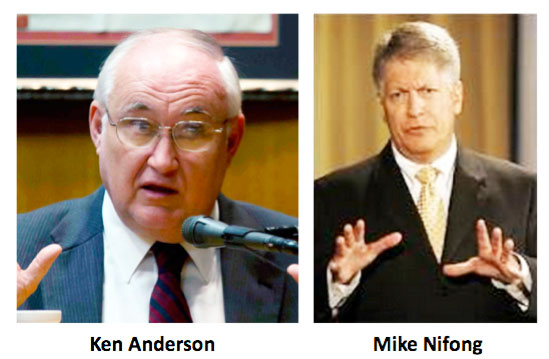
Texas Prosecutor, Ken Anderson, Out of Jail After Only 5 Days.

Former Texas prosecutor, Ken Anderson, sentenced to 10 days jail time for criminal contempt in his prosecution of the Michael Morton case has been released after only 5 days.  See previous WCB post here.

Read the story here.

And the irony is – he was released early for “good behavior.”

Please tell me this is not rubbing salt in the wounds of the wrongfully convicted.

Ruling marks historic week in Brooklyn D.A.’s Office: Discredited detective’s files to be reviewed by judge

As reported (here) in the New York Daily News, New York Supreme Court Justice Desmond Green yesterday denied a motion by the Brooklyn District Attorney to suppress a subpoena, submitted by lawyers for inmate Shabaka Shakur, to obtain the files of former police Detective Louis Scarcella. The retired detective is implicated in possible tampering in nearly 40 cases that may have resulted in wrongful convictions. In addition to the denied motion, the judge ordered the Brooklyn D.A. to provide the files of all the identified cases, two at a time, to the judge himself for review.

District Attorney Charles “Joe” Hynes had called for the review of Scarcella’s cases, after his Convictions Integrity Unit had cleared the conviction of David Ranta. Mr. Ranta had spent 23 years in prison for a murder he did not commit. Continue reading

Prosecutor Jail Time – An Emerging Trend? We Can Only Hope.

Prosecutors A&N

We’ve read much recently about former Texas prosecutor Ken Anderson being sentenced to jail time for his conduct in the Michael Morton case.  You can read Mark Godsey’s excellent editorial on the subject here.

The NY Times Editorial Board recently published a commentary on the sanctions against Ken Anderson – read that NY Times editorial here.  One of the points made in the opening paragraph of the editorial is, “the 10-day jail sentence for the prosecutor, Ken Anderson, is insultingly short.”  After all, Michael Morton spent 25 years in prison as a result of the wrongful conviction by Anderson.  I’m sure most would agree that this punishment certainly doesn’t come close to fitting the crime. Continue reading

Kash Delano Register Free After Judge Overturns Decades-Old Murder Conviction

Register

After 34 years in prison for a murder he did not commit, Kash Delano Register is a free man.  How could this perversion of justice have happened?

This quote from the HuffPost story pretty much says it all.  “Superior Court Judge Katherine Mader threw out the conviction on Thursday, ruling that prosecutors used false testimony at trial and failed to disclose exculpatory evidence.”

Read the HuffPost story here.

With news of wrongful convictions occurring at a steady pace these days, it really causes one to ponder – how many more are out there?

Tuesday’s Quick Clicks…

click

Prosecutorial Misconduct – Spotlight on Arizona

Gray Area copy

Michael Kiefer covers courts and the death penalty for The Arizona Republic.  He has recently written a four-part series of articles about prosecutorial misconduct in the Arizona courts titled “The Gray Area of Courtroom Conduct.”

Here is an excerpt from the opening section of the Part 1 article:

“There seldom are consequences for prosecutors, regardless of whether the miscarriage of justice occurred because of ineptness or misconduct.  In fact, they are often congratulated.  Since 1990, six different prosecutors who were named prosecutor of the year by the Arizona Prosecuting Attorneys Advisory Committee also were later found by appeals courts to have engaged in misconduct or inappropriate behavior during death-penalty trials, according to The Republic’s examination of court documents.”

You can read Michael Kiefer’s four-part series here.

In editorial fairness, a group of Arizona prosecutors wrote a response to Mr. Kiefer’s articles, which was posted on azcentral.com, and you can read their letter here.  Now, exercising editorial privilege, I will have to say this letter could be one of the biggest crocks of BS I have ever read.  I particularly like this sentence from the prosecutors’ letter: “The system is designed for the defense in that there are ethical rules that apply only to prosecutors.”  So … never mind that prosecutors often pay no attention to those “ethical rules.”   The position of prosecutor is endowed with more power of discretion than almost any other elected position.  There are things prosecutors can decide and do that even governors cannot decide and do.  Additionally, the prosecution has the police, the crime labs, a staff of attorneys, and they are funded by the taxpayers; while the defendant has to pay for his own investigators, forensic testing, and attorneys.

In Mr. Kiefer’s articles, you’ll find frequent mention of Maricopa County.  You know, the place where Joe Arpaio is sheriff.  More about Maricopa County in future posts.

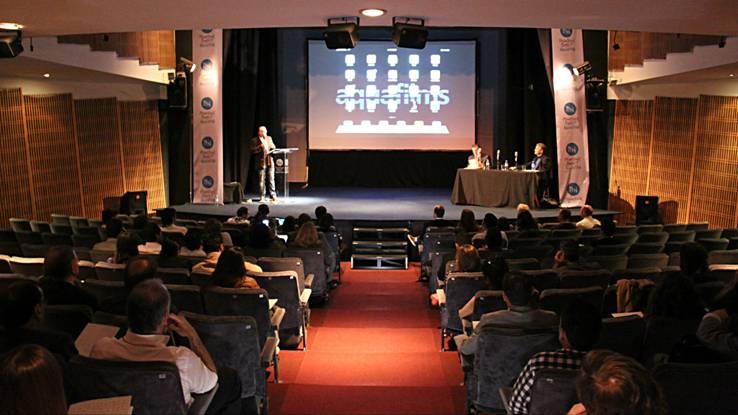
Lawyers Gather in Buenos Aires for Second Annual Latin America Innocence Conference

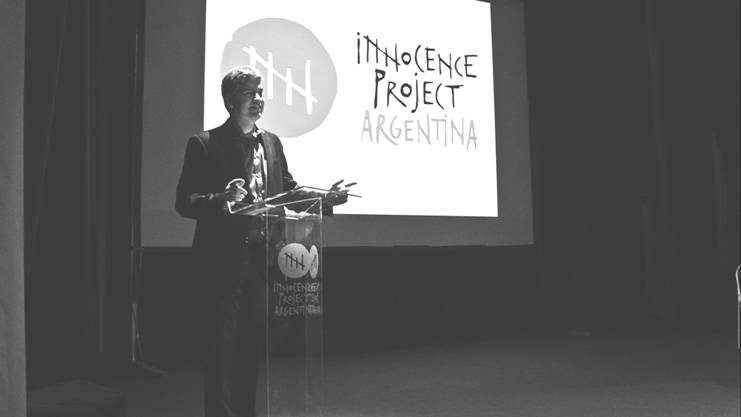
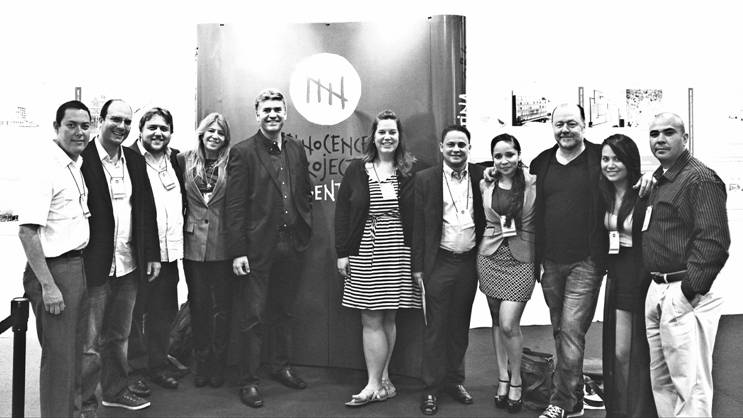
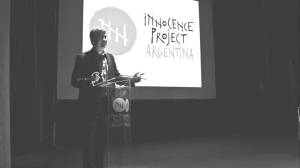
Attorneys gathered from all over Latin America for the Red Inocente!  Second Annual Latin American Innocence Conference last week in Buenos Aires, Argentina.  Over a span of three days, Enrique Piñeyro, the Director of the newly established Innocence Project Argentina, graciously welcomed participants from Argentina, Brazil, Chile, Colombia, México, Nicaragua, Paraguay, and Puerto Rico.  The group included attorneys, law students, judges, academics, politicians, scientists, and members of the media.

Director of the Innocence Project Argentina, Enrique Piñeyro

Director of the Innocence Project Argentina, Enrique Piñeyro

Piñeyro, also an accomplished Argentine film director, hosted the conference and organized speakers on an array of topics. Attorneys spoke about evidentiary issues.  Experts spoke about the criminalization of the poverty in the Latin American jails and corruption in the judiciary.  California Innocence Project exoneree, Rafael Madrigal, spoke about the seven years he spent in prison after he was wrongly convicted for an attempted murder in Orange County, California.  Exoneree, Eric Volz from Nicaragua, also spoke on his international experience resulting from his wrongful murder conviction.  Both of these talks allowed people to hear about the real-life experiences of those unjustly sent to prison and illustrated why innocence work is so important throughout the world.
Director of the California Innocence Project, Justin Brooks

Director of the California Innocence Project, Justin Brooks

This conference was the second conference of its kind.  The first conference was held in 2012 in Santiago de Chile.  Since the conference in Chile, innocence projects have taken root in Mexico, Argentina, Chile, and Peru.  The directors of these projects, as well as the director of the already long-established project in Colombia, were able to speak to the group and relay the problems, challenges, and successes of their work in their respective countries.

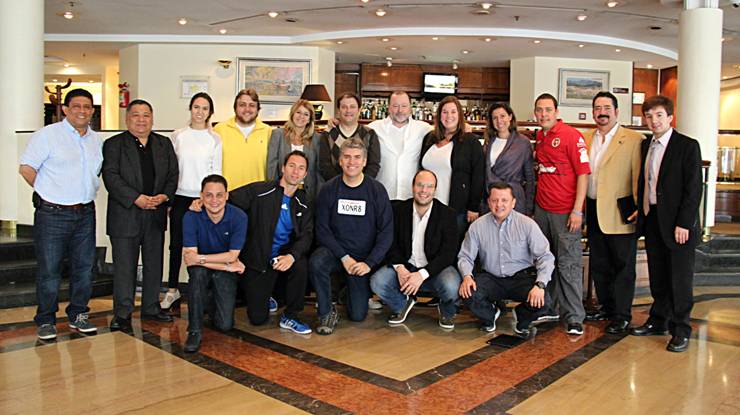
Participants and speakers from Brazil, Unites States, Nicaragua, Mexico, and Argentina.

Participants and speakers from Brazil, Unites States, Nicaragua, Mexico, and Argentina.

Piñeyro also showcased his documentary, The Rati Horror Show, to demonstrate the corruption and serious problems of the Argentine judicial system.  The documentary was pivotal in the release of Fernando Carrera, who was convicted of murder because the police altered evidence at the scene of the crime and manipulated witness testimony.  Carrera, in an unexpected Argentina Supreme Court decision, was ordered back to prison when the Court denied the decision by the lower court to reverse his conviction.  Carrera’s attorneys also participated in a forum where participants were allowed to ask them questions about the judicial decisions and the facts surrounding the underlying conviction.

The Mexican documentary, Presunto Culpable, was also shown at the conference.  The film vividly illustrates the struggle to exonerate an innocent man in the deeply flawed Mexican justice system.

Directors of the established  projects from Colombia, Brazil, Peru, Mexico, Nicaragua, Colombia, and the United States.

Directors of the established projects from Colombia, Brazil, Peru, Mexico, Chile, Nicaragua, Colombia, and the United States.

Red Inocente! hopes to organize a conference for Latin American innocence projects every year to continue to share information, experiences, and knowledge.  The conference will be held in Bogotá, Colombia in October of 2014.  Red Inocente! is a non-profit legal and education program designed to offer assistance to those who are trying to help secure the release of innocent prisoners in Latin America, promote legislative reforms to reduce the number of wrongful convictions, and offer information on latest developments in forensic science and law to the lawyers who litigate these cases.

Follow me on Twitter @justinobrooks

Professor Justin Brooks
Director, California Innocence Project
California Western School of Law
225 Cedar Street
San Diego, CA 92101
jpb@cwsl.edu
www.californiainnocenceproject.com

For more information, please visit the following websites:  www.redinocente.org, www.ipargentina.org.

The Shame of Lorain – Redux

Smith & Allen

The case of Nancy Smith and Joseph Allen of Lorain, OH is a tragic tale of a badly broken justice system gone haywire.  Their story has been reported on this blog here and here.  And the fact that this sordid tale involves the Ohio Supreme Court makes it even worse.  They both spent almost 15 years in prison until a judge confirmed the charges against them were bogus, and had them released.  But the prosecution wouldn’t acknowledge this, and wouldn’t give up.  The Ohio Supreme Court ruled that the judge didn’t have jurisdiction, and another judge was assigned to the case.  The outcome was that “deals” were struck by the defense and the prosecution, and the results of those “deals” are reported below.

Any rational person who examines the facts of this case will conclude that Nancy and Joseph are absolutely innocent.  However, to avoid being sent back to prison after initial release, Nancy had to plead to a lesser charge and was given credit for time served, but had to give up any future possibility of exoneration.  Unfortunately, Joseph did not have even this option.  He is being sent back to prison and has to give up his right to further appeals.

You can read the story by Bob Chatelle here.

Ladies and gentlemen, this is shining example of the fact that for (most) prosecutors, it’s not about justice, it’s just about winning; and doesn’t that just suck.

Update on the National Registry of Exonerations

In Mark Godsey’s ‘Quick Clicks’ yesterday, there was a piece titled “an update from the National Registry of Exonerations,” which currently has logged data on 1,219 exonerations nationwide so far.  I hope you were able to check it out, and were able to navigate through the Registry’s updated website.

To me, the most important value of the Registry is that it’s a rich source of real, hard data on the occurrence of wrongful convictions – something that we have historically not had.  The registry has been able to publish a statistical analysis of 873 exonerations from 1989-2012, and you can see that report here.

I am a self-admitted data junkie, and when I saw the Registry’s new site, was thrilled to see that they have presented data in graphical form that will be continuously updated.  I thought I would highlight two examples for you here.

NatRegExon Charts

And congratulations to both Nancy and Jim Petro on being named to the Registry’s Advisory Board.  I’m sure you’re aware that Nancy is a contributing editor to this blog.

Rob Warden to Continue the “Good Fight”

Warden

As previously reported here on this blog, Rob Warden, co-founder and director of the Northwestern Law Center on Wrongful Convictions has set a retirement date.

However, his efforts and his impact on the innocence movement won’t end there.  This recent article from the Chicago Tribune talks about his post retirement plans.

One of the things in the article that I found “of interest” was the comment by the office of Cook County State’s Attorney, Anita Alvarez:  “It is our hope that the new leadership there will display a more respectful and fair-minded view of the work of the prosecutor, rather than the cynical ‘Us versus Them’ theory disseminated by Mr. Warden throughout the course of his tenure.”

Now, I ask you; is this not the pinnacle of hypocrisy?

‘False Justice: Eight Myths That Convict the Innocent’ – Why Did They Write It?

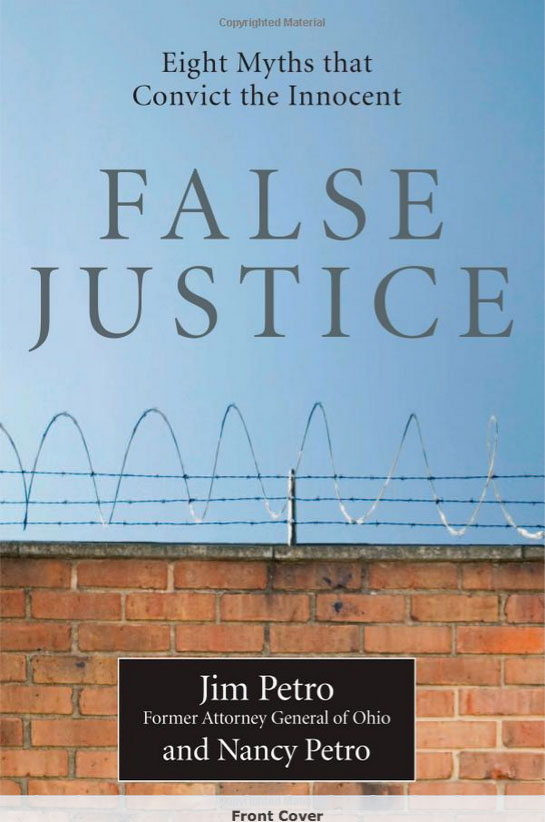
FalseJusticeI hope that you’re all familiar with, and in fact have read, the book by Jim and Nancy Petro, False Justice: Eight Myths That Convict the Innocent.

Jim&Nancy

.

.

.

.

Jim is a former Attorney General of the state of Ohio, and Nancy, among her many other endeavors, is also a contributing editor to this blog.

I recently just happened across this interview with Jim and Nancy at the Columbus Metropolitan Club in 2010.  They talk about what brought them to write the book.

It’s about an hour long, and I found it both fascinating and illuminating.  Definitely worth a watch.

Crime Stoppers Gets it Wrong … Again

We’ve reported previously on this blog about the devastating results that can occur from a combination of misinformation from a Crime Stoppers tip and police tunnel vision.  See that posting here.

Here’s another example of how that happens.  In Dallas, Alan Mason was publicly identified as a “person of interest” in a series of rapes in south Dallas.  This was based upon an anonymous, non-specific Crime Stoppers tip.

Alan Mason was not officially named as a ‘suspect,’ but his picture and name were made public as a ‘person of interest.’  Another man was subsequently linked by DNA to four of the rapes, and was named a suspect.  Mason has been cleared of involvement in the rapes, and is no longer a ‘person of interest.’  Clearly, the Crime Stopper’s tip was bogus.  If Mason was only a ‘person of interest,’ why was it necessary to make that public before it could be confirmed?

AMason

Read the Dallas News stories here and here.

There is absolutely no control over the quality or the veracity of the information that comes into Crime Stoppers; nor is there any knowledge of the motivation of the informant.  We can only hope that the police sort it out correctly, and don’t jump to tunnel vision conclusions; including making premature public statements.  Thankfully, this case did not result in an innocent person being convicted and incarcerated.