Category Archives: Eyewitness identification

National Academy of Sciences Releases Landmark Report on Memory and Eyewitness Identification, Urges Reform of Police Identification Procedures

The Innocence Project has posted a notice on its website, with a link to a press release, about the recently released report by the Nation Academy of Sciences on memory and eyewitness identification.

From the report:  “the legal standard that most courts use regarding the admissibility of eyewitness testimony was established before most of the scientific research was conducted.”

The report endorses the following procedures for police lineups:

  • Blind Administration — Research shows that the risk of misidentification is sharply reduced if the police officer administering a photo or live lineup is not aware of who the suspect is. This prevents the witness from picking up intentional or unintentional clues from the officer conducting the lineup.
  • Confidence Statements — Immediately following a lineup, the eyewitness should be asked to describe in his or her own words how confident he or she is in the identification. As the report notes, the level of confidence a witness expresses at the time of trial is not a reliable predictor of accuracy. Having the witness describe their level of confidence at the time an identification is made will provide juries with a useful tool for judging the accuracy of the identification.
  • Instructions — The person viewing the lineup should be told that the perpetrator may not be in the lineup and that the investigation will continue regardless of whether the witness identifies a suspect.
  • Videotape the procedure — The report recommends that police electronically record the identification procedure to preserve a permanent record of the procedure.

Most recent data from the National Registry of Exonerations shows that for the 1,467 wrongful convictions currently in the registry, 35% had mistaken eyewitness identification as a contributing factor.

See the Innocence Project posting here.

Jennifer Thompson Promotes the Justice for All Act

Jennifer Thompson has been featured on the WCB before.  She authored, along with Ronald Cotton, the book Picking Cotton.  Ms. Thompson incorrectly identified Ronald Cotton as the man who raped her, and Cotton spent 11 years in prison before DNA proved he was not guilty.  After his release, Ronald and Jennifer became friends, and co-authored the book, which chronicles the events of the rape and the wrongful conviction.

Ms. Thompson has recently written an op-ed for The Hill in support of reauthorization of the Justice for All Act to ensure that post-conviction DNA testing remains accessible.

See the original posting on The Hill here.  The text of her piece appears below:

October 26, 2014
Harm multiplies when the innocent are wrongly convicted
By Jennifer Thompson

In June of 1995, I found myself on a journey I never wanted, never asked for and never would have wished on another human being. I learned that the man whom I had identified in court as my rapist – the man whose face, breath and evilness I had dreamt about for 11 years – was innocent. The man whom I believed had destroyed me that night, who had stolen everything from me, and whom I hated with an all-consuming rage had lost 4000 days, eleven Christmases, eleven birthdays, and relationships with loved ones. And on June 30th of 1995, Ronald Cotton, the man I had hated and prayed for to die, walked out of prison a free and innocent man.

My rage and hatred had been misplaced. I was wrong. I had sent an innocent man to prison. A third of his life was over, and the shame, guilt and fear began to suffocate me. I had let down everyone — the police department, the district attorney’s office, the community, the other women who became victims of Bobby Poole, and especially Ronald Cotton and his family.

Several years after Ronald was freed, I received a phone call from Bobby Poole’s last victim. I remember hearing her story about what happened to her and realizing that we all had left him on the streets to commit further crimes – rapes — that we possibly could have prevented if Ronald had not been locked up for something he had never done. The knowledge that Mr. Poole had been left at liberty to hurt other women paralyzed me and sent me into a backward spiral that took years to recover from. This journey has taught me that the impact of wrongful convictions goes so much further than a victim and the wrongfully convicted. The pool of victims from 1984 was huge – me, Ron, the police department, our families, and the other women who became victims of Bobby Poole all suffered.

This case crystalized for me why it is so important to have laws in place that protect the innocent. Those laws would be important enough if they only protected the innocent, but they do so much more. They also protect the potential victims of real perpetrators, the families and children of the wrongfully convicted person, and – ultimately – the victim who learns the truth.

The Justice for All Act, which is up for reauthorization by Congress, allows men like Ronald to obtain post-conviction DNA testing that can lead to their freedom and to the conviction of the guilty. Without access to such testing, innocent men will remain in prison, real perpetrators will remain free, and new victims will have to experience the same horrors and indignities that I did. I urge Congress to pass the Justice For All Act now so that we can live in a world where the truly guilty are behind bars and the innocent are free.

Thompson is the co-author with Ronald Cotton of the book Picking Cotton, a memoir they wrote together after DNA testing proved that Cotton had been wrongly convicted of raping Thompson as a college student.

Tuesday’s Quick Clicks…

Monday’s Quick Clicks…

Report on Eyewitness Identification Released by National Academy of Sciences…

Short summary of its findings, and link to full report, available here.

Singapore Court of Appeal’s observations on witness body language

This post is slightly late but relates to an interesting development in Singapore. In May 2014, the Singapore Court of Appeal issued interesting observations about witness body language (here). While those observations were made in the context of a civil case, they will be particularly relevant for criminal cases. Citing scientific studies on how nervousness is often misinterpreted as deceitfulness, the court held: “Put simply, therefore, the demeanour of a witness on the witness stand is not invariably a conclusive indicator of deception. ”

An insightful media report on this by Andy Ho may be found here.


In prison since 2003, yet authorities knew man wrongfully convicted in 2007

Shocking news coming from Spain, where it has become clear that a Dutch citizen, Romano van der Dussen, convicted in 2005 of a series of sexual assaults, REMAINS in prison, despite DNA proving his innocence in 2007.

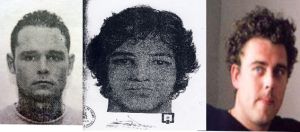
Spanish authorities have had van der Dussen in prison since the rapes took place in 2003. He was found guilty on – now definitively erroneous – eyewitness identifications (with no other links between the suspect and the crimes) in 2005. 1410717812_066741_1410798646_sumario_normal

ven der Dussen, the photofit, and Mark Dixie

However, in 2007, INTERPOL were informed by British police, that convicted murderer Mark Dixie – serving a life sentence for the rape and murder of 17 year old model Sally Ann Bowman in the UK – had previously lived in Malaga in 2002-2003. Spanish authorities uploaded the DNA obtained from the sexual assaults, and subsequently received a report in March 2007 that the DNA from the scenes matched British murdered and serial offender Mark Dixie.

One might expect that in 2007, Spanish authorities – horrified that they were keeping an innocent man behind bars, would move swiftly to ensure his release. Instead, the case has bounced around the legal system, delayed by legal technicalities. His solicitor is now awaiting fingerprints and DNA of Dixie from British authorities to proceed further with securing the release of van der Dussen. ELEVEN years since his imprisonment, and SEVEN years since the authorities discovered his innocence. What can the Spanish possibly be doing?

Read more here:
Dutchman in Spanish jail waits for DNA justice

Fuengirola court reopens sexual assault case

Spanish authorities reopen Dutchman’s rape case

There are more detailed reports in Spanish and Dutch e.g.:
En la cárcel pese a las pruebas de ADN

Tuesday’s Quick Clicks…

Eyewitnesses Are Often Wrong

We’ve commented before on this blog about how unreliable eyewitness testimony can be — see here, here, here, and here.

The US justice system gives great credence to eyewitness identification, and an eyewitness identification will even trump an airtight alibi in court.  But according to the most recent data from the National Registry of Exonerations, false or mistaken eyewitness identification is a contributing factor in 36% of wrongful convictions:

NRE graph

Here is a brief CNN clip, featuring cognitive psychologist Prof. Elizabeth Loftus of the University of California, Irvine and the University of Washington, giving some examples of faulty eyewitness testimony: Eyewitnesses Are Often Wrong.

If you would like a real “eye opener” on the subject, I recommend the book Picking Cotton by Ronald Cotton and Jennifer Thompson-Cannino.  The book details an instance in which the victim had close, lengthy, one-on-one contact with the perpetrator, and still got the eyewitness identification wrong – multiple times.


New Scholarship Spotlight: In Defense of American Criminal Justice

The Honorable J. Harvie Wilkinson III of the U.S. Court of Appeals for the Fourth Circuit has published the above-titled article in the Vanderbilt Law Review.  It argues that the system is not nearly as broken as many critics allege, some convictions of innocents is part of a necessary trade-off, and that the reforms pushed by the Innocence Movement often go to far.

Have a read here.

17, on Death Row …. and Innocent

Shareef Cousin was once the youngest person in the US on death row.

His case is yet another example of how mistaken (or false) eyewitness testimony can override an airtight alibi.  And this one was also compounded by a Brady violation regarding the eyesight of the witness, a lying detective, and coerced snitch testimony.

Cousin has recently authored a CNN article decrying the death penalty.

This quote from the article:  “It is hard to argue that the death penalty is applied fairly. Take it from me, someone who lived alongside guys on death row: The system does not identify and sentence “the worst of the worst” to death — just the most powerless.”

You can read the CNN article here.

National Registry of Exonerations June Report: Record-Breaking Pace in 2014, Causal Insights

The June 2014 update of the National Registry of Exonerations has reported 50 exonerations in the first half of 2014, which is on pace to be record-breaking and to exceed the 87 exonerations reported at year-end in 2013. Each year’s total is a dynamic number. The tally for 2013, for example, had recently increased to 89 as exonerations from the year continue to be discovered. As of June 27, 2014, the Registry was reporting 1,385 exonerations since 1989. As of today, the total has advanced to 1,394.

While these numbers are important, they are a high-level summary of the comprehensive information and case profiles that enable research and insights regarding miscarriages of justice.

An important revelation of the National Registry’s interactive database—which includes both DNA-proven and other official exonerations—is that different types of crimes have different primary contributors. Two recently created graphs enable examination of common contributors by type of crime. The graphs Continue reading

David Ranta Family Sues NYPD for $15M Over Wrongful Conviction

David Ranta spent 23 years in prison for a murder he did not commit – as a consequence of false eyewitness identification, a bogus lineup, a jailhouse snitch, and police tunnel vision.

The David Ranta case has been previously reported on this blog here, here, here, and here.

The David Ranta family is now suing the NYPD for $15 million for their suffering.  See the Huff Post story here.

Thursday’s Quick Clicks…

Even a “Disney World” Defense Can’t Overcome a (False) Eyewitness

Jonathan Fleming was convicted of murder in New York in 1990.  He was just recently exonerated and released after spending 24 years in prison for the murder he did not commit.  The story has recently been reported on this blog with the Fox News story here.  You can also read the CNN story here and the AOL story here.

Fleming had an alibi for the time of the crime.  He was at Disney World with his family.  The hotel staff remembered him, his family vouched for him, and he had a hotel receipt for a collect phone call from the hotel on August 14, 1989 9:27 p.m., which was just 4 1/2 hours before the shooting in New York.  But despite all that, because he was identified by an “eyewitness,” he was convicted.  Quoting the CNN story, “The prosecution … produced a witness who said she saw Fleming commit the crime.”

The reason that I wanted to highlight this particular case is because it’s yet another example of how eyewitness testimony, even though false or mistaken, will trump a solid alibi.

This is not a rare occurrence. Data from the National Registry of Exonerations shows that false or mistaken eyewitness identification is a contributing factor in 43% of wrongful convictions.

And to top it off, in this particular case, the phone call receipt was found in the prosecution’s case file, but was never produced – can you spell “Brady violation?”   And — the “eyewitness” was offered a deal for her testimony, and then recanted 2 weeks after the trial; but of course, her recantation was not allowed by the court.

Does this stink, or what?!  I’m tempted to launch into a much broader exposition on the failings of the justice system, but will save that for a future post on “the nature of innocence work.”

Defendant in Coldest Case Ever “Solved” Appeals His Conviction

In September, 2012, Jack McCullough was convicted of a murder committed in 1957.  The conviction was based largely upon an eyewitness identification made 53 years after the crime by a woman who was 8 years old at the time of the crime.  The unreliability of eye witness identifications has been well documented; but 53 years after the crime, and by an 8 year old?!

In addition, if you read about the exculpatory evidence that the judge ruled McCullough was not allowed to present at trial, including an alibi and the fact that he had been cleared by investigators, you have to believe he has a case.

See the CNN story and video here.

Wednesday’s Quick Clicks…

Wednesday’s Quick Clicks…

  • Is forensic odontology too unreliable?
  • Exoneree Johnathan Montgomery takes it one day at a time
  • Missouri considers eyewitness identification reform and DNA preservation bill
  • Greg Wilhoit, a former Oklahoma death-row inmate from Tulsa and nationally-known anti-death penalty advocate whose story was included in author John Grisham’s “The Innocent Man,” died Feb. 14 in Sacramento, Calif., family members said. He was 59.  Full article here
  • Upcoming symposium at the Penn Quattrone Center:  A Systems Approach to Conviction Integrity

Wednesday’s Quick Clicks…

click
  • New York Attorney General Eric Schneiderman plans to unveil legislation Wednesday that would make it easier for people wrongfully convicted of crimes to recover damages from the state.  Schneiderman’s Unjust Imprisonment Act would strip away restrictions in state law that block claims from people who were coerced into false confessions or who pleaded guilty to crimes they did not commit.  Full article here.
  • Pennsylvania Innocence Project hiring an investigator
  • Another chance for the U.S. Supreme Court to say no to prosecutorial misconduct
  • Missouri considers eyewitness id and videotaped interrogations reform
  • Opening of sealed records in Orange County, CA shows improper use of informants

Tuesday’s Quick Clicks…

click