Category Archives: Eyewitness identification

New Jersey Supreme Court Issues New Jury Instructions for Eyewitness Identifications…

From the NYTimes.com:

<nyt_text>Almost a year after the New Jersey Supreme Court made a sweeping ruling aimed at resolving the “troubling lack of reliability in eyewitness identifications,” it issued instructions on Thursday for judges to give jurors to help them better evaluate such evidence in criminal trials.

A judge now must tell jurors before deliberations begin that, for example, stress levels, distance or poor lighting can undercut an eyewitness’s ability to make an accurate identification.

Factors like the time that has elapsed between the commission of a crime and a witness’s identification of a suspect or the behavior of a police officer during a lineup can also influence a witness, the new instructions warn.

And in cases involving cross-racial identifications, judges were directed to tell jurors that “research has shown that people may have greater difficulty in accurately identifying members of a different race.”

“You should consider whether the fact that the witness and the defendant are not Continue reading

Former Supreme Court Justice’s Work for Wrongfully Convicted Sheds Light on Justice

Among the many misconceptions about the criminal justice system revealed through DNA exonerations is the myth that conviction errors will get corrected on appeal.  The Innocence Project now lists 292 DNA-proven wrongful convictions. Many of these unfortunate people had exhausted a lengthy appeals process before DNA finally proved their innocence. Former New Jersey Supreme Court Justice Virginia Long, who has committed to working for the wrongfully convicted, recently provided insights into why the courts do not Continue reading

Eyewitness Nightmare: We’ve Convicted Countless on Evidence that is Unreliable 25% of the Time

A fundamental principal in American criminal justice is that one is innocent until proven guilty beyond a reasonable doubt. But in the past two decades, DNA-proven wrongful convictions have revealed that we’ve routinely met the standard of “beyond a reasonable doubt” with evidence that is quantifiably incorrect one-fourth of the time.

A 25 percent error rate in school has historically earned the very lackluster grade of D. A 25 percent margin of error would shutter any hospital and ground any airline. But, in the criminal justice system, most Americans, blinded by trust in the system and a popular allegiance to “tough on crime” policies, have yet to Continue reading

Friday’s Quick Clicks…

  • Recommendations from Florida Innocence Commission as to how to improve the criminal justice system (more here)
  • California exonerees  Franky Carillo and Gloria Killian tell their stories of being condemned for crimes they didn’t commit in an attempt to end capital punishment in California
  • Hank Skinner, on Texas’ death row, is granted DNA testing and says his nightmare is almost over
  • Brady violations (non disclosure of exculpatory evidence) are often the fault of police, not prosecutors
  • Victims of 17th century witch hunt in Belgium formally exonerated
  • Florida Innocence Commission:  6 ways the state is keeping innocent inmates in prison
  • Virginia police departments required to have policy on eyewitness identification procedures

Are one out of every 10 rape convictions wrong?

Forensic psychologist Karen Franklin presents an interesting anaylysis on false accusations, false convictions and false recantations here.

Another False Confession Case — Fukawa Case

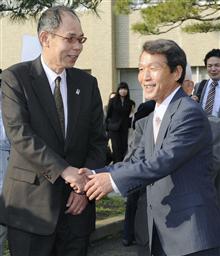
Takao Sugiyama and Shoji Sakurai

As I posted here, false confessions account for many, if not the majority of, wrongful convictions in Japan. Yet another case illustrates this: the Fukawa Case, in which two people were finally exonerated in 2011 for a 1967 robbery-murder.

The crime occured in August of 1967, in the town of Fukawa, Ibaraki Prefecture, about 40 miles outside of Tokyo. A carpenter was found dead in his home.  His legs were tied with a towel and a shirt, a pair of underpants were stuffed in his mouth, and he was strangled. There were signs of struggle in the house, but it was unclear if anything was taken from the house, except for a white purse the victim supposedly used daily. 43 fingerprints were found but none of them connected to perpetrator(s). There was no physical evidence at the scene.

However, there were several eyewitness statements that two men (one tall man and another shorter man) were near the victim’s house on the evening that the victim was supposedly murdered. This statement lead the police to think there were two perpetrators.

Based on this information, the police investigated more than 180 men in the area, until they found the two men, Shoji Sakurai and Takao Sugiyama,who did not have an alibi on the date of the crime. In October of the same year, both of them were arrested on separate charges, and were interrogated.

Sakurai and Sugiyama were held in police jails (“Daiyo-Kangoku“), and interrogated for hours and days. After 5 days of interrogations, Sakurai confessed to the crime. Based on Sakurai’s confession, the police also forced Sugiyama to confess. They retracted their confession during the interrogation by the prosecutors, but the prosecutors sent them back to police jails, and after continuous interrogations that ensued, they finally gave in and confessed again.

The two contested their guilt at trial. The prosecutors had no direct evidence of their guilt. All they had were: their confessions made during interrogations by police and prosecutors (with the  testimony of interrogators and the partial tape recordings of the interrogations which recorded only the part after they confessed to the crime), and testimonies of eyewitnesses who saw two men on the day of the crime.

There was no physical evidence, including the white purse which was never found. Their confessions during investigation changed repeatedly, Sakurai and Sugiyama’s confessions contradicted each other’s in important parts, they did not match the circumstances of the crime scene, and there was no information revealed in the confessions which unknown to investigators.

Nevertheless the trial court declared that their confessions made during investigation were reliable and sentenced them to life in 1970. The High Court as well as the Supreme Court denied the appeal. Their sentences were finalized in 1978. Continue reading

Monday’s Quick Clicks…

A Brooklyn Man Wins a New Trial After 23 Years

From unprison.com:

By Bruce Reilly…

When I woke up this morning, I knew that thousands of innocent prisoners had active cases in the court system.  When I go to sleep, I will know that one man, Derrick Deacon, waited enough time to be vindicated: 23 years.  Yesterday the New York Appellate Division overruled the lower court and decided to give the man a new trial.  Considering the evidence, the Brooklyn District Attorney would be flushing the taxpayers’ money down the drain by pushing to retry him.  This case is in many ways a textbook wrongful conviction, pushed over the top by the Exoneration Initiative.  It is worth looking at the fundamentals of the case, in hopes that someday the District Attorneys will begin admitting their mistakes and punishing government wrongdoers.

The Bad Identification

In this case a young woman identified a 5’7 guy around 19.  When the police brought in a 6 foot, 34 year old man, the police or prosecutors (according to the witness) leaned on her to give a vague description.  She told them it was not Deacon, a man she was not connected to but someone she had known from the Continue reading

Monday’s Quick Clicks…

  • Florida Governor puts innocence commission to death
  • New trial for George Gould, who was exonerated and then had his conviction reinstated by court of appeals, commences in Connecticut
  • In New York, a big push at the end of the legislative session to pass videotaped recordings and double blind lineup administration
  • News video story on the Alaska Innocence Project

Thursday’s Quick Clicks…

  • Video of Barry Scheck and several exonerees speaking out in favor of legislative reform in New York
  • U.S. Court of Appeals for the Seventh Circuit forces government agencies to turn over files in wrongful conviction lawsuit brought by exoneree Chaunte Ott
  • Petitions pouring in from across the U.S. in support of pardons for the Wilmington Ten
  • Illinois Innocence Project looks into arson case
  • New York Bar Association backs recorded interrogatons requirement and double-blind eyewitness identification methods pushed by the Innocence Project
  • New book about the Craughwell Prisoners–several men who were wrongfully convicted in Ireland more than 100 years ago
  • Man exonerated in Cambodia appeals to Prime Minister to make judicial reforms so that it doesn’t happen to others

Innocence Project, NY Bar, Rally Today for Law to Prevent Wrongful Conviction

The Innocence Project and the NY State Bar Association are rallying in Albany, NY, today to urge lawmakers to pass legislation requiring best procedural practices to reduce eyewitness misidentification and false confessions. Laws requiring or recommending best practices are in place in New Jersey, Connecticut, Texas, North Carolina, and Ohio, but have met resistance and failed to pass in New York and other states.

The Innocence Project is expected to release data showing that no police departments in NY have reported following recommended identification procedures. These reforms are frequently said to be “cost neutral” when compared to existing procedures. However, they arguably save and protect taxpayers, since the human and financial cost of convicting the innocent and permitting the guilty to continue lives of crime are enormous.

More on this here, here, and here.

Friday’s Quick Clicks…

Virginia Reconsiders Eyewitness Identification Policies with Help of Professor Brandon Garrett…

Prof. Brandon Garrett

Press release from U. of Virginia Law School:

Marvin Anderson, who served 15 years for rape before he was exonerated by DNA testing in 2001, was convicted in Hanover County, Va., in 1982 on the basis of the victim’s eyewitness testimony.

The victim had picked Anderson out from a photo array, in which his was the only color photo, as well as the only photo from an employer I.D.  He was also the only person Continue reading

Thursday’s Quick Clicks…

  • Appellate decision in Wisconsin will make it easier for exonerees in that state to obtain compensation; a judicial finding during exoneration that no evidence supports the conviction legally meets the exoneree’s burden to prove innocence in the compensation suit by clear and convincing evidence
  • Transcript of interesting cross-examination by defense attorney of eyewitness identification expert who testified for the prosecution
  • Support grows for the Wilmington 10 in North Carolina in their bid for a pardon and declaration of innocence from the governor
  • Bill introduced in New York to make eyewitness identifications double-blind
  • Review of the new wrongful conviction feature film The Paperboy

Wednesday’s Quick Clicks…

Important Eyewitness ID Case Out of Hawaii….

From BNA.com:

Last week, the Supreme Court of Hawaii held that “a trial court must grant a defendant’s request to give special cautionary jury instructions on the accuracy of eyewitness identification testimony whenever such testimony is central to the prosecution’s case, the Hawaii Supreme Court ruled May 17.  (State v. Cabagbag, Haw., No. SCWC-30682, 5/17/12).  Citing the “widely-recognized perils of eyewitness identification testimony” and numerous studies confirming that false identifications are more common than previously known, the court followed the lead of several other jurisdictions that have decided to abandon the discretionary approach and now require trial courts to grant a defense request for a cautionary instruction whenever eyewitness identification plays a critical role in the case.

Decision here

Tuesday’s Quick Clicks…

  • Discussion of new eyewitness identification law in Texas, which takes effect September 1st
  • Recent Colorado exoneree Robert Dewey is still struggling to survive. He’s now living off of food stamps and the generosity of a non-profit group that helps wrongfully convicted inmates.  “It was like being in a room full of people and you’re yelling and no one can hear you, that’s what it felt like,” added Dewey when asked to describe his time in Colorado’s Limon Correctional Facility
  • Pics and award winners of the Innocence Project of Florida’s recent annual gala
  • North Carolina Innocence Commission identifies William James Grimes, convicted of rape, as innocent, and sends his case to a 3-judge panel for further analysis
  • Tampa Bay Times calls for bold reforms in Florida to address wrongful convictions

Texas Lawmakers Blast Corpus Christi Lineup Policy…

From MySanAntonio.com:

Legislative sponsors of a law tightening procedures for police lineups on Tuesday faulted Corpus Christi police for allowing eyewitnesses in a 1983 convenience store robbery-murder to identify the suspect as he sat handcuffed in the back seat of a squad car.

State Sen. Rodney Ellis, D-Houston, and Rep. Pete Gallego, D-Alpine, stopped short of claiming Texas wrongfully executed suspect Carlos DeLuna for the February 1983 murder of store clerk Wanda Lopez. However, Gallego said the way police handled the suspect’s identification was a “textbook example” of why the system needs to be reformed.

“What appears to be very faulty eyewitness identification was the main evidence used to reach a conviction in this case,” Ellis said in an email. “The chief witness appears to have gone back and forth on how certain he was that Mr. DeLuna was the culprit. You cannot have this level of uncertainty in death penalty cases.”

Accounts of the crime, the investigation and DeLuna’s prosecution were presented in a 400-page article published Tuesday in the Columbia Human Rights Law Review. Columbia University Law School authors argue the crime actually was committed by Carlos Hernandez, a DeLuna acquaintance with a history of convenience store robberies. Hernandez, the article says, boasted of killing the store clerk

DeLuna was executed by lethal injection in 1989. Hernandez, convicted of a knife attack on a female acquaintance, died in prison in 1999.

Fully story here…

Fight Continues for 1948 Murder Case — Teigin Case

Hirasawa on the first day of his trial.

Many books have been written, documentaries and movies made on the famous Teigin Case.

It was a murder and robbery case in 1948, where a man disguised as a Government health worker entered a Teikoku Bank (“Teigin“) branch and told the employees that there was a sudden outbreak of dysentery and  the US occupation forces ordered to drink medicine. The “medicine” given by the man was in fact poison. The workers obeyed and 12 people were killed. The man fled with cash and checks from the bank.

The investigators believed that the poison used in the murder was a rare poison, obtained by few people, such as those working for a secret Unit 731 of the Japanese army during the WWII, which is said to have conducted experiments on human beings.

However, the police arrested Sadamichi Hirasawa, then a famous painter. Hirasawa was sentenced to death in 1950 by the trial court. He died while on death row in 1987 at the age of 95.

Read about the ongoing efforts to exonerate Hirasawa here.

Excerpt:

TOKYO (Kyodo) — When a death row inmate convicted of a 1948 mass murder died of natural causes 25 years ago, most people believed the “Teigin Incident” had left unanswered questions that would now never be solved.

However, a group of lawyers and experts in pharmacy and psychology are still struggling to unearth the truth behind the most notorious mass-poisoning case in postwar Japan and exonerate Sadamichi Hirasawa, who passed away on May 10, 1987, at a prison hospital in Tokyo at the age of 95.

“We will complete presenting new evidence by the end of next year to reopen the case,” said Nobuyoshi Araki, one of the lawyers involved in the petition for a posthumous retrial of Hirasawa, who was a painter.

The 19th petition was filed with the Tokyo High Court by Hirasawa’s adopted son, Takehiko, on May 10, 1989, the second anniversary of his death. The first had been filed in 1955 and rejected the next year.

One of the focuses in the petition is on the poison used to kill the 12 victims ……While the courts determined the murderer used potassium cyanide, Hiroyoshi Endo, former dean of the pharmacology department at Teikyo University, said, “I can’t specify what the poison was, but as a scientist, I can say it was not potassium cyanide.” Continue reading

Thursday’s Quick Clicks…