Category Archives: False confessions

Why Do Innocents Plead Guilty?

On the heels of the Brian Banks exoneration, his attorney Justin Brooks tries to explain why innocent Banks originally plead guilty.  And a retired judge asks “Why Do Innocent People Plead Guilty?

From the Huffington Post:

Prison is Hell for the guilty; it is difficult to envision what it must be like for the innocent. Brian Banks is yet another story of a person not only wrongfully imprisoned, but imprisoned based upon his own “voluntary” act. He was exonerated after serving five years for a rape he did not commit. How and why do innocent people confess or plead guilty to crimes that they did not commit? Roughly 20 percent of those that have been exonerated confessed to the crimes with which they were charged and convicted. Most of those involved persons who had actually gone to trial, but we have no way of knowing how many there are who merely entered guilty pleas through bargains and never appealed as a result. Although we hear and read about criminal trials, the reality is that only about 5 Continue reading

Innocence Project, NY Bar, Rally Today for Law to Prevent Wrongful Conviction

The Innocence Project and the NY State Bar Association are rallying in Albany, NY, today to urge lawmakers to pass legislation requiring best procedural practices to reduce eyewitness misidentification and false confessions. Laws requiring or recommending best practices are in place in New Jersey, Connecticut, Texas, North Carolina, and Ohio, but have met resistance and failed to pass in New York and other states.

The Innocence Project is expected to release data showing that no police departments in NY have reported following recommended identification procedures. These reforms are frequently said to be “cost neutral” when compared to existing procedures. However, they arguably save and protect taxpayers, since the human and financial cost of convicting the innocent and permitting the guilty to continue lives of crime are enormous.

More on this here, here, and here.

High Court Rejects Request for Retrial in Nabari Case…

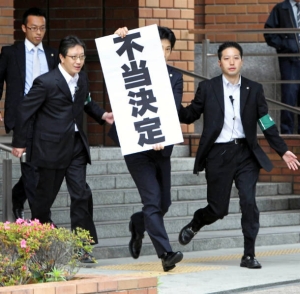
Attorney for Okunishi: “Unjust Decision” — From Chunichi Shimbun

The Nagoya High Court rejected the appeal for a retrial by Masaru Okunishi today. 86-year-old Okunishi has been on death row for 40 years. Previous posts about the Nabari Case here and here.

This is the seventh petition for retrial for Okunishi, filed in 2002. The key new evidence for this petition is a testing result by a chemist. The result concluded that the pesticide in the wine that the victims drank was not “Nikkarin-T”, the chemical with which Okunishi confessed he poisoned the wine.

Division 1 of the Nagoya High Court granted a retrial based on the new evidence in 2005, saying that Okunishi’s confession obtained during 5 days of intense interrogation was unreliable. However, this decision was vacated in 2006 by Division 2 of the same High Court after the prosecution appealed. Okunishi filed a special appeal to the Supreme Court, which referred the case back to the Division 2 of the Nagoya High Court in 2010, saying that “it did not decide on the case based on science”.

Today, Division 2 of the High Court vacated the 2005 decision to grant retrial yet again. Presiding Judge Yasuo Shimoyama stated in the decision Continue reading

The “Mr. Big” Police Tactic in Canada Leads to False Confessions…

From Canada.com:

A controversial made-in-Canada police tactic designed to elicit confessions from suspects in murders and other serious crimes is “ingenious” but also carries a “high risk of incriminating the innocent,” says a Canadian professor.

Timothy Moore, chair of the psychology department at York University, is scheduled to give a presentation about “Mr. Big” undercover sting operations Thursday before an international conference of law enforcement investigators and academics in Toronto. He provided an advance copy of his speech, titled “Eliciting the Truth by Telling Lies,” to Postmedia News.

In the speech, Moore says the technique has been successful in catching and convicting “very bad guys” who might have gotten away with murder. But he also calls Mr. Big tactics “extraordinarily invasive and psychologically manipulative” Continue reading

Two false confessors, friend they implicated declared factually innocent

“There’s no statute of limitations on the truth.”

That is how Steven Drizin of the Center on Wrongful Convictions put it when he forwarded the good news that Michael Crowe and two friends had been declared factually innocent today in the 1998 murder of Crowe’s sister.

Drizin and Rob Warden lead off their excellent book, True Stories of False Confessions, with the story about the outrageous lengths police went to in their relentless effort to persuade Crowe and a teenage friend that they had committed the murder with a third youth despite all the evidence that they did not.

DNA later linked a transient police knew had been in the neighborhood to the crime, and the charges against the teenagers were dropped on the eve of their trial. Today’s ruling wipes clear all records of their arrests.

New Article by Davis and Leo on False Confession

Deborah Davis and Richard A. Leo, The Problem of Interrogation-Induced False Confession: Sources of Failure in Prevention and Detection, in Stephen Morewitz & Mark Goldstein, eds., The Handbook of Forensic Sociology and Psychology (Springer, 2013 Forthcoming) is now available on SSRN.

Abstract:

Interrogation-induced false confessions are a systemic feature of American criminal justice. In the last few decades, scholars have assembled evidence of instances of false confessions that resulted in wrongful convictions. Despite procedural safeguards and a constitutional prohibition against legally coercive interrogation techniques, American law enforcement continues to elicit false confessions. In particular, American law enforcement interrogation techniques display two problematic features that have the potential to increase the occurrence of false confessions: (1) an assumption of guilt that promotes the misclassification of innocent suspects as likely guilty; and (2) the still-coercive nature of interrogation tactics that include strong incentives promoting confession as the mechanism to achieve the best legal outcomes and that contaminate the content of the confessions they elicit.
In this article, we address two questions: (1) Why do false confessions occur, and what can be done to prevent them?; and (2) Why do false confessions remain undetected once elicited, and what be done to more successfully identify them when they do occur? We particularly emphasize the role of failures of relevant knowledge and understanding among those who elicit and misjudge false confessions.

Fight Continues for 1948 Murder Case — Teigin Case

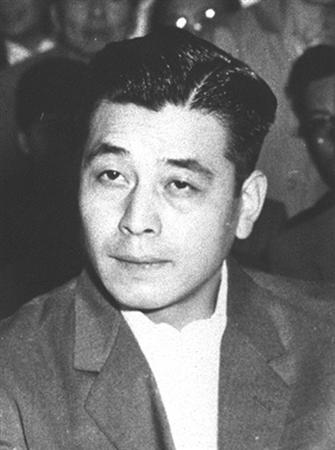
Hirasawa on the first day of his trial.

Many books have been written, documentaries and movies made on the famous Teigin Case.

It was a murder and robbery case in 1948, where a man disguised as a Government health worker entered a Teikoku Bank (“Teigin“) branch and told the employees that there was a sudden outbreak of dysentery and  the US occupation forces ordered to drink medicine. The “medicine” given by the man was in fact poison. The workers obeyed and 12 people were killed. The man fled with cash and checks from the bank.

The investigators believed that the poison used in the murder was a rare poison, obtained by few people, such as those working for a secret Unit 731 of the Japanese army during the WWII, which is said to have conducted experiments on human beings.

However, the police arrested Sadamichi Hirasawa, then a famous painter. Hirasawa was sentenced to death in 1950 by the trial court. He died while on death row in 1987 at the age of 95.

Read about the ongoing efforts to exonerate Hirasawa here.

Excerpt:

TOKYO (Kyodo) — When a death row inmate convicted of a 1948 mass murder died of natural causes 25 years ago, most people believed the “Teigin Incident” had left unanswered questions that would now never be solved.

However, a group of lawyers and experts in pharmacy and psychology are still struggling to unearth the truth behind the most notorious mass-poisoning case in postwar Japan and exonerate Sadamichi Hirasawa, who passed away on May 10, 1987, at a prison hospital in Tokyo at the age of 95.

“We will complete presenting new evidence by the end of next year to reopen the case,” said Nobuyoshi Araki, one of the lawyers involved in the petition for a posthumous retrial of Hirasawa, who was a painter.

The 19th petition was filed with the Tokyo High Court by Hirasawa’s adopted son, Takehiko, on May 10, 1989, the second anniversary of his death. The first had been filed in 1955 and rejected the next year.

One of the focuses in the petition is on the poison used to kill the 12 victims ……While the courts determined the murderer used potassium cyanide, Hiroyoshi Endo, former dean of the pharmacology department at Teikyo University, said, “I can’t specify what the poison was, but as a scientist, I can say it was not potassium cyanide.” Continue reading

High Court to Rule on Whether to Grant a Retrial for Nabari Case on May 25, 2012

86-year-old Masaru Okunishi is still on death row. He has spent more than half of his life in custody, 40 years on death row. Will he get a retrial? The Nagoya High Court will rule later this month, on May 25 on the 51-year-old Nabari Case. (See Mark Godsey’s previous post about this case here)

In March 1961, 5 people were killed and 12 got ill in a rural town in Mie Prefecture. They were at a gathering in the town and drank a bottle of wine, which was poisoned with pesticide. Since Masaru Okunishi was the one who delivered the wine to the gathering and because both his wife and lover were killed in the incident, he soon became a suspect. The police’s theory was that he put the poison in wine and killed his wife and lover, getting rid of the “love triangle” relationship. After 5 days of intense interrogation, he confessed. He was charged for the murders.

The main evidence against him were: 1. his confession, 2. the fact that the wine was in his possession right before the incident, 3. the bite mark that was left on the lid of the wine bottle which the prosecution alleged to have matched his.

The Tsu District Court handed down the decision in December 1964. The court found Okunishi “not guilty” of the crime. The Court said that the confession was unreliable, the witnesses’ testimony on the delivery and possession of the wine was unreliable and the bite mark on the lid could not be determined as his.

The prosecutors appealed and the Nagoya High Court reversed, sentencing Okunishi to death in 1969. Continue reading

Saturday’s Quick Clicks…

  • Buy tickets to Center on Wrongful Convictions event June 7th in Chicago
  • Law review article dealing with the taxation of exoneree compensation awards
  • Queens DA criticized for policy of interrogating all arrestees without Miranda warnings; DA responds by saying he videotapes all of these interrogations and it has resulted in the dismissal of charges against more than 100 innocent people

Wednesday’s Quick Clicks…

Implicated by DNA, Exonerated by DNA – The Ashikaga Case

I once had a conversation with a retired judge in Japan. He said that although there seems to be a strong belief that the DNA testing is a new golden solution, he thinks we still need to be careful. He suggested that the fact that there was a “match” of DNA evidence found at the crime scene (or from the body of the victim etc.) alone should be used to exonerate someone, but not to implicate someone.

Yes, there is always a possibility that the state-of-the-art DNA testing result is faulty: there might have been a contamination of the materials or the testing might not have been conducted properly, and there have definitely been mistakes made in the past that were revealed later.

Indeed, there is a very well known case in Japan (Ashikaga Case)  where a man was implicated by faulty DNA evidence and later exonerated by more sophisticated DNA evidence.

In May of 1990, the body of a 4-year-old girl was found dead near the Watarase River in Ashikaga City. The clothing of the victim was found from the river. The clothing had the perpetrator’s semen on.

Many became suspects until in November 1990 the police began to suspect Toshikazu Sugaya, who was a school bus driver. Continue reading

Troubled inmate’s suicide note revives questions about his confession to Ohio murder

A police officer who was an initial investigator in a 1995 central Ohio murder is among those who never believed the confession to the crime by a mentally troubled inmate who recently committed suicide.

“I just can’t go on, 14 yrs is to long for something I dident do,” Bobby Joe Clark wrote in a note before he hanged himself Feb. 11 in his cell in Southern Ohio Correctional Facility in Lucasville, Ohio.

Marion, Ohio, police Maj. Bill Collins, an initial investigator on the Harold “Sleepy” Griffin homicide, believes Clark was telling the truth before he ended his life. He told the Marion Star that he and other police officers don’t think Clark killed Griffin despite his 1998 confession and 1999 gulty plea to the crime.

Javier Armengau, one of Clark’s attorneys, says he never believed Clark’s confession either. “As sure as you and I are breathing right now, this guy had nothing to do with this,” Armengau told the Star.

Chicago Prosecutors Blind to False Confession…

Press release from the Center on Wrongful Convictions at Northwestern University….

Dear Friends,

This morning’s Chicago Tribune carries an excellent front-page story by Steve Mills detailing how the Cook County State’s Attorney’s Office has been giving short shrift to evidence that CWC client Daniel Taylor is innocent of the 1992 double murder for which he is serving life in prison without parole.

Taylor’s conviction rested on a confession that quite obviously is false; he couldn’t have been involved in the crime because he was in police custody when it occurred. For details, see the Mills story:

http://www.chicagotribune.com/news/local/ct-met-murder-reinvestigation-20120507,0,6204252.story

As hard as it is for some people to believe that false confessions occur, they are in fact amazingly frequent. Since 1986, there have been 104 documented wrongful convictions in Illinois, and, counterintuitive as it may seem, more than half of those involved false confessions. For details, please see:

http://www.law.northwestern.edu/cwc/issues/causesandremedies/falseconfessions/FalseConfessionsStudy.html

Rob Warden, Executive Director

Exoneree Ted Bradford Speaks about False Confessions

Exoneree Ted Bradford from Washington State  spoke about his experience on false confessions last Friday at the Annual Conference for Washington Defender Association.

On September 29, 1995, a woman was raped in her home in Yakima, Washington.  Six months later, on April 1, 1996, Bradford was arrested on an unrelated charge.

The detectives interrogated Bradford for over eight hours and obtained his confession to the crime. Only the last 38 minutes of the interrogation was recorded, after Bradford had finally confessed to the crime he did not commit.

I don’t know why I confessed”, Bradford said, “I just wanted to be out of that situation. I wish I could take my confession back, but I can’t. Continue reading

A Dubious Arson Case – Higashi-Sumiyoshi Case (Part 2 of 2)

A Picture of the Experiment in 2011.

Continued from Part 1

Aoki and Boku’s appeals to the Supreme Court were rejected in 2006, but their supporters continued the fight to get a retrial for them.

Boku filed a petition for retrial to the Osaka District Court on July 7, 2009. Aoki also filed her petition one month later.

The Criminal Procedure Code of Japan states that one of the instances where a retrial should be granted is “When clear evidence has been newly discovered that in regard to a person pronounced guilty Continue reading

A Dubious Arson Case – Higashi-Sumiyoshi Case (Part 1 of 2)

ImageThe excellent documentary film “Incendiary” (read more about the film here) reminded me of an arson case in Japan, the so-called Higashi-Sumiyoshi Case. Its retrial petition is currently being reviewed by Osaka High Court.

In the late afternoon of July 22, 1995, an 11 year old girl was killed in her own house in Higashi-Sumiyoshi Ward, Osaka, when a fire broke out. She was taking a shower and could not escape from the fire. The house was built mainly with wood and the fire was said to have broken out from the car parked on the first floor in the garage of the house. Her mother (Keiko Aoki), Aoki’s common-law husband (Tatsuhiro Boku) and Aoki’s son were able to escape from the fire.

The initial investigation by the fire department concluded that the cause of the fire was unknown. However, since (1) Aoki and Boku had life insurance coverage on the girl, and (2) the house was locked from the inside, the police suspected that it was an arson case. Their theory was that Aoki and Boku conspired together to get the insurance money by killing the girl. Thus, they tried to get the evidence by interrogating the couple.

The police arrested Aoki and Boku on September 10, 1995, after “voluntarily” taking them to the police station and obtaining their confession after a “voluntary” interrogation which took place from the morning. Aoki recanted her confession before the indictment Continue reading

Tuesday’s Quick Clicks…

  • Hearing held yesterday in in Texas in case of mother convicted of murdering her child by forcing him to eat cajun seasoning until he died of sodium overdose.  Mother has always maintained innocence and claims ineffective assistance of counsel and non-disclosure of crucial evidence by the prosecution
  • Recap of the Brady hearing yesterday in DC involving the Mid-Atlantic Innocence Project
  • Police claim 2005 evidence preservation law in Wisconsin is now causing storage problems
  • Listen to John Grisham’s radio interview about his work for Innocence Projects
  • Death penalty will be on California ballot in November
  • The Good Wife TV show has an episode this week based loosely on the Michael Morton wrongful conviction and exoneration
  • Janis Puracal, sister of Jason Puracal (case discussed here and here), discusses her visit with her brother in a Nicaraguan prison
  • Innocence Project fights for exoneration in alleged false confession case in DC

Exonerated Man to Receive Payment From Police Officers Allegedly Responsible For Coerced Confession

Harold Hill was exonerated in 2005, after 12 years in prison, for a rape/murder conviction based on a confession he says was beaten out of him. As reported here in the Chicago Tribune, two police officers allegedly involved in this and other similar coerced confessions will personally pay part of a $1.25 million settlement with Hill by the City of Chicago.

The officer’s payment of $7,500 each is a small part of the settlement, but it was important to Hill. Rather than receiving payment from a “faceless” government Continue reading

Monday’s Quick Clicks…

  • Website about the political persecution and alleged wrongful conviction of Adrian Nastase, the former Prime Minister of Romania
  • News video about exoneree Juan Melendez and his quest to end capital punishment
  • Juan Rivera at epicenter of discussions about false confessions; more here
  • Lockerbie:  Case Closed….the documentary film about this alleged wrongful conviction

Malaysia and Singapore: Video Recording Debates

Linked to Kana Sasakura’s earlier posts on how Japan has implemented the video recording of interrogations, the same subject has been recently raised in Malaysia and Singapore, though in response to different events.

In Malaysia, a commitment has been made to equip all offices of the Malaysian Anti-Corruption Commission (MACC) offices with Video Interview Rooms to facilitate the recording of suspect and witness interviews (story here). This commitment was undertaken against serious recent allegations of abuse, and aims to boost public confidence in the MACC (story here).

In Singapore, the issue was raised and discussed during the 2009 review of the Criminal Procedure Code. It resurfaced again in 2011, after a Court of Appeal acquittal in which the court noted that the investigator concerned had acted irregularly when taking the accused person’s statement. For now, the government has decided not to implement video recording as this “would not be really effective” in preventing coercive statements (story here). Singapore criminal defence lawyers have advocated for such video recording, arguing that this will, among others, protect “the police against wild accusations” (story here).

Effectiveness, cost, and logistics are relevant and important considerations when deciding whether to implement a criminal justice measure, but they should not be the only considerations. This is because criminal justice involves the use of coercive force against individuals by the State, a State that is also a fiduciary of the public’s trust. It is therefore important for the State to be able to justify the use of such coercive force to its public. A relevant and important justification, which is increasingly reflected in the public debates of both countries, is the transparency and fairness with which the State administers the criminal justice process. For some countries, the estimated effectiveness of certain criminal justice measures may not make their cost or implementation realistic. For other first-world countries, the impact of such cost may be less dire. Video recording will further level the playing field between the accused and the prosecution, and it will ensure a continued public confidence in the system, which is in fact what the MACC hopes its VIRs will do in Malaysia. More importantly, as observed by Sunil Sudheesan, a prominent criminal defence lawyer in Singapore, such video recording will benefit law enforcement authorities by protecting its investigators against “wild accusations” (see story).