Category Archives: Forensic controls

Arson Investigation – FINALLY, After 21 Years, the IAAI Endorses NFPA921

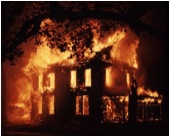
arsonThe phenomenon of “flashover,” by which any ‘compartment fire’ (ie: a fire in a room) can produce all the traditionally accepted signs of arson, was discovered in 1991.  Watch a video of flashover occurring here.
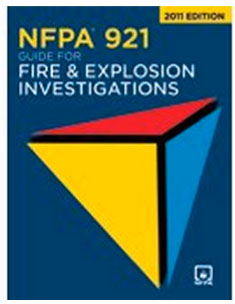

The NFPA (National Fire Protection Association), which is the recognized authoritative body on fire science, published the first edition of its standard NFPA921 (Guide for Fire and Explosion Investigations) in 1992, and it included a recognition of the phenomenon of flashover.  Consequently, it was declaring that all the “rules” and “indicators” that had been used by arson investigators for decades to determine if a fire was arson were wrong.  NFPA921 was immediately met with “stonewall” resistance from the US fire inspection community, including the IAAI (International Association of Arson Investigators).

NFPA921

The process of dragging fire investigation into the reality of science has been long and arduous.  The IAAI eventually offered a grudging acknowledgement of NFPA921, but it was not until January 12, 2013 (just three months ago) that the IAAI issued a “full” endorsement of NFPA921.  Their official position statement follows:

Continue reading

Four Years After Report Decrying Forensic Sciences, a Sign of Progress

Chemical & Engineering News has published an update of forensic science reform efforts entitled, “First Steps Toward Forensics Reform – New forensics commission to recommend guidelines, design policies.” The article provides a history of efforts taken thus far in response to the 2009 report by the National Research Council, which alerted the nation to many shortcomings in the reliability of the forensic sciences and their use in the courtroom.

According to the article (here) by Andrea Widener:

“Four years after the NRC report was released—and nearly as long as the White House has been studying it—the federal government has taken its first official steps to address the problem. The Department of Justice (DOJ) and the National Institute of Standards & Technology (NIST) have joined forces to create a National Commission on Forensic Science. That body will recommend guidelines for federal, state, and local forensics laboratories, as well as design policy on ethics, training, and certification for forensics professionals. Continue reading

Wednesday’s Quick Clicks…

click
  • In St. Louis, Rodney Lincoln’s lawyers, from the Midwest Innocence Project, argue that DNA results contradict faulty science and misleading testimony that was key to sending him to prison three decades ago on a double life sentence.
  • Karen A. Goodrow, former Director of the Connecticut Innocence Project, appointed to the bench in CT.
  • The Illinois Appellate Court on Friday granted an evidentiary hearing to a Chicago man, Charles Johnson, who has long claimed he was wrongfully convicted of a 1995 double murder, saying new evidence that defense attorneys claim implicates another man “would probably” lead to his acquittal at a retrial.  The appeals court also took the unusual step of assigning the case to a new trial court judge, agreeing with defense attorneys that Cook County Judge Joseph Kazmierski “appears to have prejudged a central issue” regarding the evidence. Kazmierski had presided over the original trial.
  • New Jersey bill would raise compensation for wrongfully convicted
  • A woman who served 27 years of a life sentence for her husband’s murder — despite not being present when he was killed — was among 87 people granted clemency by Gov. Pat Quinn on Friday.  Peggy Jo Jackson left the Logan Correctional Center on Friday and headed to South Carolina, where she’ll live with her sister and mother and complete her parole, said Erica Nichols-Cook, an attorney with the Illinois Innocence Project at the University of Illinois-Springfield.

Calculating Bad Math’s Contribution to Wrongful Conviction

This is my second stab at responding to an opinion piece (here) in the New York Times written by Leila Schneps, a mathematician and mystery writer, and her daughter Coralie Colmez, who have co-authored “Math on Trial: How Numbers Get Used and Abused in the Courtroom.” (I deleted yesterday’s post to give this more thought and expand on the issues raised in the op-ed piece.) I’ll first briefly address the authors’ troubling and rather contrived tie-in to the Italian High Court’s overturning of the acquittal of Amanda Knox. The NY Times piece otherwise makes a point worth stressing. Continue reading

Re-examination of Arson Convictions to Begin in Texas

Nine years ago Cameron Todd Willingham was executed in Texas after being convicted of killing his three children in a fire. Whether or not the tragic fire was a crime or an accident has been a haunting question in light of alternative explanations for the burn patterns once believed to be proof of the use of an accelerant. According to an Associated Press press in the Baylor Lariat (here), next month an ongoing collaboration of the Texas state fire marshall and the Innocence Project of Texas will proceed to it’s next task: reviewing the first six cases of arson conviction that have been identified as potentially problematic due to their dependance on questionable science. Continue reading

Dog-Scent Lineups – One of the ‘Junkiest’ of the Junk Sciences

pointerA dog-scent lineup consists of matching a “scent” sample from a crime scene to a “scent” sample from a suspect by a dog.  The practice has been used in several states, including Alaska, Florida, New York, and Texas.  We know that dogs have an incredibly acute sense of smell, but the major problem has been with the handlers of these dogs, who have been proven to be fakes and charlatans.

The Innocence Project of Texas has published an excellent article about this practice in the state of Texas.  While 71 pages in total, the actual article is only 14 pages – the rest being appended affidavits from experts.  The link to the article is below:

Dog Scent Lineups-Junk Science-IPOT

The most infamous practitioner of this bogus science has been Deputy Keith Pickett of Fort Bend County, Texas.  From 1994 to 2009 he traveled all over the state of Texas with his dogs, conducting dog-scent lineups.  And he was always telling police and prosecutors exactly what they wanted to hear.  The prosecutors loved him, and he was something of a “justice system rock star.”  At one point, his status as an expert was even solidified by an appellate court decision.

The NY Times published an article about the wrongful imprisonment of Curvis Bickham in Texas.  He was linked to a triple murder through bogus dog-scent lineup evidence provided by Keith Pickett and his dogs.  Mr. Bickham was eventually released only because the real perpetrator confessed, and he had lost everything – his house, his cars, and his business.  See the article here.  And another NY Times article on the subject here.  In 2009, the dog-scent convictions in Texas started being overturned.  It’s about this time that Mr. Pickett “retired.”  Nobody has records of exactly how may cases Keith Pickett and his dogs were involved in, but it’s believed to be as high as 2,000.

There is a similar situation in Florida with a dog handler named John Preston.  See article here.  To this day, nobody knows how many innocent people are still in prison as a result of John Preston’s fakery.  Preston died in 2008 without ever having been charged for his fraud.

The most scientific approach to dog-scent lineups has been taken by the Dutch police, who have been establishing rigorous training & administration requirements and processes since the 1960’s.  What they have found is that, even under the best of conditions and with the most rigorous processes, dog-scent lineup evidence is only 85% accurate.  Dog-scent lineup evidence is not admissable in Dutch courts unless it is in conjuction with other evidence identifying the suspect.  This article has more detail on the Dutch police practices with dog-scent lineups.

Panel formed to set standards, improve forensic science in U.S.

Good news from http://www.popsci.com:

After years of reports of troubled crime labs, the U.S. Department of Justice is putting together a commission that will set standards, a professional code and education requirements for forensic scientists.

The U.S. Department of Justice is looking for a little outside help standardizing the science that puts some people behind bars and sets others free. The department, along with a U.S. science body, is putting together a National Commission on Forensic Science, the agencies announced recently.

The commission will create a professional code for forensic scientists, set certification requirements and advise the Attorney General, the announcement said. In addition, the National Institute of Standards and Technology will double-check existing forensic science standards and develop new ways of making forensic measurements.

The announcement follows nationwide discoveries of sloppily run crime labs. It also comes after years of evidence that many forensic-science techniques need dramatic improvement and sometimes send innocent people to prison–or worse.

When we say years of evidence, we mean years. In 2009, the National Research Council reported that forensic science needed stronger standards. For some forensic techniques, for example, there’s no single standard for what constitutes a match between crime-scene evidence and the control; instead, interpretations vary from lab to lab.

That same year, the nonprofit Innocence Project published research that suggested 45 percent of wrongful convictions stemmed from faulty forensics. (Another report, by the former director of forensic sciences for the Michigan State Police, says the figure is more like 11 percent.)

The National Research Council report suggested the U.S. form a national institute just for forensic science. The new commission will perform many of the functions the research council suggested.

The commission will have about 30 people, including forensic scientists, academic scientists, prosecutors, defense attorneys and judges. The National Register will publish a notice asking people to apply for membership.

Why I Think the US Justice System is Broken – and Why It’s Not Getting Fixed

broken column 3I was recently made aware of a quote from the ancient Greek playwright, Euripides. “Ours is a universe in which justice is accidental, and innocence no protection.”  I often feel like this describes our current justice system exactly, but it’s not supposed to be that way, and it doesn’t HAVE to be that way.  As with any system established and run by “humans,” the justice system, including those who run it, is exposed to the entire gamut of human frailties – pride, ego, ambition, greed, envy, passion, deceit, prejudice, hate, intolerance, power, influence, and on and on.  The situation hasn’t really changed since ancient Greece, and I don’t see the nature of humanity changing radically any time in the next  few thousand years, but there are things that can be done to at least mitigate the effect of these human shortcomings on the justice system.  This post will be comprehensive and quite long – so, buckle up, and here we go.  I hope that those of  you who have the patience to read through to the end may find it interesting, enlightening, and hopefully thought provoking.

As you might guess from the title, this post will be “editorial” in nature.  I’ve been doing innocence work for five years now, and have worked with seven different Innocence Projects from across the US and one foreign country.  Over that time, I’ve been exposed to the fine details of over 40 different cases.  These are all post-conviction cases in which there is a belief by the associated Innocence Project in the actual innocence of the defendant, and thus belief of a “wrongful conviction” on the part of the justice system.  In addition, my research in these cases has exposed me to many other additional cases in which a wrongful conviction occurred.  Consequently, I’ve seen a lot of the things that can go wrong in the justice system, and have been able to make judgments about how they happen.  This post will coalesce my observations into statements about why I think the US justice system is broken.  I’m going to be painting a pretty dark picture, so keep in mind that my exposure has been to cases in which the justice system failed, but there are lots of them.  There really isn’t any substantiated data for how many wrongful convictions occur in the US every year, but recent data says it’s between 5,000 and 10,000 per year.  One is too many.  At the end of the post, we’ll talk about why it’s not getting fixed.

I’m not an attorney, and some may accuse me of being a naive, optimistic idealist (which I am) or of tracking muddy footprints through the hallowed halls of justice; but I am only reporting what I have observed.  And if you think I’m making some of this stuff up, I strongly recommend you read the book False Justice: Eight Myths That Convict the Innocent by Jim and Nancy Petro.  (It’s available from amazon.com for $16.)  Jim is a former Attorney General for the state of Ohio, and Nancy, in addition to being an author and advocate, is also a contributing editor to this blog.  Now, are there good and dedicated prosecutors and police out there who are absolutely committed to seeing that true justice is served?  Of course.  Are there qualified and capable attorneys who will do their utmost on behalf of their clients?  Of course.  Unfortunately, there are also “others.”

All that being said  ……..

Why I Think the US Justice System is Broken

(As a preview, we’ll touch upon Bad Lawyers, Prosecutors, Judges, Police, Juries, Junk Science Forensics, False Confessions, Shoddy Work by Medical Examiners, Testimony from Experts Who Aren’t Really Experts, Finality of Judgement, Highly Restrictive Rules for New Evidence, Eyewitness Identification, and Recantations.)

Continue reading

Flawed fingerprint expert won’t be getting job back…

One of the fingerprint experts at the centre of the Shirley McKie scandal in Scotland (see here…) has lost her bid to get her old job back. Fiona McBride wrongly identified a latent print at the centre of a murder case, which saw PC McKie tried for perjury and eventually compensated three quarters of a million pounds by the Scottish Government. McBride and others were suspended from work, but after a year re-training were re-instated. However, they were not allowed to sign joint reports, nor were they to be court-going experts. The fear was that the McKie misidentification would always come up and prosecutions could fail. McBride appealed to the Court of Sessions, who ruled that she need not be re-instated, but that the Employment Tribunal should re-consider if she should be paid compensation (depending on whether she contributed to her dismissal). Read more here….

921496438

McKie fingerprint expert Fiona McBride fails to win job back

Shirley McKie fingerprint expert loses job appeal

Friday’s Quick Clicks…

click

“Head Start” on a Motion for Post Conviction Relief Based Upon Newly Discovered Evidence in an Arson Case

arsonRecently, Prof. Theresa Newman, co-director of the Duke Law Wrongful Convictions Clinic, and I collaborated on a motion for post conviction relief in an arson case.  I think it turned out well.  It lays out the framework of a legal strategy to pursue a claim of “newly discovered evidence” in an arson case based upon advances in fire science, and contains citations to current fire science literature and to recognized experts in the field of fire science & arson investigation in support of that claim.  I know of several folks who are currently working on arson cases, and I’m sure there must be others; so I thought this might save some effort in what is a lengthy and difficult process.  Perhaps you can use some of the language and/or the cited references.  The “motion” is attached here for your reference.  All case-specific references have been deleted or obscured, and the case-specific reports of experts are not included, but the cited references to publicly available information are appended after the following link to the generic motion:

Arson Post Conviction Motion – New Evidence

Citations:

Lentini:    The Evolution of Fire Investigation and Its Impact on Arson Cases

Lentini:    The Mythology of Arson_Investigation

Lentini:    Nightmare On Lime Street

Carman:    Improving the Understanding of Post Flashover Fire Behavior

Continue reading

Monday’s Quick Clicks…

click
  • Center on Wrongful Convictions at Northwestern University 2012 report, outlining 5 exonerations during 2012
  • Judge in Texas considering new trial in arson case of Ed Graf
  • Charges dropped against detective accused of lying in the Tim Masters wrongful conviction case in Colorado
  • Wisconsin Innocence Project wins new trial for Seneca Malone, in prison for murder, based on ineffective assistance of counsel
  • RIP exoneree Bennett Barbour

Thursday’s Quick Clicks…

click

Wednesday’s Quick Clicks…

  • clickThe new West Virginia Innocence Project helps an exoneree clear his name from the sex offender registry
  • Irish barrister shadows Duke Innocence Project
  • Story on the documentary West of Memphis
  • Don’t let the Florida Innocence Commission die

Friday’s Quick Clicks…

  • clickCalifornia Supreme Court upholds murder conviction despite flawed forensics in the form of bite mark evidence
  • The wrongful conviction of Leo Frank in Georgia in 1913 and antisemitism
  • Texas exoneree James C. Williams would like an apology from the rape victim who incorrectly identified him

Wensday’s Quick Clicks…

California Supreme Court Facing Flawed Forensics…

From the LATimes.com:

Police suspected that William Richards had killed his wife, Pamela, the night her body was found.

There was no sign of an intruder, and police said the crime scene appeared staged. But Richards denied killing Pamela, and authorities had trouble obtaining a conviction.

After two juries hung, a third heard new evidence: A forensic odontologist testified that a “bite mark” on Pamela’s hand was consistent with Richards’ unusual dentition, a pattern the prosecution expert said was found in only about 2% of the population. That jury convicted, and a judge sentenced Richards to 25 years to life.

Ten years after the conviction, the prosecution odontologist recanted his testimony. Relying on new computer technology that made it possible to view the “bite mark” more clearly, the odontologist ruled out Richards as its source.

The California Supreme Court is now weighing his case, wrangling over what to do when forensic evidence is later discredited. A broad ruling could affect scores of criminal convictions. A narrow one would offer little hope to those convicted at least in part by so-called junk science.

“A lot of forensic science is not well validated to begin with, and that especially includes bite mark evidence,” said Hastings Law School professor David L. Faigman, an expert on scientific evidence. He said the court could rule for Richards but limit the kinds of cases that would be affected. If discredited science alone became grounds for a retrial, he said, “then you are potentially opening up the floodgates.”

The case against Richards, 63, was largely circumstantial. Richards said he discovered his wife’s body after returning home from work shortly before midnight Aug. 10, 1993. But the sandy, sagebrush-pocked land around their remote, high desert home in San Bernardino County contained no unknown tire tracks or footprints. Nothing had been stolen.

Although Pamela was found naked from the waist down, blood splatter on her Continue reading

Friday’s Quick Clicks…

Canadian Supreme Court Reopens Manslaughter Case Based on New Medical Understandings…

From thestar.com:

The Supreme Court of Canada has ordered the Ontario Court of Appeal to re-examine the case of a man convicted 41 years ago of killing his common-law partner.

Three pathologists have taken a fresh look at the manslaughter conviction of John (Jack) Salmon, concluding Maxine Ditchfield, 28, did not die from a blow to the head during brutal beatings, as the jury heard, but by a stroke.

The three pathologists say it’s likely the stroke was caused by a series of falls at her Woodstock home and in the kitchen of a nearby farmhouse after a night of heavy drinking.

Toronto lawyer James Lockyer applied to the Supreme Court to direct the appeal court consider the new evidence and decide whether Salmon’s conviction was a miscarriage of justice.

The Court ruled in his client’s favour Thursday, giving no reasons.

Salmon testified, at his 1971 trial in Woodstock, that he never assaulted the mother of three, as alleged, but noticed in the days before her death she slept a great deal and kept stumbling and falling.

A jury found him guilty nonetheless, and he was sentenced to 10 years in prison. His appeal to the Ontario Court of Appeal was dismissed in 1972. He was granted parole two years later.

Now a 72-year-old married grandfather living in Orillia, Salmon has always maintained his innocence and told the Star last year that he had loved Ditchfield. He could not be reached for comment Friday.

Lockyer called the case “a nice find.” Salmon originally approached the criminal lawyer in 2000 just for a pardon. “He said, ‘I didn’t do it, but they convicted me.’”

This prompted Lockyer to review his case. “I thought the pathology was really suspect.”

At trial, the prosecution relied on the opinion of Dr. Michael Dietritch, a now-deceased pathologist who gave the cause of death as “circulatory and respiratory failure secondary to brain damage caused by blunt trauma to the head.”

In addition, Ditchfield’s 8-year-old son Michael testified he twice saw Salmon hitting his mother, making her fall to the ground, something no one else reported. Lockyer argued his testimony is open to question.

In a document filed last July, the Crown agreed the new evidence, on its face, calls into question the validity of the medical evidence tendered at trial. The Crown joined Salmon in asking that the case be reviewed by the appeal court.

A date has not yet been set for the hearing.


Thursday’s Quick Clicks…

  • A review of the film West of Memphis, on the West Memphis 3
  • A Montana man seeking a new trial for a 2002 rape conviction faced his male accuser in court here Wednesday for the first time in 10 years – and heard the accuser take back an earlier recantation he made to officials with the Montana Innocence Project.  The alleged victim – now a 24-year-old prison inmate – said he falsely told Innocence Project officials in 2009 and 2010 that the jailhouse rape never occurred because he wanted them to quit bothering him about it.
  • Ohio Supreme Court will hear arguments in case in which Ohio Innocence Project has been denied DNA testing for a man on death row
  • Exoneree Arthur Whitfield pleads guilty to domestic violence offense
  • New documentary film about an alleged wrongful conviction called Incident at Devils Lake
  • The Arson Project releases two new reports about cognitive bias in arson investigations here and here