Category Archives: Forensic controls

Friday’s Quick Clicks…

  • Two of the Beatrice 6 awarded compensation in Nebraska

  • Innocence Project Northwest wins new trial in the murder case of Jeramie R. Davis; prosecutor says will retry
  • Eyewitness identification reforms kicking in in Texas
  • Group called “Innocence Matters” gets exoneration today in California based on recanting witness
  • NPR on the crime lab scandal rocking Massachusetts

How Much Justice Can We Afford: Postscript

In a recent post: How much justice can we afford during the UK’s financial crisis? I discussed the many budget cuts in the UK, to the police, courts, legal aid, and forensic science, that are threatening the quality of justice in this country. I could barely have believed that today we read that a senior police officer has called for ‘volunteers’ to help police take fingerprints. He calls this ‘very low grade’ forensics, and something that ordinary members of the public could do with little training. This is in an attempt to save £20m from the police budget. One can only imagine where these cuts will lead us next.

Police chief wants volunteers to collect fingerprints

Brandon Garrett: Where is the Path Forward For Forensics?

From Salon.com:

Donald Eugene Gates, convicted of murder in Washington D.C., would spend 28 years in prison before he was exonerated in 2009 through the tireless work of his lawyers at the Public Defender Service for the District of Columbia - but it was not until this Spring that the flawed FBI forensics supposedly “matching” his hair to the crime scene would finally come under broader scrutiny.

The case brought still worse problems to light. This Spring, the Washington Post released the results of a remarkable investigation, uncovering a buried 1990’s Department of Justice inquiry into FBI hair cases, and finding hundreds more cases with flawed forensics. Some of the cases were death row cases — for example, a Texas man was executed in the late 1990s, but if it had not been for the FBI’s flawed hair analysis, he would not have been even eligible for the death penalty.

This Spring, the Public Defender Service also cleared two more people who had flawed FBI hair testimony, using DNA tests. One, Kirk Odom had served 22 years in prison for a crime he did not commit and has been exonerated. The second man, Santae Tribble, spent 28 years in prison, and is still waiting for a ruling on Continue reading

How much justice can we afford during the UK’s financial crisis?

Justice is yet again coming under threat in the UK. With a government hell bent on cutting expenditure, the justice system is proving an easy targets for cuts. These cuts, whilst widely criticised, are only now starting to result in the inevitable: injustice. The most obvious cuts have been to legal aid budgets: this is not new of course, governments have been cutting the legal aid budget for years - but it has now reached crisis point, with criminal lawyers leaving the profession and ineffective defence lawyering becoming widespread. These cuts are proposed to be 40% - see here…

Legal aid cuts: if lawyers don’t defend justice for all, who will?

These cuts in addition of course to the privatisation of the court interpreting service, which I have blogged about previously.

Recently, we had the closure of the UK’s Forensic Science Service in March 2012 - while lone voices raised serious concerns about this (and I have blogged about this previously) and the risks of miscarriages of justice, the public may finally be starting to sit up. The BBC recently aired a Radio 4 documentary highlighting the risks of flawed forensic science (news item contains link to radio programme):

DNA test jailed innocent man for murder

We are now being warned that budget cuts to the Criminal Cases Review Commission - the body specifically tasked with investigating possible wrongful convictions - is leaving the organisation so cash-strapped it is taking short-cuts and delays are lengthening. The case of Kevin Lane and his fight to get the CCRC to refer his case back the Court of Appeal is just one example:

Prisoner’s 16-year fight to prise open the secrets of Operation Cactus

All of this comes on top of 20% across the board cuts to the police, with some forces cutting their forensic budgets by up to 40% to ‘protect’ frontline policing. Michael Mansfield now warns the government that treating the justice system as a business risks the entire system with creeping deregulation. The cost of wrongly imprisoning someone (and leaving someone else free to commit more crimes) is difficult to calculate in simple economic terms - the government needs to realise that all these cuts will end up with far greater costs - to public confidence in justice, and the ability of the police and courts to arrest and prosecute the right people. This is too high a cost to bear:

Justice can’t be treated as a business enterprise.

About Bite Mark Evidence - Forensic Odontology

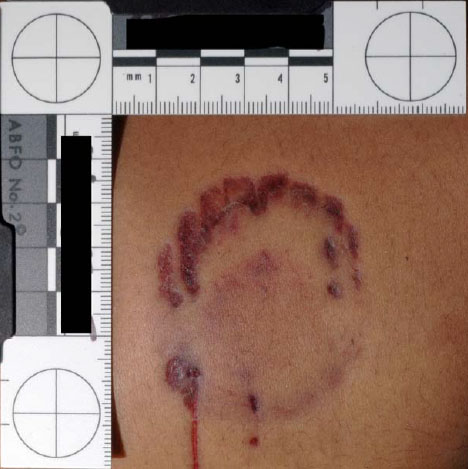
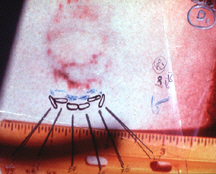
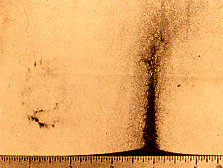
The most famous bite mark case in the US, and perhaps the world, is that of serial killer Ted Bundy. On Jan. 15, 1978, Bundy broke into the Chi Omega sorority on the Florida State University campus, assaulting and killing three women. During the crime, Bundy left a bite mark on the buttocks of Lisa Levy, whom he raped and killed. It was this bite mark that was primarily responsible for his conviction. He was executed in Florida’s electric chair on Jan. 24, 1989. Shortly before his execution, he confessed to 30 other murders in seven states, but it is believed that he may have been responsible for as many as 100 deaths.

Here are photos of the bite mark on Lisa Levy’s buttocks, and the wax impresstion that was made of Bundy’s lower dentition:

Continue reading

Bad Chemist May Have Caused Many Wrongful Convictions in Massachusetts….

From WBUR.org:

BOSTON — A chemist at the Massachusetts State Police crime lab in Jamaica Plain improperly handled drug evidence and breached procedures, leading police to worry about wrongful convictions and potential “miscarriages of justices” by corrupted evidence, state police said Thursday afternoon.

Gov. Deval Patrick ordered state police to shut the lab down early Thursday as police and the attorney general’s office investigate possible “malfeasance” of a chemist at the lab that could affect thousands of drug cases over several years.

Patrick ordered the lab closing after additional evidence came to light as part of an ongoing investigation looking at “improprieties” at the lab that conducts tests in drug cases. Within the last five days, state police investigators uncovered more improprieties than they originally thought, state police said during a press conference held at the Framingham headquarters. Investigators are looking at one chemist, who resigned in March. Police did not release the woman’s name.

Thousands of drug cases will now have to be reviewed, Massachusetts State Continue reading

An MRI Polygraph ?? Beware

Over the past few years, some researchers have been looking at the possibility that an MRI (magnetic resonance imaging) brain scan can reveal whether or not someone is lying. In experiments, subjects are instructed to lie about certain things while an MRI monitors their brain activity. When the subject lies, the researchers look for differences in the patterns of brain activity. They have observed ‘differences’ when a subject is lying as opposed to when the subject is telling the truth.

Here are two recent articles on the subject:

…….. From yesterday’s Washington Post Laris M. MRI polygraphy. Wash Post, 2012-08-26

…….. From the August, 2010 IEEE Spectrum (the official publication of the Institute of Electrical and Electronic Engineers) MRI Polygraph

There is even a company called No Lie MRI that is trying to commercialize the phenomenon. http://noliemri.com/

Now, let me comment on these developments from the standpoint of the scientific method, design of experiments, and logic. These “experiments” are nothing more than observational studies. The experiment may have a hypothesis, that is, when the subject “lies” we’ll see differences in brain activity, which, in the experiment, would be the “dependent variable”. However, this is very non-specific. What areas of the brain? What kind of activity? What extent of activity? What level of activity indicates a “lie” over a statistically significant population of subjects of representative ages, races, genders, IQ’s, and physical & mental health? And the most glaring shortcoming of these experiments is lack of control over independent variables. A properly designed experiment should have a single dependent variable and all independent variables should be controlled. That is, if the independent variable being measured is “lie or no lie”, all other independent variables must be constant throughout the experiment - age, race, gender, mental and physical health, IQ, amount of sleep, state of mind, …………..

It has already been observed that the MRI can be “fooled” if the subject imagines imperceptibly wiggling a finger or toe while lying.

I fear that we might be seeing yet another forensic junk science in the making. Conclusions based upon these studies are another example of forensics being driven by anecdotal, observational studies that get pushed through a process of flawed inductive reasoning. “I’ve seen a hundred roses, and they’re all red; therefore, all roses are red.” Or, “I’ve never seen anything like that before; therefore, it must be unique.”

So far, this technology also fails the question that most all forensics fail; “Show me the statistically valid data from which I can compute a probability of occurrence.” And by the way, even “fingerprints” fails this question.

One saving grace of many forensic disciplines is that they can be statistically valid in excluding a suspect from consideration. I don’t see that MRI scans are legitimate enough to even do that.

Science is in its infancy in terms of truly understanding the functioning of the human brain. MRI lie detection may some day be legitimate, but my prediction is that it will be decades, if not generations, from now.

Innocence Project Reaches Out to Chemists…

From Nature.com:

A group that has used DNA evidence to free nearly 300 wrongly convicted people from prison reached out to scientists this week, asking chemists to engage with forensic science. Peter Neufeld, co-founder of the Innocence Project, an organization based in New York that investigates potential wrongful convictions, asked researchers at the American Chemical Society (ACS) meeting in Philadelphia, Pennsylvania, to do more to improve the troubled field of forensic science.

Complaints about the unreliability of some scientific evidence used in courts worldwide are long-standing, and a 2009 report by the US National Research Council called for major reforms to the US forensic-science system, including better standardization of protocols and more research into the reliability of methods used. The US Congress is now considering a bill that would provide money for forensics research and require the US National Institute of Standards and Technology to establish standards in the area (see ‘Proposed bill calls for better forensic science‘).

But despite such concerns, little has changed on the ground, says Justin McShane, an attorney at the McShane Firm in Harrisburg, Pennsylvania, who works with the Pennsylvania Innocence Project and serves as co-chair of the ACS Division of Chemistry and the Law. “It’s still a Wild Wild West out there in forensic science.”

Neufeld says that misuse of forensic science is a major factor in nearly half the cases investigated by the Innocence Project. He is calling on chemists to lobby Congress individually and through the ACS in support of the bill. But he also wants more scientists to engage with forensic science research. “What we want to do is make forensic science more about science and less about law enforcement,” he says, so it becomes an impartial assessor of evidence rather than a branch of law enforcement.

This call was echoed by Frederick Whitehurst, a chemist and former investigator for the US Federal Bureau of Investigation. “What we seem to know in the world of science is that there are some real problems in the world of forensic science, and we’d rather work on something cleaner,” he told an ACS session on chemistry and the law. “We don’t seem to want to work with dirty crime sciences.”

Whitehurst says that crime-laboratory technicians are often under pressure to produce evidence that agrees with police or prosecutor theories. Scientists can “run into a sledgehammer” when their evidence doesn’t confirm prosecutors’ hypotheses, says Whitehurst, potentially putting their careers at risk.

Greg Hampikian, a geneticist at Boise State University in Idaho and director of the Idaho Innocence Project, told the meeting that he regularly has nightmares about the ease with which innocent people can be convicted because of flaws in forensics systems.

Hampikian has worked on such high-profile cases as that of Meredith Kercher, a British student who was murdered in Italy in 2007. Amanda Knox and Raffaele Sollecito were convicted of the murder, partly on the basis of DNA evidence, but were freed in 2011, in part because Hampikian showed that DNA can easily be transferred via gloves from an item a person has touched to another item — such as a knife — that they have not touched. As new techniques allow ever smaller amounts of DNA to be detected, such contamination will be an increasing problem, Hampikian says.

But DNA analysis can also prove innocence: several attendees at the ACS meeting had been exonerated through investigations by the Innocence Project.

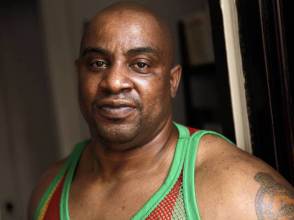
Steven Barnes was convicted of rape and second-degree murder in 1989 and spent nearly 20 years in prison before DNA testing showed that sperm cells from the crime scene did not match his. Ray Krone was sentenced to death on the basis of a bite-mark analysis in a 1991 murder case. He was proven innocent by DNA testing after serving ten years in prison. “I had never been in trouble in my life. They put me on death row. This could happen to you,” said Krone. “I’m calling on the ACS to get more involved in forensic science.”

ACS president Bassam Shakhashiri, a chemist at the University of Wisconsin–Madison, has been a strong supporter of the Innocence Project, and he appeared with many of the speakers for the Innocence Project at a press conference on Monday. He told Nature that before the society could lobby Congress in favour of the bill, the board would need to approve a policy statement on the matter, but that he planned to speak to several of the governance committees that oversee the topics involved.

“The topics discussed by the Innocence Project are vitally important to all of us,” he says.


Fabrication of Reports by Police Forensic Science Lab Scientist Revealed

Forensic Science Lab in Wakayama.- from TBS News.

It was reported today that a scientist at Forensic Science Laboratory in Wakayama Prefectural Police Headquarters had been fabricating reports in criminal cases (Read the news in Japanese here and here). It was revealed that the scientist wrote up reports although he never tested the actual evidence, using his previous reports and copied charts from them. The Wakayama Prefectural Police had been looking into the case since July, after an accusation by fellow scientist.

The alleged scientist works in the chemical division of the lab, which handles the analysis of evidence such as drugs or vehicle paint left at the scene of a traffic accident. The police determined that there had been fabrication of reports in 8 cases between May 2010 through June 2012. These cases include cases involving death of victims and hit-and-run cases. However, the Wakayama Police Department is claiming that the impact of false evidence in actual cases was minimal.

If in fact the scientist had been fabricating evidence, he may face criminal charges. There might have been trials where the reports of the scientist’s “testing” results were introduced and admitted into as evidence. If so, it could be a reason for a retrial.

There have been several incidents of fabrication of evidence by police investigators recently. In Osaka, an officer fabricated results of alcohol testing during enforcement of drunk-driving. In Fukushima, officers lost cigarette butts left at the crime scene and logged in unrelated evidence in their place. Continue reading

Wednesday’s Quick Clicks…

Innocence Project’s New Strategic Litigation Unit Takes on Bite Mark Evidence…

From press release:

THE INNOCENCE PROJECT (IP) is a national litigation and public policy organization based in New York dedicated to exonerating wrongfully convicted individuals through DNA and reforming the criminal justice system to prevent future injustice. As the DNA exonerations have revealed, the misapplication of forensic science has been a leading cause of wrongful convictions. The newly created Strategic Litigation unit is aimed at, among other things, eliminating junk science from courtrooms nationwide, beginning with bite mark comparison evidence. To that end, IP seeks to partner with an attorney(s) on criminal cases involving bite mark comparison. Attorneys with cases meeting the following criteria should contact IP directly.

  • Bite mark testimony is proffered by the government as evidence identifying the defendant to exclusion of all other potential sources
  • Pre-trial, trial, appellate or post-conviction cases: The primary interest is assisting with pre-trial Frye/Daubert motions and hearings, but IP will consider bite mark cases in all stages of litigation
  • Other disciplines, in particular other pattern or impression evidence: Although the initial focus is on bite marks, other novel, unvalidated disciplines will be considered.
  • NOTE: Strategic Litigation will consider cases with or without biological evidence, i.e., non-DNA cases.

Texas to Review Arson Convictions

How many innocent persons have been convicted of arson on now-discredited forensic arson theory? Texas may provide an indication. As reported earlier today by Mark Godsey here and in the Star-Telegram here, the Texas Forensic Science Commission has asked the Texas Innocence Project (TIP) to work with the State Fire Marshall’s Office to identify potential wrongful convictions that relied on debunked arson theory. Jeff Blackburn, chief counsel for the TIP is estimating that by spring of 2013, 10-15 cases will be identified for close Continue reading

Two Minnesota Public Defenders Take Down St.Paul Crime Lab

Two public defenders in Minnesota, not satisfied with a 1 or 2 page summary from the St.Paul crime lab, made the effort and had the chutzpah to demand complete case files, visit the lab, and interview lab staff. What they found was staggering. Controls, procedures, and minimum standards were woefully lacking. When they asked one lab staffer why there weren’t minimum standards in place, the answer was, “I guess I don’t know what minimum standards are.”

Prosecutors are now offering favorable deals in 160 drug cases, and more cases may come under review.

Law enforcement agencies are no longer sending samples for testing to the St.Paul crime lab.

Here are three articles from the St.Paul StarTribune chronicling the story.

Xiong C. St. Paul Crime Lab. Star Tribune, 2012-07-28

Tevlin J. St. Paul Crime Lab. Star Tribune, 2012-07-28

Estrada HM. St. Paul Crime Lab. Star Tribune, 2012-07-30

Reforms Recommended in Australia…

On the 18th, July 2012 the South Australian Legislative Review Committee on the CCRC Bill reported that it would not be recommending that a CCRC-style body be established in South Australia.

It did, however, make seven reform recommendations. Recommendation 3 was for a new statutory right for certain qualifying offences to provide that a person may be allowed at any time to appeal against a conviction for serious offences if the court is satisfied that:

· the conviction is tainted;

· where there is fresh and compelling evidence in relation to the offence which may cast reasonable doubt on the guilt of the convicted person.

Also of particular significance, Recommendation 5 was that the Attorney-General considers establishing a Forensic Science Review Panel to enable the testing or re-testing of forensic evidence which may cast reasonable doubt on the guilt of a convicted person, and for these results to be referred to the Court of Criminal Appeal.

The Full Report is here.

The Dark Side of Forensic Science…

From the WashingtonPost.com:

KIRK L. ODOM is innocent.

Federal prosecutors finally have confirmed that Mr. Odom was wrongfully convicted of a 1981 D.C. rape, for which he served 20 years in prison. Mr. Odom was sentenced at age 18; this nightmare has consumed more than half his life, and all because of errors in forensic techniques.

Worse still is that he isn’t alone. As The Post’s Spencer Hsu and others reported in a series of investigative articles this spring, similar errors have led to the convictions of two other men in the District: Santae A. Tribble, who served 28 years in prison, before a judge overturned his conviction in May, and Donald E. Gates, who served the same number of years for a 1981 Rock Creek rape and murder he didn’t commit.

These three cases should serve as a call to explore forensic errors that could have put more innocent men behind bars — or could do so in the future. In the wake of The Post’s reports, the Justice Department and the FBI announced last Tuesday the largest-ever post-conviction review, which will examine all cases after 1985 that relied on hair and fiber examinations. This is necessary and long overdue.

However, while the review’s results almost surely will uncover deficiencies in previous uses of forensic evidence, many flawed practices — including hair-sample analysis — are no longer in standard usage. Beyond finding and acknowledging errors of the past, a focus should be on taking every conceivable step to eliminate future wrongful convictions.

In terms of forensics, there’s still considerable work to do. As the National Academy of Sciences recommended in a 2009 report to Congress: “Research is needed to address issues of accuracy, reliability, and validity in the forensic science disciplines.” Although hair-sample analysis may be obsolete, uncertainty attaches to other techniques still in common use, such as firearm examination and fingerprint analysis. To that end, Sens. Patrick J. Leahy (D-Vt.) and John D. Rockefeller IV (D-W.Va.) each have proposed bills that would, among other things, promote more scientific research and develop uniform forensic standards. These reforms are critical steps that should have been enacted long ago, and they should be enacted without further delay.

U.S. Attorney Ronald C. Machen Jr. expressed his office’s sympathy with Mr. Odom: “Though we can never give him back the years that he lost,” he wrote, “we can give Mr. Odom back his unfairly tarnished reputation.” He’s right: No amount of recompense — financial or otherwise — could right the wrongs done to Mr. Odom, Mr. Tribble, Mr. Gates and however many others have been wrongfully convicted.

All the more reason to take every possible step to avoid similar mistakes in the future.

Historic Forensic Sciences and Standards Act Introduced in Congress…

Bill here. From TheHill.com:

House and Senate Democrats proposed legislation on Thursday that would establish federal grants to help create forensic-science standards, in an effort to help reduce wrongful convictions based on flawed forensic results.

The Forensic Science and Standards Act, from Sen. Jay Rockefeller (D-W.Va.) and Rep. Eddie Bernice Johnson (D-Texas), would provide $200 million over the next five years in grants that boost forensic science research, and nearly $100 million in that same period that the National Institute of Standards and Technology (NIST) would use to develop standards in the field.

Rockefeller said on Thursday that the bill is partly a reaction to a 2009 report that said many forensic science disciplines have not established “either the validity of their approach or the accuracy of their conclusions.” He also cited a series of articles in The Washington Post about this issue, as well as an April editorial calling for a Justice Department review of convictions based on forensic evidence.


“[A] July 11 story reports that the Justice Department and the FBI have now launched such a review,” Rockefeller said. “The National Academy of Sciences, The Washington Post, the Innocence Project and the National Association of Criminal Defense Lawyers, among others, have all called for strengthened forensic science and standards.”

The bill, S. 3378 in the Senate and H.R. 6106 in the House, would set up the grant program, and would require the National Science Foundation to direct these grants to two forensic science research centers. It would also create a system of challenges and allow the awarding of prizes “to stimulate innovative and creative solutions to satisfy the research needs and priorities” identified in the bill.

It would also task NIST with developing forensic science standards, in coordination with the two research centers.

Rockefeller’s bill has no co-sponsors, but Johnson’s bill in the House is sponsored by Reps. Donna Edwards (D-Md.) and Daniel Lipinski (D-Ill.). The Senate Judiciary Committee will hold a hearing on July 18 on the bill.

Friday’s Quick Clicks…

DNA Exoneration Yesterday in D.C.

Video here. Motions filed by his attorneys here and here….

From the Washington Post:

Federal prosecutors agreed Tuesday that a Washington man imprisoned for 20 years for rape is innocent and they acknowledged scientific errors in his case after DNA evidence proved that another man committed the crime.Kirk L. Odom will become the second District man in two months and the third in three years to have his conviction for rape or murder overturned because of erroneous hair matches claimed in court by FBI forensic experts.

Odom’s case was featured in a series of articles in April in which The Washington Post reported that Justice Department officials have known for years that flawed forensic work might have led to the convictions of potentially innocent people.

Odom, 49, served his sentence and was released from prison in 2003. He was convicted of raping, sodomizing and robbing a 27-year-old woman before dawn in her Capitol Hill apartment in 1981. However, court-ordered DNA testing revealed in January that the hair fragment in his case could not have come from Odom.Further DNA testing of stains on a pillowcase and robe indicated that only another man, not Odom, could have committed the crime.

“More than 30 years after Mr. Odom’s conviction, DNA testing reveals that he suffered a terrible injustice,” U.S. Attorney Ronald C. Machen Jr. wrote in a two-page filing in D.C. Superior Court.

“The United States expresses its profound regret for the harm suffered by Mr. Odom, and requests that this Court immediately vacate Mr. Odom’s convictions and dismiss the indictments against him with prejudice,” Machen wrote.

Odom, who was identified in court as the attacker by the victim, was thrilled by the news.

“Oh my goodness, the storm is over, yes yes!” he said from the office of his attorney, Sandra K. Levick, chief of special litigation for the District Public Defender Service.

“There’s no more dark clouds, and the sun is beginning to shine very bright,” said Odom, who lives in Southeast Washington with his wife, Harriet, a medical counselor.

Asked if he would say anything to police or prosecutors, or to the victim, Odom responded, “There’s nothing much to say except, ‘God bless you.’ ”

The Post generally does not name victims of sexual assaults without their permission.

The man whose DNA matched the stains is a convicted sex offender. He will not be charged, because the statute of limitations has expired on the crime, Machen said.

In a written statement, Machen endorsed eliminating the statute of limitations on sex crimes.

“Though we can never give him back the years that he lost, we can give Mr. Odom back his unfairly tarnished reputation,” Machen wrote. “Three decades ago, law enforcement got it wrong: Mr. Odom did not commit this crime. . . . It is never too late to secure justice — even if that means correcting a grave injustice from decades earlier.”

Odom would become the 293rd person cleared by post-conviction DNA testing in the United States, after the judge rules on what is now a joint motion between the prosecution and defense.

Odom would be released from lifelong parole and no longer would have to register as a sex offender. He also would be allowed to seek financial compensation for damages sustained during his 20-year incarceration. Prosecutors also said they would agree to seal his arrest and conviction record.

In May, a Superior Court judge dismissed the murder conviction against Santae A. Tribble, 51, after DNA tests disproved testimony at his trial from an FBI hair expert linking him to the 1978 killing of a District taxi driver.

In December 2009, Donald E. Gates was exonerated of a 1981 rape and murder in Rock Creek Park — again after DNA tests ruled out a hair match claimed by the FBI.

“We salute Mr. Odom for having the courage and fortitude to withstand more than 31 years convicted of terrible crimes for which he was absolutely innocent,” Levick said. “We salute the United States Attorney’s Office for joining us today to remedy this tragic injustice. And we salute the Department of Justice and the FBI for agreeing to a review of all cases involving hair evidence of the kind used to convict Mr. Odom, Mr. Tribble and Mr. Gates.”

Justice Department to review forensic evidence used in thousands of cases

Great reporting by The Washington Post on flawed forensic evidence has prompted the U.S. Justice Department to review thousands of cases in search of possible wrongful convictions. The Post’s latest story is here.

DNA evidence: Protecting the ‘Gold Standard’?

A couple of stories from around the world this week have highlighted again, concerns that DNA evidence may be being abused, corrupted or misinterpreted, resulting in injustices. DNA evidence is often heavily relied upon by investigators, lawyers and judges and juries alike. In many cases, this may be justified, but certainly not in ALL cases. In India, there is confusion over DNA reports concerning the case of the French Diplomat Pascal Mazurier, accused of raping his daughter. The test report from the laboratory in Bangalore is said to be‘confusing’ and‘inconclusive’. Read more here…. and here….

Image

Meanwhile, in Cook County, Illinois, a disturbing report of a rape case being prosecuted with DNA, reportedly taken from the victim’s lips, with a match given of ‘1 in 4 African American Males’. If this is the case, then this is truly shocking. Indeed, reports claim that the DNA analyst admitted that on one reading of the DNA profile, the defendant could be excluded. That such a weak ‘result’ could be the basis of a prosecution, or even simply adduced as evidence, is very worrying indeed. Read more here…. and here….

Image

Of course, DNA evidence still remains powerful, used in the right cases, with appropriate safeguards and caveats etc. It does not however, demand the slavish adherence to a belief in it’s infallibility, a faith demonstrated earlier this week by one (anonymous) Australia DNA expert (read here….with incredulity), who argues that Australia doesn’t have miscarriages of justice because of its use of DNA from highly regulated laboratories. If only that were true….